Asahi-yaki Ceramics of Uji City, Kyoto Prefecture | Comprehensive Explanation of the History and Characteristics of the Seven Enshu Kilns
Uji City, Kyoto Prefecture, is renowned worldwide as a production center for Uji tea, and at the same time, it is an important ceramics production area that has supported Japan’s tea ceremony ceramic culture. At its core is Asahi-yaki. Since its kiln was opened during the Keicho era (around 1596-1615), it has continued for over 400 years, standing alongside the world of tea ceremony while inheriting its unique aesthetic sense and techniques.
This article provides a comprehensive explanation of the history, characteristics, and current activities of Asahi-yaki kilns, one of Kyoto Prefecture’s representative ceramics production areas.
Table of Contents
- What is Asahi-yaki: Overview of the Ceramics Production Area in Uji City, Kyoto Prefecture
- History of Asahi-yaki: From the Keicho Era to Modern Times
- Positioning as One of the Seven Enshu Kilns and Its Connection to Kobori Enshu
- Characteristics of Asahi-yaki: The Beauty Created by Gohonde and Uji Soil
- Manufacturing Techniques of Asahi-yaki: Mastering Both Pottery and Porcelain
- Current Activities of Asahi-yaki Kilns: Efforts in Tradition and Innovation
- Asahi-yaki Ceramic Studio: A Center for Ceramic Art Experience and Tea Culture Dissemination
- Representative Works and Masterpieces of Asahi-yaki
- Where to Purchase Asahi-yaki and Access Information
- Conclusion: What Uji City’s Ceramics Production Area Continues to Spin into the Future
What is Asahi-yaki: Overview of the Ceramics Production Area in Uji City, Kyoto Prefecture
Asahi-yaki (朝日焼) is a collective term for ceramics produced in Uji City, Kyoto Prefecture, and simultaneously refers to the name of a kiln located in Uji Mata-furi, Uji City. Located at the foot of Asahi Mountain on the opposite bank of the Uji River from Byodo-in Temple, this production area occupies a special position in Japan’s tea ceremony ceramic culture.
There are two theories about the origin of the name Asahi-yaki. One theory suggests it derives from the name of Asahi Mountain at the foot of which the kiln was opened. Another theory proposes that it was named after the distinctive red speckles (gohonde) unique to Asahi-yaki, which resemble the light of the rising sun. In any case, the name “Asahi” symbolizes the geographical and artistic characteristics of this production area.
Given its location in Uji, Asahi-yaki has been intimately connected with tea ceremony culture. During the Muromachi period, one of the “Seven Famous Tea Gardens of Uji” was located in this area, and tea cultivation flourished. Inheriting this tradition, Asahi-yaki developed primarily around the production of tea ceremony ceramics, including tea bowls.
History of Asahi-yaki: From the Keicho Era to Modern Times
Opening of the Kiln and the First Okumura Jiro-uemon Tosaku
The history of Asahi-yaki began when the first Okumura Jiro-uemon Tosaku (also known as Tosaku) established a kiln during the Keicho era (1596-1615). This period coincided with the flourishing of Hideyoshi’s tea ceremony culture under Sen no Rikyu, transitioning into the early Edo period, an era when tea ceremony ceramic kilns were thriving throughout Japan.
The first Tosaku opened a kiln in Uji, a tea production area, aiming to create high-quality tea ceramics to meet the demand of tea enthusiasts. Using high-quality ceramic clay extracted from Asahi Mountain, he established unique firing techniques.
Kobori Enshu and Selection as One of the Seven Enshu Kilns
An important turning point in the history of Asahi-yaki came with its connection to Kobori Enshu, a prominent daimyo and tea master in the early Edo period. Kobori Enshu pursued the aesthetic of “kirei-sabi” (elegant simplicity) that embodied the spirit of tea ceremony and selected seven kilns that he favored. These became known as the Seven Enshu Kilns.
Asahi-yaki was selected as one of the Seven Enshu Kilns, alongside Ganjoyaki (Shiga Prefecture), Takatori-yaki (Fukuoka Prefecture), Uwano-yaki (Fukuoka Prefecture), Akahada-yaki (Nara Prefecture), Shidoro-yaki (Shizuoka Prefecture), and Kosobe-yaki (Osaka Prefecture). Under Kobori Enshu’s guidance, it elevated its standards and techniques as a tea ceramic. Enshu’s aesthetic sense significantly influenced Asahi-yaki’s style, resulting in works that were refined yet warm.
Edo Period to Meiji Period: Commitment to Uji Soil
Throughout the Edo period, Asahi-yaki maintained an unwavering commitment to Uji ceramic clay. Until the Meiji period, clay was extracted directly from Asahi Mountain, a fact that is considered one of the sources of the kiln’s name.
Uji soil is rich in iron, which produces distinctive coloration during firing. This region-specific soil quality became a crucial element in shaping Asahi-yaki’s individuality.
Modern Period to Present: Inheritance of Tradition and New Challenges
In the period following the Meiji Restoration, while many traditional crafts declined, Asahi-yaki maintained its vitality alongside the continuation of tea ceremony culture. Currently, clay is extracted from areas like Shirakawa and Orii Mountain across from Asahi Mountain. The kilns continue traditional techniques while also taking on the challenge of creating new vessels suited to contemporary lifestyles.
The present-day Asahi-yaki kiln represents the sixteenth generation, continuing a tradition spanning over 400 years. While valuing traditional firing in climbing kilns, they also use gas kilns to achieve stable quality and diverse expressions.
Positioning as One of the Seven Enshu Kilns and Its Connection to Kobori Enshu
The Seven Enshu Kilns refer to seven kilns selected by Kobori Enshu, a prominent daimyo and tea master of the early Edo period. Kobori Enshu (1579-1647) served as a tea ceremony master for the Tokugawa shogunate and established his unique aesthetic of “kirei-sabi” in the areas of architecture, gardening, and tea ceremony.
The seven kilns selected by Enshu each produced tea ceramics favored by Enshu while taking advantage of their regional characteristics. Asahi-yaki, due to its proximity to Kyoto, the center of tea ceremony culture, and the distinctive qualities of Uji soil, excelled particularly in the production of tea bowls and water containers for tea ceremony use among the Seven Enshu Kilns.
Through Kobori Enshu’s guidance, Asahi-yaki refined its technical sophistication and cultivated the ability to create works that appealed to tea masters’ aesthetic sensibilities. This tradition as one of the Seven Enshu Kilns remains central to Asahi-yaki’s identity today, with kiln owners displaying the “Seven Enshu Kilns” signboard to convey its history and pride.
Characteristics of Asahi-yaki: The Beauty Created by Gohonde and Uji Soil
Gohonde (ごほんで): The Most Distinctive Feature of Asahi-yaki
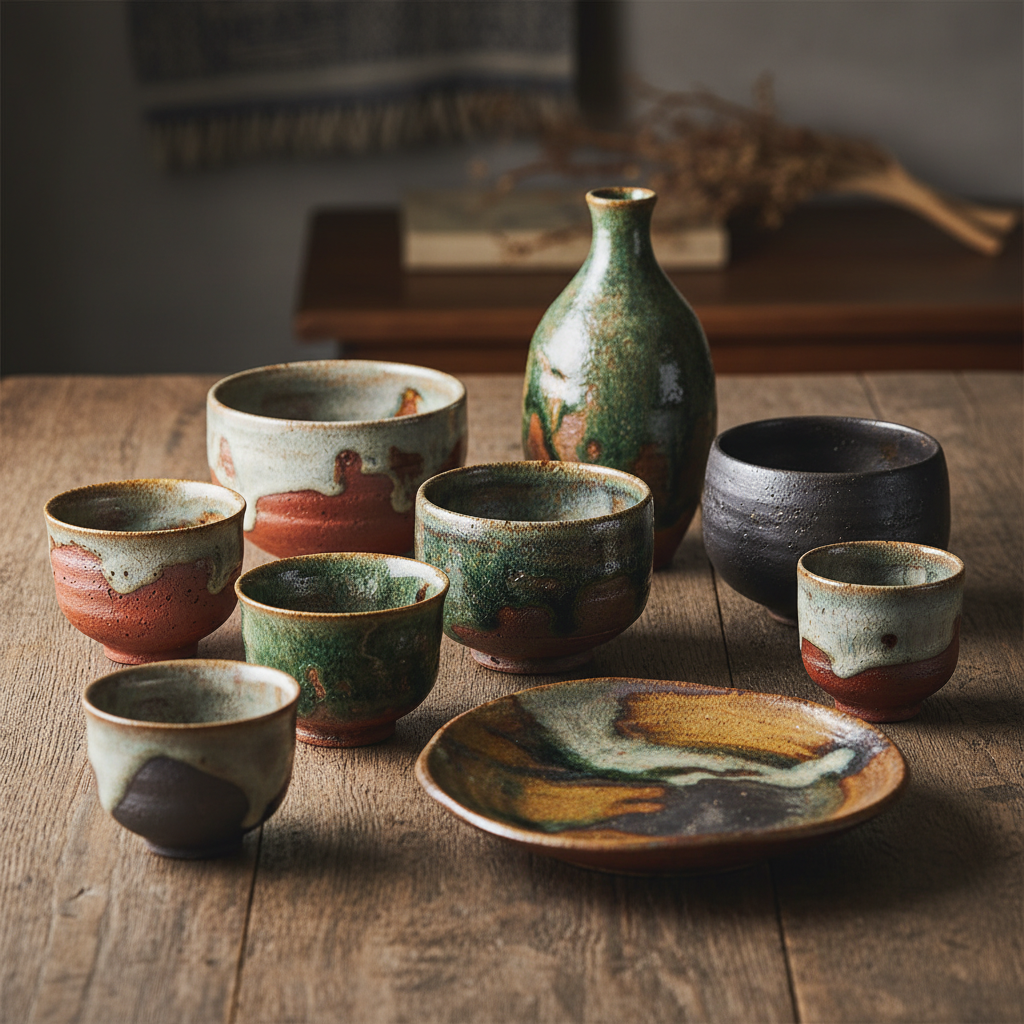
The most important element characterizing Asahi-yaki is gohonde (御本手). Gohonde refers to red or pink speckles that appear on the surface of vessels during firing. These speckles, which resemble the light of the rising sun, are considered one of the sources of the name “Asahi-yaki.”
Gohonde is a natural phenomenon that occurs when iron contained in Uji soil oxidizes during high-temperature firing. It is difficult to control artificially, and no two patterns are identical. This quality of chance and natural beauty has been highly valued by tea masters.
Kashige (鹿背) and Beni-kashige (紅鹿背)
Asahi-yaki features unique glaze techniques called kashige and beni-kashige. Kashige refers to a tea-brown coloration reminiscent of the color of a deer’s back, while beni-kashige adds a crimson hue to this.
These colorations are also produced through the iron content in Uji soil, unique glaze compositions, and careful control of firing temperature. Works with kashige or beni-kashige coloring possess an unpretentious yet dignified atmosphere, and they are treasured in the tea ceremony world.
Uji Soil: Commitment to Materials Unique to the Region
Asahi-yaki has consistently used Uji soil since its founding. Currently, ceramic clay extracted from areas like Shirakawa and Orii Mountain, where tea fields spread, is used.
Uji soil possesses appropriate iron content and plasticity, is easy to shape, and provides sufficient strength after firing. Additionally, the distinctive coloration of this soil forms the aesthetic characteristics of Asahi-yaki. Commitment to the region’s soil is not merely a continuation of tradition but is directly connected to preserving Asahi-yaki’s individuality.
Warm Colors and Texture
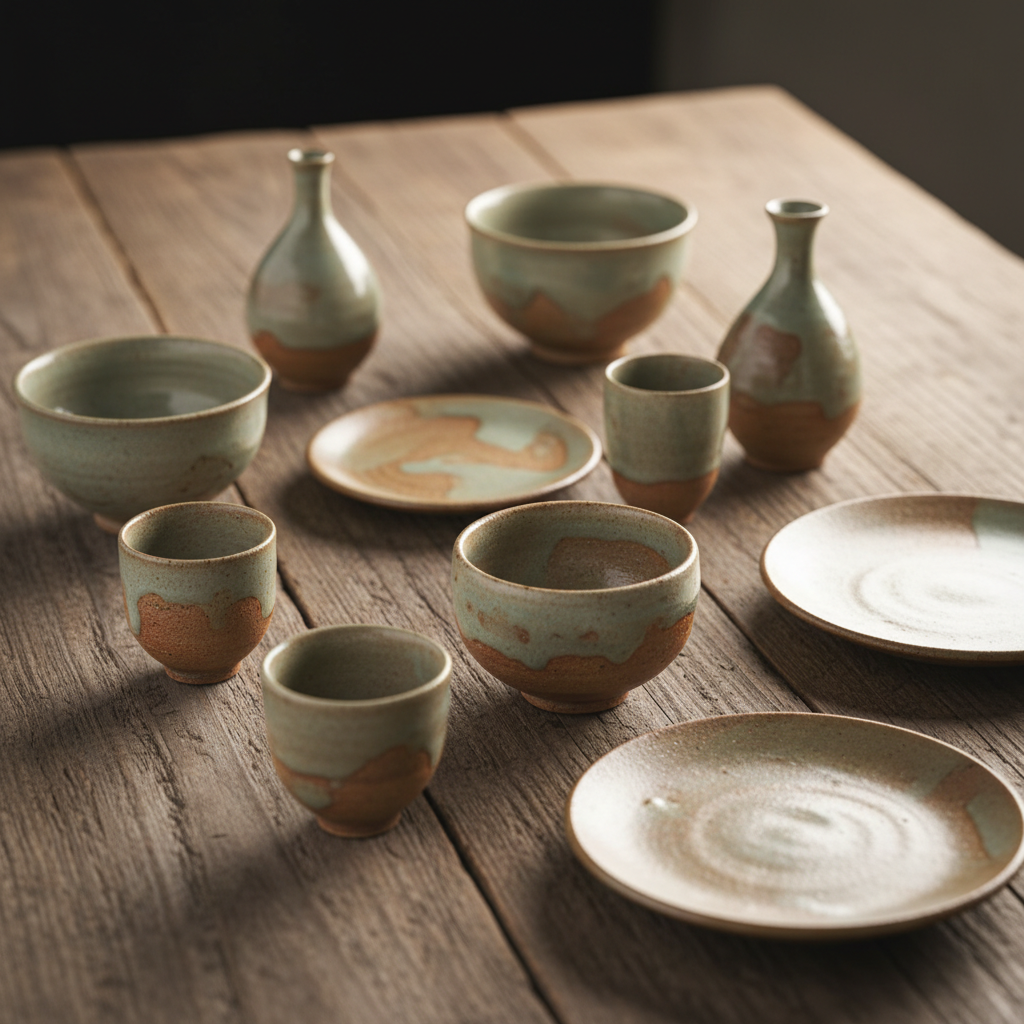
Works of Asahi-yaki are characterized by warm colors and soft texture overall. Taking white or pale beige as the base, the red speckles of gohonde and the tea-brown of kashige serve as accents, creating a calm impression. This warmth harmonizes with the spirit of “wa-kei-sei-jaku” (harmony, respect, purity, and tranquility) in tea ceremony, naturally blending into the tea room space. Though without flashiness, these vessels gain deeper appreciation the more they are used, beloved by many tea masters.
Manufacturing Techniques of Asahi-yaki: Mastering Both Pottery and Porcelain
Pottery Production: The Core of Traditional Asahi-yaki
The nucleus of Asahi-yaki consists of pottery production using Uji soil. Pottery is made primarily from clay and fired at relatively low temperatures (around 1200°C).
In Asahi-yaki’s pottery production, traditional techniques such as wheel-throwing and hand-forming are employed. After shaping, bisque firing is performed, glaze is applied, and then final firing occurs. During this process, distinctive expressions such as gohonde and kashige are created.
Porcelain Production: Innovation Incorporating Chinese Celadon Techniques
One characteristic of Asahi-yaki is that it produces both pottery and porcelain. Porcelain is made primarily from ceramic stone and fired at high temperatures (around 1300°C), resulting in white, hard-fired ware.
Asahi-yaki has incorporated Chinese celadon techniques and developed unique porcelain production. Works finished with transparent celadon glaze possess refined beauty distinct from pottery, expanding Asahi-yaki’s range of expression.
Climbing Kilns and Gas Kilns: Fusion of Tradition and Modern Technology
Asahi-yaki kilns currently employ both climbing kilns and gas kilns.
Climbing kilns are continuous-draft kilns built on slopes, using firewood as fuel and requiring several days of firing. The movement of flames and temperature changes impart unique character to works, creating the “scenery” essential to tea ceremony culture. Asahi-yaki has traditionally valued firing in climbing kilns for tea ceremony utensil production.
Gas kilns, meanwhile, allow for easy temperature management and efficient production of stable-quality works. Vessels for contemporary lifestyles are increasingly fired in gas kilns.
By employing both kiln types, Asahi-yaki maintains the dignity of traditional tea ceramics while implementing a flexible production system responsive to modern needs.
Current Activities of Asahi-yaki Kilns: Efforts in Tradition and Innovation
Inheritance of Tradition by the Sixteenth Generation
The current Asahi-yaki kiln is operated under the leadership of the sixteenth generation. While preserving over 400 years of family business tradition, it also undertakes new challenges suited to the times.
The kilns continue producing traditional tea ceramics while also investing effort in developing vessels that suit contemporary dining tables and interiors. To convey Asahi-yaki’s appeal to younger generations, they also offer design-conscious works and products at accessible price points.
Monthly Tea Gatherings and Tea Ceremonies
Asahi-yaki kilns regularly host monthly tea gatherings called “tsukigama.” These are tea ceremonies held on set dates each month, providing a precious opportunity for tea enthusiasts and the general public to enjoy tea in actual Asahi-yaki tea bowls.
Through such activities, Asahi-yaki functions not merely as a ceramics production center but also as a place where one can experience and learn tea culture.
Asahi-yaki shop&gallery: A Contemporary Center for Dissemination
The kiln includes an affiliated Asahi-yaki shop&gallery where works are displayed and sold. In the gallery, one can see and handle a wide range of works from traditional tea ceramics to contemporary vessels.
Additionally, regular special exhibitions and individual artist exhibitions are held, introducing the diverse expressions of Asahi-yaki. It has become a space where visitors can experience both the history and present state of Asahi-yaki.
Collaborative Projects with Uji Tea Culture
Taking advantage of its location in Uji, Asahi-yaki kilns actively participate in collaborative projects with Uji tea culture. Cooperating with local tea farmers and tea merchants, they host events and workshops themed around “tea and vessels,” thereby disseminating the comprehensive cultural value of Uji.
Such efforts demonstrate that Asahi-yaki does not exist in isolation but functions as part of the broader cultural resources of the Uji region.
Asahi-yaki Ceramic Studio: A Center for Ceramic Art Experience and Tea Culture Dissemination
Overview and Experience Content of the Studio
The Asahi-yaki kiln includes an affiliated ceramic art experience facility called Asahi-yaki Ceramic Studio. Here, members of the general public can experience actual Asahi-yaki production.
Experience content centers on wheel-throwing using electric pottery wheels. Staff provide careful instruction, allowing even beginners to participate with confidence. Participants can create works according to their preferences, such as tea bowls, tea cups, or flower vessels.
Completed works undergo bisque firing, glaze application, and final firing at the kiln, with pieces either mailed later or picked up at the facility. Works created using Uji soil and fired in the same kiln as professional pieces become particularly treasured memories.
Combination with Uji Tourism
The Asahi-yaki Ceramic Studio is also close to world heritage sites such as Byodo-in Temple and Uji Shrine, making it popular as part of an Uji tourism program. A typical itinerary includes visiting Byodo-in in the morning, enjoying Uji tea cuisine for lunch, and participating in ceramic art experience in the afternoon.
This allows visitors to experience Uji’s three major cultural resources—Uji tea, Asahi-yaki, and historical structures—in a single day, earning high praise from both domestic and international tourists.
Use as an Educational Program
The studio also offers educational programs for schools and groups. It serves as an opportunity for local elementary and junior high school students to learn traditional crafts and as a hands-on learning experience for school trips.
By actually touching clay, forming shapes, and learning the firing process, participants develop deeper understanding of the importance of craftsmanship and regional traditional culture. These educational activities are also crucial endeavors supporting Asahi-yaki’s future.
Representative Works and Masterpieces of Asahi-yaki
Tea Bowls: The Essence of Asahi-yaki
The representative work of Asahi-yaki is undoubtedly the tea bowl. Tea bowls with beautiful red gohonde speckles are highly valued in the tea ceremony world.
Particularly prized are tea bowls with pale pink gohonde appearing on white clay bodies, symbolic of “Asahi-yaki character” and treasured as such. The shape characteristically features a slightly thick body with warmth, and the stability when held and the pleasant feel when drinking from them are distinctive features.
Water Containers and Flower Vessels: Adornments of the Tea Room
Beyond tea bowls, water containers (mizusashi) and flower vessels (hanaire) constitute important work categories for Asahi-yaki tea ceremony utensils.
Water containers hold water during tea ceremony and Asahi-yaki examples exhibit refined form and warm glaze that combine in beautiful works. Flower vessels hold arrangements for the tea room, and simple yet presence-filled works are favored by tea masters.
Celadon Works: Demonstrating Porcelain Production Technology
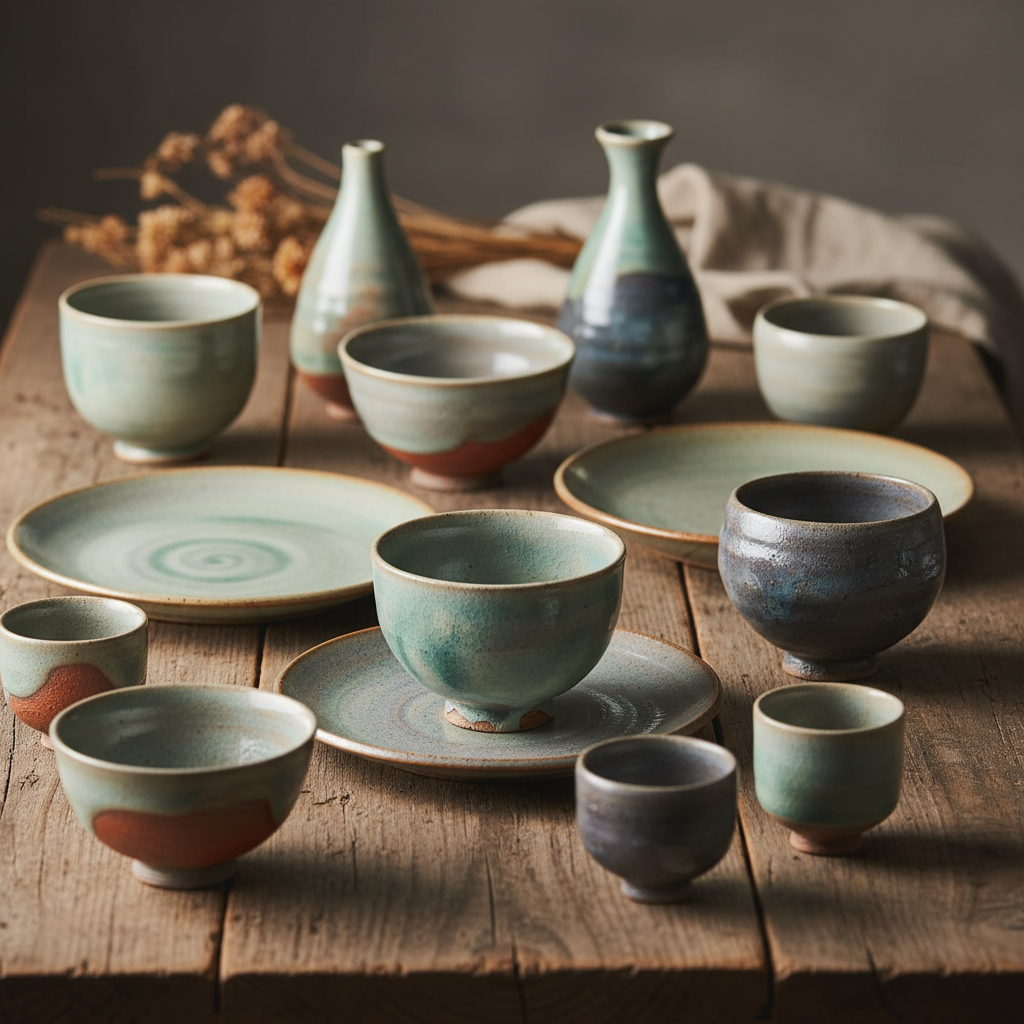
Asahi-yaki’s celadon works possess distinct charm from pottery. The transparent bluish-green glaze is beautiful, evoking the dignified quality of Song dynasty Chinese celadon.
Various forms of celadon works including flower vessels, incense burners, and tea bowls are produced, demonstrating the broad technical scope of Asahi-yaki.
Everyday Vessels: Proposals for Contemporary Living
In recent years, Asahi-yaki has emphasized the production of everyday-use vessels. A range of items suited to modern dining tables has been developed, including rice bowls, tea cups, plates, and mugs.
These works also use Uji soil and may display gohonde, allowing the enjoyment of traditional craft beauty in daily life. Prices are set relatively affordably to bring Asahi-yaki closer to younger generations.
Where to Purchase Asahi-yaki and Access Information
Asahi-yaki Kiln shop&gallery
The most reliable way to purchase Asahi-yaki is to visit the kiln’s shop&gallery directly.
Address: 67 Uji Mata-furi, Uji City, Kyoto Prefecture 611-0021
Access:
- Approximately 10 minutes on foot from Uji Station (JR Nara Line)
- Approximately 5 minutes on foot from Uji Station (Keihan Uji Line)
- Approximately 7 minutes on foot from Byodo-in Temple across the Uji River
The shop&gallery allows visitors to view and select from a wide range of works, from tea ceremony utensils to everyday vessels. Staff provide detailed explanations of works, ensuring confidence even for first-time purchasers.
Online Shop
The Asahi-yaki official website operates an online shop. Those living at a distance or unable to visit can purchase Asahi-yaki works through the internet.
Photographs and detailed descriptions of works are posted, allowing confident selection. However, since natural expressions like gohonde differ on each piece, it is recommended to view works in person if possible.
Craft Specialty Shops and Department Stores in Kyoto City
Traditional craft specialty shops in Kyoto and department stores such as Takashimaya and Daimaru carry Asahi-yaki works. These are worth exploring when visiting Kyoto.
Exhibitions and Events
Asahi-yaki kilns regularly hold exhibitions in Kyoto City, Tokyo, and elsewhere. Information about upcoming exhibitions is announced on the official website and social media. Special and new works are sometimes introduced at exhibitions.
Conclusion: What Uji City’s Ceramics Production Area Continues to Spin into the Future
Asahi-yaki is a ceramics production area that has preserved tea ceremony ceramic traditions for over 400 years in Uji City, Kyoto Prefecture, the heart of tea culture. Since its opening in the Keicho era, it has served as one of the Seven Enshu Kilns, inheriting Kobori Enshu’s aesthetic sensibility while pursuing the distinctive beauty of gohonde and kashige created by Uji soil.
The contemporary Asahi-yaki kilns continue producing traditional tea ceramics in climbing kilns while developing everyday vessels using gas kilns, operating ceramic art experience facilities, and undertaking tea culture collaborative projects. These multifaceted activities reflect an intention not merely to preserve tradition but to develop Asahi-yaki as a living culture within contemporary society.
Uji tea, Asahi-yaki, and the world heritage site of Byodo-in Temple together create a cultural landscape symbolic of Japan’s traditional culture’s richness. Through ceramic art experiences at the Asahi-yaki Ceramic Studio and work appreciation at the shop&gallery, many people encounter this tradition.
As one of Kyoto Prefecture’s representative ceramics production areas, Asahi-yaki will continue to serve as a custodian of tea ceremony culture while proposing vessels suited to contemporary living. The techniques and aesthetic sensibilities cultivated over 400 years are reliably inherited by succeeding generations and become sources of new expression.
When visiting Uji, be sure to visit the Asahi-yaki kilns and experience the appeal of ceramics distinctive to this region. Within a single tea bowl resides 400 years of history, the region’s natural features, and the creator’s intentions—you will surely sense this.