What is Uchihara-no Ware? A Thorough Explanation of the History and Charm of Kochi Prefecture’s Traditional Ceramics Production Area
Uchihara-no ware (内原野焼) produced in Aki City, Kochi Prefecture, is a traditional pottery with approximately 200 years of history. It has taken root in the region as a type of ceramics that combines simple, warm aesthetics with practicality. This article provides a thorough explanation of the charm of this traditional craft, from the history of Uchihara-no ware to its characteristics and the current state of the production area.
History and Origins of Uchihara-no Ware
Birth in the Bunsei 12th Year (1829)
The history of Uchihara-no ware dates back to Bunsei 12 (1829). Gotō Kazue (五藤主計), the lord of Aki Castle at the time, discovered that the Uchihara area had abundant high-quality clay. This discovery became the catalyst for the birth of Uchihara-no ware.
Aiming for the development of regional industry, Gotō Kazue invited skilled potters from Kyoto. By having local craftsmen learn Kyoto’s ceramic techniques, Uchihara began its path as a pottery production area. This historical background is still passed down as a handmade Tosa craft today.
The Prosperous Period as a Production Area
Uchihara-no ware entered its prosperous period from the late Edo period through the Meiji, Taisho, and early Showa periods. At its peak, six kilns were in operation, and it flourished as an important regional industry.
The main products produced at that time were daily commodities such as water jars, grinding bowls, sake bottles, and grater plates. These practical vessels became essential to the lives of common people and were widely used not only throughout Kochi Prefecture but also in surrounding regions. Uchihara-no ware products were beloved in many households for their durability and ease of use.
Positioning as a Ceramic Production Area in Kochi Prefecture
In addition to Uchihara-no ware, Kochi Prefecture has other ceramic production areas such as Odo ware and Nōchayama ware. However, Uchihara-no ware has undergone unique development rooted in the specific region of Aki City.
Compared to ceramic production areas throughout Japan, Uchihara-no ware demonstrates a unique presence as a small-scale but community-oriented traditional craft. Unlike large-scale production areas such as Arita ware and Karatsu ware in Kyushu, it is distinctive in having developed as a type of pottery that complements local living culture.
Characteristics and Charm of Uchihara-no Ware
Simple and Warm Aesthetic
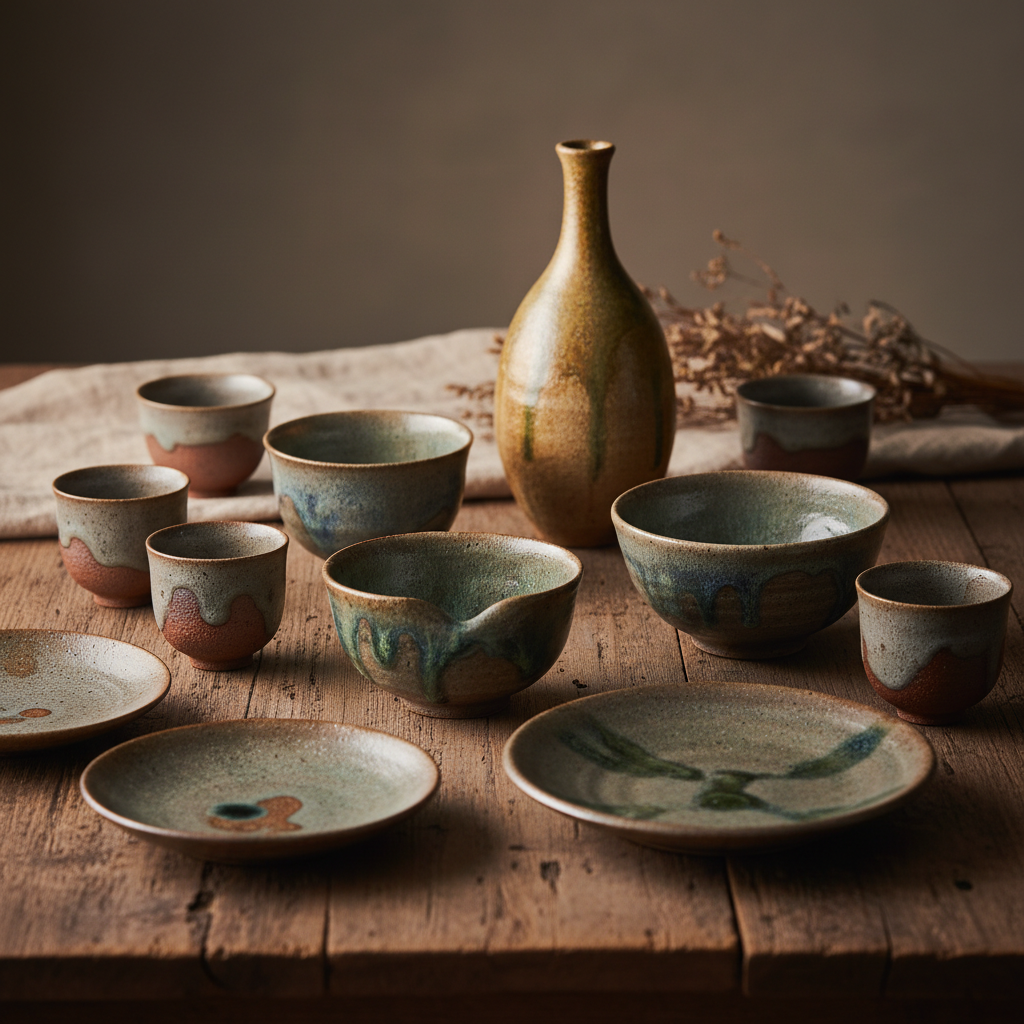
The greatest characteristic of Uchihara-no ware lies in its simple and warm aesthetic. Without elaborate decoration, it showcases the natural beauty of the clay’s texture. This simplicity is one of the reasons it has been beloved as a vessel for everyday use over many years.
The heavy-textured quality is also characteristic of Uchihara-no ware. When held in one’s hand, you can feel its solid weight, and affection grows the more one uses it. This weightiness also contributes to high durability, achieving quality that can be used continuously across generations.
Use of Traditional Glazes
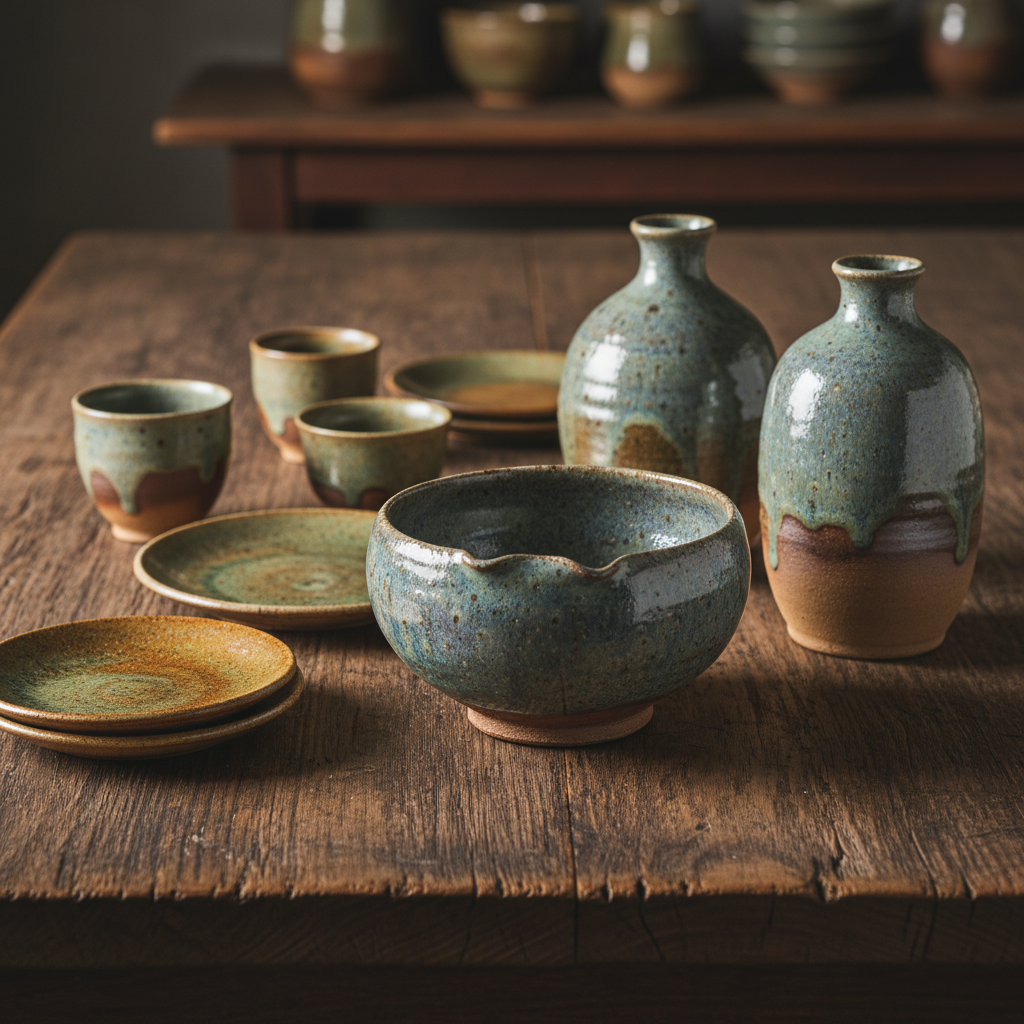
Uchihara-no ware uses glazes made from wood ash and straw ash as raw materials. These glazes made from natural materials produce unique colors and textures that cannot be expressed with chemical glazes.
Wood ash glaze is a traditional technique where burned wood ash is dissolved in water and the supernatant is used as a glaze. Straw ash glaze is similarly made from ash produced by burning rice straw. These glazes subtly change their expression depending on the firing temperature and kiln conditions, creating works where no two are exactly alike.
Emphasis on Practicality in Vessel-Making
Uchihara-no ware developed not as ornamental artwork but as practical vessels for use in daily life. Therefore, ease of use and functionality have always been prioritized.
Grinding bowls have grooves appropriately positioned for grinding foodstuffs, and sake bottles are shaped for easy pouring. Grater plates have bumps effectively positioned for grating daikon and other ingredients, with designs that prioritize practicality above all.
This commitment to practicality is inherited in contemporary works, enhancing the value of vessels suitable for daily use.
Manufacturing Process and Techniques of Uchihara-no Ware
Utilizing Local Clay
The production of Uchihara-no ware begins with the extraction of high-quality clay. The Uchihara area is abundant in clay suitable for pottery production, and this locally-specific soil shapes the individuality of Uchihara-no ware.
The extracted clay is purified of impurities and worked until it reaches appropriate hardness. This clay preparation process greatly affects the final quality of the work, requiring skilled technique.
Shaping Technique
The shaping of Uchihara-no ware primarily uses the potter’s wheel technique. Craftsmen shape the clay to uniform thickness on a rotating wheel using only the feel of their hands. This technique is cultivated through years of experience, and the handiwork of skilled craftsmen is impressive.
Since the focus is on vessels for daily use, creating shapes that consider ease of use is important. The shaping proceeds with careful attention to details such as rim shape, vessel thickness, and balance of weight.
Glaze Application and Firing
After shaping, the clay is thoroughly dried before glaze is applied. Glazes made from wood ash and straw ash are applied by brush or by immersing the entire vessel. The appearance after firing changes depending on the thickness and method of glaze application, making this step an important technique.
Firing takes place in a kiln at high temperature. Temperature control and firing time are important factors that affect the final appearance of the work. Through the movement of flames and temperature changes within the kiln, the glaze displays its unique character, and each piece is born with a different appearance.
Contemporary Uchihara-no Ware: Uchihara Pottery Museum and Yōwa Workshop
The Role of the Uchihara Pottery Museum
Currently, the Uchihara Pottery Museum is the main venue for inheriting and promoting the tradition of Uchihara-no ware. In addition to display and sales, the facility also hosts pottery experience classes, serving as a place where traditional crafts can be appreciated up close.
At the Uchihara Pottery Museum, you can directly purchase works created by skilled craftsmen. A variety of vessels are available for different purposes, including sake ware, tableware, and flower vases, allowing visitors to select works suited to their lifestyle.
Tradition Continuation through Yōwa Workshop
Yōwa Workshop Inc., which operates the Uchihara Pottery Museum, plays a central role in inheriting the tradition of Uchihara-no ware in the modern era. Master craftsmen including representative Nishi-mura Izuru continue to preserve traditional techniques while also challenging themselves to create new works suited to contemporary life.
At Yōwa Workshop, works with contemporary design are produced in addition to traditional daily commodities. This stance of maintaining tradition while evolving with the times contributes to the sustainable development of Uchihara-no ware.
Experiencing Tradition Through Experience Classes
The Uchihara Pottery Museum regularly holds pottery experience classes. Beginners can participate easily, experiencing vessel-making using the potter’s wheel or hand-building techniques.
Under the guidance of craftsmen, participants can create their own original works. Through the process of touching clay and shaping it, one can develop a deeper understanding of the charm of Uchihara-no ware. The completed works are fired later and delivered to your home.
A glass workshop is also located on the site, where visitors can enjoy sandblast experiences and other activities. As a facility where both pottery and glass crafts can be experienced, it has become a popular spot for tourists.
Uchihara-no Ware Works and Uses
Appeal as Sake Ware
Uchihara-no ware is particularly popular as sake ware. Sake bottles, spouted bowls, and sake cups are ideal vessels for enjoying sake and shochu.
The simple-styled sake bottle fits comfortably in the hand and feels pleasant when pouring sake. Many enthusiasts say that sake poured from an Uchihara-no ware sake bottle tastes remarkably deeper. This is thought to be because the fine pores in the ceramic make the sake taste smoother.
Spouted bowls are valued as vessels for enjoying sake while controlling the amount consumed. Rather than pouring directly from a bottle into a cup, transferring it to a spouted bowl first allows one to be more conscious of consumption. The spouted bowl from Uchihara-no ware has a thoughtfully designed pouring spout that prevents splashing.
Tableware for Daily Use
Uchihara-no ware tableware enriches the daily dinner table. Various types of tableware are produced, including rice bowls, tea cups, plates, and bowls.
The simple aesthetic complements not only Japanese food but also Western and Chinese cuisine. Precisely because of its simple design, it enhances dishes and adds warmth to the dining table.
Grater plates are particularly notable as traditional products of Uchihara-no ware. Used when making grated daikon radish, the bumps are arranged at appropriate spacing to allow efficient grating. As it is used more and more, it becomes familiar to the hand and becomes a tool treasured for years.
Practicality of Grinding Bowls
Uchihara-no ware grinding bowls receive high acclaim as traditional daily items even in modern times. The grooves inside are optimally positioned for grinding sesame seeds and grinding other foodstuffs.
Ceramic grinding bowls can grind ingredients more effectively than plastic or glass alternatives. Additionally, their weight provides high stability, and they do not move easily even when force is applied during grinding.
For cooking enthusiasts and those who value traditional cooking methods, an Uchihara-no ware grinding bowl becomes an indispensable tool.
Uchihara-no Ware and Kochi Prefecture’s Craft Culture
Positioning as a Tosa Handmade Craft
Uchihara-no ware is registered as one of the “Tosa Handmade Crafts” certified by Kochi Prefecture. This certification system was established to protect excellent traditional crafts from within the prefecture and widely publicize their value.
Tosa Handmade Crafts include representative works of Kochi Prefecture such as Tosa washi paper, Tosa forged blades, and Tosa coral. Uchihara-no ware is positioned alongside these as an important cultural asset of Kochi Prefecture.
Connection with Regional Culture
Uchihara-no ware is deeply connected with the regional culture of Aki City. At local festivals and events, Uchihara-no ware vessels are sometimes used, and it has become part of the area’s identity.
Aki City is also known as the birthplace of Iwasaki Yatarō, a statesman of the late Edo period, and is a region rich in history and culture. Uchihara-no ware was cultivated within this historical context of the region and has been passed down to the present day.
Value as a Tourist Resource
The Uchihara Pottery Museum has become one of Aki City’s important tourist destinations. Among tourists visiting Kochi Prefecture, there are many who visit Aki City specifically for Uchihara-no ware.
Through pottery experiences and purchasing works, visitors can experience Kochi Prefecture’s traditional culture. Additionally, by purchasing Uchihara-no ware as a souvenir, travelers can take home tangible memories of their trip.
How to Purchase and Enjoy Uchihara-no Ware
Purchase at the Uchihara Pottery Museum
The most reliable way to purchase Uchihara-no ware is to visit the Uchihara Pottery Museum directly. The museum has various types of works on display and for sale, and you can hold them in your hands to make your selection.
By consulting with craftspeople and staff members, you can find works that match your needs and preferences. Additionally, by hearing about the background of the works and the craftspeople’s thoughts, you can develop a deeper understanding of the charm of Uchihara-no ware.
Online Purchase
With the spread of the internet, it has become possible to purchase Uchihara-no ware from a distance. On online shopping sites like Rakuten, works from the Uchihara Pottery Museum are sold.
When purchasing online, it is important to carefully check photographs and descriptions and understand the size and color. Understanding that handmade items have subtle differences in appearance from piece to piece, you can select with this in mind.
Through Local Tax Contribution Gifts
Uchihara-no ware works are sometimes available as return gifts for local tax contributions to Aki City, Kochi Prefecture. Through local tax contributions, you can support the region while obtaining traditional craft works.
Local tax contribution return gift items are periodically updated, so it is good to check the latest information on Aki City’s official website and various local tax contribution sites.
The Joy of Cultivating Vessels
Uchihara-no ware vessels grow in character the more they are used. Ceramics undergo subtle changes with use and develop a unique aesthetic.
Through daily use, affection for the vessel grows, and it becomes a special tool uniquely yours. With careful handling and continued use, it may become a treasure passed down across generations.
The basic care for vessels is to wash gently with a soft sponge after use and dry thoroughly. By avoiding sudden temperature changes and handling carefully, you can maintain its beauty for many years.
The Future and Challenges of Uchihara-no Ware
Succession of Traditional Techniques
Like many traditional crafts, Uchihara-no ware faces the important challenge of training successors. Faithfully transmitting the techniques and knowledge possessed by skilled craftspeople to the next generation is essential for the survival of the production area.
The Uchihara Pottery Museum conducts activities to widely communicate the appeal of ceramics through experience classes. Such efforts have the potential to lead to cultivating future practitioners of Uchihara-no ware.
Responding to Modern Needs
While preserving tradition, developing products that match contemporary lifestyles and needs is also important. Yōwa Workshop produces works with contemporary design while utilizing traditional techniques.
Development of dishwasher-safe vessels and products that can be used in microwave ovens—works with functionality adapted to modern living—are also in progress. An attitude of maintaining balance between tradition and innovation while evolving with the times is required.
Information Dissemination and Branding
With the spread of the internet and SNS, methods of information dissemination have become diverse. To help more people learn about the charm of Uchihara-no ware, effective information dissemination is important.
Information dissemination through digital media, such as inclusion in traditional craft industry digital pamphlets, is also being conducted. Through such efforts, the existence of Uchihara-no ware is becoming known to craft enthusiasts throughout the country.
Additionally, communicating stories where the craftspeople’s faces are visible is important in creating empathy and affection for the products. By carefully communicating the thoughts of craftspeople and their manufacturing processes, the brand value of Uchihara-no ware can be enhanced.
Strengthening Regional Cooperation
For the sustainable development of Uchihara-no ware, support and cooperation from the entire region are essential. Strengthening cooperative relationships with Aki City and Kochi Prefecture and receiving support in utilizing it as a tourism resource and expanding sales channels is important.
By having local restaurants and lodging facilities use Uchihara-no ware vessels, more people can experience actual usage. Such region-wide efforts lead to the vitalization of the production area.
Conclusion: Tradition and Future Woven by Uchihara-no Ware
Uchihara-no ware is a traditional ceramic from Aki City, Kochi Prefecture, with approximately 200 years of history. Beginning with Gotō Kazue inviting potters from Kyoto in Bunsei 12 (1829), it developed as a production area rooted in the region.
Characterized by simple and warm aesthetics created through glazes using wood and straw ash, and vessel-making emphasizing practicality, it has long been beloved as pottery that complements daily life. A wide range of products are produced, from daily commodities such as water jars, grinding bowls, sake bottles, and grater plates to contemporary-design sake ware and tableware.
The Uchihara Pottery Museum and Yōwa Workshop currently serve as the center for inheriting tradition and widely disseminating its appeal through pottery experience classes and other activities. Certified as a Tosa Handmade Craft, it is positioned as an important cultural asset of Kochi Prefecture.
While facing challenges such as successor training and adapting to modern needs, Uchihara-no ware continues into the future through the stance of preserving tradition while evolving with the times. When visiting Aki City, be sure to stop by the Uchihara Pottery Museum and directly experience the charm of this traditional craft.