Agano Ware – A Complete Explanation of the History and Characteristics of Fukuoka Prefecture’s Traditional Ceramic Production Center
Agano ware (agano-yaki), located in Tagawa District, Fukuoka Prefecture, is one of Japan’s leading ceramic production centers with a history spanning over 400 years. Developed as tea ceramics, Agano ware continues to receive high praise from ceramic art enthusiasts and tea ceremony practitioners today due to its thin-walled craftsmanship and diverse range of glazes. This article provides a comprehensive explanation of Agano ware’s history, characteristics, techniques, and contemporary appeal—a ceramic production center representing Fukuoka Prefecture.
What is Agano Ware – Traditional Ceramics of Tagawa District, Fukuoka Prefecture
Agano ware is pottery produced in Kawara Town, Fukuchi Town, and Ohtou Town in Tagawa District, Fukuoka Prefecture. In 1975, it was designated as a traditional craft by the Japanese government and is known as a representative ceramic production center of Fukuoka Prefecture.
The Agano ware production area around Fukuchi Town is located at the foot of Fukushi Mountain, blessed with abundant high-quality ceramic clay, clear streams, and an abundance of pine for fuel. These natural conditions became an important foundation supporting the development of Agano ware.
Currently, multiple kilns are affiliated with the Agano Ware Cooperative Association, and they continue to produce works that preserve tradition while incorporating contemporary sensibilities. The production is not limited to tea ceremony utensils alone; the region is also characterized by the creation of a wide range of ceramics including everyday tableware and flower vases.
History of Agano Ware – Origins of a Ceramic Production Center Spanning Over 400 Years
Circumstances of Kiln Opening and Hosokawa Tadaoki
The history of Agano ware dates back to 1602 (Keicho 7). It is said that Hosokawa Tadaoki, who became the first feudal lord of the Buzen Kokura Domain, invited a Korean potter named Sonkai to build a climbing kiln in Agano, Buzen Province (present-day Tagawa District, Fukuoka Prefecture).
Hosokawa Tadaoki was also a renowned tea ceremony master who received direct instruction in tea ceremony from Sen no Rikyu. Counted among Rikyu’s Seven Disciples, Tadaoki was known by the name “Sannsai” and held significant influence in the world of tea ceremony. This deep knowledge of tea culture became the driving force for Agano ware’s development as tea ceramics.
Sonkai was one of the potters brought back by Kato Kiyomasa during Toyotomi Hideyoshi’s invasions of Korea. When invited to Hosokawa Tadaoki’s entry into Kokura Castle, Sonkai took the Japanese name Agano Kichizou and began pottery production in the Agano area. This kiln opening marked the birth of an important ceramic production center in Fukuoka Prefecture.
Development in the Edo Period and the Seven Kilns of Enshu
With the beginning of the Edo period, Agano ware experienced significant growth as tea ceramics. Particularly noteworthy is that it was counted among the “Seven Kilns of Enshu” selected by Kobori Enshu, a renowned daimyo tea master. The Seven Kilns of Enshu refers to seven kiln sites favored by Kobori Enshu, and Agano ware received high evaluation from tea practitioners as one of them.
The fusion of Hosokawa Tadaoki’s passion for tea ceremony and the superior techniques of Korean potters allowed Agano ware to establish its own aesthetic consciousness. The thin-walled, lightweight tea ceramics with refined beauty were beloved by many tea practitioners, establishing its position as a ceramic production center representing Fukuoka Prefecture.
During this period, Agano ware developed under the protection of the domain, producing high-quality pottery centered on tea ceremony utensils. Even after the Hosokawa family’s transfer to Kumamoto, the Agano ware tradition was preserved, and the production center’s techniques continued to be refined.
Changes in the Modern Era and Beyond
Following the Meiji Restoration, Agano ware faced a temporary crisis of decline after losing the patronage of the domain. However, through the efforts of potters, traditional techniques were preserved, and the production center gradually revived from the Taisho through Showa periods.
The 1975 designation as a traditional craft became a major turning point for Agano ware. This designation raised awareness of Agano ware’s importance as a ceramic production center in Fukuoka Prefecture and established a support system for preserving and transmitting traditional techniques.
In modern times, an increasing number of kiln owners are working to preserve traditional tea ceramic techniques while also creating vessels with contemporary designs and purposes. Through exhibitions and ceramic markets held within and outside Fukuoka Prefecture, the appeal of Agano ware continues to be widely communicated.
Characteristics of Agano Ware – Thin-Walled Craftsmanship and Diverse Glazes
Thin-Walled Technique as Tea Ceramics
The greatest characteristic of Agano ware stems from its development as tea ceramics: the “thin-walled” technique. Compared to other pottery, Agano ware is finished to be remarkably light and thin, making this its major attraction.
This thin-walled technique was born from the aesthetics of tea ceremony, which places emphasis on the feel of holding a tea bowl. The advanced technique of creating lightweight, easy-to-handle vessels while maintaining strength has been passed down for over 400 years.
Thin-walled vessels contain understated elegance within the simplicity and strength of the clay, providing a pleasant experience to all five senses. This characteristic is also highly valued in contemporary dining and has gained popularity as everyday tableware.
Use of Diverse Glazes
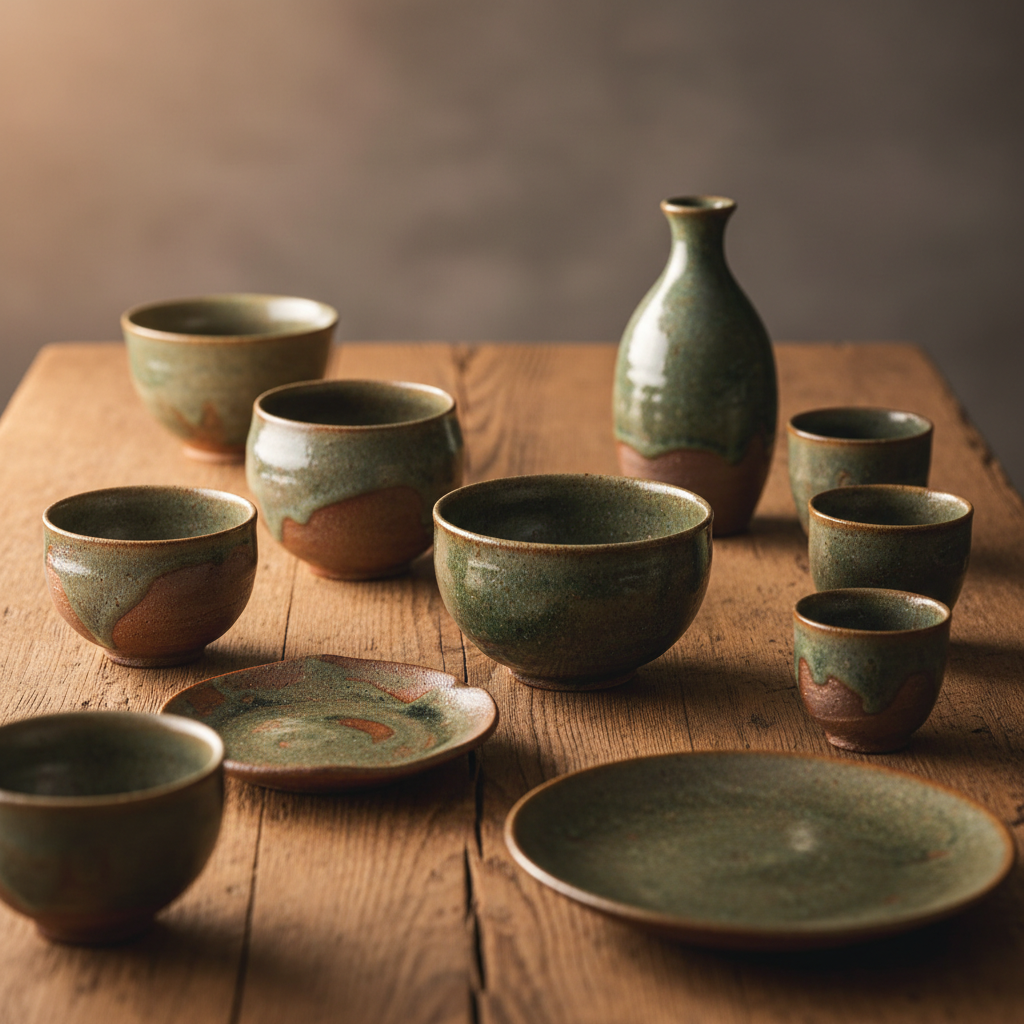
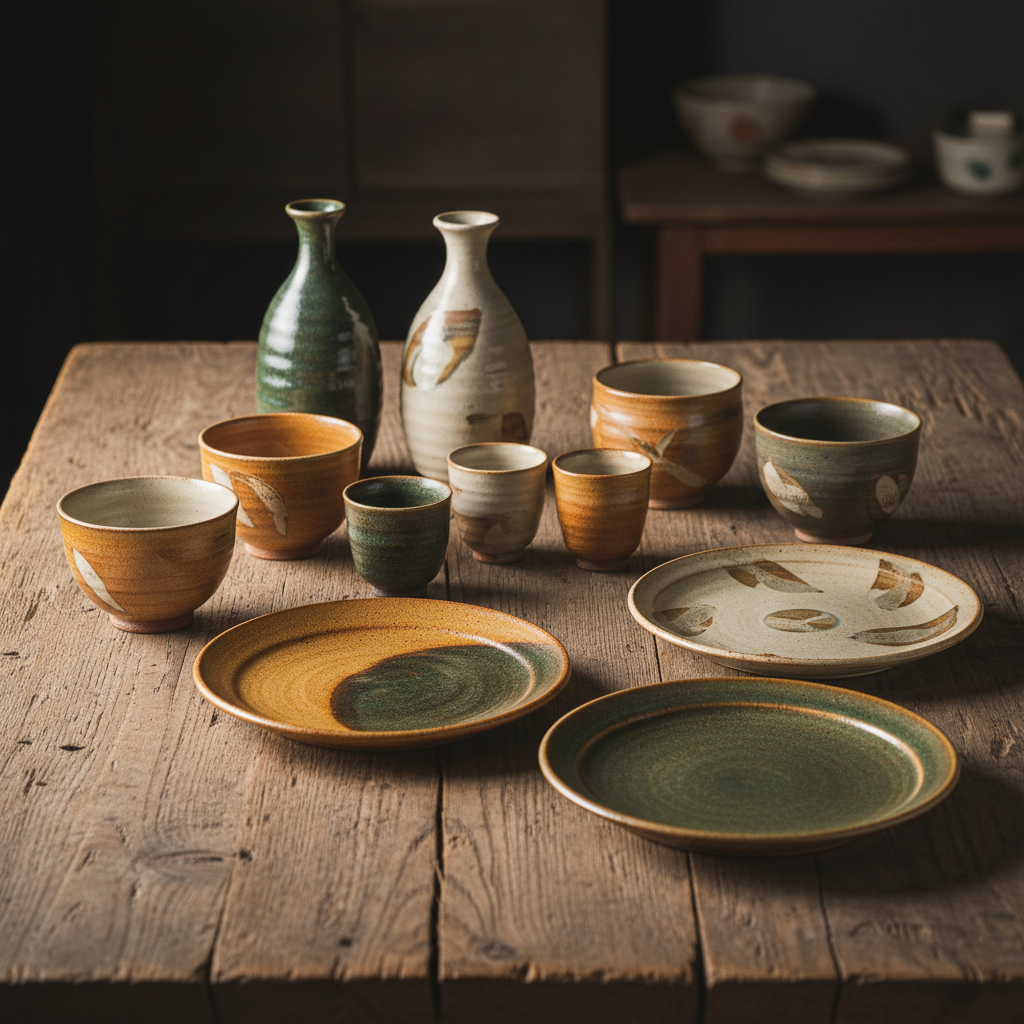
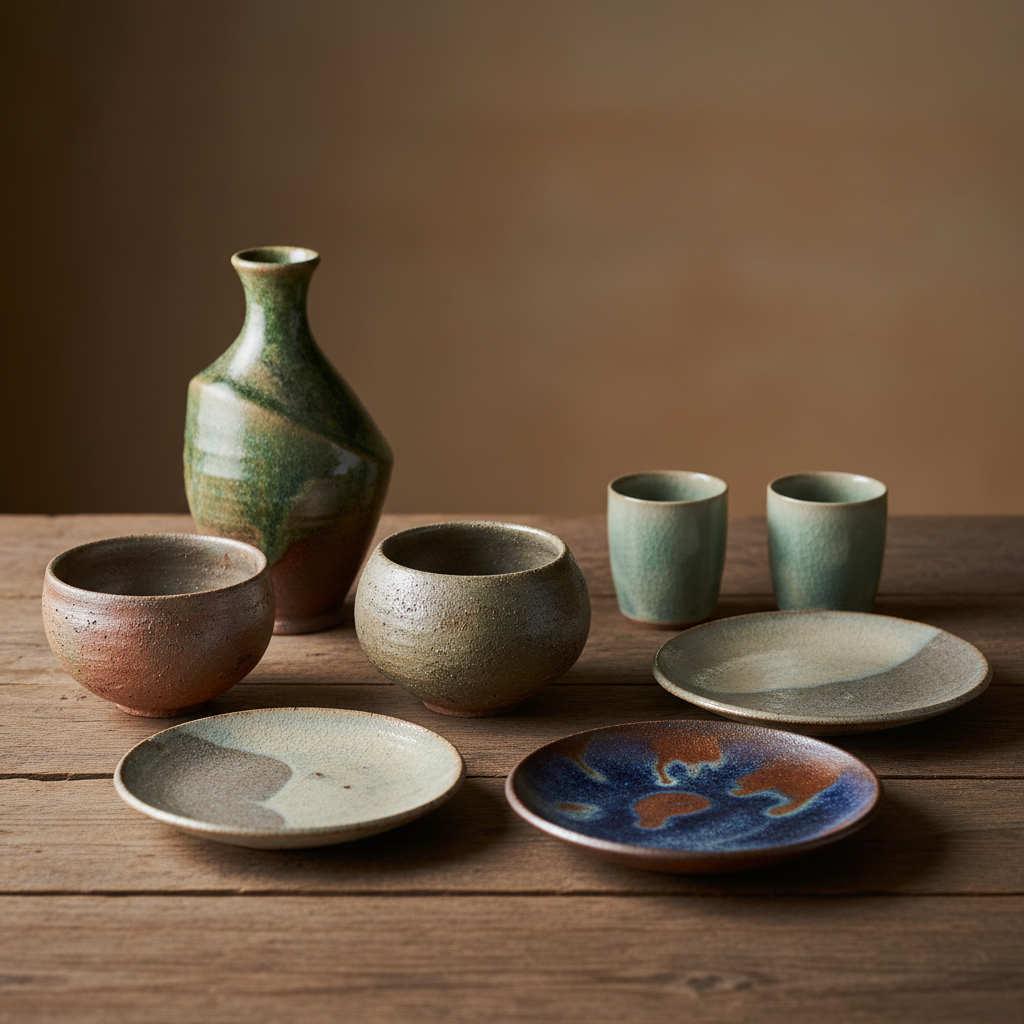
Another major characteristic of Agano ware is the unprecedented variety of glazes used compared to other ceramic production centers. This diverse use of glazes enables unique expression in which each vessel possesses different colors, textures, luster, and patterns.
Representative glazes include the following:
- White glaze: Creates a soft, milky-white appearance
- Black glaze: Deep black color with a refined atmosphere
- Blue glaze: Characterized by transparent blue
- Amber glaze: Warm, tea-brown color
- Persimmon glaze: Unique persimmon-colored hue
- Green glaze: Beautiful luster of deep green
These glazes are not only used individually but also combined to create complex color expression. Additionally, firing conditions in the kiln also affect coloring, so no two pieces with the same glaze are identical. The beauty created by the interweaving of chance and inevitability becomes a major attraction of Agano ware.
Brushstroke Pattern and Unique Design Expression
The brushstroke pattern technique is also an important characteristic of Agano ware. The unique patterns created by applying slip with a brush produce rhythmic, geometric designs.
By applying the brush to the clay body on the spinning potter’s wheel in a leather-hard state, it is possible to create regular yet warm hand-crafted expression. This technique is performed before the bisque firing, and after glazing and final firing, the pattern gains depth and complexity.
Additionally, finger-drawing technique is also employed, with designs created directly by hand or with bamboo tools. These traditional techniques continue to be reinterpreted and expressed by contemporary artists.
Representative Works and Techniques of Agano Ware
Traditional “Warizansho Mukozuke”
One of the representative works of Agano ware is the “Warizansho Mukozuke” (split Sichuan pepper serving dish). This serving dish for kaiseki tea cuisine, with its distinctive shape resembling split Sichuan pepper pods, represents the pinnacle of Agano ware technique.
Created using thin-walled technique, the Warizansho Mukozuke is lightweight yet features graceful curves and beautifully showcases food served in kaiseki tea cuisine. This work employs traditional Agano ware glazes, with each piece displaying a unique character.
Tea Bowls and Tea Utensils
Among works developed as tea ceramics, the tea bowl is one of the most important creations in Agano ware. Thin-walled and lightweight tea bowls feel pleasant to hold and excel in usability for tea preparation.
Beyond tea bowls, various tea ceremony utensils are produced, including water jars, tea containers, flower vessels, and waste water basins. These tea utensils maintain traditional form while incorporating modern refinements to meet contemporary tea practitioners’ needs.
Contemporary Tableware and Flower Vessels
Beyond traditional tea utensils, the production of contemporary tableware and flower vessels suited to modern life is actively pursued. Dishes, bowls, cups, and sake vessels are produced with Agano ware technique, beloved and used by many.
Particularly in recent years, younger-generation ceramic artists have begun presenting works that preserve traditional techniques while incorporating contemporary design, communicating new appeal as Fukuoka Prefecture’s ceramic production center.
Manufacturing Process of Agano Ware
Clay Preparation and Forming
Agano ware production begins with the selection of high-quality ceramic clay. Clay mined around Fukushi Mountain contains an appropriate amount of iron, producing strength and beautiful coloring after firing.
The extracted clay is processed to remove impurities and is kneaded until achieving appropriate plasticity. This clay preparation process greatly influences the final quality of the work, requiring skilled technique.
Forming primarily centers on wheel-thrown technique. Realizing thin-walled technique requires advanced skill to determine the clay’s condition and shape it with uniform thickness. Hand-building and mold-forming are also employed, with the optimal technique selected according to the work type.
Decoration and Glazing
After forming, decoration such as brushstroke patterns or finger-drawing is applied while the clay is in leather-hard state. This work stage requires judgment based on experience regarding dryness conditions.
After bisque firing, the work proceeds to glaze application. The diverse glazes characteristic of Agano ware each possess different compositions and application methods. Various techniques—dipping, pouring, and spraying—are employed, with the optimal glaze application method selected according to the piece.
Firing
The final firing is the most critical process determining Agano ware quality. Traditionally, climbing kilns were used, though gas and electric kilns are now employed in conjunction.
Firing temperature reaches approximately 1200-1300 degrees Celsius, with temperature control and atmospheric conditions (oxidation or reduction firing) greatly affecting glaze coloring and finish. Particularly in reduction firing, adjusting oxygen levels within the kiln creates unique colors and surface character.
After firing, temperature gradually decreases before cooling, followed by kiln opening. Depending on the piece’s position in the kiln and temperature changes, each work displays a unique character—another major attraction of Agano ware.
Positioning of Agano Ware as Fukuoka Prefecture’s Ceramic Production Center
Comparison with Other Fukuoka Ceramics
Beyond Agano ware, Fukuoka Prefecture is home to Koishiwara ware, another renowned ceramic production center. Koishiwara ware is known for its distinctive “flying plane” technique and is characterized by geometric patterns.
While Agano ware developed as tea ceramics featuring thin-walled technique and diverse glazes, Koishiwara ware developed as folk pottery, primarily producing practical everyday items. Both serve as representative ceramic production centers of Fukuoka Prefecture, each possessing distinct appeal.
The Tagawa District, where Agano ware is produced, and Asahi District, where Koishiwara ware is made, are located in different regions of Fukuoka Prefecture, with pottery production in each area reflecting local characteristics.
Relationship with Other Kyushu Ceramic Production Centers
Kyushu is home to numerous ceramic production centers representing Japan, including Arita, Karatsu, Imari, and Mikawachi ware. Many of these centers share the common origin of being established by potters brought back from the Korean invasions.
While Arita and Imari ware center on porcelain, Agano ware is primarily earthenware, with each developing uniquely. Like Karatsu ware, Agano ware has also achieved high evaluation as tea ceramics, representing a shared characteristic.
Kyushu’s ceramic production centers continue to influence one another while preserving their respective regional characteristics and traditions, with Agano ware likewise pursuing its own path as a center representing Fukuoka Prefecture.
Kiln Owners and Artists of Agano Ware
Agano Ware Cooperative Association
Currently, the Agano Ware Cooperative Association is organized centered in Fukuchi Town, the heart of Agano ware production. Multiple kiln owners are affiliated with the association, working toward traditional technique preservation and Agano ware promotion.
Each kiln owner maintains distinctive artistic style while preserving Agano ware traditions of thin-walled technique and diverse glazes. A wide range of works from traditional tea utensils to contemporary tableware are produced, allowing visitors to enjoy each kiln’s individuality.
Traditional Craftspeople and Young Artists
The Agano ware production center is home to several ceramic artists officially recognized as Traditional Craftspeople by Japan’s Minister of Economy, Trade and Industry. These traditional craftspeople bear the responsibility of passing techniques refined over many years to the next generation.
Simultaneously, young artists actively enter the Agano ware world, learning traditional techniques while challenging new expression. Maintaining balance between tradition and innovation, the production center sustains its vitality as Fukuoka Prefecture’s ceramic center.
Facilities and Events for Experiencing Agano Ware
Kiln Visits and Ceramic Experience
In the Agano ware production area around Fukuchi Town, many kiln owners accept visits and offer ceramic experiences. Through direct experience with wheel-throwing and painting, visitors can directly feel Agano ware’s charm.
Some kiln owners operate galleries alongside their studios, displaying and selling works. The ability to select pieces while directly conversing with artists represents a major appeal of visiting a production center.
Agano Ware Ceramic Festival
Each year, Fukuchi Town hosts the Agano Ware Ceramic Festival. Multiple kiln owners exhibit at this event, with works available at advantageous prices alongside ceramic experiences and wheel demonstrations among various activities.
The ceramic festival serves as an important opportunity to widely communicate Agano ware’s appeal, attracting ceramic enthusiasts from throughout Fukuoka Prefecture and beyond. It provides a valuable chance to experience the production center’s atmosphere firsthand.
Exhibitions and Sales Events
Department stores and specialty shops in Fukuoka City regularly host Agano ware exhibition and sales events. Works are also displayed at traditional craft exhibitions held nationwide, communicating Agano ware’s appeal to audiences outside Fukuoka Prefecture.
The Agano Ware Cooperative Association’s official website provides event information and details on individual kilns, recommended for confirmation before visiting.
Efforts to Communicate Agano Ware’s Appeal to Contemporary Times
Preservation and Transmission of Traditional Technique
As a nationally designated traditional craft, preserving and transmitting Agano ware’s traditional techniques represents an important task. With support from Fukuoka Prefecture and local government, training systems for developing successors and preservation of technique records are advancing.
Technique transmission from veteran ceramicists to young artists primarily occurs through hands-on instruction, with subtle techniques such as thin-walled craftsmanship and glaze formulation passed down through direct guidance.
Challenges in Contemporary Design
While preserving tradition, works suited to contemporary lifestyles are also actively created. Modern-design tableware and flower vessels attractive as interior décor pieces are being produced, gaining acceptance among younger generations.
By utilizing traditional glaze colors while pursuing simple, practical forms, new appeal as everyday tableware is being revealed.
International Communication
As overseas interest in Japan’s traditional crafts grows, Agano ware strengthens international communication through participation in international exhibitions and transactions with overseas buyers.
With tea ceremony culture, Agano ware’s aesthetics and technique are being introduced globally, leading to enhanced recognition of Fukuoka Prefecture’s ceramic production center.
Points When Purchasing Agano Ware
Selection Based on Purpose
When purchasing Agano ware, first clarifying its intended use is important. Whether using it as tea ceremony utensils, everyday tableware, or display pieces changes the selection criteria.
For tea utensils, selecting works emphasizing traditional form and formality is advisable. For everyday use, prioritizing ease of handling, size, and design preferences is recommended.
Selection of Glaze and Color
The abundant glaze variety characterizing Agano ware’s major appeal, while offering diverse options, can present selection challenges. Actually holding pieces and confirming color and texture is essential.
Even identical glazes display different coloring depending on kiln position and firing conditions, meaning each piece possesses unique character. Finding works that resonate with personal sensibility represents one of Agano ware’s pleasures.
Artist Identity and Price Range
Agano ware encompasses refined works by traditional craftspeople through reasonably-priced pieces by young artists, offering diverse price ranges. Works matching personal budget can be selected.
When purchasing directly from kiln locations, deeper understanding of works through dialogue with artists enables greater attachment during use.
Care and Use of Agano Ware
Initial Preparation Before Use
Before beginning use of new Agano ware pieces, seasoning through treatment is recommended. Boiling pieces in rice-washing water or flour-dissolved water seals the clay’s pores, preventing dirt and staining.
However, works fully covered with glaze may not require such treatment. Confirming this with the kiln owner or seller is advisable.
Daily Care
After use, gently wash with soft sponge and neutral detergent. Avoid using abrasive cleaners or rough pads that may scratch surfaces.
After washing, thoroughly wipe away moisture and ensure complete drying before storage. Storage in humid environments risks mold development.
Tips for Long-Term Use
The thin-walled nature of Agano ware vessels makes them somewhat impact-sensitive, requiring careful handling. When stacking for storage, placing cloth or paper between pieces prevents scratching.
Avoid rapid temperature changes. Placing cold-stored pieces directly under hot food or pouring boiling water into them risks cracking.
Regular use increases a vessel’s character and appeal. Agano ware pieces gain appreciation with use, allowing enjoyment of aging transformation.
Agano Ware and Fukuoka Prefecture Tourism
Access to the Production Center
The primary Agano ware production area of Fukuchi Town is approximately one hour by car from Fukuoka city. Using public transportation, JR Fukuhoku Yutaka Line’s Kaneda Station serves as the nearest station.
The production center area offers natural attractions such as Fukushi Mountain, allowing enjoyment alongside ceramic-focused visits.
Nearby Tourist Attractions
Beyond Agano ware, the surrounding Fukuchi Town area offers appealing tourist destinations. Fukushi Mountain is popular for mountain climbing and hiking, allowing seasonal nature appreciation.
Additionally, the Tagawa region possesses coal mining history, with industrial heritage such as the Coal Memorial Park available for viewing. Combining kiln visits with regional historical and cultural exploration allows enriching Fukuoka Prefecture experience.
Ceramic Tours Throughout Fukuoka Prefecture
Fukuoka Prefecture features two primary ceramic production centers: Agano and Koishiwara ware. Visiting both centers allows experiencing the diversity of Fukuoka ceramics culture.
The Koishiwara ware production area in Tohmine Village is approximately one-and-a-half hours from Agano ware’s center, allowing single-day visits to both locations. Comparing and enjoying each center’s characteristics represents distinctly Fukuoka tourism experience.
Conclusion – The Future and Appeal of Agano Ware
Agano ware is a traditional ceramic production center with over 400 years of history in Tagawa District, Fukuoka Prefecture. Developed as tea ceramics, it is characterized by thin-walled technique and diverse glaze use, continuing to be beloved by many today.
Beginning under the patronage of Hosokawa Tadaoki, a renowned tea master, Agano ware was numbered among the Seven Kilns of Enshu and gained tea practitioners’ affection. Through the Edo period’s development, it overcame post-Meiji difficulties, gaining 1975 designation as a traditional craft and establishing itself as a ceramic production center representing Fukuoka Prefecture.
In contemporary times, while continuing traditional tea utensil production, kiln owners increasingly create everyday tableware and contemporary-design works, evolving as ceramics accepted across generations.
Kiln owners affiliated with the Agano Ware Cooperative Association accept visits and ceramic experiences, allowing deeper understanding through direct production center visits. The annually held ceramic festival provides a valuable opportunity to directly experience Agano ware’s appeal.
Nurtured by Fukuoka Prefecture’s rich nature and history, Agano ware continues to fascinate many while maintaining tradition and pursuing new challenges. With refined appeal as tea utensils and approachable charm as everyday ceramics, Agano ware, representing Fukuoka Prefecture’s ceramic production center, will continue transmitting its value to the future.