
Complete Guide to Kokujiyaki (Iwate Prefecture) | The Charm of the Northern Limit Folk Kiln with 200 Years of History and Present Day
Kokujiyaki, fired in Kuji City, Iwate Prefecture, is a traditional ceramic with a history of approximately 200 years. As the northernmost traditional kiln in Japan, it is called the “Northern Limit Folk Kiln,” and its warm vessels made from local clay and simple glazes were highly praised by Soetsu Yanagi of the Folk Craft Movement. This article provides a detailed explanation of Kokujiyaki’s history, current efforts, and its appeal.
What is Kokujiyaki | Basic Information on the Northern Limit Folk Kiln
Kokujiyaki (こくじやき) is a ceramic fired in Kokuji Town, Kuji City in the northeastern part of Iwate Prefecture. As the northernmost traditional kiln in Japan, it bears the alternate name “Northern Limit Folk Kiln” and is known as a ceramic ware deeply rooted in the region’s culture and daily life.
Geographic Location and Land Characteristics
Kuji City is located in the northeastern part of Iwate Prefecture, facing the Pacific Ocean, and high-quality clay is abundantly available in the coastal areas. The clay mined in this region becomes the basic material for Kokujiyaki, and together with glaze made from local iron sand and rice husk ash, it becomes an important element in creating a distinctive appearance.
Characteristics of Kokujiyaki
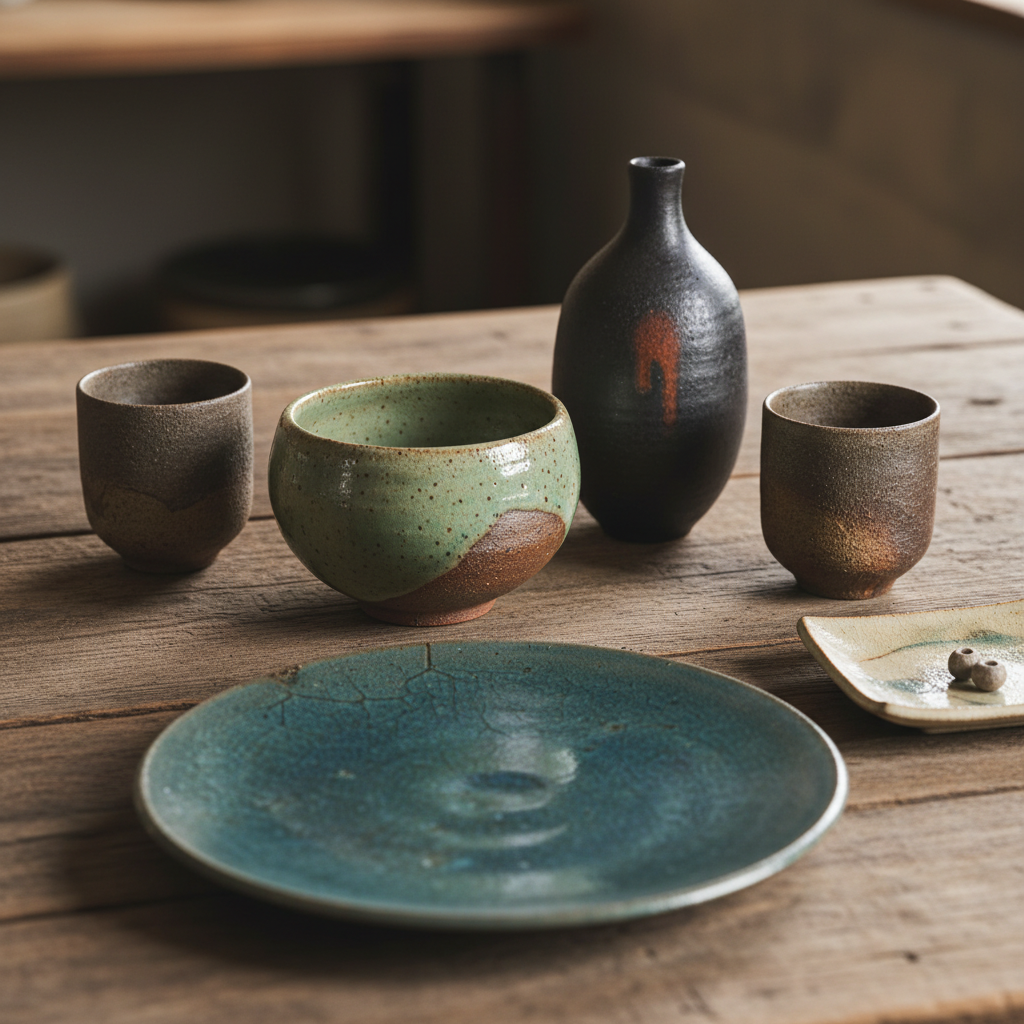
The greatest characteristic of Kokujiyaki lies in its simplicity and practicality. The slightly thick vessels are suited for everyday use, and the distinctive astringency and warmth created by glazes utilizing local materials are appealing. Warm white glaze made from straw ash and candy glaze made from iron sand are representative glazes, both of which have been inherited as glazes unique to Kokujiyaki.
History of Kokujiyaki | From the Edo Period to Present
Origins of the Business (1813)
The history of Kokujiyaki began in the 10th year of the Bunka era (1813). It is said to have originated when the first generation, Kumagai Jinemon, invited a ceramicist named Kashizo from Soma, Fukushima Prefecture, to learn ceramic techniques. According to another account, the ceramicist Kashizo from Soma, with the help of Rokuro Amatanal from Kokuji, built a kiln in Mikakucho, and multiple oral traditions remain.
The first generation, Kumagai Jinemon, studied under ceramicist Kashizo who came from Soma and acquired his techniques. Regarding glaze, he created glazes unique to Kokujiyaki based on locally available clay, and this technique has been handed down to the present day.
Relationship with the Hachinohe Domain
In its early days, Kokujiyaki functioned as the official kiln of the Hachinohe Domain. Flower bowls, plates, and jars were fired and used as official commemorative items of the domain. This relationship with the Hachinohe Domain greatly contributed to the improvement of Kokujiyaki’s quality and techniques, becoming an important factor in establishing its position as a kiln.
Development as Everyday Tableware for Common People
While serving as the official kiln of the Hachinohe Domain, Kokujiyaki also devoted efforts to firing everyday tableware for common people. Using clay abundantly available along the coastal areas, it manufactured tableware and household items used in local homes, becoming deeply rooted in the region’s culture and lifestyle.
Encounter with the Folk Craft Movement
In the 20th century, Kokujiyaki attracted the attention of Soetsu Yanagi, founder of the Folk Craft Movement. In particular, the simple one-spouted vessel with its elongated mouth was highly evaluated for its simplicity and beauty, and recognized as a vessel embodying the ideals of folk crafts. Through this evaluation, Kokujiyaki became known nationwide.
Modernization and Maintenance of Tradition
As times changed and lifestyles transformed, the environment surrounding ceramics also changed dramatically. There was once a period when the number of kilns decreased, but through continuous efforts to preserve tradition, the techniques and spirit of Kokujiyaki are still inherited today.
Manufacturing Technique of Kokujiyaki | Traditional Hand-Making Process
Commitment to Local Clay
The manufacturing of Kokujiyaki begins with using clay from Kuji. The clay mined locally serves as the foundation for creating Kokujiyaki’s distinctive appearance and has been used unchanged since 200 years ago. Understanding the characteristics of this clay and handling it appropriately is the first step in producing high-quality vessels.
Forming with the Potter’s Wheel
Kokujiyaki still inherits old techniques and uses the potter’s wheel to finish each vessel by hand. Even in modern times when mechanization has progressed, commitment to hand-wheel forming by craftsmen creates subtle adjustments in thickness and individuality in shape. By finishing with a slightly thicker form, practicality for everyday use and heat retention are realized.
Glaze Mixing and Glaze Application
Kokujiyaki’s glaze is made from iron sand and rice husk ash. White glaze made from straw ash produces a warm color, while candy glaze made from iron sand creates distinctive astringency. These glazes are unique to Kokujiyaki, and traditional mixing methods utilizing local materials are preserved.
Firing Technique
In the firing process, temperature control and time distribution are important. Kokujiyaki kilns optimize the glaze color development and vessel strength through firing techniques based on long years of experience. Through this process, the simple yet beautiful vessels of Kokujiyaki are completed.
Representative Works and Products of Kokujiyaki
One-Spouted Vessel | A Masterpiece of Folk Crafts
The representative work of Kokujiyaki is the simple one-spouted vessel with an elongated mouth. This vessel was highly evaluated by Soetsu Yanagi, and its economical form and functional beauty stand out. It is suitable for pouring sake or dashi broth and is a practical vessel that graces the everyday dining table.
Free Cups and Tea Cups
Free cups ideal for everyday use are popular products available for purchase at around 1,300 yen. Slightly thick and comfortable to hold, they are suitable for enjoying both hot and cold beverages. Tea cups similarly fit naturally into many household cupboards with their simple appearance and ease of use.
Plates and Bowls
Plates and bowls of Kokujiyaki are characterized by their simple design that enhances dishes. The colors of white glaze and candy glaze blend easily with both Japanese and Western cuisine and naturally merge with modern dining tables. The appeal lies in the abundance of sizes allowing selection according to intended use.
Jars and Flower Vases
Jars made since the time of the Hachinohe Domain’s official kiln are works evoking the history of Kokujiyaki. Currently popular as flower vases, their simple form highlights the beauty of flowers. They are frequently selected as commemorative gifts.
Present-Day Kokujiyaki | The Sole Kiln and Efforts for Succession
Shitadake Kiln | The Sole Kiln Preserving Tradition
Currently, Kokujiyaki is produced solely at Shitadake Kiln in Kokuji Town, Kuji City. While preserving the tradition of creating everyday-use vessels from 200 years ago, it is working on manufacturing products that also suit modern lifestyles. Shitadake’s Kokujiyaki is recognized as an Iwate Prefecture brand and is known as a representative craft of the region.
Ceramic Art Classes and Experience Programs
At Kokujiyaki Ceramic Art Park, ceramic classes are held where visitors can create their own original cups. Through pottery wheel experiences and hand-building experiences, visitors can learn Kokujiyaki techniques and enjoy the pleasure of creating vessels. This experience program also contributes to the dissemination of traditional techniques and succession to the next generation.
Adaptation to Everyday Use
Kokujiyaki has developed as everyday tableware for common people since its founding, but that spirit remains unchanged today. Vessels of various simple and warm forms are designed for easy everyday use and naturally fit into modern household cupboards. While inheriting tradition, development of products suited to the times continues.
Sales and Purchase Methods
Kokujiyaki can be purchased directly at the kiln, Kokujiyaki Ceramic Art Park, and is also handled at local specialty shops and online shops throughout Iwate Prefecture. For those wishing to select items in hand, a visit to the kiln is recommended. It is advisable to confirm business hours and days of closure in advance.
Charm of Kokujiyaki | Why It Continues to Be Loved
Commitment to Local Materials
The greatest appeal of Kokujiyaki is its continued commitment to local clay mined in Kuji and glaze made from iron sand and rice husk ash. By utilizing materials unique to this region, a distinctive appearance that cannot be imitated elsewhere is created.
Reconciliation of Practicality and Beauty
Kokujiyaki is made with practicality as the first priority, yet its simple beauty aligns with the ideals of folk crafts. The thickness and form designed for ease of everyday use, and the simple design that enhances dishes, are vessels that grow more endearing with use.
Warmth of Handwork
Even in modern times when machine production is the mainstream, Kokujiyaki maintains commitment to handmade creation using the potter’s wheel. The subtle differences in form and glaze expression that vary with each piece convey the warmth unique to handwork.
Inheritance of History and Culture
Kokujiyaki, with its history of more than 200 years, is not merely a vessel but also an entity transmitting the region’s history and culture. It bears multilayered narratives including its history as an official kiln of the Hachinohe Domain, its role supporting common people’s lives, and its involvement with the Folk Craft Movement.
How to Use and Care for Kokujiyaki
Tips for Everyday Use
Kokujiyaki is made with everyday use in mind, so no special handling is required. However, soaking the piece in water once before initial use prevents dirt from sticking. Regarding microwave and dishwasher use, it varies by product, so confirmation at time of purchase is recommended.
Care for Long-Term Use
Washing promptly after use and thorough drying are important. Ceramic absorbs moisture easily, so storage in humid locations should be avoided. Regular sun-drying prevents mold growth and maintains the piece in good condition for years to come.
Enjoying Aging and Weathering
Kokujiyaki gains depth with continued use. Glaze expression may change, or crazing (fine cracks on the surface) may appear, but this is characteristic aging and weathering of ceramics. As a vessel that grows with daily life, these changes can be enjoyed.
Kokujiyaki and Kuji City Tourism
Access to Kokujiyaki Ceramic Art Park
Kokujiyaki Ceramic Art Park is located in Kokuji Town, Kuji City, Iwate Prefecture. It is approximately 10 minutes by car from Kuji Station, and taxi use is convenient when using public transportation. At the kiln, in addition to product sales, workshop observation and ceramic experiences are available (by reservation).
Other Tourist Attractions in Kuji City
When visiting Kuji City, explore other tourist attractions together with Kokujiyaki Ceramic Art Park. At the Kuji Amber Museum, visitors can learn about the history of Japan’s largest amber mining region. Additionally, the city is known as a filming location for the NHK morning serial drama “Amachan,” and many fans visit related facilities.
Regional Food Culture
Kuji City is a region abundant in seafood. Enjoying fresh sea delicacies such as sea urchin and abalone on Kokujiyaki vessels is an incomparable experience. Some local restaurants and inns offer meals served on Kokujiyaki.
Challenges Facing Kokujiyaki and Future Prospects
Challenges in Successor Development
Like many traditional crafts, Kokujiyaki faces the challenge of developing successors. Currently a sole kiln preserves the tradition, but efforts to transmit this technique and spirit to the next generation are crucial. Ceramic classes and experience programs function as part of these efforts.
Adaptation to Modern Lifestyles
With changes in lifestyle, the forms and functions required of vessels have also changed. While preserving traditional techniques and materials, pursuing design and usability suited to modern dining tables leads to the sustainability of Kokujiyaki.
Information Dissemination and Market Expansion
Through information dissemination using the Internet and SNS, the appeal of Kokujiyaki can be transmitted nationwide and even internationally. Enhancement of online shops and utilization of new sales methods such as crowdfunding serve to strengthen the kiln’s business foundation.
Enhancement of Value as a Regional Brand
Kokujiyaki, as a representative craft of Iwate Prefecture, is an important element in raising the value of regional brands. Utilization as a tourism resource and collaboration with other regional industries are expected to create synergistic effects.
Summary | Value and Appeal of Kokujiyaki
Kokujiyaki, as the “Northern Limit Folk Kiln” with a history of more than 200 years, is a traditional craft deeply rooted in the culture and daily life of Kuji City, Iwate Prefecture. By continuing to use local clay and glaze and committing to hand-forming with the potter’s wheel, it has created vessels that are simple yet beautiful.
While holding a history as an official kiln of the Hachinohe Domain, Kokujiyaki developed as everyday tableware for common people and was evaluated by Soetsu Yanagi of the Folk Craft Movement. The one-spouted vessel, its representative work, is known as a masterpiece with outstanding simple form and functional beauty.
Currently, Shitadake Kiln, the sole kiln, continues to preserve tradition and is also working on technology dissemination and succession through ceramic classes and experience programs. While facing challenges such as successor development and adaptation to modern lifestyles, the commitment to local materials and handwork remains unchanged.
Using Kokujiyaki vessels in daily life connects one to 200 years of history, craftspeople’s skills, and the culture of Kuji City, Iwate Prefecture. As appropriately warm everyday-use vessels, they will continue to be cherished in many household cupboards.
When visiting Kuji City, be sure to visit Kokujiyaki Ceramic Art Park, hold the vessels in hand, and feel their simple beauty and warmth. You can also experience ceramic artistry firsthand and create your own original vessel. An encounter with Kokujiyaki will surely add new color to your daily life.