Iga Ware – Comprehensive Explanation of the Charm and History of Mie Prefecture’s Prestigious Ceramic Production Area
Iga ware, produced primarily in Iga City, Mie Prefecture, is one of Japan’s representative ceramic production areas and was designated as a traditional craft by the Japanese government in 1982. This pottery, nurtured in the land of Iga, known as the home of ninja, captivates many people today with its distinctive heat-resistant properties and its simple yet powerful aesthetic beauty.
This article provides a comprehensive explanation of everything from the historical background of Iga ware to its appeal in modern times, the characteristics of Iga City, Mie Prefecture as a production area, and differences from other ceramic production areas.
Iga Ware – Basic Knowledge of Mie Prefecture’s Representative Ceramics
Definition and Overview of Iga Ware Production Area
Iga ware is pottery produced in the Iga City area in Mie Prefecture. The main production areas center around the Marushiro district of Iga City and extend to areas such as Ayama and Shimagahara. Iga City is located in the northwestern part of Mie Prefecture, in a mountainous region near the prefectural borders with Nara and Shiga.
This region has been blessed since ancient times with high-quality ceramic clay and abundant firewood resources, creating an environment well-suited for ceramic production. Even today, while preserving traditional techniques, a wide range of products are made, from everyday tableware to artistic works.
Iga Ware’s Greatest Characteristic – Excellent Heat Resistance
The most prominent characteristic of Iga ware is its excellent heat resistance. This property derives from the special ceramic clay extracted from the geological layers surrounding Iga. The clay from Iga is produced from the ancient Lake Biwa layer, dating back approximately 4 million years, and possesses exceptionally high fire resistance.
The clay from the ancient Lake Biwa layer contains abundant organic material, which burns during firing, creating countless air pores. This porous structure produces superior insulation and heat retention properties, providing the strength to withstand rapid temperature changes.
Due to this characteristic, Iga ware is extremely well-suited for use as clay pots and heat-resistant tableware, and is currently known as one of Japan’s premier clay pot production areas. Iga ware clay pots are highly regarded for their far-infrared effects, allowing heat to penetrate evenly to the core of ingredients, resulting in deliciously cooked food.
Powerful and Simple Aesthetic Beauty
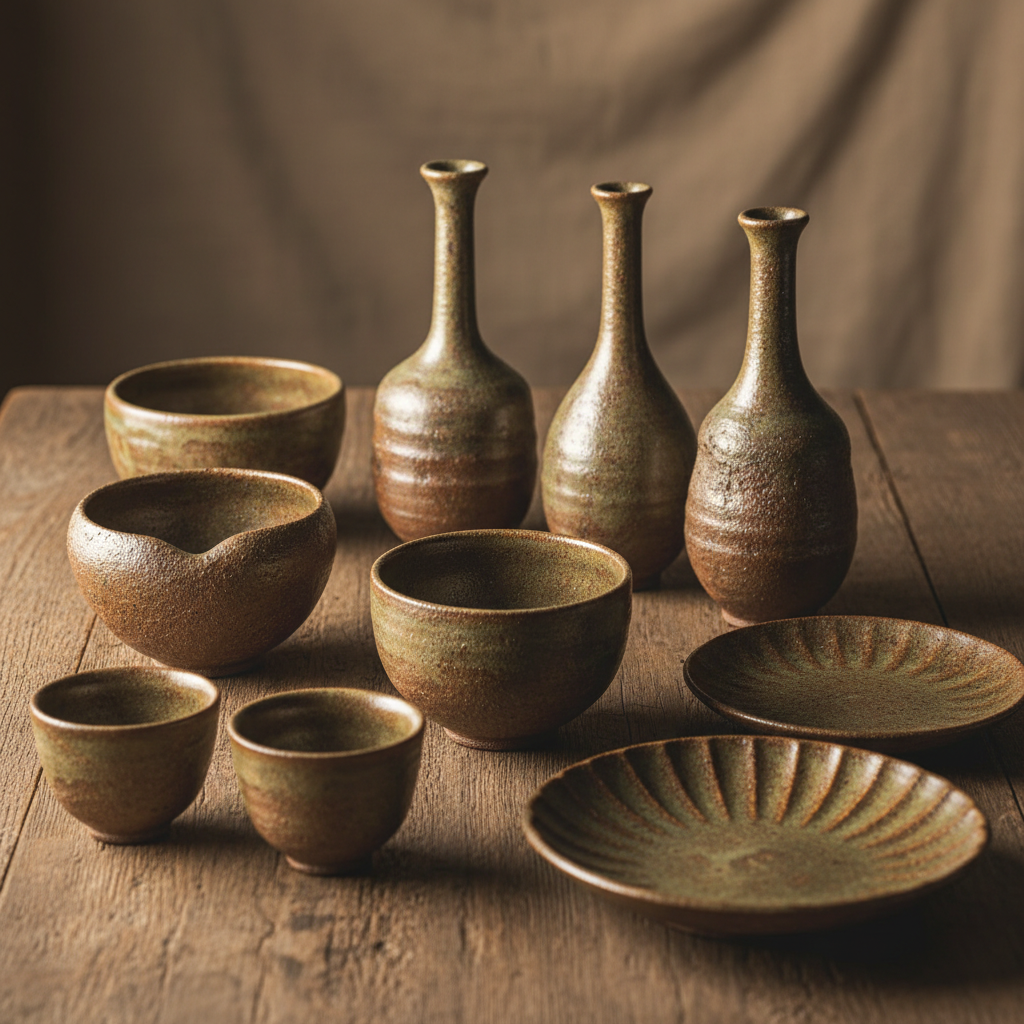
Another major charm of Iga ware lies in its powerful and simple aesthetic beauty. Particularly in Iga ware that developed as tea pottery from the Momoyama period onward, the spirit of “wabi-sabi”—finding beauty in intentional imperfection—is embodied through potter’s marks, warping, scorch marks, and natural glaze effects.
Thick and substantial forms, rough clay texture, and accidental patterns created during firing represent the fusion of nature’s power and human skill, creating unique aesthetic sensibility characteristic of Iga ware. This wild and natural beauty is highly valued as the distinctive individuality of Iga ware not found in other ceramic production areas.
History of Iga Ware – From the Nara Period to Present Day
Origins and Early History (Nara to Heian Period)
While various theories exist about the origins of Iga ware, the oldest records suggest it dates back approximately 1,200 years to the Tenpyo era (729-749). It is said that farmers in the Marushiro district, blessed with quality ceramic clay, built kilns and began firing everyday tableware.
During this era, Iga ware consisted primarily of simple everyday items, with jars (kame), pots, and grinding bowls (suribachi) being the main products. From the Nara through the Heian period, its role was chiefly to provide everyday items for local people’s daily lives.
Medieval Development (Kamakura to Muromachi Period)
Production of Iga ware became fully established during the Kamakura period. During this time, kiln sites near Makiyama in Iga City, such as the Goi no Ki kiln site, utilized the abundant ceramic clay and firewood of the surrounding area to fire grinding bowls, jars, and pots using techniques similar to those of Shigaraki ware.
In fact, medieval Iga ware and Shigaraki ware were so similar that they were difficult to distinguish. This was because the two regions were geographically close and used clay derived from the same ancient Lake Biwa layer. Iga ware of this period was widely distributed primarily as large storage containers and cooking vessels.
Flourishing as Tea Pottery (Late Muromachi to Early Edo Period)
Iga ware experienced a major cultural flowering as tea pottery from the late Muromachi period through the Momoyama period, when the tea ceremony flourished. Particularly during the Momoyama period, major tea masters such as Sen no Rikyu and Furuta Oribe began to take notice of Iga ware as tea utensils.
During this period, Iga became the domain of daimyo such as Todo Takatora and Tsutsui Sadatsugu, under whose patronage the production of tea pottery was actively encouraged. Tsutsui Sadatsugu in particular had deep knowledge of the tea ceremony and actively supported the production of Iga ware tea pottery.
The Momoyama period tea pottery of Iga ware, such as “Iga ear-handled flower vases” and “Iga water containers,” were highly valued for their powerful, warped forms and accidental patterns created by fire and natural glaze. The thick, substantial style, rough clay quality, and green natural glaze effects were perfectly aligned with the wabi-sabi aesthetic favored by tea masters.
Transition to Everyday Pottery (Mid-Edo Period Onward)
From the mid-Edo period onward, production shifted from tea pottery to everyday pottery. This change was driven by changing trends in the tea ceremony and economic factors.
During this period, Iga ware producers began to focus on producing everyday tableware that took advantage of the high heat-resistance of Iga clay. In particular, clay pots, portable cooking pots (anago nabe), and clay teapots became the main products, forming the foundation of present-day Iga ware.
In the late Edo period, Iga kilns continued to produce everyday items centered on practical vessels, which became established as a regional industry.
From Modern Times to Present Day (Meiji Era to Today)
With the arrival of the Meiji era, the modernization wave reached Iga ware. Efforts continued to preserve traditional techniques while adapting to new technologies and market needs.
During the Showa period, influenced by the folk craft movement, the simple beauty of Iga ware was re-evaluated. In 1982 (Showa 57), Iga ware was designated as a traditional craft by the government, formally recognizing its cultural value.
Present-day Iga ware continues the production of traditional clay pots and tea pottery while also offering tableware and interior products adapted to modern lifestyles. The attitude of preserving tradition while continuing to innovate conveys the charm of Iga ware to contemporary times.
Manufacturing Methods and Technical Characteristics of Iga Ware
Ancient Lake Biwa Layer Clay – Why It’s Ideal for Clay Pots
The quality of Iga ware is supported by its raw material—ceramic clay. The clay extracted from the Iga region derives from the ancient Lake Biwa layer, approximately 4 million years old. During that period, the Biwa Lake spread across the present-day Iga region, and clay sediments accumulated at the lake bottom, eventually becoming high-quality ceramic clay over many years.
The clay from the ancient Lake Biwa layer has the following characteristics:
Abundance of Organic Material: It contains the remains of ancient plants and organisms which, when burned during firing, create a porous structure.
High Heat Resistance: It can withstand temperatures exceeding 1,300 degrees and has the property of being resistant to cracking even with rapid temperature changes.
Excellent Heat Retention: The porous structure allows it to slowly accumulate heat and maintain warmth for extended periods.
Far-Infrared Effect: After firing, the vessels emit far-infrared radiation, allowing heat to penetrate ingredients evenly to their core.
Due to these characteristics, Iga ware clay pots are beloved by chefs and households throughout Japan for their ability to produce delicious food. They particularly excel in rice cooking and stew dishes.
Traditional Forming Techniques
Iga ware formation primarily employs the following techniques:
Wheel Forming: A technique where clay is shaped on a rotating potter’s wheel. Used for making tea bowls and flower containers. The powerful wheel marks characteristic of Iga ware give works their distinctive appearance.
Hand Pinching: A technique where clay is shaped by hand without the use of a wheel. This allows for freer forming and is frequently used in artistic works such as tea pottery.
Slab Forming: A technique where clay is flattened into a sheet and shaped using a mold. Well-suited for making dishes and square vessels.
Mold Forming: A technique where clay is pressed into a plaster mold or similar form. Allows for efficient production of identical forms.
Firing Technology and Kiln Types
Traditionally, Iga ware has been fired using wood-fired kilns. Some kiln operators still use traditional climbing kilns and pit kilns today.
Climbing Kilns: Continuous-style kilns built on slopes that allow for efficient firing of large quantities. Temperature variations between chambers produce diverse firing results.
Pit Kilns: Primitive kilns created by digging into the ground. The movement of flames during firing creates distinctive patterns.
Gas Kilns and Electric Kilns: In modern times, gas kilns and electric kilns, which allow for easier temperature control, are widely used. These allow for efficient production of consistently high-quality products.
The firing temperature is typically around 1,200 to 1,300 degrees, and this high-temperature firing produces the distinctive sturdiness and heat resistance of Iga ware.
Glazes and Decorative Techniques
Various glazes and decorative techniques are employed in Iga ware.
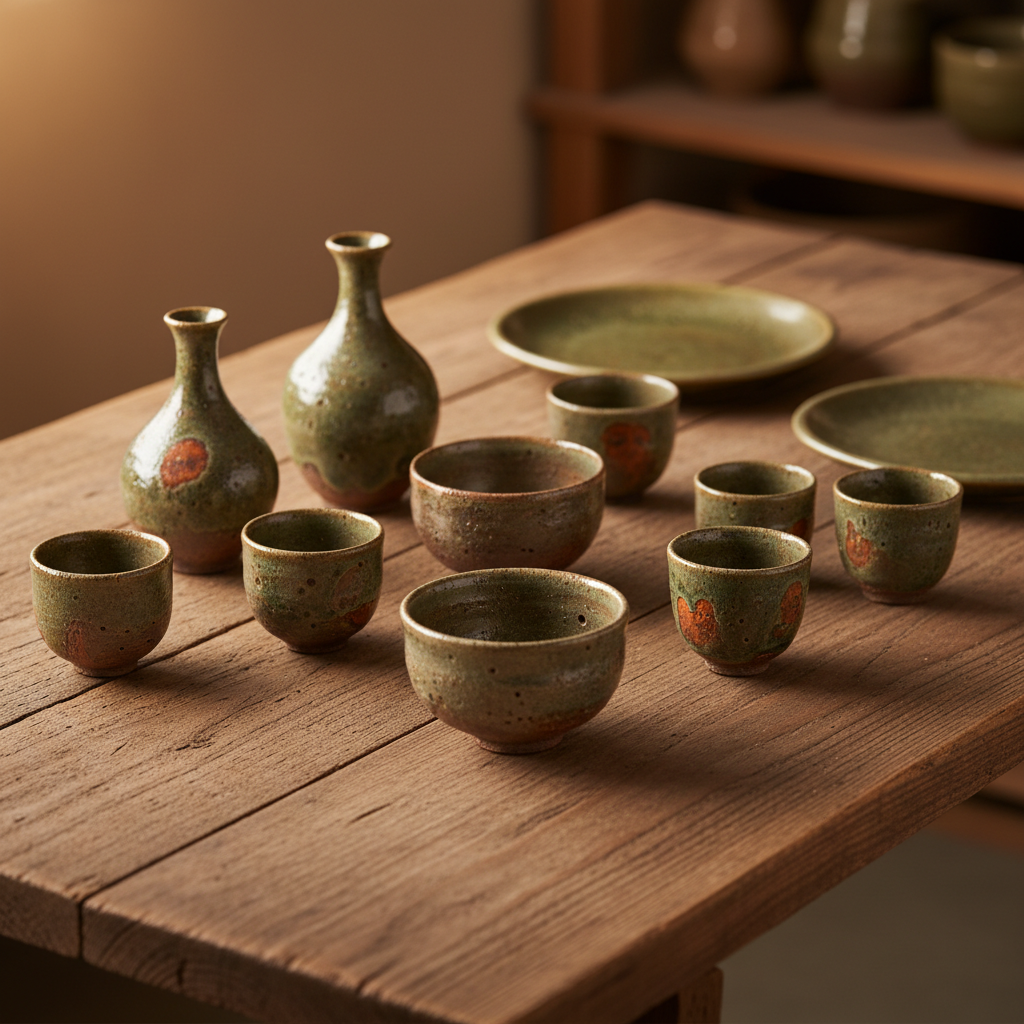
Natural Glaze (Beads Glaze): During firing in wood-fired kilns, wood ash falls on vessels and melts at high temperatures to become a glass-like glaze. Creates beautiful green and brown patterns.
Ash Glaze: A glaze with plant ash as its main ingredient. Develops a light green or blue-green color.
Iron Glaze: A glaze containing iron. Develops dark brown or amber tones, creating a subdued aesthetic.
Unglazed: A technique of firing without glaze. The clay texture is expressed as-is, creating simple beauty.
Traditional decorative techniques include wheel marks, scraper marks, comb marks, and impressed patterns. Contemporary artists pursue unique decorative expressions in addition to traditional techniques.
Representative Products of Iga Ware and Their Uses
Clay Pots – The Signature of Iga Ware
If one representative product of contemporary Iga ware must be named, it is the clay pot. Iga ware clay pots are highly regarded throughout Japan for their superior heat resistance and heat retention.
The characteristics of Iga ware clay pots are as follows:
Excellent Heat Retention: The porous structure slowly accumulates heat, maintaining warmth for extended periods even after the fire is extinguished.
Far-Infrared Effect: Heat penetrates evenly to the core of ingredients, bringing out their umami.
Crack Resistance: Possesses the strength to withstand rapid temperature changes, allowing for long-term use.
Cooking Quality: Food cooked in clay pots, particularly rice and stewed dishes, is evaluated as having a different, superior quality compared to metal cookware.
Iga ware clay pots are produced in various sizes, from single-serving to large family-sized. Additionally, specialized products for specific purposes such as rice cooking, stewing, and steaming have been developed.
Tea Pottery – Continuing the Tradition of Beauty
The tea pottery tradition continuing from the Momoyama period remains an important area of Iga ware. Various tea utensils are produced, including tea bowls, water containers, flower vases, and tea caddies.
The characteristics of Iga ware tea pottery lie in its powerful, thick forming, rough clay quality, and patterns created by natural glaze—all embodying the wabi-sabi aesthetic. Contemporary ceramicists continue this tradition while pursuing their own unique expressions.
Everyday Tableware – Vessels That Accompany Daily Life
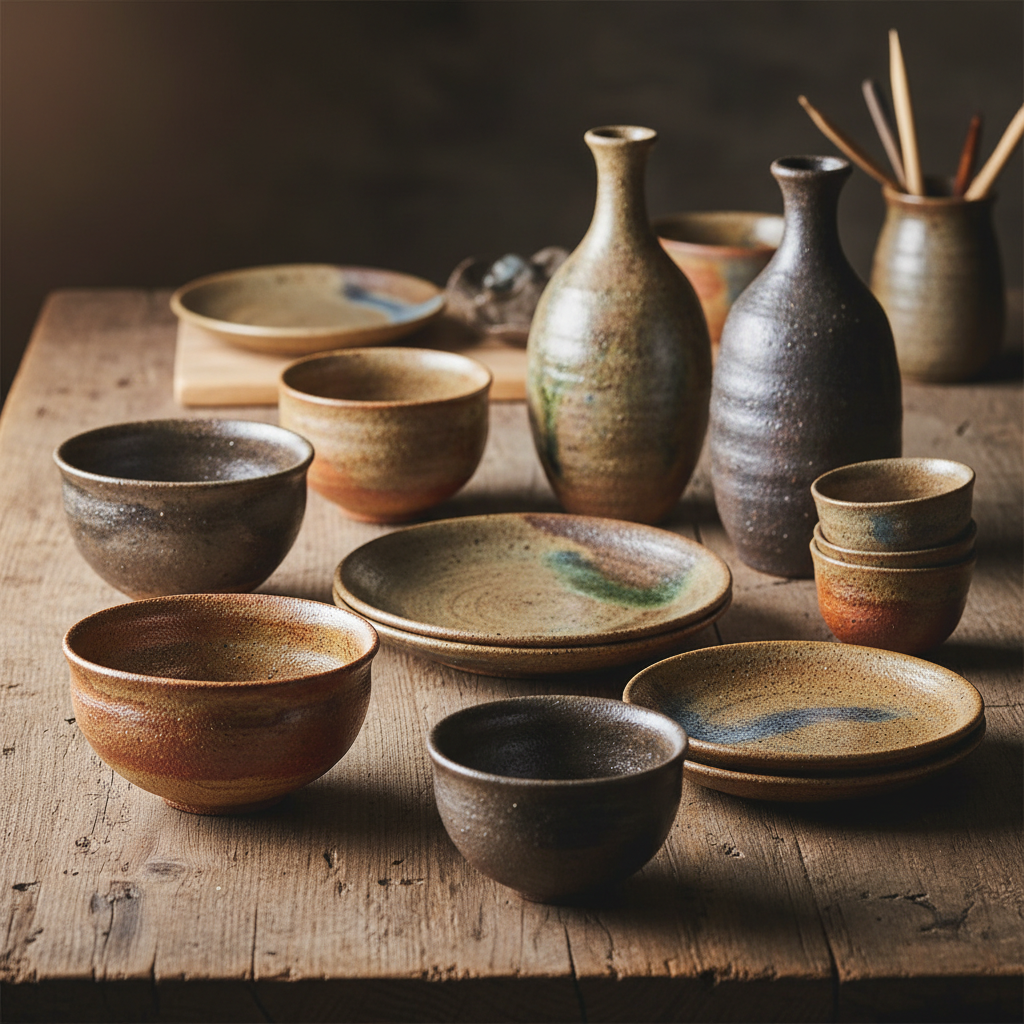
Iga ware also produces abundant everyday tableware. Rice bowls, tea cups, plates, bowls, sake bottles, and cups are among the various vessels made to brighten the dining table.
Iga ware everyday tableware is characterized by its simple and warm aesthetic, harmonizing with Japanese cuisine as well as Western and Chinese dishes. The more it is used, the deeper its appeal becomes, making it beloved tableware that inspires attachment.
Other Products
Beyond traditional clay pots, tea pottery, and everyday tableware, Iga ware produces various other items.
Heat-Resistant Cooking Vessels: Portable cooking pots, clay teapots, shochu servers, and other cooking vessels that take advantage of heat resistance.
Interior Products: Flower containers, figurines, lighting fixtures, and other products that brighten spaces.
Architectural Ceramics: Tiles, ceramic panels, and other ceramic products for architectural use.
These products provide new value suited to contemporary lifestyles while building on traditional techniques.
Mie Prefecture’s Iga City – Characteristics as a Ceramic Production Area
Geography and Historical Background of Iga City
Iga City is located in the northwestern part of Mie Prefecture, adjacent to Nara, Shiga, and Kyoto prefectures. Surrounded by mountains in a basin, it has prospered historically as a transportation hub.
Historically, it is famous as the home of Iga ninja, but it also possesses a long tradition as a ceramic production area. The area’s blessing with high-quality ceramic clay, abundant firewood resources, and proximity to cultural centers such as Kyoto and Nara supported the development of Iga ware.
Major Kilns and Production Area Structure
The Iga ware production area is primarily centered around the Marushiro district of Iga City. The Iga Ware Traditional Crafts Hall is located in the Marushiro district, where visitors can learn about the history and techniques of Iga ware.
Currently, numerous kilns of various sizes exist in Iga City, each producing distinctive products. While large-scale kilns maintain mass production systems centered on everyday products such as clay pots, small workshops create highly artistic works and unique tea pottery.
The Iga Ware Promotion Cooperative serves as the center for various initiatives including regional promotion, successor training, and market development, maintaining the foundation as a traditional industry.
Current State and Challenges of the Production Area
The Iga ware production area, like many other traditional craft areas, faces several challenges.
Shortage of Successors: As craftspeople age, younger generations of successors are lacking. Succession of techniques has become an important issue.
Raw Material Procurement: Limited locations for excavating high-quality ceramic clay raises concerns about future raw material availability.
Market Changes: While demand for traditional products declines due to changing lifestyles, responsiveness to new needs is required.
Competition from Overseas Products: Price competition with inexpensive overseas ceramics has become intense.
In response to these challenges, various initiatives are undertaken in the production area. These include support for young artist development, new product development, expansion into overseas markets, and collaboration with tourism, continuing efforts to create new value while preserving tradition.
Facilities Where Iga Ware Can Be Experienced
Several facilities in Iga City allow people to experience Iga ware up close.
Iga Ware Traditional Crafts Hall: An exhibition facility where visitors can learn about the history and techniques of Iga ware. Hands-on pottery experiences are also available.
Address: 169-2 Marushiro, Iga City, Mie Prefecture
Hours: 9:00 AM–5:00 PM (Tuesday–Sunday)
Closed: Mondays (or Tuesdays if Monday is a holiday), year-end/New Year holidays
Admission: ¥200 for adults, ¥100 for middle and high school students
Pottery Experiences at Kilns: Many kilns offer experiences such as wheel pottery and painting decoration. Advance reservations are often required, so it’s recommended to confirm before visiting.
Galleries and Shops: Various galleries and shops selling Iga ware are scattered throughout Iga City, allowing visitors to actually hold pieces and choose them.
Other Ceramic Production Areas in Mie Prefecture – Comparison with Banko Ware
In addition to Iga ware, Mie Prefecture has other important ceramic production areas. The representative example is Banko ware (Banko-yaki).
Characteristics of Banko Ware
Banko ware is pottery produced primarily in Yokkaichi City, Mie Prefecture and, together with Iga ware, represents the ceramics of Mie Prefecture. Banko ware is known as the country’s leading clay pot production area by volume and is also famous for its traditional teapots, which have been designated as traditional crafts.
The characteristics of Banko ware are as follows:
Purple Clay Teapots: Teapots made from iron-rich purple clay are particularly famous, valued for bringing out the flavor of tea.
High Heat-Resistant Clay Pots: Like Iga ware, clay pots with excellent heat resistance are extensively produced.
Diverse Products: Production ranges from everyday tableware to artistic works.
Differences Between Iga Ware and Banko Ware
Though both are ceramic production areas in Mie Prefecture, Iga ware and Banko ware have several differences.
History and Tradition: Iga ware has an ancient history dating back to the Nara period, with strong remnants of Momoyama-period tea pottery tradition. Banko ware, established in the mid-Edo period, has instead focused on developing practical products.
Clay Properties: While both use heat-resistant clay, Iga ware uses ancient Lake Biwa layer clay, while Banko ware uses local stone mixed with clay, resulting in differences in raw materials.
Product Characteristics: Iga ware is characterized by powerful, simple forming beauty with deep roots in tea pottery tradition. Banko ware shows wider-ranging expression, including purple clay teapots and more diverse designs.
Production Area Scale: Banko ware forms a relatively large production area centered on Yokkaichi City with greater production volume. Iga ware consists of relatively small kilns, with many highly artistic products produced.
In this way, Mie Prefecture has two ceramic production areas of different character, each having developed with unique charm.
How to Select and Use Iga Ware
How to Select Iga Ware Clay Pots
When selecting an Iga ware clay pot, pay attention to the following points:
Size: Choose an appropriate size matching the number of users. Sizes range from single-serving to family-sized.
Purpose: Specialized clay pots for different purposes exist, such as those for rice cooking, stewing, and steaming. Choose based on your main intended use.
Shape: Shallow or deep forms are available depending on the cooking you plan to do.
Finish: Glaze presence and type affect appearance and ease of maintenance.
Quality: Consider the reliability of the kiln or artist and the balance between price and quality.
Breaking In Clay Pots – Seasoning
Before using an Iga ware clay pot for the first time, a process called “seasoning” is necessary. This treatment seals the clay pot’s fine pores and prevents cracking and odor absorption.
Basic Seasoning Method:
- Fill the clay pot with water to 80% capacity and add rice washing water or 2-3 tablespoons of flour.
- Heat slowly over low heat and bring to a boil.
- Continue heating over low heat for 20-30 minutes after boiling.
- Turn off heat and allow to cool completely.
- Discard the contents, rinse well with water, and dry thoroughly.
This process allows starch to enter the clay pot’s pores, extending its lifespan.
Using and Caring for Iga Ware Clay Pots
Usage Precautions:
- Before use, confirm that the pot bottom is completely dry. Using while wet risks cracking when heated.
- Start with low heat and gradually increase heat. Avoid rapid temperature changes.
- Never use empty. Always use with moisture present.
- Avoid pouring cold water on the pot while it’s still hot after cooking.
Care Method:
- Wash after the pot has completely cooled.
- Wash gently with a soft sponge and neutral detergent. Avoid metal scrubbers or abrasive cleaners.
- After washing, dry thoroughly by wiping and invert to dry completely.
- Store in a location with low humidity.
- For long-term storage, wrap in newspaper or similar material.
With proper care, Iga ware clay pots can be used for decades.
Enjoying Tea Pottery and Tableware
The simple yet powerful beauty of Iga ware tea pottery and tableware can be enjoyed fully.
Tea Pottery: Tea bowls and water containers deepen in character with use. Tea stains seeping in and creating distinctive patterns are also part of the enjoyment.
Tableware: Everyday tableware such as rice bowls and plates harmonize with Japanese cuisine and various other dishes. The warmth of clay enhances food and adds richness to the dining table.
Seasonal Feeling: Iga ware vessels are well-suited for presenting seasonal dishes. Enjoy them throughout the year with spring vegetables, summer cold dishes, autumn mushrooms, and winter hot pots.
Purchasing Iga Ware and Price Ranges
Where to Purchase
Iga ware can be purchased at various locations.
Direct Purchase at Production Area: Purchase directly from Iga City kilns and galleries. The appeal of speaking directly with makers and learning the background of products is unique to this option.
Iga Ware Traditional Crafts Hall: Products from various kilns are displayed and sold, allowing comparative selection.
Department Stores: Major department stores nationwide carry Iga ware in their ceramics sections.
Specialty Shops: Available through ceramic specialty shops and folk art shops.
Online Shops: Purchase through kiln official websites or online stores specializing in ceramics. Since purchases are made without seeing actual items, selecting trusted retailers is important.
Pottery Markets and Events: Iga ware can be purchased at regularly held pottery markets and craft events.
Price Range Guidelines
Iga ware prices vary widely depending on product type, size, and artistic value.
Clay Pots:
- Practical items: ¥3,000–¥20,000 approximately
- Premium items: ¥20,000–¥50,000 and above
Everyday Tableware:
- Rice bowls: ¥2,000–¥10,000 approximately
- Plates and bowls: ¥3,000–¥15,000 approximately
Tea Pottery:
- Tea bowls: ¥5,000–Several hundred thousand yen (artist works are expensive)
- Water containers and flower vases: ¥10,000–Several hundred thousand yen and above
Artist Works and Artistic Pieces: Several tens of thousands to several million yen
Generally, everyday items are available at relatively affordable prices, while famous artist works and highly artistic tea pottery command higher prices. Choose according to your budget and purpose.
Modern Initiatives and the Future of Iga Ware
Activities of Young Artists
In recent years, the Iga ware production area has seen notable activities by young artists and ceramicists with new sensibilities. While learning traditional techniques, they produce new designs and products suited to contemporary lifestyles.
These young artists actively use SNS and online shops for information sharing and sales, developing new audiences for Iga ware. By balancing tradition and innovation, they are opening the future of Iga ware.
New Product Development and Market Expansion
In addition to traditional clay pots and tea pottery, development of new products meeting contemporary needs is underway.
IH-Compatible Clay Pots: Clay pots adapted for modern cooking equipment have been developed.
Microwave-Safe Tableware: Tableware compatible with microwaves, suited to contemporary living.
Western-Style Dishes: Plates and cups with designs suitable for Western cuisine.
Interior Products: Lighting fixtures, flower containers, objects, and other items that brighten spaces.
Collaboration Products: New products created through collaboration with designers and brands from other industries.
These new products allow Iga ware to open new markets and become familiar to more people.
Expansion into Overseas Markets
As global interest in Japanese traditional crafts grows, Iga ware is advancing into overseas markets. Various initiatives include participation in international exhibitions, sales at overseas galleries, and online international shipping.
Particularly, with the worldwide popularity of Japanese cuisine, interest in clay pots and Japanese tableware has grown, and Iga ware’s international recognition is gradually increasing.
Collaboration with Tourism
Iga City is popular as a tourist destination known as the home of ninja. Initiatives combining this tourism resource with Iga ware are underway.
Pottery Experience Tours: Programs allowing tourists to experience Iga ware production.
Kiln-Hopping: Tour routes and maps featuring multiple kilns.
Collaboration with Dining: Restaurants and cafes serving local cuisine on Iga ware vessels.
Integration with Accommodations: Meals using Iga ware and displays in guest rooms at hotels.
Through these initiatives, Iga ware is becoming known to more people as part of the region’s appeal.
Building Sustainable Production Areas
Various initiatives for sustainable development are undertaken in the Iga ware production area.
Successor Cultivation: Offering pottery classes, establishing training systems, and supporting young artists.
Recording and Succession of Techniques: Recording traditional techniques through video and documents to ensure succession to the next generation.
Stable Raw Material Procurement: Securing and managing ceramic clay extraction sites and researching alternative materials.
Environmental Consideration: Developing energy-efficient kilns and effectively utilizing waste materials.
Regional Collaboration: Cooperation with regional educational institutions and participation in regional events.
Through these initiatives, Iga ware continues to develop as a sustainable production area while preserving tradition.
Conclusion – The Charm and Value of Iga Ware
Iga ware is a ceramic production area centered in Iga City, Mie Prefecture, with a history of approximately 1,200 years and is an important traditional craft of Japan. Using excellent ceramic clay from the ancient Lake Biwa layer, it produces diverse products including clay pots with superior heat resistance and heat retention, and tea pottery with powerful, simple beauty.
Beginning with everyday items in the Nara period, flourishing as tea pottery in the Momoyama period, transitioning to practical everyday tableware production from the Edo period onward, the tradition has continued unbroken to the present. The techniques and aesthetic sense developed through this history continue to captivate many people today.
Iga ware’s most notable characteristic of heat resistance has a scientific basis derived from clay from the ancient Lake Biwa layer, and this property allows Iga ware clay pots to produce delicious food. Furthermore, the powerful, simple aesthetic beauty seen in tea pottery embodies the wabi-sabi aesthetic and represents one height of Japanese aesthetic sensibility.
Currently, the Iga ware production area faces challenges such as successor shortages and market changes, but through various initiatives including the activities of young artists, new product development, expansion into overseas markets, and collaboration with tourism, tradition is preserved while continuously creating new value.
Iga ware is not merely pottery but a cultural heritage crystallizing technology and culture nurtured through long history, natural features of the region, and human endeavor. Its simple yet powerful beauty, high practical value, and deepening appeal with use bring richness and refinement to our contemporary lives.
Should you have the opportunity to visit Iga City, Mie Prefecture, please visit Iga ware kilns and the traditional crafts hall and experience their charm firsthand. By using Iga ware vessels in your daily life, you can feel the breath of long history and tradition while enjoying a richer dining life.