Shigaraki Ware: Pottery Production Area of Shiga Prefecture: Comprehensive Explanation of the History and Characteristics of One of Japan’s Six Ancient Kilns
Shigaraki Town, Koka City, Shiga Prefecture, is known as one of Japan’s leading ceramic production areas. Shigaraki ware is counted as one of Japan’s Six Ancient Kilns and possesses a tradition of pottery production that has continued unbroken from the medieval period to the present day, making it one of Japan’s foremost ceramic production areas. While widely known for its tanuki figurines, Shigaraki ware’s history, techniques, and diverse product development occupy an important position in Japanese ceramic culture.
Shigaraki Ware: Shiga Prefecture’s Representative Ceramic Production Area
Shigaraki ware (shigarakiyaki) is pottery produced primarily in Shigaraki Town, Koka City, Shiga Prefecture. This region is located in the southernmost part of Shiga Prefecture and sits at a transportation crossroads within 100 kilometers of Osaka and Nagoya. The abundant natural environment that preserves the source of Lake Biwa and the land blessed with high-quality clay have long possessed ideal conditions for pottery production.
Currently, more than 150 kilns remain in Shigaraki Town, continuing to produce innovative works suited to modern lifestyles while preserving traditional techniques. Centered on the Shigaraki Ceramics Industrial Cooperative, the entire production area works together to promote and develop Shigaraki ware.
Status as One of Japan’s Six Ancient Kilns
Shigaraki ware is counted as one of “Japan’s Six Ancient Kilns” together with Seto, Tokoname, Echizen, Tamba, and Bizen. Japan’s Six Ancient Kilns refers to six ceramic production centers representing Japan that have continuously produced pottery from the medieval period to the present day. These kilns have formed the foundation of Japanese ceramic culture, with each developing its own distinctive characteristics and techniques.
Shigaraki ware is particularly known among these for its unpretentious beauty that highlights the nature of clay and its diverse product development, establishing a firm position as a Japanese ceramic production area.
History of Shigaraki Ware: Ceramic Production Continuing from the Nara Period
Origins and Ancient Shigaraki
There are various theories about the origins of Shigaraki ware, but the oldest theory states that it began when Emperor Shomu constructed Shigaraki no Miya Palace in Shigaraki in the middle of the Nara period, in the 14th year of Tenpyo (742). According to this theory, kilns were constructed to fire tiles for the palace, marking the beginning of pottery production in Shigaraki.
More reliable historical records show that full-scale pottery production began in Shigaraki from the late Kamakura period through the Muromachi period. During this era, Shigaraki ware consisted primarily of unglazed, fired pottery, with large storage vessels such as jars and amphorae being the main products.
The Medieval Period: Development as Tea Ceremony Ware
By the Muromachi period, Shigaraki ware came to be highly valued as tea ceremony pottery alongside the flourishing of tea culture. In particular, tea jars, tsukubai (water basins), and water vessels were favored by tea practitioners, and Shigaraki’s distinctive clay characteristics and natural glaze effects matched the aesthetic sensibility of “wabi-sabi.”
Tea masters, including Sen no Rikyu, highly valued the unpretentious and powerful beauty of Shigaraki ware. Tea ceremony pieces created during this period are still preserved as important cultural properties in some cases, occupying an important position in the history of Japanese ceramics.
The Edo Period: Commercial Development and Diversification
With the Edo period, Shigaraki ware established a commercial production system and developed significantly as a production area. During this time, a wide variety of ceramics for daily use—tea jars, sake bottles, earthenware teapots, and grater bowls—began to be produced in large quantities.
Particularly from the middle of the Edo period onward, tea jar production flourished, and Shigaraki became nationally known for its tea jars used to preserve Uji tea. Also during this period, glazed products began to be made, greatly expanding the variety of Shigaraki ware products.
Meiji and Taisho Periods: The Height of Brazier Production
From the Meiji through Taisho periods, Shigaraki ware established itself nationally as a production center for braziers (hibachi). Shigaraki braziers received high praise for their excellent fire resistance, heat retention, and beautiful decoration, eventually capturing most of the national market share.
During this period, the production area of Shigaraki prospered greatly due to brazier production, and many kilns were established. The landscape of Shigaraki with its brick chimneys standing in rows conveys the prosperity of this era to the present day.
The Showa Period: Transformation of Industrial Structure
With the Showa period, the demand for braziers declined due to changes in lifestyle. In the early Showa years, brazier production was the center of the production area, but following Japan’s post-war high-growth period as heating shifted to electricity and gas, Shigaraki ware was forced to develop new products.
During this transition period, Shigaraki ware expanded into diverse product fields including flowerpots, umbrella stands, garden ceramics, and architectural tiles. Particularly, flowerpots became a new mainstay product for Shigaraki ware, becoming widely distributed nationwide along with the gardening boom.
The Contemporary Era: The Fusion of Tradition and Innovation
Contemporary Shigaraki ware continues to pursue innovative product development suited to modern lifestyles while preserving traditional techniques. In a wide range of fields—tableware, flower containers, lighting fixtures, and interior goods—products are created that utilize the characteristics of Shigaraki ware.
Additionally, young artists and ceramic artists are relocating to Shigaraki and expanding the possibilities of Shigaraki ware with new sensibilities and techniques. The reason Shigaraki ware continues to prosper as a ceramic production area to this day is in part its flexibility in responding to contemporary needs while maintaining its foundation as a traditional industry.
Characteristics of Shigaraki Ware: The Unique Beauty Created by Earth and Flame
Shigaraki Clay: The Gift of the Ancient Lake Biwa Layer
The greatest characteristic of Shigaraki ware lies in its distinctive clay. Shigaraki’s land is abundant with high-quality clay formed from the ancient Lake Biwa layer from approximately 4 million years ago. This clay possesses ideal characteristics for pottery production: excellent fire resistance, high plasticity, and superb workability.
Representative clays used in Shigaraki include “rot soil” and “No. 1 soil,” each possessing different characteristics. Rot soil has fine particles and produces a smooth surface quality. No. 1 soil, on the other hand, contains coarser particles and creates a rough texture and powerful expression.
These clays contain minerals such as feldspar and quartz, which produce distinctive effects during firing. In particular, the “fire color” (hi-iro) red coloring created when iron contained in the clay develops through firing is known as a unique beauty of Shigaraki ware.
Glazing and Firing Techniques
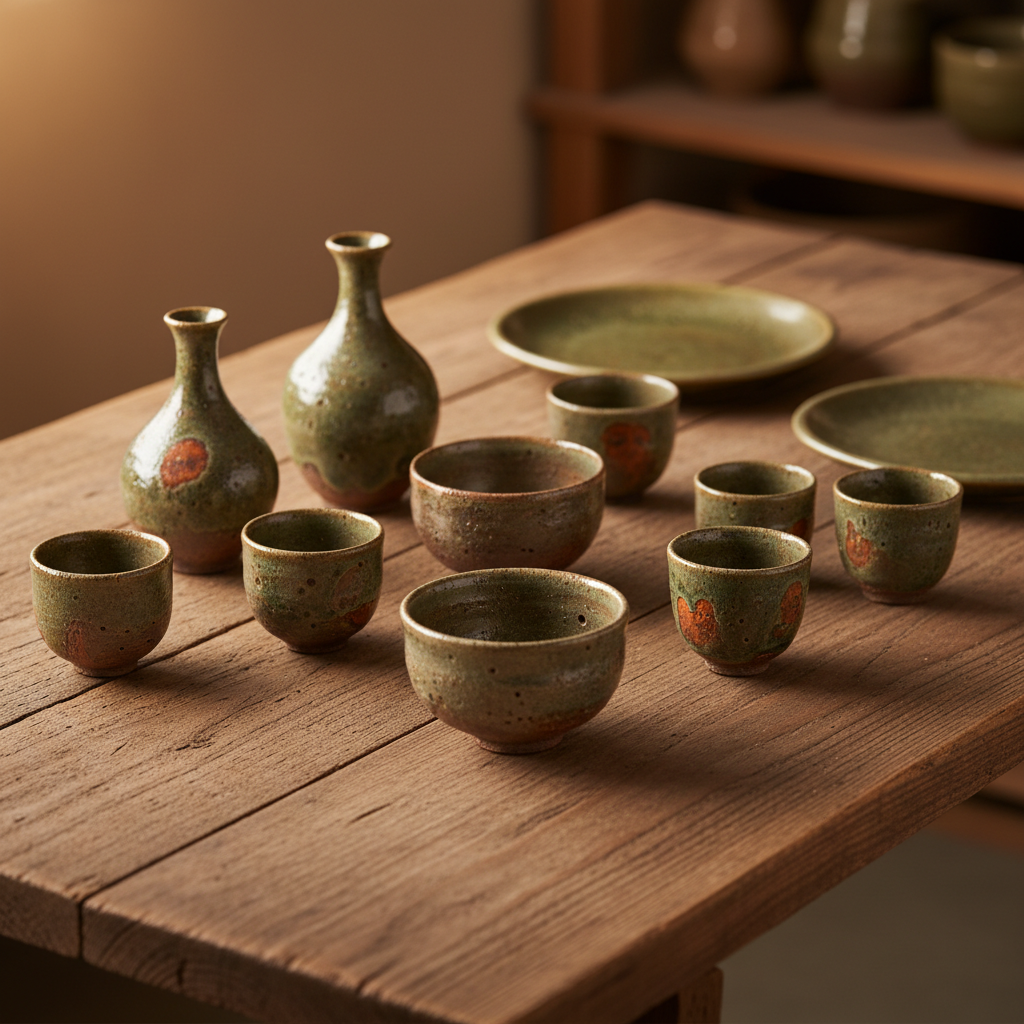
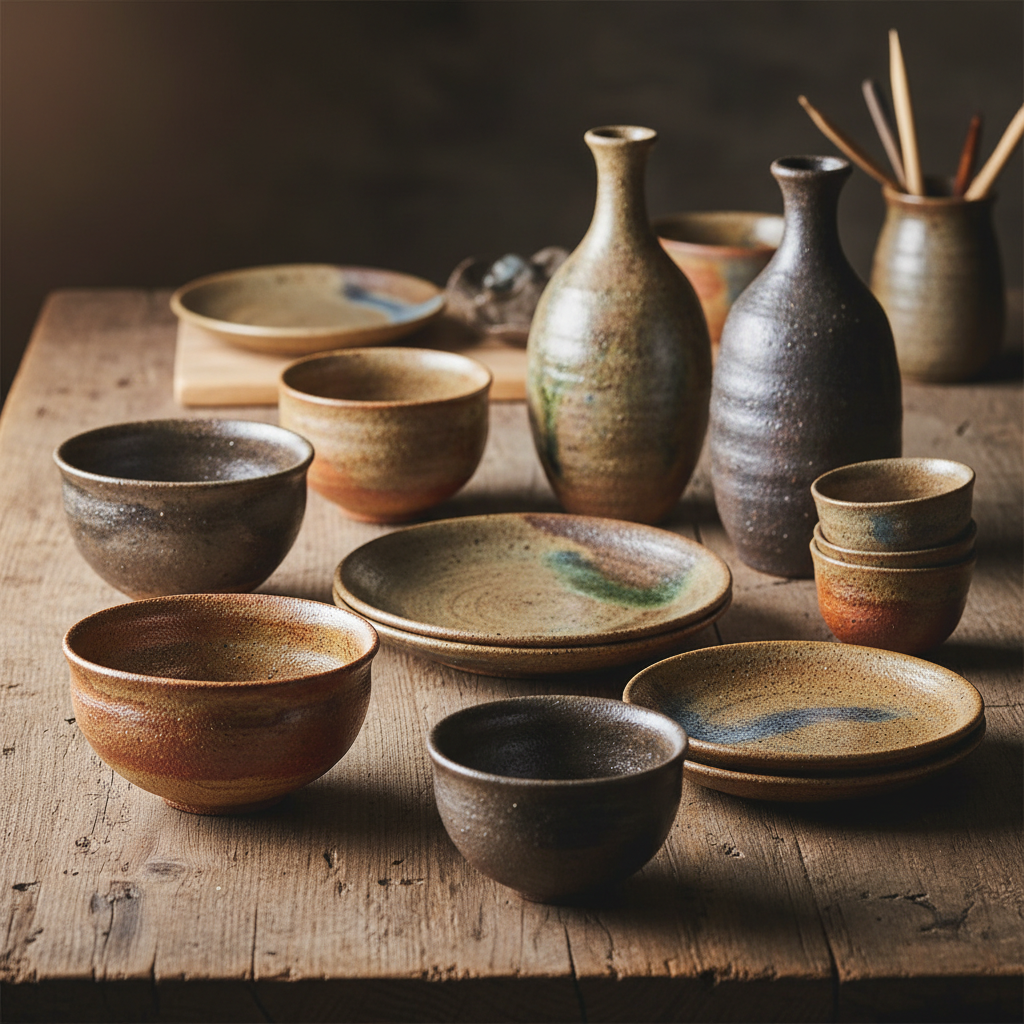
Shigaraki ware employs diverse expressions ranging from unglazed, fired stoneware to products using various glazes. In the traditional characteristic of Shigaraki ware—unglazed firing—the beauty of the clay itself is brought out by high-temperature firing without using glaze.
The “natural glaze” created when ash from firewood falls on the ware and becomes naturally glazified during firing is also a major charm of Shigaraki ware. This natural glaze displays different expressions depending on the flow of flame in the kiln and the positioning of the ware, creating distinctive effects with no two pieces alike.
When applying glaze artificially, distinctive glazes unique to Shigaraki are used. Beadro glaze, sea cucumber glaze, ash glaze, and others are applied with consideration for compatibility with Shigaraki clay, creating beautiful works through the harmony of clay and glaze.
Fire Color and Scorch: The Art of Flame
Symbolizing Shigaraki’s unique beauty is the red coloring known as “fire color” (hi-iro). This is a phenomenon in which iron contained in the clay oxidizes through the firing process, resulting in red coloration. The areas where flame directly strikes turn a vivid fire color, becoming a major charm of Shigaraki ware.
Also, the dark brown portions known as “scorch” represent another characteristic scenic quality of Shigaraki ware. This is carbonized wood ash from the firing process that adheres to and burns onto the ware. The contrast between fire color and scorch creates a powerful, forceful beauty as if the trajectory of flame were engraved into the ware.
The Sparkle of Feldspar: The Beauty of Beadro
Feldspar contained in Shigaraki clay melts when fired at high temperatures, becoming vitrified and creating white speckles or flows on the ware’s surface. This is called “beadro” and is treasured as a distinctive scenic quality unique to Shigaraki ware.
The appearance of beadro varies greatly depending on the quantity and distribution of feldspar and the firing temperature. This unpredictability gives Shigaraki ware pieces individuality and expression, enhancing their value as one-of-a-kind works.
Shaping That Highlights Clay Characteristics
Shigaraki ware is characterized by shaping that utilizes clay’s distinctive qualities. The highly plastic Shigaraki clay enables free shaping from large to small pieces. In particular, large Shigaraki ware products such as large jars and amphorae, and garden ceramics, possess size and impact difficult to achieve in other production areas.
On the other hand, delicate shaping and decoration are also possible, and contemporary artists create diverse works exploring the possibilities of Shigaraki clay. From unpretentious expressions highlighting clay qualities to refined modern designs, Shigaraki ware’s range of expression is extremely broad.
Shigaraki Ware Products: From Tradition to Modernity
Traditional Products
Traditional Shigaraki ware products include various ceramics integral to daily life such as tea jars, sake bottles, earthenware teapots, grater bowls, and braziers. These have been produced over many years as products combining practicality and beauty while making use of Shigaraki clay’s characteristics.
Tea ceremony ware in particular represents a field that exemplifies Shigaraki’s artistry. Various implements used in tea ceremonies—tea bowls, water vessels, flower containers, incense boxes—are expressed in Shigaraki’s distinctive clay and glazes. Many contemporary ceramic artists continue to work on tea ceremony ware today, preserving traditional techniques while pursuing new expression.
Tanuki Figurines: The Symbol of Shigaraki Ware
When people think of Shigaraki ware, many envision tanuki figurines. This charming tanuki became nationally famous when Emperor Showa visited Shigaraki in 1951 and, impressed by the Shigaraki tanuki arranged along the roadside, composed a poem about it.
The tanuki is considered an auspicious symbol for business prosperity due to a play on words (tanuki means “to exceed others”), and it became customary to place them in shop fronts and entrances. Today, tanuki of various sizes and designs are produced as representative products of Shigaraki ware.
Contemporary Domestic Tableware
Contemporary Shigaraki ware produces various ceramics for daily use including tableware, flower vessels, and drinking vessels. The warm-textured quality of Shigaraki clay harmonizes with contemporary dining tables and interiors, and is cherished by many users.
Western tableware including coffee cups, pasta plates, rice bowls, and mugs have also become a specialty of Shigaraki ware. Using traditional techniques while incorporating contemporary design and functionality suited to modern lifestyles, new products are continuously developed.
Garden and Architectural Ceramics
Garden ceramics utilizing Shigaraki ware’s large-scale production techniques represent an important product field of contemporary Shigaraki ware. A rich variety of ceramics for use in gardens and exteriors are produced—flowerpots, umbrella stands, water basins, stone lanterns, and more.
Flowerpots in particular are highly valued by gardening enthusiasts for their excellent breathability and water retention, making them suitable for plant growth. Additionally, architectural tiles and ceramic panels are produced, applying Shigaraki ware’s techniques to the field of architecture.
Art Works and Contemporary Ceramics
In contemporary Shigaraki, many ceramic artists and artists work, creating ceramic art pieces that build on traditional techniques while producing works as contemporary art. Objects, installations, lighting fixtures, and other works that transcend the traditional framework of pottery are being created.
In Shigaraki Town, the Shiga Prefectural Ceramics Park (Shiga Ceramic Park) operates, with works by domestic and international ceramic artists displayed in its creative research studio and ceramics gallery. Additionally, many young artists are relocating to Shigaraki and expanding the possibilities of Shigaraki ware with fresh sensibilities.
Shigaraki Ware Production Area Initiatives
The Role of the Shigaraki Ceramics Industrial Cooperative
The Shigaraki Ceramics Industrial Cooperative plays a central role in promoting the production area of Shigaraki ware. Located at 985 Eda, Shigaraki Town, Koka City, Shiga Prefecture, the cooperative handles information dissemination for the entire production area, technical training, and market development.
The cooperative focuses on quality management of Shigaraki ware, preservation of traditional techniques, and cultivation of successors. It also operates the “Shigaraki Ceramics Festival,” held once annually, contributing to the vitalization of the entire production area.
The Shigaraki Traditional Crafts Hall
The Shigaraki Traditional Crafts Hall is a facility introducing the history and techniques of Shigaraki ware. The hall contains exhibits demonstrating the changes in Shigaraki ware from ancient Shigaraki to contemporary works, allowing comprehensive understanding of Shigaraki ware’s appeal.
Operating hours are 9:00 AM to 5:00 PM, closed Thursdays and year-end/New Year holidays. Located at 1142 Nagano, Shigaraki Town, Koka City, Shiga Prefecture, it functions as an important information dissemination center for those wishing to learn about Shigaraki ware.
Shiga Prefectural Ceramics Park
The Shiga Prefectural Ceramics Park is a comprehensive ceramics culture facility established in Shigaraki Town. Its ceramics gallery displays outstanding ceramic works from Japan and abroad, while its creative research studio offers hands-on ceramic art experiences. The extensive grounds also feature an outdoor exhibition space where ceramic works harmonize with nature.
This facility functions not only to promote Shigaraki ware but also as an international ceramics culture exchange center, attracting ceramic artists and artists from around the world.
Successor Cultivation and Technical Preservation
The Shigaraki ware production area actively pursues successor cultivation and preservation of traditional techniques. The Shigaraki Ceramic Technical Testing Center provides technical training and product development support, contributing to the cultivation of young ceramic artists.
Additionally, many kilns continue to accept apprentices, directly transmitting traditional techniques through apprenticeship systems. Furthermore, many educational institutions and studios where ceramic art can be studied exist in Shigaraki, attracting people from across the nation who aspire to ceramic art.
The Shigaraki Ceramics Festival
The “Shigaraki Ceramics Festival” held annually is a major event involving the entire Shigaraki ware production area. During the festival period, many kilns sell their products at special prices, attracting hundreds of thousands of visitors from across the nation.
This event provides an excellent opportunity to make Shigaraki ware more widely known and significantly contributes to the revitalization of the production area. Additionally, programs allowing visitors to experience ceramic art and tour workshops enrich the opportunities to directly experience Shigaraki ware’s appeal.
Visiting the Shigaraki Ware Production Area
Access
By train, access to Shigaraki Town involves transferring from JR Kusatsu Line Kiyoka Station to the Shigaraki Kogen Railway, reaching Shigaraki Station in approximately 25 minutes. By car, it is approximately 10 minutes from the Shin-Meishin Expressway Shigaraki IC and approximately 20 minutes from the Meihan National Route Inuo IC.
It is within a distance allowing day trips from Osaka or Kyoto, with many tourists and ceramic enthusiasts visiting on weekends.
Kiln Tours
With more than 150 kilns in Shigaraki Town, many offer workshop tours and opportunities to view works in galleries. Each kiln possesses its own distinctive characteristics, allowing encounters with diverse Shigaraki ware ranging from kilns preserving traditional techniques to those producing innovative works.
Many kilns offer hands-on ceramic experiences with advance reservation. Through pottery wheel experiences and hand-forming experiences, one can develop deeper understanding of Shigaraki ware’s appeal.
Shigaraki’s Streetscape
Shigaraki’s streets retain brick chimneys and old kiln buildings, creating a retro atmosphere characteristic of a pottery village. Along the main street, ceramic shops, galleries, and cafes are lined up, where one can enjoy meals and tea served in Shigaraki ware.
Throughout the town, tanuki figurines of various sizes are scattered about, entertaining visitors. Additionally, Shigaraki ware monuments and objects are positioned throughout, giving the town the atmosphere of a pottery-themed park.
Selecting, Using, and Enjoying Shigaraki Ware
How to Select Shigaraki Ware
When selecting Shigaraki ware, it is important to first clarify the intended use. The appropriate product differs depending on whether it will be used as tableware, displayed as a flower container or interior decoration, or used in a garden.
The appeal of Shigaraki ware lies in the individuality of each work. The expression of clay, the scenic quality of glaze, and the appearance of fire color and scorch—even within the same series from the same kiln, each piece possesses a subtly different expression. It is recommended to handle pieces yourself and select work that resonates with your sensibility.
How to Use and Care for Shigaraki Ware
Before using Shigaraki ware dishes for the first time, it is advisable to perform “seasoning” by boiling them in rice-rinsing water, which makes the ware resistant to dirt and stains. This is a traditional method of filling tiny gaps in the clay.
After use, gently wash with a soft sponge and mild detergent, and dry thoroughly before storing. Since Shigaraki ware has water-absorbing properties, leaving it wet can cause mold and odors.
As with extended use, the appeal deepens—a characteristic charm of Shigaraki ware. With tea stains or signs of long use, the ware develops into a piece uniquely your own.
Life with Shigaraki Ware
Shigaraki ware brings warmth and enrichment to everyday living. Dishes used at the dining table present food beautifully and make dining more rewarding. Arranging seasonal flowers in a flower vessel brings together the beauty of nature and the warm touch of Shigaraki clay.
Placing Shigaraki ware flowerpots or water basins in a garden creates a space suffused with Japanese aesthetic sensibility. Incorporating Shigaraki ware as lighting fixtures or objects adds a distinctive accent to modern interiors.
Conclusion: The Tradition and Future of Shigaraki Ware
Shigaraki ware is a representative Japanese pottery that has been passed down for more than 1,300 years in Shigaraki Town, Koka City, Shiga Prefecture. As one of Japan’s Six Ancient Kilns, its history of continuous pottery production from the medieval period to the present plays an important role in Japanese ceramic culture.
The distinctive appeal of Shigaraki ware—high-quality clay from the ancient Lake Biwa layer, unique glazes, the beauty created by flame with its fire color and scorch effects, and shaping that highlights clay characteristics—are incomparable. The diverse range of products from traditional tea ceremony ware to tanuki figurines, contemporary domestic ceramics, garden ceramics, and art works testifies to Shigaraki ware’s development in constantly responding to contemporary needs.
Through the efforts of the Shigaraki Ceramics Industrial Cooperative centered production area, work in successor cultivation and technical preservation, and the activities of young artists with contemporary sensibilities, Shigaraki ware continues to innovate while honoring its traditions.
When visiting Shiga Prefecture, by all means visit Shigaraki Town to directly experience the history and culture of this ceramic production area and the appeal of Shigaraki ware. Through kiln tours and hands-on ceramic experiences, you can touch the world of beauty created by earth and flame. Shigaraki ware is an invaluable cultural heritage through which one can truly appreciate the wonders of Japan’s traditional crafts.