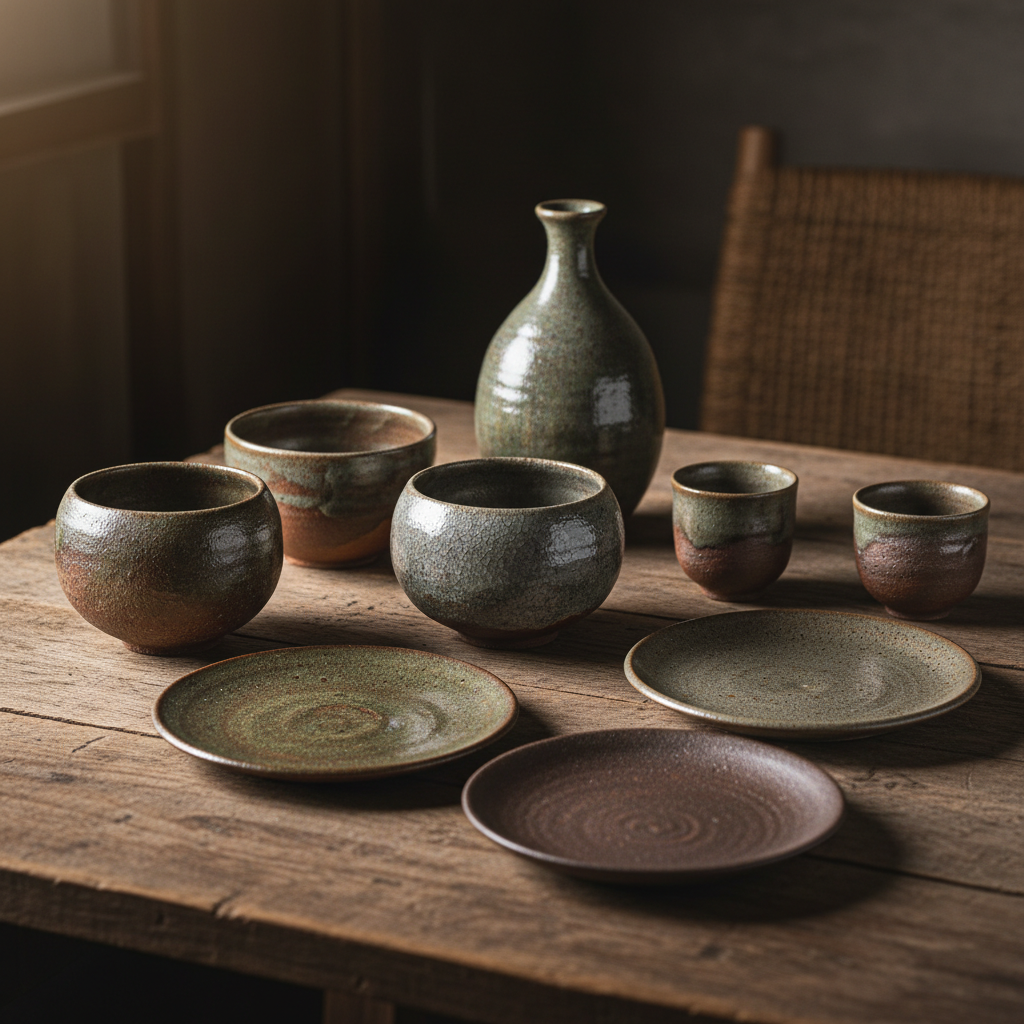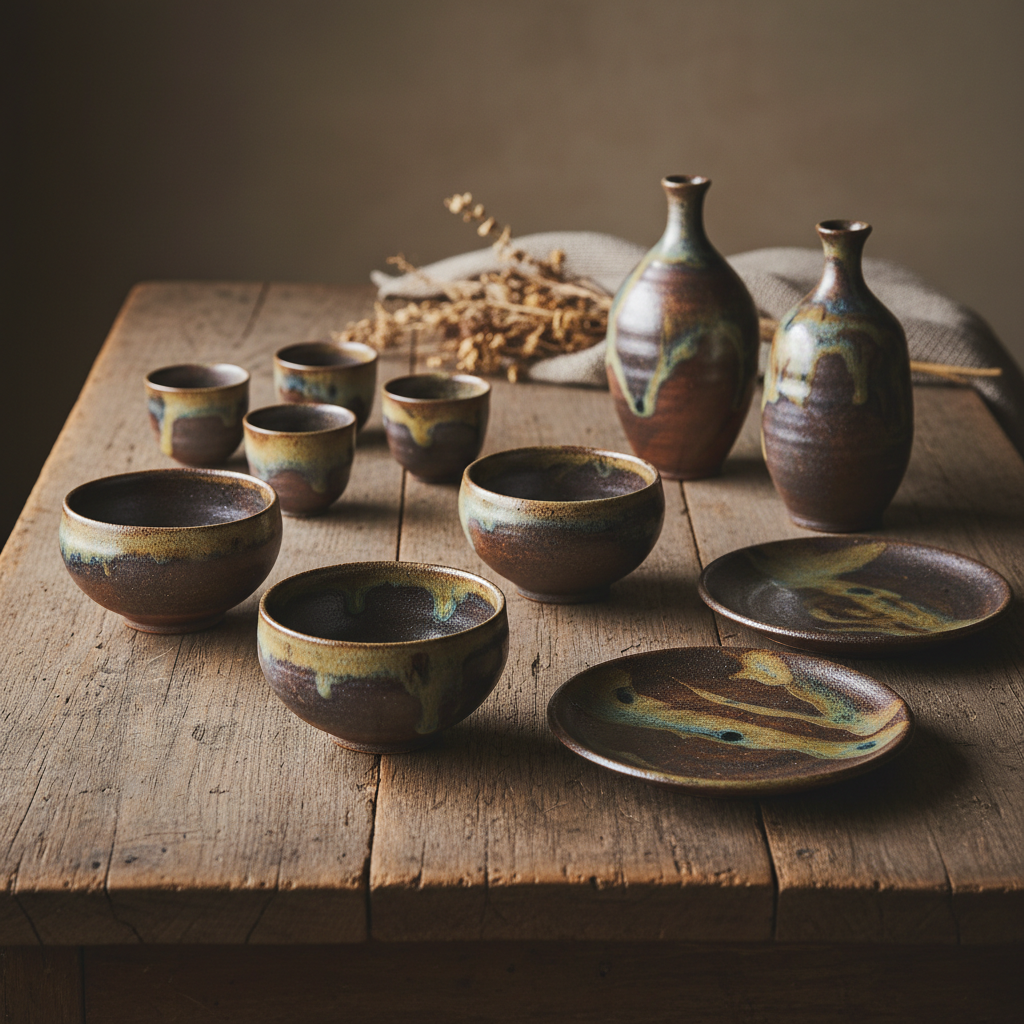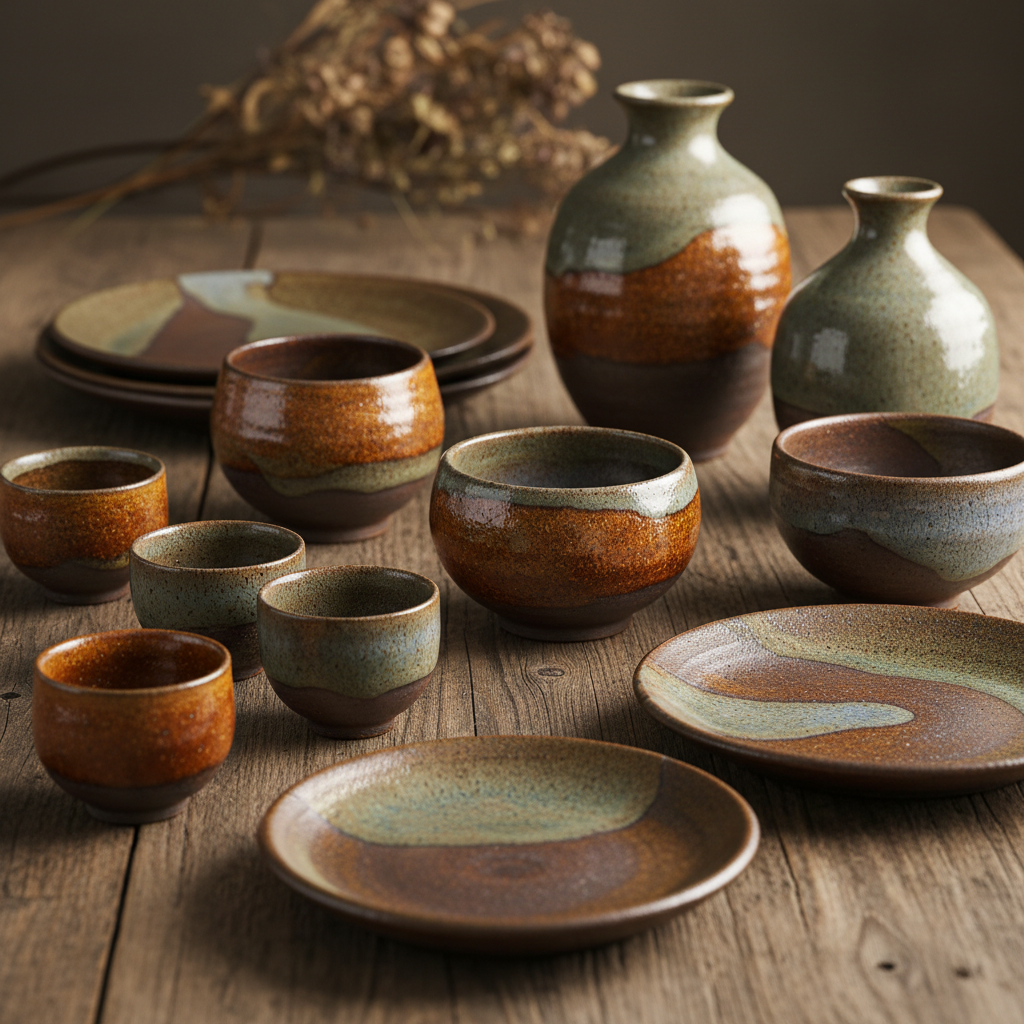
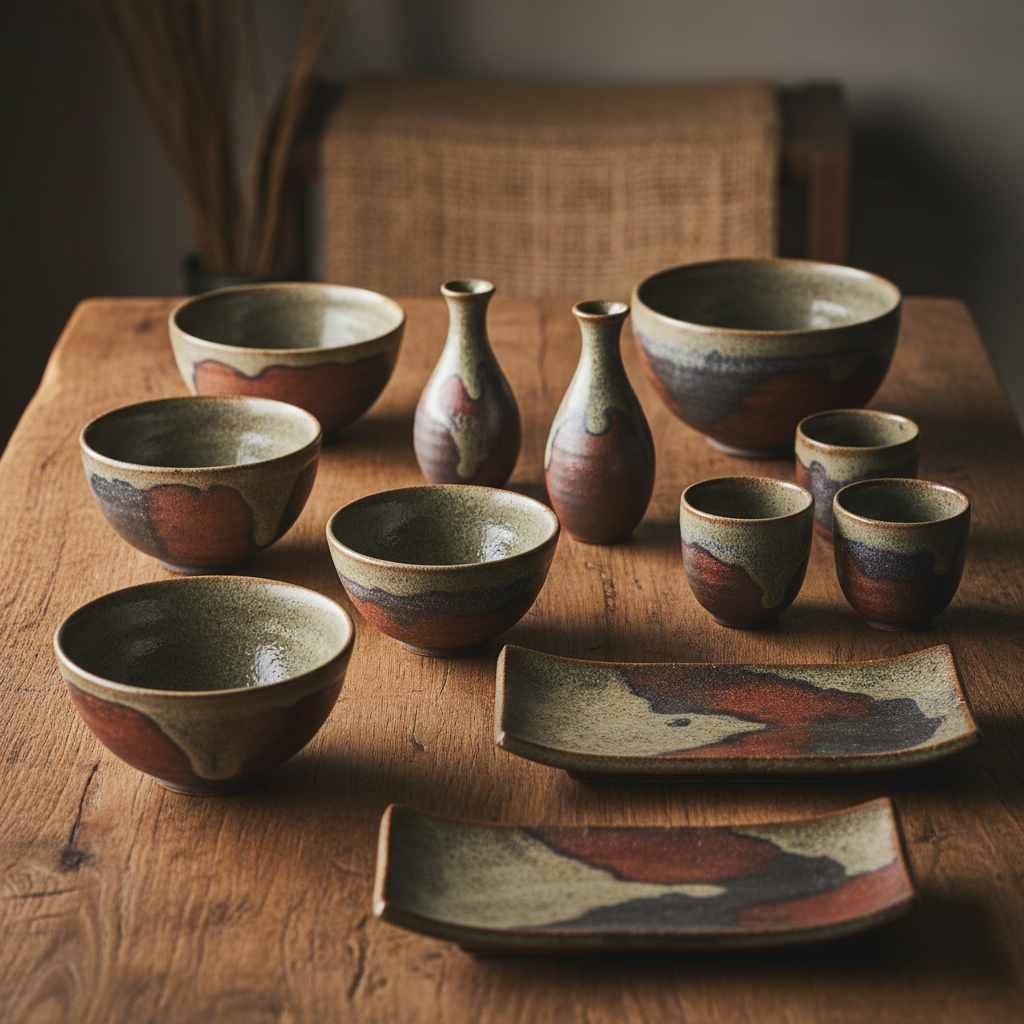
What is Shussai Ware? The Beauty of Folk Crafts and Tradition Nurtured by a Ceramic Producing Region in Izumo, Shimane Prefecture
Shussai ware (出西焼), with its kiln located in Shuссai, Hikawa Town, Izumo City, Shimane Prefecture, is a relatively new ceramic producing region that was born shortly after World War II in Showa 22 (1947), yet it is known as a renowned kiln that deeply inherits the principles of Japan’s folk craft movement.
This kiln, opened by five young local men united in their vision, received guidance from master potters such as Soetsu Yanagi, Kanji Kawai, and Bernard Leach, who were leaders of the folk craft movement, and has continued to produce high-quality pottery for over 70 years while upholding the ideal of “creating items that bring joy as tools of daily life.”
This article provides detailed information about the history of Shussai ware, its characteristics, production processes, and its position as a ceramic producing region in Shimane Prefecture.
History and Background of Shussai Ware’s Founding
Birth of a Collaborative Kiln by Five Young Men
Shussai ware was established in Showa 22 (1947) by five local youths: Hiromitsu Tatano, Kuee Nakajima, Hisato Inoue, Chiyokichi Kageyama, and Yoshio Tatano. Each of them had undergone training at kilns in various regions such as Sodeshi ware, Tamba ware, Mashiko ware, and Karatsu ware, and they realized their dream of returning to their home prefecture of Shimane and building a kiln together.
In the midst of post-war chaos, the pure passion of these young men to “create beautiful and practical vessels” became the origin of Shussai ware.
Meeting with Masters of the Folk Craft Movement
Shortly after its founding, Shussai kiln sought guidance from Soetsu Yanagi, the founder of the folk craft movement, as well as from prominent Japanese potters and folk craft scholars such as Kanji Kawai, Shoji Hamada, and Bernard Leach.
The philosophy of “beauty of utility” (yo no bi) advocated by Soetsu Yanagi—the idea that true beauty resides in everyday practical items—became the cornerstone of Shussai ware’s production philosophy and has been passed down consistently to this day. The interaction with these master potters had a profound impact on the young kiln operators, not only in terms of technique but also spiritually.
Continuation of Tradition from the Showa Era to the Reiwa Era
Although Shussai ware was born in the Showa era, more than a dozen craftspeople, including the children of the founders, continue to engage in pottery making today, maintaining tradition while continuing to create vessels suited to the modern age.
Since its founding, the kiln has continued to fire its climbing kiln, and the kiln openings that occur several times a year have become important milestones for Shussai ware. This consistent approach has supported the quality and individuality of Shussai ware.
Characteristics and Appeal of Shussai Ware
Commitment to Locally Sourced Materials from Shimane Prefecture
One of the greatest characteristics of Shussai ware is that all raw materials, including clay and glazes, are primarily sourced locally from Shimane Prefecture and custom-blended in-house.
Pottery production requires various materials—the clay that becomes the foundation of the ceramic body, the glaze applied to the surface, and the firewood used during firing—but Shussai kiln procures these as much as possible from local materials, completing every step from the process of manufacturing clay from soil to firing entirely within the workshop.
This commitment to local materials reflects not only a spirit of local production for local consumption but also the strong desire of the craftspeople to have the unique texture and color tones created by the region’s climate and natural environment reflected in their vessels.
Traditional Firing Using a Climbing Kiln
Shussai kiln has continued to use a large six-chamber climbing kiln since its founding. A climbing kiln is a traditional kiln with chambers arranged in steps along a slope, fired with wood at temperatures exceeding 1200 degrees Celsius.
Firing in a climbing kiln is difficult to control temperature, and it is affected by weather and wind direction, requiring the long-accumulated experience and intuition of skilled craftspeople. However, the unique decorative effects (kiln markings) and natural colors produced by flame and ash that can only be achieved through this method are a major attraction of Shussai ware.
In modern times, kiln operators increasingly use efficient gas or electric kilns, but Shussai kiln continues to insist on the climbing kiln because of its commitment to preserving traditional techniques and its belief in the beauty of the resulting fired pieces.
Simple and Beautiful Design
Shussai ware vessels are characterized by their simple forms with minimal decoration and their unsophisticated yet refined beauty. Based on the folk craft movement’s philosophy of “beauty of utility,” they are designed with “ease of use” as the primary consideration.
The focus is on everyday vessels such as rice bowls, tea cups, plates, bowls, and flower vases, with careful attention paid to details such as hand-fitting size and weight, and pleasant feel in the mouth, reflecting consideration for the perspective of the actual user.
The colors tend toward subdued tones such as white, amber, blue, and black, and their high versatility in pairing with both Japanese and Western cuisine is also a reason for their popularity. They are also highly valued by people with modern sensibilities, as they are even carried in select shops in Tokyo.
Practicality and Durability
Shussai ware vessels excel not only in visual beauty but also in practicality and durability. High-temperature firing in a climbing kiln results in ceramic bodies that are hard and well-fired, with sufficient strength to withstand daily use.
Furthermore, through careful adjustment of glaze composition and firing temperature, the finish maintains appropriate water absorption while resisting staining and being easy to maintain. The charm of pottery, wherein “beauty increases with use,” can be enjoyed over a long period.
The Shussai Kiln Workshop and Production Process
Location and Environment of the Workshop
Shussai kiln is located in Shuссai, Hikawa Town, Izumo City, Shimane Prefecture. This area, surrounded by the rich natural environment of the Izumo Plain, is also known as a place where high-quality ceramic clay can be obtained, providing an ideal environment for pottery making.
The workshop brings together production spaces, a climbing kiln, and a display and sales area, where visitors can catch glimpses of the craftspeople’s work.
Vertically Integrated Production from Clay Preparation to Firing
The production process of Shussai ware begins with the extraction and refinement of the raw materials. Local clay is processed using a method called water levigation (suihi) to remove impurities and refined into ceramic clay with appropriate plasticity and malleability.
Forming is performed primarily by hand using a pottery wheel, with each piece carefully shaped individually. After drying, the pieces undergo bisque firing, are glazed, and finally undergo the main firing in the climbing kiln.
The glaze is also custom-blended, based primarily on materials sourced from Shimane Prefecture, creating unique colors and textures through years of research and trial and error. Firing takes place over several days, with kiln opening occurring after the kiln temperature has cooled.
This entire sequence of processes being completed within the workshop maintains both the consistency of quality and the distinctive character unique to Shussai ware.
Collaborative Production System
A major characteristic of Shussai kiln is its continuing system of collaborative production since its founding. Rather than the kiln of an individual artist, the style of multiple craftspeople working together to create works embodies the folk craft movement’s principle of “beauty created by nameless craftspeople.”
Individual pieces are not signed with the maker’s name; only the kiln’s name, “Shussai kiln,” is marked. This reflects an attitude that prioritizes creating good vessels over individual fame and symbolizes the spirituality of Shussai ware.
Mujishoukan Display and Sales Showroom
Direct-operated Shop Adjacent to the Kiln
Adjacent to the Shussai kiln workshop is a display and sales showroom called “Mujishoukan.” At this facility, Shussai ware products can be purchased directly, allowing customers to choose their favorite vessels from an abundant selection.
The name Mujishoukan, derived from a Buddhist term meaning “the absence of fixed substance,” expresses a free mind unattached to ego. The name itself embodies the spirit of folk crafts.
The Joy of Selecting by Hand
The showroom displays a diverse range of vessels including rice bowls, tea cups, plates, bowls, teapots, and flower vases, where customers can select by physically handling them to confirm size, weight, and texture.
Even vessels of the same form have subtly different appearances due to firing in the climbing kiln, offering the pleasure of finding one’s own favorite piece. Staff members are also available to provide advice on the characteristics and uses of the vessels, giving peace of mind even for first-time buyers of Shussai ware.
Positioning as a Ceramic Producing Region in Shimane Prefecture
Ceramic Culture in Shimane Prefecture
In addition to Shussai ware, Shimane Prefecture is home to several ceramic producing regions, including Fujina ware (布志名焼), Yumachi kiln (湯町窯), and Iwami ware (石見焼).
Fujina ware developed as the official kiln of the Matsue Domain during the Edo period and has produced works of high distinction, primarily focused on tea ceramics. In contrast, Shussai ware, born after the war, has walked a unique path of creating everyday-use vessels based on folk craft principles.
These kilns, each with distinct characteristics and history, enrich Shimane Prefecture’s ceramic culture.
Recognition as Shimane Prefecture’s Traditional Craft
Shussai ware is recognized as a traditional craft of Shimane Prefecture and plays an important role in promoting regional culture both within and outside the prefecture. At the Shimane Prefecture Products and Tourism Hall and similar venues, ceramics from Shussai ware and other kilns in the prefecture are introduced, providing visitors and people from outside the prefecture opportunities to experience Shimane’s craft culture.
Recognition as a traditional craft is awarded not only for historical length but for continued use of regional materials, adherence to traditional techniques, and ongoing production of products suited to contemporary life.
Contribution to Regional Economy and Culture
Shussai kiln contributes to the regional economy through job creation and its role as a tourist resource. Visits for workshop tours and to the display and sales showroom have become one of the popular spots in Izumo tourism, with many visitors combining a trip here with a visit to Izumo Taisha.
Additionally, by using local clay and glaze raw materials, the kiln utilizes regional resources and practices sustainable pottery making. Such efforts also contribute to the preservation and development of regional culture.
How to Purchase Shussai Ware and Access
Mujishoukan, the Directly-operated Showroom
The most extensive selection is available at Mujishoukan, adjacent to Shussai kiln. Here, everything from the latest works to standard products is available, at prices only the kiln operator can offer.
Location: 3368 Shussai, Hikawa Town, Izumo City, Shimane Prefecture
Business Hours: Usually 9:30 AM–5:00 PM (please check the official website for holidays, etc.)
Retail Locations within Shimane Prefecture
Shussai ware can be purchased at various stores throughout the prefecture, including the Shimane Prefecture Products and Tourism Hall (Matsue City, Tono-cho) and select shops in Izumo City.
Shimane Prefecture Products and Tourism Hall
Location: 191 Tono-cho, Matsue City, Shimane Prefecture
Business Hours: 9:30 AM–6:00 PM (closed December 31 through January 2)
The Izumo Tourism Association (inside Big Heart Izumo) also provides information and carries some products.
Purchase Through Online Shops
For those who are distant or find it difficult to visit in person, Shussai kiln’s official online shop and online stores of select shops carrying Shussai ware also offer purchase options.
Online shops specializing in folk craft items such as “Everyday Life” feature representative Shussai ware products, allowing orders from anywhere in Japan. However, popular items can become scarce, so checking regularly is recommended.
Availability in Urban Areas Such as Tokyo
Increasingly, select shops and galleries in urban areas such as Tokyo carry Shussai ware. These shops can be found in stores specializing in folk crafts and handmade vessels, as well as in lifestyle shops.
Its simple, beautiful design and high practicality are embraced by contemporary urban dwellers, making it increasingly popular.
Shussai Ware and the Philosophy of the Folk Craft Movement
Soetsu Yanagi’s “Beauty of Utility”
Soetsu Yanagi, the founder of the folk craft movement, proposed a concept called “beauty of utility” (yo no bi). This is the idea that true beauty resides in everyday practical items, elevating the beauty of anonymous craftspeople’s everyday goods over ornate decoration or the fame of individual artists.
Shussai ware can be said to be one of the kilns that most faithfully practices this philosophy of “beauty of utility.” Though unpretentious, the forms created with the user in mind, the texture pleasing to the hand, and the unfading design are indeed manifestations of “beauty of utility.”
Vessels for Wholesome and Beautiful Living
What Shussai kiln aims for is “vessels for wholesome and beautiful living.” This means not only visual beauty but vessels that are actually used in daily life and enrich the lives of those who use them.
Rather than high-priced ceramics as art objects, creating vessels that can be used at the everyday table and that inspire affection with use is the mission and pride of Shussai ware.
Significance of Folk Crafts in Modern Times
In contemporary society overflowing with mass-produced goods, the value of folk craft items created by hand is being reconsidered. Vessels carefully crafted one by one remind the user of the importance of things and gratitude toward the maker.
Folk crafts such as Shussai ware, as alternatives to the pursuit of efficiency and convenience alone in modern life, are emerging as sources of ease and richness, and their value is likely to increase in the future.
Visiting Shussai Ware in Izumo Tourism
Tourism Route Combined with Izumo Taisha
Shussai kiln is approximately 20 minutes by car from Izumo Taisha, making it ideally located to visit as part of Izumo tourism. After or before paying respects at Izumo Taisha, one can stop by to tour the workshop and purchase vessels.
Izumo City is a region with ancient history and culture, and there are many sights beyond Izumo Taisha. A popular way to enjoy the area is to purchase Shussai ware vessels and enjoy Izumo soba.
Appeal of Workshop Tours
At Shussai kiln, depending on timing, one may be able to observe the work of craftspeople. Watching the unique technique of skilled potters as they shape vessels on a pottery wheel or apply glaze is a valuable experience.
If one can visit during kiln opening season, it’s possible to see freshly fired vessels being removed from the climbing kiln. The kiln openings, which occur several times a year, are major events for Shussai kiln, accompanied by special atmosphere.
Access Methods
By Car:
Approximately 10 minutes from “Hikawa IC” on the Sanin Expressway
Approximately 15 minutes from Izumo Airport
Approximately 20 minutes from Izumo Taisha
By Public Transportation:
Approximately 20 minutes by bus or taxi from JR Izumo Station
Approximately 15 minutes by taxi from “Izumo Taisha” station on the Ichibata Electric Railway
Parking is also available, making visiting by rental car convenient.
The Future of Shussai Ware and Tradition’s Continuation
Technical Inheritance to the Next Generation
More than 70 years have passed since the founding, and at Shussai kiln today, next-generation craftspeople, including the children of the founders, continue to inherit tradition while pursuing new challenges.
Efforts are being made to carefully pass techniques requiring long experience and intuition—such as how to fire the climbing kiln, glaze composition, and clay blending—from veteran craftspeople to younger workers.
Balance Between Tradition and Innovation
Preserving tradition is important, but it is also necessary to adapt to changing lifestyles and aesthetic sensibilities of the era. While maintaining fundamental principles and techniques, Shussai kiln is also working on developing new vessel forms suited to contemporary dining tables.
Vessels that can also be used as Western tableware, such as coffee cups and pasta plates, are being produced, maintaining a balance between tradition and innovation while continuing to evolve.
Sustainable Pottery Making
Shussai ware’s method of using local materials and firing in a wood-fueled climbing kiln is also gaining attention for its environmental considerations. As a model of sustainable pottery making, the opposite extreme from mass production and mass consumption, its value is being reassessed.
By creating high-quality vessels built to last, it serves the role of issuing warnings against a throwaway culture and fostering a mindset that treasures objects.
Conclusion
Shussai ware from Izumo City in Shimane Prefecture is a folk craft kiln founded in Showa 22 (1947) by five young men, yet under the guidance of folk craft movement masters such as Soetsu Yanagi, it has developed into one of Japan’s representative ceramic producing regions.
With its commitment to locally sourced Shimane materials, its preservation of the climbing kiln since founding, and its continued creation of practical and beautiful vessels based on the philosophy of “beauty of utility,” its value remains undiminished in the contemporary era.
Its simple, unfading design, pleasant-to-hand texture, and practicality suited to daily use are beloved by many and receive high evaluation even in urban areas such as Tokyo.
When visiting Izumo, why not visit Shussai kiln along with paying respects at Izumo Taisha, touch the beauty of vessels created by craftspeople’s handiwork, and find your own favorite vessel? Each time you use it at your daily table, it becomes a special vessel through which you can feel the natural environment of Shimane and the hearts of the craftspeople.
Shussai ware continues to engage in vessel-making that preserves its value as a traditional craft while adapting to contemporary living. Its approach guides us toward the realization of “wholesome and beautiful living” that provides not only material abundance but also spiritual richness.