Mushiage Ware (むしあげやき) Complete Guide|History and Charm of Okayama Prefecture’s Traditional Ceramic Production Center
What is Mushiage Ware|Okayama Prefecture’s Representative Traditional Ceramics
Mushiage ware (むしあげやき) is a traditional ceramic produced in the Mushiage district of Oku Town, Setouchi City, Okayama Prefecture. While known as one of Okayama Prefecture’s representative ceramics alongside Bizen ware, it remains a hidden gem that continues to preserve its unique beauty.
The greatest characteristic of Mushiage ware lies in its thin, delicate construction and pale-colored glazes. In contrast to Bizen ware, which is unglazed fired stoneware, Mushiage ware developed as glazed ceramics. This difference created a ceramic production center with a completely different character, despite being in the same prefecture.
Today, Mushiage ware is designated as a traditional craft of Okayama Prefecture, and its techniques and aesthetic sensibilities are being inherited by contemporary ceramic artists.
History of Mushiage Ware|Transition of a Ceramic Production Center Continuing from the Edo Period
Origins and Early Period of Mushiage Ware (Early Edo Period)
The history of Mushiage ware dates back to the early Edo period, specifically the Kan’ei era (1624-1644). According to tradition, ceramic production began in Mushiage village, Bizen Province (now Mushiage district, Oku Town, Setouchi City) at the command of Ikeda Mitsumasa, the lord of the Okayama domain.
Initially, production focused on everyday utensils, but due to the advantage of high-quality ceramic clay being available locally and convenient distribution afforded by the location facing the Seto Inland Sea, the area gradually developed as a production center. The Mushiage district had long thrived as a port town, with an ideal environment for sourcing raw materials for ceramics and shipping finished products.
Development in the Mid-Edo Period|Recognition as Tea Ceramics
By the mid-Edo period, Mushiage ware began to attract attention as tea ceremony utensils. Tea wares such as tea bowls, water jars, and flower containers were produced, and techniques were refined under the patronage of the Okayama domain.
During this period, Mushiage ware established a distinctive style known as “Mushiage-te.” It was characterized by thin construction, light weight, and pale yellowish-brown or grayish-white glazes. Additionally, fine crazing (small cracks in the glaze surface) was considered beautiful and was highly prized among tea practitioners.
Decline in the Meiji and Taisho Periods and Attempts at Revival
After the Meiji Restoration, Mushiage ware rapidly declined as it lost the patronage of the domain. Many kilns were forced to close, and the production center temporarily lost nearly all its function.
However, entering the Taisho period, interest in traditional ceramics increased, partly due to the influence of the mingei (folk craft) movement. Mushiage ware experienced a renewed appreciation, and some potters attempted to pass down their techniques.
From the Showa Period to Present|Inheritance of Tradition and New Development
During the Showa period, Mushiage ware sought to create vessels that honored tradition while adapting to modern lifestyles. From the 1980s onward, with protection policies for traditional crafts from Okayama Prefecture and local municipalities, Mushiage ware was officially designated as a traditional craft of Okayama Prefecture.
In modern times, though few in number, kilns and ceramic artists continuing the tradition remain active. While maintaining classical Mushiage ware techniques, works that incorporate contemporary designs and uses are also emerging, attracting new enthusiasts.
Characteristics of Mushiage Ware|Differences from Other Ceramic Production Centers
Properties of Clay and Glaze
The ceramic clay used in Mushiage ware is primarily sourced from the surrounding Mushiage district. This clay contains relatively little iron and produces pale-colored ceramics when fired.
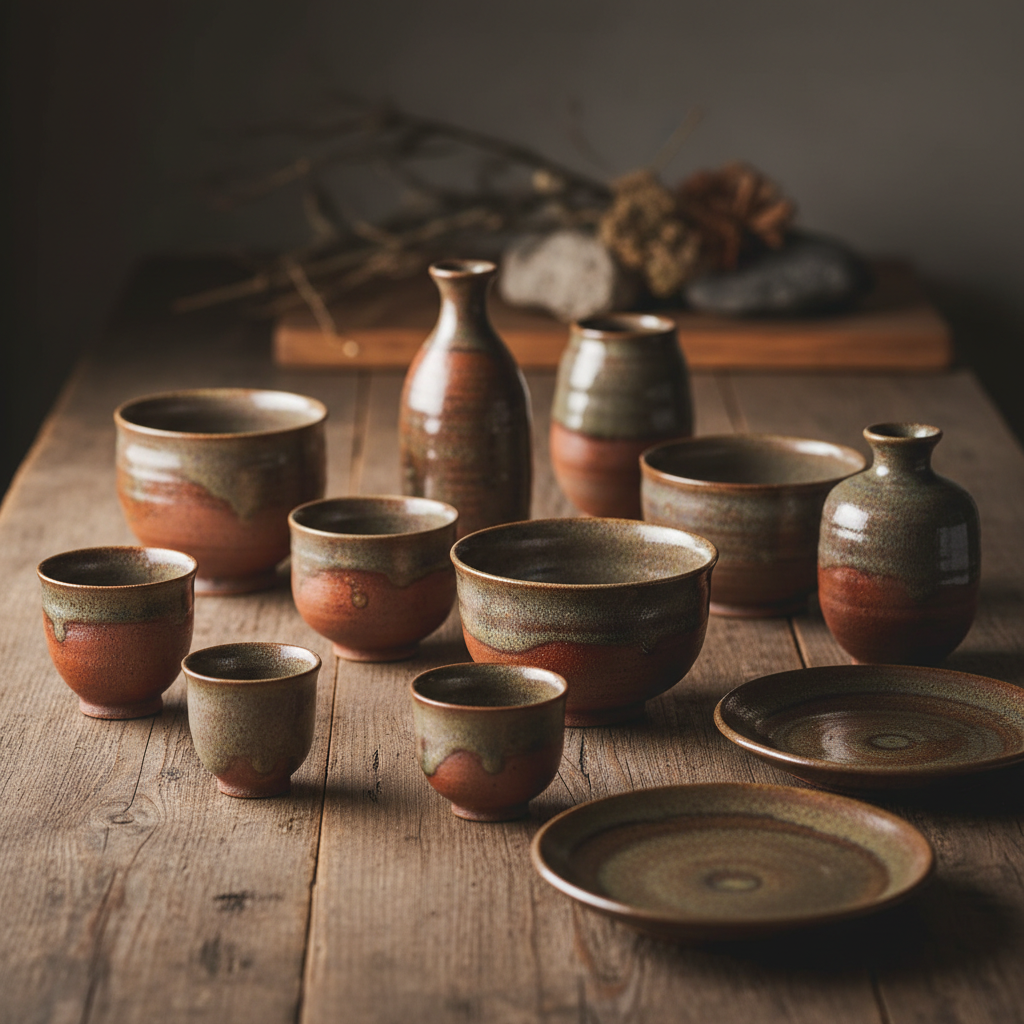
Glazes primarily consist of ash glaze or earth ash glaze, creating soft tones such as pale yellowish-brown, grayish-white, and light green. This glaze coloration is one of Mushiage ware’s greatest appeals, creating a gentle appearance in contrast to Bizen ware’s strong reddish-brown.
Thin Construction and Lightness
Another distinctive feature of Mushiage ware is its thin, lightweight construction. Through the skilled techniques of experienced potters, thinly shaved vessels are surprisingly light to hold and create a delicate impression.
This thin-making technique requires long experience and advanced skill. Potters must be intimately familiar with the clay’s properties and factor in shrinkage during drying and firing, making this a technique not easily replicated.
Beauty of Crazing
The fine crazing visible on Mushiage ware’s surface is a natural phenomenon resulting from differences in shrinkage rates between the glaze and clay body. Over time, this crazing absorbs tea stains and other substances, creating a distinctive patina.
This characteristic, which gains depth with use, aligns with the Japanese aesthetic of “wabi-sabi” and is one of the reasons Mushiage ware is treasured as tea ceremony ware.
Comparison with Bizen Ware
Despite being ceramic production centers in the same prefecture, Bizen ware and Mushiage ware possess entirely different characteristics.
Characteristics of Bizen Ware:
- Unglazed fired stoneware
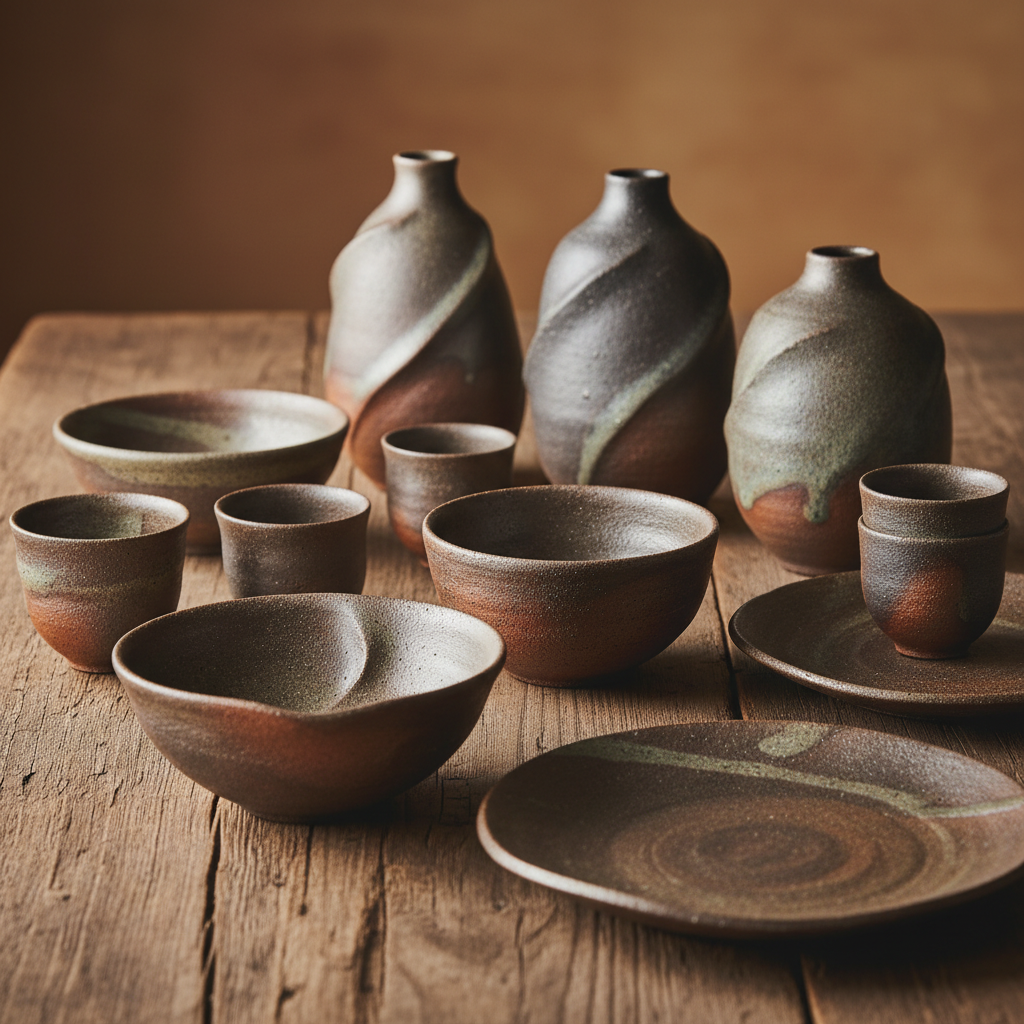
- Strong reddish-brown color
- Thick, substantial construction
- High-temperature firing above 1200 degrees
- Diverse patterns created by kiln effects
Characteristics of Mushiage Ware:
- Glazed ceramics
- Gentle appearance with pale coloring
- Thin, lightweight construction
- Relatively lower-temperature firing
- Delicate beauty from crazing
Thus, both pursue beauty through entirely different approaches, demonstrating the diversity of Okayama Prefecture’s ceramic culture.
The Mushiage Ware Production Area|Mushiage District, Oku Town, Setouchi City, Okayama Prefecture
Geography and Environment of Mushiage District
The Mushiage district, the production center for Mushiage ware, is located in the southern part of Oku Town, Setouchi City, facing the Seto Inland Sea. Once an independent municipality called “Mushiage village,” it is now part of Setouchi City.
This region, blessed with the mild climate and rich nature of the Seto Inland Sea, has long prospered in fishing and agriculture. It also flourished as a port town, serving as a key hub for maritime trade and material distribution.
These geographic conditions supported development as a ceramic production center. Sea transport made it easy to obtain raw materials and ship finished products, and the warm climate was also suitable for the drying process of ceramics.
Current Mushiage Ware Kilns
The number of kilns and ceramic artists carrying on Mushiage ware traditions in the Mushiage district today is limited. While smaller in scale than during its peak, each continues to preserve and develop Mushiage ware traditions through their own interpretations.
Major kilns produce diverse works ranging from traditional tea ceramics to everyday dishes. Some kilns also operate ceramic classes and experience workshops, providing opportunities for the general public to experience Mushiage ware.
Access and Tourism Information
Access to Mushiage district is available through the following methods:
By Car:
- About 15 minutes from Okayama Blue Line “Oku IC”
- About 40 minutes by car from JR Okayama Station
By Public Transportation:
- About 20 minutes by bus or taxi from “Oku Station” on the JR Ako Line
Mushiage district is also a place where one can enjoy beautiful views of the Seto Inland Sea, making it possible to combine kiln tours with coastal walks and local seafood.
Mushiage Ware Works and Uses
Mushiage Ware as Tea Ceremony Ceramics
Mushiage ware has developed as tea ceremony ceramics since the Edo period, and tea wares remain an important area of production today.
Main Tea Ceremony Wares:
- Tea bowls: Characterized by thin, lightweight construction and comfortable form
- Water jars: Works where the beauty of crazing stands out
- Flower containers: Simple forms highlighted by pale glazes
- Tea caddies: Small, delicate construction
- Water basins: Practical for everyday tea ceremonies
Mushiage ware tea bowls are particularly favored as thin tea bowls. They are easy to handle due to their lightness, and their pale color beautifully displays the color of tea.
Everyday Tableware
Contemporary Mushiage ware production includes many dishes suitable for daily life.
Popular Vessels:
- Rice bowls: Light and easy to hold, ideal for daily use
- Tea cups: Comfortable to hold and fitting to the hand
- Plates and bowls: Pale coloring beautifully complements dishes
- Mugs: Fusion of contemporary design and traditional technique
- Sake wares: Sets of sake bottles and cups
Mushiage ware tableware possesses a neutral beauty that complements both Japanese and Western cuisine. The simple, timeless designs make these vessels popular as pieces that can be enjoyed for years to come.
Flower Containers and Decorative Objects
Mushiage ware flower containers range from tea ceremony flower vessels to contemporary flower vases. The pale glaze color harmonizes with any flower, enhancing their beauty.
Decorative objects such as figurines and incense burners are also produced, offering enjoyment as interior décor.
Mushiage Ware Production Process
Clay Preparation and Forming
Mushiage ware production begins with selecting high-quality ceramic clay. Locally sourced clay is refined to remove impurities, then water is added to achieve proper workability.
Forming is primarily done by hand on a potter’s wheel. The technique of thin construction demands skilled craftsmanship. Artisans must read the clay’s condition and gradually thin it with delicate hands—a skill that cannot be acquired without long experience.
Drying and Shaping
After forming, pieces are allowed to dry slowly and naturally. Rapid drying causes warping and cracking, so temperature and humidity are carefully managed during this deliberate process.
When pieces reach a leather-hard state, the trimming process begins. Excess clay is removed using tools such as trimming blades, and the form is refined. The distinctive thinness and lightness of Mushiage ware emerge during this trimming process.
Bisque Firing and Glazing
When pieces are completely dry, they undergo bisque firing at around 800 degrees. Bisque firing hardens the pieces and makes them receptive to glaze application.
After bisque firing, glaze is applied. Mushiage ware uses traditional glazes such as ash glaze and earth ash glaze. The appearance of the finished work depends greatly on how the glaze is applied, requiring the potter’s sensibility and experience.
Kiln Firing
Glazed pieces are loaded into the kiln for final firing. Firing temperature is approximately 1200 degrees, and firing may be either reduction or oxidation. Temperature control during firing is extremely important. The rate of heating, holding time, and cooling speed all affect the final quality of the work. While gas and electric kilns are now standard, some potters still use traditional wood-fired kilns.
After firing, pieces cool gradually before being removed from the kiln. Each finished work is inspected individually before being shipped.
How to Purchase Mushiage Ware and Price Range
Direct Purchase from Kilns
The most reliable way to purchase Mushiage ware is to visit production centers directly. This allows you to see and handle works in person and speak directly with potters.
Most kilns operate galleries or sales spaces attached to their studios where works are displayed and sold. It is recommended to contact the kiln beforehand before visiting.
Retailers within Okayama Prefecture
Mushiage ware may be found in craft shops and department stores in Okayama City and Kurashiki City. Specialty shops dealing with Okayama Prefecture’s traditional crafts in particular often feature Mushiage ware sections.
Online Purchase
In recent years, Mushiage ware can also be purchased through online shops operated by kilns and craft retailers. However, since purchases are made without seeing the actual pieces, it is important to carefully confirm size and color specifications.
Price Range Guidelines
Mushiage ware prices vary significantly depending on the type, size, and artist of the work.
General Price Ranges:
- Tea cups and rice bowls: ¥3,000–¥8,000
- Plates and bowls: ¥5,000–¥15,000
- Tea bowls: ¥10,000–¥30,000
- Flower containers and water jars: ¥15,000–¥50,000
- Large works or works by established artists: ¥50,000 and above
Considering these are handmade individual pieces using traditional techniques, these prices are not expensive. They represent good value as vessels that can be used for many years.
Care and Use of Mushiage Ware
Preparation Before First Use
Before using new Mushiage ware, it is recommended to perform a treatment called “seasoning.”
Seasoning Method:
- Soak the vessel in water, allowing it to absorb water thoroughly
- Boil in rice washing water or diluted wheat flour solution (10–15 minutes)
- Allow to cool naturally, then rinse with water
This treatment prevents dirt from settling into the crazing. However, some contemporary Mushiage ware does not require seasoning, so confirm this at the time of purchase.
Daily Care
While Mushiage ware is relatively durable, proper care allows it to remain beautiful for years.
Care After Use:
- Wash as soon as possible after use
- Gently wash with a soft sponge and mild detergent
- Rinse thoroughly and wipe dry
- Store only after completely dry
Things to Avoid:
- Microwave use (rapid temperature changes)
- Dishwasher use (strong detergents and high heat)
- Direct flame use
- Prolonged water soaking
Developing Crazing Character
The crazing that is one of Mushiage ware’s charms deepens in character with use. Pigments from tea, soy sauce, and other sources seep into the crazing, creating distinctive patterns.
Enjoying this transformation is part of Mushiage ware’s appeal. If discoloration becomes a concern, pieces can be somewhat restored by soaking in diluted bleach. However, they will not return completely to their original state, so approaching this change with appreciation is important.
The Future of Mushiage Ware and Challenges
Initiatives for Training Successors
Like many traditional crafts, Mushiage ware faces the challenge of successor shortages. Learning the technique requires many years, and economic stability issues make it difficult for younger generations to pursue ceramics.
However, some kilns are accepting apprentices and transmitting techniques through ceramic classes. Okayama Prefecture and Setouchi City also provide support for traditional craft preservation and development.
Adaptation to Modern Life
For Mushiage ware to survive in the future, producing works suited to contemporary lifestyles is essential. Beyond traditional tea ceramics, everyday dishes and works with contemporary designs are increasingly demanded.
Some younger ceramic artists are creating modern-designed pieces and vessels for new uses while maintaining traditional techniques. Such endeavors may attract new enthusiasts and brighten Mushiage ware’s future.
Utilization as a Tourism Resource
The Mushiage district, home to Mushiage ware production, also has potential as a tourist destination with beautiful Seto Inland Sea views. Tourism development combining kiln tours with sightseeing could increase awareness of Mushiage ware.
Experience-based tourism developments such as ceramic workshops, kiln tours, and dining featuring local ingredients served on Mushiage ware are anticipated.
Conclusion|Passing Mushiage Ware’s Charm to the Next Generation
Mushiage ware is a traditional ceramic production center of which Okayama Prefecture is proud. Its history continuing from the Edo period, its unique aesthetic philosophy expressed through thin construction and pale glazes, and the deepening beauty of crazing that develops with use—these characteristics make Mushiage ware a fascinating presence unlike any other production center.
Mushiage ware possesses a gentle, delicate beauty that contrasts with the strength of Bizen ware. Its charm is something truly understood only when one holds it in hand and actually uses it.
Today, while smaller in scale, Mushiage ware is certainly being passed to the next generation by potters dedicated to preserving tradition. Should you have the opportunity to visit Okayama Prefecture, be sure to visit the Mushiage district and experience the charm of this lesser-known ceramic tradition.
A chance encounter with a single vessel may enrich your daily life. Mushiage ware is Okayama Prefecture’s precious cultural heritage, offering such meaningful encounters.