What is Hoshino Ware? A Comprehensive Explanation of the History and Characteristics of Fukuoka Prefecture Yame City’s Traditional Ceramic Production Area
“Hoshino Yaki” (星野焼), a traditional ceramic ware born in Hoshino Village, Yame City, Fukuoka Prefecture, is one of Kyushu’s representative ceramics with over 200 years of history. Loved by many people as everyday tableware due to its simple, warm aesthetic and high practicality.
This article provides a detailed explanation of all aspects of this traditional craft, including the history of Hoshino Yaki, its characteristics, production techniques, current kilns, and the charm of Hoshino Village as a ceramic production center.
The History of Hoshino Yaki: Folk Kiln Tradition Continuing from the Edo Period
Origins and Founding of Hoshino Yaki
The history of Hoshino Yaki dates back to 1805 (Bunka 2). It is said to have begun when Gentayuu, a potter from the Kurume Domain, opened a kiln in Hoshino Village. At that time, it was known that high-quality ceramic clay could be mined in the Chikugo region of southern Fukuoka Prefecture, and Hoshino Village was surrounded by three essential elements for ceramic production: abundant clay, firewood as fuel, and clean water.
From its inception, Hoshino Yaki developed as a folk kiln, not as a domain kiln, but continued to produce practical tableware closely connected to the daily lives of common people. This character as a “folk kiln” became an important element in shaping Hoshino Yaki’s simple and approachable characteristics.
Development from the Edo Period to the Meiji Period
From the late Edo period through the Meiji period, Hoshino Yaki was widely distributed throughout the Chikugo region. Production centered on essential everyday items such as jars (kame), pots, sake bottles, plates, and bowls, which were treasured in farming and merchant households.
In particular, storage jars and pickle pots were highly valued for their durability and practicality, and were used in many households throughout the Chikugo region. Records show that multiple kilns were in operation in Hoshino Village during this period, indicating the production area had a certain scale.
Changes After the Modern Period and Succession
Following the Meiji period, as industry modernized and lifestyles changed, many traditional ceramic production areas declined, and Hoshino Yaki was no exception. The spread of plastic and glass products reduced demand for traditional ceramics, and the number of kilns decreased.
However, from the late Showa period through the Heisei period, as interest in traditional crafts was reassessed, Hoshino Yaki began to attract renewed attention. Currently, a limited number of kilns continue the tradition while also challenging themselves with new designs and uses suited to modern living.
Characteristics of Hoshino Yaki: Simple Beauty and Practicality
Distinctive Glazes and Colors
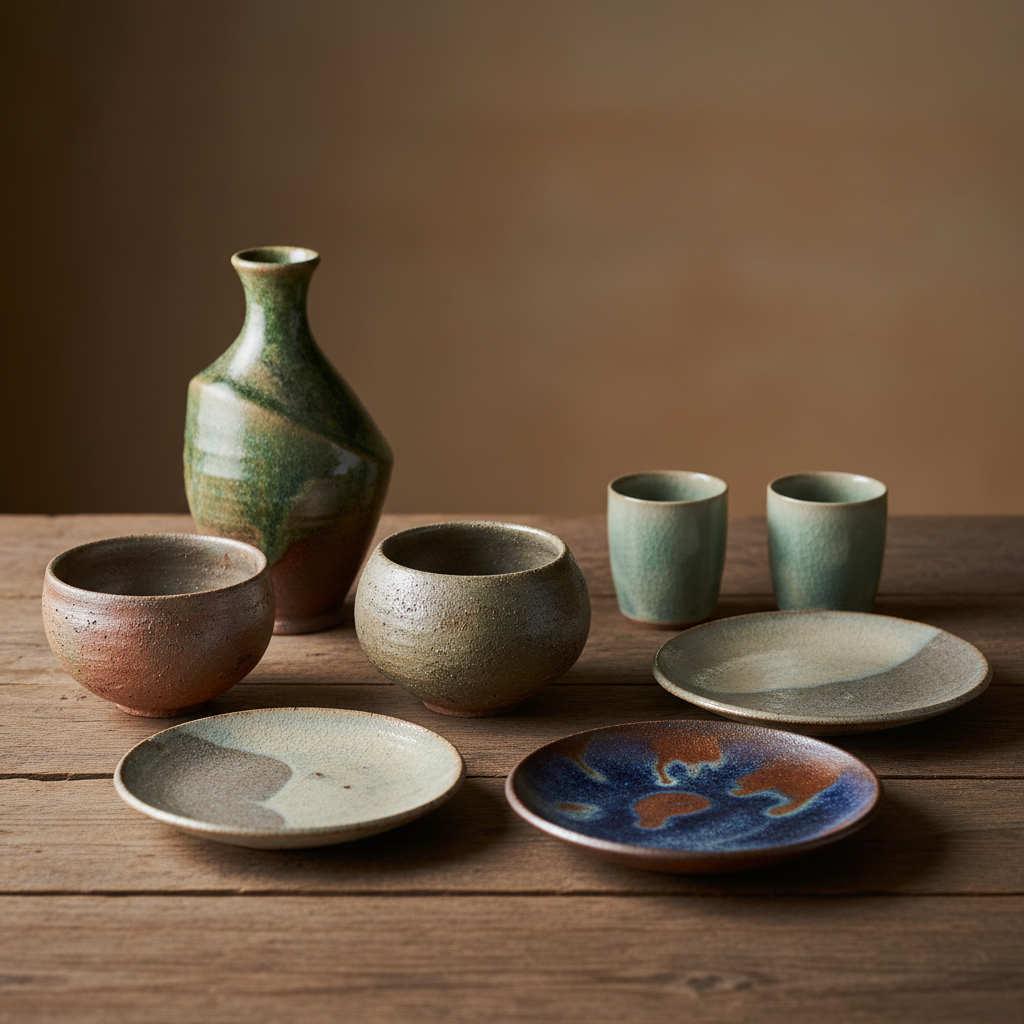
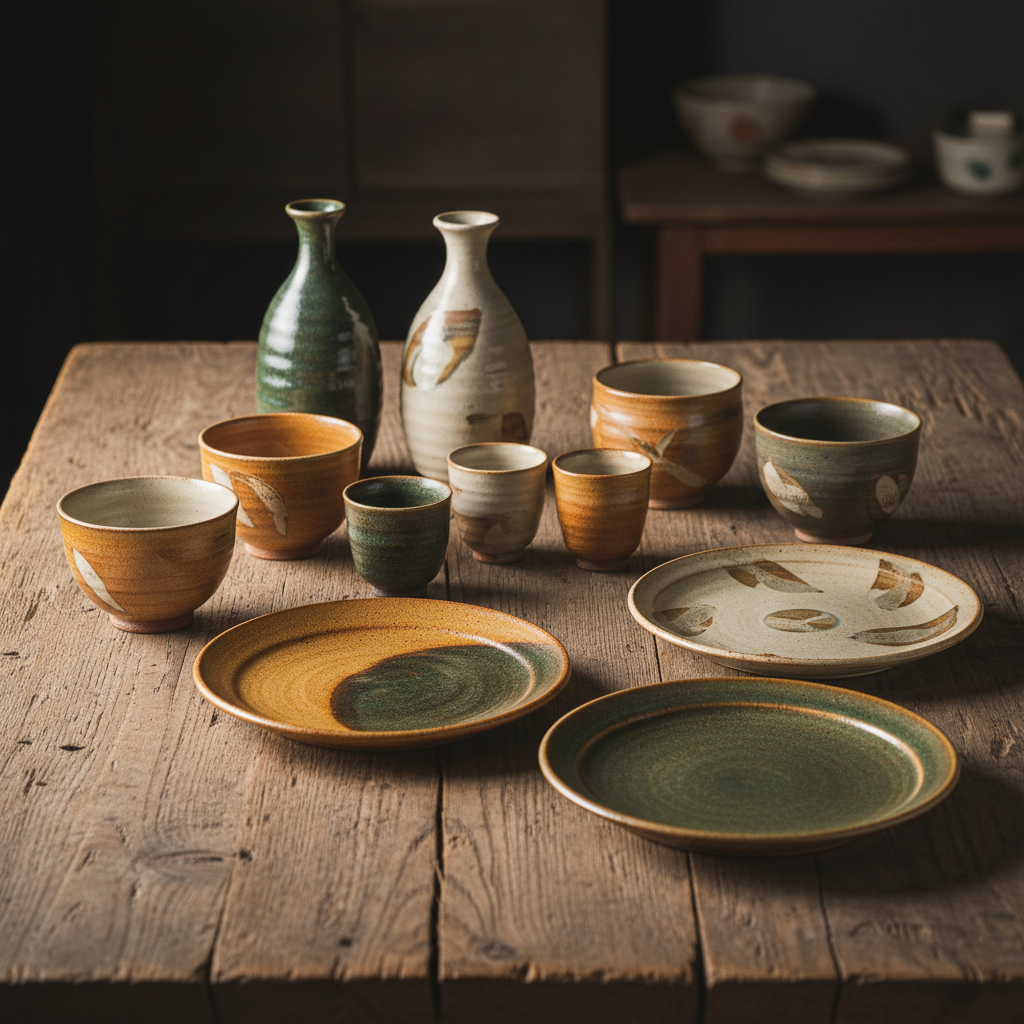
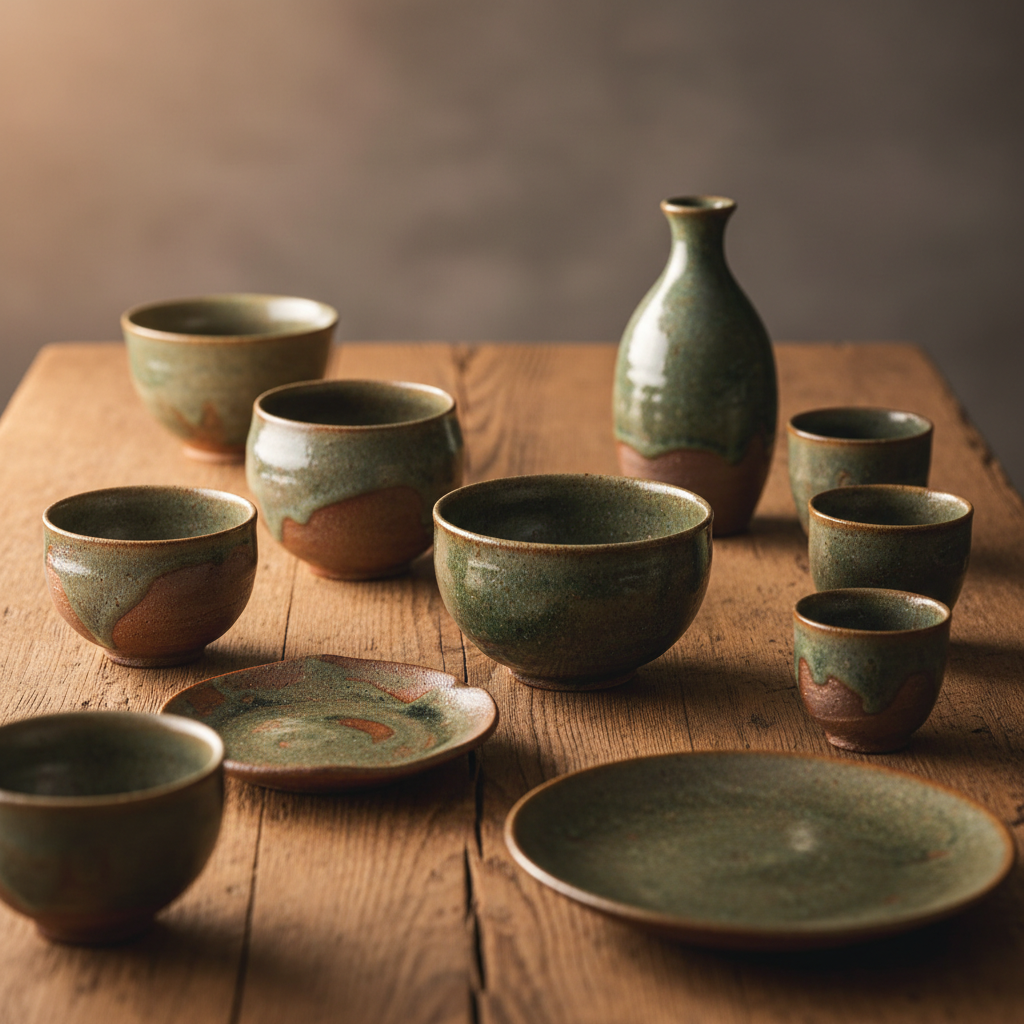
The greatest characteristic of Hoshino Yaki lies in its distinctive glazes and colors. The representative ones are as follows:
Ame-Glaze (飴釉)
A deep brown to amber-colored glaze that represents Hoshino Yaki. Using glazes containing iron creates a warm color tone. As pieces are used, their character increases, making the aging process enjoyable.
White Glaze (白釉)
A soft milky white glaze that gives a simple yet refined impression. It creates diverse expressions through layering and combination with ame-glaze.
Celadon Glaze
A pale blue-green glaze that creates a calm atmosphere. In Hoshino Yaki, this is a relatively new technique that has been adopted.
These glazes are formulated using locally available materials while drawing on long experience and technique. The approach of avoiding chemical dyes and valuing natural coloring produces Hoshino Yaki’s simple beauty.
Soil Texture and Forming Techniques
The clay used in Hoshino Yaki has ceramic soil extracted from the Hoshino Village area as its primary material. This soil contains moderate iron content, and after firing, possesses a warm color and texture.
The primary forming technique is wheel-throwing, though hand-building and mold-forming are also employed. Particularly, traditional large jars and pots are made through wheel-throwing, requiring skilled technique, with their well-balanced beautiful forms being the crystallization of the craftsman’s skill.
Utensil-Making with an Emphasis on Practicality
From its development as a folk kiln, Hoshino Yaki has always prioritized practicality in vessel-making. The elements necessary for everyday use—ease of handling, ease of use, and durability—are reflected in design and form.
- Appropriate Thickness: Resistant to breaking and excellent heat retention
- Hand-Fitting Shape: Easy to hold with a pleasant feel on the lips
- Stable Base Ring: Stability when placed on a table
- Microwave and Dishwasher Compatible: Practicality adapted to modern life (varies by kiln)
This pursuit of practicality is one of the reasons Hoshino Yaki has been loved for many years.
Hoshino Yaki Production Process: Inheritance of Traditional Techniques
1. Raw Material Extraction and Clay Preparation
Hoshino Yaki production begins with securing quality ceramic clay. Clay extracted from the Hoshino Village area is refined while removing impurities. Multiple clays are blended to create soil that is easy to form and experiences minimal shrinkage and warping after firing.
The clay is given time to age, increasing its plasticity and making it easier to form. This process can take months to years and serves as the foundation for creating fine vessels.
2. Forming
In wheel-throwing, clay is shaped on a rotating wheel using centrifugal force and hand pressure. Circular vessels such as bowls, plates, and basins are primarily made using this technique.
When creating large jars and pots, a technique combining “coil-building,” where the piece is gradually built up from the bottom, with the wheel may be employed. This requires skilled technique, and achieving uniform thickness and beautiful form requires years of experience.
3. Drying
After forming, the vessel is allowed to dry slowly and naturally. Rapid drying can cause warping or cracking, so drying takes several days to weeks while managing humidity and temperature.
As drying progresses, trimming work is performed. The bottom and sides of wheel-thrown vessels are trimmed to refine the form and create the foot ring (kotai). This trimming process is important work that affects both the beauty and usability of the vessel.
4. Bisque Firing
Completely dried vessels are fired at around 800°C. This is called bisque firing. The bisque firing hardens the vessel and makes it suitable for glazing.
5. Glazing
Glaze is applied to the bisque-fired vessel. Depending on the vessel’s form and intended expression, various techniques are employed, such as dipping, pouring, and brush application.
The color and texture of the finished piece change significantly depending on the thickness and application method of the glaze, making the craftsman’s experience and sensibility crucial. In the “layered glazing” technique that combines multiple glazes, a unique character emerges at the color boundaries, becoming one of Hoshino Yaki’s attractions.
6. High-Fire Kiln Loading
Glazed vessels are loaded into the kiln and fired at temperatures over 1200°C. During this high-fire loading, the glaze melts to form a glassy layer, creating beautiful colors and luster.
Firing can take 12 hours or more, making temperature control extremely important. The final appearance changes depending on the position within the kiln and how flames reach it, so kiln-packing arrangements demand the craftsman’s skill and experience.
7. Kiln Opening and Inspection
After firing, the kiln is cooled slowly, and vessels are removed. Each piece’s finish is confirmed one by one, with checks for warping, cracks, and glaze condition. A certain percentage of defects occur in high-temperature firing, so rigorous inspection is performed.
Hoshino Village, Fukuoka Prefecture Yame City: The Charm of a Ceramic Production Area
Geography and Natural Environment of Hoshino Village
Hoshino Village is located in the mountainous area of Yame City in the southeastern part of Fukuoka Prefecture. It is a picturesque place surrounded by mountains with the clear Hoshino River flowing through, and beautiful rice terraces and tea fields spreading out.
This region, with its high elevation and large day-night temperature differences, not only produces high-quality ceramic clay but is also known as a production area for Hoshino tea. It is also famous as a stargazing spot and has an astronomical observatory called the “Star Culture Hall.”
This rich natural environment is said to influence Hoshino Yaki’s simple, warm aesthetic.
Historical Background as a Ceramic Production Area
The Chikugo region has long been known as a ceramic production area, with abundant high-quality ceramic clay existing around Hoshino Village. Records remain of multiple kilns operating under the Kurume Domain’s administration during the Edo period.
Beyond Hoshino Yaki, nearby areas include Koishiwara Yaki and Takatori Yaki, representative ceramics of Fukuoka Prefecture, forming one of Kyushu’s most significant pottery regions. Exchange with these production areas and transmission of techniques existed, and Hoshino Yaki developed its own unique characteristics.
Current Kilns and Artist Activities
Currently, the number of kilns inheriting Hoshino Yaki tradition in Hoshino Village is limited, but each maintains its own individuality while continuing traditional techniques.
Representative kilns include:
Gentayuu Kiln (源太窯)
A kiln inheriting the line of Gentayuu, the founder of Hoshino Yaki, continuing traditional techniques and glazes while creating vessels suited to contemporary life.
Many kilns accept kiln visits and ceramic experience activities, allowing visitors to observe Hoshino Yaki production up close and experience wheel-throwing.
Hoshino Village Tourism and Hoshino Yaki
For tourists visiting Hoshino Village, touring kilns producing Hoshino Yaki is one of the popular activities. At the kilns, finished work is displayed and sold, and visitors can select pieces while talking directly with the artists.
Hoshino Village has several other tourist attractions:
- Star Culture Hall: Kyushu’s largest astronomical observatory where stargazing is enjoyable both day and night
- Tea Culture Hall: A facility introducing the history and culture of Hoshino tea
- Ikenomine Campground: A naturally rich camping area
- Hoshino Hot Spring “Kirara”: A hot spring facility known for its beauty treatment waters
After purchasing Hoshino Yaki vessels, you can enjoy Hoshino tea or relax in hot springs, making it possible to experience Hoshino Village’s charm over a full day.
Contemporary Development and Appeal of Hoshino Yaki
Fusion of Tradition and Contemporary Design
Hoshino Yaki’s kilns and artists challenge themselves with new vessel-making that honors traditional techniques while adapting to contemporary lifestyles and aesthetic sensibilities.
Beyond traditional pieces such as bowls and plates, diverse works are created including coffee cups, wine glasses, flower vases, and accessories. By incorporating contemporary sensibility into form and design while using traditional glazes, vessels that appeal to younger generations are being produced.
Value as Everyday Tableware
A major appeal of Hoshino Yaki is its high practicality suited for daily use. Not overly showy yet distinctive, and compatible with both Japanese and Western cuisine, these vessels fit perfectly on the contemporary table.
The aging process that deepens with use is also a source of enjoyment. Particularly with ame-glaze vessels, color deepens with use, developing unique character. The joy of watching your own piece develop is one of Hoshino Yaki’s attractions.
Hoshino Yaki as Gifts
Hoshino Yaki, combining handmade warmth and practicality, is also popular as gifts. It is frequently chosen for life milestones such as wedding gifts, housewarming presents, and 60th birthday gifts, with paired bowls and cups particularly being standard gift items.
Some kilns also offer artist-made one-of-a-kind pieces or custom options like personalization, making them valued as special gifts.
How to Purchase Hoshino Yaki and Care Instructions
Where to Purchase
There are several ways to purchase Hoshino Yaki:
Direct Kiln Sales
Visiting kilns in Hoshino Village directly to purchase. The greatest advantage is being able to talk with the artist and actually handle pieces before selecting.
Online Shops
Various kilns and artists operate online shops where you can purchase. Convenient for those living far away or without time to visit in person.
Crafts Shops and Select Shops
Some crafts shops and select shops throughout Fukuoka Prefecture and nationwide carry Hoshino Yaki.
Specialty Fairs and Craft Fairs
Ceramics are sometimes exhibited at department store specialty fairs and craft fairs held in various locations.
Price Range
Hoshino Yaki prices vary depending on vessel size, artist, and technique:
- Small plates and miniature dishes: Around 1,500–3,000 yen
- Tea bowls: Around 3,000–6,000 yen
- Tea cups and drinking cups: Around 2,500–5,000 yen
- Medium bowls and large plates: Around 5,000–15,000 yen
- Flower vases and pots: Around 10,000 yen and above
Pieces by well-known artists or rare works command even higher prices.
Care and Use
Methods for caring for Hoshino Yaki for long-term use:
When First Using
- Before initial use, “seasoning” the piece by simmering it in rice rinsing water makes it resistant to stains and discoloration
- Soaking in water before use prevents tea staining and discoloration
Daily Care
- Wash soon after use and dry thoroughly
- Wash gently with a soft sponge and neutral detergent
- Avoid cleansing powders and hard scrubbing brushes that can damage the glaze
Storage
- Store only after completely dry
- When stacking, place cloth or paper between pieces to prevent scratching
- Avoid direct sunlight
Precautions
- Avoid sudden temperature changes (such as plunging hot vessels into cold water)
- Confirm microwave and dishwasher compatibility with the kiln (varies by piece)
- Stop using if you notice cracks or chips
Hoshino Yaki and Other Fukuoka Prefecture Ceramic Production Areas
Beyond Hoshino Yaki, Fukuoka Prefecture has several renowned ceramic production areas. Understanding each area’s characteristics provides deeper understanding of Hoshino Yaki’s individuality.
Koishiwara Yaki
Pottery produced in the Koishiwara district of Toyomine Village, Asakura County, with approximately 350 years of history. Known for unique decorative techniques such as “flying plane” (tobiakanna) and “brush marks” (hakem), this folk art pottery features geometrically beautiful patterns.
In 2020, it received designation as a “Traditional Japanese Craft” alongside nearby Takatori Yaki.
Takatori Yaki
Pottery produced in the Takatori district of Toyomine Village, also with approximately 400 years of history. Originally developed as tea ceremony ware, it is counted among the “Seven Kilns of Enshu,” a highly prestigious ceramic tradition.
Works are created primarily as tea ceremony implements, featuring refined beauty.
Agano Yaki
Pottery produced in Fukushi Town, Tagawa County, with approximately 400 years of history. Characterized by thin, light construction, it is particularly highly valued as tea ceremony ware.
Positioning of Hoshino Yaki
In comparison to these production areas, Hoshino Yaki has:
- A history developing as a folk kiln centering on everyday tableware
- A simple, warm aesthetic
- Vessel-making emphasizing practicality
- Relatively affordable price range
These characteristics give Hoshino Yaki its individuality as “everyday tableware.” Rather than tea ceremony ware or decorative pieces, its appeal lies in approachable vessels you want to use daily on your table.
The Future of Hoshino Yaki: Inheritance and Development of Traditional Crafts
Challenges in Successor Development
Like many traditional crafts, Hoshino Yaki faces the challenge of successor shortages. Learning ceramic techniques requires years, and economic stability takes time to achieve, raising barriers for young people choosing the craftsman path.
However, recent increased interest in “craftsmanship” and “handwork” has brought more young people to the ceramic arts world. Apprenticeships at existing kilns and young artists opening independent studios indicate a new generation beginning to inherit Hoshino Yaki.
Potential as a Regional Revitalization and Tourism Resource
Hoshino Yaki also serves as an important tourism resource for Hoshino Village. Ceramic experiences and kiln tours are attractive content for visitors to Hoshino Village, contributing to regional revitalization.
Yame City as a whole is advancing branding as a “craftsmanship town,” pairing Hoshino Yaki with Yame tea, Yame lanterns, and Buddhist altars, with Hoshino Yaki playing an important role.
New Developments in the Digital Age
The spread of social media and online shops has made it easier to communicate Hoshino Yaki’s appeal nationwide and internationally. Young artists use Instagram and other platforms to introduce their work and build fan bases.
New efforts are also beginning, such as using crowdfunding for new product development and offering online ceramic classes.
Balancing Tradition and Innovation
When considering Hoshino Yaki’s future, balancing inheritance of traditional techniques with innovation meeting contemporary needs becomes important. Continuing to honor techniques and aesthetic sensibilities passed down over 200 years while simultaneously challenging new vessel-making suited to the times.
Discerning what should be preserved and what should change while advancing will be key to Hoshino Yaki being beloved for the next 100 years.
Conclusion: Bringing Hoshino Yaki’s Appeal into Daily Life
Hoshino Yaki is a traditional ceramic ware created for over 200 years in Hoshino Village, Yame City, Fukuoka Prefecture. From its development as a folk kiln, it features simple warmth and high practicality.
Its distinctive glazes like ame and white glaze, the character that comes from handmaking, and functionality suited for daily use are what make Hoshino Yaki appealing and the reasons it has been loved by many.
In Hoshino Village’s rich natural environment, craftspeople continue to turn the wheel and pass down traditional techniques to the next generation. Visiting kilns to converse with artists and experience choosing pieces by hand offers deeper understanding of Hoshino Yaki’s appeal.
Hoshino Yaki can also be obtained from distant locations through online shops. Incorporating Hoshino Yaki vessels into your daily table will surely make meals richer and more enjoyable.
Traditional crafts might feel formal, but Hoshino Yaki is “everyday tableware” you can enjoy casually. By all means, try holding Hoshino Yaki vessels and experience their warmth and ease of use.
If you have the opportunity to visit Fukuoka Prefecture, why not extend your trip to Hoshino Village to visit this ceramic region? Beautiful nature, delicious tea, and encounters with warm vessels surely await you.