
Takatori Ware (Fukuoka Prefecture) Complete Guide|History, Characteristics, How to Purchase from Kilns Through to Exhaustive Explanation
Takatori ware (takatoriyaki), a traditional ceramic of which Fukuoka Prefecture is proud, is known as one of Japan’s leading ceramic production areas with a history of over 400 years. Fusing techniques transmitted from the Korean Peninsula with Japanese aesthetic sensibilities, Takatori ware developed alongside tea ceremony culture and continues to receive high acclaim from ceramic art enthusiasts and tea practitioners today.
This article provides comprehensive explanations of information related to Takatori ware, from its origins through modern times, its unique techniques and characteristics, major kilns, and methods of purchase.
What is Takatori Ware|Fukuoka Prefecture’s Representative Traditional Ceramic
Takatori ware is a ceramic produced primarily in the areas of Nogata City (noogatashi) and Iizuka City in Fukuoka Prefecture. Its name is said to derive from the Takatori clan, which once ruled this region.
Basic Information on Takatori Ware
- Production area: Areas around Nogata City and Iizuka City, Fukuoka Prefecture
- Opening period: Keichō era (1596–1615)
- Main characteristics: High-caliber artistic style as tea ware, diverse glaze expressions
- Techniques: Wheel throwing, hand forming, glazing techniques
- Representative works: Tea bowls, tea caddies, water vessels, flower containers and other tea ceremony utensils
Takatori ware is counted as one of the “Seven Kilns of Enshu (Enshu Shichiyō),” and is a famous kiln that received high evaluation from Kobori Enshu, the great feudal lord and tea practitioner of the early Edo period.
History of Takatori Ware|A 400-Year Story Beginning with Korean Potters
Kiln Opening in the Keichō Era and Korean Potters
The history of Takatori ware traces back to Toyotomi Hideyoshi’s campaigns in Korea (the Bunroku and Keichō campaigns, 1592–1598). Kuroda Nagamasa, lord of Chikuzen Province (present-day Fukuoka Prefecture), brought Korean potters back with him and had them open kilns around present-day Nogata City around Keichō 5 (1600).
The potters recorded as the first are said to be the brothers Hachiyama and Hachizō. They brought advanced ceramic techniques from the Korean Peninsula and, while adapting them to Japanese soil and materials, established their own distinctive style.
Development as a Clan Kiln
In the early Edo period, Takatori ware was protected and fostered as the Kuroda clan’s official kiln (clan kiln). Under the patronage of the clan lord, it specialized primarily in the production of tea ceremony utensils, creating works of high aesthetic refinement.
In particular, Kobori Enshu’s selection of Takatori ware as one of the “Seven Kilns of Enshu” established Takatori ware’s position firmly. The group of works called “Enshu Takatori,” made to suit Enshu’s preferences, possess a delicate and refined beauty and are highly valued as tea ceremony utensils even today.
Kiln Relocations and Development
Takatori ware kilns have relocated several times over the ages:
- Takatozanyo Kiln (around Nogata City): The earliest kiln
- Uchigasoyō Kiln (Nogata City): Opened in the Genna era (1615–1624)
- Yamada Kiln (Iizuka City): Opened in the Kan’ei era (1624–1644)
- Hakuhasan Kiln (Iizuka City): One of the kilns that continues to this day
These kiln relocations are said to have been prompted by the need to secure higher quality ceramic clay or firewood as fuel, as well as clan policies.
Changes Following the Meiji Restoration
With the Meiji Restoration, Takatori ware lost the protection of the clan and faced a crisis of decline. However, through the efforts of potters determined to preserve tradition, it was reborn as a private kiln.
During the Shōwa period, influenced by the folk art movement as well, while preserving traditional techniques, it also began engaging in the creation of works suited to modern daily life.
Contemporary Takatori Ware
Currently, Takatori ware is designated as a traditional craft of Fukuoka Prefecture, and multiple kilns continue their activities while inheriting the tradition. Beyond tea ceremony utensils, diverse works are produced, including everyday vessels, flower containers, and objects.
Characteristics of Takatori Ware|The World of Technique and Beauty
Diversity of Glazes
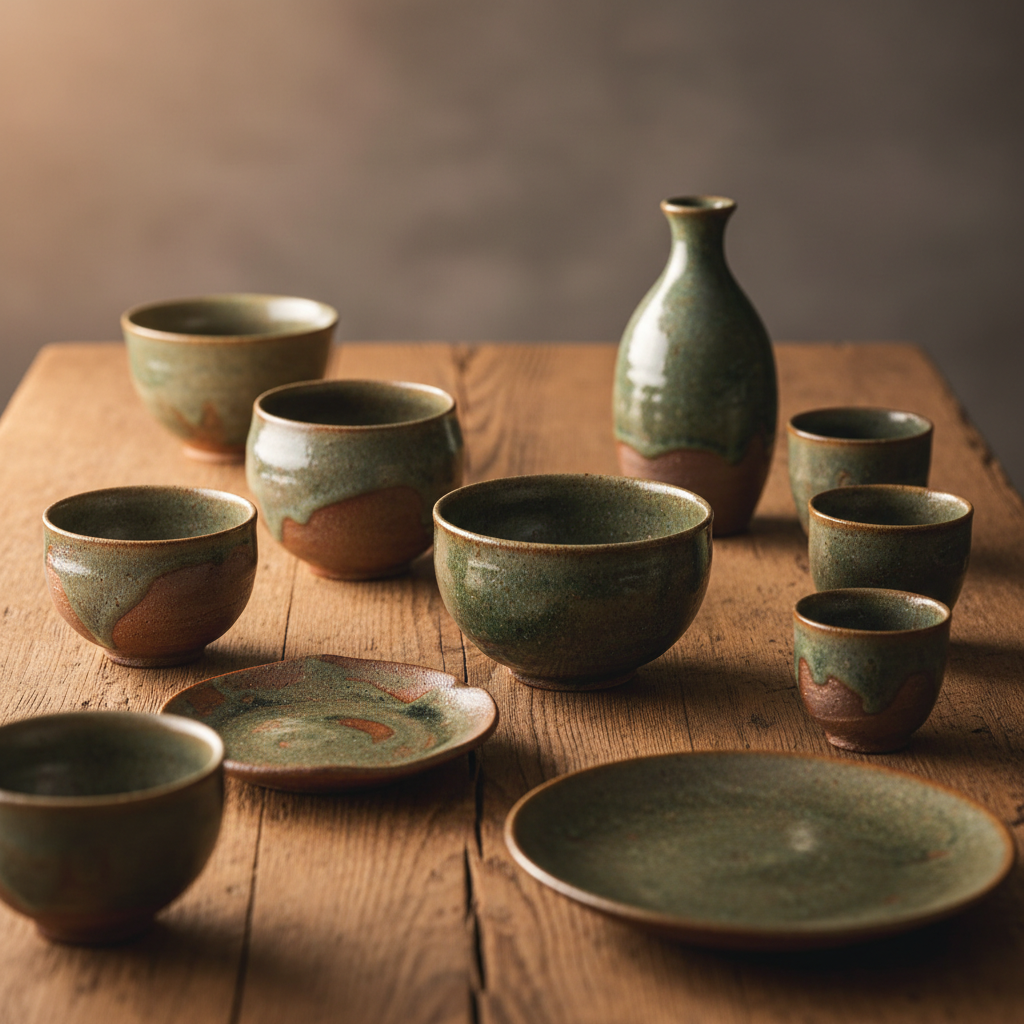
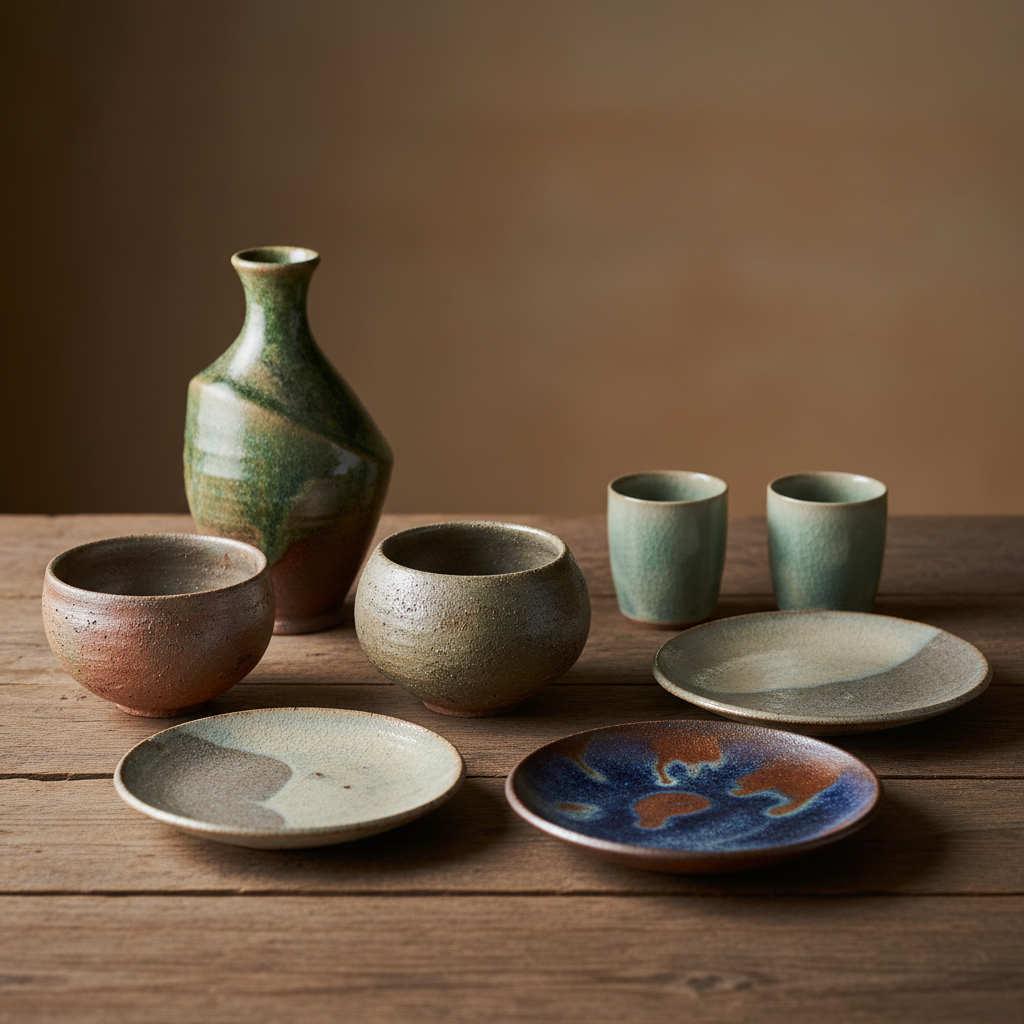
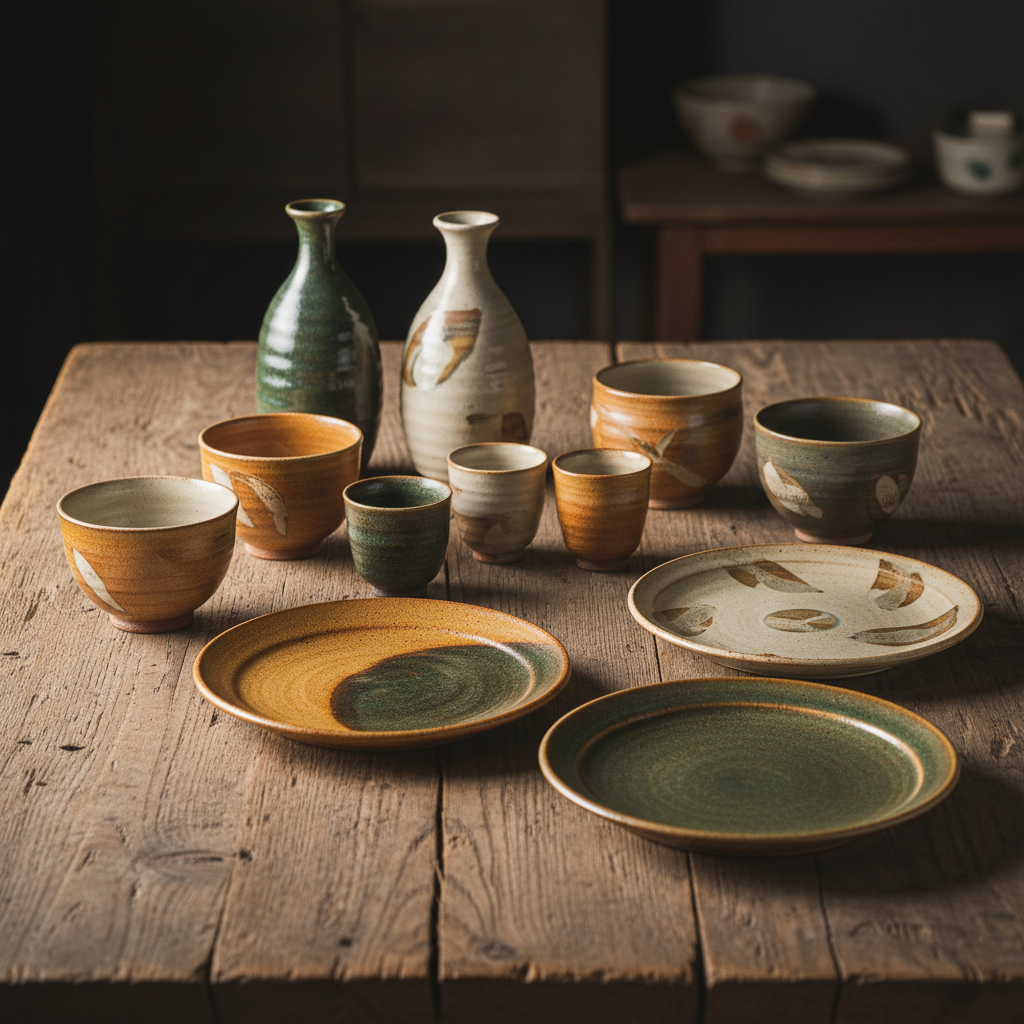
The greatest characteristic of Takatori ware lies in its diverse glaze expressions. The main glazes include the following:
1. Rice Straw Ash Glaze (Warabaiyū)
A glaze with rice straw ash as its main ingredient, exhibiting pale yellow to greenish tones. One of the representative glazes of Takatori ware.
2. White Glaze
A beautiful white glaze that creates a pure and refined atmosphere.
3. Black Glaze
A glaze containing much iron, characterized by a deep black color. Used on tea bowls and the like.
4. Amber Glaze
A dark brown glaze from iron, with the allure of a warm amber-colored finish.
5. Celadon Glaze
A blue-green glaze obtained by reduction firing ash glaze containing iron. Takatori celadon possesses a unique coloration.
Glaze Division Technique
Takatori ware frequently employs the “glaze division” technique, using multiple glazes on a single work. The subtle color changes and flows that occur where different glazes meet create the distinctive beauty of Takatori ware.
Artistic Style Emphasizing Clay Body Character
Takatori ware tends to value the texture of the ceramic clay itself. Through the technique of “reserved glazing,” leaving part of the clay body unglazed, one can enjoy the contrast between the warmth of the clay and the beauty of the glaze.
High-Caliber Style as Tea Ware
Developed as one of the Seven Kilns of Enshu, Takatori ware is characterized by its refined quality as tea ware:
- Aesthetics of Wabi-Sabi: Subdued, calming color tones
- Ease of Use: Form and weight balance that fit comfortably in hand
- Beauty of Scenery: The “landscape” created by glaze flow and color change
Forming Techniques
While wheel throwing serves as the basis, various techniques are employed depending on the work, including hand forming and carving. Particularly in tea bowls, the shape of the foot ring created through carving is highly regarded.
Major Takatori Ware Kiln Introductions
We introduce the principal kilns currently inheriting the Takatori ware tradition in Fukuoka Prefecture.
Onimaru Setsuzan Kiln (Onimarusetsuzan’yō)
One of the representative kilns of Takatori ware, located in Iizuka City. While inheriting tradition dating from the Edo period, it creates works incorporating contemporary sensibility.
Characteristics:
- Production of traditional tea ceremony utensils
- Tableware suited to contemporary living
- Research into glazes and challenging new expressions
Takatori Ware Miraku Kiln (Takatoriyaki Mirakugama)
A kiln active in Nogata City. While preserving traditional techniques, it also focuses on creating practical everyday vessels.
Characteristics:
- Full selection of everyday vessels
- Offering of experience classes
- Activities rooted in the local community
Other Kilns
The tradition of Takatori ware is carried forward by multiple kilns and individual artists. Each pursues new possibilities of Takatori ware through their own interpretation and techniques.
How to Distinguish Takatori Ware|Points for Appreciation
We present points to keep in mind when appreciating Takatori ware and considering its purchase.
Expression of Glazes
The allure of Takatori ware lies in the expression of its glazes. Pay attention to the following:
- Depth of color: Though appearing monochromatic, subtle color changes with shifting light
- Glaze flow: Natural scenery from division and flow
- Crazing (Kannyū): Fine crackle patterns on the glaze surface (intentional ones)
Form and Balance
Particularly in tea ceremony utensils, the beauty of form and balance are crucial:
- Treatment of the rim: Balance of smoothness and thickness
- Body expansion: Good fit when held in hand
- Foot ring: Where wheel-throwing technique is evident
Clay Body Character
In unglazed areas (such as inside the foot ring), one can observe the clay body’s texture:
- Clay color: Color changes from firing
- Feel: Smoothness and warmth
Signatures and Kiln Marks
Signatures and kiln marks on the bottom of works or boxes indicate important information about the artist or kiln. Each Takatori ware kiln possesses its own distinctive mark.
How to Purchase Takatori Ware|Where Can You Buy It?
There are several methods for purchasing Takatori ware.
Direct Purchase at Kilns
The most reliable method is to visit kilns directly. Many kilns offer:
- Gallery and exhibition space sales
- Dialogue with potters for work selection
- Kiln-exclusive works for purchase
- Production site viewing (advance reservations often required)
It is recommended to confirm business days and hours before visiting.
Department Stores and Specialty Shops
Takatori ware is also handled at department stores and craft specialty shops within Fukuoka Prefecture:
- Fukuoka Mitsukoshi
- Iwataya
- Traditional craft shops
At these stores, one can compare and select from works of multiple kilns.
Exhibitions and Solo Shows
Exhibitions held regularly by kilns and artists are also good opportunities for purchase:
- New work presentations
- Solo and group exhibitions
- Craft fairs
Exhibition information can be found on kilns’ websites and social media.
Online Shops
In recent years, online purchasing has become possible:
- Kilns’ official online shops
- Craft specialty e-commerce sites
- Handmade marketplaces
However, selecting ceramics after seeing the actual piece is ideal. When possible, we recommend first confirming the actual object.
Furusato Nozei
Takatori ware can sometimes be selected as a return gift for furusato nozei (hometown tax donation) to Nogata or Iizuka City. It is a method to obtain Takatori ware while contributing to the region.
Price Range of Takatori Ware
The price of Takatori ware varies widely depending on the type of work, size, and artist:
Everyday Vessels
- Tea cups and small plates: Approximately 3,000 to 8,000 yen
- Tea bowls and rice bowls: Approximately 5,000 to 15,000 yen
- Large plates and bowls: Approximately 10,000 to 30,000 yen
Tea Ceremony Utensils
- Tea bowls: 20,000 yen to 100,000 yen or more
- Water vessels: 30,000 yen to 150,000 yen or more
- Tea caddies: 50,000 yen to 200,000 yen or more
Fine Art Crafts
Works by artists of the caliber of Living National Treasures or ancient Takatori ware with historical value may command prices in the hundreds of thousands to millions of yen.
Takatori Ware Care Methods
We introduce care methods for enjoying Takatori ware long-term.
Before First Use
Before using new Takatori ware:
- Seasoning treatment: Boil in rice washing water or soak in water (if crazing is present)
- Thorough drying: Dry completely before use
Daily Use
- Soak in water before use: Prevents staining
- Avoid sudden temperature changes: Can cause cracking
- Microwave and dishwashers: Basically not usable (confirm with the kiln)
Washing and Storage
- Wash gently with soft sponges
- Allow to dry thoroughly: Prevents mold and odors
- Avoid direct sunlight: Causes color fading
- Be careful with stacking: Place cloth between pieces to prevent damage
In the Case of Tea Ceremony Utensils
Tea ceremony utensils such as tea bowls require particularly careful handling:
- Wash immediately after use: Prevents tea stain buildup
- Wipe with soft cloth
- Store in paulownia boxes: Protects from moisture and impact
Takatori Ware and Fukuoka Prefecture’s Ceramic Culture
Fukuoka Prefecture possesses a rich ceramic culture beyond Takatori ware.
Major Ceramic Production Areas in Fukuoka Prefecture
Agano Ware (Aganoyaki)
Ceramics produced in the areas around Fukuchi Town, Tagawa District. Like Takatori ware, opened by Korean potters and developed as tea ware. Characterized by thin formation and delicate glazes.
Koishiwara Ware (Koishiwarayaki)
Ceramics produced in Tōhō Village, Asakura District. Known as folk art pottery, characterized by distinctive decorative techniques such as the flying plane and brush-mark patterns.
Genkawa Ware (Genkawawaki)
Porcelain produced in Higashi Ward, Fukuoka City. Characterized by the beauty of white porcelain and the delicacy of underglaze blue painting.
Takatori Ware’s Position
Among these, Takatori ware occupies a special position as the earliest to open, establishing a distinguished tradition of high-caliber tea ware as a clan kiln. It is in many ways the origin of Fukuoka Prefecture’s ceramic culture.
Experiencing Takatori Ware|Pottery Classes and Tourism
To deepen your knowledge of Takatori ware, it is recommended to experience pottery-making yourself or visit the production area.
Pottery Experience Classes
Many kilns offer pottery experience classes:
- Wheel-throwing experience: Forming vessels on an electric potter’s wheel
- Hand-forming experience: Creating freely-shaped works
- Painting experience: Painting designs on bisque-fired vessels
Experience classes usually require advance reservations, so we recommend contacting the kiln.
Production Area Visits
Visiting Nogata or Iizuka City allows you to touch upon Takatori ware’s history and culture:
Nogata City
- Nogata Coal Memorial Hall: Learning about regional history
- Kiln tours: Visiting multiple kilns
- Regional cuisine: Enjoying local dishes served in Takatori ware vessels
Iizuka City
- Former Itō Denzaemon Residence: A Meiji and Taishō-era wealthy merchant’s mansion
- Iizuka City Historical Museum: Regional history and culture
- Kiln visits: Kilns around Hakuhasan
Events and Festivals
The production area holds events regularly:
- Kiln openings: New work presentations and sales
- Pottery markets: Multiple kilns set up stalls
- Cultural festivals: Introductions of regional traditional culture
This event information can be confirmed at each city’s tourism association or kilns’ websites.
The Future of Takatori Ware|Tradition and Innovation
Though possessing a history of over 400 years, contemporary potters continue to challenge tradition while preserving it.
Inheritance of Traditional Techniques
Younger potters learn techniques from veteran potters and pass the tradition to the next generation. Particularly:
- Glaze mixing techniques
- Wheel-throwing techniques
- Firing techniques
These techniques require years of experience and intuition, demanding careful transmission.
Contemporary Interpretation
While basing itself in tradition, work creation suited to contemporary lifestyles is also advancing:
- Modern design: Simplified, contemporary forms
- Pursuit of functionality: Designs emphasizing usability
- New glaze expressions: Experimental attempts based on traditional technique
International Outreach
In recent years, international interest in Japanese traditional crafts has grown. Takatori ware is:
- Exhibitions at overseas venues
- Accommodating inbound tourists
- International online sales
And other efforts to strengthen outreach to the world are underway.
Regional Cooperation
Takatori ware, as an important cultural resource for the region:
- Building a regional brand
- Utilization as a tourism resource
- Educational programs: Pottery training in local schools
And such initiatives involving the region are being advanced.
Summary|Rediscovering the Allure of Takatori Ware
Takatori ware is Fukuoka Prefecture’s representative ceramic, developed over more than 400 years through the fusion of techniques transmitted from the Korean Peninsula with Japanese aesthetic sensibilities.
Main Allures of Takatori Ware
- Rich history: Tradition continuing from opening by Korean potters to the present day
- Diverse glaze expressions: Varied glazes including rice straw ash, white, and black
- Refined quality as tea ware: Distinction as one of the Seven Kilns of Enshu
- Style emphasizing clay body character: Harmony between the warmth of the clay body and the beauty of glazes
- Adaptation to modern times: Evolution preserving tradition while adapting to contemporary life
Ways to Encounter Takatori Ware
Methods of experiencing Takatori ware are diverse:
- Kiln visits: Seeing works directly and engaging in dialogue with potters
- Pottery experience: Trying to create with your own hands
- Daily use: Using Takatori ware vessels in everyday life
- Tea ceremony: Using formally as tea ceremony utensils
- Collecting: Appreciating and collecting as fine art crafts
In whatever form, an encounter with Takatori ware becomes an opportunity to rediscover the depth and beauty of Japanese traditional culture.
Cultural Experience Through Takatori Ware
Takatori ware is not merely a vessel but culture itself, in which 400 years of history, the skill and passion of potters, and Japanese aesthetic sensibilities are concentrated. When holding a single tea bowl, one can reflect upon the rich stories underlying it.
When visiting Fukuoka Prefecture, please do visit Takatori ware’s production areas and touch the works themselves. The warmth of its feel and the beautiful scenery woven by glazes will surely remain deep in your heart.
Takatori ware is living traditional culture that continues from the past through the present and into the future. Contemporary potters continue to create Takatori ware for a new age while cherishing the techniques inherited from their predecessors. Please surely witness their challenge and creation with your own eyes.