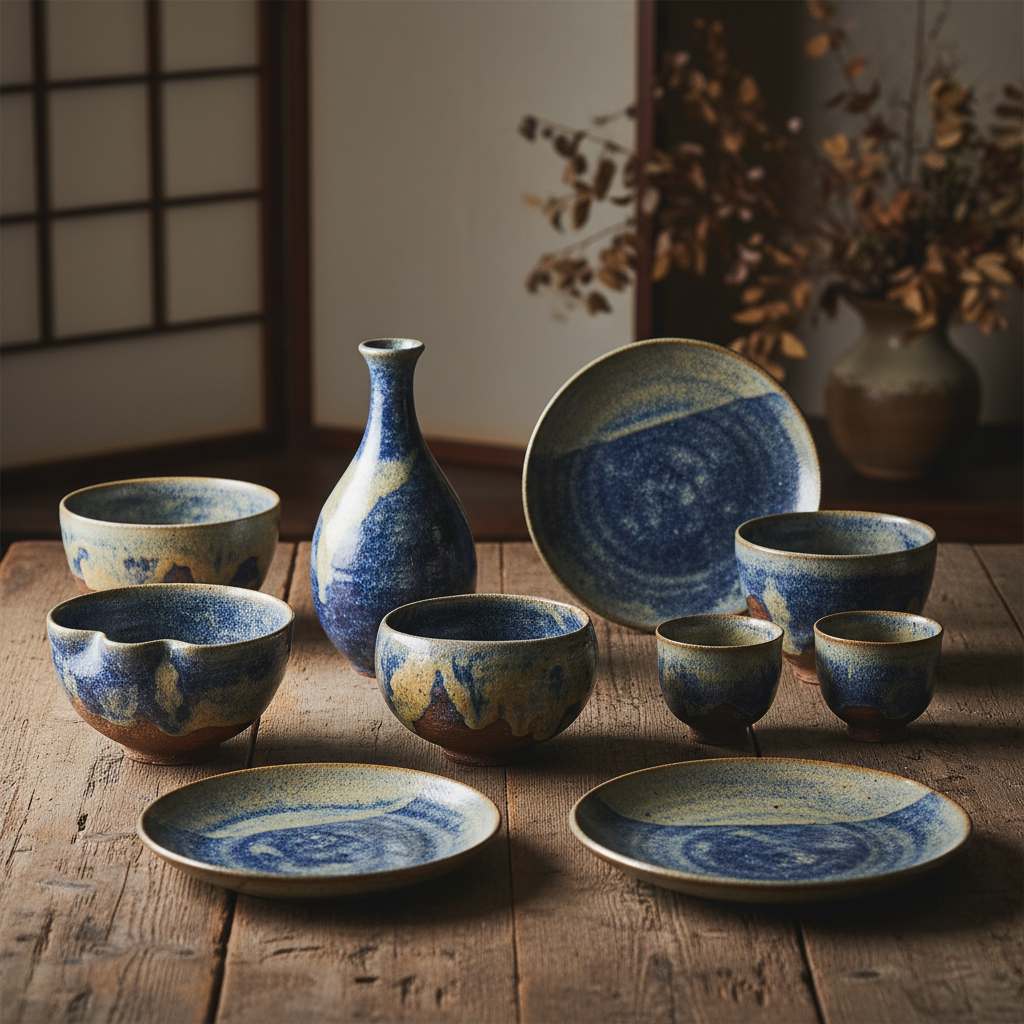

The Charm of Takeo Ko-Karatsu Ware Thoroughly Explained|History and Characteristics of Saga Prefecture’s Representative Ceramic Production Area
Saga Prefecture is known as one of Japan’s premier centers of ceramic production, with diverse pottery cultures such as Arita ware, Imari ware, and Karatsu ware flourishing. Among these, Takeo City has developed as a major production center for Karatsu ware, and “Takeo Ko-Karatsu Ware” is designated as a traditional craft. This article provides a comprehensive explanation of the history, characteristics, techniques, and current state of the Takeo Ko-Karatsu ware production area.
What is Takeo Ko-Karatsu Ware?
Takeo Ko-Karatsu Ware is a collective term for ceramics produced in Takeo City, Saga Prefecture. Developed as an offshoot of Karatsu ware, it was designated as a traditional craft in 1988. The greatest characteristic of Takeo ware is that it includes both “pottery” in tea-colored tones that brings out the quality of the clay and “porcelain” that gleams white. This duality can be said to be a unique culture created by the geographical condition of being sandwiched between Imari and Arita ware, famous for porcelain, and Karatsu ware, famous for pottery.
Geographical Characteristics of Takeo City
Takeo City is located in the western part of Saga Prefecture, positioned between Karatsu City and Arita Town. This location became the foundation for absorbing both pottery and porcelain techniques and achieving unique development. Ancient kiln sites are scattered throughout Takeo City, and kilns that have continued since the Edo period remain active in pottery production today.
History of Takeo Ko-Karatsu Ware
Origins in the Bunroku and Keicho Campaign
The history of Takeo pottery dates back approximately 400 years to the Bunroku and Keicho Campaign (1592-1598), the Korean campaign led by Toyotomi Hideyoshi. During this campaign, potters who accompanied Goto Tadashin, the lord of Takeo domain, came from the Korean Peninsula and began ceramic production in Takeo. Particularly important figures were “Fukumi Soden” and his wife “Hyakuba-sen.” Their beginning of full-scale pottery production in Takeo is considered the origin of Takeo ware.
Technical Innovation in the Late 16th Century
In the late 16th century, many potters came from the Korean Peninsula, bringing with them advanced climbing kiln techniques and glazed pottery methods. This introduction of technology led to dramatic development of ceramic production in Takeo. Climbing kilns enabled efficient firing and provided the foundation for mass production.
Development During the Edo Period
Entering the Edo period, Takeo ware evolved from traditional painted Karatsu to techniques using white slip. White slip is white clay with low iron content dissolved in water, applied to the vessel surface to create a white base. Through this technique, Takeo ware gained unique expressive power and came to circulate throughout Japan.
During the Edo period, Takeo ware produced diverse products including tea bowls, water vessels, plates, and bowls, and was highly evaluated as tea ware. Among tea people in particular, Karatsu ware was so valued as tea ware that it was referred to in the saying “first Raku, second Hagi, third Karatsu.”
From the Modern Era to the Present
Since the Meiji period, the kilns of Takeo have continued to guard tradition while developing products responsive to the needs of the times. In 1988, “Takeo Ko-Karatsu Ware” was designated as a traditional craft, and its value was publicly recognized. Today, several kilns continue to inherit traditional techniques while incorporating contemporary sensibilities into their creative work.
Characteristics of Takeo Ko-Karatsu Ware
Coexistence of Pottery and Porcelain
The greatest characteristic of Takeo ware is that both pottery and porcelain are produced. This is a rare characteristic among Japanese ceramic production areas.
Characteristics of Pottery:
- Warm texture that brings out the quality of the clay
- Tea-colored and brown-toned hues
- Water-absorbent, with flavor increasing with use
- Rich expression in glaze
Characteristics of Porcelain:
- Beautiful, gleaming white surface
- Hard and non-absorbent
- Translucent
- Capable of precise decoration
Through this duality, Takeo ware possesses a wide range of styles and has become a production area that can offer diverse products suited to different uses and preferences.
Characteristics of the Clay
The ceramic clay found around Takeo contains a moderate amount of iron and develops warm brown and tea-colored tones when fired. This characteristic of the clay creates the unique aesthetics of Takeo ware. Additionally, ceramic stone for porcelain production can be obtained in the nearby area, making it possible to produce high-quality white porcelain.
Diversity of Glazes
Takeo ware uses various glazes. In addition to traditional glazes such as transparent, white, iron, and ash glazes, contemporary kilns also undertake their own glaze development. Through the selection of glaze and application methods, vessels of the same form can display entirely different appearances, which is the charm of Takeo ware.
Types and Techniques of Takeo Ko-Karatsu Ware
As an offshoot of Karatsu ware, Takeo ware inherits many traditional techniques of Karatsu ware.
Painted Karatsu
Painted Karatsu is a technique of drawing patterns with iron pigment. Depictions of flowers, trees, and geometric patterns in free brushwork characterize this method. Iron pigment develops brown to dark brown tones when fired, creating a rustic, powerful expression. Takeo potters have used this technique to create tea bowls, plates, and bowls.
Brushwork Texture
Brushwork texture is a technique of applying white slip with a brush. The marks left by the brush create a unique sense of rhythm and dynamic expression. This was a technique in which Takeo ware excelled during the Edo period and is still inherited by many kilns today. Brushwork-textured vessels possess an unsophisticated yet refined beauty and are popular as everyday tableware.
Speckled Karatsu
Speckled Karatsu is a technique using rice-straw ash glaze. Depending on conditions inside the kiln during firing, the glaze develops blue-white, milky white, or sometimes blue-tinted speckled tones. The beauty created by this unpredictability, with no two pieces sharing the same appearance, is its charm.
Korean Karatsu
Korean Karatsu is a technique of applying two types of glaze: iron glaze and rice-straw ash glaze. A unique landscape is created at the boundary where the two glazes merge, and this technique was particularly favored by tea people. This method requires high-level skill, with only experienced potters able to produce beautiful pieces.
Powder-Blown Ware
Powder-blown ware is a technique of applying white slip over the entire vessel and then applying transparent glaze on top. The white slip displays a soft whiteness that appears to have powder blown on it, hence the name “powder-blown.” This technique was transmitted from the Korean Peninsula and is characterized by warm whiteness.
Three-Island Pattern
Three-island pattern is a technique of creating patterns on the vessel surface through impressed designs or inlay and then applying white slip. The contrast between patterned and ground areas is beautiful, possessing delicate decorative qualities.
Takeo City’s Position as a Ceramic Production Area in Saga Prefecture
Saga Prefecture’s Ceramic Culture
Saga Prefecture is known as one of Japan’s premier ceramic production centers. Since ancient times, it has served as a gateway to continental culture, and ceramic technology developed under great influence from the continent.
Major Production Areas:
- Arita Ware: The birthplace of Japanese porcelain, famous for white porcelain and colored porcelain
- Imari Ware: A collective term for Hizen porcelain shipped from Imari port
- Karatsu Ware: A collective term for pottery from eastern Saga Prefecture and northern Nagasaki Prefecture
- Takeo Ware: A unique production area creating both pottery and porcelain
- Nabeshima Ware: The highest-quality porcelain made at the official kilns of the Nabeshima domain
Geographical Advantage of Takeo City
Takeo City is positioned between Imari and Arita ware, famous for porcelain, and Karatsu ware, famous for pottery. This geographical condition became a factor in Takeo ware’s development as a unique production area creating both pottery and porcelain. It has followed its own path while absorbing both technologies and cultures.
Karatsu Ware Production Areas Spanning a Wide Region
Karatsu ware kiln sites exist not only around Karatsu City but across a wide range including Takeo City, Imari City, Arita Town, Sagasaki City, and Hirado City in Nagasaki Prefecture. This indicates that ceramic production flourished throughout this entire region from the late 16th to 17th centuries. Takeo was one of the important production centers among them.
Takeo Ko-Karatsu Ware Today
Kilns Preserving Tradition
Currently, several kilns in Takeo City continue pottery production while preserving traditional techniques. These kilns have inherited techniques over many generations and convey Takeo ware’s tradition to the present day. While each kiln possesses its own individuality, they all value the essence of Takeo ware: “the beauty of clay,” “the expression of glaze,” and “the warmth of handcraft.”
Fusion with Contemporary Sensibility
While preserving tradition, Takeo potters also take on the challenge of creating work that incorporates contemporary sensibility. They produce diverse items ranging from everyday tableware to artistic pieces. Particularly younger potters, while basing their work on traditional techniques, create vessels suited to contemporary lifestyles.
Tourism and Experience
Takeo City offers opportunities for people to encounter Takeo ware through pottery experiences and kiln tours. The actual experience of touching clay and turning the potter’s wheel provides an opportunity for deeper understanding of Takeo ware’s charm. Additionally, museums and exhibition facilities in the region showcase everything from ancient Takeo ware to contemporary works, offering knowledge of Takeo ware’s history and present.
Savoring the Charm of Takeo Ko-Karatsu Ware
Flavor Increases with Use
Pottery Takeo ware increases in flavor with use. Water-absorbent pottery absorbs moisture and oils over time, with the color changing through use. Many enthusiasts describe this aging process as “cultivating,” and there is joy in cultivating your own unique vessel.
Beauty of Everyday Use
Most Takeo ware is created with everyday use in mind. Rice bowls, tea cups, plates, and bowls that adorn the daily table combine usability and beauty. With rustic yet refined beauty, they harmonize with both Japanese and Western cuisine and blend seamlessly into contemporary dining tables.
Value as Tea Ware
Takeo ware is highly evaluated as tea ware. Tea bowls, water vessels, and flower vessels for tea ceremony embody the aesthetics of wabi-sabi. Tea ware of Takeo ware, in which clay texture, glaze expression, and form beauty are harmonized, continues to captivate tea people.
Technology Supporting Takeo Ko-Karatsu Ware
Clay Preparation
Good vessel creation begins with good clay preparation. Takeo potters refine ceramic clay from local sources, remove impurities, and finish it into clay with appropriate stickiness and plasticity. This clay preparation process determines the ultimate quality of the work.
Forming Technique
Forming employs various methods including wheel throwing, hand-building, and mold forming. Particularly wheel throwing requires high-level technique, with only experienced potters able to create beautiful forms. The technique of understanding clay characteristics and creating form with appropriate water content and pressure is cultivated through years of experience.
Glazing Technique
Glaze mixing and application are important processes that determine the expression of Takeo ware. The appearance when fired varies greatly depending on glaze concentration, application thickness, and application method. Potters establish their own glazes and glazing techniques through long experience and experimentation.
Firing Technique
Firing is the final process of ceramic creation and the most nerve-wracking work. Various elements affect the finished product including kiln temperature control, firing time, and oxygen levels in the kiln. Particularly when using wood-fired or climbing kilns, handling fire requires highly skilled technique.
The Relationship Between Takeo Ko-Karatsu Ware and Other Saga Ceramics
Relationship with Karatsu Ware
Takeo Ko-Karatsu Ware developed as an offshoot of Karatsu ware. Basic techniques and aesthetics are shared with Karatsu ware, but through Takeo’s unique clay and glazes, and the distinctive characteristic of producing both pottery and porcelain, it achieved independent development.
Relationship with Arita and Imari Ware
Being geographically close, Arita and Imari ware provided absorbed techniques for porcelain production. Particularly after the Edo period, porcelain production began in Takeo, making it a production area creating both pottery and porcelain.
Mutual Influence and Uniqueness
Each production area in Saga Prefecture has developed uniquely while exerting mutual influence. Takeo ware, leveraging its geographical condition, has walked its own path while absorbing both pottery and porcelain technologies.
The Future of Takeo Ko-Karatsu Ware
Inheritance of Tradition
The future of Takeo Ko-Karatsu Ware depends on inheriting tradition. Currently, young potters are learning techniques from predecessors and carrying on tradition. Designation as a traditional craft provides an important foundation supporting this inheritance activity.
New Challenges
Beyond simply preserving tradition, new challenges are important. Various attempts are underway including vessel creation suited to contemporary lifestyles, expansion to overseas markets, and collaboration with other industries. Takeo ware continues to evolve while maintaining balance between tradition and innovation.
Regional Cooperation
Takeo City is also known as a hot spring destination, attracting many tourists. Efforts are underway to combine the charm of a ceramic production center with that of a hot spring destination and promote the value of Takeo ware through the entire region.
Conclusion
Takeo Ko-Karatsu Ware is a ceramic representative of Saga Prefecture with over 400 years of history. It possesses the unique characteristic of producing both pottery and porcelain, continuing to create works that preserve traditional techniques while incorporating contemporary sensibility.
Takeo City, leveraging its geographical position between Imari and Arita ware and Karatsu ware, has walked its own path while absorbing both technologies and cultures. From warm earthenware that brings out clay qualities to gleaming porcelain, the wide range of styles is Takeo ware’s charm.
Through diverse techniques such as painted Karatsu, brushwork texture, speckled Karatsu, Korean Karatsu, powder-blown ware, and three-island pattern, vessels are created that captivate people in various uses from everyday tableware to tea ware. The water-absorbent characteristic of pottery provides the joy of “cultivating” vessels as they increase in flavor with use.
Today, several kilns continue pottery production while preserving tradition, and young potters undertake new challenges. Having received designation as a traditional craft with its value publicly recognized, Takeo Ko-Karatsu Ware bears an important role in Saga Prefecture’s ceramic culture.
When visiting Takeo, please be sure to visit the kilns and actually take vessels in hand, feeling their texture, weight, and appearance. We earnestly encourage you to experience the charm of Takeo Ko-Karatsu Ware, created through 400 years of history and imbued with the passion of contemporary potters.