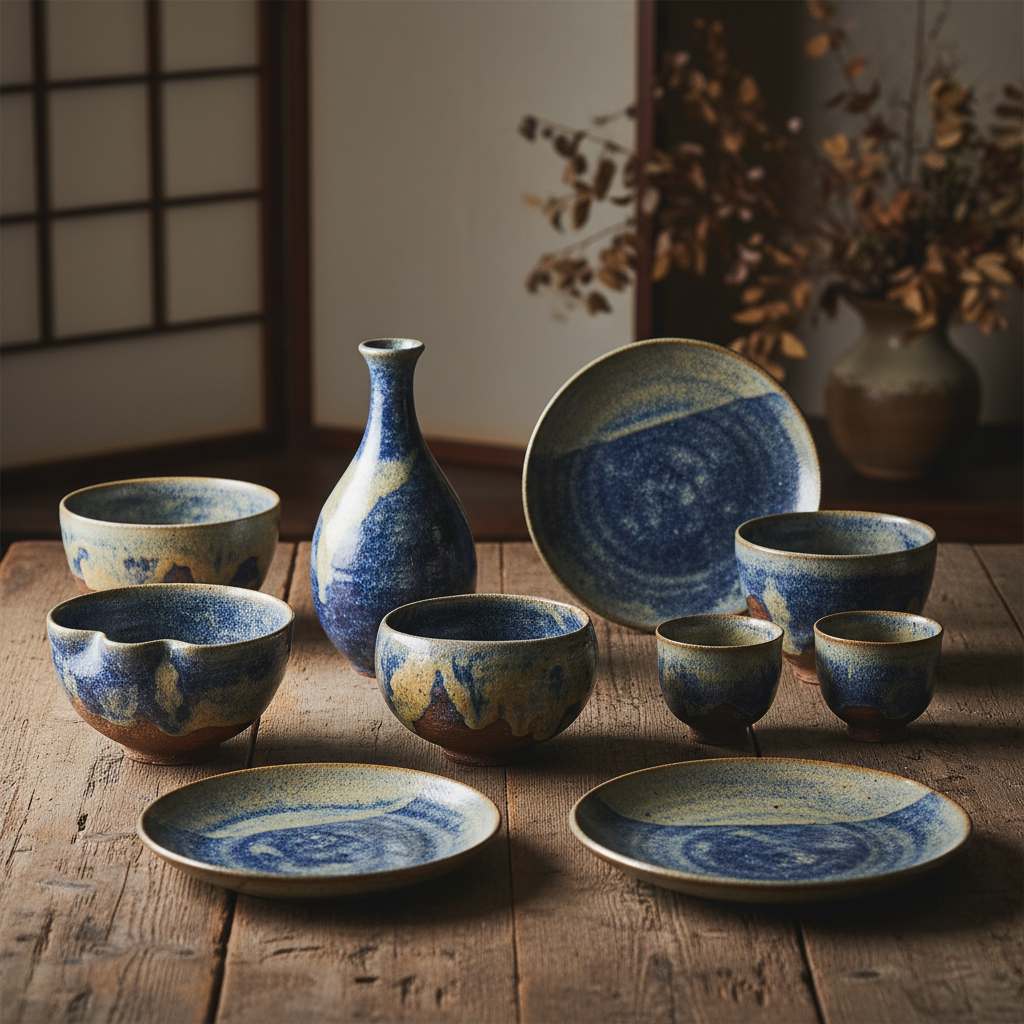

The Charm and History of Imari Ware | The Complete Overview of Saga Prefecture’s Celebrated Ceramic Production Area
Imari ware (Imari-yaki), a traditional craft representing Saga Prefecture, is one of Japan’s finest ceramics with a history spanning over 400 years. Its gorgeous colored decoration and exquisite techniques have been highly valued both domestically and internationally. This article comprehensively explains the history, characteristics, current state of the production area, and the relationship between Imari ware and Arita ware.
What is Imari Ware?
Imari ware (imari-yaki) is a collective term for ceramics produced in the Imari city area and surrounding regions of Saga Prefecture. However, the actual production area was primarily centered on Arita town, and it came to be called “Imari ware” because it was shipped out from Imari Port during the Edo period.
Definition and Scope of Imari Ware
The term “Imari ware” historically carries multiple meanings:
- Broad definition of Imari ware: All Hizen porcelain (including Arita ware) shipped from Imari Port
- Narrow definition of Imari ware: Ceramics actually produced in Imari city
- Ko-Imari: Antique designation for Hizen porcelain produced during the Edo period
In modern times, ceramics produced in Imari city are called “Imari ware,” while those produced in Arita town are called “Arita ware.” However, the two are historically deeply connected, and they share many common techniques and styles.
The History of Imari Ware
The Birth of Japanese Porcelain
The history of Imari ware coincides with the beginning of porcelain manufacturing in Japan. In the early 1610s, Korean potter Ri Sampei (Lee Sampei) discovered porcelain stone in the Izumi mountain area of Arita, marking the dawn of Japan’s porcelain industry.
Before this, pottery (earthenware) had been the mainstream in Japan, but the manufacturing technique for porcelain (stoneware) had not been established. With Ri Sampei’s discovery, the Arita area in Saga Prefecture became Japan’s first porcelain production site.
The Role of Imari Port
Porcelain produced in Arita was transported over steep mountain roads to Imari Port, from where it was exported to various parts of the country and beyond to overseas markets. Imari Port flourished as a shipping port for Hizen porcelain, and all ceramics exported from this location came to be called “Imari ware.”
During the Edo period, it is estimated that hundreds of thousands of pieces of porcelain were shipped annually from Imari Port. These were traded at high prices in Osaka and Edo markets and were treasured by daimyo (feudal lords) and wealthy merchants.
Overseas Export and International Evaluation
From the mid-17th century, Imari ware began to be exported to Europe through the East India Company. At that time, production at the Jingdezhen kilns in China had stalled due to the turmoil of the Ming-Qing transition, so Imari ware was ordered in large quantities as a replacement.
European royalty and nobility were captivated by the vividly colored Imari ware. In particular, the elegant design style called “Kakiemon style,” which made effective use of empty space, had a major influence on European ceramics manufacturing at kilns such as Meissen and Delft.
Changes in the Modern Era and Beyond
With the opening of railways during the Meiji period, distribution patterns changed, and it became possible to ship directly from Arita Station. This gradually led to the independent use of the name “Arita ware.”
After World War II, changes in lifestyle and competition from cheaper imported goods placed the traditional ceramic industry in a difficult situation. However, efforts to develop new markets continue through the fusion of traditional techniques with contemporary design.
The Characteristics and Techniques of Imari Ware
Materials and Manufacturing Methods
The greatest characteristic of Imari ware is that it is porcelain. Porcelain uses ceramic stone as its main raw material and is fired at temperatures exceeding 1,300 degrees Celsius. This gives it the following properties:
- Hard and dense: Almost no water absorption and excellent durability
- High whiteness: The beautiful white base makes colored decoration stand out
- Translucency: When made thin, it transmits light
- Sound quality: Produces a clear metallic tone when lightly struck
Representative Styles
Various styles of Imari ware developed according to period and purpose:
Early Imari
Produced around the 1610s to 1640s, this early product was centered on simple underglaze blue decoration (sometsuke, decoration in a single blue color). Though still technically underdeveloped, its simplicity gave it unique charm.
Ko-Kutani Style
Seen in the 1640s to 1650s, this colored porcelain used five colors—green, yellow, purple, cobalt blue, and red. It is characterized by bold compositions and vivid colors and is sometimes treated independently as “Ko-Kutani,” though the theory that it was produced in Arita is strong.
Kakiemon Style
Established in the late 17th century, this elegant style makes effective use of empty space. The creamy-white base is decorated with colored enamels dominated by red. It is characterized by asymmetrical composition and delicate brushwork and was particularly popular in Europe.
Kinrande (Gold Brocade)
A sumptuous style that made extensive use of red and gold, produced primarily for export. Characterized by decoration covering the entire vessel surface, it is known as “Imari kinrande.”
Nabeshima Style
The finest product produced at the Saga clan’s official kiln. Made as offerings to the shogun and feudal lords, it is characterized by flawless technique and refined design. Many dignified works remain, including those with colored decoration on celadon glaze and those with underglaze blue decoration alone.
Contemporary Imari Ware
Modern Imari ware maintains traditional techniques while developing products suited to contemporary lifestyles:
- Daily tableware: Plates, bowls, cups, and other items with modern design
- Fine art ceramics: Vases and decorative plates using traditional techniques
- Architectural ceramics: Tiles and decorative panels
- Accessories: Contemporary jewelry using ceramics
Saga Prefecture’s Ceramic Production Areas
Geographic Distribution of Production Areas
Saga Prefecture’s ceramic production areas are primarily concentrated in Arita town and Imari city in the western Nishimatsuura County:
Arita Town
Known as the birthplace of Japanese porcelain, many kilns continue to operate today. A considerable number of the approximately 20,000 residents of Arita town are employed in the ceramic industry. The entire town has developed historically around the ceramic industry.
Main districts:
- Kami-Arita district: Many traditional kilns
- Arita-Uchiyama district: Developed as a merchant quarter with many historic buildings
- Izumiyama district: Ceramic stone mining area
Imari City
Imari city historically functioned as a shipping port, but today it is home to many independent kilns. The Okawachiyama district was the site of the former Nabeshima clan kiln and currently hosts kilns continuing this tradition.
Current State and Challenges of the Production Area
Changes in Production Value
Saga Prefecture’s ceramic production value has declined significantly compared to peak levels in the 1990s. Contributing factors include changes in lifestyle, competition from inexpensive imports, and a shortage of successors.
Aging of Workers
Like other traditional crafts, the ceramic industry faces the problem of an aging workforce. In particular, the development of successors for artisans requiring highly advanced skills, such as those specializing in decoration, has become urgent.
New Initiatives
The production area is working to revitalize itself through the following initiatives:
- Collaboration with designers: Development of products with contemporary design
- Exploration of overseas markets: Promotion of exports to Western countries and Asia
- Linkage with tourism: Enhanced kiln tours and pottery experience programs
- Brand promotion: Acquisition of regional collective trademarks
- Development of young artisans: Enhanced training programs and support for independence
The Relationship Between Arita Ware and Imari Ware
Historical Unity
As previously mentioned, porcelain produced in Arita was also called “Imari ware” because it was shipped from Imari Port during the Edo period. In other words, historically “Imari ware = Arita ware,” and the two were identical.
Distinction in Modern Times
From the Meiji period onward, particularly after World War II, distinctions based on production location became clearer:
- Arita ware: Porcelain produced in Arita town
- Imari ware: Porcelain produced in Imari city
However, they share a common technical foundation, and the materials and techniques used are similar.
Distinction in Branding Strategy
Currently, both brands pursue independent marketing strategies:
- Arita ware emphasizes the story of being “the birthplace of Japanese porcelain”
- Imari ware leverages the internationally recognized name “Imari”
In 2016, the “Hizen Ceramic Industry Zone,” which includes Arita and Imari wares in the ceramic regions of Saga and Nagasaki, was recognized as a Japan Heritage site, leading to a re-evaluation of the entire region’s value.
Major Kilns and Artists of Imari Ware
Longstanding Kilns Preserving Tradition
The Imari-Arita area is home to numerous long-established kilns that have continued through many generations. These kilns preserve traditional techniques while also developing products suited to contemporary times.
The techniques passed down through generations, the unique formulations of glazes at each kiln, and decoration techniques become the individual identity of each kiln.
Living National Treasures and Renowned Artists
The Imari-Arita ceramic field has produced many Living National Treasures (holders of important intangible cultural properties). Artists with outstanding skills in various fields—colored porcelain, underglaze blue, celadon, and others—contribute to the transmission and development of tradition.
Rise of Young Artists
In recent years, young artists have increased who learn traditional techniques while incorporating contemporary sensibility. They actively engage in new sales channels, such as using social media for information dissemination and online sales.
How to Enjoy Imari Ware
Methods of Purchase
There are diverse methods for purchasing Imari ware:
- Direct visits to production areas: See and purchase items at kilns and shops
- Department stores: Carried at major department stores nationwide
- Online shops: Websites of kilns and specialty shops
- Pottery markets: Arita Pottery Festival (Golden Week), etc.
- Galleries: Galleries handling works by individual artists
Price Range
The price of Imari ware varies widely depending on its use and maker:
- Daily tableware: Several thousand to tens of thousands of yen
- Gift items: Tens of thousands to over a hundred thousand yen
- Fine art ceramics: Hundreds of thousands to millions of yen
- Living National Treasure works: Over several million yen
Usage and Care
Imari ware, being porcelain, has characteristics that make it easier to handle than pottery:
Usage precautions:
- Avoid sudden temperature changes
- Microwave and dishwasher compatibility varies by product
- Products with gold or silver decoration are not microwave-safe
Care method:
- Wash gently with neutral detergent
- Use a soft sponge
- Dry thoroughly before storing
- Pay attention to moisture during long-term storage
Visiting the Production Area
Visiting Saga Prefecture’s ceramic production areas allows for a deeper understanding of Imari ware:
Arita town:
- Arita Ceramic Museum: Exhibits ranging from Ko-Imari to contemporary works
- Kyushu Ceramic Culture Museum: Houses masterpieces of East Asian ceramics
- Kiln tours: Many kilns offer viewing and sales
- Ceramic Shrine (Toyama Shrine): A rare shrine with ceramic guardian lions and torii gate
Imari city:
- Okawachiyama: A village of kilns inheriting the tradition of the Nabeshima clan kiln
- Imari-Nabeshima Gallery: Display of Nabeshima ware
- Imari City Ceramic Merchant House Museum: Historic building and archival materials
Events:
- Arita Pottery Fair (April 29–May 5): A major event attracting approximately one million visitors
- Imari Ton-ten-ton Festival (October): Imari’s autumn festival
- Autumn Arita Ceramic Festival (November): Autumn pottery market
The Cultural Value of Imari Ware
Contribution to Japanese Culture
Imari ware has been deeply connected to various aspects of Japanese culture, including food culture, tea ceremony culture, and gift-giving customs. In particular, it has greatly contributed to the formation of Japan’s unique aesthetic sensibility of enjoying meals with beautiful vessels.
International Cultural Exchange
Through its export to Europe in the 17th and 18th centuries, Imari ware played an important role in East-West cultural exchange. The fact that European royalty collected Imari ware and it influenced local ceramic manufacturing was a significant event in cultural history.
Today, Imari ware collections exist in art museums worldwide and are valued as fine and decorative art representing Japanese culture.
Regional Identity
For Saga Prefecture, particularly Arita town and Imari city, the ceramic industry is not merely economic activity but the very identity of the region. A history and tradition spanning over 400 years has become a source of pride for local residents.
The Future of Imari Ware
Balancing Tradition and Innovation
The future of Imari ware depends on balancing the transmission of traditional techniques with contemporary innovation. While preserving classical techniques and styles, product development suited to modern life is required.
Utilization of Digital Technology
Initiatives to incorporate new technologies, such as 3D printers and digital design tools, have begun. However, their use is being explored in ways that do not diminish the value of handcraftsmanship.
Response to Sustainability
In response to growing environmental awareness, efforts are underway to develop energy-efficient kilns, reduce waste, and ensure sustainable extraction of raw materials.
Expansion into Global Markets
Against the backdrop of the world’s growing popularity of Japanese cuisine, expansion of demand in overseas markets is anticipated. In particular, approaching wealthy consumers seeking high-quality Japanese products and those interested in Japanese culture is important.
Transmission to the Next Generation
The most crucial issue is transmitting techniques and culture to the next generation. Multifaceted efforts are underway, including the development of young artisans, support for artists’ independence, and the study of regional culture in school education.
Conclusion
Imari ware is a ceramic that Saga Prefecture proudly presents to the world and is an important cultural heritage of Japan with a history spanning over 400 years. During the Edo period, it was highly evaluated both domestically and internationally, playing a role in conveying Japanese aesthetic sensibility to the world.
Even in modern times, Imari ware continues to create new value while preserving traditional techniques, demonstrating the possibilities of Japan’s traditional crafts. Though the production area faces considerable challenges, efforts by artisans, artists, and the entire region are enabling adaptation to a new era.
The beauty of Imari ware is not merely a matter of visual appeal but the crystallization of techniques, culture, and human passion cultivated throughout a long history. Enjoying Imari ware in daily life while feeling the story contained in each vessel leads to experiencing Japan’s rich culture.
Please visit Saga Prefecture’s ceramic production area and experience Imari ware firsthand. You will surely be enchanted by its beauty and profound depth.