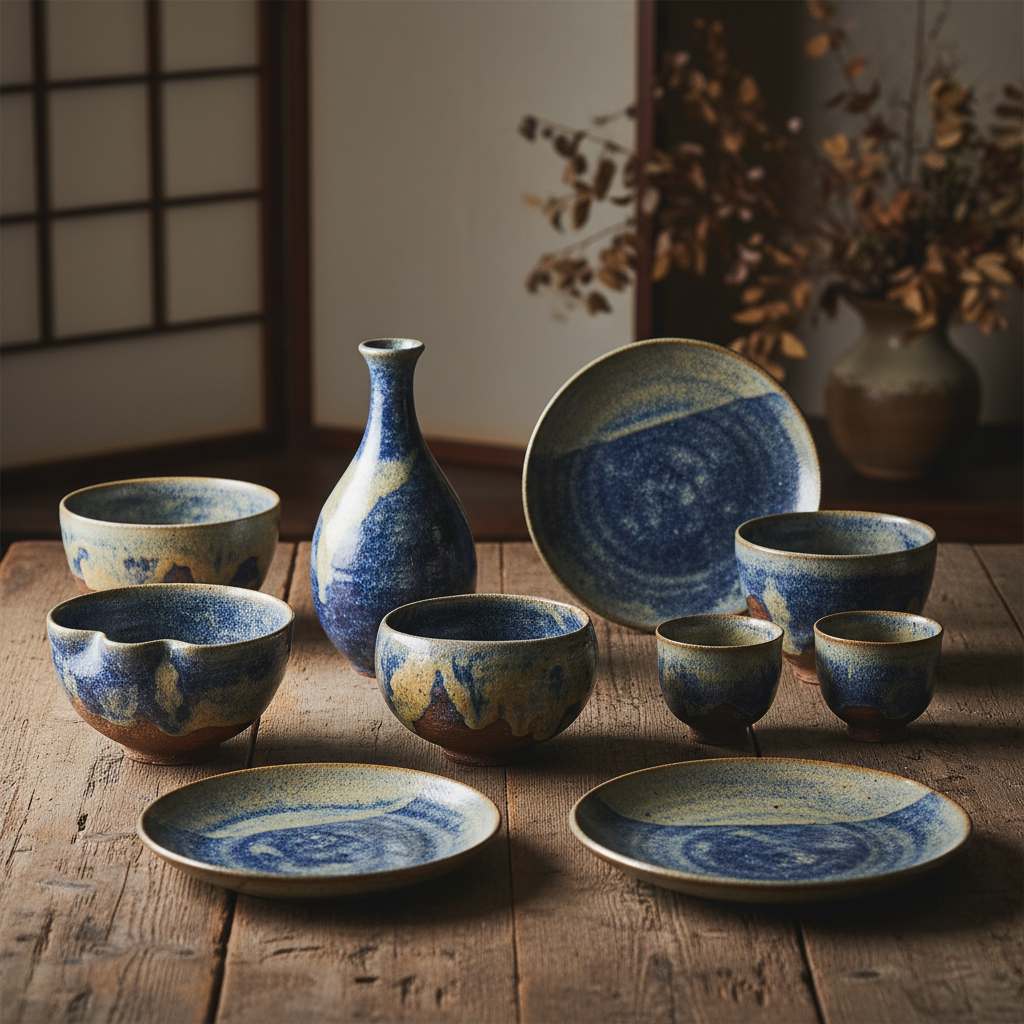

Arita Ware and Saga Prefecture’s Ceramic Producing Areas: A Comprehensive Explanation of the History and Charm of Japan’s Birthplace of Porcelain
Saga Prefecture’s Status as a Premier Ceramic Producing Area
Saga Prefecture occupies a special position among Japan’s ceramic producing areas. Home to three major ceramic brands—Arita ware, Imari ware, and Karatsu ware—Arita Town in particular has carved out a history of over 400 years of tradition and innovation as the place where porcelain was first fired in Japan.
The ceramic producing areas centered on Arita Town, Imari City, and Karatsu City in western Saga Prefecture are far more than simply places where crafts are manufactured; they are cultural centers that have demonstrated Japan’s aesthetic sense and technical prowess to the world. The beauty of translucent white porcelain, delicate underglaze blue decoration, and vibrant overglaze enamels once captivated European nobility and continue to enchant people worldwide today.
The Birth of Arita Ware and the History of Japanese Porcelain
Toyotomi Hideyoshi’s Invasion of Korea and the Arrival of Potters
The history of Arita ware traces back to the late 16th century invasion of Korea by Toyotomi Hideyoshi (the Bunroku and Keicho campaigns). This conflict is sometimes called the “pottery war,” and Saga domain lord Nabeshima Naoshige brought skilled potters back from the Korean peninsula. This event became the starting point for Saga Prefecture’s development as a ceramic producing area.
Among the potters brought from the Korean peninsula, the most significant figure was Yi Sam-pyeong (리삼평, known in Japan as Kanegae Saibei). In 1616 (Genwa 2), he discovered high-quality ceramic stone in Izumiyama in Arita Town and achieved Japan’s first successful firing of porcelain. This historic event established Arita as the birthplace of Japanese porcelain and its central position among ceramic producing areas.
The Development of Arita Ware During the Edo Period
In the early Edo period, porcelain fired in Arita was shipped from Imari Port and distributed throughout the nation, earning it the name “Imari ware.” The name “Arita ware” became commonplace only after the Meiji period.
By the mid-17th century, when the transition from Ming to Qing rule in China caused disruption and Chinese porcelain exports ceased, Arita ware seized a major opportunity. Exports to Europe began through the Dutch East India Company, and the ware entered the world market under the name “IMARI.” During this period, Arita’s ceramic producing area experienced rapid development and evolved significantly in both technical and artistic dimensions.
The Saga domain strictly managed the Arita production area to maintain quality and protect its techniques. It restricted the movement of potters and prevented the leakage of techniques, while simultaneously securing high-quality ceramic stone and supporting the development of the pottery industry. This protective policy became the foundation for establishing Arita as Japan’s premier ceramic producing area.
The Three Major Styles of Arita Ware and Their Characteristics
Arita ware developed three representative styles according to era and use. These styles demonstrate the diversity and high technical skill of Saga Prefecture’s ceramic producing areas.
Ko-Imari Style
The Ko-Imari style developed during the early to mid-Edo period as the foundational style of Arita ware. It is characterized by translucent white porcelain with underglaze blue (gosu) decoration, combined with vibrant overglaze enamels in red, green, yellow, purple, and blue applied with glass-based pigments.
The bold compositions and vivid colors received high praise in the European market and exerted significant influence on Western ceramics such as Meissen and Delft wares. Production ranged from common wares for everyday use to high-end export products, establishing Arita’s position as a representative ceramic producing area.
Kakiemon Style
Perfected in the mid-17th century by Sakaida Kakiemon, this style is characterized by “nigoshide,” a creamy white porcelain with warmth. It features compositions that skillfully employ negative space with a painterly quality, expressing natural motifs such as persimmons, bamboo, plum blossoms, and birds in delicate enamels with red as the dominant color.
The Kakiemon style was particularly beloved by European nobility, with such influence that even German Meissen kilns imitated it. Today, the Sakaida Kakiemon family continues through its fifteenth generation, preserving the traditions of Saga Prefecture’s ceramic producing areas.
Nabeshima Han Kiln Style
The finest porcelain created by the Saga domain (Nabeshima domain) as presentation gifts for the shogun and various feudal lords. Produced at a domain-controlled kiln where only selected potters were permitted to work under strict quality control.
Its characteristics include meticulous underglaze blue decoration combined with overglaze enamels in red, green, and yellow, and a distinctive foot-ring form. Emphasizing artistry over utility, Nabeshima ware—where perfect technique and aesthetic sensibility converge—represents the pinnacle of technical achievement in Arita ceramics.
The Relationship Between Imari Ware and Arita Ware
The relationship between “Imari ware” and “Arita ware” is often confused, but understanding the historical background clarifies the distinction.
During the Edo period, porcelain fired in Arita and surrounding areas was shipped from Imari Port and distributed nationwide and overseas. Therefore, despite being produced in Arita, it was called “Imari ware.” In other words, “Imari ware” during the Edo period was a distribution term referring to porcelain generally produced in the ceramic producing areas of western Saga Prefecture centered on Arita.
With the Meiji period’s arrival of railroads, direct shipment became possible from Arita Station, and the name “Arita ware” became widespread. Today, porcelain made in Arita Town and surrounding areas is generally called “Arita ware,” while that produced in Imari City is called “Imari ware,” though both share the traditions of the same ceramic producing area.
Karatsu Ware: Another of Saga’s Ceramics
In discussing Saga Prefecture’s ceramic producing areas, Karatsu ware cannot be overlooked. While Arita ware is porcelain, Karatsu ware is earthenware.
Karatsu ware’s history is older than Arita ware, with production already beginning in the late 16th century. Strongly influenced by the Korean peninsula, it is characterized by an unpretentious and powerful aesthetic that has long been highly valued in the tea ceremony world, earning the designation “First Raku, Second Hagi, Third Karatsu.”
Karatsu ware encompasses diverse techniques including Korean Karatsu, mottled Karatsu, painted Karatsu, and powder-blown Karatsu, with beauty arising from the warmth of clay and the natural transformations of glaze. It embodies an aesthetic sense of simplicity and freedom that contrasts with the refined beauty of Arita ware.
The coexistence in one region like Saga Prefecture of porcelain wares (Arita and Imari) and earthenware (Karatsu) with different characteristics demonstrates the cultural richness of this area.
Technology and Resources Supporting Saga Prefecture’s Ceramic Producing Areas
High-Quality Ceramic Stone and Raw Materials
The greatest factor in the development of Saga Prefecture’s ceramic producing areas, centered on Arita, was the existence of high-quality ceramic stone. The Izumiyama ceramic stone discovered by Yi Sam-pyeong contains components suitable for porcelain production and has been quarried for over 400 years.
Today, multiple ceramic stone production sites including the Amakawa Mine continue to support the quality of Arita ware. Since the quality of ceramic stone determines the whiteness, strength, and firing temperature of finished products, securing high-quality raw materials is the lifeline of ceramic producing areas.
Inheritance of Traditional Techniques
In Saga Prefecture’s ceramic producing areas, the complex processes of shaping, bisque firing, underglaze decoration (underglaze blue painting), glazing, high-temperature firing, overglaze decoration, and overglaze firing are still largely carried out by hand in many stages.
Diverse shaping techniques such as wheel-throwing, mold-making, and slip-casting; delicate brushwork decoration; and glaze formulation and application techniques—each process requires skilled craftsmanship. Many kilns maintain traditional techniques while simultaneously developing products suited to contemporary lifestyles.
Division of Labor and Kiln Cooperative Systems
Arita’s ceramic producing area has traditionally developed a division of labor system. A structure has been established where craftspeople and workshops specializing in each process—shaping, decoration, firing—cooperate to complete a single product.
This division of labor has fostered highly specialized technical development in each field, enhancing the competitive strength of the producing area as a whole. Today, many kilns maintain this traditional cooperative structure while producing high-quality products.
Contemporary Arita Ware and Challenges for the Ceramic Producing Area
The Fusion of Tradition and Innovation
Saga Prefecture’s ceramic producing areas continue to innovate to match contemporary times while preserving 400 years of tradition. Modern Arita ware features coexistence between kilns that inherit traditional styles and artists and companies that challenge new designs and techniques.
Following Arita’s 400th anniversary in 2016, the “2016/” project was launched, generating numerous contemporary products through collaborations between renowned domestic and international designers and Arita kilns. Efforts to pursue designs suited to contemporary lifestyles while leveraging traditional techniques have brought new vitality to the producing area.
Expansion into International Markets
Arita ware, which captivated Europe in the Edo period, continues to receive high evaluation in contemporary world markets. Exhibitions at international trade shows such as Maison et Objet in Paris, collaborations with international designers, and overseas sales through online channels demonstrate that Saga Prefecture’s ceramic producing areas actively pursue global expansion.
As worldwide interest in Japanese traditional crafts grows, Arita ware’s refined techniques and beauty are receiving renewed attention.
Successor Development and Technique Inheritance
Developing successors is a critical issue for ensuring the sustainability of the ceramic producing area. The Saga Prefectural Arita Ceramics College offers education in specialized ceramic manufacturing techniques including shaping, decoration, and design, with many graduates active in the producing area.
Additionally, multilayered human resource development systems function including apprenticeship programs at individual kilns, training at artists’ studios, and area-wide technical lectures. Young ceramic artists and entrepreneurs moving to Arita and approaching traditional industries from fresh perspectives represent an emerging trend.
Arita Town’s Ceramic Culture and Tourism
The Ceramic Market and Events
Each year during Golden Week, Arita Town hosts the “Arita Ceramic Market.” Approximately 500 shops line a roughly 4-km street, attracting over one million visitors from throughout Japan, making it one of Japan’s largest ceramic markets. Kilns and trading companies set up booths selling Arita ware ranging from everyday tableware to art pieces.
This ceramic market serves as an important opportunity to promote Saga Prefecture’s ceramic producing areas nationwide and functions as a venue directly connecting the producing area with consumers.
Kiln Tours and Hands-On Experiences
Arita Town contains numerous kilns open for viewing and facilities where visitors can experience wheel-throwing and decoration painting. Observing the actual production of ceramics and witnessing artisans’ skills firsthand allows for deeper understanding of Arita ware’s value.
Hands-on experiences in shaping and decoration deepen visitors’ understanding of and affection for the producing area by conveying both the difficulty and enjoyment of ceramic production.
Kyushu Ceramic Culture Museum and Art Museums
The Saga Prefectural Kyushu Ceramic Culture Museum, located in Arita Town, is one of Japan’s foremost ceramic specialty art museums. It houses extensive collections including Arita ware and ceramics from the Hizen region, ceramics from throughout Japan, as well as ceramics from Asia including China and Korea.
In the permanent exhibition, the history of Arita ware can be traced chronologically, allowing appreciation of masterpieces of Ko-Imari, Kakiemon, and Nabeshima styles. This museum is essential for learning about the history and culture of the ceramic producing area.
Historic Streetscapes and Architecture
Historic architecture and streetscapes throughout Arita Town speak to its history as a ceramic producing area. Tonbai walls (fences made from kiln bricks reused from climbing kilns) line back streets, buildings of kilns dating from the Edo period, commercial structures from the Taisho and Showa periods—walking these streets allows one to feel the producing area’s history.
The Arita Uchiyama district has been designated as an Important Traditional Building Preservation District, with landscapes unique to ceramic producing areas preserved.
Saga Prefecture’s Ceramics and Food Culture
The Relationship Between Vessels and Cooking
There is a saying that “cuisine is determined by the vessel,” and in Japanese cuisine, tableware plays an important role. Arita ware and Karatsu ware produced in Saga Prefecture’s ceramic producing areas are used as beautiful tableware that complements dishes in restaurants and homes throughout the nation.
White Arita porcelain displays food colors vividly, while delicate underglaze decoration and overglaze enamels add elegance to the dining table. The simple aesthetic of Karatsu ware enhances the subtlety of Japanese cuisine. Saga Prefecture’s ceramic producing areas play an important role supporting Japanese food culture.
Regional Cuisine and Tableware
Saga Prefecture has abundant local ingredients such as Yobuko squid, Ariake Sea nori, and Saga beef. When these regional dishes are presented on locally produced ceramics, a unified charm of food and vessel regional culture emerges.
Savoring Saga cuisine on Arita ware plates provides the luxury of experiencing regional culture through both visual and gustatory senses.
Other Ceramic Producing Areas in Saga Prefecture
Takeo Ware
Ceramic production also occurs in Takeo City. Takeo ware, following the lineage of Karatsu ware, is earthenware combining simple aesthetics with practicality.
Ureshino Ware
Ceramics have been produced in Ureshino City since the Edo period, with porcelain production influenced by Arita ware occurring there.
Understanding these areas demonstrates that all of Saga Prefecture has nurtured diverse ceramic cultures.
The Future of Saga Prefecture as a Ceramic Producing Area
Throughout over 400 years of history, Saga Prefecture’s ceramic producing areas have continually undergone change and innovation. They produce diverse value through the fusion of traditional techniques and contemporary design, the balance of domestic and international markets, and the coexistence of mass-produced and artistic works.
Ensuring development as a sustainable producing area requires multifaceted efforts including technique inheritance, human resource development, market development, and regional branding. All parties involved in the producing area—government agencies, kilns, artists, designers, and distributors—collaborate to explore new approaches to the ceramic producing area for the coming age.
Various initiatives are advancing, including the application of digital technology, environmentally conscious production methods, coordination with tourism, and enhanced educational programs. The willingness to preserve tradition while embracing innovation is the secret behind Saga Prefecture’s ceramic producing area’s prosperity for over 400 years and will continue forward.
Conclusion: Saga Prefecture’s Ceramic Producing Areas, the Birthplace of Japanese Porcelain
Saga Prefecture is Japan’s premier ceramic producing area, home to three major ceramic brands representing Japan—Arita ware, Imari ware, and Karatsu ware. Arita Town in particular holds a special position in Japan’s ceramic history as the place where porcelain was first fired in Japan.
From potters brought from the Korean peninsula by Toyotomi Hideyoshi’s invasion, through Yi Sam-pyeong’s discovery of ceramic stone and successful porcelain firing, the area’s development during the Edo period and exports to Europe, protection and management by the Saga domain, modernization following the Meiji period, to contemporary innovation, over 400 years of history represents a continuous interplay of technique and artistry, tradition and innovation.
The three major styles—Ko-Imari, Kakiemon, and Nabeshima Han Kiln styles—demonstrate Arita ware’s diversity and high technical achievement. Its characteristics of translucent white porcelain, meticulous underglaze decoration, and vibrant overglaze enamels continue to enchant people worldwide.
Contemporary Saga Prefecture’s ceramic producing areas preserve traditional techniques while challenging new designs and market development. Various initiatives—including participation by younger generations, international expansion, and coordination with tourism—forge the producing area’s future path.
Arita ware, Imari ware, and Karatsu ware are not merely crafted goods but existences embodying Japan’s aesthetic sensibility, technical prowess, and cultural depth. Visiting Saga Prefecture’s ceramic producing areas and touching its history and present allows one to appreciate the richness of Japanese traditional culture. As the birthplace of Japanese porcelain and a ceramic producing area of worldwide renown, Saga Prefecture will undoubtedly continue playing an important role in the future.