
Fujisawa Ware (Iwate Prefecture) Complete Guide | History, Characteristics, Kilns, Experiences, and How to Purchase—Comprehensive Explanation
Fujisawa ware, born in Fujisawa Town, Ichinoseki City, Iwate Prefecture, is a ceramic that radiates its own unique presence within contemporary pottery. Started in 1972 by ceramic artist Shinichi Homma, this pottery creates works with strong and simple beauty through its distinctive manufacturing method using traditional anagama kiln firing and red pine firewood. This article comprehensively introduces all information about Fujisawa ware, from its history and characteristics to kiln information, experience opportunities, and purchase locations.
What is Fujisawa Ware? The Appeal of Contemporary Ceramics of Which Iwate Prefecture is Proud
Fujisawa ware is pottery based in Fujisawa Town, Ichinoseki City, Iwate Prefecture (former Fujisawa Town), and began when ceramic artist Shinichi Homma built a kiln in 1972 (Showa 47). It is an extremely unique existence, possessing both the regionality of “pottery from Fujisawa Town” and the individual artist quality of “pottery along the unique path of Shinichi Homma.”
Currently, only Shinichi Homma is creating Fujisawa ware, making it a precious ceramic being preserved by a single ceramic artist. While becoming recognized as a traditional craft of Iwate Prefecture, it is characterized by free creative activities not bound by traditional styles, and receives high evaluation from pottery enthusiasts throughout Japan.
The Background of Fujisawa Ware’s Birth
1972, when Shinichi Homma built a kiln in Fujisawa Town, Iwate Prefecture, was a period in Japan’s ceramic world when the influence of the folk craft movement remained strong, yet the diversification of expression by individual artists was advancing. Homma says he entered the world of ceramics “for no particular reason,” but thereafter devoted himself to pottery for over 40 years, establishing a unique style called Fujisawa ware.
Fujisawa Town, located in southern Iwate Prefecture close to the Miyagi Prefecture border, is a place rich in nature. The soil of this region and the firing method utilizing red pine, a local material, become important elements forming the individuality of Fujisawa ware.
Characteristics of Fujisawa Ware | The Unique Colors and Textures Created by Red Pine Ash
The greatest characteristic of Fujisawa ware lies in the unique colors and textures created by firing in an anagama kiln and using red pine firewood. Here we explain in detail the elements that characterize Fujisawa ware.
Long-term Firing in an Anagama Kiln
Fujisawa ware is fired using a traditional anagama kiln. After placing works in the kiln, they undergo an extremely labor-intensive process of continuously firing with red pine firewood for approximately seven days before completion. Through this long-term firing, works are continually exposed to high temperatures, acquiring unique firing hardness and strength.
Anagama kiln firing is difficult to manage temperature-wise, and the finish of each work varies depending on its position in the kiln and how the flames strike it. This uncertainty is one of the charms of Fujisawa ware and the reason that completely unique works, with no two alike, are created.
Natural Glaze from Red Pine Ash
Another major characteristic of Fujisawa ware is the use of red pine firewood. During firing, red pine ash adheres to the works and melts at high temperatures, becoming natural glaze. This natural glaze creates the colors unique to Fujisawa ware.
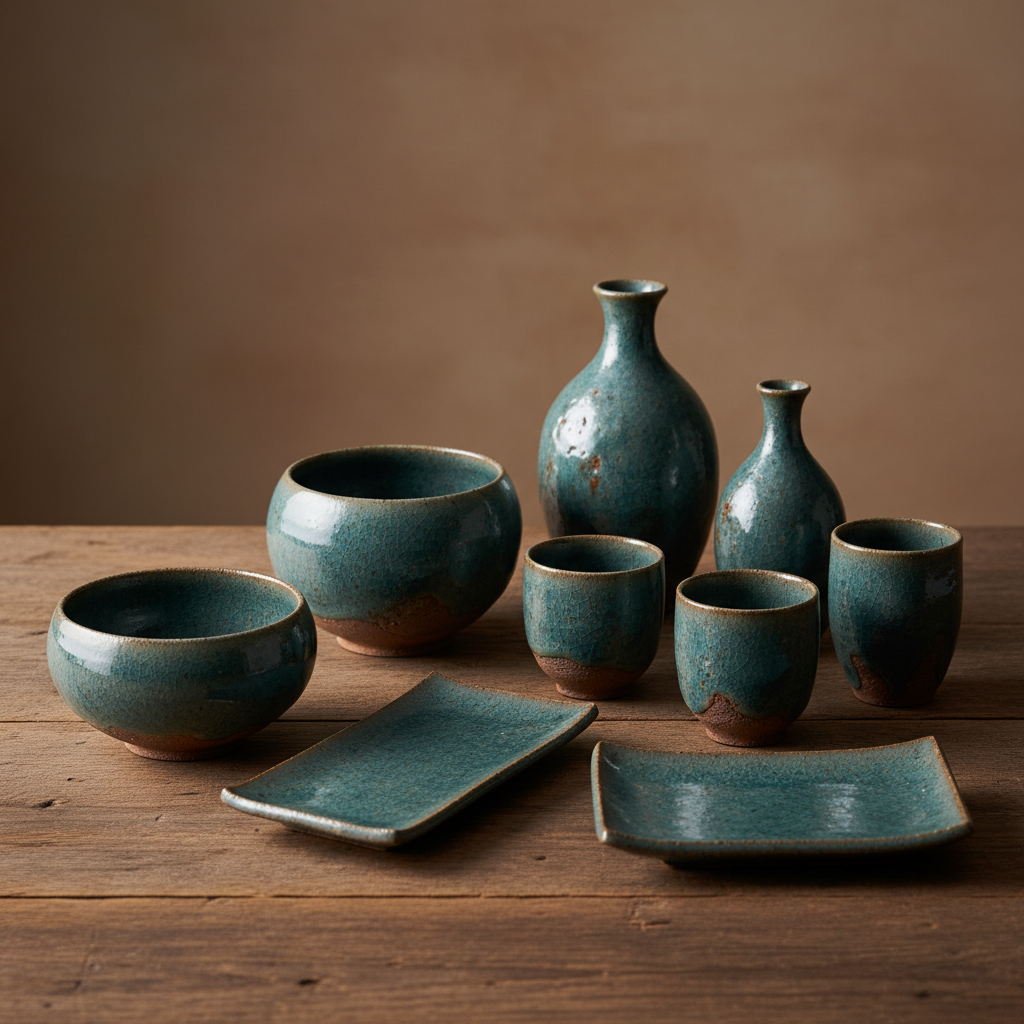
Red pine ash glaze displays various expressions, from greenish brown to deep amber colors, sometimes appearing nearly black. Rather than being artificially applied, the glaze formed naturally during firing possesses unpredictable beauty, creating different landscapes for each work.
Soil Texture and Simple Forms
Fujisawa ware is characterized by simple, powerful forms that bring out the original texture of the clay. By avoiding excessive decoration and maximizing the drawing out of the material’s texture and form beauty, the design naturally blends into contemporary living.
The soil used centers on local soil, with carefully selected materials by Homma. The soil’s particle feeling and coloring become the work’s expression as is, resulting in a simple yet present finish. A wide range of items are produced, from everyday use vessels such as tea bowls, plates, and flower vases to works for viewing.
Fujisawa Ware Kilns | The Workshop of Shinichi Homma
Currently, Fujisawa ware is created only by founder Shinichi Homma. Here we introduce Homma and his workshop in detail.
Profile of Shinichi Homma
Shinichi Homma is a ceramic artist who has continued pottery for over 40 years since building a kiln in Fujisawa Town, Iwate Prefecture in 1972. Having learned ceramics independently, he grounded himself in traditional techniques while pursuing his own aesthetic and technical sensibilities.
Homma’s works are presented at pottery exhibitions and solo exhibitions throughout Japan and are supported by many pottery enthusiasts and collectors. His works, simple yet deeply flavored, are incorporated into daily life as vessels that develop affection the more they are used.
Workshop Location and Access
Shinichi Homma’s workshop is located in Fujisawa Town, Ichinoseki City, Iwate Prefecture. The current Ichinoseki City was born in 2005 following the merger with surrounding municipalities, with Fujisawa Town becoming part of it.
If you wish to visit the workshop, it is recommended to contact in advance. There may be times when viewing is difficult, such as when the artist is in the midst of pottery work or during kiln-firing seasons, so always make a reservation before visiting.
Access Information:
- Location: Fujisawa Town, Ichinoseki City, Iwate Prefecture (details require inquiry)
- Nearest station: Approximately 30 minutes by bus or car from JR East Honshu Main Line Ichinoseki Station
- By car: Approximately 20 minutes from the Ichinoseki IC of the Tohoku Expressway
Workshop Viewing and Purchase
Purchases of works are possible at Homma’s workshop. However, since there is not necessarily a permanent sales space, if you wish to purchase, it is necessary to contact in advance and confirm inventory status and available dates for visiting.
Works are handmade one by one, and due to the characteristics of anagama firing, mass production is not possible. Therefore, desired works may not be immediately available, but this too is part of Fujisawa ware’s value.
Fujisawa Ware Ceramic Experience | Create Your Own Unique Work
The Fujisawa ware kiln may accept ceramic experience participants. Here we introduce the ceramic experience of Fujisawa ware in detail.
Experience Content and Fee
At the Fujisawa ware kiln, you can receive instruction in ceramic making. Basic pricing is 2,000 yen per kilogram of clay (including instruction), allowing even beginners to easily enjoy a ceramic experience.
The experience primarily focuses on hand-building forming techniques, through which you can learn basic pottery methods. Whether electric wheel experiences are available requires advance confirmation. Works that you form yourself will later be fired at the kiln and delivered by mail or in-person pickup after completion.
How to Reserve the Experience
If you wish to participate in a ceramic experience, advance reservation is absolutely necessary. Contact the kiln directly by phone or email, providing your desired date and time and number of participants. Particularly on weekends and holidays, reservations fill quickly, so early booking is recommended.
Experience time typically lasts approximately 2 to 3 hours, though this may vary depending on the work content and number of participants. It is recommended to plan a schedule with ample time margin.
Instruction Safe for Beginners
Even for those new to ceramics, Homma and instructional staff will teach you carefully, so you can feel at ease. You can receive careful instruction in everything from how to handle clay, basic forming techniques, to work design.
The vessel you create yourself is an original work like no other in the world. Your completed work can be treasured as an everyday-use vessel for many years to come.
Fujisawa Wildfire Pottery Festival | A Festival of Earth and Flame Recreating Jomon Fire
In discussing Fujisawa ware, one cannot overlook the “Fujisawa Wildfire Pottery Festival” held every August. While this festival has origins separate from Fujisawa ware, it is nationally recognized as an event symbolizing the ceramic culture of Fujisawa Town.
History of the Fujisawa Wildfire Pottery Festival
The Fujisawa Wildfire Pottery Festival began with its first installment held in 1976 (Showa 51), a historic festival. Under the guidance of archaeologist Hanjiro Shiono (deceased), it began as an attempt to recreate “Jomon wildfire pottery.”
This attempt to revive Jomon-era pottery techniques in the present day goes beyond mere historical recreation, becoming an opportunity through the experience of engaging with the primordial materials of earth and flame to reconsider the essence of craftsmanship.
Festival Dates and Content
The Fujisawa Wildfire Pottery Festival is held over two days—the second Saturday and Sunday of August each year. As Iwate Prefecture’s pride, a “festival of earth and flame,” it attracts numerous participants and visitors from throughout the prefecture and beyond.
At the festival, participants shape their own pottery and fire it using wildfire, a primordial method. Without electric or gas kilns, pottery is fired by burning firewood outdoors—the very technique of the Jomon era. The sight of pottery engulfed in flames gradually firing is truly a “recreation of Jomon fire.”
Hanjiro Shiono Prize and Work Display
At the Fujisawa Wildfire Pottery Festival, starting from the 12th installment (1987, Showa 62), the “Hanjiro Shiono Prize” was established to honor outstanding works. This prize, commemorating archaeologist Hanjiro Shiono who contributed to the festival’s founding, has become an important award evaluating the technique and artistry of wildfire pottery works.
Award-winning works from past years and historic posters from the first festival to the present can be viewed on the Fujisawa Wildfire Pottery Festival’s official website. By viewing these works and posters, you can sense the festival’s history and evolution.
The Appeal of the Wildfire Experience
The greatest appeal of the Fujisawa Wildfire Pottery Festival is that anyone can experience wildfire pottery. You can bring pre-shaped pottery for firing, or participate from the shaping stage (details require confirmation with organizers).
Wildfire is a rare technique in contemporary ceramics, difficult to manage temperature-wise, with the risk of works cracking. However, this very uncertainty is the essence of wildfire pottery, and the joy upon success is incomparable. The experience of firing pottery while engaging in dialogue with flame brings profound emotion and a sense of achievement to participants.
How to Purchase Fujisawa Ware | How to Obtain Works
There are several methods to purchase Fujisawa ware works. Here we introduce specific ways to obtain Fujisawa ware.
Direct Purchase at the Kiln
The most reliable method is to visit Shinichi Homma’s workshop directly. As mentioned earlier, contact in advance to confirm available visiting dates and inventory status before your visit.
The advantage of purchasing at the kiln includes being able to hear explanations of works from the artist himself and being able to select by actually handling the pieces. By seeing the workshop atmosphere and production site, your understanding of and affection for the works deepens further.
Purchase at Pottery Exhibitions and Solo Shows
Homma regularly holds pottery exhibitions and solo shows. At these exhibitions, numerous works including new pieces are displayed and sold. Exhibition information can be confirmed at ceramic-related facilities in Iwate Prefecture and from Homma’s official information (if available).
Exhibitions typically feature a wide range of items from everyday-use vessels to works for viewing, allowing you to choose pieces matching your preferences and uses.
Possibility of Online Purchase
Whether Fujisawa ware currently has an official online shop is unclear, but there is a possibility it may be handled through some craft goods sales sites and ceramics-specialty online stores. However, due to limited production by a single artist, constant inventory is not guaranteed.
When purchasing online, it is important to buy from trustworthy sellers. Beyond just photos of works, confirm detailed descriptions of size, weight, and color, and inquire about any questions before purchase.
Craft Shops and Galleries in Iwate Prefecture
Craft shops and galleries in Iwate Prefecture may also carry Fujisawa ware. Particularly in craft shops in major cities within the prefecture such as Ichinoseki and Morioka, local artists’ works are often handled, making it worthwhile to inquire.
Fujisawa Ware and Iwate Prefecture’s Ceramic Culture
Fujisawa ware constitutes a part of Iwate Prefecture’s rich ceramic culture. Here we explain the relationship between other wares in Iwate Prefecture and Fujisawa ware.
Major Pottery Wares of Iwate Prefecture
Iwate Prefecture has multiple pottery-making regions in addition to Fujisawa ware. Representative examples include:
- Kuji Ware: Traditional pottery made in Kuji City
- Daiyaki: Pottery continuing from the Edo period in Hanamaki City
- Kajitei Ware: Traditional pottery of Morioka City
These wares each possess long histories and traditions, closely connected with regional culture. Conversely, Fujisawa ware, beginning in 1972, is a relatively new ceramic that has established its own value as contemporary pottery.
Coexistence of Tradition and Innovation
The characteristic of Iwate Prefecture’s ceramic culture is the coexistence of regions continuing to guard traditional techniques and artists like Fujisawa ware taking contemporary approaches. This diversity creates the richness of Iwate’s ceramic culture.
Fujisawa ware employs traditional anagama kiln-firing technique while incorporating free-thinking approaches in form and glaze expression. This “fusion of tradition and innovation” represents one direction contemporary ceramics should pursue.
Connection with Community
Fujisawa ware and the Fujisawa Wildfire Pottery Festival have become important elements of the identity of Fujisawa Town (currently Fujisawa Town, Ichinoseki City). Using regional soil and wood, and reviving regional history (Jomon culture) in the present, these efforts greatly contribute to the succession and development of regional culture.
For residents, Fujisawa ware and the wildfire festival are sources of pride and tourism resources. Through interaction with pottery enthusiasts and tourists visiting from throughout the country, community revitalization is promoted.
Peripheral Information for Enjoying Fujisawa Ware
For those planning a kiln workshop visit or wildfire festival participation, here is information on nearby tourist spots and accommodations.
Tourist Attractions in Ichinoseki City
Ichinoseki City, located in southern Iwate Prefecture, is a city rich in history and nature. When visiting Fujisawa Town, it is recommended to visit the following tourist attractions as well:
- Genbi Gorge: A gorge designated as a national scenic spot, offering beautiful scenery throughout the seasons
- Sarashi Gorge: Counted among Japan’s hundred scenic places, featuring popular boat rides
- Yotsugi no Sato: A facility for learning regional history and culture
Hot Springs in the Area
Multiple hot spring areas exist in the vicinity of Ichinoseki City, perfect for recuperating from ceramic experience and sightseeing fatigue:
- Genbi Gorge Hot Springs: Hot springs located right beside Genbi Gorge
- Matsuri Shidei Hot Springs: Hot springs known as a hidden gem
- Hanamaki Hot Spring Resort: A large hot spring area approximately 40 minutes by car from Ichinoseki City
Accommodations
Ichinoseki City has various accommodations from business hotels to hot spring inns. Since Fujisawa Town is removed from the city center, it is convenient to stay near Ichinoseki Station and travel by rental car or taxi.
Access and Transportation
Access by Train:
- From Tokyo: Approximately 2 hours 30 minutes on the Tohoku Shinkansen to Ichinoseki Station
- From Sendai: Approximately 30 minutes on the Tohoku Shinkansen to Ichinoseki Station
- From Morioka: Approximately 40 minutes on the Tohoku Shinkansen to Ichinoseki Station
Access by Car:
- Approximately 20 minutes from Ichinoseki IC on the Tohoku Expressway to Fujisawa Town
- Approximately 1 hour 30 minutes from within Sendai City
- Approximately 1 hour 30 minutes from within Morioka City
From Ichinoseki Station to Fujisawa Town, use route buses or taxis. Renting a car allows free movement including surrounding sightseeing, making it convenient.
Deepening Your Understanding of Fujisawa Ware’s Appeal
To understand Fujisawa ware’s appeal more deeply, actually touching the works and learning the production process are important. Here we introduce ways to further learn about Fujisawa ware.
Deepening Knowledge About Ceramics
To deepen understanding of Fujisawa ware’s characteristics such as anagama kiln firing and natural glaze, it is effective to learn general ceramic knowledge. Through ceramic-related books and websites, as well as exhibitions at art museums, acquire foundational knowledge of pottery.
In particular, learning about the history of Japanese pottery, types of kilns, and types of glazes allows clearer understanding of Fujisawa ware’s uniqueness.
Actually Using the Ware
By using Fujisawa ware vessels in daily life, you can realize their appeal. The simple, powerful forms suit both Japanese and Western cuisine, becoming more familiar to the hand with use.
Vessels change in appearance with use. Tea stains and fine scratches can be enjoyed as the vessel’s “aging.” By using it carefully over time, it develops into your own uniquely cherished vessel.
Dialogue with the Artist
If possible, through dialogue with Shinichi Homma himself or those knowledgeable about ceramics, hearing the background of works and artist’s thoughts on creation is recommended. Through the artist’s words, understanding the philosophy and aesthetic sensibilities embedded in works greatly changes how you view them.
During exhibitions or workshop visits, do not hesitate to ask questions. Most artists find joy in discussing their works.
Conclusion | Fujisawa Ware’s Future and What We Can Do
Fujisawa ware is a precious ceramic being preserved by a single ceramic artist, Shinichi Homma. Over 40 years have passed since its founding in 1972, and his works have become representative of Iwate Prefecture’s contemporary ceramics.
Red pine firewood anagama firing, natural glaze beauty, simple yet powerful forms—these characteristics make Fujisawa ware a unique existence. Simultaneously, connected with the Fujisawa Wildfire Pottery Festival, a regional cultural event, it has become part of Fujisawa Town’s identity.
When considering Fujisawa ware’s future, what we can do is understand this pottery’s value, use works carefully, and pass them to the next generation. Visiting the kiln, purchasing works, and participating in ceramic experiences all become actions supporting Fujisawa ware.
If you have the opportunity to visit Ichinoseki City, Fujisawa Town in Iwate Prefecture, by all means visit the Fujisawa ware kiln. You will surely be moved by the simple, powerful beauty created by earth and flame. And at the August Fujisawa Wildfire Pottery Festival each year, you can experience the precious recreation of Jomon fire.
Fujisawa ware teaches us living in the present the essence of craftsmanship and the infinite possibilities held by earth as a material. By holding a handmade vessel and feeling its warmth, our lives surely become richer.