Hasami Ware: A Comprehensive Explanation of the History, Characteristics, and Appeal of Nagasaki Prefecture’s Representative Ceramic Ware
Hasami ware, produced in Hasami Town, Higashisono County, Nagasaki Prefecture, is a notable presence among Japan’s ceramic producing regions. In modern times, it ranks second nationwide in ceramic shipment value and is known as a major production area commanding approximately 13-16% of the daily tableware market share. This article provides a detailed explanation of Hasami ware’s history as a producing region, its characteristics, and the background to its recent popularity.
What is Hasami Ware – An Overview of Nagasaki Prefecture’s Ceramic Producing Region
Hasami ware (hasami-yaki) is a general term for ceramics produced in the area around Hasami Town, located in the central northern part of Nagasaki Prefecture. While possessing a history of over 400 years, the name “Hasami ware” actually became widely recognized relatively recently.
Geographic Characteristics of the Producing Region
Hasami Town is located adjacent to Arita Town in Saga Prefecture, which is famous for pottery. This geographic proximity has significantly influenced the history and development of Hasami ware. While belonging to Nagasaki Prefecture, it has maintained close relations with the Arita ware producing region in Saga Prefecture, and for many years its products were distributed as “Arita ware.”
The area around Hasami Town is blessed with abundant ceramic stone and timber for fuel, and pottery production is believed to have begun in the late 16th century. This natural environment became the foundation supporting the region’s development as a producing area.
The Position of Hasami Ware in the Modern Era
Entering the 21st century, Hasami ware established itself as an independent brand and attracted attention as a newly emerged ceramic producing region. Currently boasting the second-highest ceramic shipment value nationwide after Mino ware from Gifu Prefecture, it has grown to surpass the scale of Arita ware, which was once its parent industry.
It demonstrates an overwhelming presence in the daily tableware market, functioning as an important producing region that supports Japan’s dining tables.
History of Hasami Ware Producing Region – 400 Years of Tradition and Change
Edo Period – Development as Tableware for the Common People
The history of Hasami ware dates back to the late 16th century. Initially beginning with earthenware production, it transitioned to porcelain production in the 17th century.
By the late Edo period, it had grown to boast the highest production volume of underglaze blue decorated porcelain in Japan. During this period, Hasami ware was mass-produced as daily tableware for the common people and distributed throughout the country. In particular, dishes called “kurawanka bowls” that were durable and practical deeply penetrated ordinary people’s lives.
Compla Bottles and Overseas Exports
Inseparable from discussing Edo period Hasami ware are “Compla bottles.” These were containers for exporting soy sauce, sake, and other products overseas, demonstrating the technical prowess of Hasami ware. As export products to foreign countries, Hasami ware gained international recognition.
The production of Compla bottles greatly contributed to technological advancement as a producing region and the establishment of mass production systems.
Modern Era Onwards – The Period Overshadowed by Arita Ware
From the Meiji period onwards, Hasami ware was sold for a long time as “Arita ware.” While Hasami Town belonged to Nagasaki Prefecture, the distribution center was located in Arita, Saga Prefecture, so products manufactured in Hasami were marketed under the “Arita ware” brand name.
This situation continued until the end of the 20th century, with the name Hasami ware rarely appearing publicly and the producing region remaining relatively unknown. However, during this period, technological refinement and improvements to the production system were steadily advancing.
21st Century – Establishment of an Independent Brand
From the 2000s onwards, efforts to establish Hasami ware as an independent brand intensified. In addition to traditional designs, the region actively developed modern and contemporary designs, transforming into a ceramic producing region supported by younger generations as well.
Through this transformation, Hasami ware succeeded in breaking away from being “a subcontractor region for Arita ware” and became recognized nationally as a brand with independent value.
Characteristics of Hasami Ware – Technology and Aesthetic Sense Unique to the Producing Region
The Translucency of White Porcelain and the Beauty of Underglaze Blue
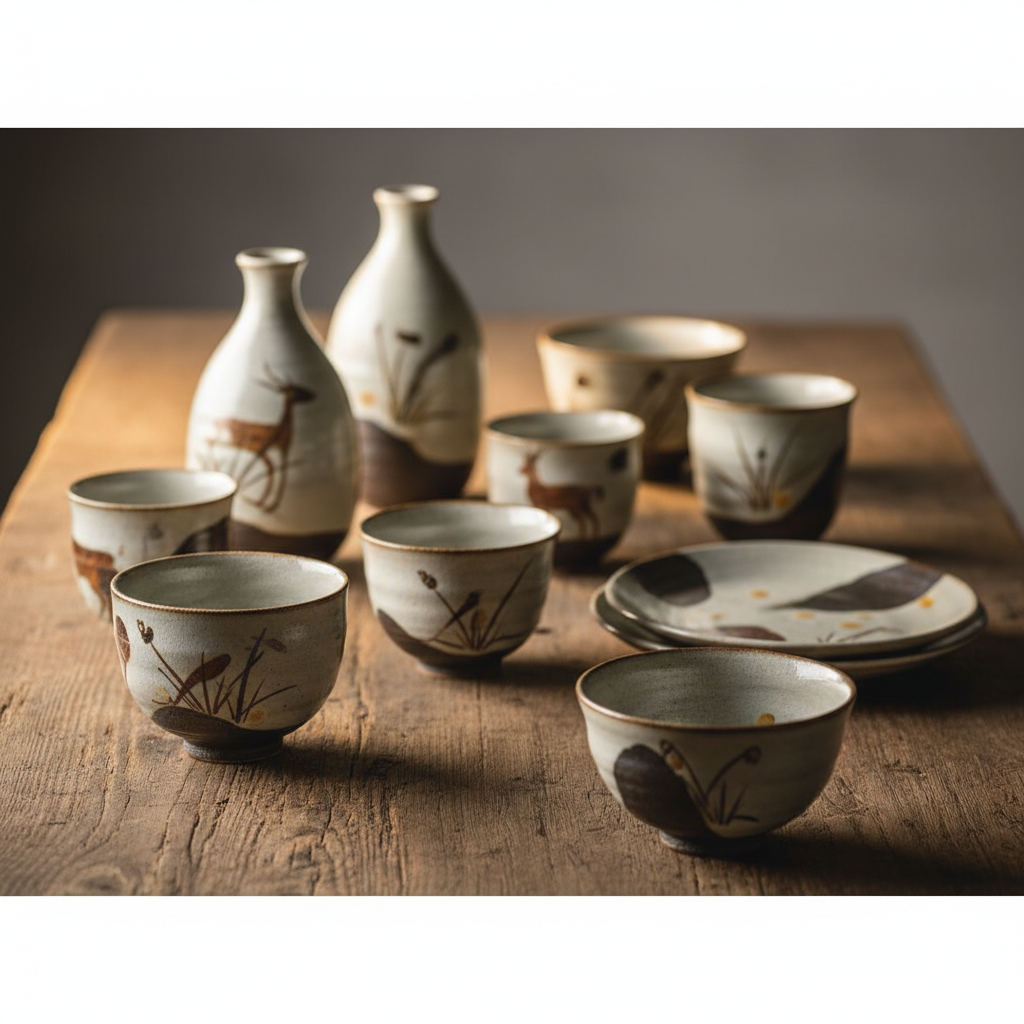
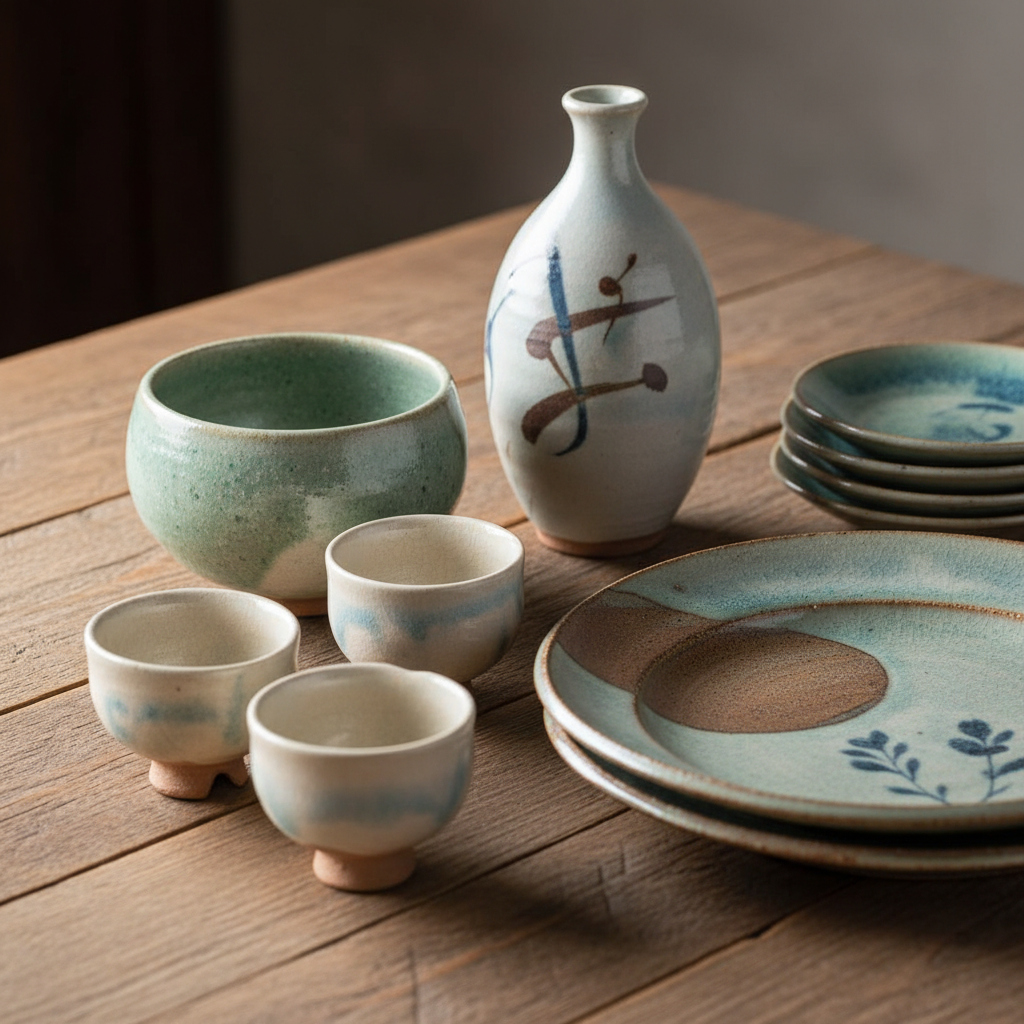
The greatest characteristic of Hasami ware lies in the beauty of seemingly translucent white porcelain. White porcelain made from high-quality ceramic stone possesses a delicate and refined texture that, while being everyday tableware, evokes a high aesthetic sensibility.
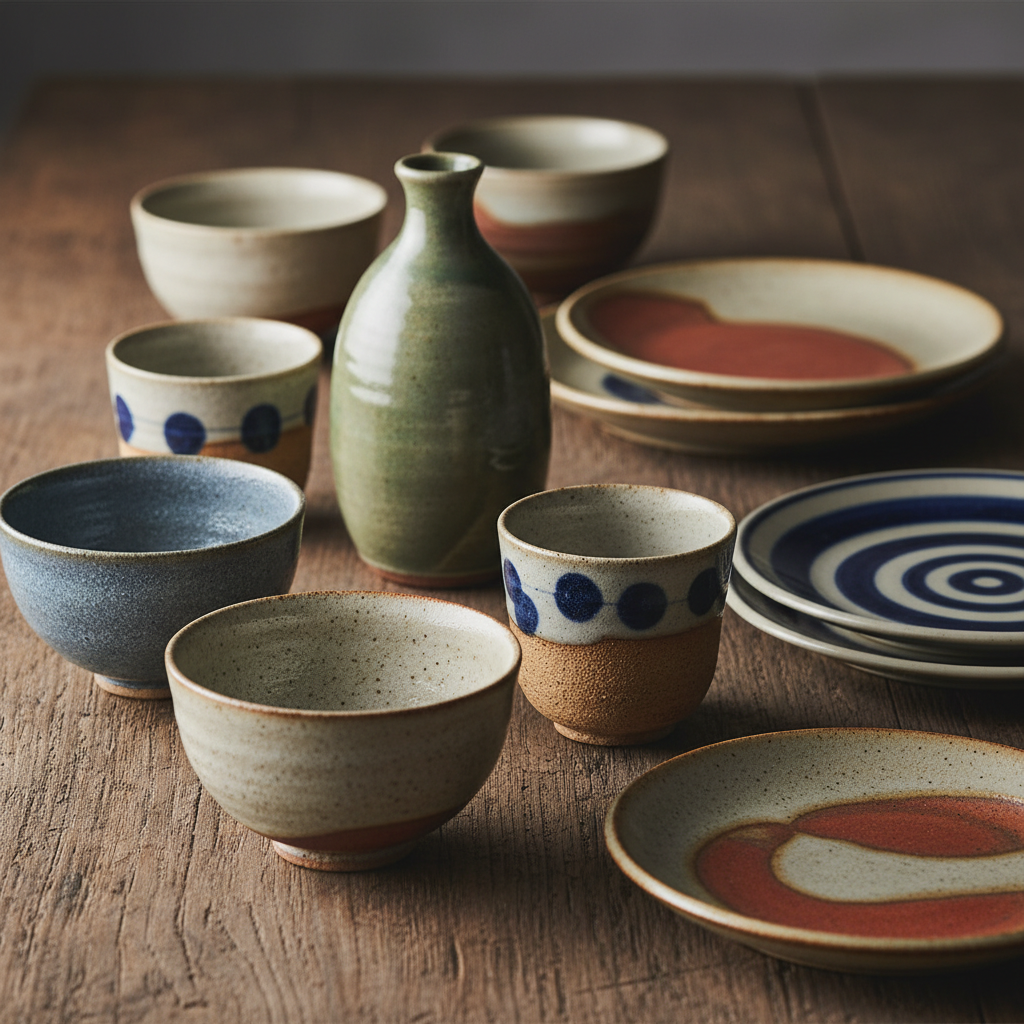
And “underglaze blue,” decorated with cobalt blue pigment called gossu (gosu), is the representative technique of Hasami ware. Underglaze blue decoration possesses deep appeal, creating designs that are simple yet never tire the viewer. The indigo patterns that stand out against white porcelain accentuate the beauty of Japanese tableware.
The Technology of Openwork Carving and Lattice Pattern
Openwork carving and the elegance of lattice patterns are notable techniques unique to Hasami ware. These decorative techniques require advanced technical skill, with the concentrated expertise of craftsmen passed down through the region.
Delicate openwork carving creates beautiful shadows and light effects, while lattice patterns give a warm expression to vessels despite their regular structure.
Recent Diverse Design Development
In addition to traditional white porcelain and underglaze blue, recent Hasami ware also exhibits colorful and vibrant designs. Diverse designs adapted to contemporary dining tables and lifestyles have been created, becoming popular as tableware that brightens and adds style to dining scenes.
Modern geometric patterns, Nordic-style designs, pop coloring—all built on traditional techniques while demonstrating flexible product development that adapts to contemporary times.
High-Quality Production System Through Division of Labor
A major characteristic of the Hasami ware producing region is its production system based on division of labor. By having specialized workshops handle each process—molding, decoration, firing, and so on—the technical skill in each area could be refined to the utmost.
This division of labor creates synergistic effects, contributing to overall quality improvement of Hasami ware. As each workshop pursues specialization, the technical level of the entire producing region is raised, establishing a system capable of producing large quantities of consistently high-quality products.
The Relationship Between Hasami Ware and Arita Ware – History Transcending Regional Boundaries
Geographic Proximity and Historical Connections
Hasami Town and Arita Town are adjacent, and both producing regions have maintained close historical ties. From the Edo period, most products manufactured in Hasami were distributed through merchants in Arita and thus typically sold as “Arita ware.”
This situation reflects the historical context in which distribution hub names took precedence over place names. The fact that Hasami Town belongs to Nagasaki Prefecture while Arita Town belongs to Saga Prefecture contributed to creating this complex relationship.
From Subcontractor Region to Independent Brand
Hasami ware was once positioned as a subcontractor producing region for Arita ware. Against the backdrop of Arita’s brand strength, a structure utilizing Hasami’s technical capabilities persisted for a long time.
However, from the 2000s onwards, momentum accelerated toward independent brand establishment for Hasami ware. Through contemporary design development, renewal of marketing strategy, and strengthened regional information dissemination, “Hasami ware” as a brand came to be recognized independently.
The Background Behind Surpassing Arita Ware in Shipment Value
Currently, Hasami ware’s ceramic shipment value exceeds that of Arita ware, making it the second-largest producing region nationwide. Several factors underlie this reversal.
First is specialization in the daily tableware market. Leveraging its history of development as tableware for common people, Hasami ware established a system for mass-producing practical, price-competitive products. Meanwhile, Arita ware shifted toward positioning itself as high-end and fine art ceramics, creating a difference in market scale.
Second is the efficient production system through division of labor. Process specialization allowed realization of mass production while maintaining high quality, elevating the region’s competitive advantage.
Third is design development that adapts to the times. Flexibility in responding to contemporary needs while preserving tradition gained the support of a broad demographic.
Why Hasami Ware is Popular – The Appeal of a Producing Region Supported in the Modern Era
Practicality and Price Suitable for Daily Use
The first reason for Hasami ware’s popularity lies in its practicality suited to daily use. Hasami ware, with its history of developing as tableware for the common people, is made with emphasis on durability and ease of use for everyday use.
Many products accommodate microwave ovens and dishwashers, matching contemporary lifestyles. Additionally, with established mass production systems, high-quality products can be offered at reasonable prices, which has become a factor in gaining support from diverse demographics.
Fusion of Tradition and Contemporary Style
Another major appeal of Hasami ware is how it actively incorporates contemporary design while possessing technology refined over more than 400 years of tradition. While based on the traditional techniques of white porcelain and underglaze blue, it develops modern designs that suit the lifestyles of younger generations.
Scandinavian-style simple designs, elegant tableware used in cafes, colorful and pop products—diverse product lineups accommodating various needs are available.
Visual Appeal in the SNS Era
In the contemporary age of social media proliferation, Hasami ware’s beautiful designs gain attention as vessels that are “Instagram-worthy.” The attractive appearance when food is plated, designs that photograph well, and aesthetic sense have become factors in attracting popularity particularly among younger generations.
The aesthetic sensibility of tableware that brightens the dining table aligns well with information dissemination in the digital age, with popularity spreading through word-of-mouth.
Producing Region-wide Branding Strategy
Behind Hasami ware’s popularity lies strategic branding across the entire producing region. Rather than individual kilns alone, consistent messaging is disseminated as a producing region, elevating the brand value of “Hasami ware.”
Regional storytelling, collaboration with designers, active information dissemination through exhibitions and events—all contribute to improving brand recognition.
Tourism Promotion in the Hasami Ware Producing Region – Development of Green Craft Tourism
Revitalization Project of the Nishinohara District
The Nishinohara district of Hasami Town, revitalized as a tourism area utilizing former ceramic manufacturing sites, bustles with many visitors, particularly young people. Old kiln buildings have been renovated into appealing spaces with accumulated shops, cafes, and galleries.
The unique atmosphere created by the fusion of retro architecture and contemporary design captivates visitors and provides opportunities to “see, touch, and experience” Hasami ware.
Workshop Experience and Combination of Regional Resources
As green craft tourism, comprehensive tourism experiences combining not only pottery experiences but also regional food and nature are provided. Underglaze decoration and pottery wheel experiences at kilns, combined with dining using local ingredients and nature walks, create popular programs unified as attractive offerings.
Provision of mechanisms enabling visiting tourists to experience the producing region’s appeal multifacetedly leads to acquiring repeat visitors and fostering regional fans.
Economic Effects from Regional Tourism
Increased tourist traffic contributes not only to promoting Hasami ware sales but also to revitalizing the entire regional economy. The ripple effects on related industries including accommodation, dining, and transportation are substantial, making tourism an important pillar for the region’s sustainable development.
In particular, increased younger tourist visitors enhance recognition of Hasami ware and lead to expansion of future customer bases.
Hasami Ware Producing Region’s Production System and Kilns
Producing Region Structure with Concentrated Multiple Kilns
Multiple kilns are concentrated in Hasami Town, each producing distinctive products. The coexistence of large-scale mass production kilns alongside small workshops pursuing original designs creates depth across the entire producing region.
This diversity enables realization of broad price ranges and product variations, becoming the region’s strength in meeting diverse customer needs.
Details of Division of Labor and Specialization of Each Process
Hasami ware production is highly specialized. Major processes include raw material blending, molding, bisque firing, underglaze decoration, glazing, main firing, overglaze decoration, and finishing, with workshops and craftspeople specializing in each.
In the molding process, techniques such as mechanical wheels and pressure casting efficiently produce uniform products. In the decoration process, appropriate techniques from traditional hand-painting to transfer methods are selected according to product characteristics.
Through this division of labor, specialists in each process refine their techniques, constructing an overall system capable of stably supplying high-quality products.
Succession of Traditional Techniques and Human Resource Development
Sustainable development of the producing region requires tradition succession and human resource development. The Hasami ware producing region actively pursues efforts to transmit traditional techniques to future generations.
In addition to apprenticeship systems at kilns, region-wide training programs and acceptance of designers and young artists have established diverse human resource development systems. Young people relocating to the region through U-turn or I-turn moves, newly engaging in pottery, are also increasing, bringing fresh energy to the producing region.
Product Variation of Hasami Ware – Diversity Created by the Producing Region
Rich Lineup of Daily Tableware
Daily tableware forms the core of Hasami ware. Various items used at everyday dining tables are produced, including rice bowls, tea cups, plates, bowls, and mugs.
From simple white porcelain vessels to traditional underglaze blue patterns and colorful modern designs, diverse design variations are available for the same items, allowing selection according to individual preferences and lifestyles.
Demand as Commercial Tableware
Hasami ware receives high evaluation not only for home use but also as commercial tableware. Products combining durability and beauty are supplied to restaurants, hotels, inns, and similar establishments.
The system enabling mass production and consistent quality has earned trust in the commercial market. Additionally, custom tableware production tailored to restaurant concepts is undertaken, demonstrating the region’s high technical capabilities.
Expansion into Interior Decorative Items
Recent developments include expansion into non-tableware interior decorative items. Diverse products utilizing ceramic characteristics, including flower vessels, lighting fixtures, and objets d’art, are being developed.
Active movement to pioneer new markets is occurring, with ceramic products enriching overall living spaces.
Methods of Purchasing Hasami Ware and Points of Contact with the Producing Region
Direct Purchase at the Producing Region
Visiting Hasami Town allows purchase of Hasami ware from kiln-operated shops or regional select shops with abundant selections. Being able to handle products directly to confirm texture and size is a significant advantage of regional purchasing.
Some kilns also offer factory tours and explanations of manufacturing processes, allowing direct hearing of makers’ intentions.
National Retailers and Select Shops
Hasami ware is handled at department stores, general merchandise shops, and select shops throughout the nation. In major urban areas including Tokyo and Osaka, shops specializing in Hasami ware exist, allowing access to diverse products without traveling to the region.
Japanese tableware specialty stores make comparative selection with ceramics from other regions possible.
Utilization of Online Shops
With internet proliferation, purchasing via online shops has become standard. Hasami ware is sold through various platforms including kiln official websites, ceramic specialty e-commerce sites, and comprehensive online retailers.
The advantages of online purchasing include the ability to acquire the region’s latest products from home and nationwide delivery capability. However, actual colors and textures may differ from images, making selection of trustworthy shops important.
Encounters at Pottery Markets and Events
Hasami Town hosts “Hasami Pottery Festival” once yearly, with many kilns setting up stalls. This opportunity allows purchase at prices more reasonable than usual rates, with ceramic fans from throughout the nation attending.
Additionally, opportunities exist for direct interaction with makers through Hasami ware kiln participation in craft events and pottery markets held nationwide.
Future Prospects for Hasami Ware Producing Region – Toward Sustainable Development
Balance Between Tradition and Innovation
For continued development of Hasami ware producing region, it is required to preserve ceramic techniques refined over 400 years while continuing innovation responding to historical change. Maintaining wide demographic support becomes possible by continuing product development based on the traditional aesthetic sense of white porcelain and underglaze blue while adapting to contemporary lifestyles.
Application of Digital Technology
Movement to incorporate new technologies such as 3D printers and digital design tools into traditional ceramic production has begun. These technologies contribute to realizing complex shapes, improving prototype efficiency, and expanding design possibilities.
However, technology introduction must maintain the warmth of handwork and the value of artisanal skill.
Expansion into Overseas Markets
With the domestic market maturing, overseas market expansion becomes an important strategy. As Japanese food culture and aesthetic sense attract worldwide attention, Hasami ware’s practicality and beauty hold potential for overseas appreciation.
Export promotion, overseas exhibition participation, and appeal to inbound tourists—global perspectives on regional promotion are required.
Environmental Consideration and Sustainability
The ceramic industry faces environmental challenges including raw material extraction and energy consumption during firing. The Hasami ware producing region is advancing environment-conscious production systems through measures such as introducing energy-efficient kilns, utilizing renewable energy, and recycling waste materials.
By creating vessels intended for long-term use, the region serves as a counterargument to disposable culture and presents sustainable consumption, with expectations for the producing region’s role in this regard.
Symbiosis with Region and Deepening Tourism Promotion
Hasami ware producing region development closely ties to overall regional revitalization. Beyond the ceramic industry alone, deepening cooperation with diverse regional industries including agriculture, forestry, and tourism enables comprehensive regional development.
Further enrichment of green craft tourism, promotion of residential relocation, program development in education—these will continue as important themes in regional development centered on the producing region.
Conclusion – The Charm and Value of Nagasaki Prefecture’s Hasami Ware Producing Region
Hasami ware from Hasami Town, Nagasaki Prefecture, is a ceramic producing region possessing a history exceeding 400 years while continuing to evolve in contemporary times. Through its history of development as tableware for common people, the beauty of white porcelain and underglaze blue, high-quality production systems through division of labor, and flexible design development adapted to the times, it has grown into a major producing region boasting second-place nationwide ceramic shipment value.
Once a producing region overshadowed by Arita ware, through independent brand establishment it now enjoys high support from younger generations. Combining practicality and beauty, Hasami ware will continue to be cherished by many people as an enriching presence at Japan’s dining tables.
Visiting the region allows experience of diverse appeal including technology of historically established kilns, tourist areas newly renovated in contemporary style, and ceramic creation experiences. Through Hasami ware ceramics, experience firsthand the producing region’s charm where Nagasaki Prefecture’s traditional culture and contemporary creativity merge.