
History and Appeal of Zezeyaki: Tradition and Revival of Shiga Prefecture’s Representative Ceramic Production Area
What is Zezeyaki?
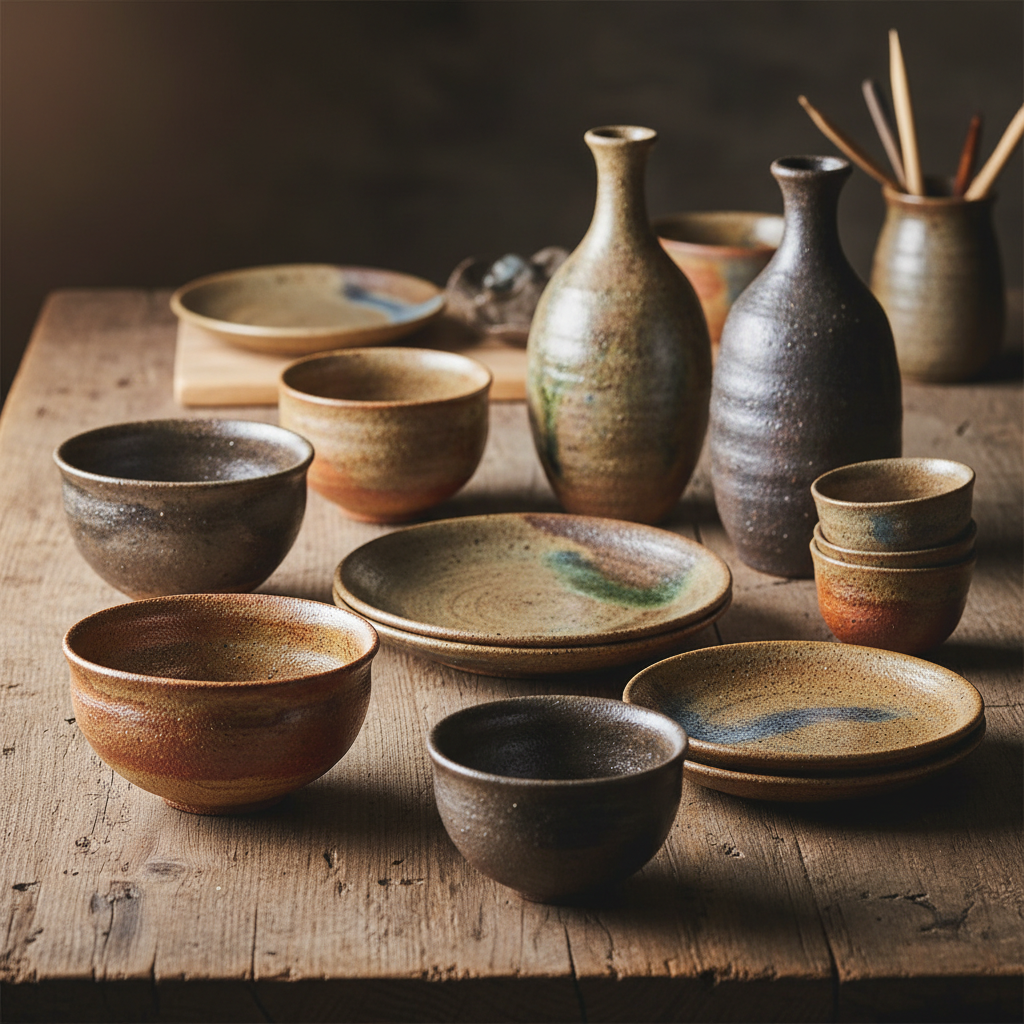
Zezeyaki (膳所焼) is pottery fired in Zesho, Otsu City, Shiga Prefecture, and has been particularly highly regarded as Japanese tea ceramics throughout history. Beginning in the early Edo period and counted among the Seven Kilns of Enshu, this ceramic ware is characterized by iron glaze with a dark tone, and features rustic yet delicate design.
The greatest characteristic of Zezeyaki lies in its thinness and lightness. Through the advanced technique of skilled craftsmen drawing clay thinly on the potter’s wheel, remarkably light tea bowls and tea utensils are produced. This technique is unique to Zezeyaki, making it valuable property that has been passed down to the present day, found nowhere else.
While Shiga Prefecture is nationally known for Shigaraki ware, Zezeyaki is also one of the important ceramic production areas representative of the prefecture. The geographical characteristics of being on the shores of Lake Biwa and the cultural environment of proximity to Kyoto greatly influenced the development of this pottery.
History of Zezeyaki: From the Early Edo Period to Modern Times
Birth in the Early Edo Period
The history of Zezeyaki begins around 1621 (Genna 7) in the early Edo period. It is said to have originated when Suganumo Sadayoshi, the feudal lord of Zesho Domain at that time, invited potters and opened a kiln. Subsequently, during the era of Ishikawa Tadamasa, who became feudal lord of Zesho Domain in 1634 (Kanei 11), the pottery came under the guidance of Kobori Enshu Masakazu (1579-1647), known as a tea master, architect, and garden designer.
Kobori Enshu was a tea master of immense influence in the tea ceremony circles of his time. The aesthetic of “kireisabi” (clean simplicity) that he advocated—meaning refined beauty without ostentation, harboring the spirit of wabi within sophistication—was deeply reflected in the style of Zezeyaki. Under Enshu’s guidance, Zezeyaki established its own refined style as a tea ceramic.
Status as One of the Seven Kilns of Enshu
Zezeyaki is counted among the “Seven Kilns of Enshu,” the tea ceramics kilns favored by Kobori Enshu. Besides Zezeyaki, the Seven Kilns of Enshu include Shitoro ware (Shizuoka Prefecture), Kosobe ware (Osaka Prefecture), Asahi ware (Kyoto Prefecture), Akahada ware (Nara Prefecture), Agano ware (Fukuoka Prefecture), and Takatori ware (Fukuoka Prefecture).
These kilns produced tea ceramics based on Enshu’s aesthetic sense and played important roles in the tea culture of the Edo period. Zezeyaki was particularly known for its thin-formed technique and the beauty of its iron glaze, receiving high evaluation from tea masters.
Changes in the Mid to Late Edo Period
Zezeyaki reached its heyday in the early Edo period, but the subsequent history was not necessarily smooth. From the late 17th century onward, due to changes in domain finances and the times, production scale declined. However, without disappearing completely, the technique was passed down in modest fashion.
Throughout the Edo period, multiple kilns existed producing Zezeyaki. The principal kilns included the Main Kiln, Bairin ware, Suzume-gaya ware, and Seta ware, each with its own characteristics. These kilns repeatedly experienced ups and downs with the times while continuing to preserve the Zezeyaki tradition.
Technical Characteristics of Zezeyaki
Thin-forming Technique
When discussing Zezeyaki, the thin-forming technique is indispensable. The technique of skilled potters using the potter’s wheel to pull clay up to astonishingly thin and uniform thickness is a high-level craft that can only be mastered through years of practice.
This thin-forming is not merely a technical challenge but also a result of pursuing both functionality and beauty as tea utensils. A thin and light tea bowl feels good when held, and excels in ease of handling when whisking tea. Additionally, through the thin vessel wall, the temperature of the tea is easily conveyed, allowing tea masters to sense the state of the tea.
Beauty of Iron Glaze
Another major characteristic of Zezeyaki is its dark-toned iron glaze. This glaze, created through the use of iron-rich soil or glaze, possesses a unique color that subtly changes depending on firing conditions.
The color of the iron glaze ranges widely from deep black to tea-brown, sometimes displaying bluish-black tones or metallic luster. This richness of variation is one of Zezeyaki’s attractions. The aesthetic of “kireisabi” advocated by Kobori Enshu is beautifully expressed in this subdued beauty of the iron glaze.
Rustic yet Delicate Design
The design of Zezeyaki avoids ornate decoration and emphasizes bringing out the natural beauty of materials. This is based on Enshu’s spirit of “kireisabi” and represents a refined style that evokes the spirit of wabi amid sophistication.
Forms center on tea utensils such as tea bowls, tea caddies, water jars, and flower vessels, possessing simple yet carefully calculated beautiful proportions. Decoration is restrained, with the flow of glaze and natural scenery created by kiln changes often appreciated, showing an attitude of respecting natural sculptural beauty over artificial ornamentation.
The Story of Zezeyaki’s Decline and Revival
Decline After the Meiji Period
After the Meiji Restoration, when Zesho Domain was abolished through the abolition of the han system, Zezeyaki rapidly declined upon losing the protection of the domain. The decline in the tea ceremony culture itself and reduced demand for tea ceramics also had an impact.
Entering the 20th century, nearly all Zezeyaki kilns disappeared, and the number of artisans possessing traditional techniques declined. At one point, the very name of Zezeyaki was nearly forgotten, and Shiga Prefecture’s ceramics became known only for Shigaraki ware.
Revival of Zezeyaki in the Showa Period
However, entering the Showa period, a movement to revive Zezeyaki began. Led by local potters and cultural figures, old documents and remaining works were researched, and efforts to recreate lost techniques were undertaken.
This revival movement was called “Revival Zezeyaki,” and while learning traditional techniques, attempts were also made at creating new works suited to contemporary life. The potters involved in the revival researched the characteristics of old Zezeyaki—particularly the thin-forming and iron glaze techniques—and successfully revived them in the modern era.
Contemporary Zezeyaki
Currently, while Zezeyaki cannot be said to have achieved complete revival, multiple kiln proprietors and potters carry on the tradition while creating works. Within Otsu City, there are Zezeyaki kilns producing not only traditional tea ceramics but also tableware suited to contemporary life.
Contemporary Zezeyaki maintains traditional techniques while demonstrating a willingness to challenge new expression. Among younger potters, some have been drawn to the appeal of the Zezeyaki tradition and have begun practicing their craft in this area.
Characteristics of Individual Zezeyaki Kilns
Bairin Ware
Bairin ware is one of the most well-known kilns among Zezeyaki. Active from the mid to late Edo period, it left behind numerous excellent works. The characteristics of Bairin ware lie in the beauty of its iron glaze and its high perfection as tea ceramics.
Works of Bairin ware are today highly evaluated as tea utensils and are housed in museums and private collections. Its style embodies typical characteristics of Zezeyaki, with the spirit of Enshu’s preferred “kireisabi” strongly reflected.
Suzume-gaya Ware
Suzume-gaya ware (雀ケ谷焼) is also an important kiln among Zezeyaki. This kiln functioned as an official kiln of Zesho Domain, producing tea ceramics for the feudal lord and upper-ranking samurai.
The works of Suzume-gaya ware are characterized by an elevated style, with many technically excellent pieces remaining. Because it received the protection of the domain, it was possible to use high-quality materials and engage in careful, time-intensive pottery work, resulting in high-quality creations.
Seta Ware
Seta ware is pottery fired in the Seta region near Zesho. It is sometimes classified as a branch of Zezeyaki and sometimes treated as an independent ceramic ware.
The characteristic of Seta ware is that while inheriting the Zezeyaki tradition, it possesses somewhat freer stylistic qualities. With strong characteristics of folk kilns, it produced not only tea ceramics but also many utilitarian wares. Today, kilns continue production under the name of Seta ware, preserving local tradition.
Positioning as a Ceramic Production Area of Shiga Prefecture
Relationship with Shigaraki Ware
The most famous ceramic production area in Shiga Prefecture is Shigaraki ware. Produced mainly in Shigaraki, Koka City, Shigaraki ware is counted among the Six Ancient Kilns of Japan and possesses a history of over a thousand years.
While Shigaraki and Zezeyaki are production areas within the same Shiga Prefecture, their character differs greatly. Shigaraki developed primarily around utilitarian wares and large ceramic pieces from ancient times, while Zezeyaki developed as a refined ceramic ware specialized in tea ceramics.
Rather than competing, the two have enriched Shiga’s ceramic culture by utilizing their respective strengths. Today, Shigaraki ware remains a large-scale production area nationally known, while Zezeyaki exists as a small-scale yet uniquely valued ceramic ware.
Other Pottery of Shiga Prefecture
Besides Zezeyaki and Shigaraki ware, several other ceramic wares existed historically in Shiga Prefecture: Kotoh ware, Shimoda ware, and Hatta ware.
Kotoh ware was a porcelain developed as an official kiln of Hikone Domain, characterized by delicate painting. Shimoda ware and Hatta ware also had regional characteristics, but both declined after the Meiji period and are barely produced today.
Examining the history of these ceramic wares reveals that Shiga Prefecture possessed a rich ceramic culture. Abundant water resources from Lake Biwa, high-quality clay, and a cultural environment near Kyoto—all conditions suitable for ceramic production—supported the development of diverse ceramic wares.
Appreciation and Collection of Zezeyaki
Points of Interest in Zezeyaki
When appreciating Zezeyaki, noting several points can deepen understanding of its appeal.
First, it is important to hold it in hand and confirm its weight. The thin-forming technique of Zezeyaki can only be truly appreciated by actually holding it. One will be amazed at how remarkably light it is despite its appearance, yet crafted with uniformly consistent thickness.
Next, observe the color and texture of the glaze. The dark-toned iron glaze changes expression according to how light strikes it, displaying a beauty of profound depth. The flow of glaze and natural scenery created by kiln changes differ in each work, allowing one to enjoy the beauty produced by nature.
The balance of form and refinement of design are also important appreciation points. Zezeyaki avoids ostentatious decoration, but this precisely makes the beauty of the form stand out. One can sense the beautifully calculated proportions despite simplicity, the harmony of functionality and beauty.
Places to View Zezeyaki
Works of Zezeyaki can be appreciated in museums and art galleries throughout Shiga Prefecture and beyond. The Otsu City History Museum displays historical crafts of the region, including Zezeyaki, where one can learn about the history and characteristics of Zezeyaki.
At the Shiga Prefectural Ceramic Art Center, while centering on Shigaraki ware, other ceramic wares of the prefecture are also sometimes introduced. Zezeyaki may be featured in special exhibitions, so checking display information is worthwhile.
In major museums in Tokyo and Kyoto, Zezeyaki is sometimes included in tea utensil collections. One may encounter Zezeyaki in special exhibitions of the Seven Kilns of Enshu.
Purchasing Contemporary Zezeyaki
Contemporary Zezeyaki works can be purchased at kiln proprietors’ studios and potters’ workshops within Otsu City. They are also handled in galleries and shops dealing with Shiga Prefecture crafts.
When purchasing, it is important to confirm the artist’s background and style, selecting works that match your preferences. Contemporary Zezeyaki artists create a wide range of works from traditional tea ceramics to contemporary tableware, allowing selection according to use and preference.
Visiting kilns in person allows you to examine works in hand and speak directly with artists. Learning about Zezeyaki’s techniques and history while selecting pieces allows you to develop deeper affection for them.
Zezeyaki and Tea Ceremony Culture
Value as Tea Ceramics
Zezeyaki has developed as tea ceramics since its inception. Under Kobori Enshu’s guidance, pursuing the optimal shape, weight, and texture for tea utensils resulted in a ceramic ware with its own unique aesthetic sense.
The tea bowl is a representative Zezeyaki work, characterized by its lightness from thin-forming and its ergonomic shape. It is highly evaluated for its ease of handling when whisking tea, pleasant sensation at the mouth, and glaze color that displays tea beautifully.
Tea caddies, water jars, and flower vessels are also important Zezeyaki work groups. These too possess the functionality required of tea ceramics while featuring the refined beauty preferred by Enshu.
The Aesthetic of “Kireisabi”
The “kireisabi” advocated by Kobori Enshu is at the core of Zezeyaki’s aesthetic. This concept refers to beautiful simplicity that, while not ostentatious, is refined; beauty that maintains the wabi spirit while possessing dignity and grace.
Compared to Sen no Rikyu’s pursuit of “wabi tea,” which embodied a stricter and more ascetic aesthetic sense, Enshu’s “kireisabi” was an aesthetic that preserved the wabi spirit while being more refined and occasionally even allowing elegance.
Zezeyaki developed as pottery embodying this “kireisabi” aesthetic. Rustic yet delicate, simple yet refined. This exquisite balance is Zezeyaki’s greatest attraction.
The Future of Zezeyaki
Inheritance of Tradition and Challenges
Contemporary Zezeyaki faces the important challenge of inheriting tradition. Transmitting techniques such as thin-forming and iron glaze formulation—which require years of experience and practice—to the next generation is not easy.
The declining tea ceremony population, reducing demand for tea ceramics itself, also presents a challenge. Beyond traditional tea ceramics alone, developing new applications suited to contemporary life is also necessary.
However, alongside these challenges, there is a growing interest in traditional crafts and reevaluation of the value of handiwork. Efforts continue to convey Zezeyaki’s unique value to the present age and encourage new generations to appreciate its appeal.
New Developments
Contemporary Zezeyaki artists challenge new expression while preserving tradition. Attempts are being made to create modern-design tableware and flower vessels while utilizing traditional tea ceramic techniques.
Through experience classes and workshops, activities to broadly communicate Zezeyaki’s techniques and history are also conducted. Allowing people to actually turn the potter’s wheel and experience the difficulty of thin-forming helps them appreciate the high level of Zezeyaki’s technique.
Information dissemination using the internet and social media also contributes to raising Zezeyaki’s awareness. Sharing photos of works and videos of production processes makes it possible to convey Zezeyaki’s appeal to people far away.
Regional Collaboration
Regional cooperation is essential for promoting Zezeyaki. In Otsu City, efforts to support Zezeyaki as a regional traditional craft are underway.
Utilization as a tourist resource is also progressing, with moves to incorporate Zezeyaki kiln tours and pottery experience into tourism plans. By combining them with Lake Biwa tourism, opportunities are being created for more people to learn about Zezeyaki.
Additionally, through collaboration with educational institutions, activities to transmit Zezeyaki’s history and techniques to local children are being conducted. Efforts to inherit Zezeyaki as regional pride to the next generation are steadily advancing.
Conclusion
Zezeyaki is pottery fired in Zesho, Otsu City, Shiga Prefecture, with a tradition continuing from the early Edo period and is a tea ceramic. As one of the Seven Kilns of Enshu, embodying Kobori Enshu’s aesthetic of “kireisabi,” it is characterized by thin-forming technique and dark-toned iron glaze.
After reaching its heyday in the Edo period, it declined after the Meiji era, but the revival movement of the Showa period brought it back into attention. Multiple kiln proprietors and potters continue to inherit the tradition today while working on creations suited to the modern age.
As a ceramic production area of Shiga Prefecture, Zezeyaki holds unique value distinct from Shigaraki ware—a precious traditional craft deeply connected to Japanese tea ceremony culture. Its delicate beauty and advanced techniques continue to fascinate many people today.
Zezeyaki’s future depends on balancing tradition’s inheritance with new developments. Through regional support and broad communication of its appeal, this valuable cultural heritage can be passed to future generations.