Minpei Ware: A Legendary Masterpiece of Awaji Island, Hyogo Prefecture – A Complete Explanation of Its History and Characteristics
What is Minpei Ware – Traditional Ceramics of Awaji Island, Hyogo Prefecture
Minpei ware (珉平焼) is a traditional ceramic produced at the southern tip of Awaji Island in Hyogo Prefecture. It was founded during the Bunsei era (1818-1830) of the late Edo period by Kashu Minpei (賀集珉平) in Igano Village, Mihara County, Awaji Province (present-day Kita-Aman Igano, Minami-Awaji City, Hyogo Prefecture).
This pottery is also called “Igano ware” or “Awaji ware” after its founding location, and gained widespread acclaim from the Edo period through the modern era. It is characterized by vibrant glazes incorporating Kyoto ware techniques and elegant works using high-quality white clay from Awaji Island. Today it is highly valued among antique collectors as a “legendary masterpiece.”
The History of Minpei Ware – From Founding to Decline
Founding During the Bunsei Era and Kashu Minpei
The history of Minpei ware begins during the Bunsei era (1818-1830). The founder, Kashu Minpei, was the village headman of Inada Village in Mihara County, Awaji Province, and a wealthy landowner engaged in soy sauce manufacturing. Minpei was not merely a merchant but approached ceramic production with the clear purpose of establishing a new industry within Awaji Island and improving the lives of its residents.
At that time, agriculture was the center of Awaji Island’s economy, but Minpei focused on the high-quality ceramic clay resources that existed in abundance on the island. In particular, the white clay discovered in the Ikenouchi district of Sumoto City proved to be an excellent material for fine ceramic production.
Invitation of Kyoto Potter Ogata Shuhei
Between 1832 and 1834, Kashu Minpei invited a renowned Kyoto potter, Ogata Shuhei, to Awaji Island. This decision became a crucial turning point in establishing the technical foundation of Minpei ware.
Ogata Shuhei was a master craftsman with traditional Kyoto ware techniques. The glaze and overglaze enamel methods he taught created the distinctive beauty of Minpei ware. By transplanting the design sensibility and technical expertise of Kyoto ware to Awaji, Minpei ware was able to produce refined works despite being a regional kiln.
Prosperity in the Late Edo Period
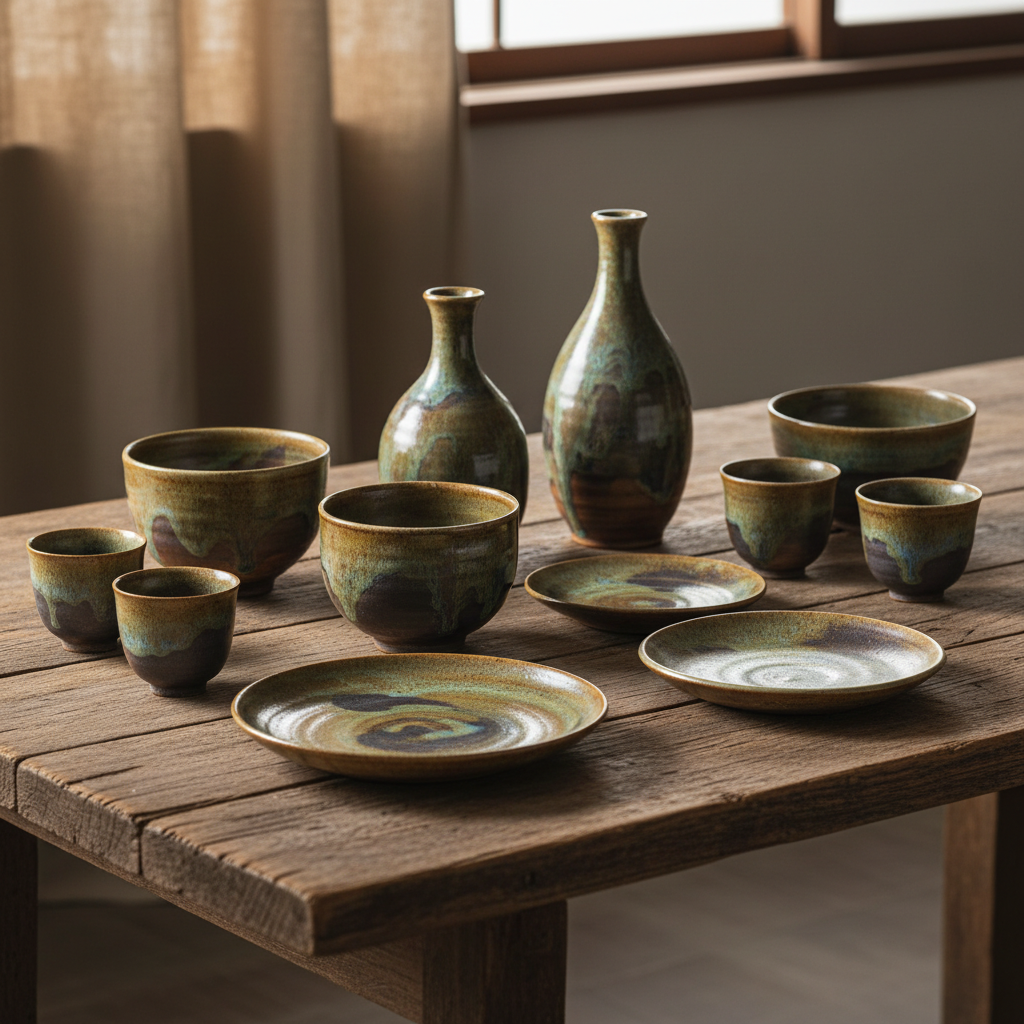
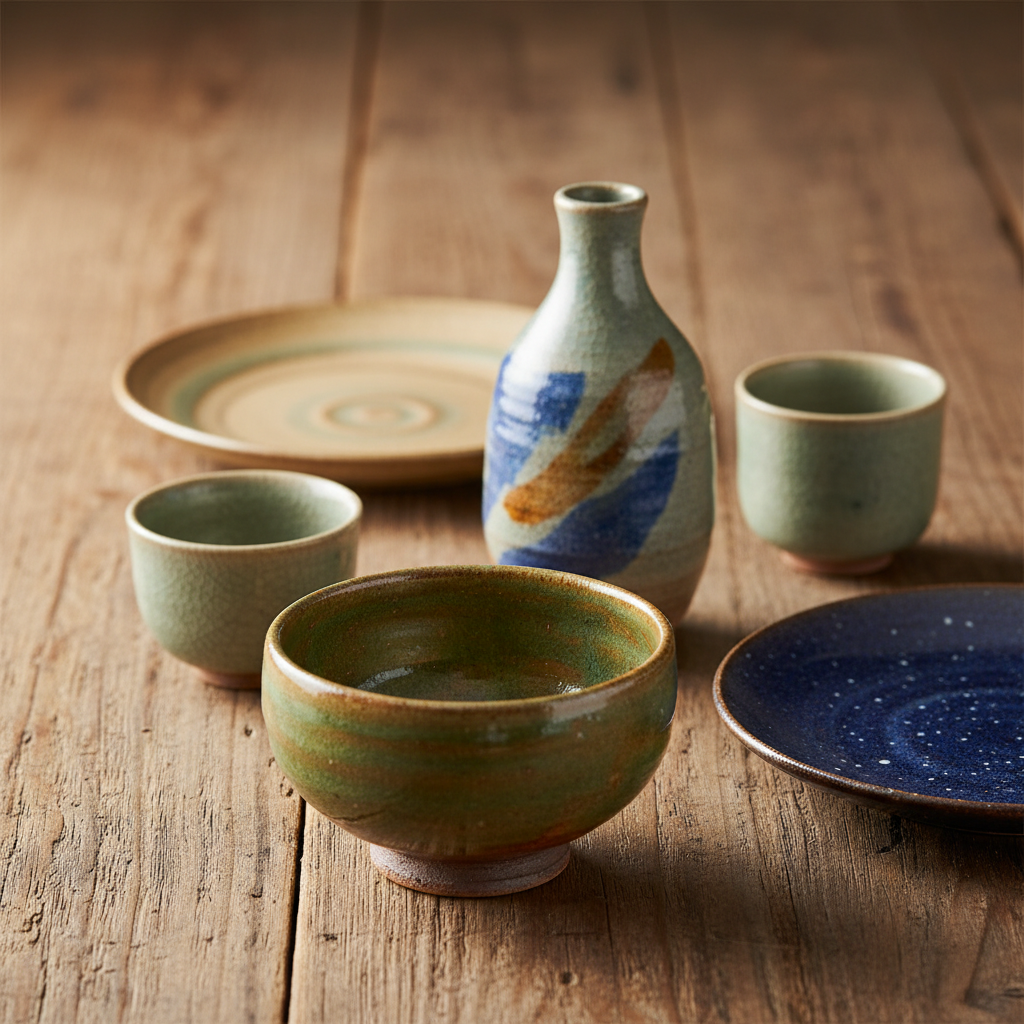
Under Ogata Shuhei’s guidance, Minpei ware developed rapidly. The fusion of Awaji Island’s high-quality white clay with the advanced techniques of Kyoto ware produced numerous works using diverse glazes such as brown, yellow, and blue.
In the “Illustrated Guide to Famous Places in Awaji Province,” Minpei ware was introduced as “Igano ceramics,” indicating its recognition as a representative local product of Awaji Island from that time. A wide range of products including tea ceremony utensils, everyday items, and decorative pieces were produced and distributed not only throughout Awaji Island but also to the main island of Honshu and Shikoku.
Development in the Meiji Era and the Tan-To Society
With the arrival of the Meiji period, Minpei ware entered a new phase. Within the wave of modernization, ceramics with more vivid colors began to be produced. Works from this period featured brighter colors compared to those of the Edo era and incorporated Western elements.
From the Meiji through Taisho periods, production continued under the name “Tan-To Society” (淡陶社). Excavation surveys by the Hyogo Prefecture Board of Education confirmed traces of pottery production continuing from the Edo period through the modern era.
End in the Taisho Period
Minpei ware (Tan-To Society) generally ceased ceramic production around the Taisho period. The convergence of changes in industrial structure, the circulation of inexpensive mass-produced goods, and succession issues led to the discontinuation of the Minpei ware tradition, which had lasted for over a century.
With this end, Minpei ware became a “legendary masterpiece,” and the value of existing works increased.
Characteristics and Techniques of Minpei Ware
High-Quality White Clay from Awaji Island
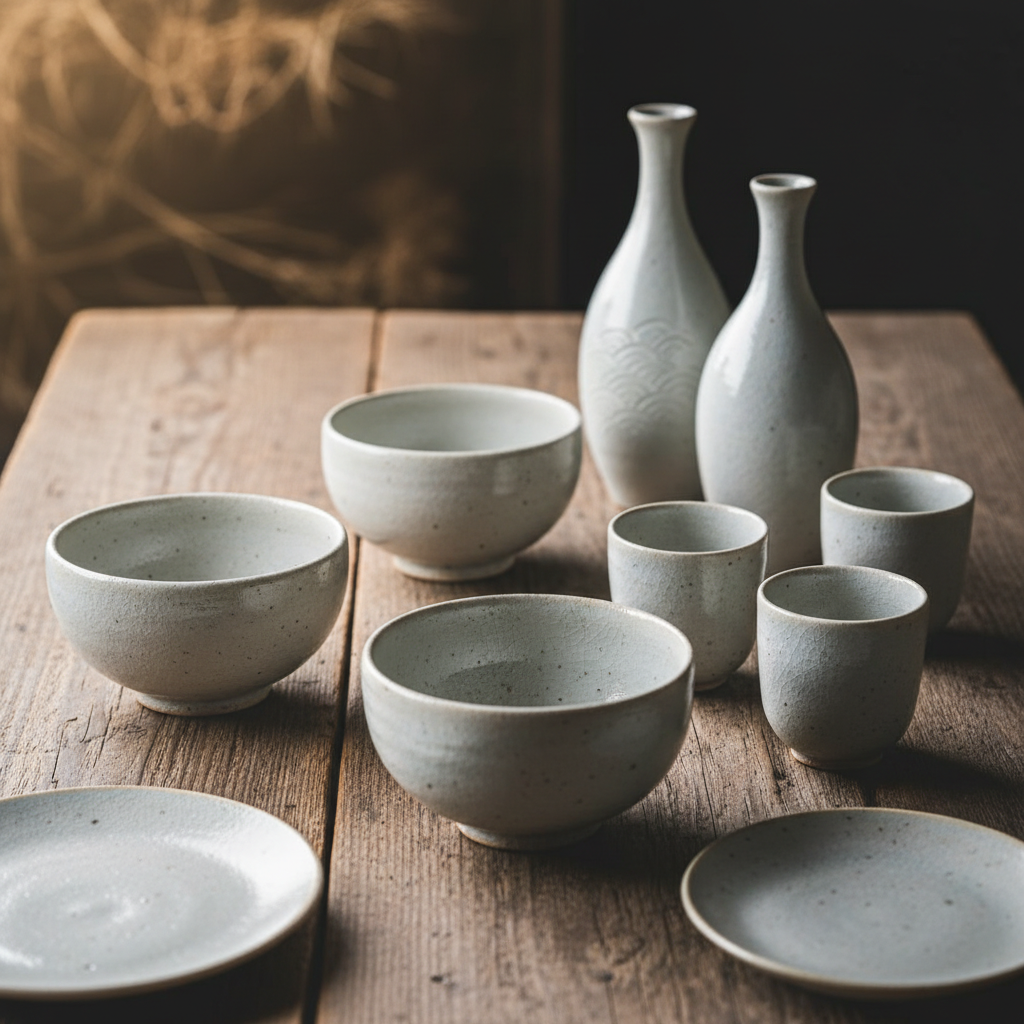
One of the greatest characteristics of Minpei ware is its use of high-quality white clay from Awaji Island. The white clay extracted from the Ikenouchi district of Sumoto City in particular featured fine texture with excellent whiteness and smoothness after firing.
This white clay had the effect of beautifully enhancing the color development of colored glazes, enabling the vivid color expression unique to Minpei ware. The high quality of the clay body became an important factor in Minpei ware’s evaluation as a high-grade ceramic.
Diverse Glaze Techniques in the Kyoto Ware Style
By adopting Kyoto ware techniques, Minpei ware achieved diverse glaze expressions. The main glaze techniques include the following.
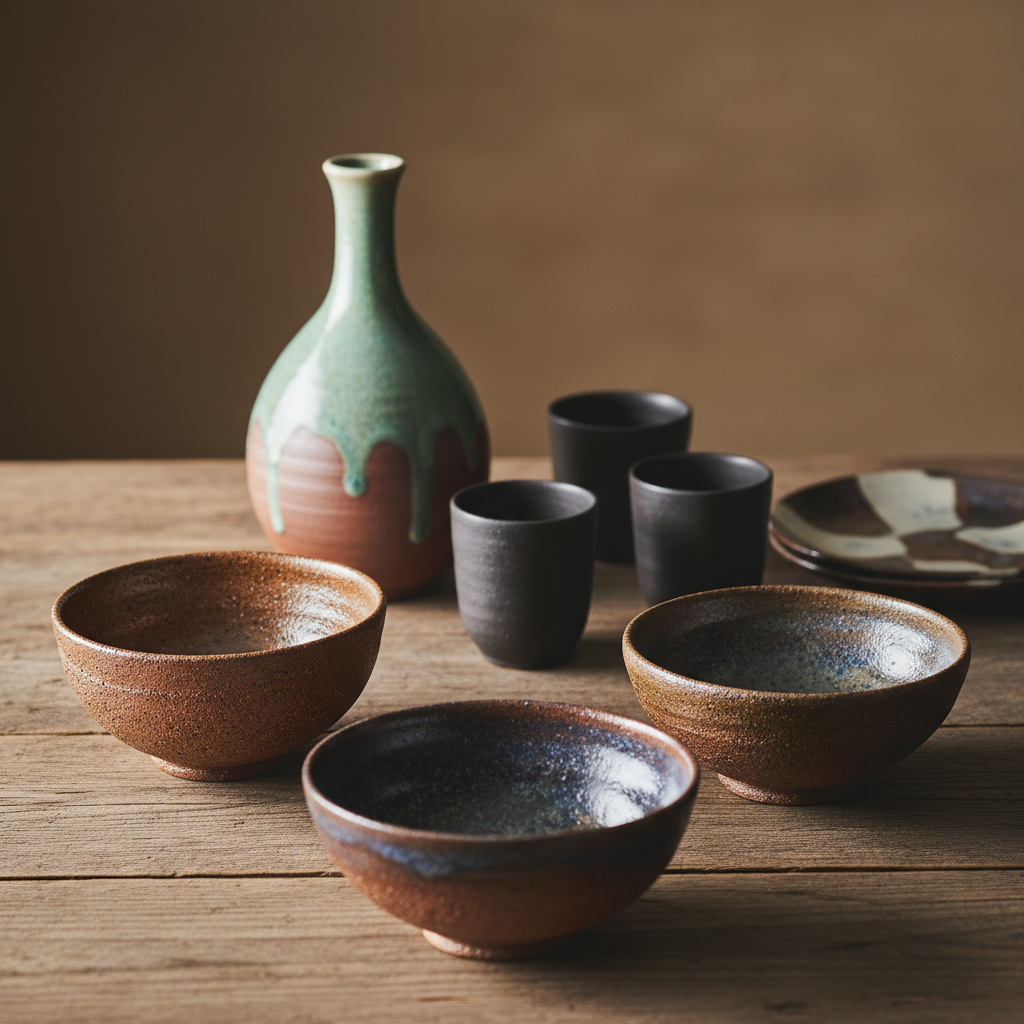
Brown glaze: A deep brown glaze characterized by its subdued finish. It was frequently used for tea ceremony utensils.
Yellow glaze (yellow Nanking): A vivid yellow glaze modeled after Chinese Nanking ware. It was used for works with an impressive, brilliant appearance.
Blue glaze (green glaze): A transparent blue-green glaze characterized by its clear, refreshing color tone.
Lustrous black glaze: A glossy black glaze that produces a high-quality finish.
Persimmon glaze: A warm persimmon-colored glaze used widely from everyday items to tea ceremony utensils.
E-Koryo and Underglaze Blue Decoration Techniques
In Minpei ware, decorative techniques such as e-koryo and underglaze blue decoration were also incorporated. E-koryo is a technique influenced by Korean ceramics, characterized by iron painting and white slip decoration.
Underglaze blue decoration is a technique in which designs are drawn with cobalt oxide (gusumi) on white clay body, covered with transparent glaze, and then fired. While influenced by Chinese porcelain and Arita ware, Minpei ware developed its own distinctive designs.
Imitations of Chinese Porcelain and Diverse Styles
An important characteristic of Minpei ware is that many imitation works of Chinese porcelain were produced. Works such as Annam ware (Gochi ware: polychrome ceramics from Vietnam and southern China) and Nanking ware were created by studying the styles of Chinese ceramics while adding independent interpretation.
Works imitating those of master craftsmen were also produced, with the aim of improving techniques and acquiring diverse styles. This multifaceted approach formed the rich expressive world of Minpei ware.
The Production Area of Minpei Ware – Igano, Minami-Awaji City
Current Situation of the Production Area
The production area of Minpei ware is present-day Kita-Aman Igano, Minami-Awaji City, Hyogo Prefecture. Corresponding to the former Igano Village of Mihara County, this region is located at the southern tip of Awaji Island and blessed with a warm climate and abundant nature.
Currently, no pottery production takes place here, but the Minpei ware kiln site has been excavated and investigated by the Hyogo Prefecture Board of Education and is protected as a historical heritage site. Pottery shards and kiln tools from the Edo period through the modern era have been unearthed from the kiln site, providing valuable materials for understanding the evolution of Minpei ware.
Related Facilities and Exhibitions
Works and materials related to Minpei ware can be viewed at the following facilities.
The Hyogo Prefectural History Museum features permanent exhibitions introducing Hyogo’s historical culture including Minpei ware. Information about Minpei ware is also made public through its digital museum.
The Hyogo Ceramic Art Museum houses works of Minpei ware (Tan-To Society) and displays them in special and thematic exhibitions. It is a facility where one can comprehensively learn about Hyogo’s ceramic culture.
In the past, special exhibitions such as “Minpei Ware: A Legendary Masterpiece Born in Awaji” have been held, providing opportunities for the charm of Minpei ware to be reassessed.
Ceramic Clay Resources of Awaji Island
Awaji Island has long been abundant in high-quality ceramic clay. Particularly around Sumoto City, not only white clay but also clay in various colors could be extracted.
This geographical advantage is thought to have motivated Kashu Minpei to establish ceramic production. The fact that raw materials could be self-supplied within the limited area of Awaji Island was one reason Minpei ware could prosper for a certain period.
Minpei Ware and Hyogo’s Ceramic Culture
Major Pottery of Hyogo Prefecture
In addition to Minpei ware, Hyogo Prefecture has other important ceramic production areas. The most renowned is Tamba ware (Tamba Tachinuki ware), counted among Japan’s Six Ancient Kilns, with a history extending from the late Heian period. Tradition continues to be maintained in present-day Sasayama City.
While Minpei ware has a shorter history compared to Tamba ware, it occupies a unique position through its polychrome enameled ceramics incorporating Kyoto ware techniques. In contrast to Tamba ware, which primarily focuses on rustic high-fired stoneware, Minpei ware is characterized by brilliant glazed ceramics.
Positioning as a Kyoto Ware-System Kiln
Minpei ware is classified as a “Kyoto ware-system kiln” in which Kyoto ware techniques were transplanted to rural areas. From the Edo period through the Meiji period, Kyoto potters were invited to various regions and Kyoto ware techniques spread throughout the country.
Minpei ware is one of the representative examples of this, and constitutes an important case demonstrating the dissemination of Kyoto ware techniques in the Kinki region. The historical significance of Minpei ware lies in achieving a high level of technical skill while being a regional kiln through the adoption of techniques from Kyoto.
Industrial Development of Awaji Island and Minpei Ware
One of Kashu Minpei’s purposes in beginning Minpei ware production was fostering industrial development and improving the lives of Awaji Island residents. During the Edo period, Awaji Island’s economy was based on agriculture, with limited means of obtaining cash income.
It was hoped that establishing a new industry of pottery would create employment and open new markets outside the island. This perspective of regional development was a pioneering undertaking relevant even to modern regional revitalization.
Appreciation and Collecting of Minpei Ware
Highlights of the Works
When appreciating Minpei ware, the first point to observe is the beauty of its glazes. The diverse colored glazes inherited from Kyoto ware change appearance with light and display deep appeal.
Next is the texture of the clay body from Awaji’s white clay. The fine-textured, smooth surface quality and white tone achieved through firing further enhance the color development of the glazes.
Pay attention also to the designs and decorative patterns. The motifs, which absorbed influences from Chinese and Korean ceramics while adding independent interpretation, display the unique charm of Minpei ware.
Evaluation in the Antiques Market
Currently, Minpei ware is highly valued in the antiques market as a “legendary masterpiece.” The relatively short production period and limited number of surviving pieces increase its rarity value.
In particular, works from the late Edo period or pieces with confirmed signatures may command high prices. Works from the Meiji era and beyond with vivid colors also attract attention as modern ceramics.
Antique dealers and art merchants specializing in antiques conduct appraisals and purchases of Minpei ware, and it maintains firm popularity among collectors.
Distinguishing Authentic from Imitation
Several points exist for judging the authenticity of Minpei ware. First is the texture and color of the clay body. The fine texture and whiteness characteristic of Awaji white clay are authentic features.
Next is the color development and texture of the glazes. Glazes produced through Kyoto ware-system techniques possess distinctive depth and transparency. Signs of aging with time are also important factors in judgment.
Other verification points include the craftsmanship of the foot ring, traces of scraping, and the presence or absence of kiln marks and signatures. Since professional knowledge is necessary, it is advisable to consult with specialists or trustworthy art merchants regarding unclear points.
Contemporary Significance of Minpei Ware
As a Regional Historical and Cultural Heritage
Minpei ware is an important historical and cultural heritage for Minami-Awaji City and Awaji Island as a whole. It is valuable material testifying to Awaji Island’s industrial and cultural history from the Edo period through the modern era, and constitutes one element forming the region’s identity.
Efforts to transmit the history and value of Minpei ware to future generations continue through kiln site preservation and research, and through museum exhibitions.
Position in Japanese Ceramic History
In the context of Japanese ceramic history, Minpei ware is positioned as an important example demonstrating the regional dissemination of Kyoto ware techniques. It can be regarded as a successful instance of transplanting central techniques to rural areas and creating unique ceramic culture through connection with regional resources.
It also carries socioeconomic historical significance as an example of a regional notable establishing ceramic production for industrial development purposes.
Expectations for Revival
In recent years, movements for revival and reassessment of traditional crafts are evident throughout Japan. Regarding Minpei ware, efforts to research its history and techniques and restore it to the modern age are anticipated.
Within the context of Awaji Island’s tourism promotion and regional branding, Minpei ware holds significant potential. Initiatives that leverage the attractive story of “legendary masterpiece” and its actual technical and artistic value may develop in the future.
Conclusion – The Charm and Value of Minpei Ware
Minpei ware is a ceramic representative of Hyogo Prefecture, born on Awaji Island during the Bunsei era of the late Edo period. Founded by Kashu Minpei, a farsighted individual, who invited Kyoto ware master craftsman Ogata Shuhei, Minpei ware produced excellent works in which Awaji Island’s high-quality white clay and Kyoto ware’s advanced techniques were fused.
Diverse styles characterize Minpei ware, including its varied glazes such as brown, yellow, and blue; decorative techniques like e-koryo and underglaze blue decoration; and imitations of Chinese ceramics. With its production area in present-day Igano, Minami-Awaji City, production continued for approximately one hundred years from the Edo period through the Taisho period.
After production ceased, Minpei ware has been highly valued as a “legendary masterpiece” by antique collectors and is protected and researched as an important historical and cultural heritage of Hyogo Prefecture. With multifaceted value including technical significance as a Kyoto ware-system kiln and social significance as a pioneering example of regional industrial development, Minpei ware is expected to see ongoing research and reassessment.
When visiting Awaji Island, why not view actual Minpei ware pieces at the Hyogo Prefectural History Museum or the Hyogo Ceramic Art Museum and experience firsthand the beauty and historical depth of this masterpiece? The world of legendary masterpiece Minpei ware will surely teach us anew the richness of Japanese ceramic culture.