
Ohhi Ware: A 350-Year Traditional Raku-Ware Side Kiln Proud of Kanazawa, Ishikawa Prefecture
What is Ohhi Ware?
Ohhi ware (大樋焼) is a traditional ceramic that has been passed down for over 350 years in Kanazawa City, Ishikawa Prefecture. Based on Raku ware techniques while achieving independent development in the Kaga region, it occupies an important position in Japanese ceramic art history as a “side kiln of Raku ware.”
Derived from Kyoto’s Raku ware yet nurtured by the climate and culture of the Hokuriku region and the Kaga Hyakuman Koku (one million koku daimyo domain), Ohhi ware has expressed a unique aesthetic sense centered on tea ceramics with characteristic warmth. Even today, in Hashiba-machi, Kanazawa City, the traditional techniques passed down through generations are preserved.
History and Origins of Ohhi Ware
Birth in the Early Edo Period
The history of Ohhi ware traces back to Kanbun 6 (1666). When the fifth feudal lord of the Kaga domain, Maeda Tsunanori, invited the fourth-generation Urasenke master Sen Soushitsu (Sensou Soushitsu) from Kyoto for the purpose of promoting the tea ceremony, the master potter Haji Choizaemon (土師長左衛門), a supreme disciple of Raku ware’s fourth-generation founder Ichiinyu, accompanied him.
Choizaemon opened a kiln in Ohhi Village (present-day Ohhi-machi) on the outskirts of Kanazawa, where he began creating tea ceremony utensils such as tea bowls using the local clay. This kiln became the origin of Ohhi ware, and thereafter it came to be called “Ohhi ware” after the village name.
Development as an Official Kaga Domain Kiln
Following the opening of the kiln by the first Choizaemon, Ohhi ware flourished as an official kiln of the Maeda clan. Under the cultural patronage of the Kaga Hyakuman Koku domain, it continued to produce high-quality works centered on tea ceremony utensils and was cherished by successive feudal lords and tea masters.
The status as an official kiln provided a stable living foundation for ceramic production while enabling the maintenance of high technical standards and the pursuit of artistry. This favorable environment supported the continuation of the kiln for over 350 years and the succession of traditional techniques.
Relationship with Raku Ware
Ohhi ware is positioned as a “side kiln” of Kyoto’s Raku ware. The first Choizaemon was a supreme disciple who studied under the fourth-generation Raku master Ichiinyu and brought Raku ware techniques and spirit to the Kanazawa area. The amber glaze technique said to have been bestowed by the Raku family became the most important characteristic of Ohhi ware.
While inheriting the essence of Raku ware—hand-molding, low-temperature firing, and the spirituality of the tea ceremony—Ohhi ware developed a unique aesthetic rooted in the Kaga landscape. Its distinguishing feature is a warmth of expression characteristic of a snowy region, different from Kyoto’s Raku ware.
Characteristics and Techniques of Ohhi Ware
Distinctive Amber Glaze
The most distinctive characteristic of Ohhi ware is its deep amber-colored glaze. This amber glaze is said to have been bestowed upon the first Choizaemon by the Raku family in Kyoto and has been passed down as a secret technique by successive masters.
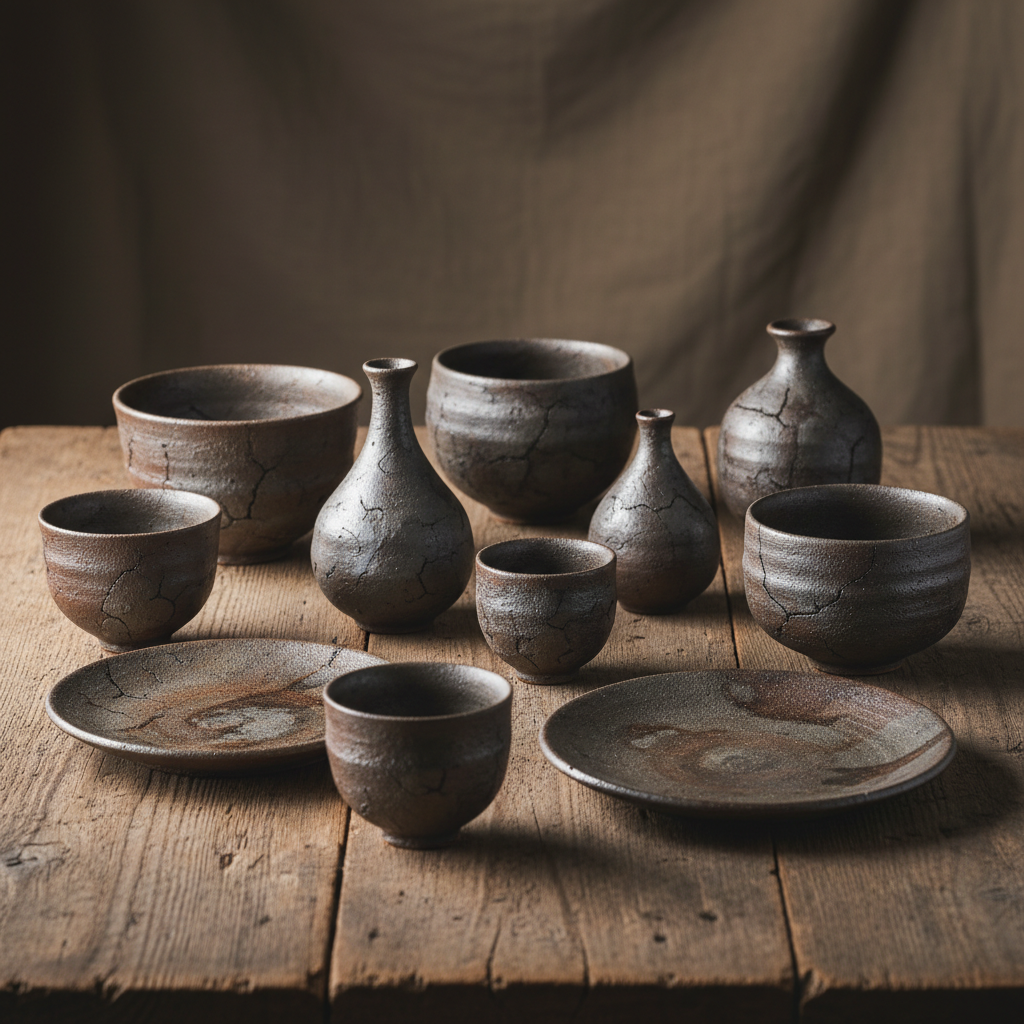
The amber glaze produces a warm brown hue by oxidative firing of glaze containing iron oxide, creating a soft texture and color tone suited to the snowy climate of Kanazawa. Works created with this glaze possess a unique beauty that imparts calm and warmth to those who view them.
Raku Ware Techniques
The production techniques of Ohhi ware fundamentally follow traditional Raku ware methods. Hand-molding without using a potter’s wheel and firing at relatively low temperatures (approximately 800-1000 degrees Celsius) make it possible to directly express the soft character of the clay and the individuality of the artisan.
After firing, the work is removed from the kiln while still glowing red and rapidly cooled to create a unique effect called “pulled black” (引き出し黒). Works created using this technique possess a unique beauty of jet-black depth and metallic luster.
Aesthetic Sense as Tea Ceramics
Ohhi ware has developed primarily around tea ceremony utensils, particularly tea bowls. The forms embodying the spirituality of the tea ceremony and an aesthetic sense emphasizing dialogue with the user are infused in the works.
Functional beauty as tea ceramics is pursued through simplified forms that suppress decoration, warm surfaces that bring out the clay’s texture, and soft curves that fit comfortably in the hand. For people spending deep snowy winters in the Hokuriku region, the warmth felt when holding it in hand held special meaning, and Ohhi ware tea bowls were cherished as fulfilling this expectation.
Lineage of Kilns and Successive Transmission
From the First Generation to the Present
Ohhi ware has had its techniques transmitted through direct succession from the first Haji Choizaemon to the present day, spanning eleven generations. Each successive master has assumed the name “Ohhi Choizaemon” while guarding traditional techniques and pursuing new forms of expression appropriate to their era.
The first Choizaemon transplanted Raku family techniques to Kanazawa, while the second generation onward established an independent artistic style rooted in the Kaga landscape. Throughout the Edo period, under the patronage of the Maeda family, the reputation of Ohhi ware grew alongside the spread of the tea ceremony.
Revival and Development after the Meiji Period
The end of domain rule following the Meiji Restoration marked a major turning point for Ohhi ware as an official kiln. Even after losing the domain’s patronage, the kiln survived supported by the continuing demand for tea ceremony culture and made efforts to maintain traditional techniques.
From the Showa period onward, with the re-evaluation of traditional crafts, Ohhi ware came to be recognized as a representative traditional craft of Ishikawa Prefecture. In contemporary times, while primarily centering on the production of traditional tea ceramics, works incorporating contemporary sensibilities are also being created.
Ohhi Museum and Cultural Outreach
Located in Hashiba-machi, Kanazawa City, the Ohhi Museum is established alongside the Ohhi Choizaemon kiln, displaying works and tea ceremony utensil collections of successive generations. This museum serves as an important cultural facility conveying the history and artistry of Ohhi ware, welcoming visitors from both Japan and abroad.
The museum hosts special exhibitions and tea ceremonies, contributing to the promotion of traditional crafts and the succession of tea ceremony culture. Studio tours and hands-on creation experiences are also provided, offering opportunities to directly experience the appeal of Ohhi ware.
Positioning as Ishikawa Prefecture’s Ceramic Production Center
Relationship with Kutani Ware
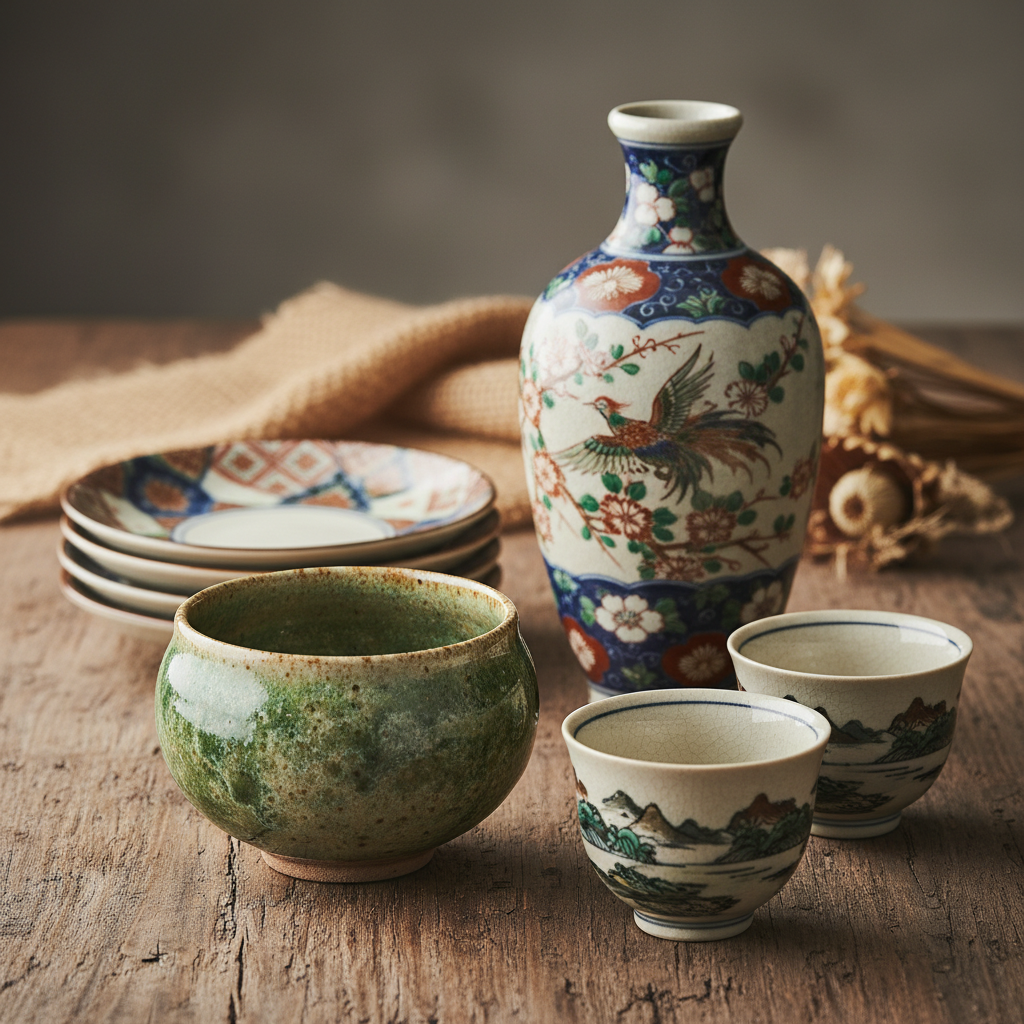
Ishikawa Prefecture is also known as a center for Kutani ware, another renowned ceramic, in addition to Ohhi ware. Kutani ware is known as colored porcelain and contrasts with Ohhi ware through its distinctive bright decorative qualities.
While Ohhi ware embodies an aesthetic sense of wabi and sabi centered on tea ceramics, Kutani ware colorfully expresses the magnificent and luxurious culture of Kaga Hyakuman Koku. Though possessing different aesthetic sensibilities, both are traditional crafts born from Kaga’s cultural soil and represent Ishikawa Prefecture’s ceramic culture.
Suzu Ware Tradition
The Noto Peninsula in Ishikawa Prefecture also preserves the tradition of Suzu ware, which continues from the medieval period. Suzu ware is an unglazed stoneware with primitive and powerful formal qualities. After once disappearing, it was revived in the late Showa period and is now attracting renewed attention as a traditional craft of Noto.
Ishikawa Prefecture, where Ohhi ware, Kutani ware, and Suzu ware with distinct characteristics coexist, is a region that has nurtured diverse ceramic cultures.
Role in Kanazawa’s Craft Culture
Kanazawa, as a castle town of Kaga Hyakuman Koku, has been a city where various traditional cultures including the tea ceremony have flourished. Ohhi ware has played an important role in this cultural environment as tea ceremony utensils.
Kanazawa’s craft culture is diverse, encompassing Kaga Yuzen dyeing, Kanazawa gold leaf, and Kaga inlay work, among others. Ohhi ware occupies a unique position among them, being closely connected to tea ceremony culture. Today, Ohhi ware remains an important element in Kanazawa’s cultural tourism.
Contemporary Development of Ohhi Ware
Succession and Innovation of Traditional Techniques
Contemporary Ohhi ware maintains traditional techniques spanning over 350 years while also engaging in the creation of works incorporating the sensibilities of the new age. While basing itself on the creation of traditional tea bowls and tea ceremony utensils, it also produces pieces and objects that harmonize with contemporary living spaces.
While employing traditional glazes such as amber and black, contemporary interpretations in form and design are added, exploring new possibilities for traditional crafts.
International Evaluation
Ohhi ware has received high evaluation not only domestically but also internationally. With growing interest in Japanese tea ceremony culture, Ohhi ware tea bowls have attracted attention from overseas collectors and tea ceremony enthusiasts.
Exhibitions and demonstrations abroad by successive masters are held, serving the role of internationally promoting the appeal of Japanese traditional crafts.
Successor Training and Future Transmission
While many traditional crafts face challenges from lack of successors, Ohhi ware maintains a system of direct succession ensuring reliable technical transmission. However, cultivating new practitioners adapted to changing times has also become an issue.
Through apprenticeship systems in studios and educational outreach activities at the museum, efforts continue to transmit Ohhi ware’s techniques and spirit to the next generation.
Experiencing Ohhi Ware
Visiting the Ohhi Museum
To deepen your understanding of Ohhi ware, visiting the Ohhi Museum in Hashiba-machi, Kanazawa City is recommended. You can comprehensively view works of Ohhi ware’s history and artistry, from masterpieces of successive generations to contemporary works.
The museum is conveniently located near Kanazawa’s Kazoe-machi teahouse district, making it easily accessible as part of Kanazawa sightseeing. A tea room is also attached, where you can actually enjoy tea in an Ohhi ware bowl.
Purchasing and Appreciating Works
Ohhi ware works can be purchased at the Ohhi Choizaemon kiln, craft shops in Kanazawa, and department stores. Various types of works are created, including tea bowls, flower vases, incense containers, and sake cups.
Prices vary widely depending on the type and artist, ranging from tens of thousands of yen to hundreds of thousands of yen, with masterpieces by successive generations reaching millions of yen. Actually holding a piece and feeling the texture of the clay and the depth of the glaze is the best way to understand the appeal of Ohhi ware.
Engaging with Kanazawa’s Tea Ceremony Culture
Truly understanding Ohhi ware also requires engaging with tea ceremony culture. Kanazawa has numerous facilities and tea rooms where you can experience the tea ceremony, enjoying matcha in an Ohhi ware bowl.
You can experience the tea ceremony at the Shigure-tei pavilion within Kenrokuen Garden or at tea houses in the teahouse districts. By actually holding an Ohhi ware tea bowl and drinking tea, you can experience why this ceramic has been cherished for over 350 years.
Conclusion
Ohhi ware is a ceramic tradition spanning over 350 years in Kanazawa City, Ishikawa Prefecture, maintaining the tradition of a side kiln of Raku ware. Since the first Haji Choizaemon opened the kiln in Kanbun 6 (1666), it has flourished as an official kiln of the Kaga domain, with successive masters transmitting traditional techniques.
The main characteristics of Ohhi ware are warm works created through amber glaze, hand-molding based on Raku ware techniques, and the profound spirituality of tea ceramics. The unique aesthetic sense nurtured by the snowy climate of Kanazawa and the cultural background of Kaga Hyakuman Koku continues to fascinate many people in contemporary times.
Occupying an important position as Ishikawa Prefecture’s ceramic center alongside Kutani ware and Suzu ware, Ohhi ware continues its contemporary development while preserving tradition, earning high evaluation at home and abroad. When visiting Kanazawa, be sure to visit the Ohhi Museum and experience the appeal of this historically significant ceramic.