A Complete Guide to Sodesshi Ware | History and Charm of Folk Craft Pottery Representing Matsue, Shimane Prefecture
Sodesshi ware (そでしやき), produced in Matsue City, Shimane Prefecture with a history spanning over 140 years, is known as a traditional ceramics production center deeply connected with Japan’s folk craft movement. With a commitment to local clay and glazes, Sodesshi ware has continued to create durable yet simple vessels with subtle grace. This guide thoroughly explains the appeal of Sodesshi ware, from its history to contemporary endeavors.
What is Sodesshi Ware | Folk Craft Pottery Representing Shimane Prefecture
Sodesshi ware is a type of pottery produced in Matsue City, Shimane Prefecture, and is a traditional craft that has continued since the Meiji period. Currently, production continues centered around the Sodesshi kiln, producing a wide range of works from everyday vessels to tea utensils and flower vases.
Basic Information about Sodesshi Ware
- Production area: Matsue City, Shimane Prefecture (currently on the shores of Lake Shinji)
- Kiln opened: Meiji 10 (1877)
- Classification: Pottery
- Characteristics: Folk craft pottery using locally sourced clay and glazes
- Main products: Tableware, tea utensils, flower vases, and other everyday vessels
Sodesshi ware is certified as a traditional craft of Shimane Prefecture and is positioned as a representative kiln of the San’in region in Japan’s list of pottery production centers.
History of Sodesshi Ware | Lineage of a Kiln Spanning Over 140 Years
Meiji Period: Kiln Opening by First-Generation Otono Tomoichi
The history of Sodesshi ware began in Meiji 10 (1877) when first-generation Otono Tomoichi opened a kiln on Koshi-zaka in Kaminogi, Matsue City. While the former Matsue domain had made several attempts at pottery production, Sodesshi ware inherited this tradition while developing its own unique path.
Second Generation: Kiln Relocation and Technical Refinement
Second-generation Otono Iwajiro relocated the kiln to Sodesshi-ura on the shores of Lake Shinji (the current location) in Meiji 26 (1893). This relocation was made in consideration of securing high-quality clay for raw materials and convenient water transport. Iwajiro traveled to kiln centers throughout Japan, including Kyoto, Seto, and Arita, dedicating himself to technical research. The techniques and knowledge cultivated during this period became the foundation for the subsequent development of Sodesshi ware.
Third Generation: Encounter with the Folk Craft Movement
The most significant turning point in the history of Sodesshi ware came during the era of third-generation Otono Toshiro. In the early Showa period, Toshiro was deeply moved by the folk craft movement advocated by Soetsu Yanagi and incorporated its philosophy into his pottery practice.
Soetsu Yanagi emphasized “beauty of use” and taught that true beauty lies in everyday vessels. Inspired by this philosophy, Toshiro began creating vessels for daily life as new folk craft pieces using local clay. His body of work, which drew on traditional techniques transmitted in Izumo while embodying folk craft ideals, received high acclaim.
Fourth Generation to Present Day: Inheritance and Innovation of Tradition
Fourth-generation Otono Shinya preserved the folk craft spirit inherited from his father while developing vessel-making suited to contemporary lifestyles. He continued creating pottery with his family, carefully crafting strong, easy-to-use vessels with simplicity yet grace, using local ceramic clay and materials.
Currently, the fifth generation has inherited the kiln, marking 143 years since opening in 2020. While weaving new sensibilities into colors and forms created through traditional techniques, the kiln continues to produce durable, easy-to-use tableware, flower vessels, and tea utensils for daily use.
Characteristics of Sodesshi Ware | Commitment to Local Materials and Folk Craft Beauty
Locally Produced Clay and Glazes
The greatest characteristic of Sodesshi ware is its thorough commitment to locally sourced materials. Clay extracted from within Matsue City is refined and used, while glaze materials such as straw, rice husks, and stone are also produced in-house.
This commitment to local materials is not merely adherence to tradition but also a practice of folk craft philosophy—creating vessels rooted in the climate and geography of the land. The unique texture and color possessed by Shimane Prefecture’s clay creates the distinctive character of Sodesshi ware.
Simple and Durable Vessels
Sodesshi ware prioritizes practicality above all else as everyday-use pottery. Vessel-making that emphasizes durability, ease of use, and long-term usability is the very embodiment of the folk craft movement’s “beauty of use” philosophy.
While featuring a simple design with minimal decoration, Sodesshi ware brings grace to the daily lives of its users through the texture of the clay, the color of the glazes, and the beauty of form. This characteristic of “grace within simplicity” is the true essence of Sodesshi ware.
Inheritance of Izumo Traditional Techniques
Sodesshi ware is based on ceramic techniques that have been transmitted in the Izumo region since ancient times. Sueki pottery production has been conducted in Izumo since antiquity, and these technical traditions were inherited through the medieval and early modern periods into the modern era.
With this regional ceramic history as its foundation, Sodesshi ware achieved its own unique development through encounter with the folk craft movement, becoming the representative ceramic production center of Shimane Prefecture.
Diverse Glazes and Colors
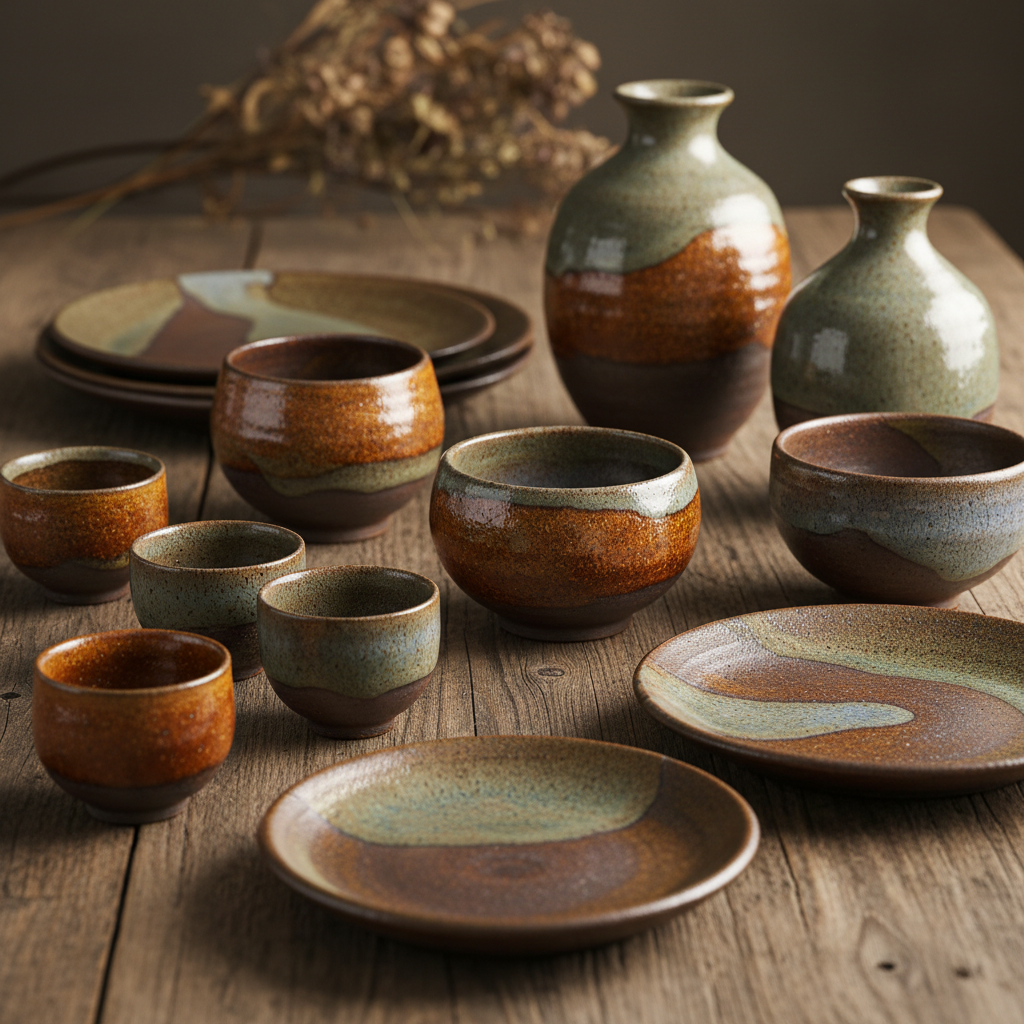
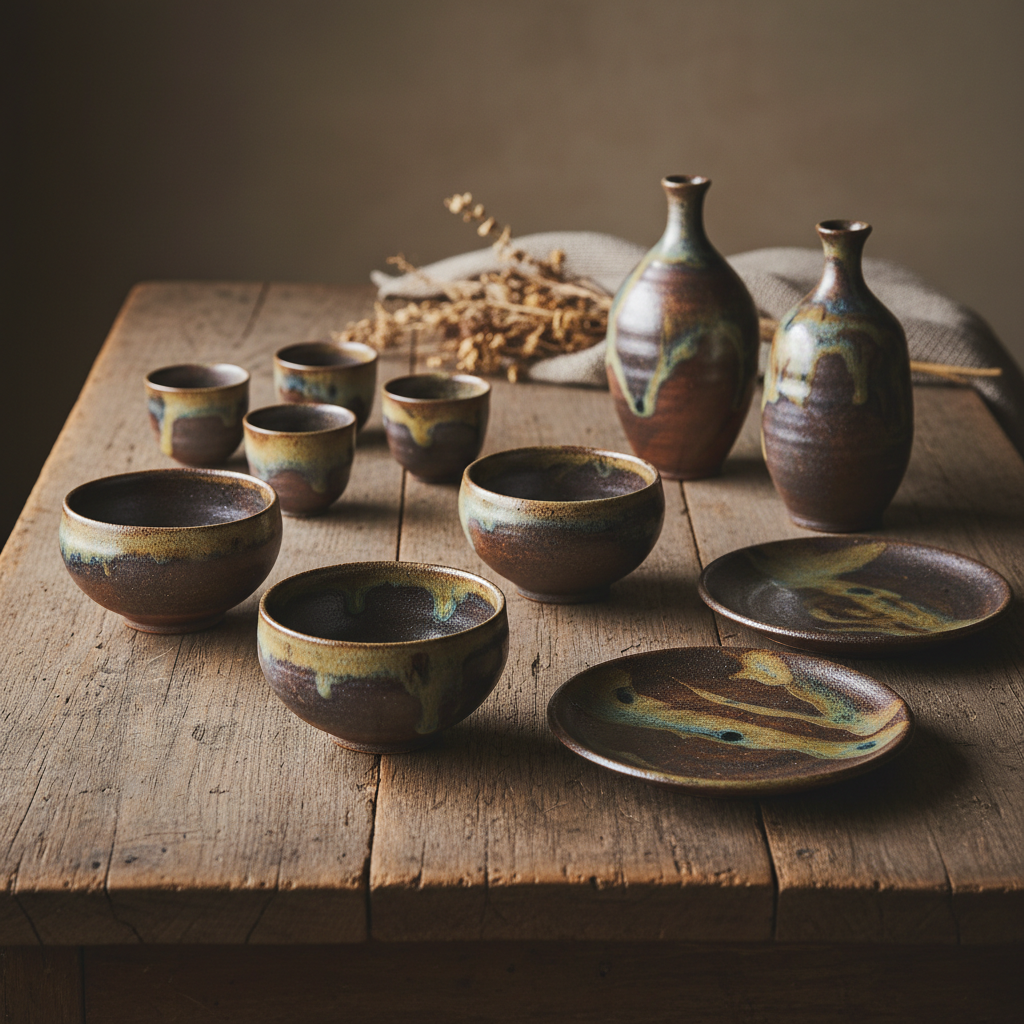
Sodesshi ware employs various glazes made from natural materials, including straw ash glaze, rice husk ash glaze, and lime glaze. Through firing, these glazes produce unique colors and textures, with vessels of the same form each displaying different characteristics.
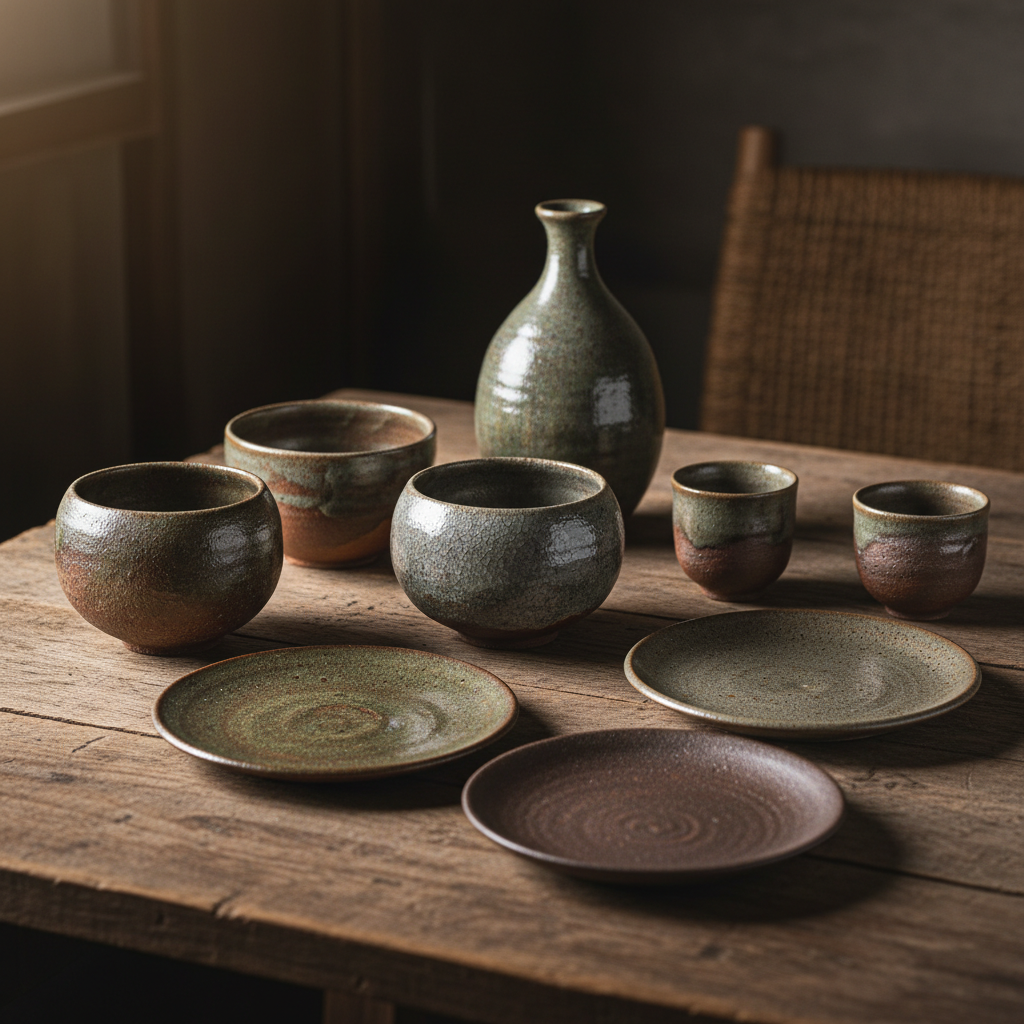
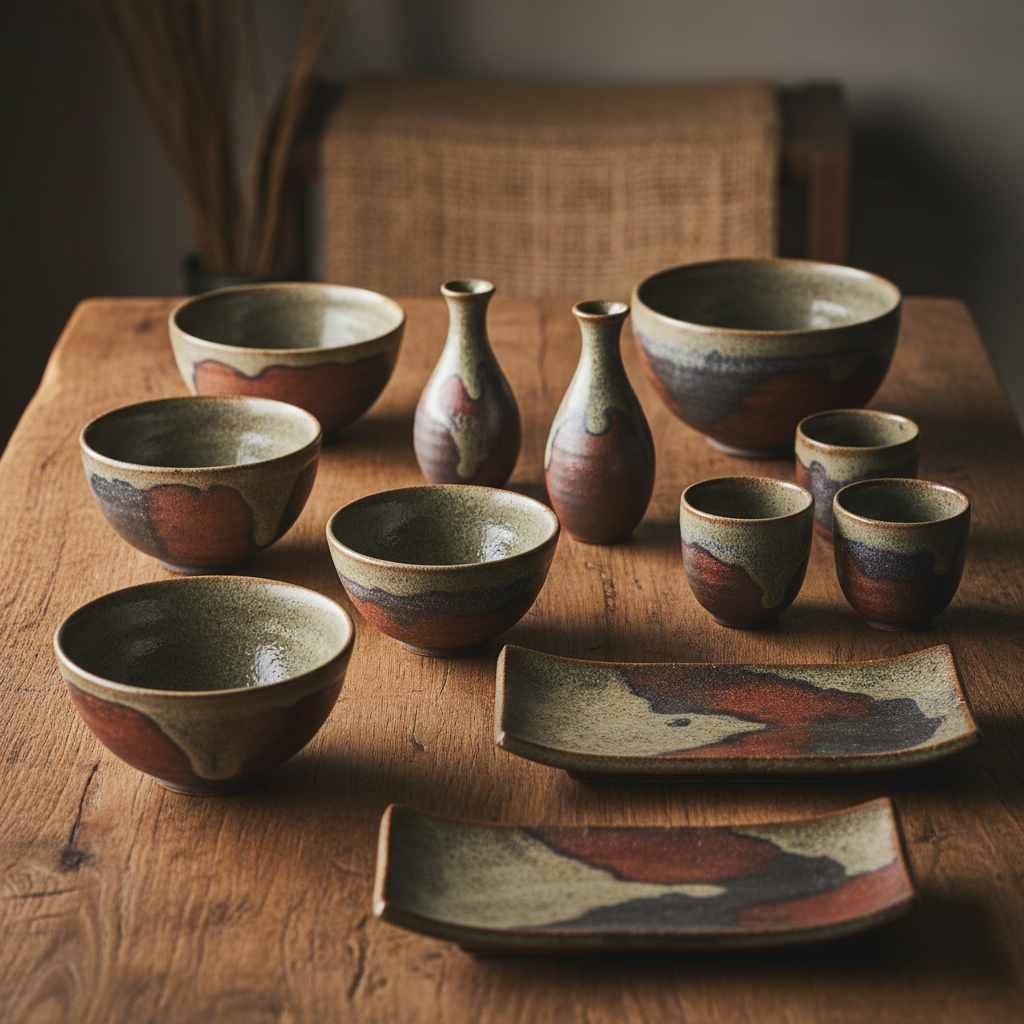
Representative colors include warm browns, subdued greens, and deep blacks, all characterized by natural color tones that highlight the beauty of the clay.
Sodesshi Kiln Today | Endeavors of a Five-Generation Kiln Studio
Location and Facilities of the Kiln Studio
The Sodesshi kiln is located on the shores of Lake Shinji in Matsue City, Shimane Prefecture. The workshop sometimes allows visitors to observe the creative process, and it is possible to purchase works directly. With easy access from Matsue Castle, the kiln studio attracts many visitors during Shimane tourism.
Production Process and Techniques
The Sodesshi kiln carries out all processes from clay preparation to forming, glazing, and firing in an integrated manner.
- Clay preparation: Clay extracted from Matsue City is refined and adjusted to appropriate consistency
- Forming: Primarily wheel-thrown, with hand-building also employed
- Drying: Thorough drying to stabilize shrinkage
- Bisque firing: Bisque firing at approximately 800 degrees
- Glazing: Application of house-made glazes
- Final firing: High-temperature firing at 1200 degrees or above
While preserving traditional techniques, the studio also pursues development of new designs suited to contemporary life.
Product Lineup
The Sodesshi kiln produces the following types of products:
- Tableware: Rice bowls, tea cups, plates, bowls, mugs, etc.
- Tea utensils: Tea bowls, teapots, tea stands, etc.
- Flower vessels: Vases, flower containers, etc.
- Sake ware: Sake bottles, sake cups, etc.
All are practical vessels intended for daily use while embodying folk craft aesthetic sensibilities.
Ceramic Production Centers of Shimane Prefecture | Relationship Between Sodesshi Ware and Other Kilns
Major Ceramic Production Centers in Shimane Prefecture
Beyond Sodesshi ware, Shimane Prefecture has several important ceramic production centers.
Shussai Ware (出西焼): A kiln located in Hikawa Town, Izumo City. Though its history is short, having opened in 1947, it was established by five young men who had trained at Sodesshi, Tamba, Mashiko, Karatsu, and other kilns. Under the guidance of Soetsu Yanagi, Bernard Leach, and Kanjiro Kawai, it is known for its modern aesthetic.
Yunotsu Ware (温泉津焼): Pottery produced in Yunotsu Town, Ota City. With a history extending from the Edo period, it is characterized by works that showcase the red-brown qualities of the clay.
Rakuzan Ware (楽山焼): A kiln in Matsue City that primarily produces tea ceramics.
Fujina Ware (布志名焼): With a kiln in Fujina, Tamayuu Town, Matsue City, it has long been known as tea pottery.
These kilns, each with their own distinct histories and characteristics, form Shimane Prefecture’s ceramic art culture.
Folk Craft Movement and Shimane Ceramics
Shimane Prefecture’s ceramics, particularly Sodesshi ware and Shussai ware, have deep connections with the folk craft movement. The philosophy of “beauty of use” advocated by Soetsu Yanagi greatly influenced the pottery ideology of both kilns.
When third-generation Otono Toshiro of Sodesshi ware participated in the folk craft movement, Sodesshi ware transformed from a mere regional kiln into a nationally recognized folk craft pottery. Furthermore, the fact that the founding members of Shussai kiln trained at Sodesshi suggests the close relationship between the two kilns.
These connections with the folk craft movement are a major characteristic of Shimane Prefecture’s ceramics, creating a unique distinctiveness different from other ceramic production centers.
How to Purchase Sodesshi Ware | Where to Obtain It
Direct Purchase at the Kiln Studio
At the Sodesshi kiln, works can be purchased directly at a gallery adjacent to the workshop. Being able to hold pieces and check their weight and texture allows you to select vessels that suit your needs. When visiting the kiln studio, it is recommended to confirm business days and hours in advance.
Retailers in Shimane Prefecture
Shimane Prefecture Products and Tourism Hall: Located near Matsue Castle, it carries a wide range of Shimane specialty products including Sodesshi ware. It is an easily accessible location for tourists.
Folk Craft and Craft Specialty Shops: Specialty shops dealing in folk crafts in Matsue City and Izumo City may carry Sodesshi ware for purchase.
Online Shopping
Fully equipped online shops allow purchase from anywhere in Japan.
- Sodesshi Kiln Official Website: An online shop operated directly by the kiln studio
- Folk Craft Specialty Sites: Online shops handling folk craft ceramics such as “Hibi no Kurashi” and “OZ Folk Craft”
- Craft Product Mail-Order Sites: Sites handling crafts from throughout Japan such as “Utsuwa no Mise Craft Nakatsuka”
Online purchases often include services such as inventory status updates and restock notifications.
Exhibitions and Events
Sodesshi ware may be exhibited at folk craft exhibitions and craft fairs held throughout Japan. At such events, there are opportunities to speak directly with makers, deepening understanding of the vessels.
How to Use and Care for Sodesshi Ware
Preparation Before First Use
Since pottery is absorbent, it is recommended to perform “seasoning” before first use.
- Place the vessel in rice-washing water or a solution of dissolved flour
- Cook over low heat for approximately 15-20 minutes
- Allow to cool naturally, then rinse with water
This treatment fills tiny crevices in the vessel, making it resistant to stains and soiling.
Daily Use
Sodesshi ware requires no special handling, as it is made with everyday use in mind.
- While dishwasher safe, hand washing will extend longevity
- Microwave use is generally possible, though avoid if the piece has metallic decoration
- Avoid direct flame
- Pre-soaking the vessel before use can help prevent stains and soiling
Maintenance and Storage
- Wash as soon as possible after use and allow to dry thoroughly
- When storing for extended periods, ensure complete dryness before storage
- For stubborn stains, they may be removed by soaking in diluted bleach solution
- When stacking, place cloth or paper between vessels to prevent direct contact
With proper care, Sodesshi ware can be used for decades, with its character deepening through use.
Sodesshi Ware and Shimane Culture
Matsue’s Tea Ceremony Culture
Matsue is known as a “city of tea ceremony,” with tea culture taking root after the seventh Matsue domain lord, Matsudaira Harugato (Lord Fumai), encouraged the practice. Sodesshi ware developed within this cultural context and has focused on producing tea utensils.
Tea bowls and utensils from Sodesshi ware used by local tea enthusiasts are valued as “vessels to nurture,” simple yet growing richer in character with use.
Lake Shinji and Pottery
The shores of Lake Shinji, where the Sodesshi kiln is located, are known as a scenic spot famous for beautiful sunsets. The abundant natural environment of Lake Shinji nurtures the soil and glaze materials that become Sodesshi ware’s raw materials and influences the maker’s sensibilities.
Sodesshi ware is cherished locally as tableware for serving fish and shellfish caught in Lake Shinji, such as clams, silver fish, and bass. The food culture of enjoying local ingredients on local vessels is itself an aesthetic of “locally produced, locally consumed.”
Position in Shimane’s Craft Culture
Beyond ceramics, Shimane Prefecture possesses many traditional crafts including Izumo stone lanterns, Unshu abacuses, and Sekishu washi paper. Among these, Sodesshi ware is deeply rooted in the daily lives of residents as a craft product closely tied to everyday living.
Shimane Prefecture emphasizes the protection and promotion of traditional crafts, with Sodesshi ware recognized as a prefectural craft whose value is widely acknowledged.
Visiting Sodesshi Ware | Tourism and Kiln Studio Viewing
Access
Train: Approximately 15 minutes by car from JR Matsue Station, or by bus toward Sodesshi
Car: Approximately 20 minutes from Matsue West IC on the Sanin Expressway
Airplane: Approximately 40 minutes by car from Izumo Enmusubi Airport
Nearby Tourist Attractions
When visiting the Sodesshi kiln, you can also tour nearby attractions.
- Matsue Castle: A historic castle with a national treasure-designated main tower
- Horikawa Boat Tour: A pleasure boat tour around the moat of Matsue Castle
- Shimane Prefectural Art Museum: Located on the shores of Lake Shinji with beautiful sunset views
- Tamatsukuri Hot Spring: An ancient hot spring known for its skin-beautifying properties
- Izumo Taisha: A historic shrine famous as the deity of fortunate marriage (approximately 40 minutes by car)
How to Enjoy a Kiln Studio Visit
When visiting a kiln studio, keep these points in mind for a richer experience:
- Advance contact: Confirm available viewing times
- Observe the creative process: Depending on timing, you may be able to watch the pottery-making
- Select works: Handle pieces directly to check weight and texture
- Dialogue with the maker: Listen to the maker’s thoughts on the vessels and usage advice
- Stroll the area: Enjoy the beauty of Lake Shinji at a leisurely pace
The Future of Sodesshi Ware | Inheriting Tradition and New Challenges
Cultivation of Young Craftspeople
With the five-generation Sodesshi kiln, the inheritance of traditional techniques is an important issue. Through continuing pottery work with family, technical transmission to the next generation is carried out. Additionally, ceramic artists who have trained at other kilns may study at Sodesshi, allowing for ongoing technical exchange.
Adaptation to Contemporary Life
While preserving tradition, development of new designs suited to contemporary lifestyles is also underway. Innovations include forms compatible with Western cuisine, microwave compatibility, and dishwasher compatibility, accommodating contemporary needs.
International Promotion
Interest in Japanese folk craft ceramics is growing internationally, and Sodesshi ware is receiving increasing international recognition. English-language online shop support and other measures are advancing, with orders arriving from around the world.
Sustainable Kiln Craft
Approaches to sustainable kiln craft are also being explored, including use of local materials and wood-fired kilns. The folk craft philosophy of “creating good things that last a long time,” which stands in contrast to mass production and mass consumption, also aligns with contemporary concepts of sustainability.
Conclusion | The Appeal and Value of Sodesshi Ware
Sodesshi ware, produced in Matsue City, Shimane Prefecture with a history spanning over 140 years, is a ceramic production center that has embodied the philosophy of the folk craft movement through commitment to local clay and glazes.
From the opening by first-generation Otono Tomoichi, through third-generation Otono Toshiro’s participation in the folk craft movement, to the current fifth generation, Sodesshi ware has consistently created “beautiful vessels for everyday use.” Durable, easy-to-use, and simple yet graceful vessels from Sodesshi continue to accompany the daily lives of their users, deepening in character through long-term use.
As a representative ceramic production center of Shimane Prefecture and an important bearer of folk craft ceramics, Sodesshi ware will continue to preserve its traditions while embracing challenges for the new era ahead.
Vessels born on the shores of Lake Shinji represent Shimane’s nature, history, and culture in concentrated form. Please take the opportunity to hold them and experience their appeal firsthand. Their true value becomes apparent through continued daily use.