
Tamba Tachikui Ware Complete Guide | The Charm and History of Japan’s Six Ancient Kilns Ceramic Production Area Boasted by Hyogo Prefecture
What is Tamba Tachikui Ware – Hyogo Prefecture’s Representative Ceramic Production Area
Tamba Tachikui ware (丹波立杭焼) is traditional pottery produced mainly in the Imada district of Tamba Sasayama City in Hyogo Prefecture. It is said to have been established from the late Heian period through the early Kamakura period, and the kiln fire has been continuously passed down for over 800 years without ever going out.
Along with Seto, Tokoname, Shigaraki, Bizen, and Echizen, it is counted as one of the “Six Ancient Kilns of Japan” and has earned high acclaim as a ceramic production area born and raised in Japan. Tamba Tachikui is a central pottery production area, and currently about 60 kiln workshops stand side by side, making it one of Japan’s most prominent pottery villages.
Also called Tamba ware, Tachikui ware (立杭焼), and Tachikui kiln (立杭窯), it has a history of primarily firing daily utensils. The characteristic rustic, unpretentious style, filled with natural beauty, continues to be loved by many people as everyday vessels.
History of Tamba Tachikui Ware – A Lineage of Tradition Spanning Over 800 Years
Late Heian Period to Kamakura Period – The Age of Kiln Establishment
The origins of Tamba Tachikui ware are said to trace back to the late Heian period through the early Kamakura period. Located in the southwest end of Tamba in the central-east part of Hyogo Prefecture, at the border of three provinces—Harima, Settsu, and Tamba—the lush natural environment of Tachikui, blessed with high-quality pottery clay and abundant pine wood for fuel, became the starting point for ceramic production.
Initially, firing was done using pit kilns, with daily utensils such as jars and vases as the main products. Tamba ware of this era was unglazed stoneware, characterized by simple yet powerful forms.
Muromachi Period to Azuchi-Momoyama Period – Development of Techniques
Entering the Muromachi period, kiln structures changed from pit kilns to climbing kilns, greatly improving production efficiency. During this period, the use of glazes also began, and works using ash glaze and iron glaze were created.
With the flourishing of tea ceremony culture during the Azuchi-Momoyama period, Tamba ware as tea ceramics also gained attention. The production of tea ceremony utensils such as tea bowls and tea caddies began, establishing the area’s position as a production center.
Edo Period – Establishment of the Production Area and Refinement of Techniques
During the Edo period, the kiln workshops of Tamba Tachikui were organized and the infrastructure of the production area was established. Many of the techniques established during this period have been passed down to the present day.
Decorative and pattern techniques such as nail carving, leaf motifs, impressed patterns, flowing glaze, tube painting, and ink marbling were developed, forming Tamba ware’s unique aesthetic sense. Production focused mainly on daily-use tableware, sake vessels, and flower vases, becoming widely distributed as pottery closely connected to the common people’s lives.
Meiji Period and Beyond – Modernization and Inheritance of Tradition
The wave of modernization in the Meiji period influenced Tamba Tachikui, bringing new techniques and designs. However, traditional techniques and styles were carefully preserved, and while maintaining traditional manufacturing methods as the foundation, the area underwent evolution suited to the times.
During the Showa period, influenced by the folk craft movement, the pursuit of “beauty of utility” became clearer. In 1978, it was designated as a national traditional craft, and traditional techniques began to receive public support for preservation and inheritance.
Characteristics of Tamba Tachikui Ware – Harmony of Simple Beauty and Practicality
Style and Aesthetic Sense
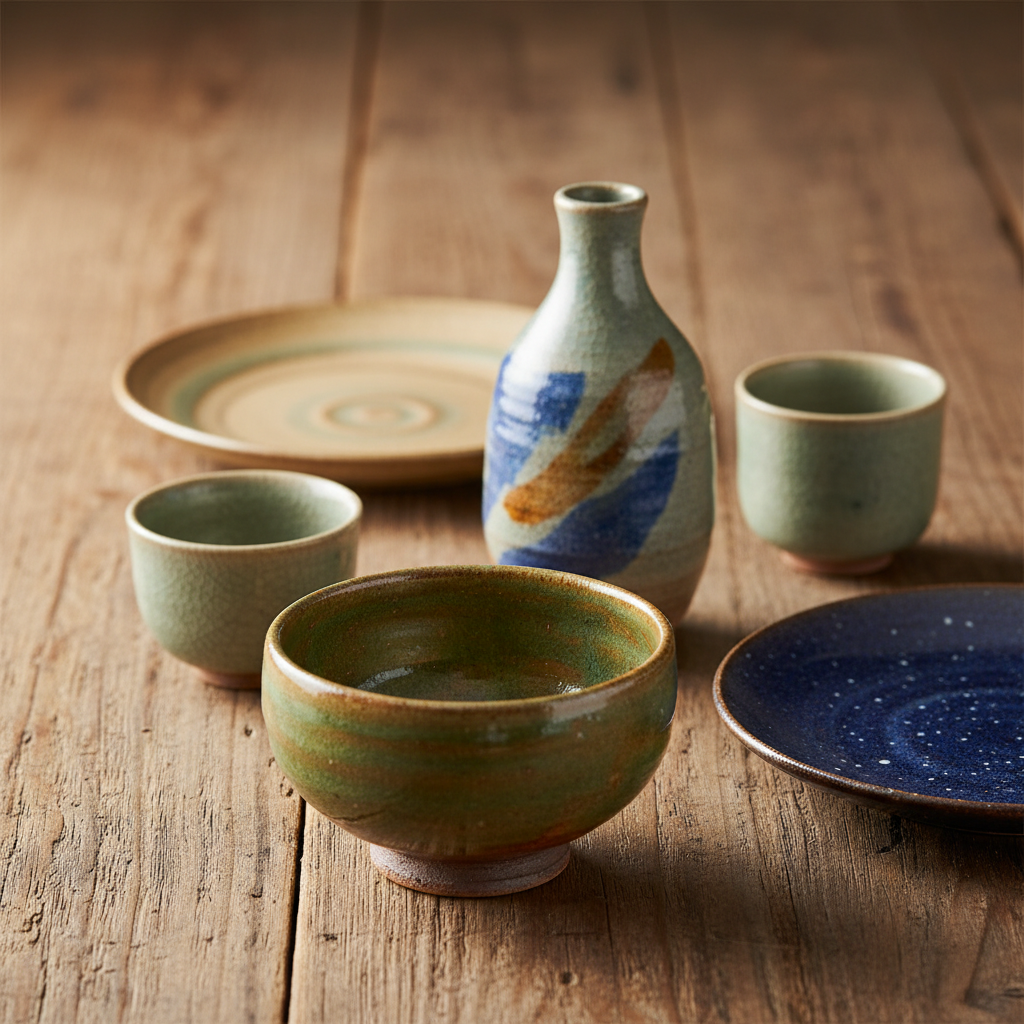
The greatest characteristic of Tamba Tachikui ware is its rustic, unpretentious style full of natural beauty. Rather than applying flashy decorations, craftsmanship emphasizes the texture of the clay, the natural flow of glaze, and the beauty of chance created by kiln variations.
Embodying “beauty of utility,” the vessels combine ease of use that fits the hand with visual beauty. While being everyday utensils, they have the property of increasing in charm with use, and are highly valued as ceramics that can be cherished long-term.
Traditional Techniques and Decoration
Tamba Tachikui ware has unique techniques and decorations passed down from ancient times.
Nail carving is a technique of carving patterns using nails or bamboo spatulas, allowing simple yet powerful expression. Leaf motifs involve pressing plant leaves against vessels to create patterns, incorporating the natural beauty of flora.
Impressed patterns are created by pressing molds against vessels to form regular designs. Flowing glaze is a technique that highlights the natural beauty of glaze flowing down the surface.
Tube painting uses a tube-shaped tool for brushwork with glaze or slip, allowing delicate linear expression. Ink marbling is a technique of transferring to vessels the patterns created by dropping ink onto water, characteristic of utilizing chance.
Glazes and Colors
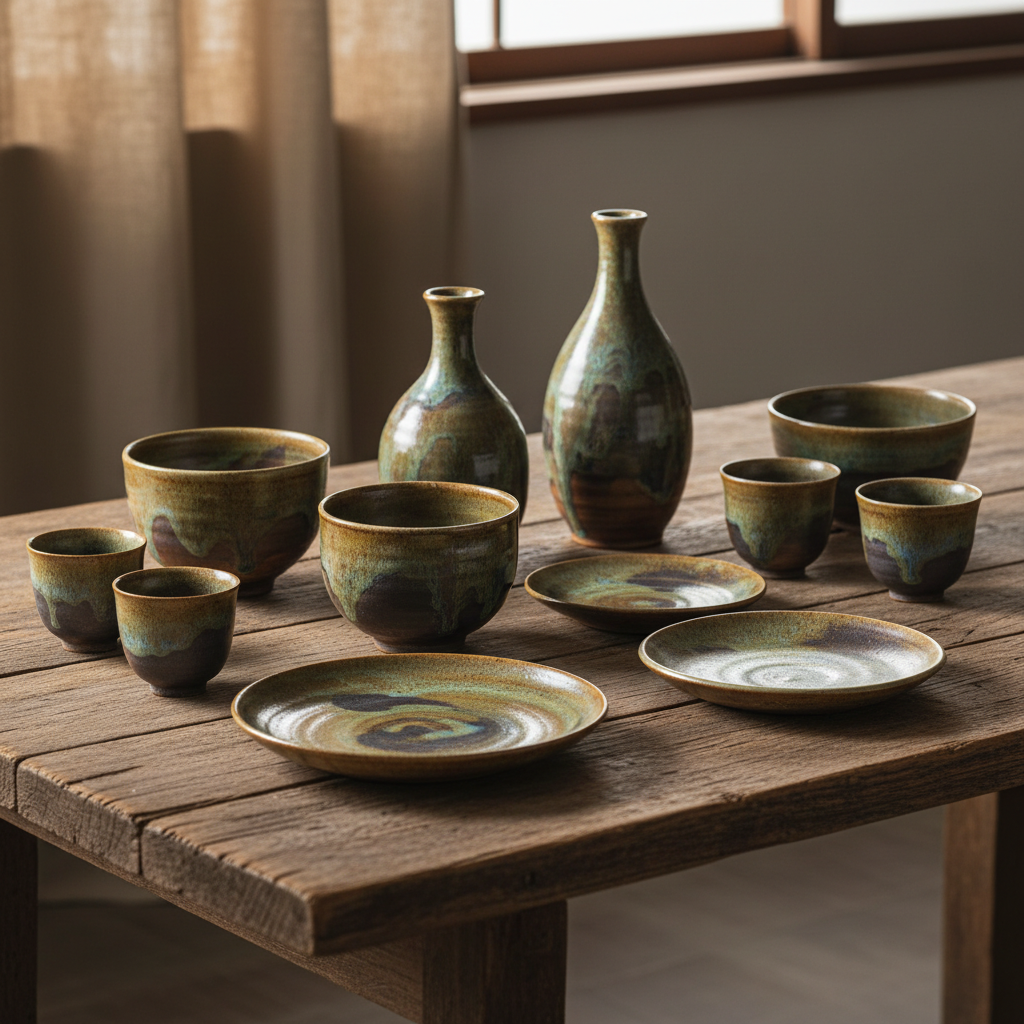
Tamba Tachikui ware primarily uses traditional glazes such as ash glaze and iron glaze. Ash glaze, made from wood ash, is characterized by warm, natural coloring. Iron glaze, containing iron, produces a wide range of tones from reddish-brown to blackish-brown.
“Kiln variation,” where the same glaze displays different appearances depending on firing conditions within the kiln, is another appeal of Tamba ware. The accidental beauty created by flame exposure and temperature changes produces individual character in each piece.
Main Products
Currently produced items are divided broadly into craft folk art products and industrial products.
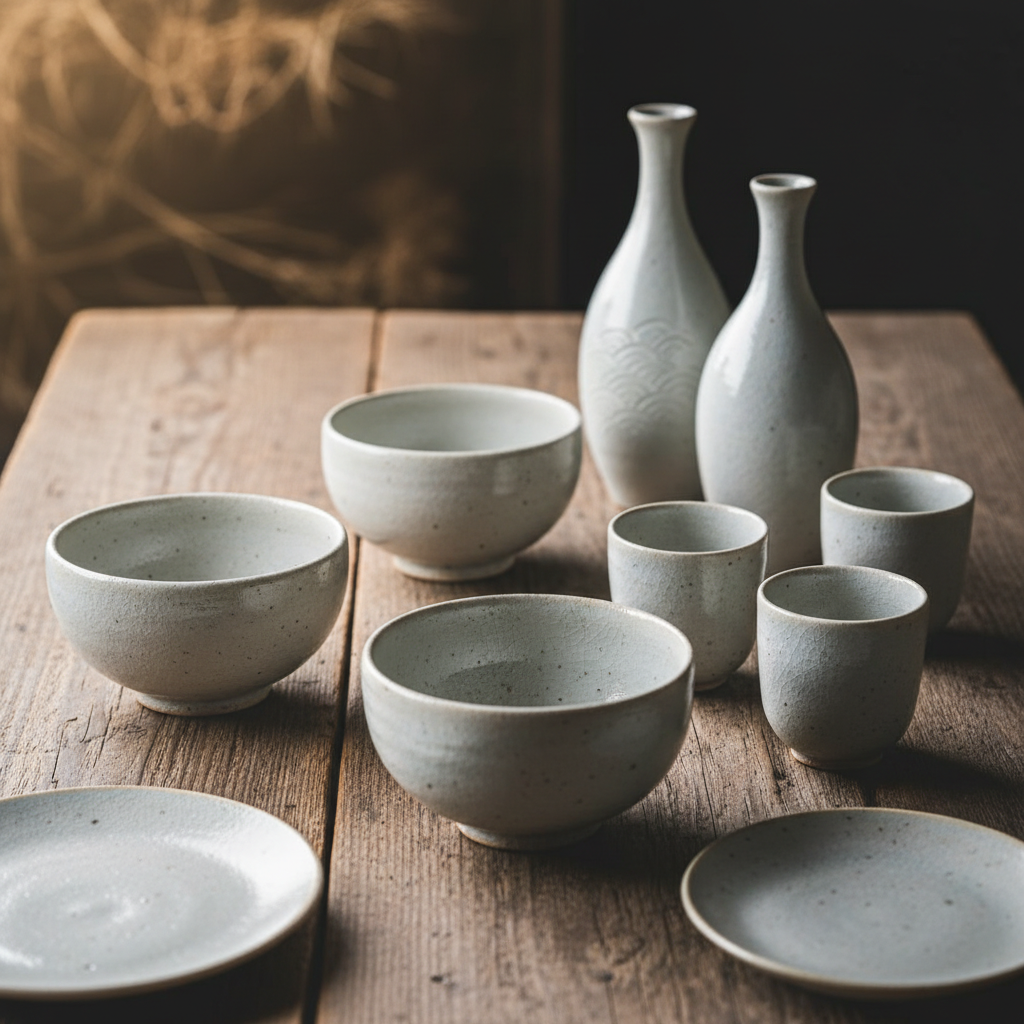
Craft folk art items center on “daily-use vessels” such as flower vases, tea utensils, tea bowls, tea cups, plates, bowls, sake decanters, sake cups, vases, and flower bottles. Craftsmanship adds fresh beauty to ancient traditional techniques, pursuing designs that harmonize with contemporary living.
Industrial products include flowerpots and sake barrels. While emphasizing practicality, these maintain the simple beauty characteristic of Tamba ware and are popular.
Tableware offers abundant selections of everyday items such as rice bowls, soup bowls, plates, and cups. Products compatible with microwave ovens and dishwashers have been developed, continuing evolution to match modern lifestyles.
Visiting the Tamba Tachikui Production Area – Kilns and Facilities
Imada District, Tamba Sasayama City – The Pottery Village
The Tachikui area in Imada Town, Tamba Sasayama City, Hyogo Prefecture, home to Tamba Tachikui ware production, is known as the “pottery village.” About 60 kiln workshops line the area, each pursuing their own individual style.
The Tachikui district is located in central-east Hyogo Prefecture, at the border of Harima, Settsu, and Tamba provinces, in a region blessed with lush natural surroundings. Visiting the kilns scattered throughout the pastoral landscape, a “kiln tour,” is one of the pleasures of visiting Tamba Tachikui.
Tamba Traditional Crafts Park Suo no Sato
The Tamba Traditional Crafts Park “Suo no Sato (陶の郷)” is a facility where you can comprehensively experience the appeal of Tamba ware. Operated by the Tamba Tachikui Ceramic Cooperative, it plays an important role as an information center for the production area.
The park features “Kamamoto Yokocho” (Kiln Workshop Alley), where works from multiple kiln workshops are gathered in one place, allowing you to compare and purchase Tamba ware of various styles. In April 2024, the sales floor was renovated as a cultural tourism promotion project, creating a more enjoyable space.
Additionally, pottery classes are held, allowing beginners to experience pottery-making casually. You can experience various techniques such as electric wheel-throwing and hand-building, creating your own original work.
Kiln Workshop Touring Digital Map
As a first-of-its-kind initiative in a pottery production area, a kiln workshop touring digital map has been released. Using a smartphone, you can check information about each kiln while efficiently enjoying the kiln tour.
Information about each kiln’s characteristics, style, business hours, and access is listed, making it easier to find kilns that match your preferences. Attracting attention as a new style of production area tourism utilizing digital technology.
Tamba Yaki Pottery Festival – A Major Event Once a Year
The Tamba Yaki Pottery Festival is held each October and is the largest event in Tamba Tachikui. It is an opportunity where kilns throughout the production area gather and offer works at prices more favorable than usual, attracting many pottery enthusiasts.
During the event period, about 60 kilns each sell their works at special prices, and pottery class experience events and food booths featuring local ingredients are also set up, enveloping the entire production area in a festive atmosphere.
Some kilns debut new works or allow visits to normally closed workshops, making it an excellent opportunity to deeply understand Tamba ware’s appeal. Details and dates are announced on the Tamba Tachikui Ceramic Cooperative’s official website.
Cultural Properties and Related Facilities
National Traditional Craft Designation
Tamba Tachikui ware was designated as a national traditional craft in 1978 (Showa 53). It was recognized as a craft maintaining traditional techniques and methods, primarily for daily use.
This designation has enabled public support for preservation and inheritance of traditional techniques, cultivation of successors, and other efforts, greatly contributing to the maintenance and development of the production area.
The Six Ancient Kilns of Japan and Japan Heritage
The Six Ancient Kilns of Japan, including Tamba Tachikui ware, were designated as Japan Heritage in 2017 as “Six Ancient Kilns You’ll Surely Love – Japanese-born and Japanese-raised Pottery Production Areas.”
The historical value of six production areas—Seto (Aichi Prefecture), Tokoname (Aichi Prefecture), Shigaraki (Shiga Prefecture), Bizen (Okayama Prefecture), Echizen (Fukui Prefecture), and Tamba (Hyogo Prefecture)—continuing production from the medieval period to modern times was recognized.
Hyogo Prefecture’s Cultural Tourism Resources
On Hyogo Prefecture’s official tourism portal site “HYOGO! Navi,” Tamba Tachikui ware is introduced as an important tourism resource. The tradition passed down over 800 years and the vitality of continued active production are disseminated as cultural appeal of Hyogo Prefecture.
The official tourism site of Tamba Sasayama City “Gururi! Tamba Sasayama” provides detailed information about the appeal of Tamba ware and kiln village tours, with increasing importance as a tourism resource.
Purchasing and Pottery Experience at Tamba Tachikui Ware
Purchasing at Kiln Workshops
The most reliable way to purchase Tamba Tachikui ware is to visit the kilns in the production area directly. About 60 kilns each produce works in different styles, offering the pleasure of finding vessels matching your preferences.
At kilns, you can select works while speaking directly with artisans and receive advice about the thoughts behind the vessels and usage methods. Some kilns also allow viewing of workshops and kilns, deepening attachment to the vessels through understanding the production process.
Purchasing at Kamamoto Yokocho
At Kamamoto Yokocho inside Tamba Traditional Crafts Park “Suo no Sato,” you can view and compare works from multiple kilns at once. Especially recommended for those purchasing Tamba ware for the first time or wanting to compare various styles.
The renovated sales floor has works displayed for easy viewing and each kiln’s characteristics are clearly presented. You can consult with staff while selecting vessels suited to your needs and budget.
Purchasing Online
For those who find it difficult to visit the production area, purchasing through online shops is also possible. Many kilns operate their own websites and online shops, making it possible to purchase Tamba Tachikui ware from anywhere nationwide.
However, since ceramics vary in appearance piece by piece, it is recommended to view actual pieces if possible. When purchasing online, confirm detailed photos and descriptions, and contact the kiln with any questions.
Pottery Class Experience
Pottery classes are held at Tamba Traditional Crafts Park “Suo no Sato” and at each kiln workshop. Beginners can participate casually and create their own vessels using electric wheel-throwing or hand-building.
Experience sessions last approximately 1-2 hours, and the created works are fired at the kiln and mailed to you later. Vessels you create yourself hold special attachment and become an opportunity to more deeply understand Tamba ware’s appeal.
Most pottery classes require advance reservation, so it’s recommended to confirm before visiting.
Using and Caring for Tamba Tachikui Ware
Preparation Before First Use
When using Tamba Tachikui pottery for the first time, it’s recommended to perform “seasoning.” Seasoning seals the fine pores of the pottery, preventing stains and dirt from adhering.
The common method is boiling the vessel in rice-washing water or water with dissolved flour. Place the vessel in a pot large enough for complete submersion, boil it, then simmer at low heat for 20-30 minutes, let it cool naturally, then rinse with water.
Daily Care
Wash vessels as soon as possible after use. Washing before food coloring and oil penetrate prevents stains.
Use a soft sponge and neutral detergent when washing. Avoid abrasive cleaners and hard scrubbing pads, which may damage the surface.
After washing, wipe away moisture thoroughly and dry completely before storing. Storing with remaining moisture can cause mold and odors.
Tips for Long-Term Use
Pottery is weak to sudden temperature changes, so avoid plunging hot vessels into cold water or pouring hot water into cold vessels. This causes cracks and breaks.
Whether microwave and dishwasher use is appropriate varies by kiln and work. Confirm at purchase and refrain from use if not compatible.
Using vessels continuously enhances their charm—one of Tamba ware’s appeals. Through careful use, vessels develop and reveal their own unique character.
Comparing Tamba Tachikui Ware with Japan’s Other Ancient Kilns
Differences from Seto Ware (Aichi Prefecture)
Seto ware is characterized by abundant glaze varieties and diverse color expression. While Tamba Tachikui ware is based on rustic style, Seto ware often displays more decorative and ornate works.
Differences from Tokoname Ware (Aichi Prefecture)
Tokoname ware is known for red clay teapots using iron-rich clay. While Tamba Tachikui ware centers on tableware and flower vessels, Tokoname developed as a tea ware production area, particularly for teapots.
Differences from Shigaraki Ware (Shiga Prefecture)
Though famous for tanuki figurines, Shigaraki ware originally specialized in large pottery. Like Tamba Tachikui ware, it’s characterized by rustic style, but Shigaraki ware is distinguished by coarser clay texture and stronger appearance.
Differences from Bizen Ware (Okayama Prefecture)
Bizen ware is unglazed stoneware, expressed only through clay and flame, characterized by unique landscapes. Tamba Tachikui ware typically employs glazes, centering on works with softer impressions.
Differences from Echizen Ware (Fukui Prefecture)
Echizen ware historically centered on large-scale containers such as jars and vases. Like Tamba Tachikui ware, it is based on daily utensils, but Echizen ware emphasizes practicality, characterized by a rugged style.
The Future of Tamba Tachikui Ware – Tradition Inheritance and Innovation
Cultivating Successors
The Tamba Tachikui production area actively works to pass traditional techniques to the next generation. Beyond kiln workshop children, the area accepts outside migrants and pottery students, promoting area revitalization.
Through pottery classes and training programs, environments allowing learning of Tamba ware techniques from basics have been established, with focus on cultivating new practitioners.
Product Development Suited to Modern Living
While preserving tradition, product development suited to modern lifestyles is also advancing. Works compatible with microwave ovens and dishwashers, plates and cups designed for both Japanese and Western cuisines—products responding to contemporary needs are being created.
Works created by young artisans, incorporating new sensibilities while utilizing traditional techniques, are being born and attracting attention as new appeal of Tamba ware.
Cultural Tourism Promotion Projects
As a first-ever initiative in a pottery production area, cultural tourism promotion efforts are intensifying, including Kamamoto Yokocho renovation and kiln workshop touring digital map releases.
By transmitting Tamba ware’s appeal more deeply to visitors and deepening understanding through experience, the production area aims for sustainable development.
International Dissemination
Efforts to internationally disseminate the value of the Six Ancient Kilns are underway. Activities include exhibiting at overseas shows and preparing infrastructure for inbound tourism, conveying Tamba ware’s appeal worldwide.
By having the world recognize value as traditional Japanese culture, the production area anticipates improved brand strength and new market development.
Access and Tourism Information
Access to Tamba Tachikui
By Car
- From Osaka: Approximately 15 minutes from “Tannan Sasayama IC” on the Chugoku Expressway
- From Kobe: Approximately 15 minutes from “Tannan Sasayama IC” on the Maizuru-Wakasa Expressway
By Public Transportation
- Approximately 15 minutes by bus from “Ano Station” on the JR Fukuchiyama Line
- Approximately 30 minutes by bus from “Mita Station” on the JR Fukuchiyama Line
Tamba Traditional Crafts Park “Suo no Sato” features free parking, making car access convenient.
Nearby Attractions
Tamba Sasayama City has many tourist spots beyond Tamba Tachikui ware.
Sasayama Castle Ruins is a nationally designated historic site with beautiful stone walls and moats remaining. The castle town’s nostalgic streetscape is also appealing.
Tamba Sasayama Black Soybeans and Tamba Chestnuts allow enjoying local specialties. In autumn, black soybean edamame comes into season, attracting many tourists.
Tamba Sasayama Dekansho Hall allows learning about regional history and culture. Displays of the folk song “Dekansho Bushi” are featured, allowing contact with regional traditional culture.
Accommodations
Tamba Sasayama City offers various types of accommodations including renovated old houses and hot spring inns. It’s recommended to spend relaxed time in the production area, enjoying kiln tours and pottery experiences.
Conclusion – Experience the Appeal of Tamba Tachikui Ware
Tamba Tachikui ware is a ceramic production area representing Hyogo Prefecture with over 800 years of history. As one of Japan’s Six Ancient Kilns, it continues vessel-making that preserves traditional techniques while accompanying contemporary living.
The rustic, unpretentious style filled with natural beauty is loved by many people as everyday vessels. About 60 kilns each produce individual works, and the production area maintains rich diversity as a whole.
At Tamba Traditional Crafts Park “Suo no Sato” and at each kiln, you can not only purchase works but also enjoy pottery class experiences. At the annual Tamba Yaki Pottery Festival, the entire production area becomes lively, offering opportunity to encounter Tamba ware in special atmosphere.
Why not visit Hyogo Prefecture’s Tamba Sasayama City, feel the air of this historic production area, and find your own favorite vessel? Tamba Tachikui ware, increasing in charm with use, will surely add color to your life.