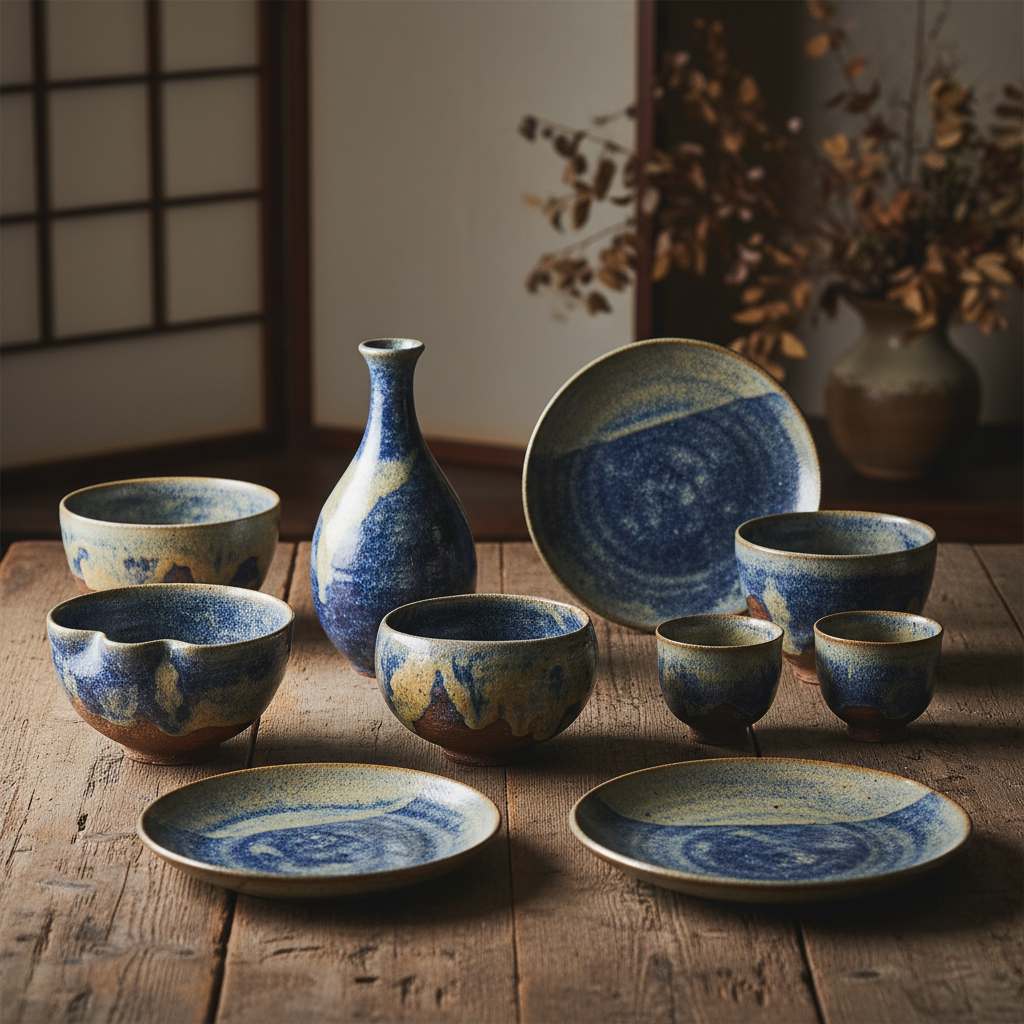

The Charm and History of Hizen Yoshida Ware|A Thorough Explanation of Saga Prefecture’s Ureshino City’s 400-Year Porcelain Production Area
What is Hizen Yoshida Ware|Traditional Porcelain of Ureshino City, Saga Prefecture
Hizen Yoshida ware (Hizen Yoshida yaki) is porcelain fired in the Yoshida district (Yoshida Sarayashiki) of Ureshino City, Saga Prefecture. As a key part of the Hizen region, known as the birthplace of Japanese porcelain, it has inherited ceramic culture for over 400 years.
The Yoshida district of Ureshino City is located on the border between Saga and Nagasaki prefectures, in a region famous nationwide as one of Japan’s three most famous hot springs for beautiful skin and as a producer of fragrant Ureshino tea. It is in this land of rich nature and hot spring culture that Hizen Yoshida ware has undergone its unique development.
Currently, there are 11 kilns in the Yoshida district, each working to preserve traditional techniques while creating tableware suited to contemporary lifestyles. With the development of the Ureshino hot spring resort, production has centered on tableware for tourists and everyday use dishes, with tea utensils and tea cups that are characteristic of a hot spring area being particularly well-known products.
The History of Hizen Yoshida Ware|A Story Woven by 400 Years of Tradition
Birth as a Ceramic Production Area
The history of Hizen Yoshida ware dates back to the first year of Tensho (1577). When Ryuzoji TakaNobu attacked the Arima clan of Omura, while deploying troops through Yoshida village, a retainer of the Yoshida castle lord discovered a white-glowing stone in the riverbed of Narukawa Valley, upstream of the Haguchi River flowing through the village. This discovery of ceramic stone is considered the beginning of ceramic production in Yoshida.
Later, during Toyotomi Hideyoshi’s invasion of Korea (the Bunroku and Keicho campaigns), Nabeshima Naoshige, the daimyo of the Saga domain, brought back many Korean ceramic artisans. In the third year of Keicho (1598), he sent one of them to Yoshida to produce porcelain on a full scale. From this period onward, porcelain production technology was established in the Yoshida district.
Based on excavation surveys, actual production is estimated to have begun in the 1650s to 1660s, and it has become clear that porcelain production was already underway in the early Edo period.
Development During the Edo Period and Support from the Nabeshima Domain
During the Edo period, the Yoshida district flourished greatly in the porcelain industry due to encouragement from the Nabeshima domain lord. Yoshida also functioned as a post town, and as people and goods passed through this strategic location, ceramic production and distribution became increasingly active.
The Hizen Yoshida ware production area was geographically close to the Arita and Hasami ware production areas. Historically, Yoshida ware was sometimes sold as part of Arita ware to all parts of the country and even to China. As the entire Hizen region developed into a major Japanese porcelain production center, Yoshida ware cultivated its own techniques and characteristics.
Throughout the Edo period, artisans improved their techniques through mutual competition and effort, producing diverse products such as colored porcelain similar to designs made in China and decorative blue-and-white ware with unique designs.
Changes After the Meiji Period and Inheritance to the Present
With the arrival of the Meiji period, Japan’s ceramic industry underwent modernization, and production systems and distribution networks changed dramatically. Hizen Yoshida ware also adapted to these changes, preserving traditional techniques while developing new products to meet market demands.
In particular, as the Ureshino hot spring developed as a tourist destination, demand grew for tableware for hot spring guests and vessels as souvenirs, and Hizen Yoshida ware established its unique position as a production area deeply connected to hot spring culture.
Today, traditional kiln operators and innovative young artists coexist, and the production area with over 400 years of history continues to convey new charm.
Characteristics of Hizen Yoshida Ware|The Appeal of Technique and Design
Quality and Technique as Porcelain
Hizen Yoshida ware is porcelain, possessing different characteristics from pottery. Because porcelain is fired at high temperatures, it is hard, dense, and has almost no water absorption. This gives it excellent durability, making it a type of vessel that can be cherished for everyday use over a long period.
Using ceramic stone from the Yoshida district as raw material, artisans create thin, lightweight yet durable vessels using techniques refined over 400 years. The whiteness and smooth texture unique to porcelain enhance the beauty of cuisine and have become indispensable to Japanese food culture.
Practicality as Everyday Tableware
A major characteristic of Hizen Yoshida ware is that production centers on everyday tableware. Rice bowls, plates, tea cups, teapots and similar items used daily at the table are the primary products, combining practicality with beautiful design.
Because the location is adjacent to Ureshino hot spring, a tourist destination, many tableware items are produced for use in hot spring inns, and tea utensils for enjoying Ureshino tea are also widely produced. These vessels are deeply connected to hot spring culture and tea culture, serving the role of conveying the charm of the region.
Diverse Designs and Expression
In Hizen Yoshida ware, diverse techniques and designs can be seen, from traditional blue-and-white painting (sometsuke) to colored porcelain and celadon. Designs influenced by Chinese porcelain and unique designs with comic expressions of people and animals are produced, with each kiln having its own distinctive character.
Recently, kilns like “224porcelain” have appeared, challenging contemporary design with creative thinking and flexible attitudes, leading the entire production area. This coexistence of tradition and innovation is creating new charm in Hizen Yoshida ware.
Positioning as a Ceramic Production Area in Saga Prefecture
“Birthplace of Japanese Porcelain”: The Hizen Region
Saga Prefecture is at the center of the Hizen region, known as the birthplace of Japanese porcelain. It is concentrated with major Japanese ceramic production areas such as Arita ware, Imari ware, and Karatsu ware, and has led Japanese ceramic culture for over 400 years.
In 2016, “Birthplace of Japanese Porcelain: Hizen ~A Colorful Stroll Through Diverse Ceramics~” was certified as a Japan Heritage site, and the value of ceramic culture in the Hizen region was reappraised. Hizen Yoshida ware is positioned as one of the important production areas constituting this Japan Heritage site.
Relationship with Arita and Hasami Ware
The Yoshida district of Ureshino City, where Hizen Yoshida ware is produced, is geographically close to Arita Town, where Arita ware is produced, and Hasami Town in Nagasaki Prefecture, where Hasami ware is produced. Historically, these production areas have developed while influencing one another.
In the past, Yoshida ware was sometimes sold as part of Arita ware, and the entire Hizen region functioned as a single ceramic production area in some respects. Even today, technical exchanges and collaborative projects between production areas are conducted, contributing to the enhancement of the charm of the entire Hizen region.
Synergistic Effects with Ureshino Hot Spring
A major characteristic is that the Hizen Yoshida ware production area is adjacent to Ureshino hot spring. Many tourists visit Ureshino, which is nationally recognized as a hot spring destination. This flow of tourists has led to increased recognition of Hizen Yoshida ware and expanded sales channels.
Tableware used in hot spring inn meals and tea cups sold in hot spring shopping areas represent a unique charm created by the fusion of hot spring culture and ceramic culture, elevating the brand value of the Ureshino region.
Kiln Operators and Artisans of Hizen Yoshida Ware
11 Kilns Weaving Tradition
Currently, 11 kilns are operating in the Yoshida district, each with its own distinct characteristics in vessel making. Despite being a small porcelain production area, each kiln expresses its individuality and produces diverse products, which is one of the charms of Hizen Yoshida ware.
Among the kiln operators, some continue to preserve traditional techniques passed down through generations, while others challenge new designs suited to contemporary lifestyles. This diversity becomes the vitality of the entire production area and the driving force for inheriting over 400 years of history into the present.
Innovative Initiative “224porcelain”
Among Hizen Yoshida ware kiln operators, “224porcelain (Ni-Ni-Yon Porcelain)” attracts particular attention. With creative thinking and a flexible approach, it is known as a driving force in the production area, creating works that fuse contemporary design with traditional techniques.
224porcelain’s products, while featuring simple and modern design, maximize the beauty and functionality of porcelain and have received high evaluations from both domestic and international sources. The existence of such innovative kilns is creating new charm in Hizen Yoshida ware and conveying the appeal of ceramics to younger generations.
Technical Inheritance by Artisans
The quality of Hizen Yoshida ware is supported by skilled artisans. From raw material preparation to forming, decorating, and firing, a finished vessel goes through many processes. In each process, the techniques and experience of artisans are utilized, producing high-quality products.
In recent years, as many traditional industries face a shortage of successors, technical inheritance has become an important issue for Hizen Yoshida ware as well. However, with efforts by kiln operators and the entire production area, training of young artisans and recording and transmission of techniques are progressing, and efforts to connect 400 years of tradition to the future continue.
The “Ekubo to Hokuro” Project|Creating New Value
Giving New Value to Non-Standard Products
The “Ekubo to Hokuro” (dimples and beauty marks) project, a collaborative initiative by Hizen Yoshida ware kiln operators, is drawing attention as an endeavor demonstrating new possibilities in the ceramic industry.
In this project, products normally classified as non-standard—those with black spots or pinholes (small holes)—are sold by each kiln at discounted prices. By giving affectionate nicknames like “dimples” and “beauty marks” to products that would traditionally have been discarded, the idea is to have consumers accept them as individual characteristics.
Contribution to Sustainability
The “Ekubo to Hokuro” project is more than just a sales promotion effort. By reducing discarded products, it contributes to reduced environmental burden and is evaluated from a sustainability perspective.
By reconsidering the conventional value system in which only perfect products have worth, and proposing a new perspective that appreciates small imperfections and individual variations as part of a vessel’s character, it contributes to shifting consumer consciousness.
Communicating the Charm of the Production Area
This project also serves as an opportunity to widely disseminate the charm of Hizen Yoshida ware as a production area. The unique naming and concept have attracted attention, serving as a catalyst for people previously unfamiliar with Hizen Yoshida ware to learn of the production area’s existence.
Through collaboration among kiln operators, the cohesion of the entire production area is strengthened, and as an innovative activity leveraging the agility unique to a small porcelain production area, it draws attention from other production areas.
The Hizen Yoshida Ware Kiln Operators’ Hall|The Production Area’s Focal Facility
Reborn as an Exchange Venue Through Renovation
On January 26, 2019, the “Hizen Yoshida Ware Kiln Operators’ Hall,” a focal facility in the Yoshida Sarayashiki district, reopened following renovation. This facility, located at the center of the kiln operator area, plays an important role as a place for information dissemination and exchange about the production area.
Through the renovation, the exhibition space and sales corner have been expanded, making it a place where visitors can more deeply experience the charm of Hizen Yoshida ware. Because works from each kiln can be viewed all in one place, visitors can compare the characteristics and design differences of each kiln while finding their favorite vessels.
A Place to Experience the Charm of Ureshino
The Hizen Yoshida Ware Kiln Operators’ Hall is not merely a facility for displaying and selling ceramics. It is positioned as a place where visitors can comprehensively experience the charm of the Ureshino region.
Collaboration with regional specialty products such as Ureshino hot spring and Ureshino tea is also being pursued, disseminating the unique charm of Ureshino created by the fusion of hot spring culture, tea culture, and ceramic culture. For tourists, it has become an important stop when visiting Ureshino.
Access and Surrounding Information
The Hizen Yoshida Ware Kiln Operators’ Hall is located approximately 15 minutes by car from the Ureshino hot spring area. When using public transportation, it is convenient to use a bus or taxi from JR Takeo-Onsen Station.
Around the facility, 11 kilns are scattered, and taking the kiln hall as a starting point, visitors can enjoy a tour of the kilns. If contacted in advance, some kilns accept visitors for kiln tours, and seeing the actual production sites allows for a deeper understanding of Hizen Yoshida ware’s charm.
How to Purchase and Enjoy Hizen Yoshida Ware
Purchasing On-Site
The most reliable way to purchase Hizen Yoshida ware is to visit the kiln hall or individual kilns in the local area. You can hold the products in your hands to check their texture and weight while selecting, and can also directly hear from the kiln operators about product characteristics and how to use them.
When visiting Ureshino hot spring, please be sure to extend your visit to the Yoshida district and enjoy selecting vessels while feeling the atmosphere of the production area. The ability to experience two cultures—hot springs and ceramics—simultaneously is a charm unique to Ureshino.
Purchasing Online
For those living far away or who find it difficult to visit the area in person, many kilns have established online shops. Products can be purchased from the official Hizen Yoshida ware website or from individual kiln websites.
Also, online shops dealing in Japanese traditional crafts carry Hizen Yoshida ware. Products from the “Ekubo to Hokuro” project may also be available for online purchase, so please check.
Enjoying Everyday Use
Because Hizen Yoshida ware is made for everyday use, it can be casually used not just on special occasions but at daily dining tables. By taking advantage of porcelain’s characteristics of durability and ease of handling, it enriches ordinary meals.
By incorporating Hizen Yoshida ware into your life in various scenes—Ureshino tea cups and teapots for enjoying tea, rice bowls for breakfast, and plates for dinner—you can feel the ceramic culture of 400 years of history close at hand.
Learning Hizen Ceramic Culture at the Saga Prefectural Kyushu Ceramic Museum
The Saga Prefectural Kyushu Ceramic Museum in Arita Town, Saga Prefecture is a facility where you can comprehensively learn about the ceramic culture of the Hizen region. Featuring Arita ware as its center, it displays the history, techniques, and works of ceramics from the Hizen region, including Hizen Yoshida ware.
In the permanent exhibition, you can trace the history of Japanese porcelain from its birth to the present and understand the role the Hizen region played in Japan’s ceramic culture. In special exhibitions, exhibitions focusing on particular themes are held, allowing visitors to discover the diverse charms of ceramic culture.
By visiting this cultural museum before or after visiting the Hizen Yoshida ware production area, you can develop a deeper understanding of Hizen ceramic culture and enjoy vessel selection and appreciation more richly.
Hizen Yoshida Ware and Ureshino’s Year-Round Events and Festivals
Kiln Markets and Ceramic Markets
In the Hizen Yoshida ware production area, kiln markets and ceramic markets are held several times a year. At these events, products can be purchased at lower prices than usual, and opportunities to visit kilns that are normally closed to the public become available.
It is also a precious opportunity to speak directly with kiln artisans and hear about their thoughts on vessel making and their techniques, deepening your attachment to the products. Event dates can be confirmed on the Hizen Yoshida ware official website or Ureshino City tourism information.
Collaborative Events with Ureshino Hot Spring
As two major cultural resources of the region, Ureshino hot spring and Hizen Yoshida ware hold collaborative events. Tours themed on hot springs and vessels, and special dining experiences using vessels at hot spring inns, are popular offerings that allow visitors to enjoy both charms simultaneously.
Particularly during the Ureshino tea season, events combining tea-picking experiences with kiln visits and tea ceremonies using tea utensils are held, providing opportunities to comprehensively experience Ureshino’s culture.
The Future of Hizen Yoshida Ware|Harmony of Tradition and Innovation
The Rise of Young Artists
In recent years, movements of young artists and successors actively engaging in vessel making with fresh sensibilities have become more active in the Hizen Yoshida ware production area. While learning traditional techniques, they are creating works incorporating contemporary lifestyles and design trends, bringing new energy to the production area.
Efforts to adapt to the digital age, such as information dissemination through social media and expanded online sales, are also progressing, attracting attention from throughout the country and even internationally.
Building a Sustainable Production Area
As exemplified by the “Ekubo to Hokuro” project, the Hizen Yoshida ware production area is advancing efforts toward building a sustainable production area. Active engagement with social issues such as reducing environmental burden, effective use of resources, and coexistence with the community creates new value for the production area.
Leveraging the agility and flexibility that only a small production area can achieve, efforts continue to adapt to changes of the times while connecting over 400 years of tradition to the future.
Value Dissemination as a Japan Heritage Site
As a component asset of “Birthplace of Japanese Porcelain: Hizen,” Hizen Yoshida ware also serves a role as part of a Japan Heritage site. Together with Arita and Imari ware, it disseminates the value of Japan’s ceramic culture domestically and internationally, contributing to the promotion of cultural tourism.
Going forward, by deepening collaboration throughout the Hizen region and continuing to disseminate charm while leveraging the individuality of each production area, it is expected that the status as the center of Japan’s ceramic culture will be further elevated.
Conclusion|Experience the Charm of Hizen Yoshida Ware
Hizen Yoshida ware is ceramic that has been inherited for over 400 years in the Yoshida district of Ureshino City, Saga Prefecture. As a key part of the Hizen region, known as the birthplace of Japanese porcelain, it continues to produce high-quality and beautiful porcelain centered on everyday tableware.
Eleven kilns each express their individuality while working on vessel making that preserves traditional techniques while responding to contemporary needs. Through innovative initiatives like the “Ekubo to Hokuro” project and the emergence of young artists, the production area gains new vitality.
Adjacent to Ureshino hot spring, one of Japan’s leading hot spring destinations, Hizen Yoshida ware possesses a unique charm deeply connected to hot spring culture and tea culture. Please experience its history, tradition, and challenge toward the future in the local area. By incorporating Hizen Yoshida ware into your daily dining table, you can feel the 400-year ceramic culture close at hand.