
What is Shokudai Ware? A Comprehensive Explanation of 400 Years of Tradition and Charm of a Ceramic Production Area in Northern Kumamoto Prefecture
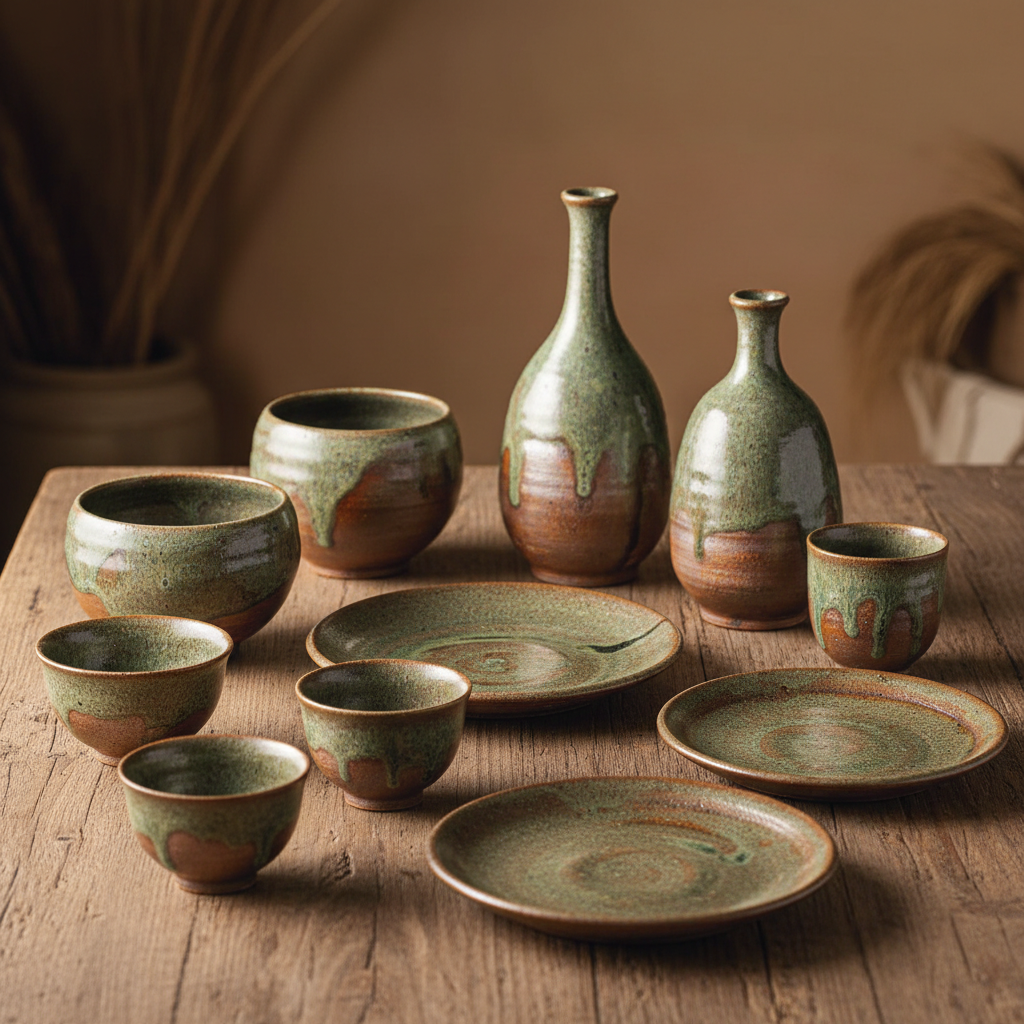
Shokudai ware (shokudaiyaki) is a traditional pottery that has been fired for approximately 400 years in the northern part of Kumamoto Prefecture. Also written as Shoutai ware, it is designated as a traditional craft of Japan representing Kumamoto Prefecture. It is highly valued by tea enthusiasts and pottery lovers for its distinctive ceramic clay rich in iron content, beautiful colors of white, blue, and yellow created by straw ash glaze, and its simple yet powerful form.
This article provides a comprehensive explanation of Shokudai ware’s ceramic culture representing Kumamoto, from its historical background to its technical characteristics, production area details, and contemporary initiatives.
The History of Shokudai Ware: A 400-Year Story That Began with the Hosokawa Clan
The Beginning in the Kanei Period: Potters from Buzen
The history of Shokudai ware dates back to 1632 (Kanei 9). It is said to have begun when Hosokawa Tadatoshi, transferred from the Buzen Kokura Domain to the Higo Kumamoto Domain, brought two potters with him. Genshichi of the initial Hinakoji family and Hachizaemon of the Katsuragi family, potters of Buzen and Ueno ware, built a climbing kiln at the foot of Mount Shoutai under the lord’s command and began pottery production.
These potters are said to have inherited pottery techniques from the Korean Peninsula, and these techniques became the foundation of Shokudai ware. It is said that pottery industry in early modern Kumamoto began with Korean potters who came to Japan around 400 years ago along with Kato Kiyomasa and Hosokawa Tadaoki, and Shokudai ware was born within this larger movement.
Development as a Domain Kiln and Pottery for the Common People
While Shokudai ware fired tea pottery as an official kiln of the Hosokawa Domain, it simultaneously produced numerous everyday ceramic goods. This duality is a major characteristic of Shokudai ware. By producing a wide range of ceramics from high-grade tea utensils to everyday household items, it established its foundation as a production area.
Throughout the Edo period, Shokudai ware develops under the protection of the Kumamoto Domain. Its reputation as tea pottery in particular increases, and it becomes treasured among the samurai and tea practitioners. At the same time, it becomes an essential presence as practical pottery supporting the lives of local residents.
Changes After the Meiji Era: Decline and Revival
After the Meiji Restoration, Shokudai ware loses the domain’s patronage and enters a period of temporary decline. Many kilns are forced to close, and there are times when the inheritance of traditional techniques is in jeopardy.
Starting in the Showa period, a revival movement of Shokudai ware begins through the efforts of potters and researchers such as Moreshige Jitaro. Work on reappraising traditional techniques and preservation activities progresses, and influenced by the folk craft movement, Shokudai ware gains new appreciation.
In modern times, works incorporating contemporary design and uses while preserving tradition have also emerged, and Shokudai ware attracts attention as both old and new pottery.
The Production Area of Shokudai Ware: Rich Ceramic Clay at the Foot of Mount Shoutai
Geographic Characteristics of Northern Kumamoto Prefecture
The production area of Shokudai ware centers around Mount Shoutai in the cities of Arao, Nankan, and Nagasu in northern Kumamoto Prefecture. Mount Shoutai, at 501 meters elevation, is an independent peak with gentle terrain and rich vegetation, and high-quality ceramic clay is abundant at its foot.
The “Shokudai clay” extracted from the foot of Mount Shoutai has a unique property of containing iron and mixed pebbles. This ceramic clay is a crucial element that produces the characteristic texture and fired appearance of Shokudai ware.
Distribution of Major Kilns
Currently, kilns producing Shokudai ware are scattered throughout the prefecture’s northern areas including Arao City, Nankan Town, Nagasu Town, and Kumamoto City. Each kiln inherits Shokudai ware techniques while maintaining its own traditions and individuality.
Representative kilns include Shokudai Fumoto kiln, Shokudai Mizuho kiln, Takemiya kiln, and Nakahira kiln, many of which feature workshop viewing and direct sales outlets, providing visitors opportunities to observe craftsmen’s handiwork up close. Visiting the production area allows one to directly experience the pottery-making process and the individual characteristics of each kiln, which is one of the attractions of this ceramic production area.
Production Area Environment and Resources
The Mount Shoutai area is a region with abundant resources necessary for pottery production. In addition to high-quality ceramic clay, raw materials for glazes such as straw ash and wood ash, and feldspar can be sourced locally.
The abundant natural environment also serves as a supply source for firewood to fire kilns, and some kilns still continue firing using traditional climbing kilns. The climate and humidity unique to this region also affect pottery drying and firing, becoming a factor in creating Shokudai ware’s distinctive appearance.
Characteristics of Shokudai Ware: Harmony of Simplicity and Strength
Properties of Shokudai Clay and Firing Temperature
The greatest characteristic of Shokudai ware is the use of Shokudai clay rich in iron and containing many small pebbles. This clay produces a unique texture and color when fired, creating the distinctive appearance unique to Shokudai ware.
As pottery, it is fired at high temperatures (approximately 1,250–1,300 degrees Celsius), making it extremely durable and excellent in practicality. This high-temperature firing increases vessel strength and realizes durability suitable for daily use.
Distinctive Colors from Straw Ash Glaze
A characteristic feature representing Shokudai ware is the beautiful coloring from straw ash glaze (warabai yu). Straw ash, wood ash, feldspar, and other materials are used as glaze and applied through flowing technique.
This straw ash glaze produces three beautiful colors of white, blue, and yellow. Particularly, the creamy white glaze described as “white like snow” is almost synonymous with Shokudai ware’s beauty. Depending on how the glaze flows and its position within the kiln and firing conditions, vessels are born with no two having identical appearance.
The Alternative Name “Tokutoku Ware” and Five Virtues
Shokudai ware has an alternative name of “Tokutoku ware” (five virtues ware). This represents five virtues possessed by Shokudai ware, which are said to have the following meanings:
- Durability – Robust construction through high-temperature firing
- Practicality – Functionality suitable for daily use
- Beauty – Distinctive aesthetic appeal from straw ash glaze
- Moisture prevention – Resistance to dampness due to pottery’s properties
- Extended longevity – The flavor increases with use
These five virtues demonstrate that Shokudai ware is not merely a work of art but a practical vessel rooted in daily life.
Simple Yet Powerful Sculptural Beauty
Shokudai ware vessels are characterized by simple yet powerful forms. They eschew excessive ornamentation, with basic design emphasizing the clay’s texture and the glaze’s beauty.
This simplicity resonates with the philosophy of “beauty of function” advocated by the folk craft movement, pursuing beauty in everyday-use vessels. The approach to vessel-making that appeals to all five senses of the user—the weight felt in hand, texture, mouth feel—is inherited.
The Manufacturing Process of Shokudai Ware: Inheriting Traditional Techniques
Ceramic Clay Extraction and Refining
The manufacture of Shokudai ware begins with extracting ceramic clay from the foot of Mount Shoutai. Extracted clay undergoes water levigation (suihi) and kneading processes to remove impurities and achieve appropriate plasticity.
Shokudai clay containing iron and pebbles has aspects that are difficult to handle as-is, but these very characteristics are the source of Shokudai ware’s distinctive appearance. Some kilns blend clay from multiple sources to create optimal soil.
Forming Techniques
Various forming techniques are used in Shokudai ware including wheel-throwing (rokuro), hand-forming, and mold-raising. Wheel-throwing in particular requires skillful technique, with the craftsman’s skill directly reflected in the work.
Appropriate techniques are selected depending on the shape—bowls, plates, vessels—with each piece carefully formed. After forming, pieces are gradually dried and undergo trimming and finishing processes before preparation for glazing.
Glaze Composition and Application
Shokudai ware’s characteristic straw ash glaze is created by blending straw ash, wood ash, feldspar and other materials in unique proportions. This blending ratio is a secret formula of each kiln, with subtle differences in color and texture occurring across kilns even in the same Shokudai ware.
Glazing characteristically uses “flow-pouring” technique. By flowing glaze onto vessels, natural flowing patterns emerge, completing vessels with one-of-a-kind appearances. The beauty woven together by this combination of chance and inevitability is a major attraction of Shokudai ware.
Kiln Firing and Firing Process
Firing uses various kilns depending on the kiln including climbing kilns, gas kilns, and electric kilns. Kilns using traditional climbing kilns create unique scenery on vessels through wood firing, with flame variations.
Firing temperature reaches approximately 1,250–1,300 degrees Celsius, with high-temperature firing realizing Shokudai ware’s characteristic robustness. Depending on position within the kiln and flame exposure, the same glaze produces different colors, creating the profound nature of pottery.
Contemporary Shokudai Ware: Coexistence of Tradition and Innovation
Value as a Nationally Designated Traditional Craft
Shokudai ware is designated as one of four nationally designated traditional crafts in Kumamoto Prefecture. This designation certifies that it possesses a long history with traditional techniques and methods currently inherited.
By receiving national designation, support for preserving and inheriting traditional techniques is obtained, and opportunities arise for the value of Shokudai ware to be widely recognized. The production area as a whole works to preserve tradition while emphasizing technical inheritance to the next generation.
Challenges in Contemporary Design
While preserving tradition, new designs suited to contemporary lifestyles have emerged. Young artists work on creating pieces incorporating contemporary sensibility while basing themselves in traditional techniques.
Development of vessels suited to modern dining including coffee cups and wine glasses progresses, realizing vessel-making that preserves the value of traditional crafts while fitting into daily life.
Collaboration with Corporations
In recent years, collaborations such as with major coffee chains have been seen. These projects lead to heightened awareness of Shokudai ware and development of new customer bases, attracting attention as contemporary applications of traditional crafts.
Branding as a regional specialty and use as a tourism resource also progresses, with active regional revitalization efforts through Shokudai ware.
Successor Development and Technical Inheritance
The Shokudai ware production area implements various measures for inheriting traditional techniques to the next generation. Apprenticeship systems at kilns, pottery classes, and school collaboration programs represent diverse forms of technical inheritance.
Many kilns are family businesses passed from grandfather to father to child, with techniques and spirit transmitted within families. Simultaneously, accepting new talent from outside achieves both tradition inheritance and introduction of fresh perspectives.
Types and Uses of Shokudai Ware
Shokudai Ware as Tea Pottery
Shokudai ware, with history as an official kiln, is highly valued as tea pottery including tea bowls, water containers, and flower vessels. Its simple yet refined bearing harmonizes well with the spirituality of tea ceremony.
Tea bowls in particular feature form fitting the hand, appropriate weight, and good feel on the lips, with shaping considering the user. The glaze scenery differs with each bowl, with tea practitioners finding pleasure in discovering their own special bowl.
Practicality as Everyday Tableware
Beyond tea pottery, Shokudai ware is widely enjoyed as everyday-use vessels. Various daily necessities are produced including rice bowls, tea cups, plates, bowls, and jars.
High-temperature firing provides durability and moisture-resistant properties suitable for daily use. With use, flavor increases, becoming vessels that can be cherished long-term in many households.
Value as Decorative and Fine Art Objects
In addition to practical vessels, decorative Shokudai ware including flower vessels and figurines are produced. High-art works leveraging the beauty of straw ash glaze are evaluated as fine art.
Works by renowned potters are housed in museums and collectors’ collections, recognized as bearing a portion of Japanese pottery culture.
Purchasing and Enjoying Shokudai Ware
Direct Purchase at Kilns
The best way to purchase Shokudai ware is to directly visit production area kilns. Most kilns in Arao, Nankan, Nagasu and elsewhere feature direct sales shops or galleries allowing hands-on selection of works.
Visiting kilns allows direct conversation with artists and craftspeople about their thoughts and processes, also a major attraction. Some kilns welcome workshop tours, with viewing production sites deepening understanding and affection for Shokudai ware.
Retailers in Kumamoto City and Nationwide
Kumamoto City has craft shops and galleries handling Shokudai ware, allowing comparison shopping among multiple kilns’ works. Shokudai ware is also carried at folk craft shops and department stores nationwide.
An increasing number of kilns operate online shops, with purchase possible from distant locations. However, viewing actual pieces before purchase is ideal, so in-store purchase is recommended when possible.
Usage and Care
Shokudai ware is durable pottery but requires proper care for long-term use. Pre-use soaking in water (“water breaking-in”) prevents stains and soiling.
After use, gentle washing with neutral detergent and thorough drying is important. Microwave and dishwasher use varies by kiln and piece, so checking at purchase is recommended.
Enjoying increasing flavor through use is also part of Shokudai ware’s appeal. Continued careful use develops vessels into uniquely personal ones.
Enjoying Shokudai Ware at Events
Production areas regularly host kiln-touring events and pottery markets. These events feature more work displays and sales, with opportunities to purchase at special prices.
There is pleasure in touring kilns discovering each individual character and finding favorite artists and kilns. Experiencing Shokudai ware while enjoying regional food and nature is a valuable opportunity.
Shokudai Ware and Kumamoto’s Ceramic Culture
Other Ceramic Production Areas in Kumamoto Prefecture
Beyond Shokudai ware, Kumamoto has multiple ceramic areas including Amakusa ceramics, Takada ware, and Amida ware. Each possesses unique history and characteristics, forming Kumamoto’s rich ceramic culture.
Shokudai ware, as the representative pottery of northern Kumamoto, supports the region’s craft culture alongside these areas. Understanding each area’s individuality clarifies Shokudai ware’s characteristics.
Connections with Regional Culture
Shokudai ware is not merely a craft but deeply connected with regional culture of northern Kumamoto. Shokudai ware vessels have been used in regional festivals, events, and daily life, enriching people’s lives.
Regional history, natural environment, and people’s activities are reflected in Shokudai ware pottery, allowing one to sense regional culture through vessels.
Shokudai Ware as a Tourism Resource
Recently, Shokudai ware attracts attention as an important tourism resource for Kumamoto Prefecture. Kiln touring attracts many tourists as a new charm of Kumamoto tourism.
Tourism routes combining Mount Shoutai surroundings’ natural scenery, hot springs, and cuisine centered on Shokudai ware are proposed, with active regional revitalization efforts.
Conclusion: The Appeal and Future of Shokudai Ware
Shokudai ware is a traditional pottery of northern Kumamoto Prefecture with 400 years of history. Beginning with the Hosokawa family’s transfer and functioning as an official kiln firing tea pottery, it simultaneously produced numerous everyday items for common people.
The distinctive appearance from Shokudai clay rich in iron and straw ash glaze coloring, durability from high-temperature firing, and simple yet powerful sculptural beauty characterize Shokudai ware. As the alternative name “Five Virtues Ware” shows, it has long been loved as vessels combining beauty and practicality.
In production areas centered on Mount Shoutai’s foot in Arao City, Nankan and Nagasu Towns, numerous kilns currently work to preserve traditional techniques while incorporating contemporary sensibility. Maintaining value as nationally designated traditional craft while continuing new challenges, Shokudai ware is Kumamoto’s pride where tradition and innovation coexist.
By visiting production areas, engaging with kiln people, and handling vessels directly, one can feel Shokudai ware’s true appeal. Whether as everyday-use pottery or special tea utensils, Shokudai ware brings richness and refinement to our lives.
Inheriting 400 years of tradition while evolving toward the next 100 years, Shokudai ware with its simple, powerful beauty will continue to fascinate many people. When visiting Kumamoto, be sure to visit Shokudai ware production areas and touch the profound world of this traditional craft.


