
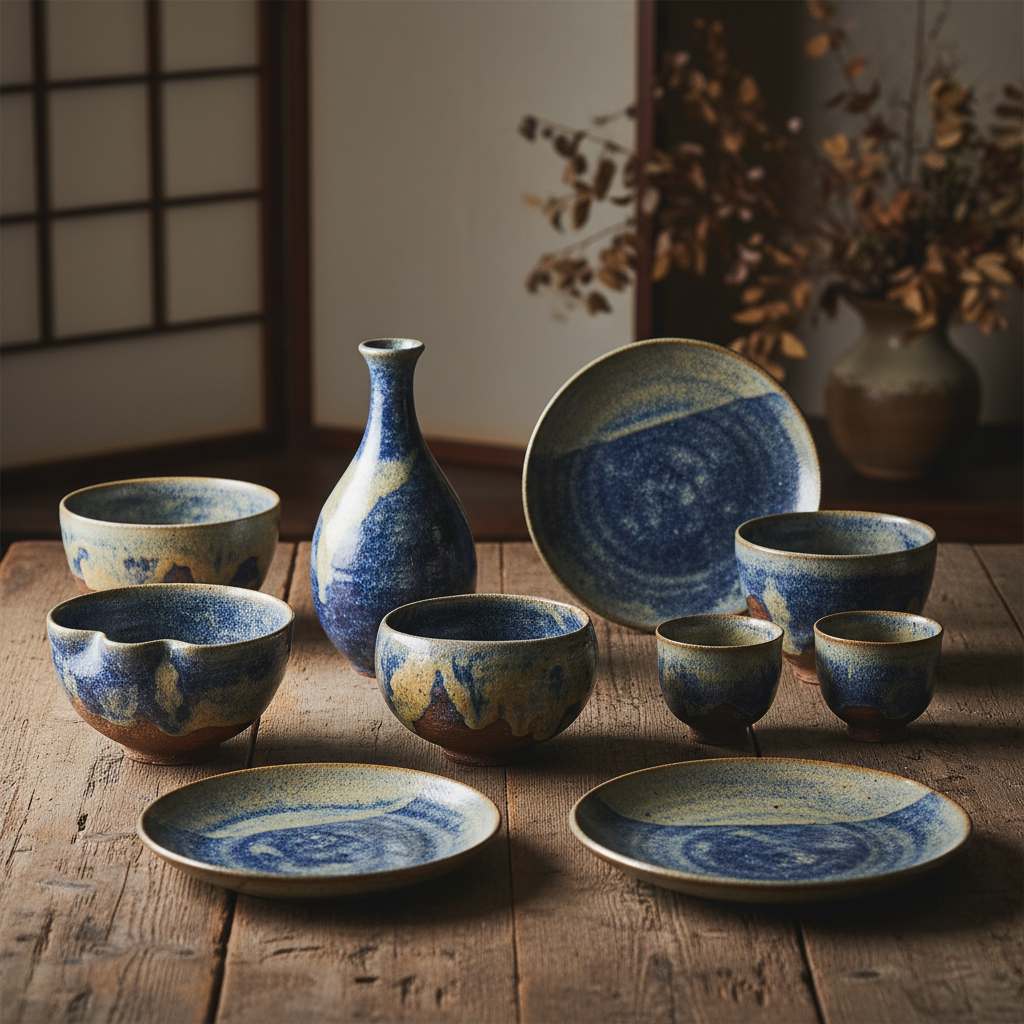
What is Shida Ware? A Thorough Explanation of the History and Charm of Saga Prefecture’s Hidden Ceramic Production Area
Saga Prefecture is known as one of Japan’s representative ceramic production areas, but hidden in the shadow of Arita ware and Imari ware is a ceramic production area that remains relatively unknown. One such area is “Shida ware (shidayaki).” This article provides a detailed explanation of Shida ware’s history, characteristics, and current situation.
Basic Information about Shida Ware
Shida ware is a ceramic produced mainly in the Shida district of Shiota Town, Ureshino City, Saga Prefecture. This region is adjacent to Arita Town, a major Arita ware production area, and had an environment well-suited for ceramic production.
About Shida Ware’s Production Area: Shiota Town, Ureshino City
Shiota Town, located in the southwestern part of Saga Prefecture near the border with Nagasaki Prefecture, has the following characteristics:
- Abundant ceramic stone resources: Surrounded by mountains where high-quality ceramic stone can be quarried
- Water resources: Abundant water sources necessary for ceramic manufacturing
- Fuel: Historically, firewood and charcoal were procured from surrounding forests
- Strategic location: Prospered as a post station on the Nagasaki Kaido, favorable for product distribution
With these conditions in place, the Shida district had the foundation to develop as a ceramic production area.
History of Shida Ware
Beginnings in the Edo Period
The history of Shida ware dates back to the middle of the Edo period. While there are various theories about the exact founding year, ceramic production is believed to have already been underway around the 18th century.
As Arita ware techniques spread to surrounding areas, ceramic production also began in the Shida district. Initially, it was characterized by:
- Production focused on everyday utensils (bowls, plates, vessels, etc.)
- Consumption mainly local and in surrounding areas
- Playing a subcontracting role for Arita ware
Development in the Meiji Period
With the advent of the Meiji period, Shida ware underwent a major turning point. Particularly from the late Meiji period through the Taisho period, the ceramic industry in the Shida district reached its peak.
Characteristics of Shida ware’s peak period:
- Increase in kilns: More than 20 kiln operators at the peak
- Expansion of production volume: Established mass production system centered on daily tableware
- Expansion of sales channels: Shipments increased not only throughout Kyushu but also nationwide
- Technological improvement: Adopted Arita ware techniques while developing unique methods
Changes in the Taisho and Showa Periods
From the Taisho period through the early Showa period, Shida ware continued to develop. However, after entering the Showa period, it faced various challenges.
Changes in the Showa period:
- Wartime controls: Difficulties in securing raw materials and fuel due to war
- Postwar recovery: Temporary increase in demand after the war
- High-growth economic period: Decline in ceramic demand due to proliferation of plastic products
- Decrease in kilns: Increase in abandoned kilns due to lack of successors and management difficulties
Shida Ware Today
Currently, very few kilns continue to operate in the Shida district. While many have closed and the former bustle has been lost, the historical value is being reassessed.
Characteristics and Techniques of Shida Ware
Product Characteristics
Compared to Arita ware, Shida ware has the following characteristics:
1. Practical, everyday vessels
Shida ware centered on production of vessels for daily use rather than luxury items.
- Durable and easy-to-use forms
- Affordable pricing
- Products rooted in common people’s daily life
2. Simple, understated beauty
Rather than elaborate decoration, the characteristic is simple design that brings out the quality of materials.
- Centered on white porcelain and underglaze blue painting
- Restrained decoration
- Combination of practicality and beauty
3. Relationship with Arita ware
Shida ware has a close relationship with Arita ware:
- Sometimes used the same ceramic stone
- Strongly influenced technically by Arita ware
- Engaged in subcontracting production for Arita ware
Manufacturing Process
The manufacturing process of Shida ware is basically the same as Hizen-type porcelain such as Arita ware:
- Raw material preparation: Crush ceramic stone and mix with water to create mud
- Shaping: Create vessel form using a pottery wheel or mold
- Drying: Allow shaped vessels to dry
- Biscuit firing: First firing at around 800 degrees
- Underglaze decoration: Apply decoration such as underglaze blue painting
- Glazing: Apply glaze
- Glost firing: Firing at around 1300 degrees
- Overglaze decoration: Apply overglaze decoration if needed
- Overglaze firing: Fire to set at around 800 degrees
Shida Ware Kilns and Current Situation
Existing Kilns
Unfortunately, the number of kilns continuing to operate in the Shida district is extremely small. Many closed from the late Showa period through the Heisei era.
Shida Ware no Sato Museum
To pass down the history of Shida ware to future generations, Ureshino City has established the “Shida Ware no Sato Museum.”
Museum features:
- Preserves and publicly displays the climbing kiln actually used
- Exhibits historical materials of Shida ware
- Displays showing the manufacturing process of the time
- Collection of Shida ware products
Particularly noteworthy is the “Shida ware climbing kiln” used since the Meiji period. This climbing kiln:
- Measures 23 meters in length
- Has 10 firing chambers
- Was used for over 100 years from the Meiji, Taisho, and Showa periods
- Currently designated as a National Registered Tangible Cultural Property
This climbing kiln is preserved as a valuable industrial heritage that tells the story of Shida ware’s history.
Positioning of Shida Ware among Saga Prefecture’s Ceramic Production Areas
Saga Prefecture is one of Japan’s premier ceramic production areas with multiple production sites. What is the positioning of Shida ware among these?
Major Ceramic Production Areas in Saga Prefecture
1. Arita Ware (Arita Town)
- Birthplace of Japanese porcelain
- Highly valued domestically and internationally
- Wide range of products from luxury to everyday items
2. Imari Ware (Imari City)
- Developed as a shipping port for Arita ware
- Unique techniques also developed
- Tradition of the Nabeshima Clan kiln
3. Karatsu Ware (Karatsu City)
- Production area for pottery
- Highly valued as tea ware
- Referred to as “First Raku, Second Hagi, Third Karatsu”
4. Shida Ware (Shiota Town, Ureshino City)
- Developed as a peripheral production area of Arita ware
- Production centered on everyday utensils
- Production now essentially ended
Historical Significance of Shida Ware
Though Shida ware lacks the fame of Arita ware, it holds important significance in the following ways:
1. Role as a regional industry
- Functioned as an industry supporting the regional economy
- Created numerous jobs
- Central to the regional community
2. Everyday people’s living culture
- Supplied vessels closely connected to daily life
- Supported people’s food culture
- Embodied the history of practical ceramics
3. Value as industrial heritage
- Valuable example showing the reality of local ceramic industries
- Industrial heritage such as climbing kilns remain
- Clues to understanding the process of modernization
Differences between Shida Ware and Arita Ware
While Shida ware and Arita ware are geographically close and technically related, there are several differences.
Product Differences
| Item | Shida Ware | Arita Ware |
|——|——–|——–|
| Main products | Primarily everyday utensils | Wide range from everyday items to luxury goods |
| Price range | Relatively inexpensive | From inexpensive to expensive |
| Decoration | Simple | Delicate painting and elaborate decoration also |
| Market | Mainly domestic and regional | Widely distributed domestically and internationally |
Differences in Historical Background
Arita Ware:
- Ri Sampei succeeded in porcelain firing in the 1610s (origin of Japanese porcelain)
- Developed with domain protection and encouragement
- Exported overseas from the Edo period onward
- Many kilns still operate today
Shida Ware:
- Production began around the 18th century (later than Arita ware)
- Developed by adopting Arita ware techniques
- Primarily for domestic market
- Production now essentially ended
Visiting Shida Ware: Tourism Information
Those interested in the history of Shida ware are encouraged to visit Shida district, Shiota Town, Ureshino City.
Shida Ware no Sato Museum
Access:
- Bus or taxi from JR Takeo-Onsen Station
- About 15 minutes by car from Ureshino IC on the Nagasaki Expressway
Highlights:
- Climbing kiln designated as a National Registered Tangible Cultural Property
- Historical exhibits on Shida ware
- Exhibits of tools and products from that era
- Explanations of ceramic manufacturing processes
Shiota-tsu Town Streets
The Shiota Town area, including the Shida district, preserves historic townscapes that flourished as a post station on the Nagasaki Kaido.
Features:
- Buildings from the Edo and Meiji periods
- White-walled storehouses and townhouses
- Selected as an Important Preservation District for Groups of Historic Buildings
- Can experience the history of development alongside Shida ware
Nearby Tourist Spots
Ureshino Onsen:
- One of Japan’s three great beauty bath hot springs
- About 10 minutes by car from the Shida district
Arita Town:
- Arita ware production area
- Numerous kilns and galleries
- About 20 minutes by car from Shida district
Shida Ware Collections and Value
Shida Ware as Antiques
While production of Shida ware has essentially ended, it holds certain value in the antique market.
Collection targets:
- Products from Meiji and Taisho periods: Products from the peak period have historical value
- Vessels with distinctive painting: Items with unique designs
- Products with kiln marks: Items where the kiln can be identified
Value characteristics:
- Generally lower prices compared to Arita ware
- Rarity is increasing, with potential for future appreciation
- Academic value as historical materials of local kilns
How to Identify Shida Ware
Shida ware and Arita ware are similar, making identification sometimes difficult.
Identification points:
- Kiln marks or signatures: Check for marks from Shida district kilns
- Product characteristics: Predominantly everyday utensils with restrained decoration
- Provenance or transmission history: Items used in the Ureshino/Shiota area
- Expert appraisal: Consult specialists for definitive identification
Learning from Shida Ware: The History of Local Ceramic Production Areas
The history of Shida ware demonstrates a typical path followed by Japanese local ceramic production areas.
Pattern of Local Kiln Development and Decline
Development period (late Edo to Meiji and Taisho):
- Production began in response to local demand
- Improvement in technology and expansion of production scale
- Functioned as an important pillar of the regional economy
Transition period (early to mid-Showa):
- Shortages of raw materials and fuel due to war
- Temporary increase in demand after the war
- Changes in lifestyle during high-growth economic period
Decline period (late Showa to Heisei):
- Proliferation of substitute products like plastic
- Lack of successors
- Increase in closures due to management difficulties
Preservation period (present day):
- Reappraisal of value as industrial heritage
- Historical preservation through museums
- Utilization as regional cultural resources
Contemporary Significance
The history of Shida ware has the following contemporary significance:
1. Regional identity
- Symbolizes the history and culture of a region
- Becomes a source of pride for local residents and cultural heritage
2. Teaching material for industrial history
- Case study for learning local industrial development and decline
- Key to understanding industrial structural changes
3. Tourism resource
- Material for industrial heritage tourism
- Content for conveying regional appeal
4. Recording of traditional techniques
- Preservation of increasingly lost techniques
- Leaves possibility for future revival
The Future of Saga Prefecture’s Ceramic Industry and Shida Ware’s Role
Saga Prefecture’s ceramic industry continues centering on Arita ware, but currently faces various challenges.
Contemporary Issues
- Lack of successors: Decrease in young generation ceramic artists
- Changes in demand: Demand decline due to lifestyle changes
- Competition from overseas products: Price competition with cheap imports
- Technical inheritance: Difficulty in inheriting traditional techniques
New Initiatives
Saga Prefecture’s ceramic production areas are undertaking the following initiatives:
1. Training of young artists
- Enrichment of ceramic classes and training programs
- Support for young artists
2. Design innovation
- Development of products suited to contemporary lifestyles
- Collaboration with renowned designers
3. Development of overseas markets
- Promotion as Japan brand
- Participation in overseas exhibitions
4. Promotion of industrial tourism
- Kiln tours
- Ceramic experience programs
Lessons Shown by Shida Ware
The history of Shida ware provides important lessons to current ceramic production areas:
1. Importance of recording and preservation
- Record techniques and history before production ends
- Conservation activities for industrial heritage
2. Connection with community
- Coordination with local communities
- Positioning as part of local culture
3. Value of diversity
- Diversity including peripheral areas, not just Arita ware
- Bringing out the individual characteristics of each production area
4. Inheritance of history
- Learn from the history of past production areas and apply to the future
- Preserve the memory of lost production areas
Conclusion: The Story of Saga Prefecture’s Ceramic Production Areas Told by Shida Ware
Shida ware is a ceramic produced mainly in the Shida district of Shiota Town, Ureshino City, Saga Prefecture, from the Edo period through the Showa period. While not as well-known as Arita ware, it supported the region’s life and played an important role as an industry.
Currently, production of Shida ware has essentially ended, but the climbing kiln and materials preserved in the Shida Ware no Sato Museum are valuable industrial heritage conveying the history of local ceramic production areas to the present.
The history of Shida ware is a story of development and decline followed by Japan’s local industries, and simultaneously a record of the lives and culture of local people. When visiting Saga Prefecture, why not pay attention not only to Arita ware but also to the history of lesser-known production areas like Shida ware?
Through Shida ware, we can learn the following:
- The importance and fragility of local industries
- The difficulty of inheriting traditional techniques
- The significance of industrial heritage preservation
- The value of ceramics as regional culture
Saga Prefecture’s ceramic production areas have formed a rich history through diversity including peripheral areas like Shida ware while centering on Arita ware. Understanding this history will lead to a deeper understanding of Japan’s ceramic culture.


