Echizen Ware: A Comprehensive Explanation of the History and Characteristics of Fukui Prefecture’s Representative Ceramic Production Center
Echizen ware, fired in Echizen Town, Nyu District, Fukui Prefecture, is a traditional ceramic with approximately 850 years of history, counted as one of Japan’s Six Ancient Kilns. It is known for its simple aesthetic created through firing without glaze and the unique beauty produced by natural ash glaze. This article provides a detailed explanation of Echizen ware’s history, characteristics, production center information, and contemporary developments—covering this ceramic production center that represents Fukui Prefecture.
What is Echizen Ware? Fukui Prefecture’s Traditional Ceramics
Echizen ware (echizenyaki) is ceramics produced primarily in the Miyazaki district (former Miyazaki Village) and Oda district (former Oda Town) of Echizen Town, Nyu District, Fukui Prefecture. Beginning around the 12th century in the late Heian period, it has continued to the present day, developing as one of Japan’s leading ceramic production centers.
Position as One of Japan’s Six Ancient Kilns
Echizen ware is counted as one of the “Six Ancient Kilns of Japan (rokkoyo)” alongside Seto ware, Tokoname ware, Shigaraki ware, Tamba ware, and Bizen ware. The Six Ancient Kilns refer to representative ceramic production centers whose production has continued from the medieval period to the present, and Echizen ware represents the Hokuriku region among them.
In 2017, it was recognized as a “Japan Heritage” site, and its historical and cultural value was reaffirmed. Additionally, in 1986 (Showa 61), it received designation as a nationally designated traditional craft from the Ministry of International Trade and Industry (now the Ministry of Economy, Trade and Industry), ensuring the preservation and transmission of traditional techniques.
Definition of Echizen Ware
The current definition of Echizen ware is “ceramics made using local soil in the Miyazaki and Oda districts of Echizen Town, Nyu District, Fukui Prefecture.” The use of soil from the production area is an important requirement, and the iron-rich soil unique to this region creates Echizen ware’s distinctive character.
The History of Echizen Ware: A Tradition of Ceramic Production Continuing from the Late Heian Period
Origins and Beginning in the Late Heian Period
The origins of Echizen ceramics date back approximately 1,300 years, but the formal beginning of the production center is considered to be approximately 850 years ago in the late Heian period. More than 200 kiln ruins have been discovered to date, confirming that large-scale production was conducted in ancient times.
Initially, production focused on everyday items such as water jars (for water and grain), pots, grinding bowls, sake vessels, and eyebrow-darkening jars. These were essential practical items widely used in daily life.
Kiln Development and Formation of Production Centers
Kilns were initially built in Kosobara, Echizen Town, where the present “Echizen Ceramic Village” is located, and later spread to various hilly areas in Kumagai, Byodo, and other locations. This region was chosen because high-quality ceramic clay was abundant, firewood for fuel was easily obtainable, and it was conveniently close to the Echizen coast for maritime transport.
By the late Muromachi period, Echizen ware’s production system underwent major development. Kilns were concentrated in one location at Byodo, Echizen Town, and massive kilns over 25 meters long were constructed that could fire approximately 5 tons at once, including 60 large jars and 1,200 grinding bowls. This established the region’s position as the largest ceramic production center in the Hokuriku region.
National Distribution via Kitamaebune Ships
The background for Echizen ware’s widespread recognition was maritime transport via Kitamaebune (merchant ships). Taking advantage of its proximity to the Echizen coast, Echizen ware products were widely distributed via Kitamaebune from Hokkaido in the north to Shimane Prefecture in the south.
Grinding bowls in particular became known as a representative product of Echizen ware, and their durability and practicality made them highly valued throughout the country. At ports where Kitamaebune called, Echizen ware was handled as one of the important trade goods, supporting the region’s prosperity.
Changes Since the Modern Period
After the Meiji period, Echizen ware production temporarily declined due to changes in lifestyle and competition from other production centers. However, starting in the 1960s (Showa 40s), many ceramic artists began moving to Echizen Town (former Miyazaki Village and former Oda Town) and surrounding areas.
These ceramic craftspeople worked on creating new works—dishes and flower vessels suited to contemporary life and artistic objects—while inheriting traditional techniques. Through this movement, Echizen ware was reborn as a production center that preserved its value as a traditional craft while incorporating contemporary sensibilities.
Characteristics of Echizen Ware: Unglazed Firing and Natural Ash Glaze
Properties of Iron-Rich Local Soil
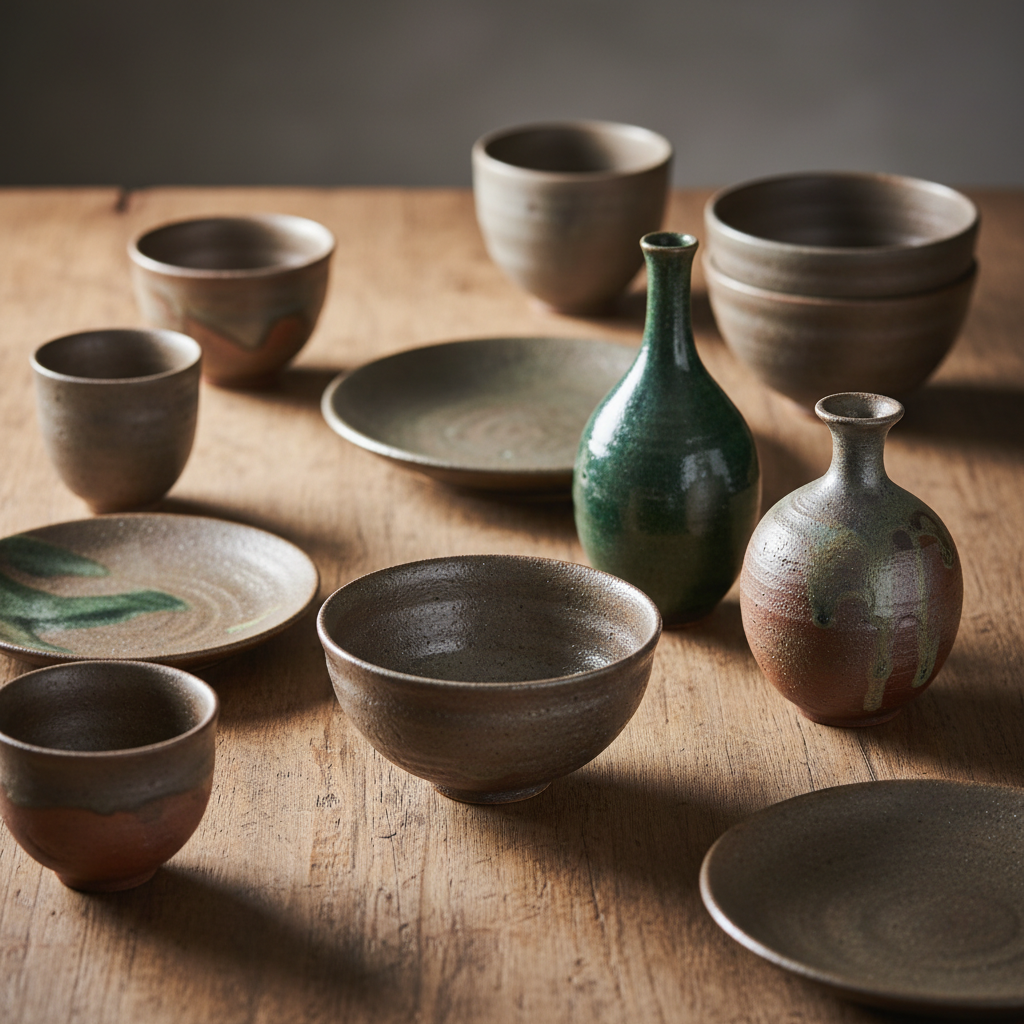
The greatest characteristic of Echizen ware is the use of iron-rich soil from the local area. Through the use of this soil, the color of the fired surface varies richly from dark gray to reddish-brown. Even when fired in the same kiln, each piece shows different coloring depending on its position in the kiln, temperature, and how the flames strike it, which is a major attraction.
Unglazed Firing Technique
The basic technique of Echizen ware is “unglazed firing (muyuu yakishime).” This technique does not use glaze, but rather fires the clay body itself at temperatures above 1,300 degrees, resulting in a finish that brings out the soil’s original texture and color.
Vessels made through unglazed firing are extremely durable with excellent water resistance, serving as practical ceramics for long-term use. Additionally, the character increases with use, and pieces can be enjoyed for their changes over time.
Beautiful Scenery from Natural Ash Glaze
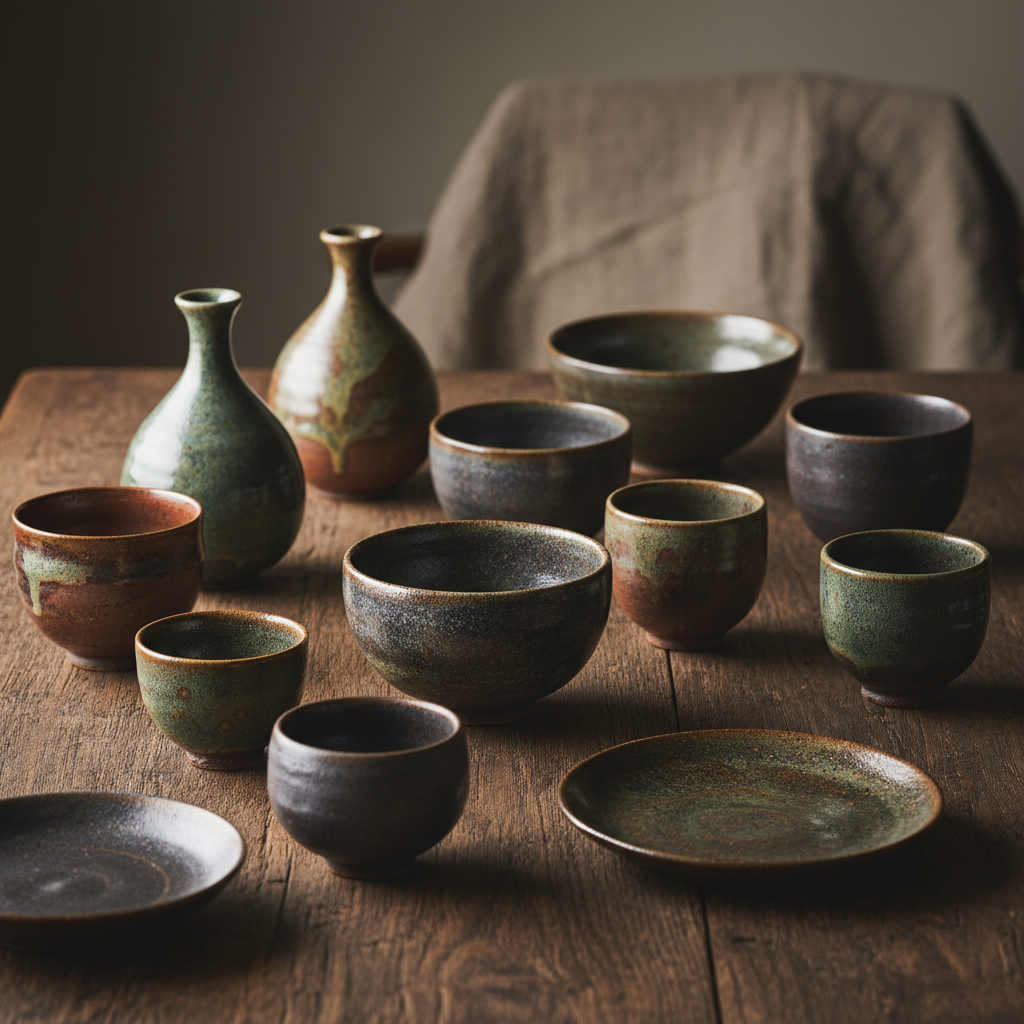
Another major characteristic of Echizen ware is the beautiful scenery created by natural ash glaze (shizen’yu). During firing at temperatures above 1,300 degrees, ash from the firewood falls on the vessel, melts, and flows down, forming a yellowish-green beautiful glaze-like layer.
This natural glaze is difficult to control artificially and is created as a chance occurrence within the kiln. Therefore, no two pieces are identical, and each becomes a one-of-a-kind work. The trails left by flowing ash are called “hidasuki” (fire cord marks) and are considered one of the highlights of Echizen ware.
Simple and Warm Aesthetic
Through unglazed firing and expression by ash glaze, Echizen ware possesses a simple, warm aesthetic. There is no ornate decoration, but there is a natural beauty created by soil and fire, and it has a calm, grounded presence that harmonizes even with contemporary living spaces.
The Echizen Ware Production Center: The Ceramic Region of Echizen Town, Fukui Prefecture
Geography and Environment of Echizen Town
Echizen Town, Nyu District, Fukui Prefecture, the production center of Echizen ware, is a town with the Echizen Cape jutting into the Japan Sea, surrounded by the sea and mountains in a naturally rich region. The beautiful landscape of the Echizen coast and the hilly terrain of inland areas have provided an environment suitable for ceramic production.
Major Production Districts
Echizen ware production is primarily conducted in the following districts:
Miyazaki District (former Miyazaki Village): One of the birthplaces of Echizen ware, where traditional kiln operators have gathered. Many kiln ruins have been discovered here, making it a region of high historical importance.
Oda District (former Oda Town): A major production center alongside Miyazaki District, where many kiln operators are still active today.
Kosobara District: Home to the Echizen Ceramic Village, which has developed as a contemporary ceramic center.
Echizen Ceramic Village and Related Facilities
In Kosobara, Echizen Town, “Echizen Ceramic Village” serves an important role in information dissemination and providing experiences with Echizen ware. The following facilities are located in this area:
Fukui Prefecture Ceramic Hall: A public facility that displays ceramic works including Echizen ware, offers ceramic classes, and preserves materials. Visitors can learn about Echizen ware’s history and techniques.
Echizen Ware Hall: A kiln operator-run sales facility where various Echizen ware works can be purchased. By being able to handle pieces directly, visitors can find vessels suited to their preferences.
Workshops and Galleries: Individual workshops and galleries operated by ceramic artists are scattered throughout the Ceramic Village area, where visitors can encounter diverse works reflecting each artist’s individuality.
Role of the Echizen Ware Industrial Cooperative
The Echizen Ware Industrial Cooperative is an organization of kiln operators and ceramic craftspeople in the production center that promotes Echizen ware, transmits techniques, and manages quality. The cooperative works to develop products that respond to contemporary needs while preserving Echizen ware’s tradition, supporting the development of the entire production center.
Echizen Ware Products and Uses
Traditional Everyday Items
Echizen ware has long been produced centered on everyday items. Representative products include:
Grinding Bowls: The most representative product of Echizen ware, with fine ridged patterns on the interior that provide excellent grinding capability. Their durability and longevity made them widely used for commercial purposes.
Jars (Kame): Large containers used for storing water, grain, miso, and other items. Their excellent water resistance made them valued for properly preserving contents.
Pots: Pots of various sizes were created and used as storage containers.
Sake Vessels: Containers used for holding liquids such as sake and soy sauce.
Vessels for the Contemporary Table
Since the 1960s (Showa 40s), Echizen ware has also developed as tableware brightening the daily dining table:
Rice Bowls and Tea Cups: Works that serve as everyday use vessels, allowing people to feel the warmth of the soil.
Plates and Bowls: Vessels for serving dishes, available in various shapes and sizes. The natural glaze scenery enhances the presentation of food.
Sake Vessels: Many pieces are created for enjoying sake, including sake bottles and cups.
Cups and Mugs: Contemporary vessels for enjoying coffee and tea are also available in abundance.
Flower Vessels and Interior Décor
The simple beauty of Echizen ware is also highly valued as flower vessels and interior décor:
Flower Vases and Flower Containers: Flower vessels with beautiful natural ash glaze flows can be used both as tea ceremony implements and as modern interior décor.
Objects: Contemporary artists also create artistic works that serve as art pieces brightening spaces.
Echizen Ware Kiln Operators and Artists
Kiln Operators Preserving Tradition
In Echizen Town, traditional kiln operators exist who preserve techniques passed down through generations. These operators work on creating products suited to the times while employing traditional techniques. Many operators accept workshop visits and pottery experiences, allowing visitors to directly experience Echizen ware’s appeal.
Individualistic Ceramic Artists
Since the 1960s (Showa 40s), many ceramic artists from across the country have moved to Echizen Town, creating works that reflect their individual sensibilities. Many ceramic artists, while using traditional techniques as their foundation, pursue contemporary designs and new forms of expression, expanding Echizen ware’s possibilities.
Nurturing Young Artists
The production center also invests effort in transmitting traditional techniques and nurturing new talent. Through pottery classes and training programs, the next generation of ceramic craftspeople is being developed, with new talent emerging to lead Echizen ware’s future.
Purchasing Echizen Ware and Experiencing It
Purchasing at the Production Center
The most reliable way to purchase Echizen ware is to visit Echizen Town, the production center:
Echizen Ware Hall: Directly operated by kiln operators with a wide variety of works and price ranges.
Individual Kilns and Workshops: By visiting kilns directly, you can select works while conversing with artists.
Fukui Prefecture Ceramic Hall: Displays works and also sells some pieces.
Online Purchasing
Those from distant areas can purchase Echizen ware through online stores operated by the Echizen Ware Industrial Cooperative or individual kilns. Using photographs and descriptions as reference, it is possible to obtain Echizen ware from home.
Pottery Experiences
The Echizen Ceramic Village and various workshops offer pottery experience programs. Through potter’s wheel experiences and hand-building experiences, you can create your own original works. Through these experiences, you can gain a deeper understanding of Echizen ware’s techniques and appeal.
Availability Within Fukui Prefecture
Echizen ware can also be purchased at tourism facilities and souvenir shops throughout Fukui Prefecture. At locations around Fukui Station and major tourist sites, shops carrying Echizen ware are available, making it popular as travel souvenirs.
Echizen Ware and Fukui Prefecture’s Culture
Value as a Regional Traditional Craft
Echizen ware is one of Fukui Prefecture’s representative traditional crafts. In addition to Echizen ware, Fukui Prefecture has numerous traditional crafts bearing the “Echizen” name, including Echizen lacquerware, Echizen washi paper, and Echizen forged blades. These are promoted together as the “Echizen Craftsmanship Region.”
Utilization as a Tourism Resource
Echizen Town, the production center of Echizen ware, has also developed as a tourism destination centered on ceramics. Centered on the Echizen Ceramic Village, tourists visit to enjoy kiln tours, pottery experiences, and work appreciation, contributing to regional vitalization.
Education and Cultural Transmission
Echizen ware is also addressed in local school education, providing opportunities for children to learn their region’s traditional culture. Through pottery classes and field trips, the transmission of culture to the next generation is being promoted.
Contemporary Development and Future of Echizen Ware
Fusion of Tradition and Innovation
Contemporary Echizen ware actively pursues new forms of expression and applications while preserving traditional techniques. Centered on young artists, diverse developments can be seen, including designs suited to contemporary lifestyles and ceramics as art works.
International Promotion
Following Japan Heritage designation, efforts to promote Echizen ware internationally have been strengthened. Activities from an international perspective are expanding, including participation in international exhibitions and sales to overseas collectors.
Building a Sustainable Production Center
The production center is also working on building sustainable operations, including adopting environmentally conscious production methods and effectively utilizing regional resources. The coexistence of traditional firewood kilns and the development of energy-efficient kilns is being explored to balance environmental concerns with tradition.
Utilization of Digital Technology
New initiatives using digital technology have begun, including information dissemination through SNS and online stores, and virtual workshop tours. This makes it possible to communicate Echizen ware’s appeal to a broader audience.
Conclusion: The Appeal of Echizen Ware and Fukui Prefecture’s Ceramic Production Center
Echizen ware is a ceramic production center representing Fukui Prefecture with approximately 850 years of history. Counted as one of Japan’s Six Ancient Kilns, it is characterized by traditional unglazed firing techniques and beautiful natural ash glaze, recognized as a nationally designated traditional craft and Japan Heritage site.
Beginning in the late Heian period and widely distributed nationally via Kitamaebune merchant ships, Echizen ware developed as the largest ceramic production center in the Hokuriku region. Currently, centered in the Miyazaki and Oda districts of Echizen Town, Nyu District, Fukui Prefecture, traditional kiln operators and innovative ceramic artists coexist, creating diverse works.
Using locally sourced iron-rich soil and firing at temperatures above 1,300 degrees creates a simple, warm aesthetic loved for a wide range of applications from everyday use vessels to art works. At facilities such as the Echizen Ceramic Village, works can be purchased and pottery experiences enjoyed, allowing visitors to directly experience Echizen ware’s appeal.
While transmitting traditional techniques, Echizen ware continues to evolve through product development responding to contemporary needs and promotion internationally. When visiting Fukui Prefecture, be sure to visit this historically significant ceramic production center and experience firsthand the beauty created by soil and fire.