Oda Ware: Fukui Prefecture Ceramics – A Thorough Explanation of Echizen Ware’s History and Tradition
Introduction
Echizen Town in the Niu District of Fukui Prefecture boasts a history of over a thousand years as one of Japan’s leading ceramic production centers. The ceramics currently known as “Echizen ware” were once called “Oda ware” and have been passed down as a regional traditional craft. This article comprehensively explains the transition from Oda ware to Echizen ware, the characteristics of the production area, the transmission of techniques, and the activities of kilns in modern times, providing a complete overview of Fukui Prefecture’s ceramic culture.
Oda Ware: The Former Name of Echizen Ware and Its Historical Background
The Origin of the Name Oda Ware
Oda ware is the name for ceramics produced primarily in the Oda district of Echizen Town in Fukui Prefecture’s Niu District. From the Edo period through the first half of the Showa period, ceramics fired in this region were known as “Oda ware” or “Byodo ware.” In particular, jars and bottles produced in Byodo village in the Oda district (present-day Byodo in Echizen Town) became known as “Oda bottles” and gained recognition from ancient times.
Regarding the founding, there are several theories: one traces it back to Genchin, a tile maker during the Joroku years (1528-1532), while another theory places the founding in the Kanho years (1741-1744). However, archaeological surveys have revealed that ceramic production in this region dates back to the late Heian period.
The Change to the Name Echizen Ware
After World War II, the ceramics scholar Fujio Koyama introduced the area as “Ancient Kilns of Echizen” and listed it as one of the Six Ancient Kilns of Japan, which caused the name “Echizen ware” to become widely recognized. This long-unnamed production area had its historical significance in Japanese ceramic history reassessed through Koyama’s research.
From the Heian through Muromachi periods, it was called “Kumadani ware” based on the name of the production area. From the Edo period through the first half of Showa, it was “Oda ware,” and since the postwar period it has been known as “Echizen ware.” This transition in nomenclature tells the story of the area’s historical development and the process of scholarly reassessment.
Characteristics of the Fukui Prefecture Echizen Town Ceramic Production Area
Geographic Conditions and Raw Materials
The Miyazaki district (former Miyazaki village) and Oda district (former Oda town), primarily in Echizen Town in Fukui Prefecture’s Niu District, possess geographic conditions suitable for ceramic production. The soil in this region contains high iron content, and after firing, the surface color ranges from black-gray to reddish-brown. The high iron content in this soil is the factor that creates Echizen ware’s distinctive robust character.
Characteristics as Stoneware
Echizen ware is classified as stoneware (sekki) in ceramic taxonomy. Stoneware has intermediate properties between pottery and porcelain and is fired at temperatures of 1200 to over 1300 degrees Celsius. Echizen ware is essentially unglazed stoneware, which is a major characteristic—it is fired without the use of glaze.
The Beauty of Natural Glaze
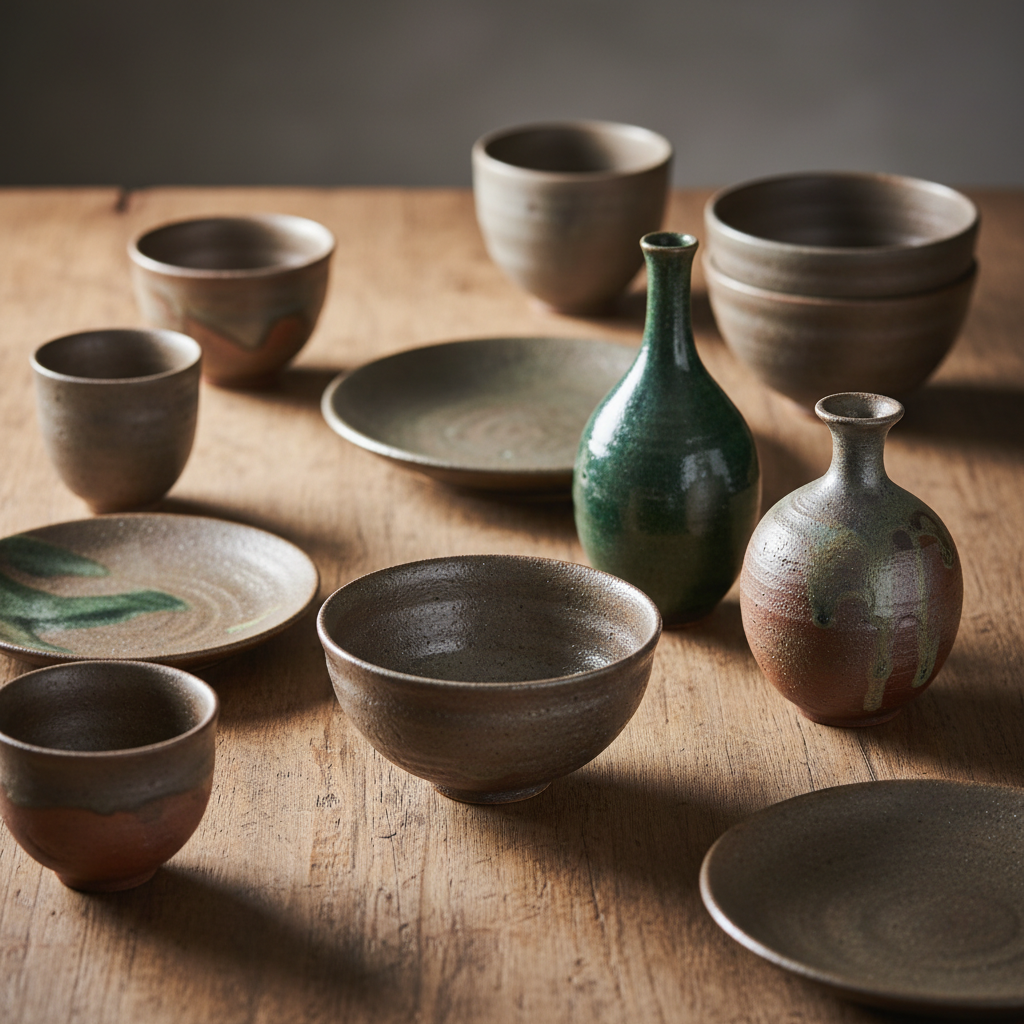
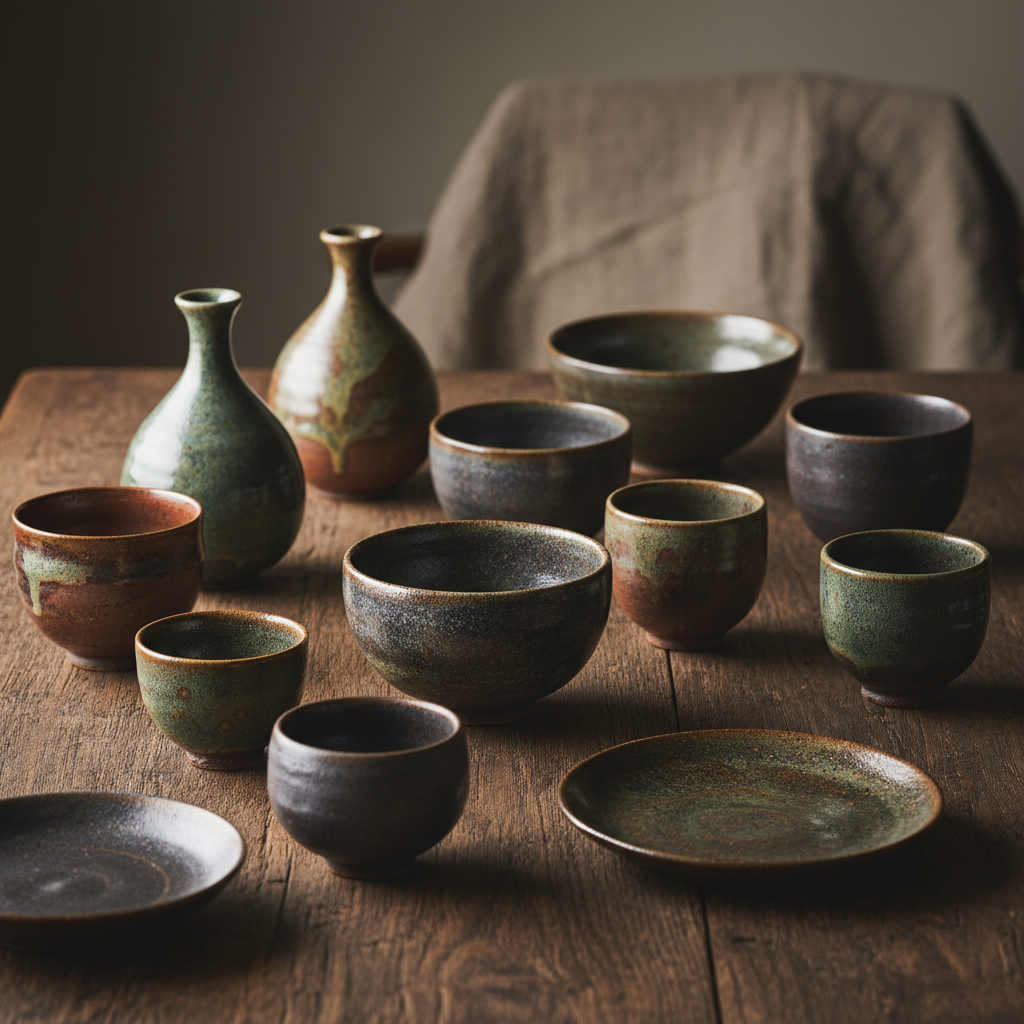
The greatest characteristic of Echizen ware is the beauty of natural glaze created when ash from firewood flows onto the ware and melts during firing at temperatures over 1300 degrees Celsius. In particular, the beautiful sight of yellowish-green natural glaze flowing down from the shoulders of large jars and vessels is highly appreciated as representative of Echizen ware. This natural glaze is difficult to recreate artificially and is an art form created by chance within the kiln and the long-accumulated experience of artisans.
The History of Echizen Ware: From the Heian Period to the Present
Heian Period: From Sue Ware to Pottery
The history of Echizen ware is said to have begun in the late Heian period. During this time, building on the techniques of sue ware, production of more practical pottery began. By the late Heian period, it developed uniquely while receiving influence from Tokoname ware.
Early Echizen ware incorporated Tokoname techniques while establishing its own style utilizing regional materials and kiln characteristics. Mainly utilitarian wares such as jars, vessels, and grinding bowls were produced.
Kamakura and Muromachi Periods: Expansion of Production
From the Kamakura through Muromachi periods, Echizen ware production reached its peak. During this time, numerous kilns operated, and products were distributed across a wide area along the Japan Sea. Large jars and vessels were highly valued as storage containers for grain and water, and demand increased particularly throughout the Hokuriku region.
Echizen ware from the Muromachi period was centered on pieces combining powerful forms with practicality. Upon entering the Momoyama period, the influence of tea ceremony culture was felt, and items such as water containers and flower vessels also came to be produced.
Edo Period: Development as Oda Ware
During the Edo period, ceramic production continued centered around Byodo village (present-day Byodo in Echizen Town), becoming known as “Byodo ware” or “Oda ware.” Production remained primarily focused on utilitarian items during this period, but refinement of technique progressed, and more elaborate works were also created.
Meiji and Taisho Periods: Crisis of Decline and Attempts at Revitalization
During the Meiji and Taisho periods, due to changes in industrial structure and the proliferation of inexpensive industrial products, Echizen ware faced a crisis of decline. However, during this difficult period, movements emerged to explore new possibilities for Echizen ware.
The kiln operators of Nichisho-en, followed by Kosohara ware, Oda ware, and Fukui ware, aimed to create not only traditional stoneware but also new forms of Echizen ware such as colored-decorated ceramics and white porcelain. This innovative attempt was the crystallization of kiln operators’ efforts to preserve tradition while adapting to the times.
Showa Period: Designation as One of the Six Ancient Kilns and Reassessment
Upon entering Showa, the introduction of “Ancient Kilns of Echizen” by ceramicist Fujio Koyama brought a major turning point to the production area. Recognition as one of the Six Ancient Kilns of Japan led to widespread acknowledgment of Echizen ware’s historical value.
Subsequently, comprehensive investigation and research by Kyuemon Mizuno advanced the field. While serving as a high school teacher, Mizuno received instruction from Koyama and energetically conducted distribution surveys and artifact collection in the Echizen Town and Echizen City areas (the former Miyazaki village, Oda town, and Takefu city), clarifying the distribution of kiln sites. This academic backing further enhanced the cultural property value of Echizen ware.
Modern Times: Inheritance of Tradition and New Developments
Currently, numerous kiln operators in Echizen Town continue to inherit tradition while also challenging themselves with contemporary work creation. From traditional unglazed stoneware to colored-decorated ceramics and pieces with contemporary designs, diverse works are being produced.
Colored-Decorated Ceramics and the Development of Traditional Techniques
Challenge to Colored-Decorated Ceramics
During the decline period of the Meiji and Taisho eras, kiln operators in Echizen risked their survival to challenge new techniques. One of these was the production of colored-decorated ceramics. While traditional Echizen ware was unglazed stoneware, to meet the demands of the times, attempts were made to incorporate the techniques of glaze-using colored-decorated ceramics and white porcelain.
This innovative undertaking did not completely abandon tradition but rather sought new expression while utilizing the fundamental techniques of Echizen ware. The production of colored-decorated ceramics required advanced techniques, and kiln operators repeatedly went through trial and error to master these skills.
Kosohara Ware and Fukui Ware
Kosohara ware is one of the innovative kilns in Echizen Town. Based on the techniques of traditional Echizen ware, it aimed at work creation adapted to new times. Similarly, Fukui ware engaged in ceramic production that preserved regional tradition while incorporating contemporary sensibilities.
These kiln operators not only sought commercial success but also played a role in expanding the technical possibilities of Echizen ware and opening the path for transmission to future generations.
Renowned Kiln Operators and Ceramic Artists
Shichizaemon Kitano: The Model for “Dance of Flame”
Shichizaemon Kitano is a ceramic artist worthy of special mention in the history of Echizen ware. He is also known as the model for author Setsuko Tsumura’s novel “Dance of Flame,” which won the Akutagawa Prize.
Shichizaemon Kitano, during the difficult Meiji and Taisho periods, worked to preserve the tradition of Echizen ware while endeavoring to master new techniques. He challenged the creation of colored-decorated ceramics and pursued beauty different from traditional stoneware. His passion and effort had a major impact on ceramic artists of subsequent generations.
Jugorouemon Fujita (8th Generation): Fukui Prefecture-Designated Intangible Cultural Property
Jugorouemon Fujita of the 8th generation is a ceramic artist whose exceptional technique was recognized as a Fukui Prefecture-designated intangible cultural property. While perfectly mastering traditional Echizen ware techniques, he also challenged contemporary product creation.
Fujita’s works embody the harmony of tradition and innovation. His technique of maximizing the beauty of natural glaze in unglazed stoneware is based on long experience and deep understanding. This technique was inherited by his disciples and forms the foundation of contemporary Echizen ware.
Sakon Ceramic Studio: Contemporary Application of Traditional Technique
Sakon Ceramic Studio is known as a kiln that tackled contemporary product creation with traditional techniques. It produced a wide range of works from utilitarian items to art pieces, expanding the possibilities of Echizen ware.
Rather than merely preserving traditional techniques, by engaging in the creation of vessels suited to contemporary lifestyles, it achieved the compatibility of practicality and artistry in Echizen ware.
Oda Ware Hikozaemon Suzuki Kiln
The Hikozaemon Suzuki Kiln is one of the representative kilns continuing the tradition of Oda ware. While preserving traditional techniques, it continues to create works suited to the times.
The works of the Hikozaemon Suzuki Kiln possess the powerful forms and beautiful natural glaze characteristic of Echizen ware, and are supported by many enthusiasts.
Chojiro Morisaki: Contribution to Technical Innovation
Chojiro Morisaki is one of the ceramic artists who contributed to the technical innovation of Echizen ware. Along with Shichizaemon Kitano, he devoted himself to introducing new techniques and refining traditional methods.
Japan’s Six Ancient Kilns and the Positioning of Echizen Ware
What Are the Six Ancient Kilns
The Six Ancient Kilns of Japan refers to representative ceramic production centers in Japan where production has continued unbroken from the medieval period to the present. Besides Echizen ware, these include Seto ware (Aichi Prefecture), Tokoname ware (Aichi Prefecture), Shigaraki ware (Shiga Prefecture), Tamba Tachikui ware (Hyogo Prefecture), and Bizen ware (Okayama Prefecture).
The Uniqueness of Echizen Ware
Among the Six Ancient Kilns, Echizen ware occupies a unique position. Compared with other production areas, the following characteristics can be noted:
- Unglazed Stoneware Tradition: Without using glaze, pursuing the beauty of natural glaze through high-temperature firing
- Emphasis on Practicality: Forms prioritizing function as storage containers, such as large jars and vessels
- Climate and Geography of the Hokuriku Region: A robust artistic style nurtured by the severe climate of the Japan Sea side
- Iron-Rich Soil: Unique color variation from reddish-brown to black-gray
The relationship with Tokoname ware is also noteworthy. From the late Heian period through the early Kamakura period, Tokoname techniques were transmitted to Echizen, forming the foundation for Echizen ware’s unique development. However, Echizen ware is not merely an imitation of Tokoname ware but has established its own style utilizing regional materials and techniques.
Echizen Ware Manufacturing Techniques
Raw Material Extraction and Preparation
The creation of Echizen ware begins with the extraction of high-quality ceramic clay. Soil extracted from the Echizen Town area and surrounding regions contains high iron content and strong plasticity. Extracted soil is used after removing impurities and adjusting moisture content.
Forming Techniques
Traditional Echizen ware forming primarily uses the potter’s wheel. In particular, creating large jars and vessels requires highly advanced wheel techniques. The “coil-building” method of building up clay while shaping is also employed.
Drying and Bisque Firing
After forming, pieces must be thoroughly dried. Rapid drying causes cracks, so pieces are carefully dried over time. After drying, bisque firing is performed at around 800 degrees.
Main Firing: High-Temperature Firing at 1300 Degrees or Above
The greatest characteristic of Echizen ware is firing at temperatures of 1300 degrees or above. This high-temperature firing creates the hard, stoneware-like finish characteristic of stoneware and the beauty of natural glaze.
In wood-fired kiln firing, ash from the firewood falls on the pieces and melts at high temperatures to create natural glaze. The flow pattern and color of this natural glaze vary depending on the position within the kiln, the flow of fire, and weather conditions, making no two pieces identical.
Kiln Opening and Selection
After firing, pieces are opened from the kiln after it has cooled sufficiently. Each piece is inspected to judge the quality of firing. The beauty of natural glaze, the degree of vitrification, and warping of form are confirmed, and those suitable for sale are selected.
Contemporary Echizen Ware: The Current State of the Production Area and Initiatives
Current State of Kiln Operators
Currently, multiple kiln operators continue operations in Echizen Town. While each kiln operator has its own individual style, all inherit the tradition of Echizen ware. Some kilns specialize in traditional stoneware, while others produce colored-decorated ceramics or vessels with contemporary designs.
The Role of the Fukui Prefectural Ceramic Art Museum
The Fukui Prefectural Ceramic Art Museum is an important facility for conveying the history and culture of Echizen ware. The museum displays a wide collection ranging from historic Echizen ware pieces to works by contemporary artists.
Beyond exhibitions, the museum also conducts ceramic art classes and experience programs, providing the general public with opportunities to engage with Echizen ware. It also conducts survey and research activities, contributing to the scholarly elucidation of Echizen ware’s value.
Echizen Town Oda Culture History Museum
The Echizen Town Oda Culture History Museum introduces the history and culture of the Oda district, with detailed exhibitions on the historical development of Oda ware and Echizen ware. One can learn about the development of colored-decorated ceramics and the achievements of renowned ceramic artists.
Successor Development and Technical Transmission
Successor development is becoming an important issue in Echizen ware production areas. The transmission of traditional techniques requires many years and experience, and active efforts are being made to transmit skills to younger generations.
Some kiln operators accept apprentices and provide hands-on instruction. Efforts to develop people interested in ceramics are also being made through ceramic art classes and training programs.
Utilization as a Tourist Resource
Echizen ware production areas are positioned as an important tourism resource for Fukui Prefecture. Opportunities for tourists to engage with Echizen ware are provided through kiln visits, ceramic art experience, and gallery tours.
The Echizen Ceramic Village contains multiple kilns and galleries, making it possible to purchase works and observe the creation process. By linking tourism with industry promotion, revitalization of the production area is being promoted.
Echizen Ware Works and Their Uses
Traditional Works
Traditional Echizen ware works include the following:
- Large jars (ogame): Large containers used for storing grain or water
- Vessels (tsubo): Storage containers in various sizes
- Grinding bowls (suribachi): Widely used as cooking utensils
- Bottles (bin): Containers for storing liquids
- Bowls (hachi): Tableware and cooking utensils
These works are characterized by robust forms emphasizing practicality. Large jars with flowing natural glaze are both practical items and possess value as artistic works.
Tea Ceremony Utensils
From the Momoyama period onward, influenced by tea ceremony culture, Echizen ware kilns began producing tea utensils:
- Water containers (mizusashi): Containers for water used at tea gatherings
- Flower vessels (haaire): Flower containers for decorating tea rooms
- Tea bowls: Bowls for preparing matcha
Echizen ware tea utensils are characterized by simple, robust strength rather than brilliance, possessing a beauty consonant with the spirit of wabi-sabi.
Contemporary Works
Contemporary Echizen ware also produces pieces suited to modern life while utilizing traditional techniques:
- Tableware: Plates, bowls, cups and other everyday vessels
- Flower containers: Vases with contemporary designs
- Objects: Ceramic art as artistic works
- Architectural ceramics: Tiles and decorative panels
While using traditional unglazed stoneware techniques, the forms and designs are often contemporary, supported by a wide range of people.
Points for Appreciating Echizen Ware
The Beauty of Natural Glaze
The greatest point to appreciate when viewing Echizen ware is the beauty of natural glaze. The variety of natural glazes in colors ranging from yellowish-green to brown flowing across the surface of the vessel means no two pieces are identical. The appearance changes depending on how light strikes it, allowing one to enjoy different beauty depending on the viewing angle and time of day.
The Texture of the Soil
Because iron-rich soil is used, the fired color ranges from black-gray to reddish-brown. This soil texture and color variation is also a major attraction of Echizen ware. On unglazed portions, one can directly feel the texture of the soil itself.
The Power of the Forms
The forms of Echizen ware are characterized by robust strength based on practicality rather than decorative elaborateness. In particular, large jars and vessels command attention through their impressive presence. This simple yet imposing form is the crystallization of beauty refined through long history.
The Increasing Charm of Use
Echizen ware vessels increase in charm the more they are used. Particularly with unglazed stoneware, use creates a unique luster on the surface, and colors deepen with patina. This enjoyment of aging is one of the charms of Echizen ware.
Purchasing and Collecting Echizen Ware
Where to Purchase
Echizen ware can be purchased at the following locations:
- Kiln Direct Sales: Direct purchase at each kiln in Echizen Town
- Echizen Ceramic Village: A facility where multiple kilns and galleries are gathered
- Fukui Prefectural Ceramic Art Museum: Sales at the museum shop
- Department Stores: Events at department stores within and outside Fukui Prefecture
- Online Shops: Internet sales conducted by some kilns
Price Range
Echizen ware prices vary greatly depending on the size, techniques, and artist:
- Everyday Use Vessels: Several thousand to around 10,000 yen
- Medium-Sized Flower Containers or Vessels: 10,000 to 50,000 yen
- Large Works or Artist Pieces: 100,000 yen or more
- Antiques and Old Echizen Ware: Prices vary greatly depending on rarity
Points for Collecting
Points to consider when collecting Echizen ware:
- Handling Pieces in Person: Confirm weight, texture, and balance
- Beauty of Natural Glaze: Select glaze flow patterns that match your preference
- Considering Use: Clarify whether for practical use or appreciation
- Artist Individuality: Visit multiple kilns to understand each one’s characteristics
- Enjoying Aging: Anticipate the beauty that emerges through use
Comparison of Echizen Ware with Other Production Areas
Relationship with Tokoname Ware
Echizen ware developed under the influence of Tokoname ware in the late Heian period. While both share much in common, the following differences exist:
- Soil Quality: Echizen contains more iron, with stronger reddish-brown tones
- Natural Glaze Color: Echizen features yellowish-green, while Tokoname shows more tea-brown
- Forms: Echizen gives a more simple and robust impression
Differences from Bizen Ware
When compared with Bizen ware, also one of the Six Ancient Kilns:
- Firing Temperature: Both use high-temperature firing but differ in kiln structure
- Soil Color: Bizen is characterized by reddish-brown; Echizen ranges from black-gray to reddish-brown
- Natural Glaze: Echizen’s flowing natural glaze is more pronounced
Comparison with Shigaraki Ware
Shigaraki ware is also one of the Six Ancient Kilns, but:
- Soil Texture: Shigaraki has strong sand content; Echizen is clay-rich
- Firing Methods: Shigaraki employs diverse techniques; Echizen centers on stoneware
- Uses: Shigaraki focuses on tea utensils and garden use; Echizen traditionally on utilitarian items
Conclusion: From Oda Ware to Echizen Ware, A Thousand Years of Tradition
Echizen Town’s ceramics, known as Oda ware, represent a production area with over a thousand years of history from the Heian period to the present and are one of Japan’s leading ceramic centers. The powerful forms of unglazed stoneware and the beauty of natural glaze are the crystallization of technique and aesthetic sensibility cultivated through long history.
Known as “Oda ware” from the Edo period through the first half of the Showa period, this production area was recognized as one of the Six Ancient Kilns as “Echizen ware” after the war. The production area has overcome the crisis of decline in the Meiji and Taisho periods, challenged new techniques such as colored-decorated ceramics, and continues to inherit tradition in the modern era.
Through the efforts of renowned ceramic artists and kiln operators such as Shichizaemon Kitano, 8th Generation Jugorouemon Fujita, and Sakon Ceramic Studio, Echizen ware techniques have been recognized as a Fukui Prefecture-designated intangible cultural property and are being passed to future generations.
Currently, numerous kilns in Echizen Town continue to operate, producing diverse works ranging from traditional stoneware to contemporary designed vessels. Through facilities such as the Fukui Prefectural Ceramic Art Museum and Echizen Ceramic Village, efforts are being made to widely communicate the charm of Echizen ware.
Echizen ware, with its thousand-year history, is not merely a traditional craft but a living culture used and cherished in contemporary life. Its simple yet robust beauty will continue to captivate many people. When visiting Fukui Prefecture, by all means visit the kilns of Echizen Town and directly experience the charm of Oda ware and Echizen ware.