
Everything About Hachinohe Ware|History, Characteristics, and Present of Aomori Prefecture’s Renowned Ceramic Production Center
What is Hachinohe Ware|Traditional Pottery Representing Aomori Prefecture
Hachinohe ware (hachinohe yaki) is pottery fired in Hachinohe City, Aomori Prefecture, and is a precious ceramic designated as a traditional craft of Aomori Prefecture. It has a history of being fired in the Kanisawa Mountains within Hachinohe City until the end of the Edo period, and has been cherished as folk pottery closely connected to the daily lives of ordinary people.
In contrast to Tsugaru ware from the same Aomori Prefecture, which followed a high-end product line as the official supplier to the Hirosaki clan lord, Hachinohe ware was characterized by being primarily produced as practical vessels for common people. Although the kilns were once completely shut down, they were remarkably revived in 1975 (Showa 50) through the efforts of Watanabe Shozan, and the tradition continues to be passed down today by the second generation.
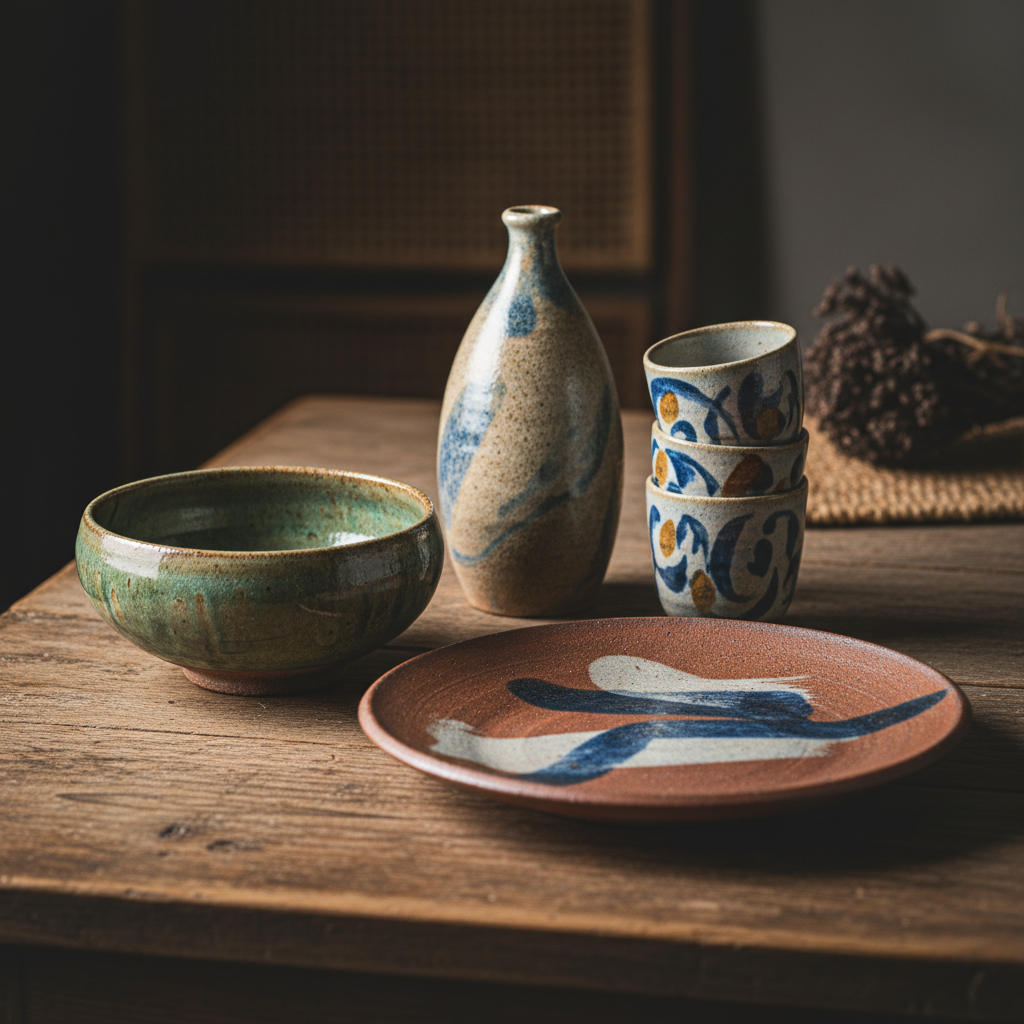
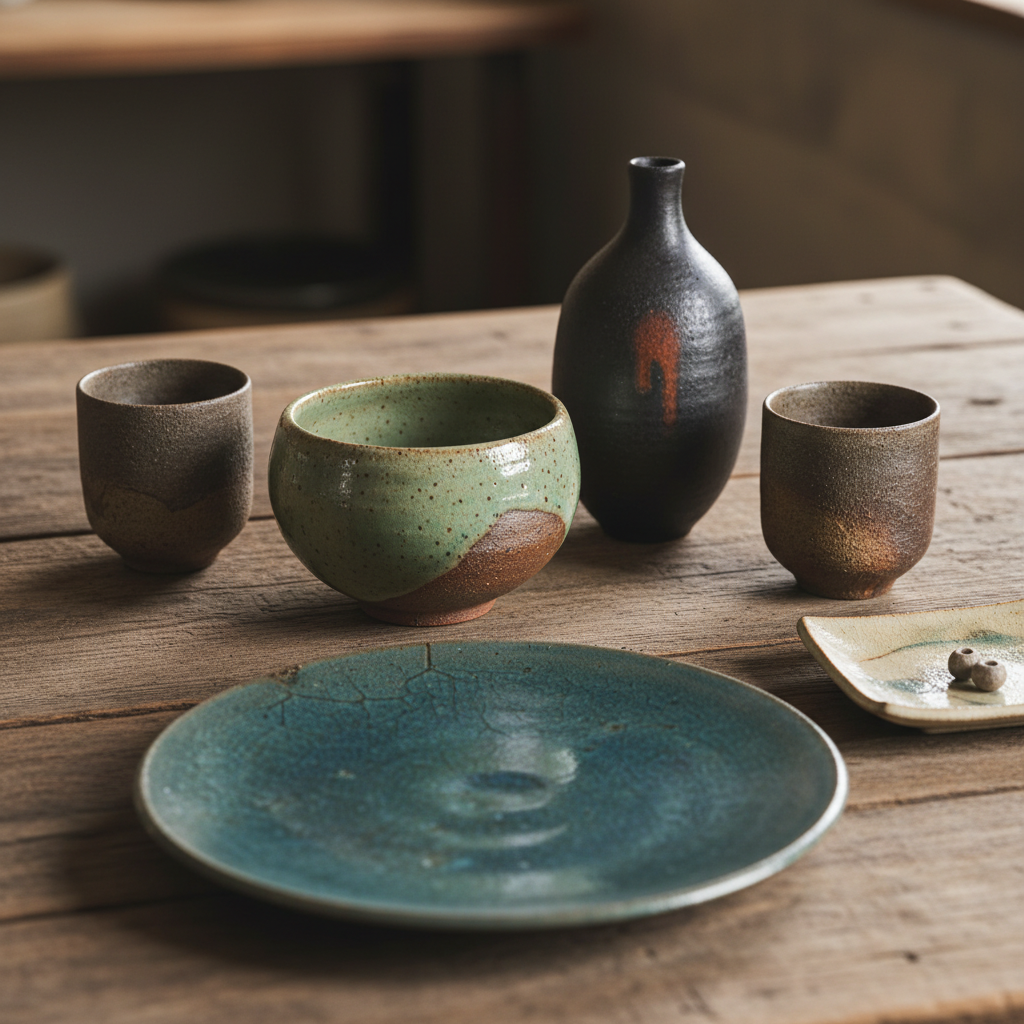
The greatest appeal of Hachinohe ware lies in its unique green glaze that seems to reflect the rich natural beauty of Aomori. The deep green glaze reminds one of Aomori’s mountains and forests, possessing a simple yet refined beauty.
History of Hachinohe Ware|From Folk Pottery to Phantom Ware, and Its Revival
History Until the End of the Edo Period
Accurate records of the founding year and founder of Hachinohe ware have not been preserved, and it remains unclear when and by whom it was started. However, it is certain that it was fired in the Kanisawa Mountains within Hachinohe City until the end of the Edo period, and was also called “Kanisawa ware” at that time.
In the mountains of Hachinohe, there were places where high-quality clay could be extracted, and taking advantage of this geographical advantage, climbing kilns and flat kilns were constructed. In contrast to Tsugaru ware, which produced high-end products as official suppliers to the clan lord, Hachinohe ware primarily produced practical vessels used in the daily lives of ordinary people. Many essential items for daily life, such as rice bowls, plates, pots, and storage jars, were fired and cherished by people in the region.
Decline and Closure in the Meiji Period
With the advent of the Meiji era, Hachinohe ware gradually began its decline. The influx of Western culture, changes in industrial structure, and the proliferation of inexpensive mass-produced goods made it increasingly difficult for hand-crafted folk pottery to remain economically viable. At some point during the Meiji period, Hachinohe ware completely ceased production, and its techniques and traditions were lost.
During this period, Hachinohe ware became a “phantom ware,” with only a few remaining old vessels bearing witness to its history.
Revival in Showa 50|Restoration by Watanabe Shozan
It was Watanabe Shozan, who had trained in Munaibitsuyaki from Sado, Niigata Prefecture, who brought the dormant tradition of Hachinohe ware back to life. In Showa 50 (1975), Watanabe successfully recreated Hachinohe ware from over 150 years earlier using clay extracted from within Hachinohe City.
Watanabe Shozan carefully researched old documents and surviving vessels, exploring the techniques of that era. By extracting soil from within Hachinohe City and making various refinements, he was able to produce pottery with an appearance close to Edo-period Hachinohe ware.
Through this revival, the Shozan kiln was opened, and Hachinohe ware began writing a new chapter in its history as a traditional craft of Aomori Prefecture.
Current Hachinohe Ware|Succession to the Second Generation
Currently, the Shozan kiln is being carried on by second-generation potter Watanabe Masaki. While inheriting the techniques and spirit of founder Watanabe Shozan, he is also working on creating vessels suited to contemporary lifestyles.
By preserving traditional techniques while incorporating new sensibilities, Hachinohe ware has established itself as a ceramic production center representing Aomori Prefecture. It continues to produce products and play an important role in transmitting regional culture since the Heisei period onwards.
Characteristics of Hachinohe Ware|Unique Green Glaze and Simple Beauty
Green Glaze Reflecting Aomori’s Nature
The most characteristic element of Hachinohe ware is its unique green glaze. Various shades of green glaze are used, from deep to bright green, all possessing a beauty that embodies the rich natural environment of Aomori Prefecture.
This green glaze carries a distinctive hue reminiscent of Aomori’s mountains, forests, and seasonal landscapes, giving viewers a sense of calm and warmth. The subtle variations and flows of the glaze create different expressions in each vessel, which is part of its charm.
Earthiness Drawn from Local Clay
Hachinohe ware uses clay extracted from within Hachinohe City as its primary material. By using locally sourced clay, the characteristics of the Hachinohe area are reflected in the vessels, creating a unique aesthetic found in no other production center.
The simple earthiness that draws from the clay’s nature has excellent compatibility with the green glaze, creating a warm expression. The craftsman’s skill in understanding the clay’s properties from the forming stage and bringing out its optimal form shines through.
Practicality as Folk Pottery
Hachinohe ware developed as folk pottery for common people, so practicality is prioritized over decorative qualities in vessel-making.
The ware is characterized by durability suitable for everyday use, shapes that fit comfortably in the hand, and designs pursued for ease of use—all features of pottery that accompanies daily life. The simplicity of avoiding ornate decoration instead creates a universal beauty that harmonizes with contemporary living.
Individuality from Handcrafting
Each vessel is hand-formed and completed through the processes of drying, preliminary firing, glazing, and main firing. Even vessels of the same shape possess subtle individual characteristics.
The way the glaze is applied, the kiln transformation during firing, and the expression of the clay—various elements combine to create unique vessels. This “one meeting, one treasure” encounter is one of the attractions of Hachinohe ware.
Manufacturing Process of Hachinohe Ware|Vessel Creation Through Traditional Techniques
Clay Extraction and Preparation
Hachinohe ware production begins with extracting clay from within Hachinohe City. Locations where high-quality clay can be extracted are selected, and the excavated soil is refined.
The extracted clay is stripped of impurities and adjusted to an appropriate water content. The clay’s condition changes with temperature and humidity, requiring seasonal adjustments. Through thorough kneading, it is brought to a state suitable for forming.
Forming
Using the prepared clay, vessel shapes are created. Forming on a pottery wheel is the basic technique, but depending on the vessel type, hand-forming and mold-forming are also employed.
Craftspeople rely on their accumulated sensory experience to discern the clay’s properties while forming. Various factors are considered—uniformity of thickness, balance of shape, and usability—as each vessel is carefully shaped.
Drying
Formed vessels are dried slowly over an extended period. Rapid drying causes distortion and cracking, so drying is carefully advanced while managing humidity and temperature.
The time required for drying varies depending on the vessel’s size and thickness, taking anywhere from several days to several weeks to remove moisture completely. Careful execution of this process is a crucial point in preventing failures during firing.
Preliminary Firing
Completely dried vessels are first subjected to preliminary firing (suyaki). Preliminary firing is conducted at relatively low temperatures around 800 degrees, hardening the vessels and bringing them to a state suitable for glaze application.
Through preliminary firing, vessels gain strength and become porous, making them absorb glaze easily. At this stage, the vessel’s shape is fixed and cannot be reversed.
Glaze Application
Glaze is applied to preliminarily fired vessels. Green glaze, which is characteristic of Hachinohe ware, is primarily used, with glaze selection made according to the vessel’s purpose and the atmosphere desired.
The finish varies greatly depending on how the glaze is applied, and this step demands the craftsman’s technique and experience. Various techniques are employed—dipping, pouring, and brush application.
Main Firing
Glazed vessels are placed in the kiln and fired at high temperatures around 1200 degrees in main firing. During this process, the glaze melts to form a glassy coating, and the vessel is completed.
Temperature control in the kiln is extremely important, requiring meticulous attention to how temperature is raised, holding time, and cooling methods. “Kiln transformation,” where color changes depending on the vessel’s position in the kiln and how the flames reach it, is also one of Hachinohe ware’s attractions.
After firing, vessels are cooled slowly before being removed from the kiln, undergoing inspection, and completing as finished products.
Places Where Hachinohe Ware Can Be Experienced and Purchased
Shozan Kiln Watanabe Pottery Studio
The Shozan kiln, which revived Hachinohe ware, offers pottery classes and studio tours. It provides a precious opportunity to actually experience the production of Hachinohe ware, allowing even beginners to create their own vessels under the guidance of craftspeople.
Facility Information:
- Address: 33-6 Ueno-Jra, Ueno, Hachinohe City, Aomori Prefecture
- Phone: 0178-23-4020
- Experience offerings: Pottery classes, wheel-throwing experiences, etc.
Completed products can also be purchased at the studio, offering a wide range of items from traditional vessels to contemporary-designed pieces.
Craft Shops and Local Product Halls in Hachinohe City
Hachinohe ware can also be purchased at craft shops and local product halls throughout Hachinohe City. Shops handling Aomori Prefecture’s traditional crafts allow visitors to see various regional crafts including Hachinohe ware at once, making it possible to compare while selecting.
Many of these facilities are convenient to visit during sightseeing, and increasing numbers of tourists are purchasing Hachinohe ware as souvenirs.
Online Purchase
In recent years, Hachinohe ware can also be purchased through the internet. The Shozan kiln’s official website and online shops handling crafted goods feature products with photographs and detailed descriptions, making it possible to obtain Hachinohe ware from afar.
However, since each handmade vessel has a unique character, it is recommended to see the actual product before purchasing.
Comparison with Other Ceramic Production Centers in Aomori Prefecture
Differences from Tsugaru Ware
Tsugaru ware and Hachinohe ware, both from Aomori Prefecture, differ greatly in their origins and character.
Tsugaru ware developed as the official supplier to the Hirosaki clan lord and was positioned as a high-end product. In contrast, Hachinohe ware developed as folk pottery primarily producing practical items closely connected to ordinary people’s daily lives.
This difference is reflected in the design and price ranges of vessels—while Tsugaru ware emphasizes decorative qualities, Hachinohe ware is characterized by simple practicality.
Relationship with Kanayama Ware
Aomori Prefecture has other ceramic production centers such as Kanayama ware, each with its own history and characteristics. Hachinohe ware is particularly distinguished by the beauty of its green glaze and the historical background of its tradition being revived after once ceasing production.
Ceramic production centers in Aomori Prefecture each establish unique artistic styles drawing on their region’s clay and glaze characteristics, nurturing diverse pottery culture within the prefecture.
Contemporary Value of Hachinohe Ware and Future Prospects
Value as a Traditional Craft
Hachinohe ware, designated as a traditional craft of Aomori Prefecture, holds important value as a regional cultural heritage. Its history continuing from the end of the Edo period and the narrative of a once-interrupted tradition being revived carry cultural significance beyond mere functional objects.
Continuing to preserve traditional techniques is an essential undertaking for maintaining regional identity and passing it on to future generations.
Harmony with Contemporary Life
The simple beauty of Hachinohe ware naturally blends into contemporary living. Its simple, timeless design works well with both Japanese and Western cuisine, offering high practicality as everyday tableware.
The restrained color of the green glaze also complements modern interiors, possessing elements that appeal to younger generations.
Contribution to Regional Revitalization
Hachinohe ware serves as a regional brand for Hachinohe City, playing a role in tourism resources and regional development. It contributes to the region in various ways—attracting tourists through pottery experiences, disseminating regional history and culture, and creating employment.
It occupies an important position in craft promotion throughout Aomori Prefecture, serving as an element that enhances the prefecture’s cultural appeal.
Challenges in Succession and Future Outlook
Currently, with the second generation carrying on the tradition, Hachinohe ware is not exempt from the succession challenges that affect traditional crafts in general. Various issues require attention—technique succession, market expansion, and cultivation of young artists.
On the other hand, positive efforts are being undertaken—preserving tradition while challenging new expression, and product development meeting contemporary needs. Hachinohe ware is expected to develop as pottery that will continue to be cherished by future generations.
Conclusion|Rediscovering the Appeal of Hachinohe Ware
Hachinohe ware is a precious Aomori Prefecture ceramic revived in Showa 50 by Watanabe Shozan from the folk pottery tradition that had been fired in Hachinohe’s mountains until the end of the Edo period. It is characterized by its history of being cherished as practical pottery for ordinary people, its unique green glaze reflecting Aomori’s nature, and its simple beauty drawing from local clay.
While Tsugaru ware served as high-end official supplier ware to the clan lord, Hachinohe ware continued as folk pottery creating vessels accompanying daily life. The fact that a once-interrupted tradition was revived and continues to be passed down by the second generation emphasizes the narrative quality of Hachinohe ware.
Vessels created through traditional processes—extracted from clay sources within Hachinohe City, carefully formed, dried, preliminarily fired, glazed, and main-fired—each possess different expressions and convey the warmth inherent to handcrafting.
The Shozan kiln offers pottery experiences, allowing deeper understanding of Hachinohe ware’s appeal through actual production participation. When visiting Aomori Prefecture, be sure to experience Hachinohe ware and feel its history and beauty firsthand.
As a ceramic production center of Aomori Prefecture, Hachinohe ware plays an important role in transmitting regional culture. Hachinohe ware, continuing vessel-making that preserves tradition while harmonizing with contemporary living, will undoubtedly continue to be loved by many people for years to come.