
History and Characteristics of Takato Ware | The Charm and Present State of Nagano Prefecture Ina City’s Ceramic Production Area
Table of Contents
- What is Takato Ware
- The History and Origins of Takato Ware
- Characteristics and Techniques of Takato Ware
- Present-Day Takato Ware and Hakusan Noborigama
- Takato Ware Pottery Experience
- Ceramic Production Areas in Nagano Prefecture
- How to Purchase Takato Ware and Access
- The Future and Succession of Takato Ware
What is Takato Ware
Takato Ware (高遠焼) is pottery fired in Takato Town, Kamiina District, Nagano Prefecture (now Takato Town, Ina City). While multiple ceramic production areas exist within Nagano Prefecture, Takato Ware is known as a fired pottery with a unique history and culture among them.
Takato is a region that once flourished as the castle town of Takato Domain and is nationally famous as a cherry blossom viewing spot. Takato Ware, born in this land, is maintained today as a traditional craft closely connected to the region’s history.
Positioning of Takato Ware
Numerous ceramic production areas exist throughout Japan, with Arita Ware, Kutani Ware, Mino Ware, Seto Ware, and Shigaraki Ware being widely known. Within Nagano Prefecture, besides Takato Ware, there are production areas such as Matsushiro Ware, Obayashi Ware, and Tenryukyo Ware, but Takato Ware is positioned as a valuable ceramic production area with a history dating back to the late Edo period.
The History and Origins of Takato Ware
Founding in the Edo Period
The history of Takato Ware began in 1812 (Bunka 9). The then Takato Domain needed to manufacture ceramic pipes to carry water into Takato Castle and is said to have invited a potter from Mino Province (present-day Gifu Prefecture). This is considered the origin of Takato Ware.
Mino was one of Japan’s premier ceramic production areas, and its techniques were highly regarded. By introducing the techniques of Mino potters, the Takato Domain was able to realize the practical manufacture of ceramic pipes. This pipe production became the beginning of ceramic manufacture in Takato.
Development as Niwa Ware
Beginning with ceramic pipe production, Takato Ware subsequently developed as the domain’s niwa ware (御庭焼), pottery fired under the patronage of daimyo or feudal lords. Niwa ware refers to ceramics produced under the protection of daimyo or territorial lords, primarily for use by domain lords, their retainers, and upper-class people.
Takato Ware was prized as vessels that emphasized practicality while possessing a simple and warm character. Using local clay, a ceramic culture rooted in the region was cultivated.
Decline from the Meiji Period to Early Showa
The social changes following the Meiji Restoration had a major impact on Takato Ware. From around 1877 (Meiji 10), Takato Ware began its decline, and by the early Showa period, it faced a crisis of closure.
As the domains lost their patronage and industrial structures changed, small-scale regional kilns became difficult to sustain. Many traditional kilns disappeared, and Takato Ware’s techniques and culture were on the verge of being lost.
Revival in the Showa Period
The person who revived the declining Takato Ware was potter Yonenosuke Karaki (唐木米之助). In 1975 (Showa 50), Karaki established the “Hakusan Noborigama” (白山登窯) kiln in Takato, succeeding and reviving the traditional techniques of Takato Ware.
Through Karaki’s efforts, Takato Ware was revived in the modern era and again drew attention as a regional traditional craft. Hakusan Noborigama continues to operate today as the central kiln of Takato Ware.
Characteristics and Techniques of Takato Ware
Materials and Soil Properties
Takato Ware uses ceramic clay extracted locally. Nagano Prefecture’s soil often contains iron, which creates a warm color tone when fired. This regional characteristic is a factor that creates Takato Ware’s unique character.
Double-Layered Glaze-Flowing Technique
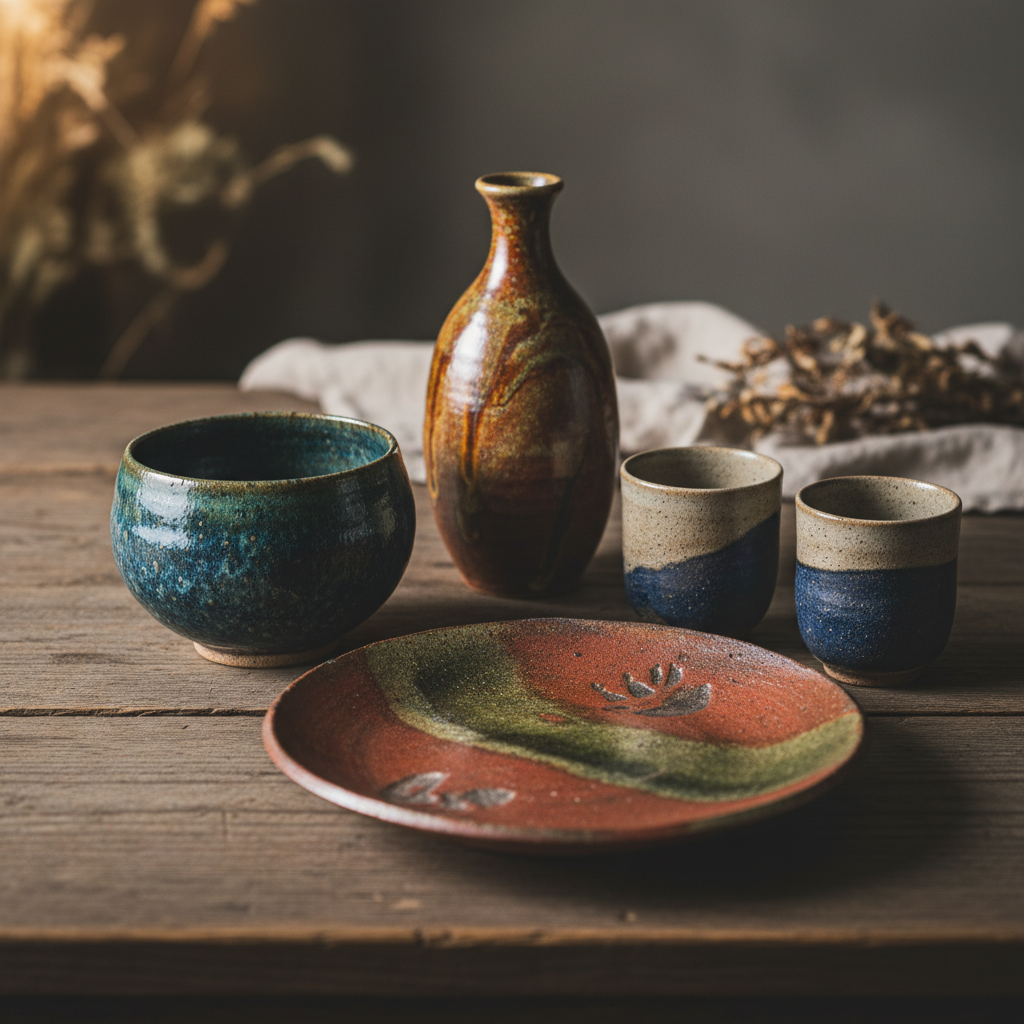
The greatest characteristic of Takato Ware is the “double-layered glaze-flowing” technique. In this technique, different glazes are applied in two layers, and the flow of the glaze during firing creates unique patterns.
The chance element created by the flowing glaze merges with the intentional control based on the potter’s experience, producing individual works where no two are the same. Through this technique, vessels are completed that possess a simple yet delicate flavor.
Decoration with Cherry Blossoms as Motif
Takato is famous for the cherry blossoms of Takato Castle Ruins Park, known as “Japan’s finest cherry blossoms.” Reflecting this regional characteristic, Takato Ware often features works created using pink glaze with cherry petals molded in relief.
Cherry blossom small plates and cherry-patterned vessels are popular with tourists and ceramic enthusiasts as representative products of Takato Ware. They represent a characteristic unique to Takato, where regional culture and pottery are integrated as one.
Harmony of Practicality and Beauty
Since Takato Ware originated from ceramic pipes, a practical product, an emphasis on usability has become a tradition in vessel-making. The works are characterized by a harmony of durability suitable for everyday use, shapes that fit comfortably in the hand, and beauty that pleases the eye.
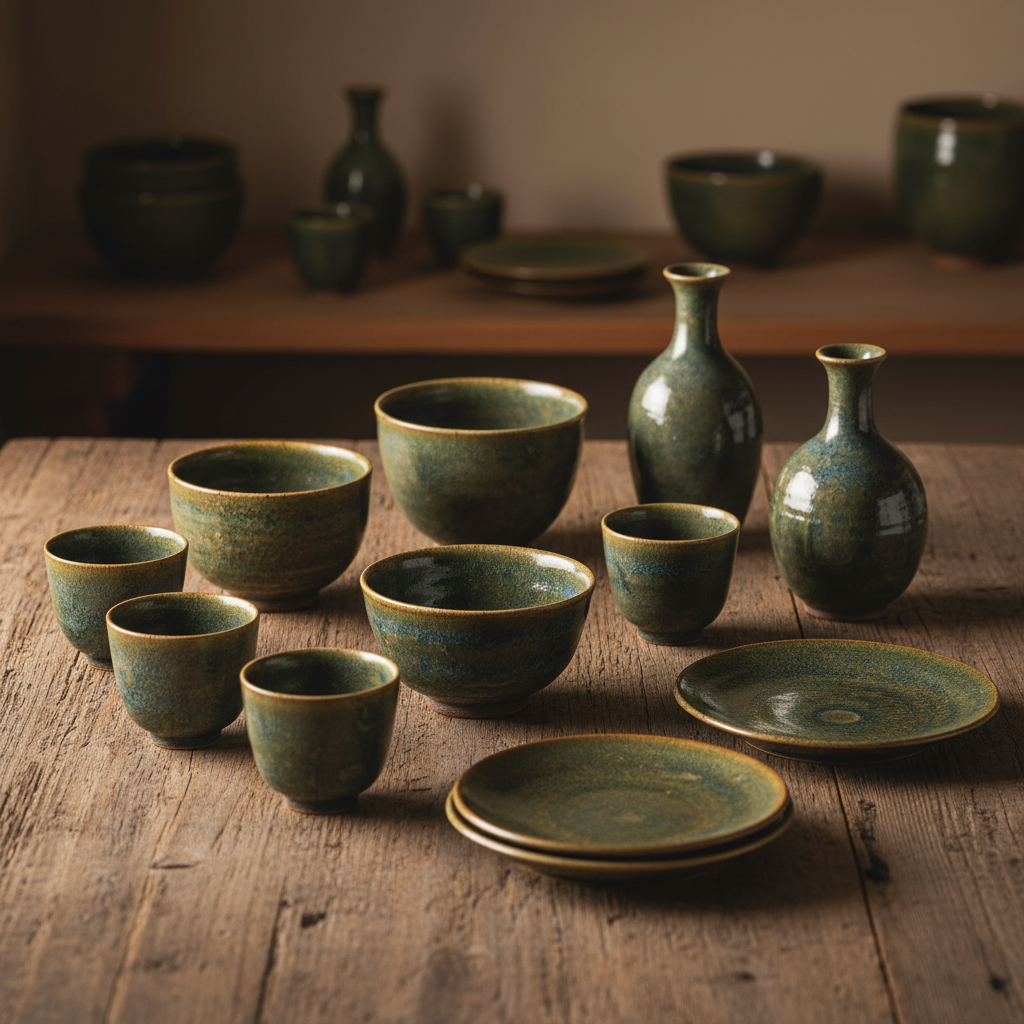
Various vessels for daily life are produced, including rice bowls, plates, tea cups, and flower vases, and are appreciated as pottery that naturally blends into modern living.
Present-Day Takato Ware and Hakusan Noborigama
The Role of Hakusan Noborigama
The kiln representing present-day Takato Ware is “Hakusan Noborigama.” Opened in 1975 by Yonenosuke Karaki, this kiln has become the central institution transmitting Takato Ware’s traditions to the present day.
While preserving traditional techniques, Hakusan Noborigama also produces vessels with new designs suited to contemporary living. Continuing its activities while maintaining a balance between tradition preservation and innovation, it works to pass Takato Ware’s culture to the next generation.
Product Lineup
Hakusan Noborigama produces and sells various ceramic products. Representative products include the following:
- Chopstick rests: Affordable products available from around 300 yen, popular as souvenirs
- Cherry blossom small plates: Small plates around 1,000 yen with decorative cherry blossoms characteristic of Takato
- Rice bowls and tea cups: Practical vessels suitable for everyday use
- Flower vases and jars: Works with high decorative value that can be enjoyed as interior decoration
- Large plates and bowls: Striking vessels that complement dishes
All possess the warmth of handmade work, with each piece having a different character.
Kiln Viewing and Sales
Hakusan Noborigama offers kiln studio viewing and direct sales of products (confirmation in advance required). Visiting the actual site where pottery is created and observing the potter’s technique firsthand deepens understanding of Takato Ware.
Additionally, at the direct sales shop, completed works can be purchased, and by speaking directly with the artist, advice on how to use vessels and care methods can be obtained.
Takato Ware Pottery Experience
Overview of Experience Classes
Hakusan Noborigama offers pottery experience classes where visitors can actually experience the production of Takato Ware. Programs are available that even beginners can participate in, allowing creation of original works that are one-of-a-kind.
Experience Menus
Hand-Forming Experience
- Fee: From 2,500 yen for 500g
- Duration: Approximately 2 hours
- Content: Traditional technique of hand-shaping clay. Can create free-form shapes and is easy for beginners to undertake
- Number of Participants: From 1 person (reservation required)
Electric Wheel Experience
- Fee: 4,500 yen for 1,000g
- Duration: Approximately 2 hours
- Content: Shape vessels using an electric wheel. Allows for a more authentic pottery experience
- Number of Participants: From 1 person (reservation required)
Flow of Experience
In pottery experience, participants engage in the shaping work from among the complete production processes. The complete production process is as follows:
- Shaping: Forming the clay (done by participant)
- Trimming: Refining the shape
- Drying: Allowing sufficient drying
- Bisque firing: Firing once at low temperature
- Glaze application: Applying glaze
- Final firing: High-temperature final firing
Participants perform the shaping work, with the kiln taking responsibility for the subsequent processes to complete the piece. The finished work is sent by mail or picked up later, arriving in hand approximately 1-2 months later.
Group Experience
Hakusan Noborigama can accommodate groups of up to 40 people. It is frequently used for school excursions, corporate training, and group travels, and is utilized as part of Nagano Prefecture’s learning travel programs.
Advance reservations are essential, so early contact is recommended when considering group use.
Ceramic Production Areas in Nagano Prefecture
Nagano Prefecture is an inland prefecture surrounded by mountains, yet has had multiple ceramic production areas since ancient times. Besides Takato Ware, the following production areas exist:
Matsushiro Ware (松代焼)
Pottery fired in Matsushiro Town, Nagano City. Developed as the official kiln of Matsushiro Domain, with tea ceremony utensils among its products. Kilns continuing the tradition remain active today.
Obayashi Ware (尾林焼)
Pottery fired in Iida City. With history continuing from the Edo period, it has primarily produced vessels for everyday use.
Tenryukyo Ware (天竜峡焼)
Pottery fired in Tenryukyo, Iida City. In a region known as a scenic spot of the Tenryu River, a ceramic culture linked with tourism has developed.
Other Production Areas
Besides the above, small-scale kilns and individual artists are scattered throughout Nagano Prefecture. Each produces unique works utilizing regional characteristics, forming the diversity of Nagano Prefecture’s ceramic culture.
Characteristics of Nagano Prefecture’s Ceramic Production Areas
Compared to large-scale production areas like Arita Ware and Mino Ware, Nagano Prefecture’s ceramic production areas are small-scale, but are characterized by being deeply connected to regional history and culture. Many have traditions of niwa ware from the domain period, and pottery-making that values regionality is conducted.
Additionally, Nagano Prefecture is rich in tourism resources, and ceramic production areas develop activities linked with tourism. By providing opportunities for visitors to actually experience ceramic culture through kiln viewing and pottery experience classes, they balance tradition preservation with regional revitalization.
How to Purchase Takato Ware and Access
Access to Hakusan Noborigama
Location: Takato Town, Ina City, Nagano Prefecture
Transportation Access:
- By car: Approximately 30 minutes from Ina IC on the Chuo Expressway
- By public transportation: Approximately 25 minutes by bus from JR Iida Line Ina City Station to Takato Station
It is recommended to confirm official information regarding detailed address and business hours before visiting. Especially if participating in experience classes, advance reservation is essential.
Purchase Methods
Takato Ware can be purchased through the following methods:
- Direct sales at kiln: Purchase directly at Hakusan Noborigama. Allows conversation with the artist and learning about the background of works
- Regional souvenir shops: May be handled at souvenir shops in Takato Town or Ina City
- Event exhibitions: May exhibit at pottery markets and craft fairs
- Online: Some works are available for online purchase
Combination with Takato Tourism
Takato Town is a nationally famous tourist destination for the cherry blossoms of Takato Castle Ruins Park. Particularly during the peak cherry blossom viewing season in mid-April, many tourists visit. Combining cherry blossom viewing with a visit to Takato Ware kilns enables a more fulfilling travel experience.
Also enjoyable are local cuisine such as Takato soba and walks through historic streets. By experiencing the comprehensive charm of the region alongside its ceramic culture, understanding of Takato Ware deepens.
The Future and Succession of Takato Ware
Challenges in Tradition Succession
Like many regional kilns, Takato Ware faces the challenge of cultivating successors. Pottery is a technique requiring long years of practice, and succession of traditional techniques takes time.
However, Hakusan Noborigama continues activities to broaden the base of ceramic culture through offering experience classes and interaction with young people interested in pottery.
Harmony with Modern Life
For Takato Ware to continue existing in the future, creating vessels suited to modern lifestyles is important. By maintaining traditional techniques and aesthetic sensibilities while pursuing designs that blend with modern dining tables and living spaces, acquisition of new customer groups can be expected.
In fact, Hakusan Noborigama, while preserving tradition, is also engaged in developing new products and developing new designs suited to contemporary lifestyles.
Value as a Regional Brand
Takato Ware is not merely pottery but also a cultural resource expressing the identity of the Takato region. Vessels with cherry blossom motifs linked to the region’s image as a famous cherry blossom location possess charm unique to Takato.
By cultivating ceramic culture integrated with regional history, culture, and nature, Takato Ware can increase its value both as a tourism resource and as a regional brand.
Education and Outreach Activities
The pottery experience class is not merely a tourism activity but also an important educational venue for transmitting ceramic culture to the next generation. Through the experience of actually touching clay and forming shapes, understanding and attachment to pottery are born.
By deepening cooperation with school education and lifelong learning, local children and residents can re-recognize the value of Takato Ware and develop awareness of treasuring it as regional pride.
Realization of Sustainable Kiln Industry
In an era of heightened environmental consciousness, sustainable production activities are also an important theme. Research into energy-efficient firing methods while using local soil and glaze materials, and other environmentally considerate pottery-making is required.
By utilizing traditional climbing kiln techniques while incorporating modern technology, realizing sustainable kiln industry with reduced environmental burden is an important issue for Takato Ware’s future.
Summary
Takato Ware is a traditional Nagano Prefecture ceramic with a history of over 200 years from its founding in 1812. Beginning with ceramic pipe production by potters invited from Mino, developing as niwa ware, experiencing decline after the Meiji period, and revived in Showa 50 by Yonenosuke Karaki, it has a rich history.
It is characterized by a distinctive double-layered glaze-flowing technique and decoration with cherry blossoms as motif, valued for its simple yet delicate flavor. Currently, Hakusan Noborigama takes the lead in succession of tradition and also offers pottery experience classes.
Besides Takato Ware, Nagano Prefecture has ceramic production areas including Matsushiro Ware, Obayashi Ware, and Tenryukyo Ware, each cultivating unique ceramic culture connected to regional history and culture.
Takato Ware is expected to continue being preserved and developed in the future as a regional cultural resource and as a valuable production area demonstrating the diversity of Japan’s ceramic culture. When visiting Takato, visiting Hakusan Noborigama is highly recommended to actually experience Takato Ware firsthand.