Complete Guide to Inuyama Ware | History and Charm of a Traditional Ceramics Production Area Proud of Aichi Prefecture
Inuyama ware, a traditional ceramic with over 300 years of history in Inuyama City, Aichi Prefecture. Known alongside Seto ware and Tokoname ware as a major ceramic production area representing Aichi Prefecture, its deep and fascinating qualities remain largely unknown to the general public. This article provides a detailed introduction to the complete picture of this valuable traditional craft, from the history and characteristics of Inuyama ware to its contemporary efforts.
What is Inuyama Ware | Traditional Ceramics Nurtured in Inuyama City, Aichi Prefecture
Inuyama ware is a traditional ceramic produced primarily in Inuyama City, Aichi Prefecture. Said to have begun during the Kyoho era (1716-1736) in the middle of the Edo period, it has over 300 years of history and has become one of Aichi Prefecture’s important cultural heritages.
Definition and Classification of Inuyama Ware
In a broad sense, Inuyama ware refers to all ceramics produced in Inuyama City and its surrounding areas, while in a narrow sense, it refers to products fired in Inuyama Castle town from the Edo to Meiji periods. In terms of ceramic classification, it belongs to “pottery” and has developed as glazed pottery.
Inuyama ware is characterized differently by the following historical periods:
- Early Inuyama Ware (Kyoho era to Tenmei era): Focused on simple everyday tableware
- Maruyama Kiln Era (Tenmei era to Bunka era): Period of development as tea ceramics
- Late Inuyama Ware (Bunsei era to Meiji period): Introduction and development of diverse techniques
- Contemporary Inuyama Ware (Showa period to present): Inheritance of tradition and exploration of new expression
History of Inuyama Ware | Development as an Aichi Prefecture Ceramic Production Area
Beginnings in the Edo Period
The origins of Inuyama ware trace back to the Kyoho era (1716-1736), when ceramics production began in Inuyama Castle town. Under the protection of the feudal lord of Inuyama domain at the time, the Naruse family, production started with everyday tableware.
Inuyama was blessed with water transportation via the Kiso River, good-quality pottery clay for raw materials was available in surrounding areas, and firewood fuel was abundant, providing ideal conditions for development as a ceramic production area.
Prosperity of the Maruyama Kiln
During the Tenmei era (1781-1789), Inuyama ware entered a major turning point. During this period, a kiln opened in a place called Maruyama raised the reputation of Inuyama ware significantly.
The Maruyama kiln shifted from producing everyday tableware to focusing on tea ceramics and art pottery. Tea utensils such as tea bowls, water vessels, and flower containers were highly valued among tea practitioners for their refined aesthetic appeal.
Diversification from Late Edo to Meiji Period
From the late Edo period through the Meiji period, Inuyama ware underwent further technological innovation. The characteristics of this period include:
- Introduction of Red Painting Technique: Production of colored porcelain influenced by Kyoto ware
- Development of Underglaze Blue: Color pattern expression using cobalt oxide (gossu)
- Attempts at Cochin Ware Style: Colorful works using three-color glazes
- Production of Molded Ware: Transition to mass production systems
In the Meiji period, Inuyama ware attracted attention as an export ceramic, with products exported to Europe and America. Particularly, decoratively colored works gained popularity overseas.
Changes in the Taisho and Showa Periods
From the Taisho period through the early Showa period, Inuyama ware experienced declining production due to changes in lifestyle and competition from other production areas. However, some kiln operators continued creating works suited to the times while preserving tradition.
After the war, influenced by the folk art movement, simple and practical Inuyama ware was reevaluated.
Characteristics of Inuyama Ware | Differences from Other Aichi Prefecture Ceramics
Distinctive Techniques and Glazes
The greatest characteristic of Inuyama ware lies in its diversity. Due to incorporating various techniques throughout its long history, it is difficult to define “Inuyama-ness” in a single phrase, but the following characteristics can be noted:
1. Work Style Highlighting the Natural Character of Simple Clay
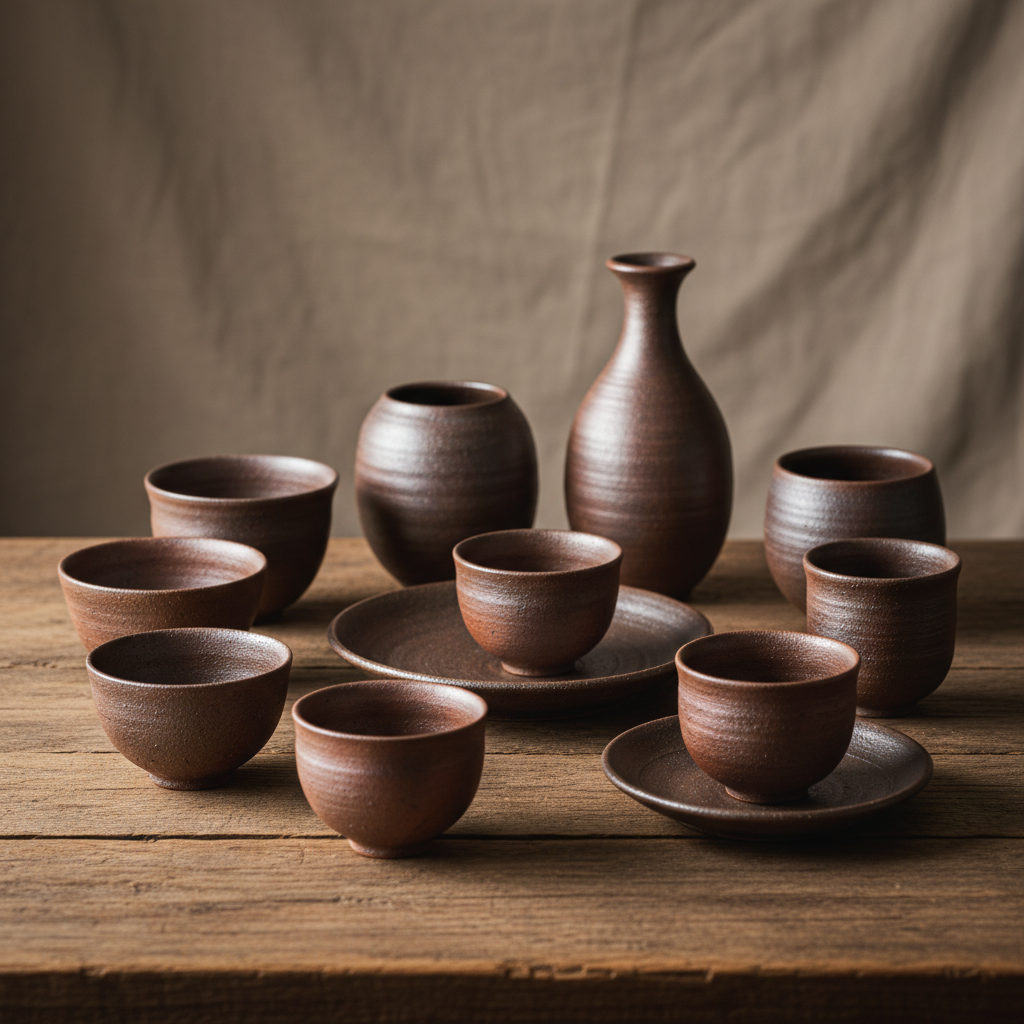
Early to mid-period Inuyama ware frequently featured simple and warm works that highlighted the texture of locally-sourced pottery clay. Glazes that revealed the clay’s color, such as clear glaze and amber glaze, were preferred.
2. Underglaze Blue Painting Using Cobalt Oxide
The underglaze blue technique that developed from the late Edo period through the Meiji period is characterized by blue patterns created using cobalt oxide (gossu). Diverse designs were applied, including landscapes, flowers, and geometric patterns.
3. Red Painting and Colored Painting
The red painting technique influenced by Kyoto ware involved overglaze decoration applied after firing, adding colorful ornaments in red, green, yellow, gold, and other hues. Particularly common in Meiji-period export pieces.
4. Three-Color Glazes in Cochin Ware Style
The three-color technique using color glazes in green, yellow, purple, and other hues is another characteristic of Inuyama ware. Following Chinese Cochin ware techniques, the charm lies in the combination of three-dimensional decoration and color.
Vessel Forms and Uses
Inuyama ware has seen changes in its primary products across different periods:
Early to Mid-Edo Period
- Everyday tableware (bowls, plates, basins, jars, etc.)
- Agricultural tool-related pottery
- Condiment containers and storage vessels
Late Edo Period to Meiji Period
- Tea ceremony implements (tea bowls, water vessels, flower containers, water droppers, etc.)
- Sencha tea ceremony implements (teapots, tea bowls, tea braziers, etc.)
- Writing desk items (inkstones, brush washers, water droppers, etc.)
- Decorative items (figurines, vases, etc.)
Contemporary
- Daily tableware (bowls, plates, mugs, etc.)
- Recreations of tea ceremony implements
- Ceramic art as artistic works
- Interior decorations
Comparison with Other Aichi Prefecture Ceramic Production Areas
Aichi Prefecture has many ceramic production areas besides Inuyama ware, including Seto ware, Tokoname ware, and Akazu ware. Comparing their characteristics:
Seto Ware
- One of Japan’s largest ceramic production areas
- Diverse production from porcelain to pottery
- The origin of the term “seto-mono” (ceramics)
- Established mass production system
Tokoname Ware
- One of Japan’s six ancient kilns
- Famous for red clay teapots
- Tradition of large jars and vessels
- Continues large-scale production today
Akazu Ware
- Seven types of glazes and decorative techniques
- Tradition as tea ceramics
- Designated as a Ministry of Economy, Trade and Industry Traditional Craft
Inuyama Ware
- Small-scale but diverse techniques
- Integration of tea ceramics and everyday tableware
- High value of historical works
- Currently maintained by a small number of kiln operators
While smaller in production scale compared to other Aichi prefecture production areas, Inuyama ware holds a unique position in its diversity and historical value.
Manufacturing Method of Inuyama Ware | Traditional Ceramic Creation
Raw Material Extraction and Clay Preparation
The pottery clay used as the raw material for Inuyama ware was historically extracted from areas surrounding Inuyama City. Clay from the Kiso River basin was primarily used, mixed with feldspar and silica to create clay suitable for ceramics.
In contemporary times, as local pottery clay has become depleted, raw materials are often sourced from other regions, though traditional mixing ratios are maintained by each kiln operator.
Clay preparation process:
- Clay extraction: Sourcing raw material clay
- Water levigation: Dissolving in water to remove impurities
- Blending: Mixing multiple clays and minerals
- Clay kneading: Making uniform clay while removing air
- Aging: Allowing to rest for a period to increase plasticity
Forming Techniques
Various forming techniques have been employed in Inuyama ware depending on the product type and era.
Wheel Throwing
The most fundamental technique, where clay is pulled upward on a rotating wheel to create vessel forms. Suitable for circular vessels such as bowls, plates, and jars. Skilled artisans create uniformly thick beautiful vessel forms with slight force adjustments.
Hand Building
A technique where clay is shaped by hand pressing and stretching. Often used for works with strong artistic expression such as tea bowls and flower containers, with each piece having unique character.
Mold Forming
A technique using plaster or wooden molds to shape pottery, used when creating multiple vessels of the same form. Increasingly used as mass production systems developed from the Meiji period onward.
Slab Construction
A technique of combining slab-shaped clay to form vessels. Suitable for square plates and box-shaped vessels.
Decorative Techniques
One of the fascinations of Inuyama ware lies in its diverse decorative techniques.
Carving
A technique using spatulas and bamboo tools to carve patterns into leather-hard clay. Various expressions are possible including line carving, faceting, and openwork carving.
Inlay
A technique filling carved sections with clay of different colors, creating beautifully contrasting patterns.
Slip Coating
A technique coating the surface with clay slip of different color from the body clay, changing the surface color. Includes white and colored slip coating.
Underglaze Blue Painting
A technique painting patterns with cobalt oxide-containing pigment, then coating with clear glaze before firing. The blue patterns are characteristic, widely used from the late Edo period onward.
Red and Colored Overglaze Painting
A technique painting patterns with overglaze pigment after the main firing, then refiring at low temperature. Enables diverse color expression including red, green, yellow, and gold.
Glazing and Firing
Glazing
The process of applying glaze to dried clay bodies. The following glazes have been used in Inuyama ware:
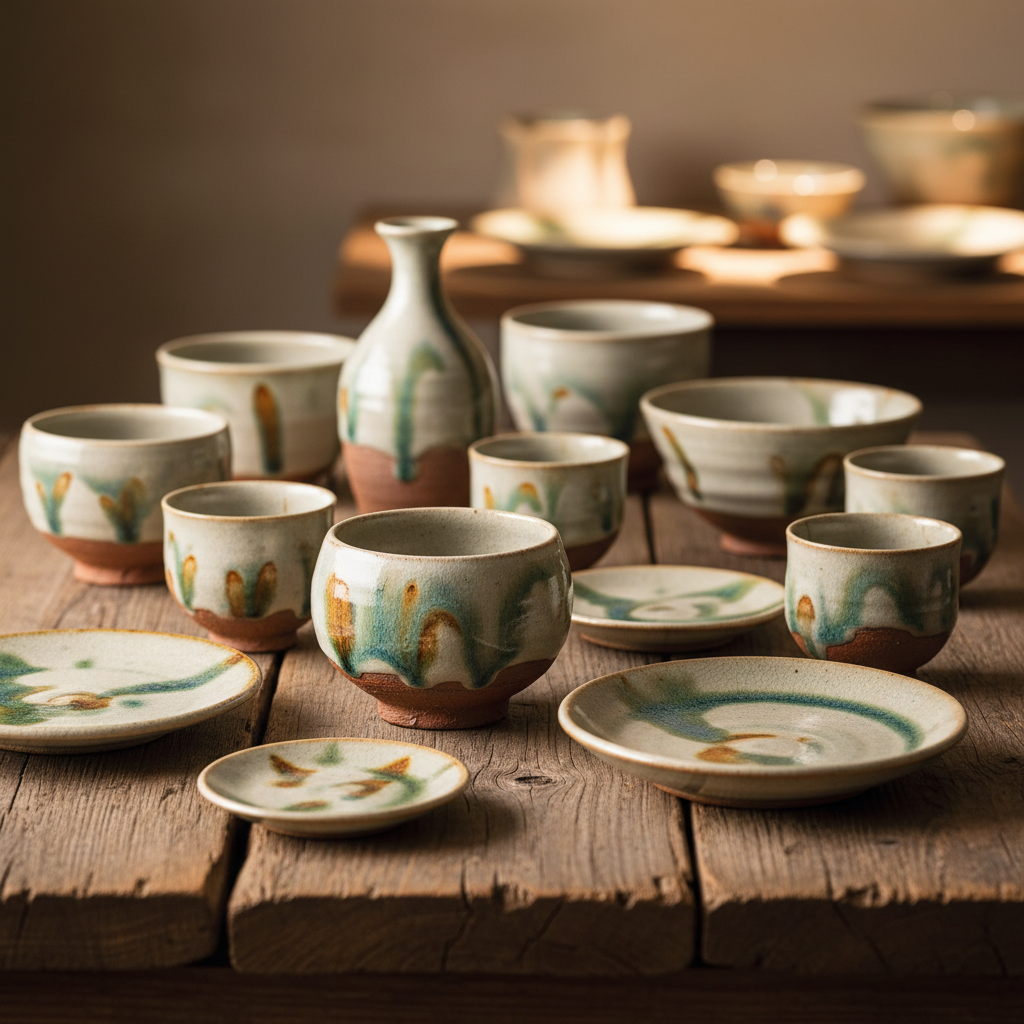
- Clear Glaze: Basic glaze revealing clay color
- Amber Glaze: Iron-containing tea-brown glaze
- Celadon Glaze: Iron-containing greenish-blue glaze
- White Glaze: Glaze showing white color
- Three-Color Glaze: Color glazes in green, yellow, purple, etc.
Firing
The firing temperature for Inuyama ware varies depending on product type, but generally ranges around 1200-1250 degrees Celsius.
Traditionally wood kilns were used, but contemporary works employ gas or electric kilns. However, some artists continue using traditional kilns to achieve the unique surface effects (kiln variations) that wood firing produces.
Firing typically follows these steps:
- Bisque Firing (around 800 degrees): Preliminary firing before glazing
- Glazing: Applying glaze to bisque-fired clay bodies
- Main Firing (1200-1250 degrees): Final firing
- Overglaze Painting (as needed): Decoration such as red painting
- Overglaze Firing (around 800 degrees): Setting overglaze pigments
Inuyama Ware Kiln Operators and Artists | Techniques Inherited in Contemporary Times
Major Existing Kiln Operators
While many kiln operators existed during Inuyama ware’s heyday, in contemporary times the tradition is maintained by several kiln operators and individual artists.
Imai Kiln
One of the representative kiln operators transmitting Inuyama ware tradition to the present day. While inheriting techniques from the Edo period, it creates vessels suited to contemporary living. Particularly renowned for tea ceramic production, it receives high evaluation from tea ceremony enthusiasts.
Other Kiln Operators and Workshops
Several individual ceramic artists and small workshops exist within Inuyama City and surrounding areas, each continuing the Inuyama ware tradition through their own interpretations.
Contemporary Artists’ Efforts
Contemporary Inuyama ware artists work on ceramic creation incorporating contemporary sensibility while studying traditional techniques.
Inheritance of Tradition
Some artists research old Inuyama ware works, attempting to restore techniques that are disappearing. In particular, efforts are being made to recreate Edo-period tea ceramics and Meiji-period colored ware techniques using literature and extant works as references.
Contemporary Expression
Meanwhile, an increasing number of artists pursue contemporary art ceramic expression while basing themselves in Inuyama ware tradition. Abstract forms and works incorporating contemporary color sensibility attract attention from younger generations.
Everyday Tableware
Efforts are being devoted to creating practical and beautiful daily tableware suited to contemporary lifestyles. Technical improvements are also being made, including developing glazes compatible with microwave ovens and dishwashers.
Appreciating and Purchasing Inuyama Ware | Visiting the Production Area
Facilities for Viewing Inuyama Ware
Inuyama Castle Town
Around the National Treasure Inuyama Castle castle town, several ceramic shops and galleries allow viewing of Inuyama ware. Ideal to visit combined with sightseeing.
Kiln Operator Direct Shops
Some kiln operators operate shops displaying and selling works in workshops. Opportunities for direct conversation with artists provide deeper understanding of works.
Aichi Prefectural Ceramic Museum
Located in Seto City, the Aichi Prefectural Ceramic Museum allows learning the history of Aichi prefecture’s ceramics, with important historical Inuyama ware pieces in its collection. Inuyama ware is sometimes featured in special exhibitions.
How to Select Inuyama Ware
Points when purchasing Inuyama ware:
Consider Usage
Intended use—whether for daily use, tea ceremony, or appreciation—changes which works to select. For daily use prioritize practicality, for tea implements prioritize formality, for appreciation emphasize artistry.
Know the Artist’s Individuality
Despite being Inuyama ware, each artist’s style differs greatly. Comparing multiple works and finding artists matching your preferences is important.
Physically Examine When Possible
If possible, physically handle pieces to confirm weight, tactile sensation, and mouth feel (for tableware). Texture not apparent in photographs significantly affects usability.
Price Range
Inuyama ware prices vary greatly depending on work size, technique complexity, and artist reputation:
- Daily tableware: Around 2,000-10,000 yen
- Tea implements: 10,000 yen to over 100,000 yen
- Artistic works: 50,000 yen to several hundred thousand yen and above
- Antiques: Prices vary greatly by piece
Inuyama Ware Care Methods
Before First Use
Recommend “seasoning” new pottery before use. Boiling in rice water or wheat flour-dissolved water seals fine clay pores, preventing stains and soiling.
Daily Care
- Wash as soon as possible after use
- Use soft sponges and neutral detergent
- Dry thoroughly before storage
- For long-term non-use, store in low-humidity locations
Cautions
- Avoid rapid temperature changes (don’t rinse hot items in cold water)
- Microwave and dishwasher compatibility varies by piece and requires confirmation
- Pieces with gold or silver decoration require especially careful handling
- Consider restoration options like gold seaming if cracks or chips occur
Experiencing Inuyama Ware’s Charm | Ceramic Classes and Experience Facilities
Appeal of Ceramic Experience
Actual ceramic creation experience is the best way to deeply understand Inuyama ware. Inuyama City and surrounding areas have ceramic experience facilities accessible to beginners.
Available Experiences
- Wheel Throwing Experience: Bowl and plate forming using electric wheels
- Hand Building Experience: Free-form vessel and figurine creation
- Painting Experience: Decorating bisque-fired pieces
- Full-Scale Ceramic Courses: Continuing learning programs
Experience Benefits
- Understanding Craftsmanship: Experiencing the difficulty and fascination of ceramics through handling clay
- Attachment to Creations: Self-made pieces create special emotional investment
- Enhanced Production Area Understanding: Deeper learning of Inuyama ware history and techniques
- Travel Memories: Perfect as souvenir of Inuyama sightseeing
Experience Precautions
- Wear clothes suitable for getting dirty
- Keep nails short
- Firing requires time, with pieces usually mailed later
- Beginners should attempt simple forms before complex ones
- Understand that craftsman adjustments to final finishes are included
Inuyama Ware and Aichi Prefecture’s Ceramic Culture
Characteristics of Aichi Prefecture’s Ceramic Industry
Aichi Prefecture is known as one of Japan’s premier ceramic production areas. Its characteristics include:
Coexistence of Diverse Production Areas
Multiple production areas such as Seto ware, Tokoname ware, Akazu ware, and Inuyama ware, each with distinct characteristics, are scattered throughout the prefecture, mutually influencing and developing together.
Integration of Tradition and Innovation
A history of preserving ancient traditional techniques while actively incorporating new technology and expression methods.
Industry Scale
Production ranges from daily tableware to art ceramics and industrial ceramics, making it the center of Japan’s ceramic industry.
Inuyama Ware’s Position
Inuyama ware holds the following position in Aichi prefecture’s ceramic industry:
Small-Scale Yet Distinctive Production Area
Despite smaller scale compared to mass-production areas, it has established a unique position through historical value and artistic merit.
Tradition as Tea Ceramics
Particularly in tea implements, its refined aesthetic appeal continues to be valued by tea practitioners.
Cultural Asset Value
Inuyama ware from the Edo through Meiji periods has become valuable cultural property housed in museums and galleries.
Exchange and Influence with Other Production Areas
Throughout history, Inuyama ware has received much influence from other production areas:
Influence from Seto Ware
Nearby Seto ware provided learning in glaze techniques and underglaze blue methods. Particularly from the late Edo period onward, Seto potters creating works in Inuyama facilitated active technical exchange.
Influence from Kyoto Ware
From the late Edo through Meiji periods, Kyoto ware colored techniques were introduced, greatly expanding Inuyama ware’s expressive range.
Influence from Chinese Ceramics
Influences from Chinese ceramics are evident, including Cochin ware techniques, showing internationally-minded ceramic creation.
Inuyama Ware’s Future | Inheritance and Development of Traditional Crafts
Contemporary Challenges
Like many traditional crafts, Inuyama ware faces several challenges:
Successor Shortage
Aging of highly skilled craftspeople accelerates, making technical transmission to next generations urgent. While certain numbers of young people pursue ceramics, achieving independent status as self-supporting artists proves difficult.
Increased Recognition
Compared to Seto and Tokoname ware, Inuyama ware’s recognition is not necessarily high. Efforts to help more people learn of Inuyama ware’s appeal are necessary.
Raw Material Sourcing
Depletion of local pottery clay creates challenges for stable material sourcing.
Market Changes
Lifestyle changes reduce demand for traditional tea implements and Japanese tableware. Development of products suited to contemporary lifestyles is necessary.
Inheritance Efforts
Various efforts address these challenges:
Technical Record Preservation
Recording traditional techniques through video and documents for posterity. Detailed records are created especially for disappearing techniques.
Young Artist Cultivation
Young artist cultivation occurs through ceramic classes and apprenticeship systems. Support systems for artist independence are also developing.
Production Area Cooperation
Rather than individual kiln operators and artists remaining isolated, production area-wide cooperation for joint PR and sales promotion activities is emerging.
Educational Partnerships
Incorporating ceramic experience in regional school education to transmit local traditional culture to children.
New Developments
Efforts exploring new possibilities while preserving tradition are also active:
Fusion with Contemporary Design
Contemporary design incorporation while employing traditional techniques is advancing. Stylish vessels appealing to younger generations open new markets.
Cross-Industry Collaboration
Collaboration with restaurants and hotels creating original tableware opens new business models.
Overseas Market Expansion
Efforts introducing Inuyama ware to overseas markets with increasing interest in Japanese traditional crafts have begun. Particularly gaining attention from European and American ceramic enthusiasts.
Digital Technology Utilization
Active information dissemination and sales using SNS and online shops occur especially among young artists. This enables direct connection with ceramic fans nationwide.
Tourism Resource Utilization
Inuyama City possesses abundant tourism resources including National Treasure Inuyama Castle. Efforts utilizing Inuyama ware as a tourism resource advance:
Fusion of Ceramic Experience and Tourism
Tours combining Inuyama Castle sightseeing with ceramic experience attempt using Inuyama ware as tourism content.
Coordination with Town Development
Coordinating castle town landscape improvements with ceramic shop and gallery recruitment to advance “pottery town” branding.
Event Hosting
Regular ceramic markets and artist exhibitions increase opportunities to encounter Inuyama ware.
Conclusion | Passing Inuyama Ware’s Charm to the Next Generation
Inuyama ware is a valuable traditional ceramic of Aichi Prefecture with over 300 years of history. Technology and aesthetic consciousness continuing from the Edo period are carefully inherited by contemporary artists.
Despite its small-scale production, its diverse techniques and high artistic merit represent major attractions of Inuyama ware. From simple everyday tableware to refined tea ceramics to vibrant colored painting, Inuyama ware’s wide range of expression provides users and viewers deep satisfaction.
In contemporary times, while facing various challenges, Inuyama ware is steadily passed to next generations through efforts of artists maintaining tradition while exploring new possibilities.
When visiting Inuyama, by all means experience Inuyama ware. Combined with viewing National Treasure Inuyama Castle, visiting kiln operators or participating in ceramic experience will enable you to feel the depth of ceramic culture rooted in this place.
The artisans’ thoughts embedded in each individual vessel and the aesthetic sensibility nurtured through 300 years of history—that is Inuyama ware’s true charm. Using Inuyama ware vessels in daily life becomes a rich experience of touching long history and tradition.
As one ceramic production area Aichi Prefecture takes pride in, Inuyama ware will surely continue being loved by many people, passed to the next era.