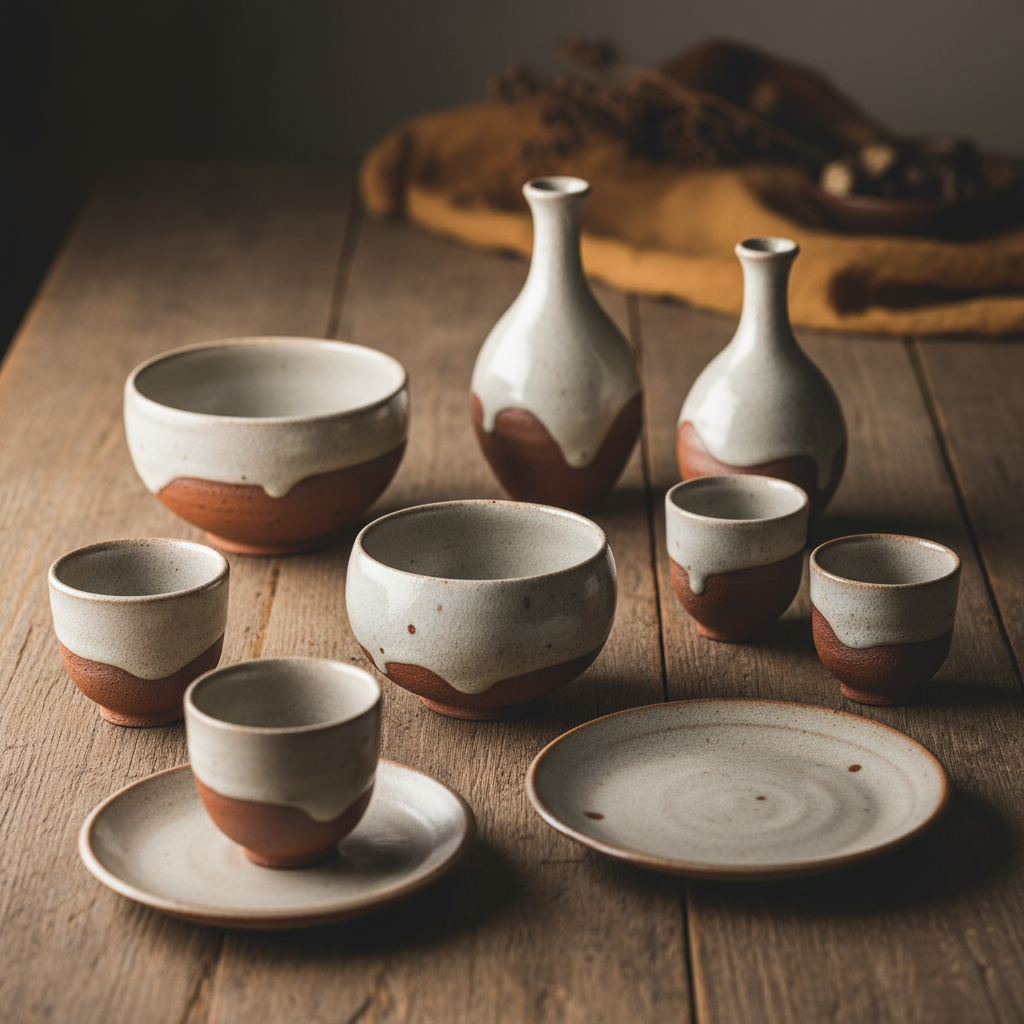

Kikkō Ware (きっこう焼) Complete Guide | History and Characteristics of Osaka’s Traditional Ceramic Producing Region
Kikkō ware (きっこう焼) is one of the traditional ceramics representative of Osaka Prefecture. With a history spanning from the late Edo period to the present, it is known as a celebrated kiln that incorporated Kyoto ware techniques while achieving its own unique development. This article provides a detailed explanation of Kikkō ware’s history, characteristics, techniques, and its succession in the modern era.
What is Kikkō Ware | Overview of Osaka’s Representative Ceramics
Kikkō ware is a traditional ceramic produced in Osaka Prefecture, having received particularly high acclaim as tea ceramics. Its name derives from its founder, Kikkō Jūsanken (吉向十三軒).
Basic Information about Kikkō Ware
- Production region: Osaka Prefecture (primarily within Osaka City)
- Origin: Late Edo period (Bunka-Bunsei era, around 1804–1830)
- Characteristics: Refined workmanship influenced by Kyoto ware, masterpieces of tea ceramics
- Techniques: Diverse techniques including overglaze enameling, underglaze blue painting, and raku ware
- Primary products: Tea utensils including tea bowls, water vessels, incense containers, and flower vases
Kikkō ware developed within the cultural context of Osaka as a commercial city and established its own unique position as ceramics deeply connected to tea ceremony culture.
History of Kikkō Ware | From the Edo Period to the Present
Founder Kikkō Jūsanken and the Birth of Kikkō Ware
Kikkō Jūsanken (1785–1834), the founder of Kikkō ware, was born as Ihei (伊兵衛) into a merchant family in Osaka. From childhood, he developed an interest in ceramic art. After studying pottery in Kyoto, he returned to Osaka and opened his own kiln.
Jūsanken studied techniques from celebrated Kyoto ware masters such as Mokubei (木米) and Ninami Dōhachi (仁阿弥道八), and developed them further in Osaka. His style, characterized by a reflection of literati tastes, earned high praise from cultured individuals and tea masters of the time.
Development in the Late Edo Period
The Bunka-Bunsei period (1804–1830) was the era when Osaka’s merchant culture flourished most. During this time, Kikkō ware produced works with the following characteristics:
- Reflection of literati tastes: Works incorporating classical designs from Chinese ceramics
- Masterpieces of tea ceramics: Tea bowls and water vessels treasured in the world of tea ceremony
- Overglaze enameling technique: Refined colored enameling learned from Kyoto ware
- Raku ware technique: Tea bowls incorporating raku ware techniques
Jūsanken’s works were highly valued among wealthy merchants and cultural figures of Osaka at the time, becoming known as the work of “Osaka’s master craftsman.”
Development under Subsequent Generations
Following the death of the first generation Jūsanken, Kikkō ware was inherited by his descendants. Subsequent generations continued to preserve Kyoto ware traditions while developing Osaka’s unique artistic style.
With the advent of the Meiji period, traditional ceramic art was forced to change amid the waves of modernization. However, Kikkō ware sustained its traditions, supported by continued demand for tea utensils.
Kikkō Ware in the Modern Era
From the Showa period onward, Kikkō ware has undergone the following transitions:
- Pre-war period: Continued demand supported by the flourishing of tea ceremony culture
- Post-war period: Gained attention amid the reevaluation of traditional crafts
- Present day: Succession of traditional techniques and exploration of new forms of expression
In the modern era, the traditions of Kikkō ware continue to be inherited by Osaka ceramic artists, with production of works centered on tea utensils ongoing.
Characteristics and Techniques of Kikkō Ware
Stylistic Characteristics
Kikkō ware is known as ceramics with the following characteristics:
1. Refinement Influenced by Kyoto Ware
While basing itself on Kyoto ware techniques, Kikkō ware developed its own unique style reflecting Osaka’s cultural background. The refined brushwork and color use characteristic of Kyoto ware are distinctive features.
2. Reflection of Literati Tastes
From the preference of the first generation Jūsanken for literati tastes, Kikkō ware frequently features classical designs from Chinese ceramics and decorations reminiscent of literati painting. Works drawing on Chinese poetry and historical tales are not uncommon.
3. Excellence as Tea Ceramics
Kikkō ware has been highly valued as tea ceramics, with tea bowls in particular being treasured in the tea ceremony world. Works combining practicality and beauty are characteristic.
4. Fusion of Diverse Techniques
Various techniques including overglaze enameling, underglaze blue painting, and raku ware are incorporated, with the most suitable expressive method selected for each work.
Primary Techniques
The main techniques used in Kikkō ware include the following:
Overglaze Enameling (いろえ)
Overglaze enameling is a technique of painting on bisque-fired pieces and firing at low temperature. Kikkō ware is characterized by refined overglaze enameling techniques learned from Kyoto ware, with vibrant decorations using red, green, yellow, purple, and other colors.
Underglaze Blue Painting (そめつけ)
Underglaze blue painting is a technique of decorating white clay with cobalt oxide (called gosu). Many works are influenced by Chinese blue and white porcelain, with literati taste reflected in landscape and bird-and-flower paintings.
Raku Ware (らくやき)
Raku ware is a technique of firing at low temperature and rapidly cooling by removing pieces from the kiln. Frequently used for tea bowls, it is characterized by soft texture and warm coloring.
Gold and Silver Decoration
Decorative techniques using gold and silver leaf that create richness of effect. In tea utensils in particular, they are sometimes employed to express high formality.
Representative Works and Types of Kikkō Ware
Tea Bowls
The most representative work of Kikkō ware is the tea bowl. Tea bowls created using raku ware techniques are characterized by soft feel and warm coloring, and are highly valued in the tea ceremony world.
- Raku tea bowls: Red raku and black raku tea bowls created using raku ware techniques
- Overglaze enameled tea bowls: Tea bowls with vibrant colored enameling
- Underglaze blue painted tea bowls: Tea bowls with blue painting in cobalt oxide
Water Vessels (みずさし)
Water vessels are containers for water used in tea ceremony. Kikkō ware produced water vessels of various shapes and decorations. Many examples feature landscape and bird-and-flower paintings reflecting literati tastes.
Incense Containers (こうごう)
Incense containers are small vessels for holding incense used in tea ceremony. Kikkō ware incense containers are characterized by precise craftsmanship and delicate painting, and are popular as collector’s items.
Flower Vases (はないれ)
Flower vases are vessels for arranging flowers in the tea room. Kikkō ware produced flower vases of various shapes. Many examples feature decorations expressing seasonal feeling.
Other Works
- Waste water vessels (けんすい): Vessels for discarding used water in tea ceremony
- Lid rests (ふたおき): Tools for resting the lid of a tea kettle
- Tea caddies (ちゃいれ): Vessels for holding powdered tea
- **Side dishes (むこうづけ): Vessels used in kaiseki cuisine
Kikkō Ware’s Position as a Ceramic Producing Region of Osaka Prefecture
Osaka’s Ceramic Culture
Osaka Prefecture historically flourished as a commercial city and developed a rich merchant culture. In the field of ceramics, while not as large-scale as Kyoto or Arita, ceramics with unique cultural backgrounds were created.
Kikkō ware is one of the representative ceramics born from Osaka’s cultural soil. While incorporating Kyoto ware techniques, it developed its own unique style reflecting Osaka’s merchant culture and tea ceremony culture.
Other Ceramics of Osaka
Osaka Prefecture has the following ceramics in addition to Kikkō ware:
- Sakai ware: Pottery produced in Sakai City
- Sumiyoshi ware: Pottery produced in the Sumiyoshi region
- Hiraino-gō ware: Pottery produced in the Hiraino region
These ceramics each possess a style reflecting regional characteristics, demonstrating the diversity of Osaka’s ceramic culture.
Relationship with Kyoto
Osaka and Kyoto are geographically close and have maintained active cultural exchange. Kikkō ware learned Kyoto ware techniques and developed them in Osaka—a good example showing the connection between the ceramic cultures of both regions.
The techniques learned by the first generation Jūsanken in Kyoto merged with Osaka’s cultural background to bear fruit as a unique style. In this way, Kikkō ware can be said to be a product of cultural exchange between Kyoto and Osaka.
Points of Appreciation for Kikkō Ware
Beauty of Form
When appreciating Kikkō ware, first note the overall form. For tea bowls, the weight and balance when held, the shape of the rim, and other aspects are important. Kikkō ware tea bowls are characterized by functional beauty considering practicality.
Delicacy of Painting
In works with overglaze enameling or underglaze blue painting, the delicacy of painting is a highlight. Attention to brushwork, color use, compositional balance, and other elements allows deeper understanding of the work’s appeal.
Color Development of Glaze
Kikkō ware employs various glazes. The color development and texture of glazes, and the accidental beauty of kiln variation (ようへん) are also points of appreciation.
Signature and Box Inscriptions
Kikkō ware works frequently bear the maker’s seal, and box inscriptions record the work’s title, production date, and other information. This information serves as important clues to understanding the work.
Succession and Challenges of Kikkō Ware in the Modern Era
Succession of Traditional Techniques
In the modern era, the number of ceramic artists inheriting Kikkō ware’s traditional techniques is limited. However, among Osaka ceramic artists, there are those who study Kikkō ware traditions and continue creating works while adding contemporary interpretation.
The following efforts are being undertaken for the succession of traditional techniques:
- Documentation and preservation of techniques: Elucidating techniques through research of old works
- Training of successors: Technical transmission through ceramic classes and workshops
- Hosting exhibitions: Activities to broadly communicate Kikkō ware’s appeal
Contemporary Developments
While preserving tradition, creating new works suited to contemporary lifestyles is also important. Contemporary ceramic artists are undertaking the following:
- Vessels for daily use: Production of vessels for daily life, not limited to tea utensils
- Contemporary design: Incorporating contemporary sensibility while employing traditional techniques
- Cross-industry collaboration: Cooperative work with designers and artists
Challenges and Prospects
The succession of Kikkō ware faces the following challenges:
- Shortage of successors: Lack of young ceramic artists inheriting traditional techniques
- Raising awareness: Low general recognition, with limited market
- Securing raw materials: Difficulty obtaining traditional materials
- Economic sustainability: Profitability of work produced using traditional techniques
The following efforts are expected in response to these challenges:
- Strengthened information dissemination: Information sharing through SNS and websites
- Provision of experience programs: Popularizing Kikkō ware through ceramic experience
- Regional cooperation: Utilization as an Osaka tourism resource
- Developing collectors: Increase of enthusiasts understanding work value
Locations to View and Purchase Kikkō Ware
Museums and Galleries
Kikkō ware works can be viewed at the following institutions:
- Osaka Museum of Oriental Ceramics: Kikkō ware works are included among the East Asian ceramics collections
- Osaka Museum of History: Kikkō ware may be displayed as Osaka’s history is introduced
- Various regional museums: Kikkō ware may be featured in special exhibitions
Galleries and Antique Shops
Galleries and antique shops handling Kikkō ware exist in Osaka City and Kyoto. Particularly in shops specializing in tea utensils, there is possibility of finding Kikkō ware works.
Auctions
Kikkō ware works occasionally appear at fine art auctions. Works by the first generation Jūsanken in particular sometimes command high prices.
Ceramic Artists’ Studios
Visiting the studios of contemporary ceramic artists inheriting Kikkō ware traditions allows direct purchase of works. Through dialogue with artists, one can also deepen understanding of the works.
Kikkō Ware and Tea Ceremony Culture
Kikkō Ware as Tea Utensils
Kikkō ware developed as tea utensils. In the tea ceremony world, not only the beauty of tools but also their practicality and spirituality are valued. Kikkō ware tea bowls have been valued by tea masters for the following points:
- Good hand feel: Easy to hold with good mouth contact
- Beautiful interior landscape: Beautiful scenery on the bowl’s interior
- Seasonal sense: Designs and colors appropriate to the season
- Formality: Enabling selection according to tea ceremony formality
Use in Tea Gatherings
Kikkō ware tea utensils continue to be used in contemporary tea gatherings. Particularly in tea gatherings in Osaka and the Kansai region, Kikkō ware may be employed as local ceramics.
When Kikkō ware is used in tea gatherings, the following are considered:
- Harmony with season: Vibrant colored enameling for spring, warm-toned raku tea bowls for winter, and so on
- Alignment with theme: Selecting works with designs matching the gathering’s theme
- Consideration for guests: Choosing tools considering guest preferences and formality
Relationship with Tea Masters
Since the first generation Jūsanken’s time, Kikkō ware has developed through deep engagement with tea masters. Works were created in response to orders from tea masters, and techniques were refined incorporating tea master opinions.
Such collaborative relationships with tea masters greatly contributed to quality improvement of Kikkō ware and elevated its excellence as tea utensils.
Conclusion | The Appeal and Value of Kikkō Ware
Kikkō ware, representative of Osaka Prefecture’s traditional ceramics, has been passed down from the late Edo period to the present day. While basing itself on Kyoto ware techniques, it developed its own unique style reflecting Osaka’s cultural background, earning particularly high evaluation as tea ceramics.
Primary Appeals of Kikkō Ware
- Historical value: Tradition and lineage continuing from the late Edo period
- Artistry: Refined painting and superior sculptural beauty
- Practicality: Functional beauty as tea utensils
- Cultural significance: Connection to Osaka’s literati culture and tea ceremony culture
- Rarity: Limited number of works and successors
Significance in the Modern Era
In the modern era, Kikkō ware holds the following significance:
- Value as cultural heritage: Important heritage transmitting Osaka’s ceramic culture
- Preservation of traditional techniques: Recording and succession of disappearing techniques
- Regional identity: Part of Osaka’s cultural identity
- Value as fine art: Subject of collection and investment
Kikkō ware is an important entity narrating the history of Osaka Prefecture’s ceramic producing regions. To pass its traditions to the future, it is important to correctly understand its value and provide support. Nurturing a culture of enjoying ceramic beauty not only as tea utensils but also in daily life will also contribute to Kikkō ware’s succession.
If you have the opportunity to visit Osaka, by all means view actual Kikkō ware works at museums and galleries. You will surely be able to appreciate its delicate beauty and the high level of technique cultivated over a long history.