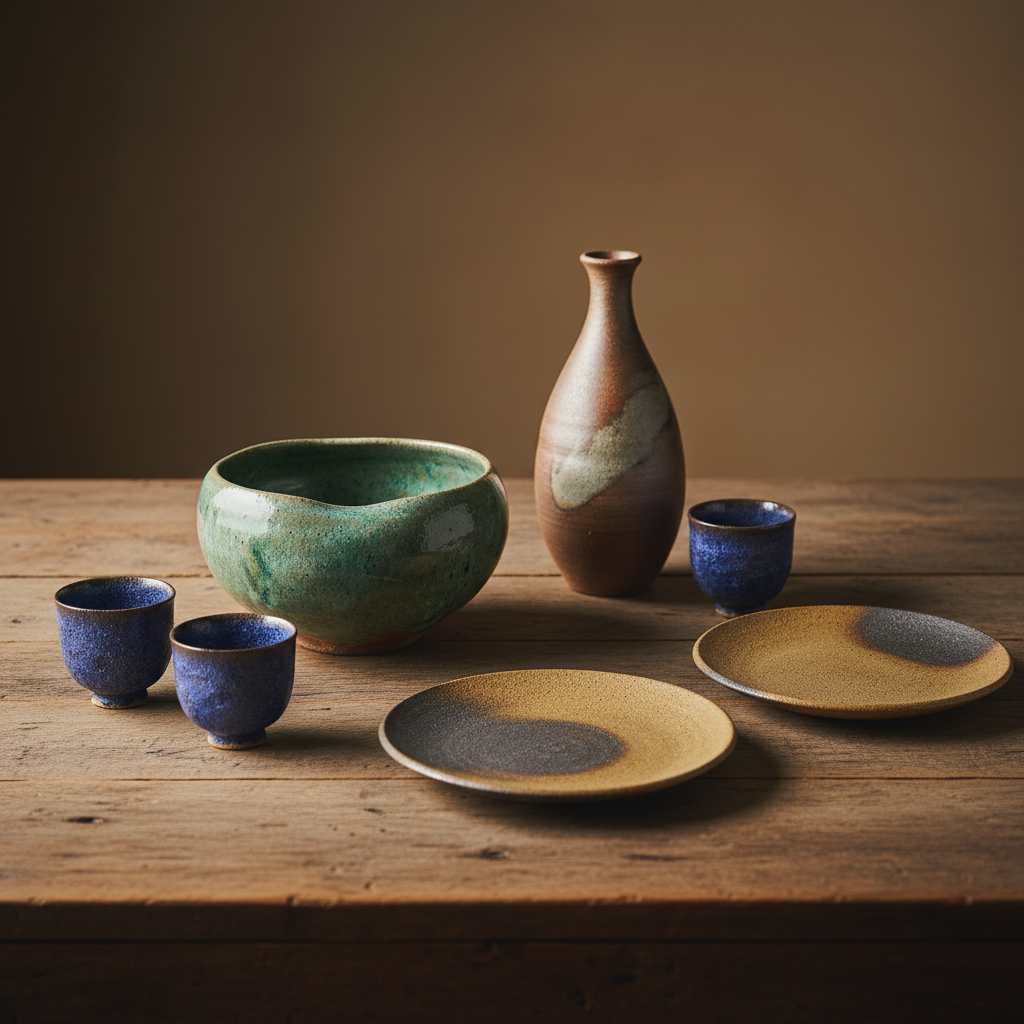

Hirayashimizu Ware: A Comprehensive Explanation of the History and Characteristics of Yamagata Prefecture’s Proud Ceramic Production Center
What is Hirayashimizu Ware – Yamagata Prefecture’s Representative Ceramic Production Center
Hirayashimizu ware (hirayashimizuyaki) is a traditional ceramic produced in the Hirayashimizu district of Yamagata City, Yamagata Prefecture. Located at the foot of Chitose Mountain, this region is known as the “Ceramic Arts Village” and is the oldest ceramic production center in Yamagata Prefecture, with a history spanning more than approximately 200 years.
Because it uses raw clay rich in iron extracted from Chitose Mountain, it is also known by the alternative name “Chitose ware.” Pottery utilizing the unique soil characteristics of this region is characterized by its simple and warm appearance, and multiple kiln operators continue to preserve traditional techniques to this day.
Hirayashimizu in Yamagata City has established its own unique position in Japanese ceramic arts culture as an important ceramic production center in the Tohoku region. As a production center, Hirayashimizu is not merely a place where pottery is produced, but rather a place that embodies regional culture and history, and continues to be beloved by many people today.
The History of Hirayashimizu Ware – A Tradition Continuing from the Edo Period
The Origins of Kiln Opening and Various Theories
There are multiple theories about the beginning of Hirayashimizu ware. The most widely known is the theory that during the Bunka era (1804-1818) in the late Edo period, Niwa Jirozaemon, a landowner, invited ceramic craftsman Ono Tojihei from Hitachi Province (present-day Ibaraki Prefecture) and had him create pottery using the soil from Chitose Mountain, which marked the beginning of the craft.
Niwa Jirozaemon is said to have begun making pottery while balancing it with agricultural work, and succeeded in establishing it as a regional industry. Ono Tojihei is still respected as the founding father of Hirayashimizu ware, and his techniques have been passed down through generations.
Another traditional account holds that during the Heian period, the monk Jikaku Daishi taught ceramic arts using soil from Chitose Mountain. While the truth of this theory remains unclear, it suggests that the Hirayashimizu area was recognized as a source of high-quality ceramic clay from ancient times.
The Influence of Soma Ware and the Propagation of Techniques
During the Bunsei era (1818-1830), ceramic craftsmen were invited from the Soma Domain, and the techniques of Soma ware were brought to Hirayashimizu. This transmission of technology greatly expanded the technical range of Hirayashimizu ware, and kiln production rapidly spread throughout the village.
By incorporating Soma ware techniques while utilizing the region-specific raw materials of Chitose Mountain, Hirayashimizu’s unique ceramic culture was formed. This period became an important turning point for Hirayashimizu’s development from a small-scale kiln site into a full-fledged ceramic production center.
The Golden Age and the Development of Kiln Production
Hirayashimizu ware reached its peak during the mid-Meiji period. During this era, the number of kiln operators increased, and Hirayashimizu became a major settlement where kiln production thrived. A wide range of ceramics were produced, from everyday tableware to tea utensils, and were distributed widely throughout Yamagata Prefecture and surrounding regions.
From the Taisho period into the early Showa period, Hirayashimizu ware production continued actively. However, as times changed, the scale of kiln production gradually decreased due to changes in industrial structure and lifestyle. With the spread of mass-produced industrial products, traditional handmade pottery faced a period of seeking new value.
Passing Down to Modern Times
As the era transitioned from Showa through Heisei to Reiwa, Hirayashimizu ware has shifted its role from “mass production of everyday goods” to “individually distinctive craft works.” Currently, there are 6 kiln operators in the Hirayashimizu district, each preserving tradition through their own artistic style and techniques while also challenging new forms of expression.
Each kiln operator, while basing their work on techniques continuing for more than 200 years, also works on creating vessels suited to modern life and producing works of high artistic value. This flexible approach supports Hirayashimizu ware as a living traditional craft that continues to exist today.
The Characteristics of Hirayashimizu Ware – The Unique Character Created by Chitose Mountain’s Raw Clay
The Iron-Rich Raw Clay of Chitose Mountain
The greatest characteristic of Hirayashimizu ware lies in the raw clay rich in iron extracted from Chitose Mountain. This raw clay is hard ceramic stone, and for a long time its characteristic of being rich in iron was considered a difficult-to-handle material in ceramics. However, the Hirayashimizu ceramic craftsmen chose to activate this characteristic not as a shortcoming but as an individuality.
The raw clay of Chitose Mountain contains both the clay components that make up pottery and the ceramic stone components that make up porcelain. Because of this, Hirayashimizu ware has the unusual characteristic of being able to produce both pottery and porcelain. Examples of both pottery and porcelain being traditionally made in the same production center are rare throughout Japan.
A Simple and Warm Appearance
Hirayashimizu ware born from raw clay rich in iron is characterized overall by its simple and warm appearance. While lacking flashiness, it fits comfortably in the hand as everyday tableware and develops affection the more it is used, possessing a texture that deepens the user’s connection to it.
This simplicity is also deeply connected to the Tohoku climate and Yamagata’s culture. It can be said that the character of the Tohoku region, which prioritizes practicality and approachability over ornate decoration, is reflected in Hirayashimizu ware’s aesthetic sensibility.
Different Artistic Styles and Techniques Among Kiln Operators
One of the major characteristics of Hirayashimizu ware is that the glazes and techniques used differ greatly among kiln operators. While using the same Hirayashimizu soil, each operator creates diverse expressions through their own research and ingenuity.
This diversity demonstrates the richness of the production center. Rather than being unified in a single style, the culture that respects each operator’s individuality supports the creativity of Hirayashimizu ware.
Representative Works and Techniques
“Pear Celadon” of Seiryuu Kiln
The most well-known representative work of Hirayashimizu ware is “Pear Celadon” (nashi seiJi) of Seiryuu Kiln. Seiryuu Kiln is a kiln operator following in the line of Niwa Jirozaemon, and was opened in the Meiji period with Niwa Tetsusuke as the first kiln master.
In 1945 (Showa 20), the third-generation kiln master Niwa Ryunosuke turned the tables on the iron content in Chitose Mountain’s raw clay, which had previously been avoided, and succeeded in creating a celadon glaze that utilized it. The unique bluish color created by activating the iron content was named “Pear Celadon” because it possesses a quality reminiscent of the surface of a pear.
Pear Celadon is currently highly evaluated as a work that most symbolizes the uniqueness of Hirayashimizu ware. The creativity of understanding regional materials deeply and transforming what was thought to be a shortcoming into a virtue is an excellent example of innovation in crafts.
The “Remaining Snow” Series
Another representative work of Seiryuu Kiln is “Remaining Snow.” Works made with white glaze, they are characterized by a pure and beautiful quality evoking Yamagata’s winter landscape. In contrast to Pear Celadon, the fact that the same kiln produces diverse works using different techniques demonstrates the high level of Hirayashimizu ware’s technology.
The Remaining Snow series, expressing the scenery of snowy Yamagata through vessels, is a collection of works that strongly conveys regional character.
The Traditional Techniques of Shichikemon Kiln
Shichikemon Kiln is a kiln operator that has preserved the traditional techniques of Hirayashimizu ware for approximately 200 years. Since its opening in the late Edo period, it has continued to value techniques passed down through generations while creating works suited to the times.
At Shichikemon Kiln, traditional wheel-throwing and hand-molding techniques are used to carefully finish each work. The warmth of handmade work that cannot be obtained through mass production becomes the appeal of Shichikemon Kiln’s creations.
The Individuality of Other Kiln Operators
Currently, there are 6 kiln operators in Hirayashimizu, each developing their own unique glazes and decorative techniques. A diverse range of expressions coexist: works with subdued colors using ash glaze, vibrant works with ornate overglaze enameling, and works incorporating contemporary design.
This diversity itself is the richness of Hirayashimizu ware as a production center, serving as a source of constant new discoveries for those who visit.
Hirayashimizu Ware Production Center Today
The Development of the Ceramic Arts Village
The Hirayashimizu district of Yamagata City has been developed as a “Ceramic Arts Village,” with facilities and workshops for experiencing ceramic culture scattered throughout. At the workshops of kiln operators, displays and sales of works are conducted, allowing visitors to select vessels while engaging in direct conversation with the artists.
By visiting the production center, one can directly experience the environment in which Hirayashimizu ware is made and the feelings behind its creation. The experience of touching pottery while viewing the landscape overlooking Chitose Mountain will deepen understanding and affection for the works.
Ceramic Arts Experiences and Successor Development
Many kiln operators accept ceramic arts experiences, allowing visitors to actually turn a wheel or create vessels through hand-molding. Learning under the guidance of professional ceramic artists, touching Hirayashimizu clay, and experiencing the pottery-making process provides a valuable opportunity to deepen understanding of traditional crafts.
Moreover, such experiential activities play an important role in the transmission of techniques to the next generation. They function as a place to nurture young people interested in ceramics and discover future bearers of the tradition.
Connections with Regional Culture
Hirayashimizu ware is not merely a craft product but is deeply connected with Yamagata’s regional culture. At local festivals and events, Hirayashimizu ware vessels are used, becoming integrated into daily life.
As tableware for taro stew and regional dishes, which are part of Yamagata’s food culture, Hirayashimizu ware has become part of the region’s identity. The cycle of tasting regional cuisine served in vessels made from regional materials produces the richness of regional culture.
Value as a Tourist Resource
In recent years, Hirayashimizu ware has been attracting attention as an important tourist resource for Yamagata Prefecture. Tourists interested in traditional crafts and pottery enthusiasts from throughout the country visit the production center, contributing to regional revitalization.
Tourist routes incorporating kiln operator tours and ceramic arts experiences have been developed, with Hirayashimizu ware becoming established as a new attraction in Yamagata tourism. Alongside hot springs and natural scenery, the cultural experience of Hirayashimizu ware has made Yamagata’s appeal more multifaceted.
Places to Purchase and Experience Hirayashimizu Ware
Workshops of Individual Kiln Operators
The best way to purchase Hirayashimizu ware is to visit the production center and directly visit each kiln operator’s workshop. The 6 kiln operators, including Seiryuu Kiln and Shichikemon Kiln, conduct displays and sales of their works at their respective workshops.
By selecting vessels while conversing directly with the artist or workshop staff, one can gain deep knowledge of the background and techniques behind the works. Additionally, some workshops allow visitors to observe the production site, making it possible to witness the process through which pottery comes into being.
Retail Shops in Yamagata City
Hirayashimizu ware can also be purchased at craft shops and souvenir stores in Yamagata City. Since works from multiple kiln operators can be compared at once, this is convenient for those encountering Hirayashimizu ware for the first time.
Shops carrying Yamagata Prefecture hometown craft products offer a wide selection of traditional crafts from Yamagata, including Hirayashimizu ware.
Online Purchase
Most kiln operators maintain official websites and conduct sales online. Even for those unable to visit the production center due to distance, Hirayashimizu ware can be obtained through the internet.
However, it is ideal to see pottery in person to confirm its texture and size. If possible, we recommend visiting the production center at least once to touch the actual items.
Ceramic Arts Experience Programs
Multiple kiln operators in Hirayashimizu offer ceramic arts experience programs. Through wheel-throwing or hand-molding experiences, you can create your own original works.
Works created during experiences are fired at the kiln operator’s workshop and then sent by mail. Vessels you create yourself inspire special affection and deepen understanding of Hirayashimizu ware. Since advance reservations are often required for experiences, it is recommended to confirm before visiting.
The Appeal and Future Prospects of Hirayashimizu Ware
The Coexistence of Tradition and Innovation
A major appeal of Hirayashimizu ware is that it preserves more than 200 years of tradition while continuously challenging new forms of expression. The flexibility to base work on traditional techniques while creating pieces suited to modern lifestyles and aesthetic values supports the production center’s sustainability.
Young ceramic artisans pursue their own forms of expression while learning tradition. This creative attitude keeps Hirayashimizu ware alive as “ongoing culture” rather than as a “relic of the past.”
Sustainable Use of Regional Resources
Hirayashimizu ware, activated by Chitose Mountain’s region-specific raw clay, possesses sustainability as a local production for local consumption craft. The cycle of using regional materials, creating with regional techniques, and being used by regional people demonstrates an environmentally conscious approach to crafts.
At the same time, awareness is increasing throughout the production center regarding resource conservation and sustainable harvesting. Efforts are being made to preserve high-quality raw clay for future generations.
Domestic and International Promotion
Hirayashimizu ware is being promoted both domestically and internationally as a representative craft of Yamagata Prefecture. Through participation in traditional craft exhibitions and craft fairs and international promotional activities, the recognition of Hirayashimizu ware is steadily increasing.
Particularly in recent years, there has been growing international interest in Japanese traditional culture and craftsmanship, and craft works rooted in specific regions like Hirayashimizu ware are attracting attention. Its simple, practical beauty possesses a universality that transcends cultural differences and is accepted by many people.
Passing Techniques to the Next Generation
The most important issue for Hirayashimizu ware is transmitting techniques and culture to the next generation. Each kiln operator is working to develop successors, with techniques being passed down from parent to child and from teacher to apprentice.
Additionally, local school education incorporates Hirayashimizu ware, providing opportunities for children to experience their region’s traditional culture. Such efforts lead to nurturing personnel who will support the production center in the future.
Conclusion – The Value of Yamagata’s Proud Ceramic Production Center
Hirayashimizu ware is a traditional ceramic produced in the Hirayashimizu district of Yamagata City, Yamagata Prefecture, passed down for more than 200 years. It is characterized by its simple and warm appearance, utilizing region-specific raw materials from Chitose Mountain rich in iron.
Said to have begun during the Bunka era in the late Edo period, Hirayashimizu ware developed by incorporating techniques from Soma ware and reached its peak during the mid-Meiji period. While the scale of the industry has changed with the times, 6 kiln operators continue today to preserve tradition while creating individual works.
Particularly, “Pear Celadon” of Seiryuu Kiln is highly evaluated as a creative work utilizing the iron content of the raw clay. The fact that diverse expressions coexist within the same production center, with each operator using different glazes and techniques, is also a major appeal of Hirayashimizu ware.
Developed as a “Ceramic Arts Village,” the Hirayashimizu district allows people to experience traditional crafts through kiln operator tours and ceramic arts experiences. Deeply connected with regional culture, Hirayashimizu ware is an important cultural resource for Yamagata Prefecture and also a tourism resource.
The attitude of Hirayashimizu ware—preserving tradition while continuing to innovate—demonstrates a model for sustainable regional culture. Through the transmission of techniques to the next generation and promotion both domestically and internationally, Hirayashimizu ware will continue to develop as a ceramic production center representing Yamagata Prefecture.
Hirayashimizu ware, in which regional materials, regional techniques, and regional culture are united as one, is truly a traditional craft of which Yamagata Prefecture can be proud.