
What is Narushima Ware? A Comprehensive Explanation of the Appeal and Characteristics of Yamagata Prefecture’s Historic Ceramic Production Area
Overview and History of Narushima Ware
Narushima ware (narushmayaki) is a traditional ceramic produced in the Narushima district of Yonezawa City, Yamagata Prefecture. As one of the important ceramic production centers in the Tohoku region, it possesses a long history and unique culture.
Origins and Development of Narushima Ware
The history of Narushima ware dates back to the mid-Edo period. It is said to have begun as ceramic production was encouraged as part of the Yonezawa Domain’s industrial promotion policy. The daimyo of the Yonezawa Domain at the time invested efforts in fostering regional industries, with ceramic manufacturing being one of its important pillars.
The Narushima district was known as an area where high-quality ceramic clay could be extracted, and it was also blessed with abundant water resources from the Mogami River system, making it an environment well-suited for ceramic production. These natural conditions became the foundation supporting the development of Narushima ware.
Position as a Ceramic Production Center in Yamagata Prefecture
While Yamagata Prefecture has other ceramic production areas such as Hirakiyomizu ware in addition to Narushima ware, Narushima ware has established its own unique position as a representative pottery of the Yonezawa region. It has a history of producing a wide range of products, from everyday items to fine art crafts, while being closely connected to the region’s living culture.
Characteristics and Appeal of Narushima Ware
Materials and Soil Properties
The greatest characteristic of Narushima ware lies in the quality of the ceramic clay extracted locally. The clay found in the Narushima district and its surrounding areas contains an appropriate amount of iron, producing a unique warm color tone after firing. This soil characteristic creates Narushima ware’s distinctive appearance.
The ceramic clay has fine particles and excellent plasticity, making delicate sculpting possible. Additionally, it fires to a firm, durable state, making it possible to create practical vessels with high utility value.
Glazes and Color Beauty
Traditionally, Narushima ware has used natural material-based glazes such as ash glaze and iron glaze. These glazes change color subtly depending on firing temperature and the atmosphere within the kiln, creating a unique expression where no two pieces are identical.
In particular, the warm-toned colors of candy brown and dark brown are known as representative characteristics of Narushima ware. Techniques such as applying white slip followed by transparent glaze are also employed, allowing for diverse expressions.
Practicality and Design
Since Narushima ware has long been cherished as vessels for everyday use, design that prioritizes practicality is fundamental. Shapes that fit the hand, comfortable weight, durability—these features are designed with the premise of being used in daily life.
At the same time, it possesses simple yet refined beauty and also has design qualities that harmonize with modern dining tables. While preserving tradition, new design development suited to contemporary times is also being undertaken.
Manufacturing Process of Narushima Ware
Clay Preparation
The production of Narushima ware begins with the selection and preparation of high-quality ceramic clay. Extracted clay has impurities removed and is adjusted to appropriate moisture content. By allowing the clay to mature, it becomes easier to handle and improves quality after firing.
Forming Techniques
Narushima ware primarily uses wheel throwing as its main technique. Skilled craftspeople carefully shape each piece by hand. Hand-forming and mold-forming are also used according to the type of work.
The drying process after forming is important. Rapid drying causes cracking and fissures, so drying time is adjusted according to season and weather conditions.
Bisque Firing and Glazing
After drying is complete, the work undergoes bisque firing. Bisque firing is done at temperatures around 800 degrees, creating a state suitable for glaze application.
After bisque firing, the process moves to glaze application. Various techniques such as dipping, pouring, and brushing are used to apply glaze. The thickness of glaze and the application method significantly change the appearance of the finished piece, making this a process that tests the craftsperson’s experience and skill.
Glaze Firing
Works with applied glaze are fired at high temperatures around 1200 degrees. Temperature management and atmospheric control within the kiln become crucial elements determining the final finish.
Firing can take anywhere from more than a dozen hours to several days, and including the slow cooling time afterward, the entire process can take more than a week.
Representative Products of Narushima Ware
Everyday Tableware
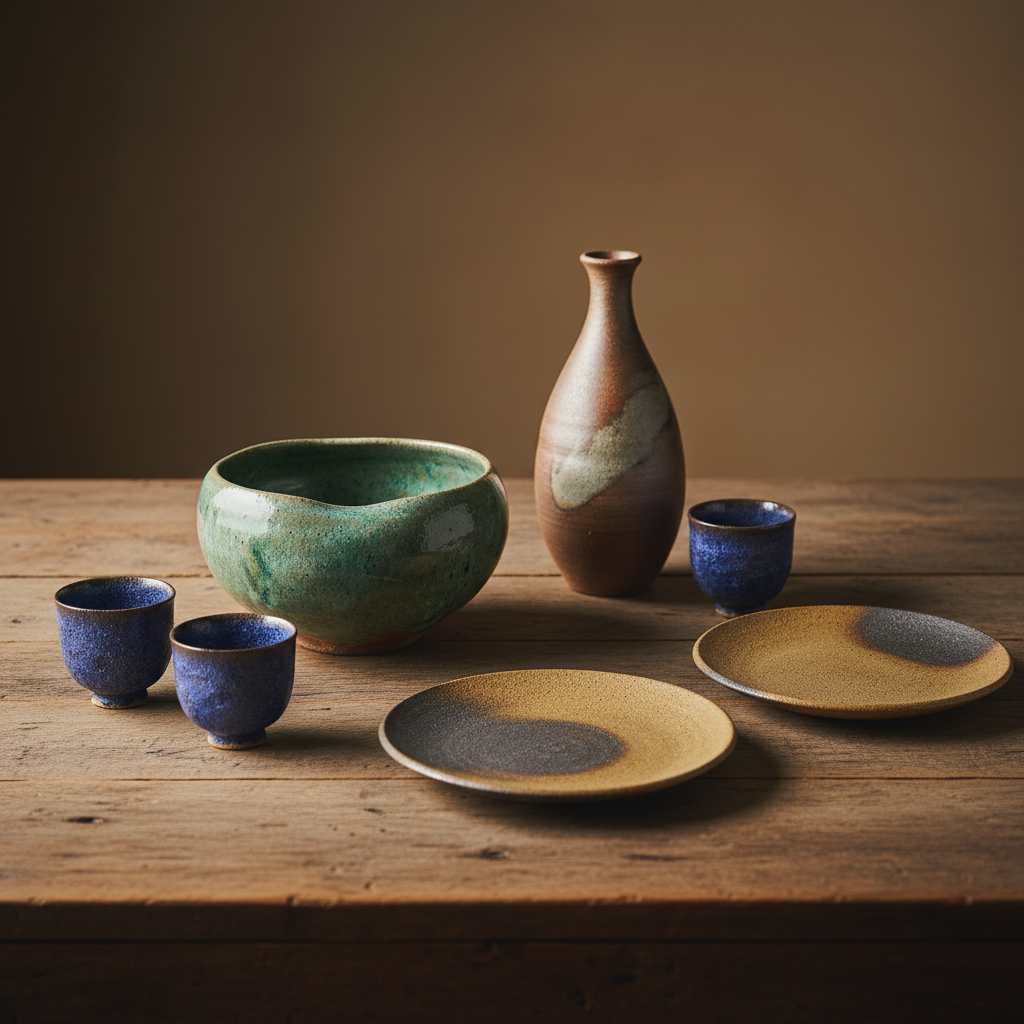
The primary products of Narushima ware are everyday tableware. Tea bowls, teacups, plates, bowls, and various other vessels used at the dining table are produced. These combine practicality with beauty, and their appeal deepens with prolonged use.
Flower Vessels and Tea Utensils
Flower vessels for arranging flowers and tea utensils used in tea ceremony, such as tea bowls, water jars, and waste water containers, are important product categories of Narushima ware. Tea utensils in particular are valued for their simple beauty that harmonizes with the aesthetic sense of wabi-sabi.
Sake Vessels
As Yamagata Prefecture is also famous as a sake-producing region, Narushima ware sake vessels are popular as vessels for enjoying local sake. Sake bottles, cups, and drinking vessels are produced and are praised for enhancing the flavor of sake.
Craftspeople Supporting Narushima Ware
Succession of Traditional Techniques
The techniques of Narushima ware have been passed down from parent to child, from master to apprentice. Many years of training and effort are required to become a full-fledged craftsperson. There are numerous techniques to master, including how to handle clay, wheel-throwing skills, glaze compounding, and kiln firing methods.
Contemporary Makers
Currently, though not numerous, kiln workshops and ceramic artists who carry on tradition continue to work in the Narushima district. While preserving traditional techniques, they also challenge themselves in creating new designs and vessels suited to modern lifestyles.
Narushima Ware in Yamagata Prefecture’s Ceramic Culture
Relationships with Other Prefecture Production Areas
In addition to Narushima ware, Yamagata Prefecture has other ceramic production areas such as Hirakiyomizu ware (Yamagata City). While each possesses its own characteristics, together they enrich Yamagata Prefecture’s overall ceramic culture.
While Hirakiyomizu ware is strongly characterized as tea pottery, Narushima ware carries a strong tradition as everyday ceramics, each serving different roles.
Connection with Regional Culture
Narushima ware is deeply connected to the living culture of the Yonezawa region. There is a history of Narushima ware vessels being used in the region’s festivals, events, and everyday dining. This intimate relationship with the region has shaped Narushima ware’s individuality.
Current State and Issues of Narushima Ware
Changes in Production Scale
While Narushima ware has seen reduced production scale compared to its peak, high-quality kiln workshops and artists continue their work. Small-scale production that values the warmth of handmade work rather than mass production is the mainstream.
Initiatives in Successor Development
The issue of successor shortages facing many traditional crafts is no exception for Narushima ware. However, various initiatives are underway to transmit traditional techniques to the next generation.
Efforts continue through holding ceramic workshops, supporting young artists’ development, and accepting practitioners from other regions and areas who are relocating, bringing in fresh perspectives.
Purchasing Narushima Ware and Experiences
Where to Purchase
Narushima ware can be purchased at craft shops and roadside stations in Yonezawa City, as well as directly from kilns. It is also handled at local specialty shops throughout Yamagata Prefecture. In recent years, sales through online shops have made it possible to purchase from anywhere in the country.
Ceramic Experiences
Some kilns offer ceramic experiences. Through experiences such as actually throwing on a wheel or hand-forming vessels, one can gain a deeper understanding of Narushima ware’s appeal.
Some services send finished pieces created during experiences to your home after firing, making them popular as travel souvenirs.
Narushima Ware and Contemporary Life
As Everyday Tableware
Narushima ware naturally blends into contemporary dining tables. It works well not only with Japanese cuisine but also with Western and Chinese dishes, enriching daily meals.
Regarding microwave and dishwasher use, this varies by piece, so it is recommended to confirm at purchase. Most everyday tableware is made with durability suitable for regular use.
Use as Interior Decoration
Beyond use as tableware, flower vessels and decorative objects can be incorporated into interiors. The simple, warm appearance complements not only Japanese rooms but also Western-style rooms, bringing a sense of calm to the space.
Preservation and Care of Narushima Ware
Initial Treatment Before Use
When using Narushima ware for the first time, a treatment called seasoning is recommended. By boiling in rice rinsing water or soaking in water, you can prevent staining from the crackle (fine cracks) on the surface.
Daily Care
After use, gently wash with a soft sponge and neutral detergent, then dry thoroughly before storing. Avoiding prolonged soaking and preventing rapid temperature changes are keys to prolonging the life of vessels.
Enjoying Aging and Patina
Narushima ware becomes more appealing with use. Tea stains and other deposits entering the crackle create unique patterns, and the color deepens—changes that can be enjoyed. This aging is a distinctive appeal of handmade vessels.
Future Prospects for Narushima Ware
Harmony of Tradition and Innovation
The future of Narushima ware lies in preserving traditional techniques while developing new products meeting contemporary needs. Young artists challenge themselves to create vessels with contemporary designs and new uses based on traditional methods.
Exploration of new possibilities includes development of products not traditionally made, such as coffee cups and wine glasses, and expansion into interior goods.
Coordination with Regional Revitalization
Narushima ware is utilized as an important cultural resource for Yonezawa City in tourism promotion and regional branding. Efforts are underway to develop tourism programs combining the region’s food culture and historical heritage, contributing to overall regional revitalization.
Domestic and International Promotion
As interest in Japanese traditional crafts grows domestically and internationally, Narushima ware has increasing opportunities for new recognition. Efforts continue to convey Narushima ware’s appeal to more people through exhibition participation and international promotion activities.
Conclusion
Narushima ware is a traditional ceramic production area rooted in Yonezawa City, Yamagata Prefecture, possessing a long history and unique culture. Vessels created through high-quality local ceramic clay and craftspeople’s techniques combine practicality and beauty, bringing warmth to daily life.
While facing challenges such as reduced production scale and successor shortage, efforts continue to preserve tradition while undertaking new experiments suited to contemporary times, opening possibilities for Narushima ware’s future.
When visiting Yamagata Prefecture, please be sure to touch Narushima ware vessels and experience their appeal firsthand. The warmth unique to handmade craftsmanship and quality for long-term use will surely enrich your life.

