Kobu-shi Ware: Hokkaido’s Ceramic Production Center – Complete Explanation of History, Characteristics, and the Appeal of the Kiln
Kobu-shi ware (こぶ志焼), which cannot be overlooked when discussing Hokkaido’s ceramic culture. Since its establishment in 1946, this pottery, which has been passed down for over 75 years in Iwamizawa, Hokkaido, continues to create unique vessels rooted in the climate of the northern region as the oldest existing kiln in the prefecture.
This article provides a thorough explanation of the appeal of Kobu-shi ware as a ceramic production center representative of Hokkaido, from its historical background to production techniques, characteristics of glazes, and the kiln’s contemporary endeavors.
What is Kobu-shi Ware – Hokkaido’s Representative Ceramics
Kobu-shi ware is pottery produced in Iwamizawa City, Hokkaido. It was established in 1946, shortly after World War II, by the first generation, Yamaoka Mishuai, and is now being passed down to the third generation, Yamaoka Chiaki.
The Origin of the Name Kobu-shi Ware
The kiln’s name “Kobu-shi kiln” derives from the spring when the first firing was conducted. In the mountains and fields of Iwamizawa, Hokkaido, magnolia flowers (kobu-shi), which announce the arrival of spring to the north along with cherry blossoms, bloom abundantly. Because these magnolia flowers were blooming beautifully at the time of the first firing, the first generation, Yamaoka Mishuai, named it the “Kobu-shi kiln.”
This name carries not merely a plant name, but a double meaning: the joy of spring arriving after enduring Hokkaido’s harsh winter, and the birth of a new kiln. Today, it has become known affectionately to residents of Hokkaido and many others as “Kobu-shi ware,” symbolizing Hokkaido’s ceramic culture.
Positioning as a Ceramic Production Center in Hokkaido
Japanese ceramic production centers, such as Arita ware, Mino ware, and Seto ware, are concentrated south of Honshu, but Hokkaido also possesses a unique ceramic culture. Kobu-shi ware, as the oldest existing kiln in Hokkaido, plays a central role among the prefecture’s ceramic production centers.
The history of Hokkaido’s pottery is relatively recent, with full-scale ceramic production beginning after the Meiji period. While several kilns, such as Sapporo ware, were created, most were discontinued after short periods. In this context, Kobu-shi ware has continued uninterrupted from the postwar chaos to the present, becoming an important presence as a successor to Hokkaido’s ceramic culture.
The History of Kobu-shi Ware – Three Generations of Inherited Tradition
The Establishment of the Kiln by the First Generation, Yamaoka Mishuai (1946)
In 1946, the first generation, Yamaoka Mishuai, opened the Kobu-shi kiln in Iwamizawa, Hokkaido. The establishment of the kiln in the harsh period immediately after the war involved many difficulties.
The first generation, Mishuai, held the lofty aspiration of creating ceramics representative of Hokkaido. The folk art movement had also begun at this time, and the pursuit of “beauty in utility,” combining practicality and beauty, became the foundational principle of Kobu-shi ware.
From the establishment of the kiln, Mishuai engaged in glaze research based on sea cucumber glaze (namako-yu). Sea cucumber glaze creates a distinctive appearance where blue and white blend together and requires high-level technical knowledge and experience. This passion for glaze research became the foundation that shaped the later characteristics of Kobu-shi ware.
The Era of the Second Generation, Yamaoka Akira
The second generation, Yamaoka Akira, who inherited the kiln from the first generation, maintained the founder’s principles while pursuing developments suited to the times. From the period of high economic growth through the Heisei era, he upheld the stance of vessel-making rooted in Hokkaido’s climate while adapting to changes in lifestyle.
During the second generation’s era, research into technically advanced glazes such as tenmoku glaze and copper red glaze progressed further. These glazes employ traditional techniques used in classical Chinese ceramics, yet they display unique coloring and expression within the environment of Hokkaido’s climate, soil, and water.
Contemporary Development by the Third Generation, Yamaoka Chiaki
Currently, the third generation, Yamaoka Chiaki, has inherited the kiln and continues to create vessels that honor tradition while harmonizing with modern life. More than 75 years after the establishment, the stance of “vessel-making rooted in Hokkaido’s climate,” the founding principle, remains unchanged.
In the third generation’s era, while inheriting traditional glaze techniques, efforts are also concentrated on developing designs that harmonize with contemporary dining tables and living spaces. A wide range of offerings is available, from vessels for everyday use to works for special occasions.
Characteristics of Kobu-shi Ware – Glazes and Production Techniques
The Beauty of Sea Cucumber Glaze
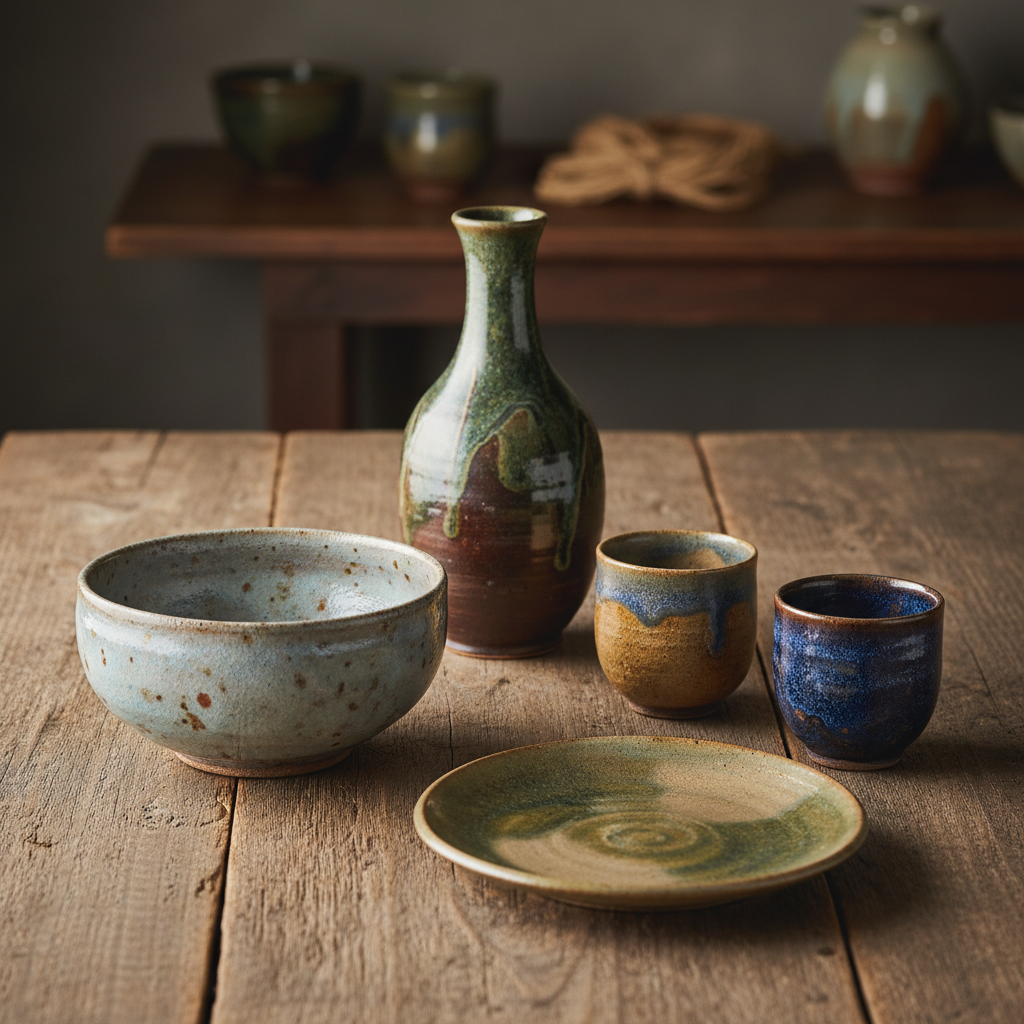
The glaze most representative of Kobu-shi ware is sea cucumber glaze. Sea cucumber glaze possesses a bluish-white color and a unique texture resembling the surface of a sea cucumber, a creature from the sea.
The characteristic of sea cucumber glaze is that no two pieces possess the same appearance. Depending on temperature fluctuations within the kiln, how the flame strikes, and the thickness of the glaze, the manner in which blue and white blend changes subtly. The beauty of the landscape created by this serendipity is the greatest appeal of sea cucumber glaze.
Kobu-shi ware’s sea cucumber glaze possesses a unique color created by Hokkaido’s cold climate and clear water. It differs from sea cucumber glaze fired in kilns on Honshu, characterized by a somewhat stronger blue tone and transparent coloring.
Tenmoku Glaze and Copper Red Glaze
In addition to sea cucumber glaze, Kobu-shi ware employs technically demanding glazes such as tenmoku glaze and copper red glaze.
Tenmoku glaze is a glaze containing abundant iron, producing deep black to brownish tones. It was perfected during China’s Song dynasty and has been treasured as a tea utensil in the tea ceremony. Kobu-shi ware’s tenmoku glaze displays unique coloring that capitalizes on the characteristics of Hokkaido’s soil and water.
Copper red glaze is a glaze using copper as a coloring agent, producing a vivid red hue. Firing conditions are extremely difficult, with slight changes in temperature or atmosphere altering the color—a delicate glaze indeed. Kobu-shi ware has long engaged in research of this copper red glaze, achieving stable, beautiful red coloring.
Colors and Finishes Created by Hokkaido’s Climate
The greatest characteristic of Kobu-shi ware is that Hokkaido’s climate is reflected in the vessels. The clay used, water, and all climate conditions create Kobu-shi ware’s unique appearance.
Hokkaido’s clear air and water influence glaze coloring. Additionally, the cold climate affects the drying of clay and the biscuit firing process, requiring production processes different from kilns on Honshu.
Vessels born within such an environment possess both the strength reminiscent of Hokkaido’s earth and delicate coloring. As they are used in daily life, they fit comfortably in the hand, and affection deepens—vessels supported by many people.
The Production Process of Kobu-shi Ware
From Clay Preparation to Forming
The production of Kobu-shi ware begins with clay preparation. The clay used is composed of carefully selected raw materials, primarily from Hokkaido. The clay’s blending ratio is adjusted according to the type and purpose of the vessels being created, resulting in a unique formulation based on long-standing experience.
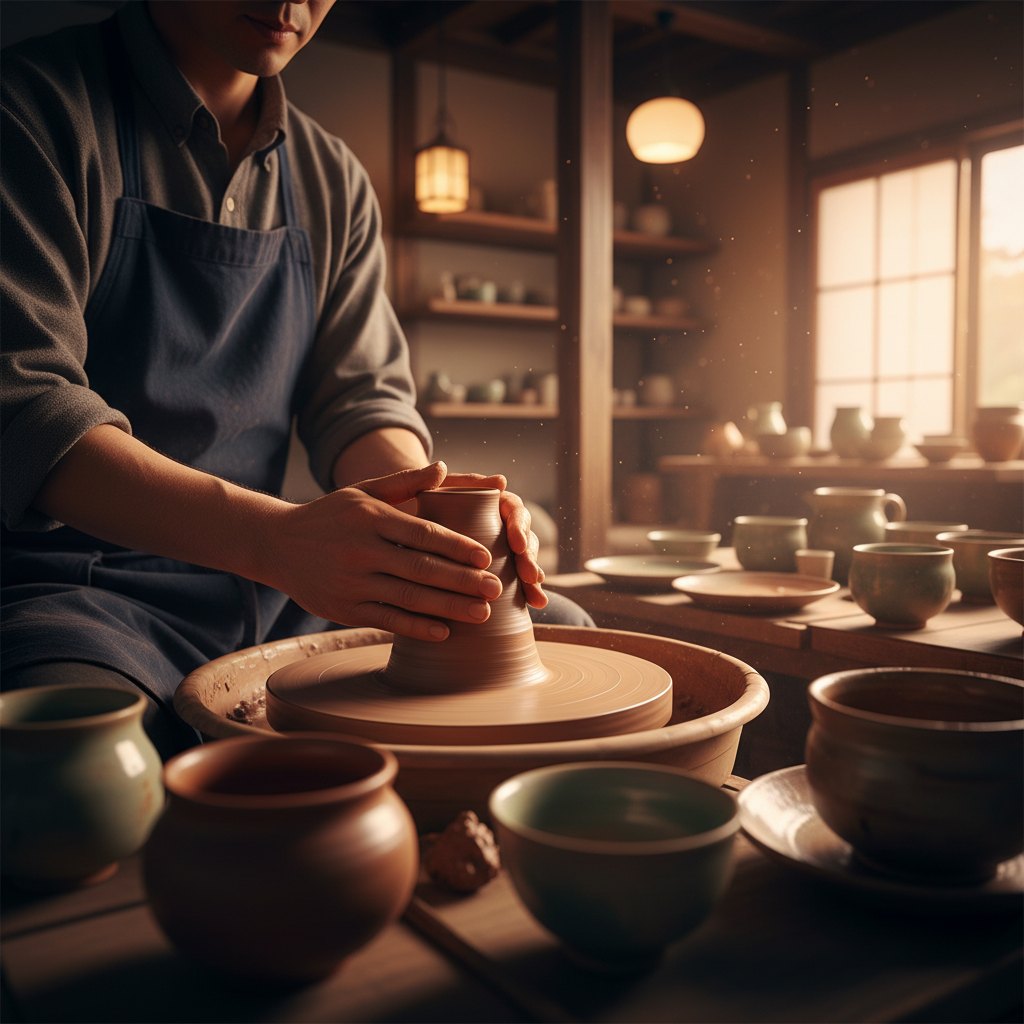
Forming is primarily conducted through hand work using the potter’s wheel. In the process of carefully shaping each piece, the artisan’s technique and sensibility are reflected. Even vessels of identical design display subtly different expressions due to handwork.
Biscuit Firing and Glazing
Following forming, vessels are dried sufficiently before entering the biscuit firing stage. Biscuit firing is conducted at temperatures around 800 degrees Celsius, strengthening the vessel and creating conditions favorable for glaze application.
Glaze application following biscuit firing is a critical process determining Kobu-shi ware’s quality. The glaze’s concentration, application method, and thickness significantly alter the finished vessel’s appearance. Particularly with glazes such as sea cucumber glaze, displaying complex coloring, long-standing experience and intuition are required.
Glaze Firing and Kiln Opening
Vessels that have been glazed proceed to the glaze firing stage. The kiln’s temperature exceeds 1200 degrees Celsius, and firing continues over more than ten hours at a gradual pace. Every process—the temperature rise curve, duration of maximum temperature, and cooling rate—affects the vessel’s finish.
Kiln opening occurs after sufficient cooling following firing. The moment the kiln opens is the most tense time for the artisan. The glaze’s coloring, vessel’s form, and presence or absence of cracks are all verified, and following rigorous inspection, products are released to the world.
Types and Uses of Kobu-shi Ware Vessels
Everyday Tableware
The foundational principle of Kobu-shi ware is “vessels that accompany daily life.” A rich array of vessels usable at the everyday table is available, including rice bowls, tea cups, plates, and bowls.
Everyday vessels emphasize practicality while possessing the beauty of adding color to the dining table. The gentle coloring of sea cucumber glaze harmonizes with both Japanese and Western cuisine, enhancing dishes. Additionally, meticulous attention is paid to usability—the vessel’s weight when held and how it feels at the mouth.
Tea Utensils and Special Vessels
Kobu-shi ware also concentrates efforts on producing tea utensils, such as tea bowls and water containers. Tea bowls using tenmoku glaze and copper red glaze are highly evaluated in the world of the tea ceremony.
Many works created as vessels for special occasions or gifts are produced. Offerings are diverse and suit various purposes, including large plates brightening anniversary dining tables and sake vessels appropriate for celebratory occasions.
Vessels Harmonizing with Contemporary Living Spaces
Recently, development of vessels adapted to contemporary lifestyles has been undertaken. Items usable as Western tableware, such as coffee cups and pasta plates, and flower vessels with designs harmonizing with modern interiors are also produced.
Vessel-making that capitalizes on traditional glaze techniques while naturally integrating into modern dining tables and living spaces represents a new challenge for Kobu-shi ware.
Kiln Endeavors – Continuation and Development of Tradition
Workshop Visits and Experience Classes
The Kobu-shi kiln hosts workshop visits and experience classes for those interested in ceramic arts. Visiting the actual production site allows one to understand the process through which vessels are created.
Experience classes provide opportunities such as forming using the potter’s wheel and decorative painting. The experience of creating vessels with one’s own hands deepens understanding of Kobu-shi ware and provides an opportunity to experience the joy of creation.
Events and Exhibition Openings
The Kobu-shi kiln regularly hosts exhibitions and events throughout Hokkaido and beyond. At exhibition and sales events held at the kiln, new works are introduced, and special pieces normally difficult to obtain are displayed.
Additionally, exhibitions are held outside the prefecture in cities such as Tokyo and Osaka, conveying Kobu-shi ware’s appeal to fans nationwide. Such events serve as valuable opportunities for artisans and users to interact directly.
Information Dissemination and Online Development
In contemporary times, efforts are also concentrated on information dissemination through websites and social media. Various information is conveyed, including introductions of new works, sharing of production scenes, and event information.
Sales are also conducted through online shops, making it possible for those living at a distance to obtain Kobu-shi ware. However, the importance of viewing actual items when selecting is also emphasized, with recommendations to view and purchase actual products whenever possible.
Kobu-shi Ware and Hokkaido’s Ceramic Culture
The History of Hokkaido’s Pottery
Hokkaido’s ceramic history is newer compared to Honshu. During the Edo period, pottery was created within Ainu culture, but full-scale ceramic production began after the Meiji period.
During the Meiji period, Sapporo ware was created but was discontinued after a short period. Subsequently, several kilns repeated cycles of opening and closure. Within this history, the continuing existence of Kobu-shi ware, which emerged after the war, holds significant meaning for Hokkaido’s ceramic culture.
Relationships with Other Hokkaido Pottery
Hokkaido is home to several kilns besides Kobu-shi ware. Each possesses unique characteristics while forming Hokkaido’s ceramic culture.
Kobu-shi ware, as the oldest kiln, has influenced ceramic artists and kilns throughout the prefecture. Through sharing of techniques and cooperation in exhibitions, it contributes to the development of Hokkaido’s ceramic culture overall.
Connection to the Folk Art Movement
The timing of Kobu-shi ware’s establishment coincides with the period when the folk art movement spread nationwide. The folk art movement found beauty in everyday-use vessels and pursued “beauty in utility.”
The first generation, Yamaoka Mishuai, also sympathized with this folk art movement’s principles and aimed to create vessels combining practicality and beauty. Today, this principle continues to be inherited as Kobu-shi ware’s fundamental stance.
Methods of Purchasing Kobu-shi Ware and Shops Handling It
Direct Purchase at the Kiln
The most reliable method of purchasing Kobu-shi ware is to visit the kiln in Iwamizawa. At the kiln, numerous works are constantly displayed and sold, allowing one to select pieces by directly handling them.
The advantage of visiting the kiln is not only viewing works directly but also hearing explanations from the artisan regarding the works’ characteristics and usage. Additionally, sensing the atmosphere of the production site deepens attachment to the vessels.
Shops and Galleries Handling the Ware
Kobu-shi ware is handled at department stores, specialty shops, and galleries both within and outside Hokkaido. In Tokyo, it can be purchased at vessel specialty shops in Ginza and other locations.
Shops handling the ware display carefully selected works, and expert staff can provide detailed explanations. Since regular exhibitions are also held, it is recommended to check for information.
Notes on Online Purchase
Kobu-shi ware can also be purchased through online shops, but several precautions exist when purchasing without viewing the physical item.
Since pottery differs in appearance from piece to piece, impressions differ between photographs and actual items. Particularly with glazes such as sea cucumber glaze displaying complex coloring, variations exist in color and pattern development. It is recommended to view actual items and purchase when possible.
How to Use Kobu-shi Ware and Care Instructions
Preparations Before First Use
Before using newly acquired Kobu-shi ware vessels, it is recommended to conduct a process called seasoning. Seasoning involves boiling the vessel in water mixed with rice-washing water or dissolved wheat flour, filling the clay’s fine crevices and preventing staining.
After seasoning is completed, the vessel is thoroughly washed and dried before use. This single step is the secret to using and maintaining vessels beautifully for an extended period.
Daily Maintenance Methods
Kobu-shi ware vessels can generally be handled like ordinary tableware. Following use, they are gently washed with a soft sponge and neutral detergent.
However, avoid soaking vessels in water for extended periods. Since pottery possesses water-absorbing properties, prolonged immersion can cause staining. After washing, water is thoroughly wiped away, and the vessel is dried sufficiently before storage.
Precautions for Long-term Use
Pottery is susceptible to sudden temperature changes; therefore, avoid warming the vessel before adding hot contents or immediately placing hot items into a vessel removed from the refrigerator.
Regarding use in microwave ovens and dishwashers, appropriate handling differs depending on the vessel. Verification at the time of purchase is recommended. Generally, vessels created using traditional techniques are recommended for hand washing.
Experiencing the Appeal of Kobu-shi Ware
Recommendation for Visiting the Kiln
To most deeply understand Kobu-shi ware’s appeal, a visit to the kiln in Iwamizawa is recommended. Within the kiln situated in Hokkaido’s naturally abundant environment, one can directly sense the atmosphere of the production site and the artisan’s thoughts.
When visiting, prior contact is recommended. Depending on timing, it may be possible to observe production in progress.
Treasuring One’s Meeting with a Vessel
Kobu-shi ware vessels each possess different expressions. Despite identical designs and glazes, subtle differences arising from the firing process grant each vessel individuality.
When selecting vessels, treasure encountering a piece that resonates with your heart. A vessel that feels comfortable to hold—its coloring, weight, everything sensed as pleasant—will become a vessel to enjoy for an extended period.
Incorporating Hokkaido’s Beauty into Daily Life
Incorporating Kobu-shi ware vessels into daily life also signifies inviting Hokkaido’s climate and history to the dining table. Drinking morning coffee from a sea cucumber glaze cup, serving evening stew in a bluish-white bowl—within such ordinary moments, the beauty nurtured by Hokkaido’s earth breathes.
Vessels gain richness in flavor as they are used, and a deep bond emerges between vessel and holder. Time spent with Kobu-shi ware vessels enriches daily life.
Conclusion – As a Ceramic Production Center of Which Hokkaido is Proud
Kobu-shi ware has continued vessel-making for over 75 years since its establishment in 1946 in Iwamizawa, Hokkaido. Throughout its inheritance from the first generation, Yamaoka Mishuai, to the third generation, Yamaoka Chiaki, the principle of “vessel-making rooted in Hokkaido’s climate” has consistently been upheld.
Unique glaze techniques centered on sea cucumber glaze, colors and finishes created by Hokkaido’s environment, and the stance of creating vessels accompanying daily life—all these factors position Kobu-shi ware as the ceramic production center representative of Hokkaido.
In contemporary times, Kobu-shi ware, continuing new challenges while honoring tradition, is a presence bearing Hokkaido’s ceramic culture into the future. Through kiln visits, experience classes, and exhibitions, many people can experience Kobu-shi ware’s appeal.
Should you have the opportunity to visit Hokkaido, by all means, visit the Kobu-shi kiln in Iwamizawa. By incorporating Kobu-shi ware vessels into your everyday dining table, you can feel close to the beauty nurtured by Hokkaido’s earth. Vessels crafted with meticulous care will accompany users’ lives and become cherished possessions.