
Zuishi Ware | The Renowned Celadon Kiln of Wakayama Prefecture and the History of Ceramic Producing Areas
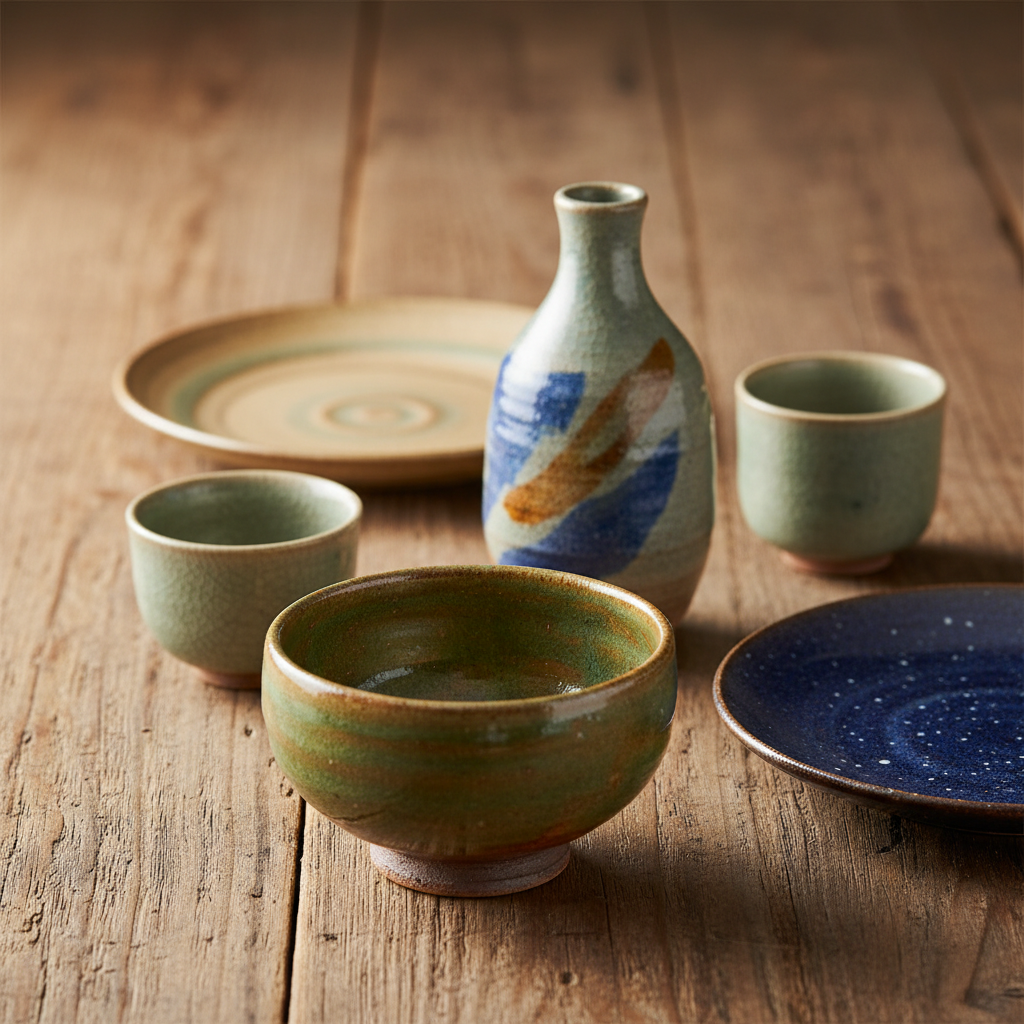
Zuishi ware (ずいしやき) is ceramics fired in Wakayama City, Wakayama Prefecture, characterized by beautiful celadon with a translucent blue-green hue. It flourished as an official kiln of the Kishu Clan, and kiln masters that continue to preserve tradition still exist today, making it one of the representative ceramic producing areas of Wakayama Prefecture. This article provides a detailed explanation of the history, characteristics, production methods, and changes in Zuishi ware up to the present day.
What is Zuishi Ware | Overview of Wakayama Prefecture’s Celadon Pottery
Zuishi ware is ceramics fired in Suzumaru-cho (すずまるちょう), Wakayama City, Wakayama Prefecture. It has multiple alternative names including “Suzumaru ware,” “Meppōtani ware (めっぽうたにやき),” “Nago ware,” “Kijō ware,” and “Wakayama ware.” These alternative names derive from the place names of the producing area and its relationship with the Kishu Clan.
The name “Zuishi” means “fresh verdant grass,” and true to its name, the distinctive color characteristic is the blue-green hue expressing the green of grass. This unique color is produced through celadon techniques inherited from China’s Longquan kiln (りゅうせんよう).
Zuishi ware is counted as one of the “Three Great Kilns of Early Modern Kishu” alongside Kairakuen ware (かいらくえんやき) and Nanki Otokoyama ware (なんきおとこやまやき), occupying an important position as a ceramic producing area in Wakayama Prefecture.
The History of Zuishi Ware | From Founding to Present
Founding Period | Opening with Official Permission from the Kishu Clan
The history of Zuishi ware begins in Kansei 8 (1796). Sakaue Shigejiro (first generation), a wealthy merchant in Wakayama Castle town, obtained official permission from the Kishu Clan to open the kiln. According to another account, the founding date was Kyōwa 1 (1801), and there are slight chronological differences depending on historical records.
The first-generation Sakaue Shigejiro researched the techniques of China’s Longquan kiln and succeeded in celadon production. The beautiful blue-green hue caught the eye of Kishu Clan Lord Tokugawa Harutomi (とくがわはるとみ), and it was recognized as an official kiln of the clan. The fact that the clan lord himself bestowed the name “Zuishi ware” elevated the status of the kiln.
Golden Period | Prosperity as an Official Kiln of the Kishu Clan
Having become an official kiln of the Kishu Clan, Zuishi ware achieved development under the clan’s protection. During the time of the second-generation Sakaue Shigejiro, diverse products were made beyond tea implements and everyday utensils, including braziers, incense burners, and flower vases.
The refined beauty of celadon products received high evaluation, and master artisans from other regions including Kyoto took notice. Zuishi ware artisans not only produced celadon but also created imitations of other famous kilns, broadening their technical range.
In works that remain today, marks such as “Nanki Zuishi-dō sei” are impressed as intaglio seals, indicating their high status. Works such as “Celadon Brazier with Six-Petaled Hollyhock and Arabesque Designs” and “Celadon Hand Brazier with Chrysanthemum Openwork” are preserved as cultural heritage.
Late Edo to Meiji Period | System Change and Kiln Closure
The social transformation brought about by the Meiji Restoration had a major impact on Zuishi ware. From Meiji 2 (1869) into the following year, it was placed under the control of the Kishu Clan’s Kaibutsu Bureau (かいぶつきょく) and operated as part of the clan’s policy for industrial development.
The kiln continued until Meiji 7 (1874), during the time of the second-generation Sakaae Shigejiro, but management became difficult after losing the clan’s protection. Subsequently, Kitabayashi Tōzaburō, a former administrative official, took over management for approximately one year, but the kiln closed in Meiji 8 (1875). Some materials indicate that ceramic production continued until around Meiji 9 (1876), and there are various theories about the exact time of closure.
Modern Era | Revival and Inheritance of Tradition
Although Zuishi ware ceased production, its tradition has been revived in modern times. Currently, the sixth-generation Sakaue Shigejiro maintains the kiln and continues the traditional techniques as “Zuishi-dō,” the Zuishi ware kiln.
With a workshop in Wakayama City, he produces celadon products inheriting the tradition of the former official kiln of the Kishu Clan Tokugawa family. He works on a wide range of products from everyday use to tea implements, including tea cups, rice bowls, and matcha whisks rests, with prices ranging from around 1,000 yen to high-end items exceeding 100,000 yen.
Characteristics of Zuishi Ware | The Beauty of Celadon and Technique
Distinctive Blue-Green Color | The Longquan Kiln Tradition
The greatest characteristic of Zuishi ware is its beautiful, translucent blue-green hue. This color expresses “fresh verdant grass” and derives from the celadon technique developed at the Longquan kiln in Zhejiang Province, China.
The Longquan kiln reached its peak from the Song to Yuan dynasties and was a renowned Chinese kiln whose celadon was prized in Japan as “kinu-ta seiji” (砧青磁). Zuishi ware succeeded in studying the Longquan kiln’s techniques and reproducing them with Japanese materials and technology, making it a valuable kiln.
The beauty of color is determined by glaze composition and firing technique. The gray-tinged green glaze with depth is particularly highly evaluated, with a sophisticated quality that changes appearance depending on how light falls upon it.
Production Technique | The Process of Celadon Production
Zuishi ware production employs traditional celadon techniques. First, carefully selected ceramic clay is shaped. Wheel-throwing, hand-building, and other techniques are chosen according to the type of work.
After shaping, the piece is thoroughly dried before bisque firing. After bisque firing, celadon glaze is applied. The composition of this glaze is the key to creating Zuishi ware’s distinctive blue-green color. By reduction firing with iron-bearing glaze, a beautiful blue-green color is produced.
As for decorative techniques, linear incised design is characteristic. Refined patterns such as hollyhock designs, arabesque designs, and chrysanthemum openwork are applied. Works using the “six-petaled hollyhock,” the family crest of the Tokugawa family of Kishu, are particularly indicative of the status as an official kiln.
Types of Works | From Tea Implements to Everyday Items
Diverse works were produced at Zuishi ware. As tea implements, there are tea bowls, water vessels, waste water basins, and incense containers. The matcha whisk rest is a particularly representative work, currently produced for prices ranging from 20,000 to 100,000 yen.
As everyday items, braziers, hand warmers (teaburi), flower vases, and incense burners were made. These combined practicality with artistic quality and were favored by the upper classes of Kishu.
Everyday items such as tea cups and rice bowls were also produced, and are currently available from around 1,000 yen. The ability to enjoy celadon’s beauty in everyday life is also part of Zuishi ware’s appeal.
Positioning as a Ceramic Producing Area in Wakayama Prefecture
One Corner of the Three Great Kilns of Early Modern Kishu
Zuishi ware is called one of the “Three Great Kilns of Early Modern Kishu” along with Kairakuen ware and Nanki Otokoyama ware. Each kiln has distinctive characteristics and formed Wakayama Prefecture’s ceramic culture.
Kairakuen ware was a kiln opened by Kishu Clan Lord Tokugawa Harutomi in the Kairakuen within Wakayama Castle during the Bunka era (1804-1818), characterized by Kyoto-style colored porcelain. Nanki Otokoyama ware opened during the Bunsei era (1818-1830) and specialized in underglaze blue and colored decoration.
In comparison with these kilns, Zuishi ware established a unique position as a kiln specializing in celadon. Each possessed different techniques and aesthetic sensibilities, creating diversity in Wakayama Prefecture’s ceramic producing areas.
Suzumaru-cho, Wakayama City | Geographic Background of the Producing Area
Suzumaru-cho, the producing area of Zuishi ware, was located in the Wakayama Castle town. This area, popularly called “Meppōtani,” possessed geographic conditions suitable for ceramics production.
Its proximity to Wakayama Castle was important in fulfilling the role as an official kiln. It was convenient for delivery to the clan lord and upper-ranking samurai, and offered an environment conducive to receiving clan protection and guidance.
Currently, a Zuishi ware kiln exists within Wakayama City, continuing the tradition. Though traces of the former producing area have faded, factory tours and work purchases are possible at the kiln, allowing visitors to experience the history and techniques of Zuishi ware.
Relations with Other Ceramic Producing Areas
Zuishi ware had deep relations with Kyoto’s ceramic culture. There was exchange with Kyoto’s master artisans, and technical influence is documented. Also, by producing imitations of various kilns, artisans developed their techniques.
In comparison with blue-green glaze kilns elsewhere in Japan, Zuishi ware is valued for faithfully reproducing Longquan-lineage celadon. Celadon kilns from the same period include Kyoto’s Awata-guchi ware and Okayama’s Mushiake ware, each possessing distinctive coloration and techniques.
The celadon techniques of Zuishi ware influenced ceramic culture within Wakayama Prefecture and were inherited by potters of subsequent generations.
Zuishi Ware Cultural Heritage and Extant Works
Works of Important Cultural Property Grade
Among Zuishi ware works, some are preserved as cultural heritage. The “Celadon Brazier with Six-Petaled Hollyhock and Arabesque Designs” is a brazier with a six-petaled hollyhock and arabesque design in linear incision, with a beautiful gray-tinged green glaze. An intaglio seal mark reading “Nanki Zuishi-dō sei” is found on the inside of the base.
The “Celadon Hand Brazier with Chrysanthemum Openwork” is also a representative work, with chrysanthemum openwork applied to a hand warmer (a device for warming hands). These works are introduced on sites such as the Digital Repository of Japanese Cultural Heritage, demonstrating the technical achievement of Zuishi ware.
These refined celadon products prove that Zuishi ware not only produced everyday items but also created works of high artistic quality.
Holdings in Museums and Art Museums
Zuishi ware works are held in museums and art museums throughout Wakayama Prefecture and beyond. The Wakayama Prefectural Museum, Wakayama City Museum, and others maintain collections of Zuishi ware and occasionally display them in permanent or special exhibitions.
Also, works are held in museums in Kyoto and Tokyo, as well as by private collectors, and are traded in the antique market. Particularly, works with maker’s marks and celadon pieces in good condition receive high valuations.
Modern Evaluation and Value
In modern times, Zuishi ware has been reevaluated as a representative of Wakayama Prefecture’s ceramic culture. Though it has a history of closure, the fact that its tradition has been revived and production continues is valuable.
Modern works attract attention from tea ceremony enthusiasts and ceramic collectors, beyond their value as antiques. The production of works that preserve traditional celadon techniques while harmonizing with contemporary life is appreciated.
The Current State of Zuishi Ware Kiln | The Sixth Generation’s Challenge
Activities of Zuishi-dō
Currently, the sixth-generation Sakaue Shigejiro operates the Zuishi ware kiln “Zuishi-dō.” Inheriting the tradition of the former official kiln of the Kishu Clan Tokugawa family, he works on celadon production.
The workshop is located in Wakayama City, where ceramics are produced using traditional techniques. He works on diverse products including tea cups, rice bowls, and matcha whisks rests, with widely varied pricing. Beginner-level tea cups are priced from around 1,000 yen, while full-scale tea implements such as matcha whisks rests range from 20,000 to 100,000 yen.
Inheritance and Innovation of Traditional Techniques
The sixth generation challenges both preserving traditional celadon techniques and creating works responding to contemporary needs. Building on Longquan-lineage celadon techniques, he continues research on glazes and improvements to firing methods.
Inheriting tradition requires not only technique but also its spiritual nature. Communicating the aesthetic sensibility of Zuishi ware’s “fresh verdant grass” to the present age becomes the mission of the kiln.
Methods for Purchase and Viewing
Zuishi ware works can be purchased directly at the kiln “Zuishi-dō.” With prior notice, factory tours are also possible. By observing the production process and experiencing the artisan’s technique firsthand, understanding of Zuishi ware deepens.
Also, works may be handled at craft shops and souvenir stores within Wakayama Prefecture. Internet mail order purchases are possible, but it is recommended to examine actual pieces in hand to confirm the color and texture of the celadon.
Zuishi Ware and Wakayama Prefecture’s Ceramic Culture
Kishu Clan Cultural Policies and Ceramics
The Kishu Clan, one of the Tokugawa Three Lords, devoted effort to cultural promotion. In particular, the tenth-generation clan lord Tokugawa Harutomi was known as a cultured person who encouraged ceramic production.
It was Harutomi who bestowed the name “Zuishi ware” upon it, and it was Harutomi who opened Kairakuen ware. The fact that the clan lord himself maintained deep interest in ceramic culture and supported kiln openings and artisan development led to the formation of Wakayama Prefecture’s ceramic producing areas.
Positioning as a Wakayama Prefecture Craft
In modern times, Zuishi ware is positioned as a traditional craft of Wakayama Prefecture. It attracts attention as a tourism resource of the prefecture, drawing ceramic enthusiasts and tourists from within and outside the prefecture.
Among Wakayama Prefecture’s crafts are Kishu lacquerware, Kishu binchotan charcoal, and Kishu fishing rods, but Zuishi ware is known among these for its historical value and high artistic quality.
Regional Revitalization and Cultural Transmission
The inheritance of Zuishi ware is important not merely as preservation of traditional crafts but from the perspective of regional revitalization. As an indicator of Wakayama City’s historical identity and as a tourism resource, Zuishi ware contributes to the region.
Various efforts are needed, including successor training, documentation of techniques, and increased opportunities for work exhibition. The administration, kiln, and local residents must cooperate in transmitting Zuishi ware’s culture to future generations.
Conclusion | The Appeal and Future of Zuishi Ware
Zuishi ware is celadon pottery fired in Wakayama City, Wakayama Prefecture, characterized by beautiful, translucent blue-green hue. It was opened in Kansei 8 (1796) by first-generation Sakaue Shigejiro and flourished as an official kiln of the Kishu Clan. The celadon techniques inherited from China’s Longquan kiln were highly valued, and it is counted as one of the Three Great Kilns of Early Modern Kishu.
Though it closed once during the Meiji period, the sixth-generation Sakaue Shigejiro currently maintains the kiln, continuing the tradition. The beautiful celadon expressing “fresh verdant grass” continues to captivate many people in the modern era.
As a ceramic producing area representing Wakayama Prefecture, Zuishi ware is an entity embodying the region’s history and culture. By continuing to produce works that preserve traditional techniques while responding to contemporary needs, Zuishi ware will transmit its value into the future.
When visiting Wakayama, be sure to visit the Zuishi ware kiln and experience this beautiful world of celadon. You will surely come to appreciate the profundity of Japanese ceramic culture and the unique appeal of local kilns.