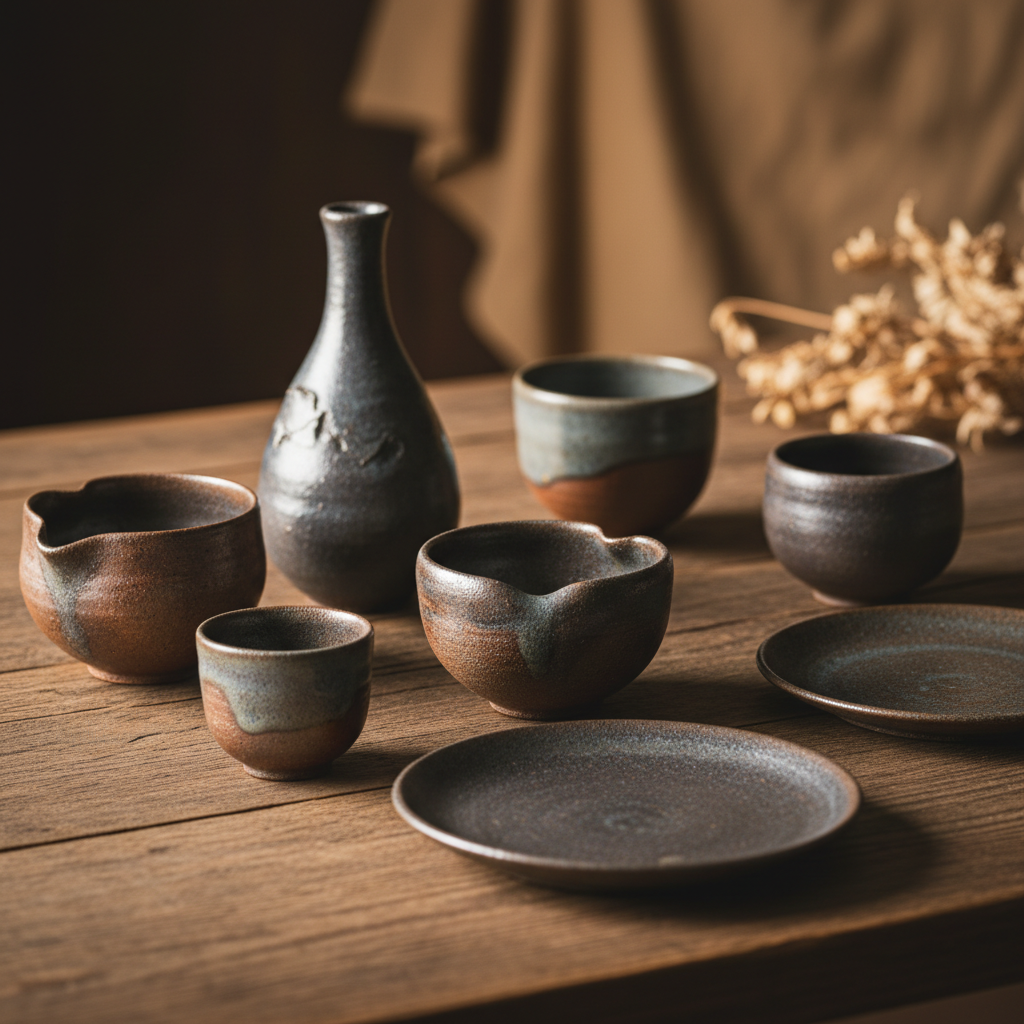

Yunotsu Ware Complete Guide | History and Charm of Shimane Prefecture’s Representative Ceramic Production Area
Yunotsu ware (yunotsu-yaki), fired in Yunotsu Town, Oda City, Shimane Prefecture, is a ceramic production area boasting over 300 years of history and represents the traditional crafts of Shimane Prefecture. Using highly fire-resistant Ishimi clay and fired at high temperatures, the robust pottery was once shipped throughout Japan in water jars called “hando,” achieving great prosperity. This article provides comprehensive information about the history, characteristics, current kilns, and must-see spots of Yunotsu ware, conveying the full appeal of this traditional craft.
History and Development of Yunotsu Ware
The Beginning of Yunotsu Ware and the Opening of Kilns in the Hoei Era
The history of Yunotsu ware began with the opening of three kilns during the Hoei era (1704-1708) of the Edo period. This was a time when the Iwami silver mine reached its peak, and Yunotsu Port thrived as the shipping port for its silver.
Several geographical and resource advantages contributed to Yunotsu’s development as a ceramic production area. First, Yunotsu Port, a natural harbor with a ria-type coast, could accommodate large vessels and flourished as a port of call for kitamaebune (northern trading ships). Additionally, all conditions necessary for pottery production were present: sloping terrain suitable for building climbing kilns, high-quality ceramic clay and glaze found in the area, abundant timber, and clear water.
The Golden Age of Renown Throughout Japan with “Hando”
Yunotsu ware became nationally known through the production of large water jars called “hantō” (half-tō). Due to their durability and practicality, hando were in wide demand as everyday items and became the main product of Yunotsu ware from the late Edo period through the Meiji era.
Hando shipped throughout Japan via kitamaebune from Yunotsu Port were highly evaluated for their quality, establishing the reputation of Yunotsu ware. Many kilns operated in Yunotsu at that time, and it prospered greatly as a center for everyday ceramics production.
Decline in the Showa Period and Revival Through the Mingei Movement
While Yunotsu ware flourished from the Meiji through Taisho periods, the situation changed dramatically with the onset of the Showa period. The development of new materials such as plastics and chemical products caused demand for traditional ceramic products to decline sharply. In particular, hando, the main product, was replaced by cheaper and lighter alternatives, and Yunotsu ware entered a period of serious decline.
The crisis was resolved by encounters with proponents of the Mingei (folk craft) movement, including Soetsu Yanagi. In particular, a potter named Jozō Arao continued to preserve the traditions of Yunotsu ware, which had nearly disappeared, and passed the techniques and spirit to the next generation. Hiroshi Arao, the son of Jozō Arao, inherited his father’s will and opened the Tsubaki Kiln, contributing to the revival of Yunotsu ware.
Influenced by the Mingei movement, Yunotsu ware gained new appreciation as ceramics pursuing “beauty of utility,” combining practicality and beauty. Currently, kilns continue to operate, preserving traditional techniques while creating tableware and crafts suited to modern living.
Characteristics and Manufacturing Methods of Yunotsu Ware
Robust Pottery from Ishimi Clay
The greatest characteristic of Yunotsu ware lies in its robustness. The strength comes from the use of highly fire-resistant Ishimi clay. This clay, found in the Ishimi region, contains considerable iron content and produces a unique color when fired.
Yunotsu ware uses this Ishimi clay and fires it at approximately 1300°C, producing hard, crack-resistant pottery. This high-temperature firing extends the pottery’s service life and increases its practicality as an everyday item.
Traditional Firing in Climbing Kilns
Traditional climbing kilns are used in the production of Yunotsu ware. Built in a staircase pattern using sloped terrain, climbing kilns are structured to efficiently generate high temperatures.
At Yunotsu Yakimono no Sato, massive climbing kilns said to be among the largest in Japan—measuring 30 meters long (15 stages) and 20 meters long (10 stages)—have been reconstructed, allowing visitors to see their grand scale up close. These climbing kilns are reconstructions of ones built in the mid-Edo period and have become valuable cultural properties conveying the history of Yunotsu ware to the present day.
Diversity of Glaze and Color
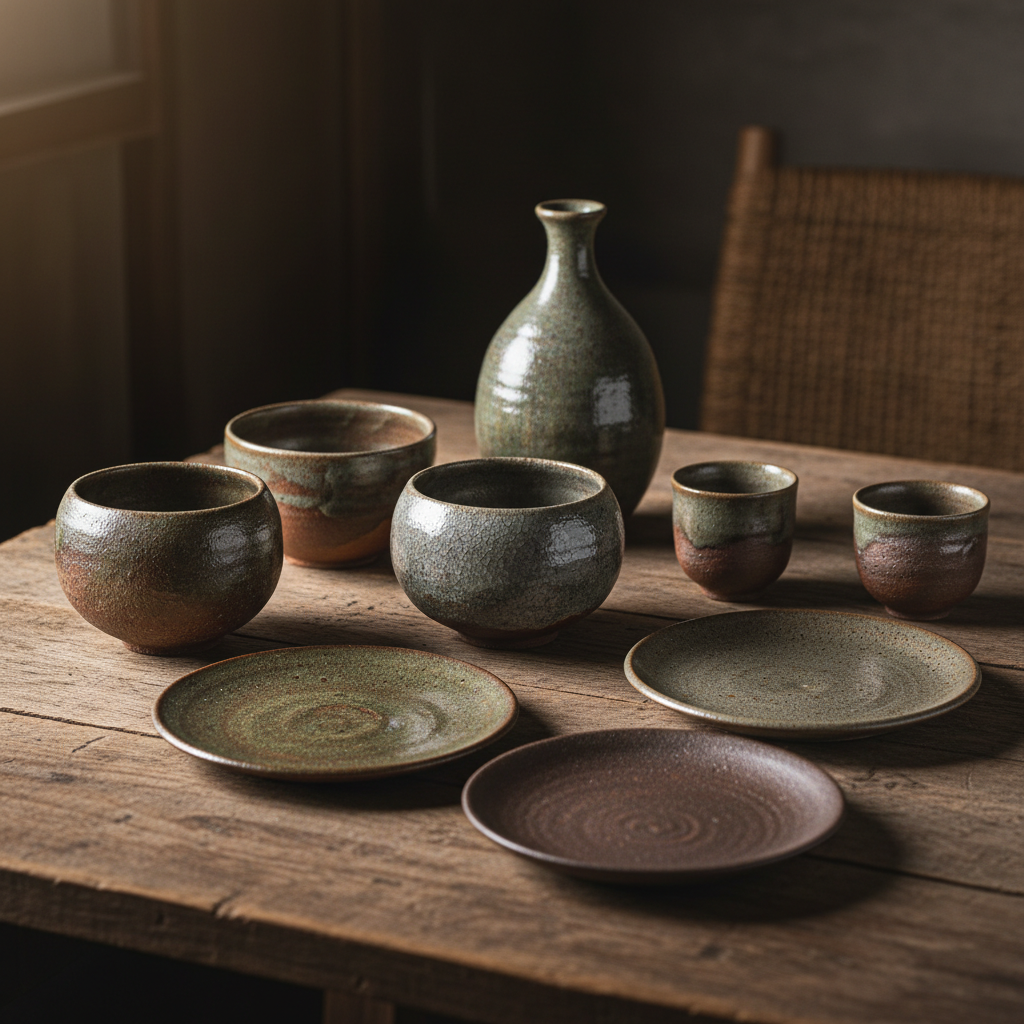
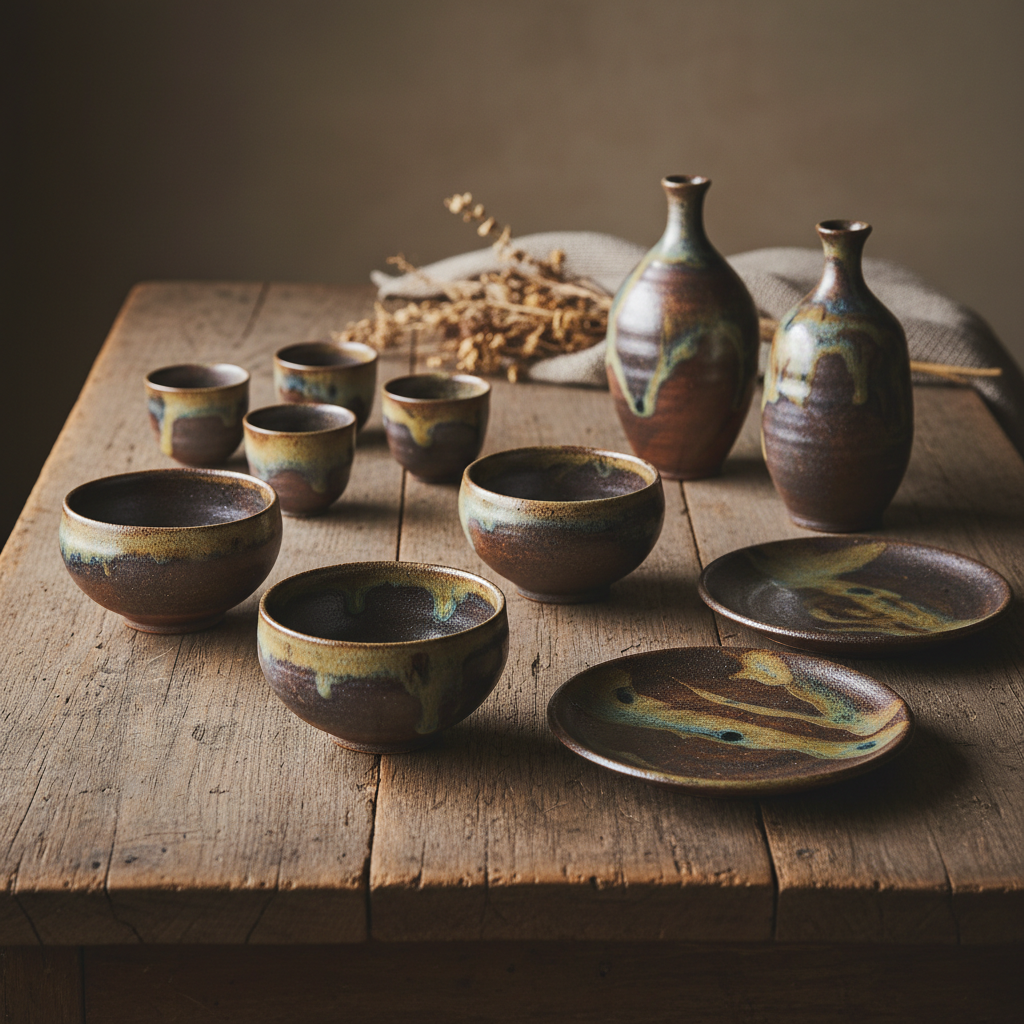
Yunotsu ware has traditionally used natural glazes found locally. Combined with the iron-rich Ishimi clay, warm brown and dark brown tones emerge after firing.
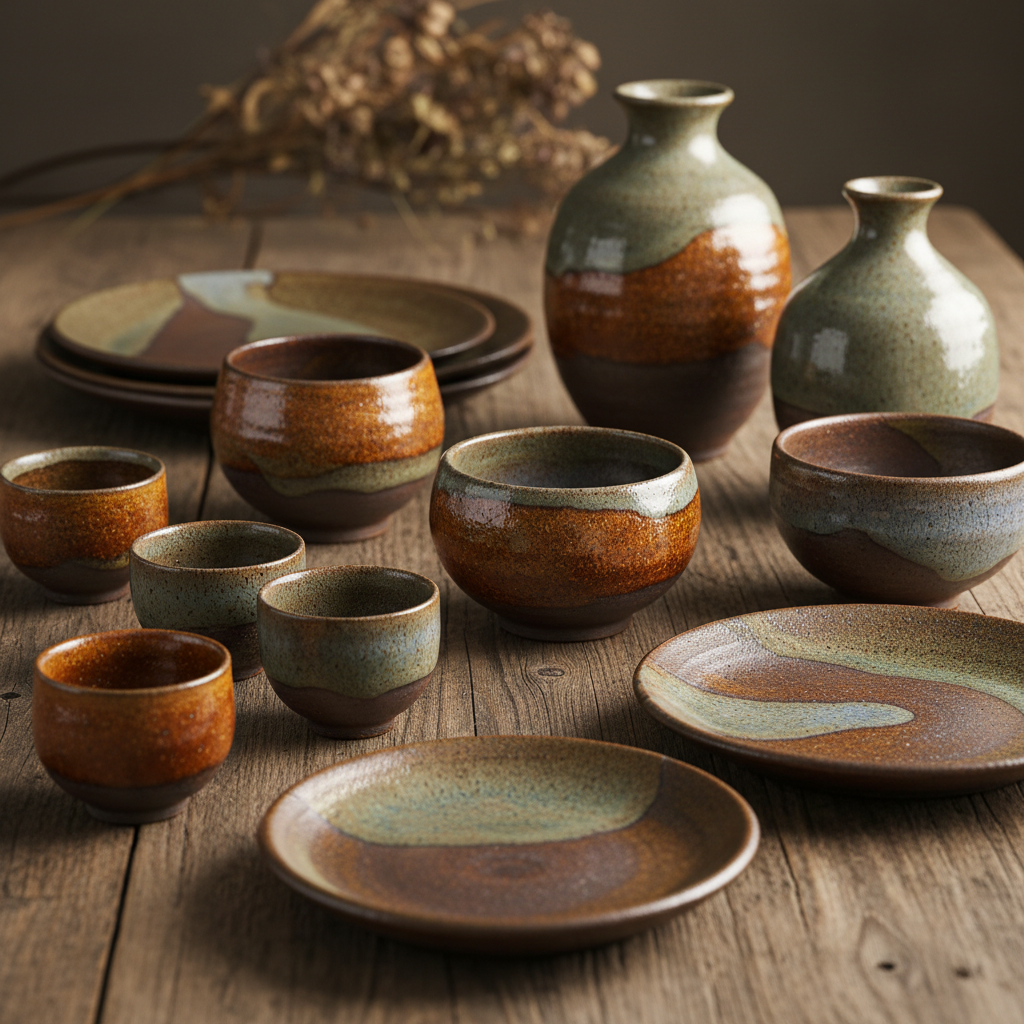
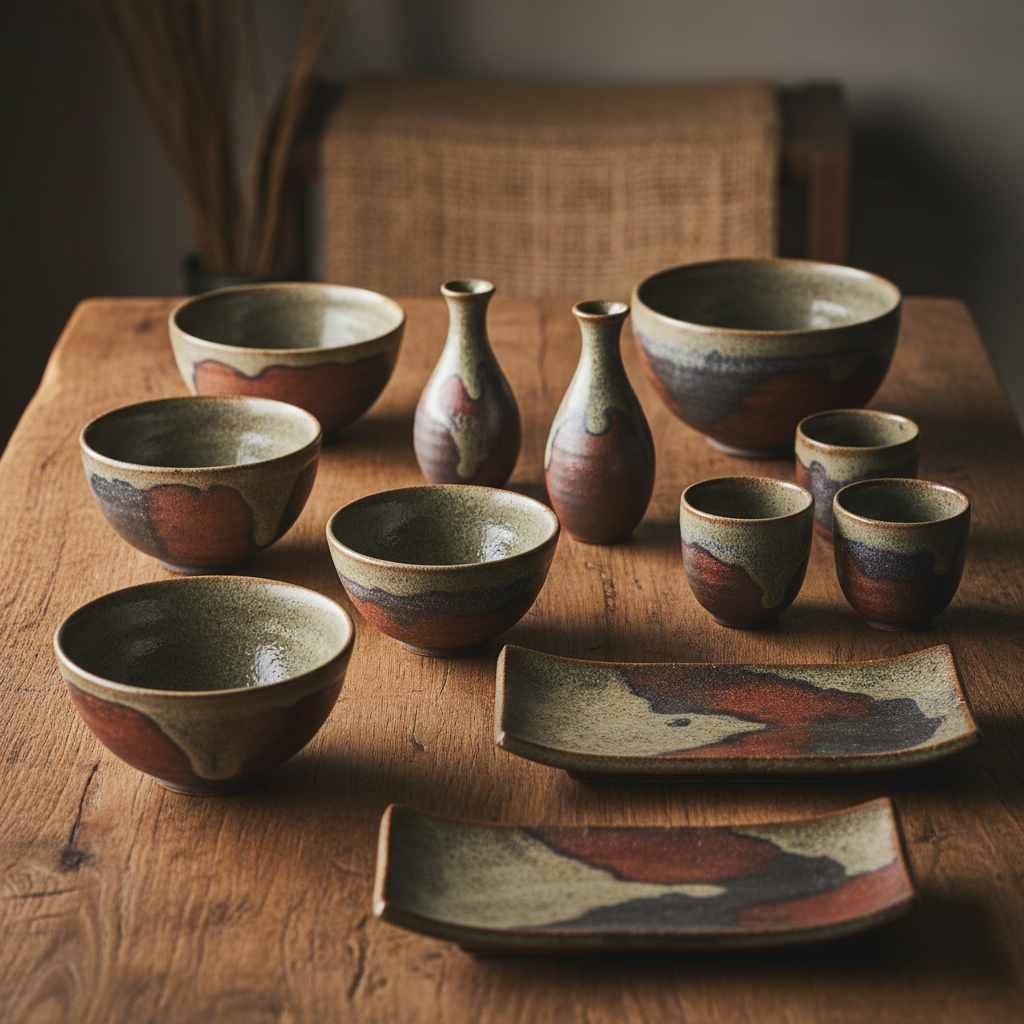
Current kilns research and develop various glazes with diverse colors and textures in addition to traditional ones, producing works that harmonize with modern living spaces. Nevertheless, the primitive and powerful texture unique to Ishimi clay is preserved as a characteristic of Yunotsu ware.
Current Yunotsu Ware Kilns
Tsubaki Kiln (Tsubaki Kiln Co., Ltd.)
Tsubaki Kiln is essential to any discussion of Yunotsu ware’s revival. Opened by Hiroshi Arao, Tsubaki Kiln creates tableware and crafts suited to modern living while inheriting the spirit of the Mingei movement.
Tsubaki Kiln’s works maintain traditional techniques while pursuing usability and design. Known as a representative kiln of Yunotsu ware, it handles works ranging from everyday tableware to special crafts.
Moriyama Kiln
Moriyama Kiln is another important kiln conveying the tradition of Yunotsu ware to the present. While based in traditional techniques, it pursues a unique style and produces individual works.
Each kiln maintains its own individuality and technique while preserving the common tradition of Yunotsu ware. Visitors can directly visit kilns to engage in dialogue with artists and find their own unique pieces.
Yunotsu Yakimono no Sato and Experience Facilities
Yakimono-kan Displays and Sales
“Yakimono-kan,” the central facility of Yunotsu Yakimono no Sato, is a place to learn about the history and present of Yunotsu ware. The hall displays historical materials and valuable antique works from Yunotsu ware, allowing visitors to understand the changes in this ceramic production area.
Additionally, outstanding works by currently active kilns are displayed and sold, making it possible to see and select a diverse range of works, from traditional crafts to contemporary designed tableware.
Facility information is as follows:
- Address: 22-2 Yunotsu I, Yunotsu Town, Oda City, Shimane Prefecture 699-2501
- Hours: 9:00-17:00
- Closed: Every Wednesday and year-end/new year holidays
Pottery Creation Experience
In the creation studio of Yakimono-kan, pottery experiences such as hand-throwing and painting are available. Even beginners can participate easily and create their own original works.
In the pottery experience, visitors can directly experience the texture of Ishimi clay, a characteristic of Yunotsu ware, and realize the profundity of traditional crafts. Created works are fired at the kiln and sent home afterward, allowing visitors to enjoy the memory of their trip for a long time.
Experiences are by reservation; it is recommended to inquire before visiting.
Viewing the Largest Climbing Kilns in Japan
The two massive climbing kilns at Yunotsu Yakimono no Sato, symbols of the site, are open for viewing. Their scale—measuring 30 meters and 20 meters, the largest in Japan—has overwhelming impact when actually seen.
These climbing kilns are valuable cultural heritage conveying the prosperity of Yunotsu ware in the Edo period to today. Visitors can closely observe the staircase structure utilizing sloped terrain and the arrangement of firing chambers, observing the wisdom and techniques of their predecessors.
The Charm of Yunotsu and Surrounding Tourism
Relationship with World Heritage Iwami Silver Mine
Yunotsu is registered as part of the World Heritage site “Iwami Silver Mine Heritage and Its Cultural Landscape.” The history of Yunotsu thriving as the shipping port for silver mined at Iwami Silver Mine is closely connected to the development of Yunotsu ware.
The kitamaebune used for silver transport carried Yunotsu ware products on the return journey to all regions of Japan, becoming the catalyst for Yunotsu ware’s nationwide spread. Understanding this historical background deepens appreciation of Yunotsu ware.
Strolling Through the Yunotsu Hot Spring Town
As its name suggests, Yunotsu is also known as a hot spring resort. The hot spring town, designated as an Important Preservation District for Groups of Historic Buildings, is a picturesque area with townscapes remaining from the Edo period.
After visiting Yakimono-kan, one can stroll through the hot spring town and soak in the historic waters, experiencing Yunotsu’s culture with all five senses. The appeal of Yunotsu lies in being able to simultaneously enjoy pottery and hot springs, two traditional Japanese cultures.
How to Purchase Yunotsu Ware
Direct Kiln Visits
The best way to purchase Yunotsu ware is to visit kilns directly. By selecting works while conversing with artists, one can learn about the thoughts and techniques behind the pieces.
Some kilns, such as Tsubaki Kiln and Moriyama Kiln, accept workshop visits, and production processes can sometimes be observed. It is recommended to contact in advance before visiting.
Purchase at Yakimono-kan
Yakimono-kan at Yunotsu Yakimono no Sato displays works from multiple kilns in one place. This allows comparison of each kiln’s characteristics while selecting, making it especially recommended for those purchasing Yunotsu ware for the first time.
Staff will carefully explain the characteristics and usage of Yunotsu ware, allowing you to purchase with confidence.
Shimane Prefecture Products and Tourism Hall
For those unable to visit from outside Shimane Prefecture, Yunotsu ware can be purchased at the Shimane Prefecture Products and Tourism Hall. As a specialty shop handling traditional crafts of Shimane Prefecture, carefully selected Yunotsu ware is sold there.
Use and Care of Yunotsu Ware
Yunotsu Ware as Everyday Tableware
Yunotsu ware developed as everyday items and ceramics produced today are mostly designed with practicality for daily use in mind.
The robustness from high-temperature firing possesses sufficient strength to withstand everyday use. Various tableware is produced including rice bowls, teacups, plates, and bowls, allowing one to enjoy the warmth of Yunotsu ware at the daily table.
Tips for Caring for Pottery and Making It Last
Proper care is important for using Yunotsu ware long-term. Soaking in water once before first use helps prevent dirt and staining.
After use, wash gently with a soft sponge and dry thoroughly before storing. Avoid sudden temperature changes; regarding microwave and dishwasher use, this varies by work, so it is recommended to confirm at purchase.
The appeal of pottery lies in increasing in character with use. Yunotsu ware too develops unique qualities with long-term use, growing into your own vessel.
Yunotsu as a Ceramic Production Area in Shimane Prefecture
Relationship with Ishimi Ware
The relationship between Yunotsu ware and Ishimi ware is important when discussing ceramic production areas in Shimane Prefecture. Broadly, Yunotsu ware is sometimes included in Ishimi ware, but Yunotsu ware is generally distinguished as a production area with its own history and characteristics.
The entire Ishimi region is a ceramic production area blessed with high-quality clay, and Yunotsu ware can be said to be a production area that developed by taking advantage of its geographical condition as a port town.
Positioning as Traditional Craft of Shimane Prefecture
Yunotsu ware is recognized as one of Shimane Prefecture’s representative traditional crafts. It is listed on Shimane Prefecture’s traditional craft inventory and is a subject of protection and promotion as a cultural asset of the prefecture.
The historical background tied to the World Heritage Iwami Silver Mine, traditional techniques continuing for over 300 years, and the existence of kilns preserved to the present day indicate that Yunotsu ware is not merely a local pottery but one of the production areas representing Japan’s ceramic culture.
Summary: Experience the Charm of Yunotsu Ware
Yunotsu ware is a ceramic production area with over 300 years of history in Yunotsu Town, Oda City, Shimane Prefecture. Beginning in the Hoei era and gaining renown throughout Japan with water jars called “hando,” it faced a crisis of decline but achieved revival under the influence of the Mingei movement.
Made from highly fire-resistant Ishimi clay and fired at 1300°C, Yunotsu ware is characterized by being durable, crack-resistant, and long-lasting. Kilns continue to operate in Yunotsu, preserving traditional techniques while creating tableware and crafts suited to modern living.
At Yunotsu Yakimono no Sato, visitors can enjoy multiple aspects of Yunotsu ware’s charm, including viewing the nation’s largest climbing kilns, displays and sales at Yakimono-kan, and pottery experiences. Combined with its historical connection to World Heritage Iwami Silver Mine and the picturesque townscape of the hot spring town, Yunotsu is a precious place to experience Japan’s traditional culture.
When visiting Shimane Prefecture, be sure to visit Yunotsu and directly experience the charm of this historic ceramic production area. By visiting kilns, engaging in dialogue with artists, and handling the vessels firsthand, you will be able to sense the true value of Yunotsu ware.