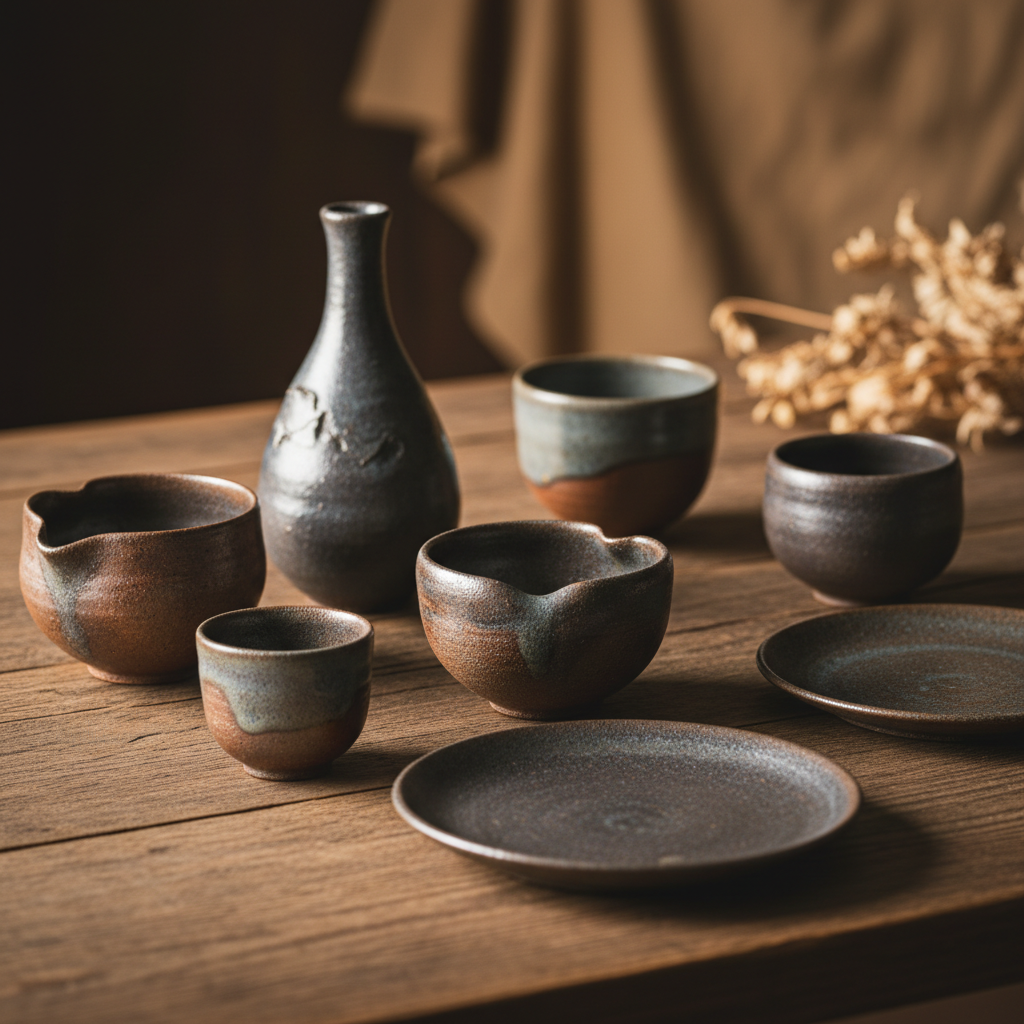
What is Iwami Ware? A Thorough Explanation of the History and Characteristics of Shimane Prefecture’s Representative Ceramic Producing Region
Basic Information on Iwami Ware (Iwamiyaki)
Iwami ware is a general term for pottery that has been produced since the mid-18th century in the Iwami region in western Shimane Prefecture, particularly centered around Gotsu City. It was designated as a traditional craft by the government in 1994 (Heisei 6) and has a history of nearly 300 years as Shimane Prefecture’s representative ceramic producing region.
The most distinctive feature of Iwami ware is the large water jar called “handō.” This unique large-scale pottery was transported throughout Japan by kitamaebune (merchant ships) from the late Edo period through the Meiji era, making the name of Iwami ware known throughout the country. Today, while preserving tradition, diverse products suited to modern lifestyles continue to be produced.
Iwami Ware Production Area and Geographic Characteristics
The main production area of Iwami ware is Gotsu City in Shimane Prefecture, with production occurring throughout the surrounding Iwami region. This area has long been known as a land rich in high-quality ceramic clay, and the clay extracted from the geological layer known as the Tsuno-zu layer in particular possesses strong adhesive properties ideal for pottery production.
Gotsu City is a port town facing the Japan Sea and was once prosperous as a port of call for kitamaebune merchant ships. This geographic condition played an important role in distributing Iwami ware throughout the country. Even today, multiple kilns exist in Gotsu City, and some kilns using traditional climbing kilns remain.
History and Development of Iwami Ware
Origins and Early Period (Mid-18th Century)
The history of Iwami ware is said to have begun in earnest during the Hōreki era (1751-1764) of the Edo period. At that time, pottery craftsmen from what is now Yamaguchi Prefecture moved to the Iwami region and transmitted pottery-making techniques to local craftspeople, marking the beginning of the tradition.
Early Iwami ware centered on small everyday items such as sake flasks and sake bottles. However, as the special properties of the high-quality clay abundant in this region came to be recognized, production gradually developed toward larger-scale items.
Heyday (Meiji Era)
Iwami ware experienced its greatest prosperity during the Meiji era. During this period, mass production systems for large handō were established, and at its peak, more than 100 kilns were said to be in operation.
During the Meiji era in Japan, demand for containers for food storage increased, and large Iwami ware handō with superior durability became nationally popular. Utilizing sea transport routes via kitamaebune, products were shipped over a wide range from Hokkaido to Kyushu. They were particularly highly valued as jars for pickles, praised for their resistance to acids and salt.
From Modern Times to Present Day
From the Taisho era through the early Showa period, the Iwami ware industry underwent gradual changes. As new materials such as plastic and glass containers became prevalent, demand for large water jars and pickle jars declined.
However, Iwami ware kiln operators diversified their products in response to the needs of the times, developing items suited to modern lifestyles such as everyday tableware, flower vases, and interior products. The designation as a traditional craft by the government in 1994 (Heisei 6) can be said to be proof that the value of Iwami ware, which continues innovation while preserving tradition, was recognized.
Characteristics and Manufacturing Methods of Iwami Ware
Superior Characteristics of Ceramic Clay
The quality of Iwami ware is supported by ceramic clay unique to the Iwami region. The clay extracted from the Tsuno-zu layer possesses the following excellent characteristics:
Fine and hard quality: Because clay particles are fine and uniform, the fired product becomes extremely hard and durable.
Acid and alkali resistance: It has a chemically stable composition and possesses strong resistance to acids and alkalis. This is the reason it was prized as pickle jars.
Suitability for high-temperature firing: Firing is possible at high temperatures (approximately 1200-1300 degrees) close to the refractory limit, through which the surface becomes vitrified and water resistance and durability improve dramatically.
Salt and water resistance: It has high resistance to salt and moisture, and does not deteriorate easily even with prolonged use.
Through these characteristics, Iwami ware has supported people’s lives for over 200 years as sturdy, highly practical pottery.
Traditional Technique “Shino-zukuri”
A representative manufacturing method of Iwami ware is the traditional technique called “shino-zukuri.” This is a unique technique for producing large-scale pottery, performed through the following process:
- Stacking cord-like clay: Clay is stretched into cord form and stacked in a spiral pattern.
- Striking and compacting: A backing wood is placed from the inside while the outside is struck with a beating board to compact the clay. This increases strength.
- Shaping: The form is gradually shaped while striking, creating large vessels.
This technique makes possible the production of large pottery such as large handō, umbrella stands, water lily bowls, and garden table sets. This traditional technique continues to be passed down in modern times and shapes the individuality of Iwami ware.
Commitment to Climbing Kilns
While gas and electric kilns are now mainstream, some Iwami ware kiln operators continue to insist on using “climbing kilns.”
Climbing kilns are traditional kilns built in a staircase pattern on slopes, using firewood as fuel. The characteristics of this kiln are:
- Distinctive firing colors: Ash from the firewood falls on the work, creating natural ash glaze effects.
- Temperature fluctuations: Because temperature distribution within the kiln is not uniform, each piece develops a different appearance.
- Transmission of tradition: It plays a role in conveying techniques and wisdom cultivated by predecessors to the next generation.
Firing in climbing kilns requires time and effort, but in return, works with a unique flavor that machines cannot produce are created.
Representative Products of Iwami Ware
Large Handō (Large Water Jars)
The product that symbolizes Iwami ware is the “handō.” The handō, also written as “飯銅,” originally referred to large containers for storing rice. Iwami ware handō sometimes exceed one meter in diameter and were used nationwide as water jars and pickle jars.
The characteristics of handō are its overwhelming size and high practicality. Despite being thick and sturdily made, the interior is finished smoothly, and water or food can be stored long-term without quality degradation. From the Edo period through the Meiji era, when plumbing was not yet widespread, it is said that every household had at least one—a daily necessity.
Everyday Ceramic Ware
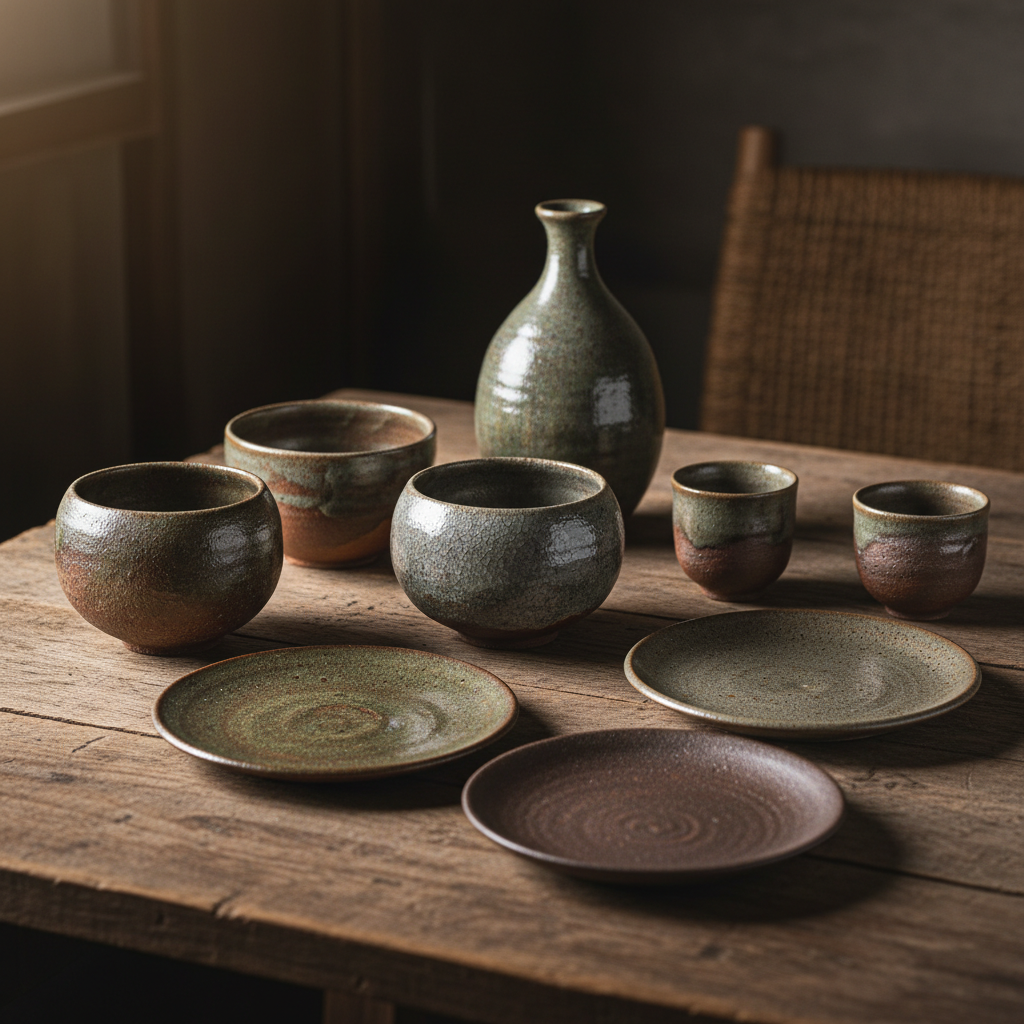
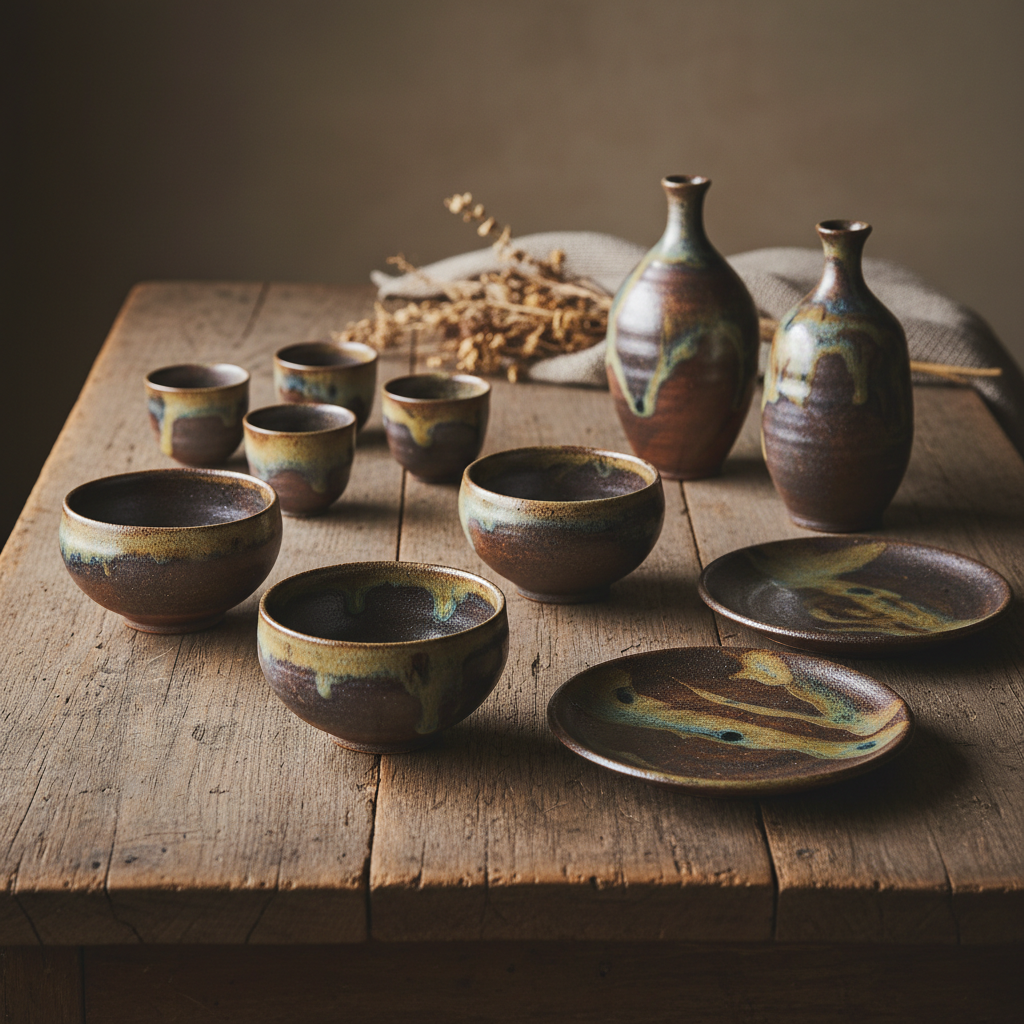
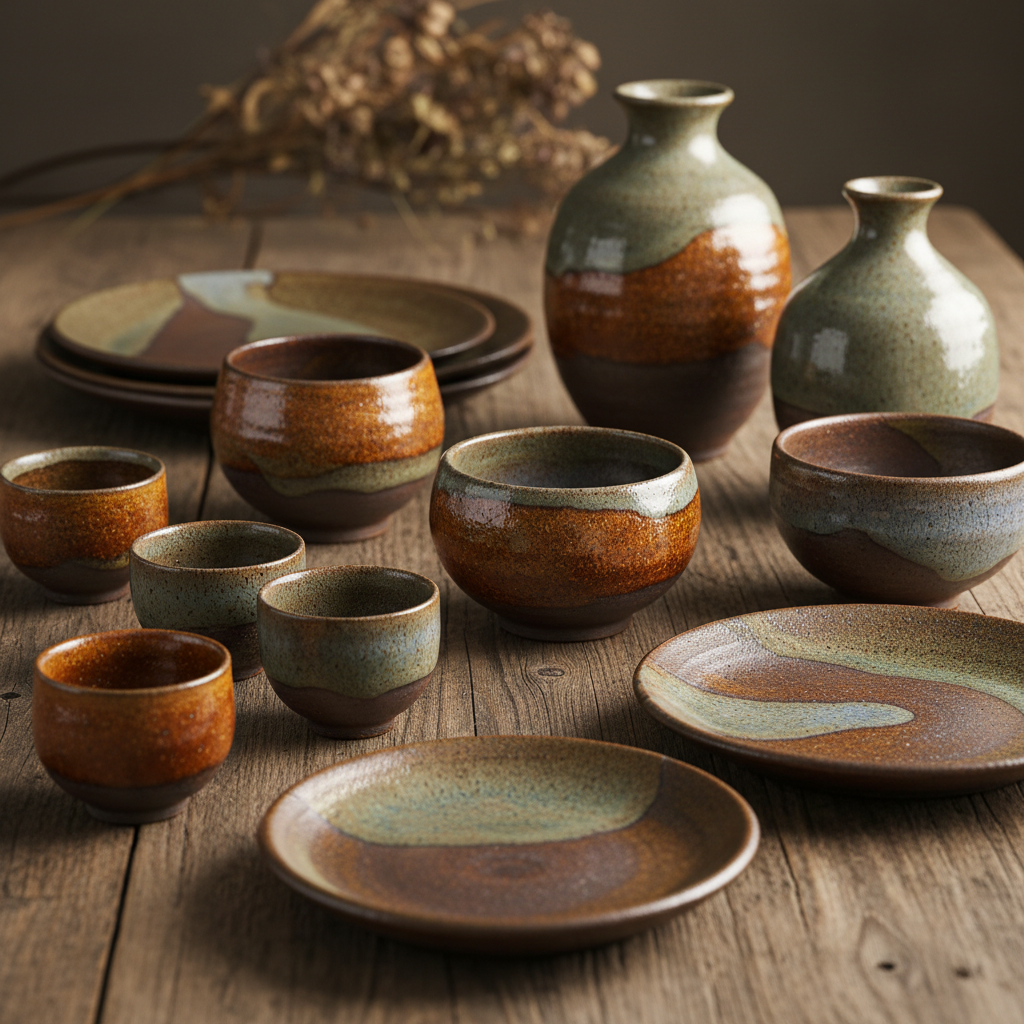
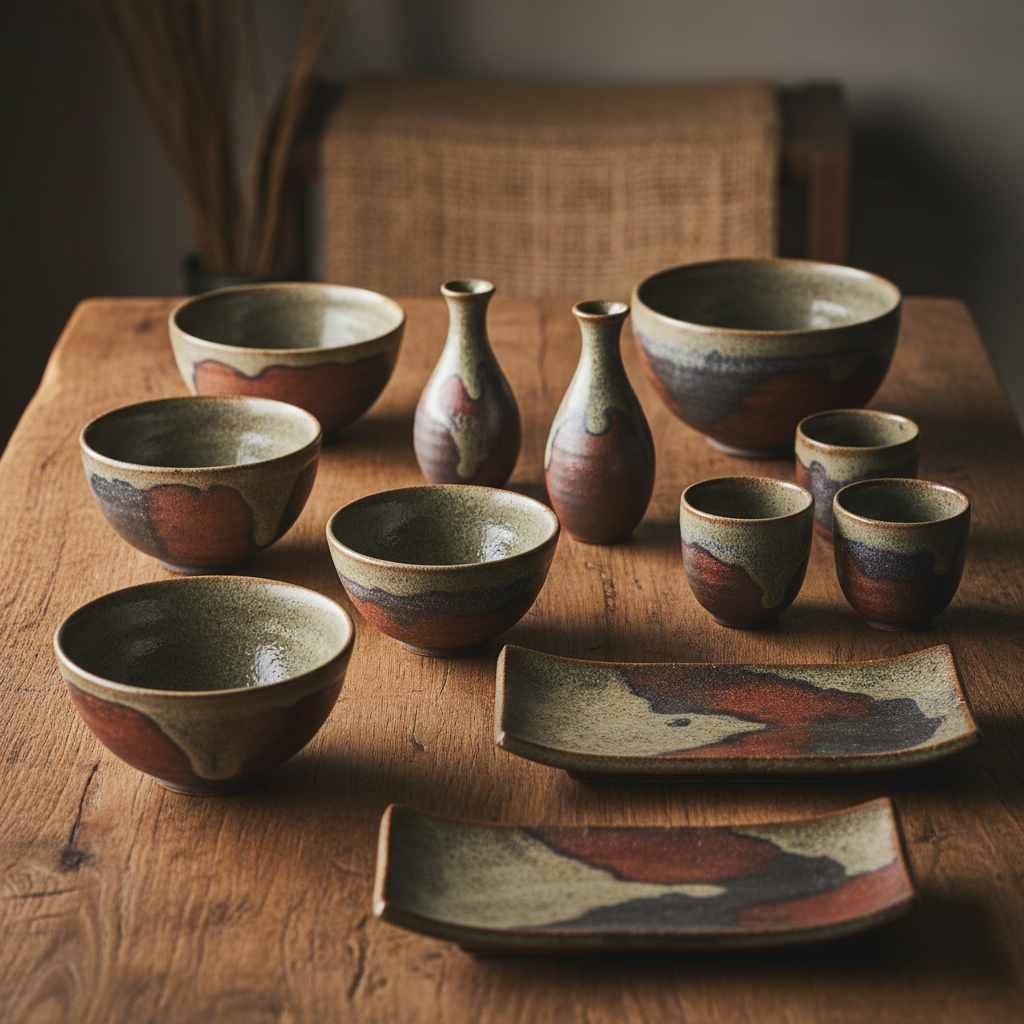
Modern Iwami ware pursues diverse product development while preserving tradition. Everyday ceramics include:
- Tableware: Bowls, plates, dishes, tea cups and the like for daily use
- Cooking utensils: Mortar and pestle, clay pots, steamers, etc.
- Storage containers: Miso jars, pickled plum jars, rice bran pickle containers, etc.
These products are finished in designs suited to modern kitchens and dining rooms while utilizing the robustness and durability unique to Iwami ware.
Large Pottery and Interior Products
Large pottery utilizing the traditional technique “shino-zukuri” also forms an important product category of Iwami ware:
- Umbrella stands: Practical interior décor for entryways
- Water lily bowls: For cultivating aquatic plants on patios and balconies
- Garden table sets: With robustness to withstand outdoor use
- Flower vases and jars: Large-scale works for flower arrangements and display
These products demonstrate Iwami ware’s technical capabilities while serving to add Japanese aesthetic to modern living spaces.
Iwami Ware Kilns and Production System
Iwami Pottery Industrial Cooperative Association
Iwami ware producers have organized the Iwami Pottery Industrial Cooperative Association to work on preserving tradition and developing the industry. This association operates with the goal of promoting the entire Iwami ware producing region through technology improvement, successor training, and sales channel development.
The association regularly holds exhibitions and direct sales events to widely convey the appeal of Iwami ware. It also provides guidance on maintaining quality standards as traditional crafts and support for new product development.
Major Kiln Operators
The Iwami ware producing region has several historically established kilns. Representative kilns include:
Onoe Kiln: A kiln that preserves traditional techniques while also producing works with contemporary designs.
Sekishū Shimada Kiln: Insisting on firing in climbing kilns, it transmits the traditional Iwami ware manufacturing method to the present.
Sesshū Kiln: Produces a wide range of products from everyday ceramics to artistic works.
Many of these kilns accept visitors and offer pottery experiences, allowing you to see the Iwami ware production process up close.
Purchasing and Experiencing Iwami Ware
Major Retail Outlets and Facilities
Places where you can purchase Iwami ware include the following facilities:
Gotsu City Local Industry Promotion Center: A facility that exhibits and sells local products including Iwami ware. You can compare works from many kilns at once.
Shimane Prefecture Products and Tourism Hall: A facility handling Shimane Prefecture specialties where you can purchase representative Iwami ware products.
Direct sales outlets at individual kilns: By visiting kilns directly, you can select products while conversing with artisans. Custom orders may be possible in some cases.
Related Museums and Exhibition Facilities
To deepen your knowledge of the history and techniques of Iwami ware, we recommend visiting the following facilities:
Gotsu City Local Industry Promotion Center: Historical materials on Iwami ware and actual examples of large handō once used are exhibited.
Workshops of individual kilns: Many kilns accept visitors to their workshops and kilns. Seeing the actual production site allows you to experience the high level of Iwami ware technique.
Iwami Ware and Shimane Prefecture’s Ceramic Culture
Position of Iwami Ware in Shimane Prefecture
While Shimane Prefecture has other ceramic producing regions such as pottery from the Izumo region in addition to Iwami ware, Iwami ware occupies a special position as a traditional craft representing the prefecture.
Shimane Prefecture positions Iwami ware as an important regional resource and focuses on its promotion. Beyond designation as a Shimane prefectural traditional craft, its value is nationally recognized through government designation as a traditional craft.
Role as Regional Economy and Tourism Resource
Iwami ware is an important regional industry for Gotsu City and the surrounding Iwami region. Beyond creating employment at kilns, it contributes to the regional economy as a tourism resource.
In recent years, tourism routes such as “ceramic tours of the Iwami region” have been developed, and increasing numbers of tourists visit for kiln tours and pottery experiences. By connecting traditional industry with tourism, new forms of regional revitalization are being born.
Contemporary Initiatives in Iwami Ware
Balancing Tradition and Innovation
Iwami ware kiln operators continue to innovate while preserving tradition. Based on techniques cultivated over nearly 300 years of history, they develop products suited to contemporary lifestyles.
For example, in addition to traditional colors like brown and ash gray, products using contemporary color glazes are produced, as are pieces with designs suited to Western interiors. Functional improvements such as developing microwave-safe and dishwasher-safe products are also progressing.
Successor Training and Technology Transmission
With many traditional crafts facing successor shortages, technology transmission to the next generation is also an important issue for Iwami ware. The Iwami Pottery Industrial Cooperative Association and individual kilns are putting effort into training young ceramicists, establishing training systems and providing technology instruction opportunities.
Additionally, systems have been set up to accept and provide ceramic learning opportunities for newcomers and migrants. Through such efforts, traditional techniques are passed to the next generation without being lost.
International Expansion and New Market Development
Iwami ware is considering expansion into overseas markets in addition to domestic markets. With growing international interest in Japanese traditional crafts, the robustness, practicality, and unique beauty of Iwami ware are increasingly being appreciated overseas.
Activities are expanding to include participation in international craft exhibitions and negotiations with overseas buyers. The day when products made with traditional techniques add color to people’s lives around the world may be near.
Experiencing the Appeal of Iwami Ware
The Joy of Pottery Experience
To understand Iwami ware more deeply, actually making it yourself is best. Many kilns accept pottery experiences, which are accessible even for beginners.
Various experience menus are available, from potter’s wheel work to hand-building small items. The joy of eating from a bowl you made yourself is special, and affection for Iwami ware deepens all the more.
Sensing Quality Through Daily Use
The true value of Iwami ware can be fully appreciated through daily use. Sturdy, long-lasting quality, increasing flavor with use, and high practicality. These are merits that can only be understood by actually using items in daily life.
In particular, storage containers such as pickle jars and miso pots are products where you can truly appreciate high performance. Their moderate breathability and moisture-retaining properties allow food to be stored in ideal conditions.
Conclusion
Iwami ware is a traditional pottery with nearly 300 years of history in the Iwami region of Shimane Prefecture and is one of Japan’s representative ceramic producing regions designated as a government traditional craft. Using high-quality ceramic clay from the Iwami region centered on Gotsu City, it has produced sturdy, highly durable products through high-temperature firing.
Known nationwide for the large water jars called handō, Iwami ware prospered as a major production region with more than 100 kilns operating during the Meiji era. In modern times, while preserving the traditional manufacturing techniques of large-scale pottery, it produces diverse products including everyday ceramics and interior items responsive to contemporary needs.
Fine and hard ceramic clay, properties superior in acid, salt, and water resistance, the traditional technique of “shino-zukuri,” and kilns insisting on climbing kiln firing. All of these characterize Iwami ware as unique pottery.
Under the production system centered on the Iwami Pottery Industrial Cooperative Association, representative kilns such as Onoe Kiln, Sekishū Shimada Kiln, and Sesshū Kiln are working on technology transmission and innovation. New challenges such as successor training and international expansion are beginning, and the future of Iwami ware can be said to be bright.
When visiting Shimane Prefecture, be sure to visit kilns in Gotsu City and directly experience the appeal of Iwami ware. Beautiful and practical pottery born from 300 years of tradition will surely enrich your life.