The Complete Guide to Satsuma Ware | Thorough Explanation of Kagoshima Prefecture’s Representative Ceramics: Production Areas, History, and Characteristics
Satsuma ware (satsumayaki) is a representative traditional ceramic of Japan with its main manufacturing region in Kagoshima Prefecture. With a history spanning over 400 years and designated as a nationally recognized traditional craft, this pottery is known for its contrasting beauty of white Satsuma and black Satsuma. This article provides a comprehensive explanation of Satsuma ware’s history, production areas, characteristics, and manufacturing process, covering the ceramic culture that Kagoshima takes pride in.
What is Satsuma Ware | Overview of Kagoshima Prefecture’s Representative Ceramics
Satsuma ware is a general term for ceramics produced in Kagoshima Prefecture (formerly Satsuma Province). In January 2007, “Satsuma ware” was registered as a regional collective trademark by the Kagoshima Satsuma Ware Cooperative Association, and its tradition and quality have been officially protected.
The greatest characteristic of Satsuma ware lies in its diversity. There is “white Satsuma (white mon),” featuring colorless or pale yellow crackle glaze (craquelure), “black Satsuma (black mon)” with various colored glazes, underglaze blue decorated porcelain and three-color glazed porcelain, and many other highly varied types. This diversity stems from the historical background that Satsuma ware developed not from a single kiln but from multiple lineages.
Currently, Satsuma ware is highly valued not only within Japan but also internationally. White Satsuma, in particular, is known worldwide as “SATSUMA,” becoming an internationally recognized artwork.
The History of Satsuma Ware | 400 Years of Tradition Beginning with Korean Potters
The Origins of Satsuma Ware and the Imjin War
The history of Satsuma ware begins in 1598 (Keichō 3), when Shimazu Yoshihiro, the lord of the Satsuma domain, returned from the Imjin War (the Korean campaign) bringing Korean potters to Satsuma. It is said that Shimazu Yoshihiro returned with approximately 80 Korean potters, and these craftsmen built kilns throughout Satsuma, marking the origin of Satsuma ware.
The Korean potters brought their respective techniques and traditions, beginning ceramic production suited to the Satsuma land. They received special protection from the Satsuma domain and were able to form independent settlements while dedicating themselves to ceramic production. During this period, it is particularly noteworthy that the potters were permitted to bear surnames and carry swords, receiving treatment equivalent to that of the samurai class.
Development of Satsuma Ware During the Edo Period
During the Edo period, Satsuma ware developed into two major streams. One was kilns producing high-quality white Satsuma as official domain wares, and the other was kilns manufacturing black Satsuma daily household goods for the common people.
White Satsuma was produced primarily as luxury items for the daimyo and upper-ranking samurai, with such pieces as gifts, tea ceremony utensils, incense burners, and ornamental objects being created. The white Satsuma, finished with meticulous painting and gold decoration, was carefully treasured as an important item demonstrating the domain’s prestige.
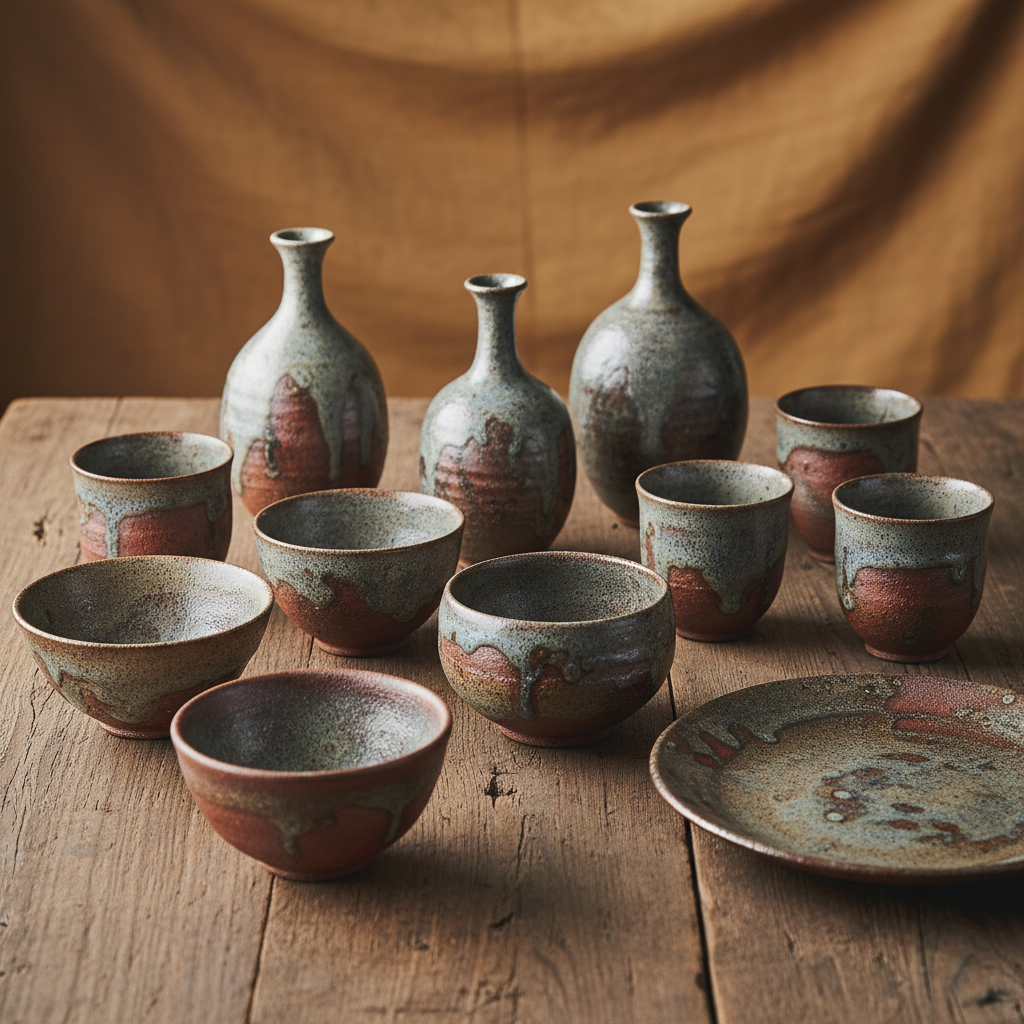
On the other hand, black Satsuma was produced as practical tableware for use in everyday life by common people. Black Satsuma, with its simple and powerful dark brown clay body decorated with iron and amber glazes, was highly durable. Items such as black choka (black sake bottles) for drinking shochu and jars and storage vessels were manufactured.
The Meiji Period and Leap to the World
Satsuma ware became known worldwide during the Meiji period. Beginning with the 1867 Paris Exposition Universelle, when Satsuma ware was exhibited at world’s fairs held in the West—including the Vienna Exposition (1873) and the Philadelphia Centennial Exposition (1876)—its delicate and brilliant ornamentation captivated Western audiences.
White Satsuma, in particular, created a major boom as “SATSUMA,” with European royalty and collectors competing to purchase it. During this period, Satsuma ware specially manufactured for export was executed with extremely meticulous painting and lavish gold decoration, gaining recognition as the pinnacle of Japanese ceramic art worldwide.
Meiji-period Satsuma ware, while preserving traditional techniques, evolved into a more ornamental and luxurious style to meet Western market demand.
Continuation of Satsuma Ware in the Modern Era
From the late Meiji period through the Taisho and Showa periods, as the export boom ended, Satsuma ware lost some of its momentum, but traditional techniques continued to be carefully preserved at each kiln. After World War II, as attention to Japan’s traditional crafts increased, Satsuma ware again drew focus.
In 1974, it was designated as a nationally recognized traditional craft. Currently, while preserving tradition, Satsuma ware with contemporary designs suited to modern life is also being produced. In kilns throughout Kagoshima Prefecture, young ceramic artists are learning traditional techniques while also challenging new forms of expression.
Major Production Areas of Satsuma Ware | Kilns and Lineages in Kagoshima Prefecture
Satsuma ware is produced in multiple regions throughout Kagoshima Prefecture, with each production area possessing its own distinct characteristics. Ancient kiln sites number approximately 50, classified primarily into six lineages.
The Tateno Lineage
The Tateno lineage began in the area around present-day Koriyama, Kagoshima City. It is said to have been established by a Korean potter named Gimhae (Kinkai). The Tateno lineage primarily produced black Satsuma, focusing on everyday tableware. Its characteristic simple and powerful style has continued to produce household ceramics closely connected to common life.
The Naeshirogawa Lineage
The Naeshirogawa lineage centers on the Miyama district of Higashi-Ichiki, Hiji City. Established by Korean potters including Park Pyongui (Boku Heiī), it became particularly famous for producing white Satsuma. The Naeshirogawa potter settlement remains as “Miyama” today, where one can feel the atmosphere of a Korean-style town layout and traditional kilns.
The Naeshirogawa lineage is skilled in producing high-quality white Satsuma with a milky-white body, fine crackle glaze, and meticulous painting. During the Edo period, as an official domain kiln, it produced gifts and tea ceremony utensils.
The Ryumonji Lineage
The Ryumonji lineage centers on the Ryumonji kiln in present-day Kaji, Aira City. Known as a representative black Satsuma kiln, it is particularly famous for producing black choka (vessels for drinking shochu).
The characteristic of Ryumonji ware is the powerful dark brown quality resulting from using soil with high iron content and firing at high temperatures. Unglazed stoneware firing techniques are also employed, producing works with simple yet striking presence. The Ryumonji kiln continues to operate today, preserving traditional black Satsuma techniques.
The Nishi-Mochida Lineage
The Nishi-Mochida lineage developed in the area around present-day Nishi-Beppu, Kagoshima City. It produced both white and black Satsuma, but particularly served as an official domain kiln producing luxury items such as tea ceremony utensils and incense burners. Characterized by meticulous technique and refined design, it was one of the Satsuma domain’s important kilns during the Edo period.
The Hirasa Lineage
The Hirasa lineage consists of kilns around present-day Hirasa, Satsumasendai City. It primarily produced black Satsuma focused on daily household items. Characterized by sturdy construction prioritizing practicality, it produced numerous items supporting common people’s daily life.
The Tanegashima Lineage
The Tanegashima lineage developed on Tanegashima, an island in Kagoshima Prefecture. Due to its geographic separation from other lineages, it achieved independent development. Tanegashima ware is characterized by a simple finish and has produced practical ceramics close to island life.
Contemporary Major Kilns
The current central kilns for Satsuma ware include the Ryumonji kiln in Aira City, the Naeshirogawa kiln (Miyama) in Hiji City, and the Chodaro kiln in Kagoshima City. These kilns, while preserving traditional techniques, are also engaged in producing new Satsuma ware suited to contemporary lifestyles.
White Satsuma and Black Satsuma | The Contrast of Two Forms of Beauty
The greatest characteristic of Satsuma ware is the coexistence of two contrasting styles: white Satsuma (white mon) and black Satsuma (black mon).
Characteristics of White Satsuma (White Mon)
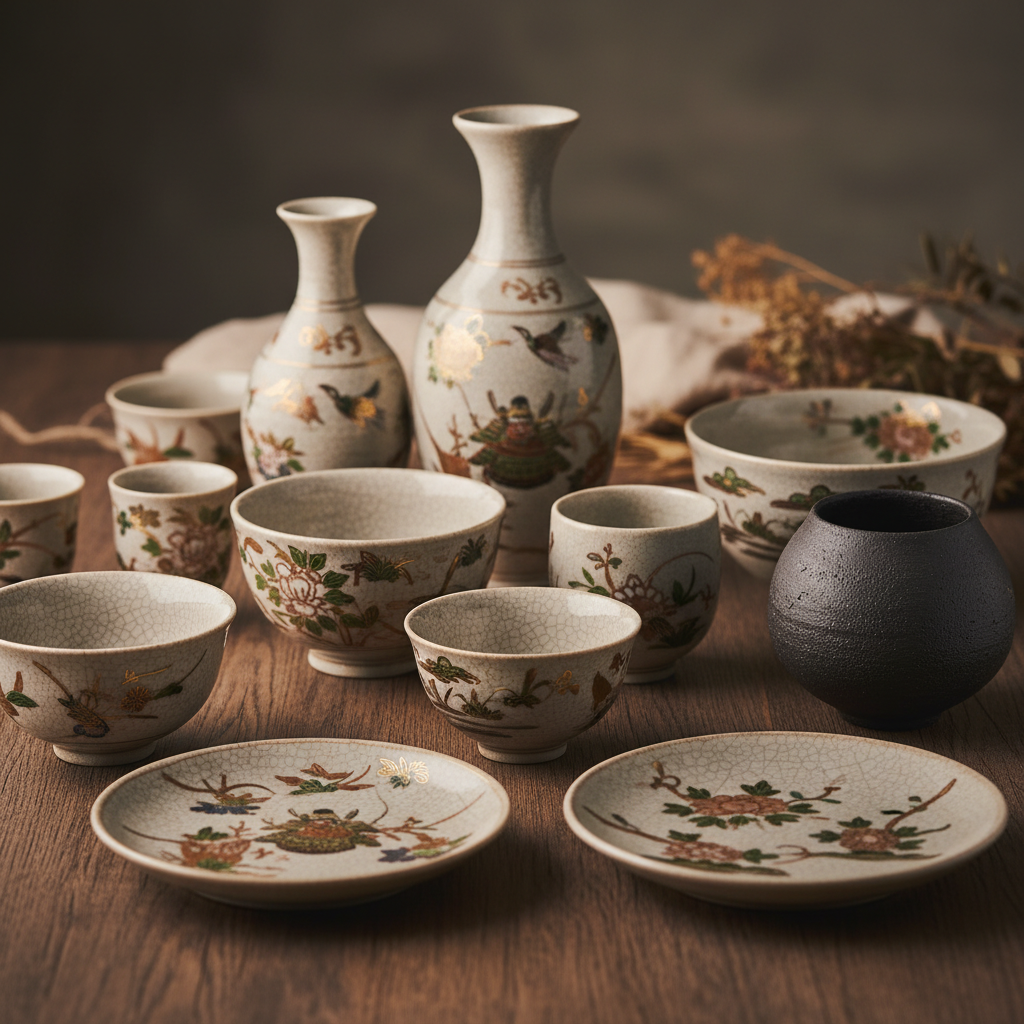
White Satsuma is characterized by its milky-white body with a warm tone and fine crackle glaze (kannyū) on its surface. This crackle results from fine cracks in the glaze due to differing shrinkage rates during firing, creating a unique beauty specific to white Satsuma.
The ornamentation of white Satsuma is extremely meticulous, with designs depicting flowers and birds, seasonal phenomena, human figures, landscapes, and other motifs rendered in red, blue, green, and gold decoration. The lavish use of gold decoration, in particular, has become synonymous with white Satsuma. During the Edo period, it was produced as luxury items for the daimyo and upper-ranking samurai, with tea ceremony utensils, incense burners, flower vases, and ornamental objects being created.
Following the Meiji period, export white Satsuma especially increased in decorativeness, with densely-painted designs covering the entire surface. This technique, known as “nishikide” (brocade-style painting), became tremendously popular in the West as “SATSUMA.”
The production of white Satsuma requires highly advanced techniques, involving numerous processes from clay refinement through shaping, bisque firing, glazing, main firing, painting, and gold decoration. The painting stage particularly demands the skills of experienced craftsmen, with completing a single piece sometimes taking several months.
Characteristics of Black Satsuma (Black Mon)
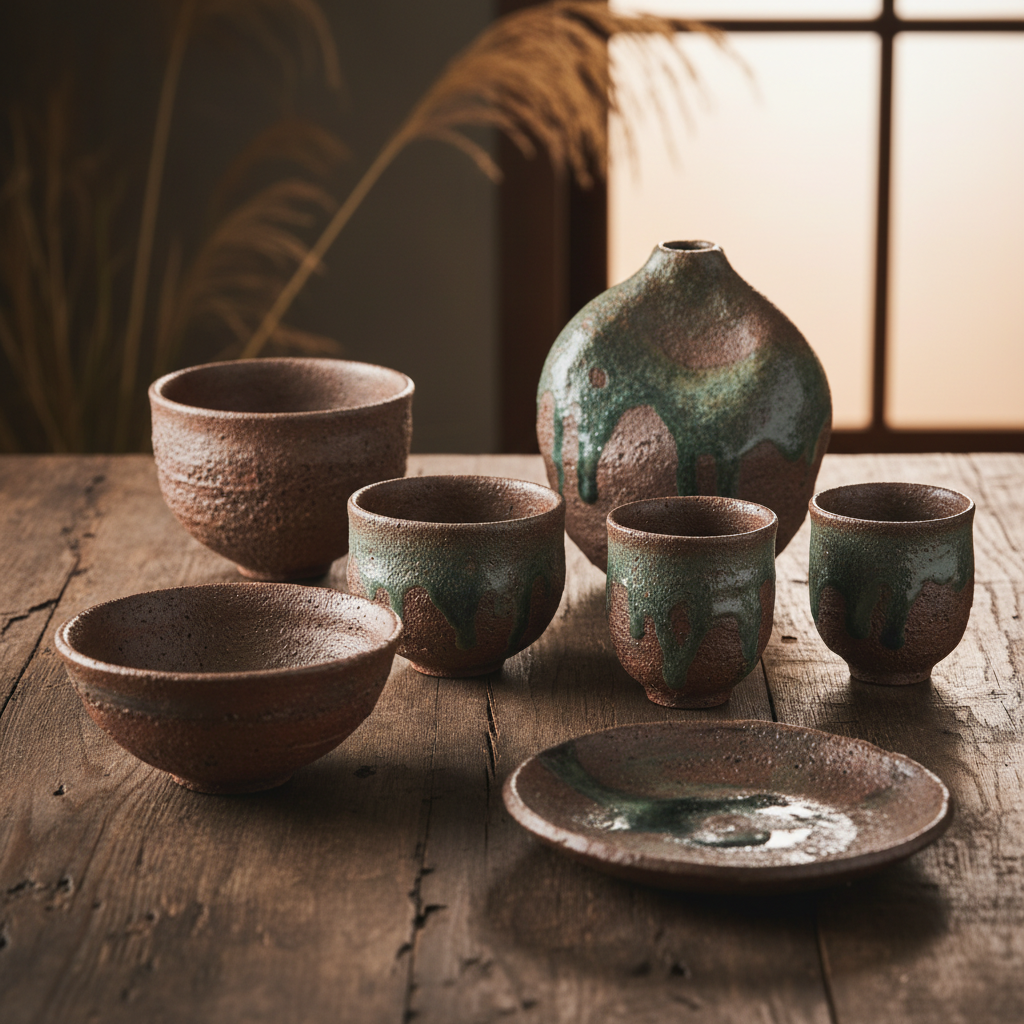
Black Satsuma is pottery created using soil with high iron content, finished with dark brown or amber-colored glaze and fired. In contrast to white Satsuma’s brilliance, it is characterized by simple and powerful beauty.
Black Satsuma was primarily produced as practical tableware for everyday use by common people. Various vessels for daily life were manufactured, including black choka (vessels for drinking shochu), jars, storage vessels, plates, and bowls. The black choka, in particular, is deeply connected to Kagoshima’s shochu culture and remains beloved by many people today.
The appeal of black Satsuma lies in its simple finish and the increasing depth of character through aging and use. Pieces made with unglazed stoneware firing techniques showcase the clay’s texture naturally, exuding powerful presence.
The manufacturing process is simpler than white Satsuma, but adjusting soil composition and firing temperature requires experienced expertise. Particularly for black Satsuma like Ryumonji ware, high-temperature firing produces a distinctive hard-textured quality.
The Coexistence of White and Black Satsuma
The coexistence of two contrasting styles—white and black Satsuma—is a major characteristic of Satsuma ware. This is deeply related to the Satsuma domain being a hierarchical society. White Satsuma was clearly distinguished as luxury goods for the upper class, while black Satsuma served as daily items for common people.
However, both possess their own beauty and value, with both being preserved as important traditions of Satsuma ware to the present day. In contemporary times, this distinction has blurred, and both white and black Satsuma are widely appreciated as ceramics for enjoying their respective beauties.
The Manufacturing Process of Satsuma Ware | Details of Traditional Techniques
Satsuma ware production involves numerous processes and advanced techniques. Here, the manufacturing process is explained in detail, centered on white Satsuma.
1. Raw Material Extraction and Clay Preparation
Satsuma ware production begins with securing quality clay. Ceramic clay extracted from specific locations in Kagoshima Prefecture has impurities removed and is adjusted to appropriate particle size. Clay for white Satsuma is especially carefully refined, with low-iron white clay being used.
The clay is mixed with water and worked while removing air, creating a uniform state. This “clay wedging” is extremely important for preventing cracks or distortion during firing. Thoroughly worked clay is left to rest until reaching appropriate hardness.
2. Shaping
Shaping employs techniques including wheel throwing, hand-building, and mold pressing. The optimal shaping method is selected depending on the object’s form and size.
In wheel throwing, clay is placed on a rotating wheel, and the vessel’s form is created using only hand sensation. Creating uniform thickness with beautiful curves requires long years of experience and skilled technique.
Complex forms such as ornamental objects and incense burners are shaped through hand-building or using molds. Carefully finished shaped pieces are left to dry sufficiently.
3. Bisque Firing
Dried shaped pieces are bisque fired at approximately 800 degrees Celsius. Bisque firing hardens the clay, making it easier to handle in subsequent processes. Additionally, bisque firing improves glaze adhesion.
4. Glazing
Glaze is applied to the bisque-fired vessel. For white Satsuma, milky-white glaze is used. Glaze is applied either by brushing or immersing the entire piece in glaze.
The thickness and uniformity of glaze significantly affect the beauty of the finished piece. Particularly, the technique of applying glaze is important for beautifully achieving the characteristic crackle of white Satsuma.
5. Main Firing
Glazed vessels are fired at temperatures exceeding 1200 degrees Celsius. Through this main firing, the clay and glaze melt together, forming a beautiful glass-like surface.
The firing temperature, firing duration, and the atmosphere inside the kiln (oxidation or reduction flame) all affect the color and texture of the finished piece. Temperature management and cooling speed are crucial for beautifully achieving white Satsuma’s milky-white color and crackle.
6. Painting
The meticulous painting that characterizes white Satsuma occurs after main firing. An outline is first drawn in ink, which is then colored with red, blue, green, yellow, and other pigments.
Painting requires extremely advanced technique, with experienced artists carefully painting each piece with brushes. Various designs including flowers and birds, seasonal phenomena, human figures, and landscapes are painted, with the vessel’s surface finished as if it were a beautiful painting.
7. Gold Decoration
Following painting, gold decoration is applied. Gold powder dissolved in special liquid is drawn with fine brushes on the outlines and details of the designs. Gold decoration is a crucial element enhancing white Satsuma’s brilliance.
8. Overglaze Firing
Vessels with painting and gold decoration are again fired at approximately 800 degrees Celsius. Through this overglaze firing, the pigments and gold become fixed to the vessel, creating a beautiful luster.
Temperature management in overglaze firing is extremely delicate. Excessive temperature causes the pigments to flow, while insufficient temperature results in poor adhesion. Long-experienced craftsmen’s intuition is crucial at this stage.
9. Finishing
After overglaze firing, the vessel undergoes final inspection and finishing. Fine dirt is removed, and it is shipped as a completed product.
As described, Satsuma ware production, particularly white Satsuma, requires numerous processes and advanced techniques. A single piece can take weeks to months to complete.
The Designs and Motifs of Satsuma Ware | The World of Traditional Design
Numerous traditional Japanese motifs appear in Satsuma ware, especially white Satsuma. Each motif carries distinct meaning and wishes.
Flower and Bird Designs
Flower and bird designs are among the most frequently seen motifs in Satsuma ware. Flowers such as cherry blossoms, chrysanthemums, peonies, and plum blossoms are combined with birds including cranes, phoenixes, and peacocks. Flower and bird designs express the beauty of the four seasons and the harmony of nature, carrying auspicious meaning.
Human Figure Designs
Human figure designs such as Chinese-style children (karakoyako), beautiful women, and warriors are also characteristic of Satsuma ware decoration. Particularly in Meiji-period export Satsuma ware, meticulously painted human figures frequently appear. These sometimes depict scenes from stories or legends.
Landscape Designs
Mountain and water landscapes, famous locations, and seasonal scenery are sometimes depicted. Particularly, works depicting Sakurajima or Kagoshima landscapes are distinctive features of Satsuma ware.
Geometric Designs
Geometric motifs such as seigaiha wave patterns, shippō roundels, ichimatsu checkerboard, and asanoha hemp leaf patterns are frequently used on vessel edges and backgrounds, serving to enhance the primary design.
Kinran-de (Gold Brocade Style)
“Kinran-de,” covering the entire vessel surface with gold decoration and colored painting, particularly developed in Meiji-period export Satsuma ware. Splendid ornamentation captivated Western audiences and sparked the “SATSUMA” boom.
Satsuma Ware and Kagoshima Culture | Deep Connections with Shochu Culture
Satsuma ware, particularly black Satsuma, is deeply connected with Kagoshima’s shochu culture. The black choka (kurojoka), a vessel for drinking shochu, is a representative work of black Satsuma.
The black choka is a small teapot-like vessel for drinking warmed shochu, called “choka” or “choku” in Kagoshima. Black Satsuma clay excels at heat retention, making it ideal for maintaining shochu at appropriate temperature.
In Kagoshima, there is a tradition of warming shochu in a black choka and pouring it into small cups (choku) for drinking. This drinking method, called “choku nomī,” has become a symbol of Kagoshima’s shochu culture.
The black choka, while being practical tableware, develops increasing depth of character with use, as shochu aroma gradually penetrates the vessel, creating a unique finish. Many Kagoshima residents continue carefully using black choka passed down through generations.
Contemporary Satsuma Ware | Harmony of Tradition and Innovation
Contemporary Satsuma ware preserves traditional techniques while also challenging new forms of expression and uses.
Continuation of Traditional Techniques
Traditional techniques for both white and black Satsuma are carefully preserved at various kilns throughout Kagoshima Prefecture. Particularly at kilns such as Naeshirogawa (Miyama) and Ryumonji, techniques continuing from the Edo period remain preserved today.
Through the registered traditional craftsman certification system, highly skilled craftsmen are developed and technical succession is promoted. Young ceramic artists also train at traditional kilns, learning techniques.
Challenges in Contemporary Design
While preserving tradition, new Satsuma ware with designs suited to contemporary life is also being produced. Simple and modern-form vessels and works employing contemporary color usage represent Satsuma ware acceptable to younger generations.
Additionally, increasing numbers of ceramic artists create Satsuma ware as art pieces while employing traditional techniques. These works are exhibited in museums and art galleries both domestically and internationally, demonstrating new possibilities for Satsuma ware.
Tourism and Experience
Many kilns in Kagoshima Prefecture offer Satsuma ware production experiences and kiln tours. The Miyama district features ceramic experience facilities and museums for learning Satsuma ware history, popular with tourists.
At these experience facilities, visitors can participate in wheel-throwing and painting experiences, creating their own Satsuma ware. Additionally, viewing craftsperson demonstrations allows visitors to directly experience the Satsuma ware production process and the heights of technical skill.
Facilities for Appreciating Satsuma Ware | Museums and Galleries
Several facilities in Kagoshima Prefecture allow people to learn about Satsuma ware’s history and techniques while viewing actual works.
Kagoshima Prefectural Museum of History and Art Reimeikan
Located in Kagoshima City, Reimeikan is a comprehensive museum displaying Kagoshima’s history and culture. The collection of Satsuma ware is extensive, allowing visitors to appreciate representative works of both white and black Satsuma. Particularly valuable pieces from the Edo period through Meiji period are displayed.
Miyama Ceramic Recreation Hall
Located in the Miyama district of Higashi-Ichiki, Hiji City, Miyama Ceramic Recreation Hall is a facility introducing Satsuma ware’s history and techniques. Situated in the Miyama district where kilns famous for white Satsuma production cluster, it offers Satsuma ware exhibitions, sales, and ceramic experiences.
Ryumonji Ware Cooperative Association
At the Ryumonji kiln workshop in Kaji, Aira City, visitors can observe the traditional black Satsuma production process. The gallery also allows visitors to appreciate and purchase Ryumonji ware works.
Other Facilities
Numerous galleries and craft shops handling Satsuma ware are located throughout Kagoshima City and the prefecture. These establishments offer a wide range of Satsuma ware from traditional pieces to contemporary designs.
Purchasing and Using Satsuma Ware | Incorporating Traditional Crafts into Daily Life
Satsuma ware can be enjoyed not only as art but also as tableware for everyday use.
How to Select Satsuma Ware
When selecting Satsuma ware, one chooses between white or black Satsuma depending on intended use. For appreciation or gifts, finely decorated white Satsuma is appropriate. For daily-use tableware or enjoying shochu, practically excellent black Satsuma is recommended.
Handling pieces personally to confirm weight, texture, and painting details is important. Particularly with white Satsuma, craftsmanship appears in every detail, including crackle patterns and gold decoration beauty.
Using and Caring for Satsuma Ware
White Satsuma, being delicate work, is most often displayed for appreciation, but if used, requires careful handling. Dirt can accumulate in crackle patterns, so pieces should be washed promptly after use and dried thoroughly.
Black Satsuma is practical tableware suitable for daily use. Particularly, black choka develops increasing character with use. The shochu aroma gradually penetrating creates a unique finish, offering the pleasure of having one’s own vessel develop through use.
When using pieces as tableware, soaking in water before use prevents dirt absorption. When washing, soft sponges should be used, and abrasive cleansers should be avoided.
Where to Purchase Satsuma Ware
Satsuma ware can be purchased at kiln-operated shops, craft shops, and department stores throughout Kagoshima Prefecture. Many pieces are also available through online shops.
When purchasing genuine Satsuma ware, selecting items bearing the Kagoshima Satsuma Ware Cooperative Association certification mark provides assurance. Particularly when purchasing expensive white Satsuma, purchasing from reliable specialist shops or kilns is recommended.
Conclusion | The Appeal of Satsuma Ware and Its Future
Satsuma ware is Kagoshima Prefecture’s representative traditional ceramic with a history spanning over 400 years. Techniques brought by Korean potters underwent independent development in the Satsuma region, establishing itself as pottery possessing the contrasting beauty of white and black Satsuma.
White Satsuma’s brilliant, meticulous ornamentation is known worldwide as “SATSUMA,” recognized as the pinnacle of Japanese ceramic art. Meanwhile, black Satsuma’s simple, powerful beauty connects with Kagoshima’s shochu culture, becoming deeply rooted in people’s lives.
Developed from multiple lineages including Tateno, Naeshirogawa, and Ryumonji, Satsuma ware maintains distinct characteristics at each production area while preserving tradition through to the present. At kilns throughout Kagoshima Prefecture, skilled craftspeople continue preserving traditional techniques while also challenging new forms of expression.
Satsuma ware production requires numerous processes and advanced techniques from clay preparation through shaping, firing, and painting. Particularly, meticulous white Satsuma painting and gold decoration represent techniques only achievable by master craftspeople, with these skills certainly being passed to the next generation of ceramic artists.
Contemporary Satsuma ware, while preserving tradition, also challenges new designs and uses suited to modern life. Possessing value as art while enjoyable as practical tableware, Satsuma ware embodies the appeal of Japanese traditional crafts.
When visiting Kagoshima Prefecture, be sure to visit Satsuma ware kilns and museums to directly experience its beauty and technical excellence. Additionally, incorporating Satsuma ware into daily life allows one to become part of a 400-year tradition, passing its appeal to future generations.
Satsuma ware is the crystallization of ceramic culture continuing from the past through the present toward the future, a source of Kagoshima’s pride. Its diversity and beauty will continue to captivate many people.