What is Miyaoi Ware? A Comprehensive Explanation of the History and Characteristics of Miyazaki Prefecture’s Ceramic Production Center
Miyazaki Prefecture’s Miyaoi City is a historic region located in southern Kyushu that has nurtured a unique ceramic culture. Miyaoi ware is a general term for pottery produced in this region and holds a distinctive position among Japan’s ceramic production centers. This article provides a detailed explanation of the history, characteristics, manufacturing methods, and ceramic culture of Miyazaki Prefecture regarding Miyaoi ware.
History and Origins of Miyaoi Ware
Origins of Miyaoi Ware
The history of Miyaoi ware dates back to the mid-Edo period. The Miyaoi region was under the control of the Satsuma Clan and developed while being strongly influenced by Satsuma ware from the adjacent Kagoshima Prefecture. The geographical conditions of the Miyaoi Basin and the environment where high-quality ceramic clay could be obtained made pottery production possible in this region.
Excavations at the Miyaoi ruins have uncovered diverse pottery including tenmoku tea bowls, tea mills, braziers, and water containers, confirming that ceramics were both used and produced in this region from ancient times. These excavated items serve as important materials that speak to the depth of pottery culture in Miyaoi.
Relationship with Satsuma Ware
Understanding Miyaoi ware requires considering its relationship with Satsuma ware. Under the influence of the Satsuma Clan, Miyaoi received the techniques and styles of Satsuma ware and underwent its own independent development. While Satsuma ware is broadly divided into white Satsuma and black Satsuma, Miyaoi ware is characterized by its focus on more practical everyday items.
Whereas Satsuma ware developed as high-quality ceramics under the clan’s patronage, Miyaoi ware was nurtured as pottery closely connected to the region’s daily life. This difference became a factor in producing Miyaoi ware’s unique, simple and powerful expression.
Changes Since the Modern Period
Following the Meiji Restoration, the collapse of the clan system brought difficulties to many ceramic production centers, and the Miyaoi region’s pottery production also faced a major turning point. Today, while preserving traditional techniques, pottery creation is being adapted to modern lifestyles.
Characteristics of Miyazaki Prefecture’s Ceramic Production Centers
Pottery Culture in Miyazaki Prefecture
Miyazaki Prefecture has multiple ceramic production centers beyond Miyaoi ware. In a list of Japan’s ceramic production centers, Miyazaki Prefecture is known for Miyaoi ware as well as Komatsuhara ware and others. These production centers, while each possessing their own history and characteristics, form the ceramic culture of southern Kyushu.
Miyazaki Prefecture’s ceramics were nurtured in a warm climate and rich natural environment, characterized by simple and warm craftsmanship. While emphasizing practical utility as everyday items, the pursuit of beauty is a stance inherited by contemporary artists.
Techniques and Characteristics of Miyaoi Ware
The manufacturing method of Miyaoi ware is based on traditional pottery-making techniques. Using ceramic clay obtained locally, forms are created through wheel-throwing or hand-building, and after glazing, pieces are fired in a kiln.
Main characteristics:
- Simple aesthetic: Emphasizing natural beauty with restrained decoration
- Practicality: Durable construction based on daily use
- Warm color tones: Subdued colors that make use of the soil’s texture
- Regionality: Unique expression reflecting the climate of the Miyaoi Basin
Contemporary Miyaoi Ware
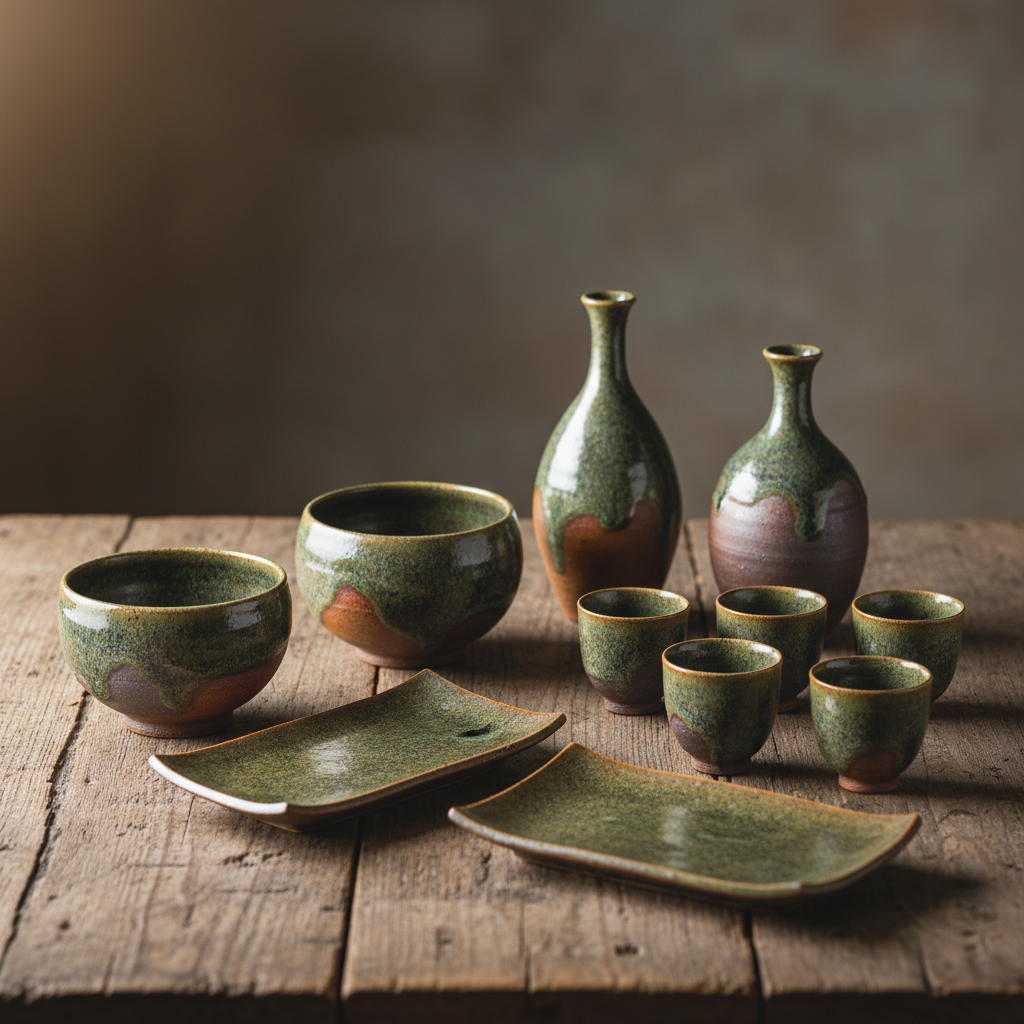
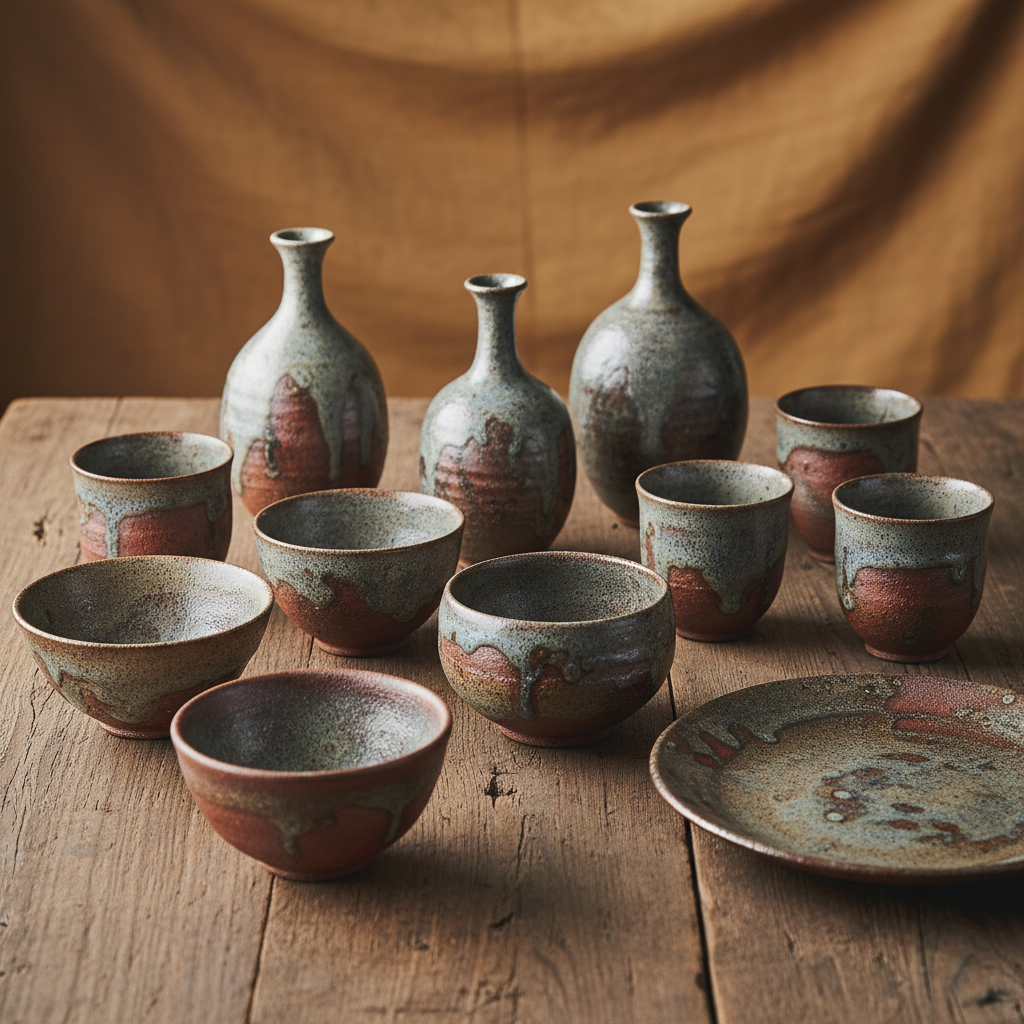
Currently, a small number of ceramic artists and kilns continue their activities in the Miyaoi region. While preserving traditional techniques, they are creating pottery suited to modern life, producing diverse works including tableware, flower vases, and tea ware.
At kilns such as Sanmei Kiln and other Miyazaki Prefecture kilns, the spirit of the folk art movement is being carried forward while creating vessels that align with users’ lives. These works are attracting attention from folk art enthusiasts and pottery lovers throughout the country.
Comparison with Major Ceramic Production Centers Throughout Japan
Ceramic Production Centers in Hokkaido and the Tohoku Region
Japan’s ceramic production centers are scattered throughout the country, each with distinctive characteristics. Hokkaido is known for Otaru ware, while the Tohoku region preserves traditions such as Aizu Hongō ware (Fukushima Prefecture), Ōhori Soma ware (Fukushima Prefecture), and Kirikomi ware (Miyagi Prefecture).
These production centers developed in a cold climate, characterized by thick, heat-retaining vessels.
Ceramic Production Centers in the Kanto Region
In the Kanto region, Mashiko ware (Tochigi Prefecture) is particularly famous. It developed as a central figure in the folk art movement and remains active with many ceramic artists today. Kasama ware (Ibaraki Prefecture) is also known as a representative production center of the Kanto region.
Ceramic Production Centers in the Chubu Region
The Chubu region is Japan’s largest ceramic production area. Mino ware (Gifu Prefecture) accounts for approximately half of Japan’s ceramic production and is known for its diverse styles and techniques.
Major production centers:
- Seto ware (Aichi Prefecture): A historic production center that gave rise to the term “setomono”
- Tokoname ware (Aichi Prefecture): One of Japan’s Six Ancient Kilns, famous for teapots
- Kutani ware (Ishikawa Prefecture): Characterized by vivid colored decoration
- Echizen ware (Fukui Prefecture): One of Japan’s Six Ancient Kilns with a simple aesthetic
Ceramic Production Centers in the Kansai Region
The Kansai region is concentrated with production centers boasting history and tradition, including Kyo ware and Kiyomizu ware (Kyoto Prefecture), Shigaraki ware (Shiga Prefecture), and Tamba ware (Hyogo Prefecture).
Kyo ware and Kiyomizu ware are deeply connected to court culture and tea ceremony culture, characterized by delicate and graceful craftsmanship. Shigaraki ware is one of Japan’s Six Ancient Kilns and is also known for its tanuki figurines.
Ceramic Production Centers in the Chugoku and Shikoku Regions
In the Chugoku region, Bizen ware (Okayama Prefecture) and Hagi ware (Yamaguchi Prefecture) are particularly famous. Bizen ware is one of Japan’s Six Ancient Kilns, characterized by unglazed stoneware firing techniques. Hagi ware is prized by tea people for its soft aesthetic.
In the Shikoku region, Tobe ware (Ehime Prefecture) is known as a production center characterized by white porcelain with blue decoration.
Ceramic Production Centers in the Kyushu Region
The Kyushu region is one of the centers of Japan’s ceramic culture. Along with Miyazaki Prefecture, where Miyaoi ware is produced, there are many important production centers.
Major production centers:
- Arita ware and Imari ware (Saga Prefecture): Japan’s first porcelain production centers
- Karatsu ware (Saga Prefecture): Acclaimed as “first Raku, second Hagi, third Karatsu”
- Satsuma ware (Kagoshima Prefecture): Two lineages of white Satsuma and black Satsuma
- Koishiwara ware (Oita Prefecture): Traditional production center noted in the folk art movement
- Agano ware (Fukuoka Prefecture): Developed as tea ceremony ware
- Hasami ware (Nagasaki Prefecture): A major production center for everyday tableware
Miyaoi ware is positioned among Kyushu’s ceramic production centers as a center that, while influenced by Satsuma ware, underwent its own independent development.
Differences Between Miyaoi Ware and Satsuma Ware
Differences in Production Purpose
Satsuma ware, as an official clan kiln, was primarily intended to produce high-quality ceramics, while Miyaoi ware was centered on producing more common everyday items. This difference significantly influenced both wares’ styles.
Differences in Decorative Quality
Satsuma ware, particularly white Satsuma, is characterized by elaborate painting and gold leaf decoration, but Miyaoi ware is centered on simple expression with restrained decoration. As a result of prioritizing practicality, simple and timeless designs developed.
Positioning in the Modern Era
Satsuma ware is designated as Japan’s traditional crafts and receives high evaluation both domestically and internationally. Meanwhile, Miyaoi ware, though small in scale, continues production rooted in the region, maintaining its unique charm as a production center known to connoisseurs.
A Journey Around Miyazaki Prefecture’s Ceramics
Ceramic Art Spots Around Miyaoi City
When visiting Miyaoi City, you can experience the region’s history and culture. At the Miyaoi City History Museum, you can view pottery excavated from the Miyaoi ruins as well as historical materials about the region.
Ceramic Shops in Miyazaki Prefecture
Throughout Miyazaki Prefecture, there are various pottery shops and studios handling local ceramics. By visiting artists’ studios directly, you have opportunities to observe the creative process and engage in direct dialogue with artists.
Takachihō ware and Other Miyazaki Prefecture Pottery
In the Takachihō region in northern Miyazaki Prefecture, Takachihō ware is produced. At kilns such as Gohō Kiln, creative works reflecting the spirit of the mythical land of Takachihō are created. When visiting Miyazaki Prefecture, touring these production centers allows you to experience the diverse ceramic culture within the prefecture.
Current Status and Challenges of Japan’s Ceramic Production Centers
Production Decline at Ceramic Production Centers
Throughout Japan’s ceramic production centers, production volume continues to decline due to changes in lifestyles and the increase of inexpensive imported goods. Particularly in small-scale regional centers, successor shortages and declining demand have become serious issues.
Countermeasures Through Production Center Comparison
Various initiatives are being undertaken at each center to address production decline. These include partnerships with tourism, product development suited to modern lifestyles, and market exploration in overseas regions, with strategies developed by each center to leverage its characteristics.
In small-scale production centers like Miyaoi ware, the path forward involves pursuing small-scale production and increased added value while leveraging the artist’s identity and regional characteristics, rather than mass production.
Designation of Traditional Crafts and Support
The Traditional Crafts System designated by the Minister of Economy, Trade and Industry is an important system for preserving traditional techniques and methods and promoting regional development. Currently, approximately 30 ceramic-related production centers throughout the country are designated.
Designated centers receive support from the national and local governments while conducting activities such as successor training, technical preservation, and market development.
Differences Between Pottery and Porcelain and How to Distinguish Them
Characteristics of Pottery
Pottery is fired at relatively low temperatures (approximately 800–1,200 degrees) and has the following characteristics:
- Texture conveying the warmth of earth
- Water-absorbing (not completely vitrified)
- Produces dull sound when struck
- Thick and substantial
- Opaque
Miyaoi ware, Satsuma ware (black Satsuma), Bizen ware, and Mashiko ware are classified as pottery.
Characteristics of Porcelain
Porcelain is fired at high temperatures (approximately 1,200–1,400 degrees) and has the following characteristics:
- White and smooth surface
- Minimal water absorption
- Produces metallic, high-pitched sound when struck
- Thin and lightweight
- Translucent when held to light
Arita ware, Kutani ware, and Tobe ware are classified as porcelain.
Semi-porcelain and Stoneware
There are also fired ceramics with properties between pottery and porcelain. Stoneware is fired at higher temperatures than pottery, is less water-absorbing, and is harder. Part of Tokoname ware and Shigaraki ware fall into this category.
The Appeal of Miyaoi Ware and Miyazaki Prefecture’s Ceramics
Beauty for Everyday Use
Miyaoi ware and other Miyazaki Prefecture ceramics are appealing in their practical beauty intended for everyday use. By using the vessels at the daily table, you can enjoy the changing expressions of the pottery and deepen your attachment to it.
Harmony of Earth Expression and Glaze
Miyazaki Prefecture’s ceramics are characterized by a simple aesthetic that takes advantage of local earth. The texture of the earth and the color of the glaze create harmony, producing warm expression. The subtly different expression of each piece is the charm unique to handwork.
Vessels Where You Can See the Maker’s Face
As a small-scale production center, Miyaoi’s proximity between creator and user is also one of its charms. Learning about the artist’s thoughts and creative background deepens attachment to the vessel.
Purchasing Miyaoi Ware and Its Handling
Places Where You Can Purchase
Miyaoi ware and Miyazaki Prefecture ceramics can be purchased from:
- Artists’ studios (direct purchase)
- Folk art shops and pottery stores in Miyazaki Prefecture
- Folk art specialty shops nationwide
- Online shops
- Craft fairs and events
Pottery Care Methods
Methods for caring for pottery to enjoy it for a long time:
When starting to use:
- Soak overnight in water before use (seasoning)
- Boiling in rice washing liquid is even more effective
During daily use:
- Soak in water before use to prevent staining from penetrating
- Wash immediately after use and dry thoroughly
- Confirm whether microwave and dishwasher use is appropriate
Storage method:
- Store after completely drying
- Avoid excessive stacking
- Keep away from direct sunlight
The Significance of Visiting Ceramic Production Centers
Experiences Available Only at Production Centers
By actually visiting a ceramic production center, you can experience the land’s climate, history, and culture firsthand. Visiting Miyaoi City allows you to understand the relationship between the rich natural environment of the Miyaoi Basin and the pottery culture nurtured there.
Interaction with Makers
Through studio visits and dialogue with artists, you can directly hear about their thoughts on pottery-making and their techniques. Such interaction deepens understanding of vessels and amplifies the joy of using them.
Contribution to Local Economy
Visiting production centers and purchasing pottery locally contributes to maintaining traditional industries and revitalizing the local economy. For small-scale production centers in particular, such support plays an important role in the center’s survival.
Conclusion: The Future of Miyaoi Ware and Miyazaki Prefecture’s Ceramics
Miyaoi ware is a ceramic tradition nurtured in Miyaoi City, Miyazaki Prefecture, and while influenced by Satsuma ware, it has undergone its own independent development. Throughout Japan, diverse ceramic production centers exist, each inheriting unique techniques and aesthetic sensibilities.
Currently, many ceramic production centers face challenges of production decline and successor shortages, but small-scale centers like Miyaoi ware are charting their own course by taking advantage of regional and artistic characteristics. Preserving tradition while creating vessels that align with contemporary life suggests the future direction of ceramic production centers.
Miyazaki Prefecture’s ceramic culture is formed by diverse production centers including Miyaoi ware, Komatsuhara ware, and Takachihō ware. By visiting these production centers, actually touching the pottery, and using it, you can experience the richness of Japan’s ceramic culture.
Japan’s ceramic production centers extend nationwide from Hokkaido to Okinawa, each producing diverse expressions reflecting the region’s climate and history. Why not embark on a journey of exploration into the depths of Japan’s ceramic culture, starting with Miyaoi ware as your entry point?