
Seto Ware: The Complete Picture of Japan’s Largest-Scale Ceramics Production Center and its Thousand-Year History
What is Seto Ware from Aichi Prefecture?
Seto ware (setoyaki) is a general term for ceramic products produced in Seto City, Aichi Prefecture and surrounding areas such as Owariasahi City. As one of Japan’s Six Ancient Kilns, it is a representative ceramics production center of Japan, with uninterrupted pottery production continuing for over 1,000 years from ancient times to the present.
The greatest characteristic of Seto ware is that it is an extremely rare production center among Japan’s major ceramic areas in that it produces both earthenware and porcelain. This diversity speaks to the high technical capabilities and comprehensive strength of Seto ware as a production center.
Why “Setomono” Became a Generic Term for Ceramics
The word “setomono” (Seto ware) is used today as a generic term referring to ceramics in general throughout Japan. This is evidence that Seto ware historically circulated widely, particularly in eastern Japan, and became deeply rooted in people’s daily lives.
There is also a theory that the place name “Seto” itself derives from “suedokoro” (pottery production site), indicating that this region was an ancient center of ceramic production. Seto City, located approximately 20 km east of Nagoya City, is surrounded by low mountains with elevations of 100-300 meters and has a warm climate, blessed with abundant high-quality ceramic clay that burns white and is said to be among the world’s finest.
History of Seto Ware: Changes in Ceramic Production Spanning Over a Thousand Years
Late Heian Period: Birth of Ko-Seto
The roots of Seto ware trace back to ash-glazed earthenware of the late Heian period. From this period onward, glazed earthenware called “Ko-Seto” (Old Seto), modeled after Chinese ceramics, began to be produced. Glazed earthenware refers to pottery made using a technique of applying glaze (uwagusu) to the surface of vessels before firing.
Seto is known as the only production center among Japan’s Six Ancient Kilns (Seto, Tokoname, Shigaraki, Echizen, Tanba, and Bizen) to establish glaze-applying technology early on. This technological innovation increased vessel durability and made it possible to produce ceramics with beautiful luster and color.
Kamakura Period: Technological Innovation by Kato Shiroji Kagenori
During the Kamakura period, the formal development of Seto ware is said to have begun when Kato Shiroji Kagenori (also known as Toji Shiro), who had studied ceramic technology in China, established a kiln in Seto. Toji Shiro brought Song dynasty ceramic technology from China back to Japan and practiced that technique in Seto.
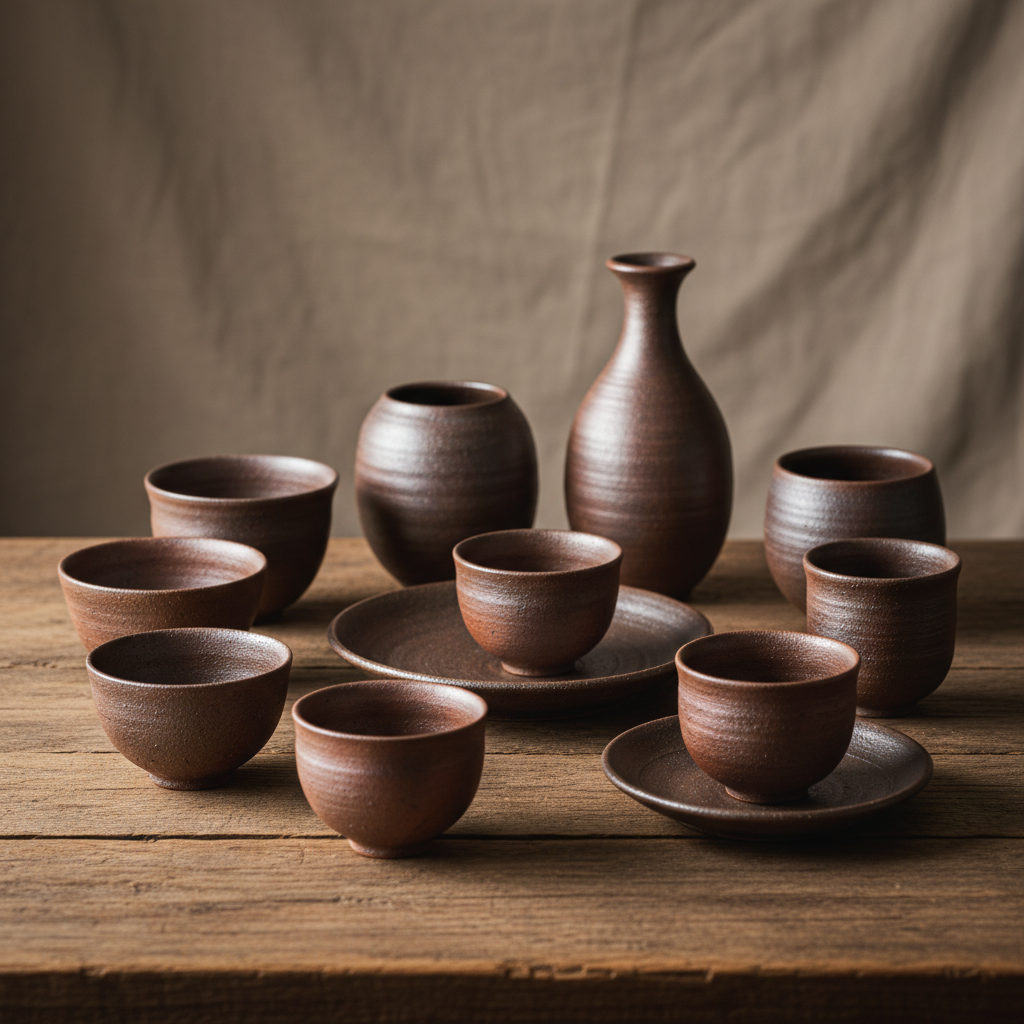
From this period through the Muromachi period, Seto developed as the only domestic glazed earthenware production center, establishing a monopolistic position. Products from this era, called Ko-Seto, were characterized by elegant works using iron oxide glaze and ash glaze in reddish-brown or dark brown tones, with luxury items such as tea jars, water ewers, and flower vases being produced.
Muromachi Period through Azuchi-Momoyama Period: The Golden Age and Warring States Turmoil
During the Muromachi period, Seto ware established itself as a high-quality ceramic distributed nationwide. However, the turmoil of the Warring States period caused many potters to relocate to the Mino region (present-day Gifu Prefecture), and Seto’s ceramic industry temporarily declined. Ceramics fired in Mino during this period were sometimes also called “setomono,” demonstrating the great influence of Seto ware.
Edo Period: Beginning of Porcelain Production and Industrial Recovery
With the arrival of the Edo period, Seto’s ceramic industry revitalized once again. Particularly important was the beginning of porcelain production from the late Edo period onward. While Seto had previously focused on earthenware production, it adopted the porcelain manufacturing technology established in Arita in Hizen (present-day Saga and Nagasaki Prefectures) and transformed into a comprehensive ceramics production center producing both earthenware and porcelain.
During this period, Kato Tamikichi is said to have brought back porcelain manufacturing technology from Arita, establishing the foundation for porcelain production in Seto. Throughout the Edo period, Seto ware produced a wide range of products from daily necessities to luxury items, becoming widely distributed primarily in eastern Japan.
From the Meiji Period Onward: Modernization and Diversification
With the arrival of the Meiji period, Seto’s ceramic industry rode the wave of modernization, achieving further development. While incorporating Western technology and design, production of ceramics for export also became active. In particular, ceramic novelties and figurines called “Seto Novelties” became major export goods to Europe and America, supporting Seto’s economy.
From the Showa period onward, diverse products were produced, including white cloud ceramics, oxidized porcelain (bone china, new born), semi-porcelain, stoneware, and fine ceramics. A production center with such a broad product lineup is extremely rare in Japan.
Characteristics of Seto Ware: Technical Capabilities Producing Earthenware and Porcelain
Abundant Ceramic Clay Resources
The high quality of Seto ware is supported by the abundant high-quality ceramic clay found in the surrounding region. The area around Seto City contains large deposits of excellent ceramic clay that burns white, making it possible to achieve beautiful glaze color development and detailed painted decoration.
The quality of this ceramic clay is one of the primary reasons why Seto has continuously developed as a ceramic production center from the Heian period to the present day.
Diverse Glazing Techniques
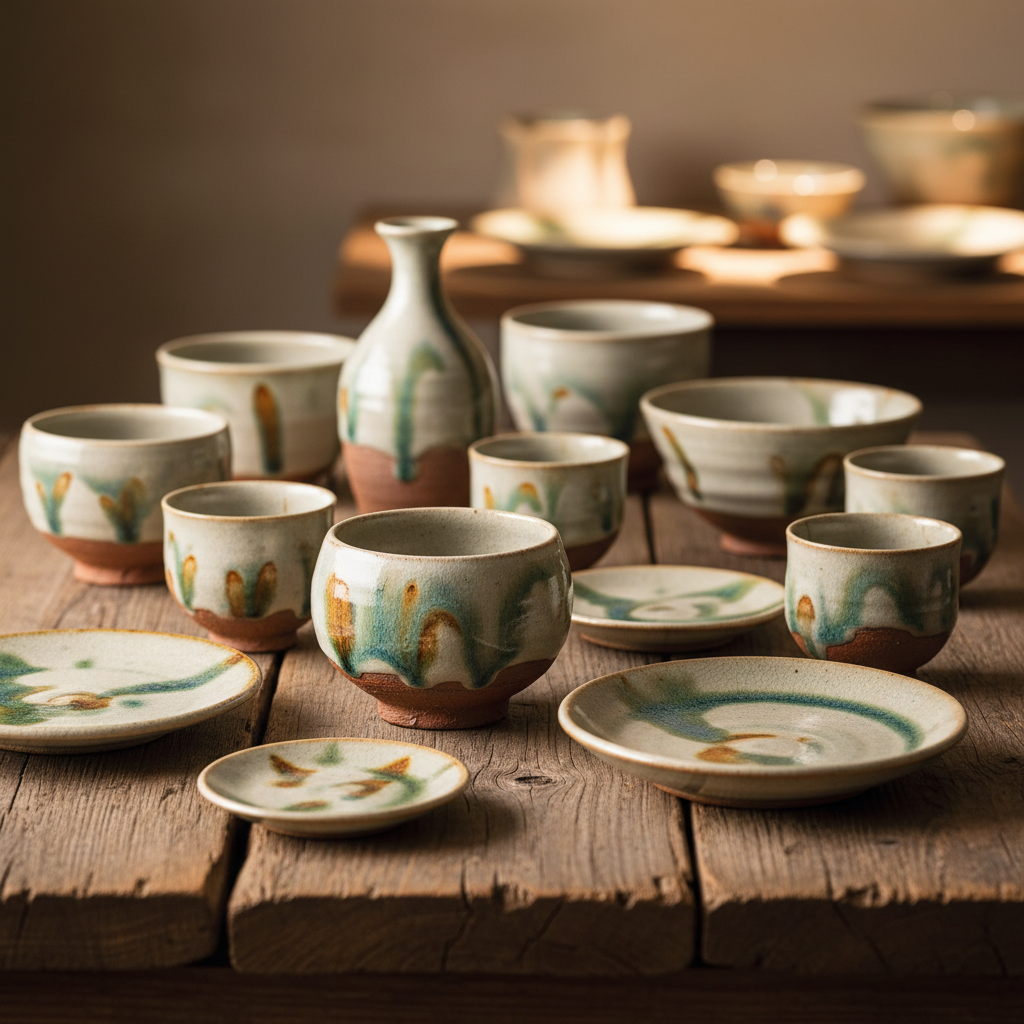
Another major characteristic of Seto ware is its diverse glazing techniques. In Seto, which has worked on glazed earthenware production from ancient times, various glazes have been developed and used, including ash glaze, iron oxide glaze, oribe glaze, yellow Seto, and shino glaze.
These glaze techniques give products unique color and texture, enhancing the aesthetic value of Seto ware. In particular, “Akatsu ware,” designated as a traditional craft, preserves seven types of glaze and twelve types of decorative techniques, demonstrating the diversity of its technical capabilities.
Concurrent Production of Earthenware and Porcelain
As mentioned previously, the greatest distinctive feature of Seto ware is that it produces both earthenware and porcelain. Earthenware uses soil as raw material, is fired at relatively low temperatures (approximately 800-1,250°C), is water-absorbent, and is characterized by warm texture. Porcelain, on the other hand, uses ceramic stone as its primary raw material, is fired at high temperatures (approximately 1,200-1,400°C), is non-water-absorbent, and is characterized by a hard, white, translucent finish.
By possessing both technologies, Seto has developed as a comprehensive ceramics production center capable of producing an extremely wide range of products, from tea ware to everyday tableware to industrial products.
Three Types of Seto Ware Particularly Famous in Aichi Prefecture
Akatsu Ware (Akatsu-yaki)
Akatsu ware is earthenware produced in the Akatsu district of Seto City and was designated as a traditional craft by the government in 1977 (Showa 52). The greatest characteristic of Akatsu ware is its expressive range utilizing seven types of glazes (ash glaze, iron oxide glaze, Ko-Seto glaze, yellow Seto glaze, shino glaze, oribe glaze, and gofukamui glaze) and twelve types of decorative techniques.
Highly valued as tea ceramics, it is produced in a wide range from tea utensils such as tea bowls, tea containers, and flower baskets to everyday tableware. While maintaining traditional techniques, new designs suited to contemporary life are also being created, and it is known as a production center where tradition and innovation coexist.
Seto Sometsuke Ware (Seto Sometsuke-yaki)
Seto Sometsuke ware is porcelain with indigo (gosu) painted decoration on white porcelain surfaces and was designated as a traditional craft by the government in 1997 (Heisei 9). In Seto, where porcelain production began in the late Edo period, it developed uniquely while influenced by Arita ware and other traditions.
The characteristics of Seto Sometsuke ware are delicate brushwork in decoration and the beauty of translucent white porcelain. It permits diverse expression ranging from traditional patterns to contemporary designs, with tableware at its center and is widely appreciated. It receives high evaluation as a product combining the warmth of hand-painted work by craftspeople with the functionality of porcelain.
Seto Novelty
Seto Novelty is a general term for ceramic figurines and decorative objects produced in Seto. From the Meiji period through the Showa period, they were produced in large quantities as export goods to Europe and America, becoming an important industry supporting Seto’s ceramics sector.
Characterized by meticulous sculpting and delicate coloring, diverse motifs were created including animals, dolls, and character merchandise. At its peak, it occupied the majority of the world novelty market, becoming internationally known as the “Holy Land of Novelties.” Even today, the technology is preserved and maintains high popularity as a collector’s item.
Brand Power of Seto Ware: Value as a Regional Brand
Regional Community Trademark Registration
Seto ware is registered as a regional community trademark to protect its value as a regional brand. The Seto Ware Promotion Association is the trademark holder, and use of the “Seto ware” name is limited to ceramics produced in Seto City and Owariasahi City, Aichi Prefecture.
Through this trademark registration, the brand value of Seto ware is legally protected, allowing consumers to confidently select authentic Seto ware. Designated products range widely across tableware, flower vases, and decorative objects made of ceramics, reflecting the broad product lineup of Seto ware.
Value as One of Japan’s Six Ancient Kilns
Seto is counted as one of Japan’s Six Ancient Kilns along with Tokoname, Shigaraki, Echizen, Tanba, and Bizen, and was certified as a “Japan Heritage” site in 2017 (Heisei 29). The historical value of having continued uninterrupted production for more than a thousand years is highly evaluated both domestically and internationally.
Among Japan’s Six Ancient Kilns, Seto occupies a unique position in terms of early establishment of glaze technology and technical innovation and diversity in producing both earthenware and porcelain.
Comprehensive Strength as a Production Center
Modern Seto functions as a comprehensive production center producing an extremely wide range of ceramics-related products, from traditional handicrafts to industrial products to cutting-edge fine ceramics. This diversity is the driving force enabling the production center to survive and continue developing while adapting to changing times.
Seto City has a concentration of ceramics-related enterprises, workshops, and craftspeople, with a complete supply chain formed from raw material supply, manufacturing, distribution, to sales. This industrial clustering supports high technical capabilities and efficient production systems.
Contemporary Efforts Supporting Seto Ware
Human Resource Development and Technical Succession
Seto is actively engaged in preserving traditional techniques and cultivating new human resources. Aichi Prefectural Seto Ceramic High School (now: Aichi Prefectural Seto High School) has provided specialized education in ceramics for many years. Additionally, multiple ceramic art studios and training facilities in Seto City support those aiming to become professional ceramicists and those enjoying ceramics as a hobby.
Artisans ranging from traditional craft technique holders (Living National Treasure-level craftspeople) to young artists are active, with succession and innovation progressing in both technique and design.
Utilization as a Tourism Resource
Seto City is actively engaged in tourism promotion, leveraging its characteristics as a “Ceramic Capital.” The Seto-gura Museum allows visitors to learn about the history and culture of Seto ware, attracting many tourists. Additionally, the “Setomono Festival” held every September in attracts hundreds of thousands of visitors from across the country and has become a major event widely communicating the appeal of Seto ware.
Kilns and workshops are scattered throughout the city, with many facilities offering kiln tours and ceramic art experience activities. Through these efforts, Seto ware has increased its value not merely as a product but also as an experiential tourism resource.
Design and Innovation
While preserving tradition, there is also active development of new designs suited to contemporary lifestyles. Young artists and designers create works using traditional techniques while incorporating contemporary sensibility, with increasing recognition in domestic and international design awards.
Additionally, technology cultivated in Seto is being utilized in cutting-edge material fields such as fine ceramics, with increasing fusion between traditional industry and advanced industry.
Purchasing and Experiencing Seto Ware
Places to Purchase
Seto ware can be purchased directly at kilns and ceramic shops in Seto City, as well as at department stores, craft shops, and online retailers throughout the country. Facilities such as “Setomono Honten” and “Seto-gura” in Seto City particularly offer a wide variety of Seto ware products in one place.
Price ranges vary widely, from everyday tableware to artist-made tea ceramics, allowing selection according to budget and purpose.
Ceramic Art Experience
Numerous facilities in Seto City offer pottery wheel and painting experiences. Beginners can participate easily and create original works. Through the experience, one can gain a direct sense of the Seto ware production process and the high level of craftsmanship.
Conclusion: The Enduring Appeal of Seto Ware Shining Beyond a Thousand Years
Seto ware, centered in Seto City, Aichi Prefecture, has developed as a representative ceramics production center of Japan with a history spanning more than a thousand years. The fact that the word “setomono” has become synonymous with ceramics demonstrates its great influence.
Among Japan’s Six Ancient Kilns, Seto is a rare production center that established glaze technology early and further produces both earthenware and porcelain, always standing at the forefront of technological innovation. Diverse product groups such as Akatsu ware, Seto Sometsuke ware, and Seto Novelty demonstrate Seto’s high technical capability and creativity.
Even in modern times, Seto ware continues to evolve while maintaining both the succession of traditional techniques and the development of new designs. While protecting its value as a regional brand, it is also utilized as a tourism resource and continues to be loved by many people.
The appeal of Seto ware lies in its long history, high technical capabilities, and flexibility to change with the times. The tradition of ceramic production that has continued unbroken for over a thousand years will continue to shine as a part of Japanese culture and as a presence enriching people’s lives.