
Akazu Ware Aichi Prefecture Ceramics Production Area|Comprehensive Explanation of the Source of Seto Ware, Boasting a Thousand Years of Tradition
What is Akazu Ware? The Complete Overview of Aichi’s Traditional Ceramics
Akazu ware (赤津焼) is a ceramic produced primarily in the Akazu district, located in the eastern part of Seto City, Aichi Prefecture. It is known as the oldest production area within Seto ware, with full-scale production believed to have begun in the late Heian period through the Kamakura period.
While the term “setomono” (瀬戸もの) has become synonymous with ceramics, and Seto is a representative ceramic production area of Japan, Akazu ware is the very origin of Seto ware. Akazu ware developed alongside Seto kiln, one of Japan’s Six Ancient Kilns, and the techniques and aesthetic sense passed down over more than a thousand years remain vibrant to this day.
In 1977 (Showa 52), it was designated as a traditional craft by the government, and its value was officially recognized. Characterized by seven types of glazes and twelve types of decorative techniques, Akazu ware combines practicality with artistic merit, and is widely cherished for everything from tea ceremony utensils to everyday tableware.
The Akazu Ware Production Area|Geography and Climate of Akazu District, Seto City, Aichi Prefecture
Ideal Location Conditions as a Ceramic Production Area
Akazu district in Seto City, Aichi Prefecture, the production area of Akazu ware, is located approximately 20 km northeast of Nagoya and spreads across rolling hills with elevations around 200 meters. The reason this region has prospered as a major ceramic production center for over a thousand years lies in the abundance of natural resources necessary for ceramic arts.
The geological layers surrounding Akazu contain abundant high-quality ceramic clay, particularly blessed with clay-rich soil. From the geological structure known as the Seto layer group, plastic clay, silica stone, feldspar, and other essential raw materials for ceramic production can be extracted. Additionally, the surrounding forests provided abundant firewood for kiln firing, making fuel procurement easy.
Akazu Town as a Pottery Cluster
Currently, approximately sixty kilns are gathered in Akazu town (〒489-0022 Aichi Prefecture, Seto City, Akazu-cho), preserving the landscape of a traditional pottery village. Centered around the Akazu Ware Industrial Cooperative (Seto City, Akazu-cho 43), artisans are engaged in the succession and innovation of techniques.
In Akazu district, the “Akazu Ware Festival” is held on the third Saturday and Sunday of April and the second Saturday and Sunday of September each year, featuring product exhibitions and sales at kilns as well as ceramic experience activities. Additionally, the Akazu Ware Hall (Seto City, Akazu-cho 94-4) maintains permanent exhibitions where visitors can learn about the history and techniques of Akazu ware.
The History of Akazu Ware|A Thousand-Year Story Spanning from the Nara Period
The Source of Seto Ceramics, Inheriting the Tradition of Sue Ware
The origins of Akazu ware trace back to Sue ware from the Nara period. Sue ware is high-fired pottery transmitted from the Korean peninsula during the Kofun period, and it had been produced in the Seto region since ancient times. This Sue ware technology developed from the late Heian period through the Kamakura period, evolving into glazed ceramics.
In the late Heian period (around the 12th century), full-scale production of glazed ceramics began in the Seto region. While influenced by contemporary Chinese ceramics, potters developed unique techniques. Products from this period are called “Ko-Seto” (old Seto), and Akazu district was one of the central production areas.
Flourishing in the Kamakura and Muromachi Periods and Establishment of Techniques
From the Kamakura period through the Muromachi period, Akazu ware developed significantly. During this era, with the spread of tea ceremony culture, demand for ceramic tea utensils increased. Akazu potters, while taking Chinese Tenmoku tea bowls and celadon as models, developed unique glaze techniques.
During the Muromachi period, diverse glaze techniques such as yellow Seto, Seto black, Shino, and Oribe were born. These techniques were developed in the Seto region, including Akazu, and left a significant mark on Japanese ceramic history. In particular, the innovative form and decoration of Oribe ware were highly valued by tea masters of the time.
Transformation in the Edo Period and the Challenge of Porcelain Production
With the beginning of the Edo period, porcelain production started in Hizen (present-day Saga and Nagasaki prefectures), and Seto ceramics faced competition. However, Seto potters made efforts to master porcelain production technology, and by the early 19th century, porcelain production became full-scale in Seto as well.
Akazu district continued traditional ceramic production while developing products suited to the needs of the times. In the late Edo period, mass production of miscellaneous daily goods was also undertaken, strengthening the district’s foundation as a production area.
Modernization After the Meiji Period and Revitalization of Traditional Techniques
The wave of modernization in the Meiji period brought significant changes to the kiln industry of Seto. While production efficiency improved through mechanization and introduction of new technologies, traditional techniques faced the danger of being lost.
In the early Showa period, a movement to revive disappearing traditional glazes and decorative techniques began by ceramic artists and researchers. Through the efforts of ceramic artists such as Karaku Katoh and Toshinomo Katoh, techniques such as Ko-Seto and yellow Seto were reproduced and passed down to the present day.
After World War II, the value as a traditional craft was re-recognized, leading to the 1977 designation as a traditional craft. In modern times, while preserving traditional techniques, efforts are being made to develop new designs that harmonize with contemporary living.
The Characteristics of Akazu Ware|Seven Glazes Weaving Rich Expressions and Practical Beauty
Diverse Expressions Created by Seven Types of Traditional Glazes
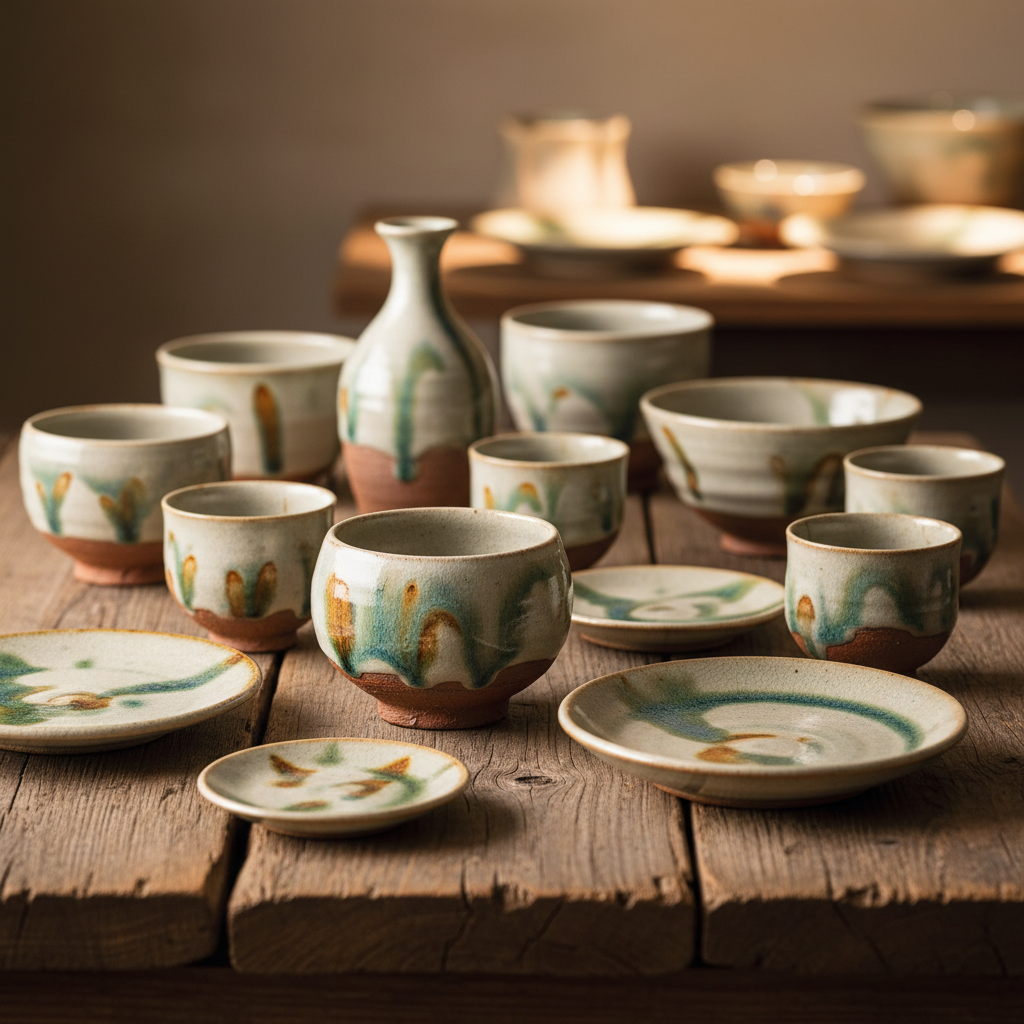
The greatest characteristic of Akazu ware lies in the diverse expressions created by mastering seven types of traditional glazes. These “seven glazes” (shichiyuu) each possess different colors and textures, giving each work a rich individuality.
1. Ash Glaze (Kaiyuu)
A glaze with wood ash or straw ash as the main ingredient, characterized by pale green to yellow-green coloring. A traditional glaze from Ko-Seto times, it creates a simple, warm appearance.
2. Iron Glaze (Tetsuyuu)
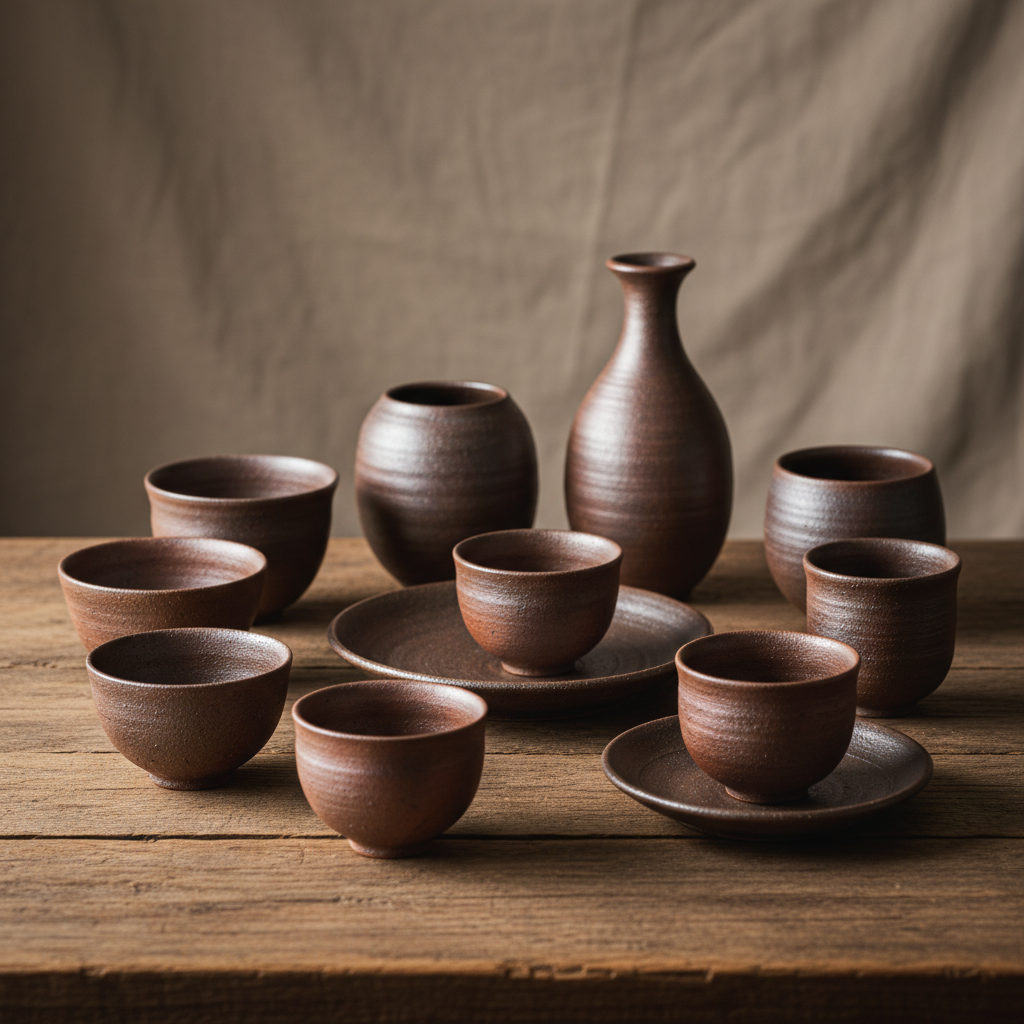
A glaze containing abundant iron, displaying deep colors from tea brown to black brown. Used in Tenmoku tea bowls, it creates a heavy and calm atmosphere.
3. Ko-Seto Glaze (Koseto-yuu)
A glaze created by adding iron to ash glaze, characterized by yellow-brown to amber coloring. A representative glaze of medieval Ko-Seto, highly valued for its historical significance.
4. Yellow Seto Glaze (Kiseto-yuu)
A glaze with feldspar as the main component, charming with its soft yellow coloring. A technique perfected from the late Muromachi through the Momoyama period, its warm tone was beloved by tea masters.
5. Shino Glaze (Shino-yuu)
A white glaze with feldspar as the main ingredient, producing a soft white color and unique texture when applied thickly. One of the representative glazes of the Momoyama period.
6. Oribe Glaze (Oribe-yuu)
A glaze containing copper, characterized by vibrant green coloring. Combined with innovative forms favored by Furuta Oribe, it creates original works.
7. Ofuke Glaze (Ofuke-yuu)
A transparent feldspar-based glaze, characterized by pale blue-green coloring. This name comes from the Ofuke kiln of the Owari Tokugawa family in the Edo period. It conveys an elegant and refined impression.
Diverse Designs Through Twelve Traditional Decorative Techniques
In addition to the seven types of glazes, twelve traditional decorative techniques are passed down in Akazu ware. Combining these techniques opens possibilities for seemingly infinite expressions.
Scrape Carving (Hera-bori)
A technique of carving designs into semi-dry clay using a scraper. By varying the thickness and depth of lines, both delicate and powerful expressions are possible.
Stamped Decoration (Inka)
A technique of pressing a mold carved with designs onto the clay to create patterns. The same pattern can be repeatedly used, making it suitable for regular decoration.
Comb Marking (Kushime)
A technique of drawing lines on the clay with a comb-shaped tool to create wave-like or straight patterns. Rhythmic patterns are characteristic, creating dynamic decoration.
Mishima Technique (Mishima-de)
A technique of stamping patterns into the clay and filling the recessed areas with white or slip clay. A technique transmitted from Mishima on the Korean peninsula, valued for the beauty of its contrast.
Glaze Application (Yuuyaku)
A technique of applying different glazes in sections or with flowing strokes. The flow and overlapping of glazes create chance effects, producing unique expressions in each piece.
Painting (E-tsuke)
A technique of painting with pigments such as iron oxide or copper oxide on the clay or glaze surface. The freedom of brushwork allows for pictorial expression.
Other techniques include inlay (zoogan), line carving, tube decoration (itchin), scraping, textile patterns, and brush patterns. Using these techniques individually or in combination creates the rich decoration unique to Akazu ware.
Harmony of Practicality and Artistic Merit
Another important characteristic of Akazu ware is the harmony between practicality and artistic merit at a high level. Items such as tea bowls, plates, bowls, flower vessels, and sake utensils are everyday objects while also possessing the value of fine crafts.
Particularly as tea ceremony utensils, Akazu ware has been treasured by tea masters since ancient times. The aesthetic sense cultivated within Momoyama period tea ceremony culture is inherited in contemporary works, embodying “beauty in function” as valued ceramics.
Materials and Tools of Akazu Ware|High-Quality Ceramic Clay and Traditional Pottery Equipment
Seto Ceramic Clay|Natural Resources Supporting a Thousand-Year Production Area
The production of Akazu ware uses high-quality ceramic clay extracted from the Seto region. Clay from the Neogene Miocene layer called the Seto layer group possesses properties suitable for ceramic production in terms of plasticity, refractoriness, and post-firing strength.
Primarily used ceramic clays include kibushi clay and gairome clay. Kibushi clay has the characteristic of high plasticity and ease of forming, while gairome clay is characterized by high refractoriness and white firing results. Blending these creates clay suited to the intended use or expression of the work.
Glaze Raw Materials|Natural Gifts Creating Colors
The seven types of glazes are each made from different natural raw materials. Wood ash or straw ash is used for ash glaze, feldspar for feldspar glazes, and iron-containing soil or ore for iron glazes. These raw materials are pulverized and mixed with water to achieve appropriate concentration.
Glaze formulation is conducted based on the long-standing experience and intuition of ceramic potters. Since the same raw materials produce greatly different colors depending on formulation ratio, firing temperature, and kiln atmosphere (oxidizing or reducing), advanced technique and knowledge are required.
Traditional Pottery Equipment
Traditional tools are used in the production of Akazu ware. The pottery wheel (rokuro) is a fundamental forming tool, and even in modern times when electric wheels are widespread, some artisans use hand wheels.
Tools used for decoration include scrapers, combs, stamp molds, and brushes. Many of these tools are self-made or modified by artisans to suit their hands. Devotion to tools is also an important element in creating individual character in works.
The Production Process of Akazu Ware|Traditional Techniques Creating the Beauty of Ceramics
1. Clay Preparation|Ceramic Clay Refinement and Blending
Production of Akazu ware begins with clay preparation. Extracted clay first undergoes water levigation, a process for removing impurities. The clay is dissolved in water, and using differences in settling speed, particles are sized and sand and stones are removed.
The refined clay is blended according to intended use, with consideration given to ease of forming, shrinkage rate during firing, and post-firing color. Blended clay is thoroughly wedged to remove air, reaching a uniform state. This “spiral wedging” is important for removing air bubbles in the clay and preventing cracking during firing.
2. Forming|Techniques of the Wheel and Hand-Building
Forming primarily uses wheel-forming and hand-building techniques. Circular vessels such as tea bowls and plates are often formed on the wheel, with artisans creating uniformly thick vessels using only hand sensation on the rotating clay. Mastering this technique requires years of practice.
Hand-building technique allows for freedom of form. Various methods exist including coil-building, slab-building, and mold-pressing, making it suitable for expressing individual character in works.
The formed vessel is allowed to dry appropriately. Rapid drying causes cracking, so vessels are slowly dried while controlling humidity.
3. Decoration|Pattern Application Using Twelve Techniques
When the clay reaches the “leather-hard” stage called “kawagatame,” decorative work begins. At this stage, techniques such as scrape carving, comb marking, and stamped decoration are used to apply designs.
In the Mishima technique, designs are pressed with stamps, and white clay is pressed into the recessed areas, with excess clay scraped away to raise the pattern. This work requires advanced technique, as too much scraping removes the pattern while insufficient scraping prevents beautiful finishing.
Painting is done either after biscuit firing or after final firing. Painting after biscuit firing is called “underglaze painting,” achieving soft coloring through the glaze.
4. Biscuit Firing|Preliminary Firing at Around 800 Degrees
After decoration is complete and the clay fully dries, biscuit firing is performed. Biscuit firing at approximately 800 degrees hardens the clay to a state where glazing is easier.
Biscuit-fired vessels retain water absorption while possessing certain strength, making glazing easier. Checking for shape distortion or defects occurs at the biscuit stage, with corrections made as needed.
5. Glazing|Mastering Seven Types of Glazes
Glaze is applied to the biscuit-fired vessel. Glazing methods include dipping, pouring, and spraying, selected based on vessel shape and desired effects.
The seven traditional glazes characteristic of Akazu ware are sometimes used individually and sometimes applied in sections or layered. Glaze thickness and application method greatly affect the fired appearance, requiring the artisan’s experience and sensibility.
Works with Oribe and yellow Seto glazes applied in sections, or Shino glaze with iron painting, create diverse expressions.
6. Final Firing|High-Temperature Firing Above 1200 Degrees
Glazed vessels undergo final firing. Akazu ware’s final firing occurs at 1200 to 1300 degrees. Firing takes over ten hours, making temperature control extremely important.
Traditionally wood-fired kilns were used, though modern gas and electric kilns are also employed. However, some artisans continue using wood-fired kilns seeking their unique firing effects.
During firing, the kiln atmosphere (oxidizing or reducing) is controlled. Oribe glaze develops beautiful green in reducing atmospheres, while iron glaze shows different tones in oxidizing and reducing atmospheres. Such firing technique supports Akazu ware’s diverse expressions.
7. Kiln Opening and Quality Control|Final Steps to Completion
After firing, kilns are opened once temperature drops. Each work is carefully inspected after removal. Glaze coloring, shape, and presence of defects are checked, with only products meeting standards shipped.
Completed Akazu ware gains greater appreciation with use. Especially in tea utensils, repeated use creates fine crazing in the glaze surface, where tea sediment seeps in to create unique landscapes. Called “tea-seasoning,” this is treasured by enthusiasts.
Contemporary Akazu Ware|Succession of Tradition and New Challenges
Protection and Promotion as Traditional Crafts
Following the 1977 traditional craft designation, Akazu ware has undertaken preservation and succession of traditional techniques with government support. The Akazu Ware Industrial Cooperative offers training programs for successors, supporting technical improvement of young artisans.
Seto City also emphasizes popularization activities for Akazu ware through opening pottery classes and experience workshops, and operating exhibition facilities. The Akazu Ware Hall displays works ranging from historical pieces to contemporary artists, conveying Akazu ware’s appeal to visitors.
New Designs Harmonizing with Contemporary Living
While preserving traditional techniques, development of new designs suited to modern lifestyles progresses. Young artisans create works employing traditional seven glazes and decorative techniques while using modern forms and coloring.
Products suited to contemporary dining, including coffee cups, wine glasses, and Western tableware, are increasing. Through fusion of tradition and innovation, Akazu ware continues evolving as ceramics accepted by new generations.
Dissemination Overseas and International Exchange
Recently, Akazu ware has garnered international attention. As a Japanese traditional craft, it exhibits at international exhibitions and trade fairs, earning high evaluation. Particularly, the warmth of handwork and diverse expressive capability interest overseas collectors and designers.
International exchange flourishes, with overseas ceramic artists visiting Akazu to study techniques, and Akazu artisans holding workshops overseas. Through such exchange, Akazu ware’s technique and aesthetic sense spreads worldwide.
Experiencing Akazu Ware|Visiting the Production Area to Touch Ceramic Arts’ Appeal
Akazu Ware Hall|A Base for Learning History and Technique
The Akazu Ware Hall (Aichi Prefecture, Seto City, Akazu-cho 94-4) is a facility for comprehensively learning Akazu ware’s history and techniques. Permanent exhibitions allow viewing of Akazu ware’s transition from Ko-Seto to contemporary works chronologically. The seven glazes and twelve decorative techniques are also detailed with actual works.
Kiln Tours|Visiting Artisan Workshops
Approximately sixty kilns in Akazu district offer workshop tours and product sales, with many allowing visitors to observe artisan work firsthand, providing direct experience of traditional techniques’ depths. Purchasing directly from kilns allows the pleasure of selecting vessels while conversing with makers.
Ceramic Experience|Creating Your Own Vessels
Workshops and pottery classes in Akazu district offer wheel and painting experiences. With artisan instruction, beginners can create bowls or plates, receiving finished works after firing. The joy of eating from vessels one has made is exceptional, providing close experience of ceramics’ appeal.
Akazu Ware Festival|A Major Event Held Twice Yearly
The “Akazu Ware Festival,” held on the third Saturday and Sunday of April and second Saturday and Sunday of September annually, is Akazu district’s largest event. All sixty kilns simultaneously display and sell works, offering opportunities to purchase at better prices than usual.
During festival periods, pottery experiences, kiln tour guides, and artisan demonstrations are held, allowing abundant experience of Akazu ware’s appeal. Many ceramic enthusiasts and tourists visit, enveloping the entire production area in vitality.
Purchasing and Using Akazu Ware|Points for Long-Term Appreciation
Selecting Akazu Ware
When selecting Akazu ware, first clarifying intended use is important. Purpose—whether for tea ceremony or everyday tableware—affects appropriate form and glaze.
Personally handling pieces to confirm weight, texture, and mouthfeel is recommended. Especially with tea bowls or sake vessels, ease of holding and drinking greatly affect usability. While glaze coloring and decorative beauty are important, balancing with practicality is advised.
Initial Care|Sealing Method
Like Akazu ware ceramics, the glaze surface contains fine pores, and direct use can allow staining and soiling. Conducting “sealing” before initial use prevents this.
Common sealing methods include simmering vessels in rice washing water or flour-dissolved water. Starch fills pores, preventing dirt penetration. After sealing, dry thoroughly before use.
Daily Care and Storage
After use, gently wash with soft sponge and neutral detergent. Avoid abrasive cleaners or scrubbers, which may damage glaze. After washing, thoroughly dry and store in humidity-free locations.
When stacking vessels, place soft cloth or paper between them to prevent scratches.
Category
Akazu ware is classified within the ceramic and pottery category among Japanese traditional crafts. More specifically, the following classifications apply.
Craft Categories
- Traditional craft (Minister of Economy, Trade and Industry designated)
- Ceramics and pottery
- Products related to Japan’s Six Ancient Kilns
- Aichi Prefecture regional brand products
Product Categories
- Tea ceremony utensils (tea bowls, tea caddies, water jars, flower containers)
- Daily tableware (plates, bowls, tea cups, mugs)
- Sake utensils (sake bottles, cups, pouring vessels)
- Flower vessels and vases
- Interior accessories
- Fine craft and appreciation pottery
Technique Categories
- Glazed ceramics
- Decorative ceramics
- Multi-glaze technique products
Within these categories, Akazu ware is positioned as products from Japan’s representative ceramic production area, backed by over a thousand years of history and advanced technique.
Conclusion|The Future of Akazu Ware, Where a Thousand Years of Tradition Lives
Akazu ware, passed down for over a thousand years in Akazu district, Seto City, Aichi Prefecture, can be said to embody the history of Japanese ceramics itself. Beginning with Nara period Sue ware, continuing through Heian and Kamakura period glazed ceramics, Muromachi and Momoyama period tea ceramics, to contemporary domestic pottery, it has continuously evolved with the times.
The rich means of expression through seven types of glazes and twelve types of decorative techniques represent rare traditional techniques globally. These techniques are not merely decorative technologies but cultural heritage embodying concentrated Japanese aesthetic sense and nature appreciation.
Contemporary Akazu ware, while preserving tradition, engages in product development responding to modern needs. The fusion of young artists’ innovative ideas with veteran artisans’ reliable technique ensures Akazu ware continually evolves.
Visiting the production area allows touching the artisans’ sincere work and the depth of ceramic culture nurtured by a thousand years of history. Each handcrafted vessel contains the maker’s thoughts and skill, creating new value through dialogue with users.
Akazu ware, particularly distinguished among Japanese ceramic production areas for diverse expressive capability, will continue being loved by many people. The world of Akazu ware, where tradition and innovation coexist, will be passed to the future as a symbol of Japanese craft culture’s richness.