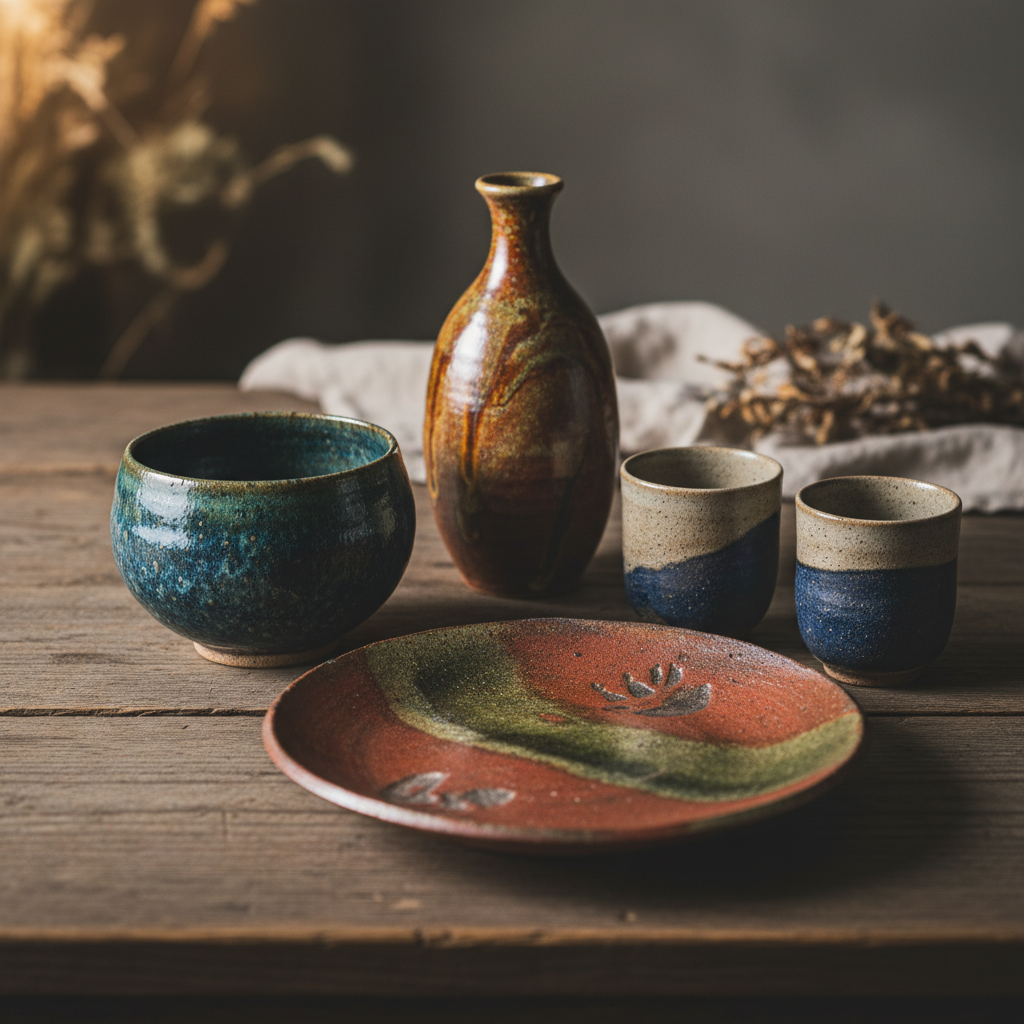

Shibutami Ware (渋民焼) Complete Guide|History and Charm of Gunma Prefecture’s Traditional Ceramic Production Area
Gunma Prefecture is home to numerous ceramic production areas, and among them, “Shibutami Ware (shibutamiyaki)” stands out for its unique history and characteristics. This article provides a detailed explanation of this precious traditional craft, from its origins to the present day, covering its technical features and information about the production area.
What is Shibutami Ware? Its Position in Gunma Prefecture’s Ceramic Culture
Shibutami Ware is one of the traditional ceramics produced in Gunma Prefecture. Gunma Prefecture is located in the inland region of the Kanto area, and due to its abundant clay resources and high-quality water, it has long been an active ceramic production area.
Overview of Gunma Prefecture’s Ceramic Production Areas
Gunma Prefecture has multiple ceramic production areas, each with its own distinctive characteristics. Representative examples include:
- Shibutami Ware: The tradition of simple and practical folk kilns
- Fujioka Ware: Ceramics that utilize local clay
- Kiryu Ware: Ceramics from Kiryu, known as a textile town
Among these, Shibutami Ware developed as a folk kiln particularly focused on everyday tableware.
The History of Shibutami Ware|A Tradition Continuing from the Edo Period
The Origins of Shibutami Ware
While there are various theories about the origins of Shibutami Ware, it is believed to have begun in the mid to late Edo Period. During that time in Gunma Prefecture (Kozuke Province), “farm-side kilns” (noukangama) existed in various locations where people engaged in pottery making as a side business while farming.
Shibutami Ware was born as one such farm-side kiln and produced everyday utensils closely tied to the lives of local people.
Development During the Edo Period
During the Edo Period, Gunma Prefecture was a strategic point on major highways such as the Nakasendo and Mikuni Kaido. This resulted in:
- Development of Distribution: Expanded sales routes for ceramics
- Active Technical Exchange: Increased technical exchanges with other production areas
- Increased Demand: Growing demand in post towns and castle towns
Against this backdrop, Shibutami Ware grew into an important industry in the region.
Changes During the Meiji, Taisho, and Showa Periods
With the arrival of the Meiji Period, the wave of modernization swept through the ceramic industry. Shibutami Ware was no exception:
- Technological Innovation: Improvements to pottery wheels and kilns
- Changes in Production System: Shift from cottage industry to workshop system
- Diversification of Design: Adoption of new designs alongside traditional styles
From the Taisho Period through the early Showa Period, the area was also influenced by the Mingei (folk craft) movement, a time when simple beauty was reevaluated.
From the Postwar Period to Modern Times
After World War II, the Japanese ceramic industry entered a major period of transition. The spread of plastic products and changes in lifestyle reduced demand for traditional ceramics.
Shibutami Ware was no exception, and while production scale declined, the technique and spirit have been passed down to the present day by kilns and ceramic artists who continue to preserve the tradition.
Characteristics of Shibutami Ware|Technique and Aesthetics
Clay and Raw Materials
To understand the characteristics of Shibutami Ware, one must first know about the clay used.
Locally Sourced Clay
Clay extracted from within Gunma Prefecture is primarily used. This clay:
- Contains an appropriate amount of iron
- Possesses excellent plasticity
- Exhibits a warm color tone after firing
Characteristics of Glazes
The following glazes have been traditionally used in Shibutami Ware:
- Ash Glaze: A simple glaze primarily made from wood ash
- Iron Glaze: A glaze containing iron that produces tea-brown coloring
- Clear Glaze: A transparent glaze that showcases the base clay color
Forming Techniques
The forming of Shibutami Ware primarily employs the following techniques:
- Wheel Throwing: For round vessels such as bowls, plates, and basins
- Hand Building: For complex shapes such as teapots and flower vases
- Mold Forming: Used when efficiently producing identical shapes
Firing Methods
Traditional Kilns
Traditionally, Shibutami Ware used the following types of kilns:
- Climbing Kiln: An efficient kiln that utilizes slopes
- Pit Kiln: A primitive kiln dug into the ground
Modern Kilns
Today, gas kilns and electric kilns, which allow for easier temperature control, are also used, though some ceramic artists remain devoted to traditional wood-fired kilns.
Design and Decoration
The aesthetics of Shibutami Ware lie in “beauty of function.” While prioritizing practicality, decorative techniques such as the following are sometimes applied:
- Brush Marks: A technique of applying decorative clay with a brush
- Scraping Off: A technique of partially removing decorative clay
- Stamping: A technique of pressing patterns with stamp-like tools
- Inlay: A technique of embedding clay of different colors
However, excessive decoration is avoided, and simple designs that showcase the inherent qualities of the material are characteristic.
Information About the Shibutami Ware Production Area|Gunma Prefecture’s Ceramic Culture
Geographic Background
Gunma Prefecture is located in the northwestern part of the Kanto region and has the following geographic characteristics:
- Mountainous terrain: Approximately two-thirds of the prefecture is mountainous
- Abundant rivers: Rich water resources from the Tone River system
- Hot springs: Numerous hot springs such as Kusatsu and Ikaho
Such natural environment has provided ideal conditions for the production of high-quality clay and ceramic manufacturing.
Current State of the Production Area
The modern Shibutami Ware production area faces the following situation:
Number of Kilns
While the number of kilns has decreased compared to its peak, there are kilns that continue to preserve tradition and young ceramic artists who express Shibutami Ware with new sensibilities.
Products
- Everyday tableware such as rice bowls and teacups
- Decorative items such as flower vases and incense burners
- Contemporary design vessels
Related Facilities and Experiences
Gunma Prefecture has the following facilities related to ceramics:
Ceramic Experience Facilities
Many kilns and workshops offer ceramic experiences. Through wheel-throwing and hand-building experiences, you can directly feel the appeal of Shibutami Ware.
Galleries and Sales Outlets
There are galleries that display and sell artists’ works, as well as sales outlets that handle works from multiple kilns.
Pottery Markets and Events
Pottery markets and craft fairs are held several times a year, attracting many ceramic enthusiasts.
Comparison of Shibutami Ware with Other Ceramic Production Areas in Gunma Prefecture
Differences from Fujioka Ware
Fujioka Ware is ceramic centered in Fujioka City, Gunma Prefecture, with the following characteristics:
- More decorative works
- Stronger tradition as tea pottery
- Greater variety of glazes
Shibutami Ware is more characterized by its everyday utility and simplicity.
Relationship with Kiryu Ware
Kiryu City is famous as a textile town, but ceramic production has also taken place there. Kiryu Ware is characterized by:
- Fusion with textile culture
- Modern design orientation
- Predominantly small-scale workshops
Shibutami Ware differs in that it retains a strong rural tradition.
Highlights of Shibutami Ware Works and Appreciation Points
Simple Beauty
The greatest appeal of Shibutami Ware lies in its simplicity. Imperfectly perfect forms, natural glaze flows, and the warmth of clay—these combine to create vessels that bring peace to their users.
Practicality
Developed as a folk kiln, Shibutami Ware emphasizes practicality:
- Comfortable Shape: Weight and balance that fit naturally in the hand
- Convenient Size: Size suitable for the Japanese dining table
- Durability: Strength to withstand daily use
Enjoyment of Changes Over Time
Shibutami Ware vessels gain depth of character with continued use. Tea stains seep in, and craquelure (fine cracks in the glaze) collect color, allowing your vessel to develop into something uniquely yours.
Purchasing Shibutami Ware and Care
Purchasing Methods
There are several ways to purchase Shibutami Ware:
- Direct Kiln Sales: Visit production area kilns and purchase directly
- Galleries: Available at galleries in and outside Gunma Prefecture
- Online Shops: Some kilns offer online sales
- Pottery Markets: Purchase at pottery markets held several times a year
- Craft Shops: Available at specialty shops dealing in traditional crafts
Selection Tips
When Selecting for Practical Use
- Size and shape suitable for the intended purpose
- Weight and balance when held in hand
- Dishwasher compatibility (if needed)
When Selecting as Display Pieces
- Works reflecting the artist’s individuality
- Beauty of glaze coloring and texture
- Interesting or unique shape
Care Methods
Methods for caring for Shibutami Ware for long-term use:
Before First Use
- Boil in rice rinsing water (seasoning)
- Allow to dry thoroughly
Daily Care
- Wash immediately after use
- Gently wash with a soft sponge
- Allow to dry thoroughly before storage
- Keep away from direct sunlight
Precautions
- Avoid sudden temperature changes
- Microwave use depends on the piece (verification needed)
- Do not leave soaking in water for extended periods
Modern Development and Future of Shibutami Ware
Preservation of Tradition
To pass on the tradition of Shibutami Ware to future generations, the following initiatives are underway:
Successor Development
- Accepting apprentices
- Conducting ceramic classes
- Collaborating with universities and vocational schools
Technical Documentation
- Video recording of traditional techniques
- Organization and preservation of literature
- Technique demonstrations at exhibitions
Modern Approaches
While preserving tradition, new approaches adapted to modern lifestyles are also being pursued:
Design Innovation
- Introduction of contemporary colors
- Expansion to Western tableware
- Development as interior decorative items
Expansion of Sales Channels
- Information sharing through social media
- Strengthening online sales
- Expansion into foreign markets
Collaboration
- Cooperation with designers from other fields
- Collaboration with regional products
- Cross-industry partnership projects
Connection with Regional Development
Shibutami Ware plays an important role in regional development in Gunma Prefecture:
As a Tourism Resource
- Kiln-visiting tours
- Ceramic experience programs
- Display and sales at regional tourist facilities
As a Regional Brand
- Promotion as “Gunma Crafts”
- Featured in hometown tax return gifts
- Use in regional events
Environment Supporting Gunma Prefecture’s Ceramic Culture
Securing Raw Materials
Securing high-quality clay is essential for any ceramic production area. In Gunma Prefecture:
- Collaboration with in-prefecture clay sources
- Exploration of sustainable mining methods
- Research on alternative materials
Through these efforts, stable supply of raw materials is being pursued.
Technical Research and Support
Public Support
- Research at the Gunma Prefecture Industrial Technology Center
- Support through traditional craft designation
- Utilization of subsidy systems
Industry Association Activities
- Information exchange through ceramic artist associations
- Holding joint exhibitions
- Implementation of technical training sessions
Education and Public Outreach
Use in School Education
- Ceramic experiences at local elementary and middle schools
- Learning about traditional crafts
- Acceptance of career experience programs
General Public Courses
- Ceramic classes at community centers
- Courses at culture centers
- Support for ceramic circles
Visiting Shibutami Ware|Access to the Production Area and Tourism
Access Information
Access to Gunma Prefecture:
Railway
- From Tokyo to Takasaki by Joetsu Shinkansen in approximately 50 minutes
- To various locations in the prefecture by conventional train
Automobile
- Using the Kan-Etsu Expressway
- Using the Joshinetsu Expressway
Airplane
- Nearest airports are Haneda or Narita
- To Gunma Prefecture by rental car or train from the airport
Nearby Tourist Attractions
When visiting Shibutami Ware kilns, enjoy these Gunma Prefecture tourist spots:
Hot Spring Areas
- Kusatsu Hot Spring: One of Japan’s three most famous hot springs
- Ikaho Hot Spring: Famous for its stone-stepped street
- Shima Hot Spring: Historically significant hot spring
Nature and Scenic Spots
- Oze: Beautiful wetland
- Tanigawa Mountain: Hiking and mountain climbing
- Agatsuma Gorge: Famous for autumn foliage
Historical and Cultural Facilities
- Tomioka Silk Mill: UNESCO World Heritage Site
- Gunma Prefectural Museum of Modern Art
- History museums throughout the region
Ceramic Experience Recommendations
When visiting the production area, definitely try a ceramic experience:
Experience Contents
- Wheel-throwing experience: 30 minutes to 1 hour
- Hand-building experience: 1 to 2 hours
- Painting experience: 30 minutes to 1 hour
Reservations and Preparation
- Advance reservation is often required
- Wear clothes that are acceptable to get dirty
- Works are typically sent by mail at a later date
Collecting and Appreciating Shibutami Ware
The Collector’s Perspective
The pleasures of collecting Shibutami Ware:
Artist Individuality
Even among Shibutami Ware pieces, each artist has distinct individuality. Collecting works from multiple artists allows you to enjoy this diversity.
Changes Over Time
Collecting from old works to contemporary pieces allows you to trace the historical evolution of Shibutami Ware.
Collection by Purpose
- Rice bowl collections
- Flower vase collections
- Sake vessel collections
And more, there is also the pleasure of collecting by intended use.
Opportunities for Exhibitions and Appreciation
Opportunities to appreciate Shibutami Ware:
Regular Exhibitions
- Solo exhibitions at kilns
- Group exhibitions at galleries
- Events at department stores
Art Museums and Museums
- Permanent displays at Gunma Prefecture art museums
- Featuring in special exhibitions
- Displays at folk museums
Shibutami Ware and Food Culture
Harmony Between Vessels and Cuisine
Shibutami Ware vessels pair excellently with Japanese cuisine:
Compatibility with Japanese Food
- Simple vessels enhance the cuisine
- The warmth of clay envelops the delicacy of Japanese food
- Harmony with Japanese cuisine that values seasonality
Use in Modern Dining
- Surprisingly compatible with Western food
- As vessels for one-plate dishes
- For plating desserts
Shibutami Ware as Tea Ceremony Utensils
Shibutami Ware is also valued in the world of the tea ceremony:
Tea Bowls
- Simple beauty aligns with the spirit of the tea ceremony
- Form that fits comfortably in the hand
- Aesthetics of wabi-sabi (understated elegance)
Other Tea Ceremony Utensils
- Water jar (water vessel)
- Waste water basin
- Incense container
Conclusion: The Appeal and Value of Shibutami Ware
Shibutami Ware is a traditional ceramic that has been nurtured within Gunma Prefecture’s rich nature and history. Its simple beauty and practicality bring deep peace and richness to our modern lives.
Inherent Value of Shibutami Ware
- Beauty of Function: Harmony of practicality and beauty
- Regional Character: Unique expression of Gunma Prefecture’s climate and nature
- Tradition: Techniques and spirit continuing from the Edo Period
- Contemporaneity: Evolution and innovation in line with the times
The Future of Shibutami Ware
Shibutami Ware continues its development, preserving tradition while adapting to modern lifestyles. While there are many challenges—successor development, technical innovation, and expansion of sales channels—its simple charm continues to attract many people.
Should you have the opportunity to visit Gunma Prefecture, by all means visit a Shibutami Ware kiln and actually touch the works. The warm feel of the hand and the vessel infused with the maker’s thought will surely enrich your daily life.
Shibutami Ware is not merely ceramic. It is an irreplaceable cultural heritage in which the history, culture, and daily lives of the people of Gunma Prefecture are concentrated. We earnestly hope that this tradition will be passed on to the future and come to be loved by even more people.