
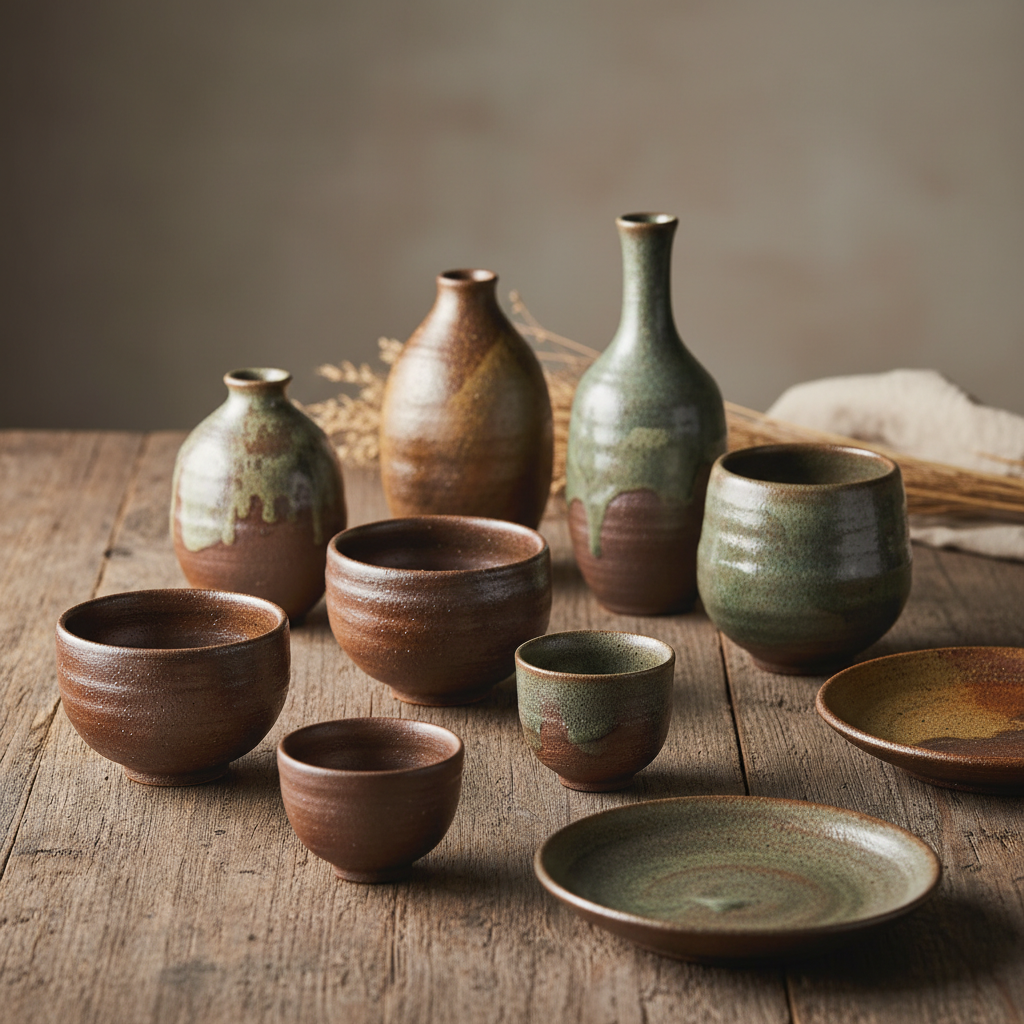
Shizuhata Ware (しずはたやき) Complete Guide | Shizuoka’s Traditional Ceramics Associated with Tokugawa Ieyasu
What is Shizuhata Ware | Shizuoka’s Representative Traditional Pottery
Shizuhata ware (しずはたやき) is pottery fired in Shizuoka City, Shizuoka Prefecture, with over 400 years of history dating back to the early Edo period. It is known as a prestigious ceramic production area that received the title “Shizuhata Ware” from Tokugawa Ieyasu and flourished as the official kiln of the Tokugawa family.
It is characterized by a unique flavor cultivated over long years in the peaceful climate of Shizuoka. Currently, as a Shizuoka prefectural governor-designated traditional craft, its traditions and techniques continue to be passed down. The representative work “Onifuku” (鬼福), a three-piece set of sake cups depicting a smiling face on the inside and demon roof tiles on the outside, has become the symbolic representation of Shizuhata ware.
History of Shizuhata Ware | Deep Connection with Tokugawa Ieyasu
Opening of the Kiln in the Early Edo Period and Reception of the Title
The history of Shizuhata ware dates back to the early Edo period. It began when Ota Shichiroemon, a retainer of the Tokugawa family, received twenty-five koku of territory stamped with a vermillion seal and the title “Shizuhata Ware” from Tokugawa Ieyasu at the foot of Shizuhata Mountain (the current Aoi Ward, Shizuoka City, near the back of Sengen Shrine).
What Ota Shichiroemon presented to Ieyasu was a special sake cup based on an anecdote from the Battle of Mikatagahara (1573). It is said that when the Takeda army surrounded Ieyasu in this battle, he was rescued by the sound of a large Setsubun drum and the cry “Out with demons, in with good fortune.” Drawing on this story, Ota Shichiroemon created a three-piece set of sake cups with a smiling face depicted on the inside and demon roof tiles modeled on the outside. When Ieyasu was greatly pleased and granted the title “Shizuhata Ware,” it is said.
Prosperity as an Official Kiln
Subsequently, Shizuhata ware served as the official kiln for the Tokugawa family, Surpu Castle, Kunozan Toshogu Shrine, and Sengen Shrine. With over 240 years of documented history, it developed as a prestigious pottery serving the needs of the Tokugawa family and shrines.
Throughout the Edo period, Shizuhata ware established a firm position in Shizuoka, and many artisans honed their techniques. Works from that era combined practicality and artistry, and were widely used as tea utensils and everyday vessels.
Decline in the Bunsei Period and the Abe River Flood
Around the end of the Bunsei period (circa 1830), Shizuhata ware declined sharply. This is said to have been because the Abe River experienced a massive flood that swept away the kiln site as well. The succession of equipment and techniques built up over many years was temporarily interrupted by a natural disaster.
Revival and Modernization in the Meiji Period
Shizuhata ware, once discontinued, was revived in the Meiji period under the leadership of Ota Manjiro. However, it was unable to return to its former prosperity.
In the mid-Meiji period, Shizuoka Prefecture seriously considered reviving Shizuhata ware as one of its regional industries and invited Aoshima Shosuke, who was operating a kiln in Hachiban-cho. Under prefectural support, efforts began to pass on the techniques and traditions of Shizuhata ware to the next generation. Through these revival efforts during this period, Shizuhata ware established the foundation that continues to the present day.
Inheritance in Modern Times
In modern times, kilns including Shushuko Pottery Studio continue to preserve the traditions of Shizuhata ware. It has been designated as a Shizuoka prefectural governor-designated traditional craft and is cherished as part of Shizuoka City’s cultural identity.
The word “Shizuhata ware” appears in “Tokaido Chukurin Koshikake,” written by Jippensha Ikku in the 1800s, suggesting that it was a known item among travelers during the Edo period.
Characteristics of Shizuhata Ware | Unique Flavor and Techniques
Subdued and Deep Colors
The greatest characteristic of Shizuhata ware is its unique color with a subtle, muted tone that exudes an ancient, rustic charm. This modest subdued hue does not restrict pairings with displayed flowers or other vessels; it harmonizes with its surroundings while maintaining its presence.
Shizuhata ware, cultivated in Shizuoka’s gentle climate, has the characteristic of naturally blending into all scenes of daily life. While not flamboyant, it is pottery that truly embodies the “beauty of utility,” with increasing depth of flavor the more it is used.
Glaze and Firing Techniques
Shizuhata ware employs traditional glaze compounding and firing techniques. The simple finish that brings out the texture of the clay harmonizes with the unique coloration produced by the glaze, creating a flavor found in no other production area.
Works using the underglaze copper red (yuirikō) technique are particularly known for the beautiful red color produced by reduction firing of glaze containing copper, and are recognized as works requiring high technical skill.
Combination of Practicality and Artistry
While maintaining its status as an official kiln, Shizuhata ware has prioritized practicality as everyday ware. Various vessels rooted in daily life—such as teacups, tea utensils, plates, and bowls—are produced, combining ease of use with beauty.
Careful attention has been paid to every detail, such as form that fits the hand, appropriate weight, and pleasant feel on the lips, making these vessels popular with many people as items that can be treasured for years.
Representative Work “Onifuku” | Symbol of Shizuhata Ware
Origin and Meaning of Onifuku
Onifuku (鬼福) is called the trademark of Shizuhata ware and is its representative work. As mentioned earlier, it originated from a three-piece set of sake cups created based on an anecdote from the Battle of Mikatagahara.
The design depicting a smiling face on the inside and demon roof tiles on the outside carries the meaning of “inviting good fortune within and warding off disaster from without.” This auspicious motif overlaps with the Setsubun chant of “Out with demons, in with good fortune” and has been cherished as a symbol of protection from evil and the attraction of good fortune.
Types and Sizes of Onifuku
In modern Shizuhata ware, the Onifuku design is applied to various vessels. In addition to the traditional three-piece set of sake cups, diverse works are produced, including teacups, rice bowls, plates, and flower vases.
Onifuku comes in small, medium, and large sizes, allowing for selection according to use and preference. Small sizes are popular as affordable gifts, while medium and large sizes are favored as items for home use or as special gifts.
How to Use Onifuku Vessels
Onifuku vessels can be used in a wide range of settings, from everyday use to special occasions. When enjoying tea or alcohol using Onifuku ware, one can feel the history associated with Tokugawa Ieyasu while spending leisurely time.
From the perspective of being an auspicious object, these vessels are also appreciated as gifts for housewarming, business opening, or sixtieth birthday celebrations. With its meaning of inviting good fortune, Onifuku is ideal as a heartfelt gift for someone special.
Other Shizuhata Ware Works
Underglaze Copper Red Flower Vase
A flower vase using the underglaze copper red technique demonstrates the technical skill of Shizuhata ware. The beautiful red coloring from the copper stands out in the simple form, making a single flower even more striking. It is a fine piece that elegantly enhances any space, whether placed in an alcove, entryway, or living room.
Nanban-Style Teacup
A teacup using the nanban technique is characterized by its rough clay texture and rustic flavor. The warm sensation when held in the hand and the deepening flavor with use are its attractions, making it a vessel that can be cherished for years as an everyday item.
Tea Service Set
A tea service set comprising a teapot, teacup, and tea saucer is ideal for entertaining guests. The unified design and color present the tea time in a refined manner. It is popular as a home use item as well as a gift for weddings or housewarming celebrations.
Everyday Vessels
Various vessels that brighten the daily table are also produced, such as rice bowls, soup bowls, plates, and bowls. The simple yet distinctive design is easy to pair with both Japanese and Western cuisine, making these vessels popular in many households as items one wants to use daily.
Modern Shizuhata Ware Kilns | Shushuko Pottery Studio
Efforts of Shushuko Pottery Studio
The representative kiln currently preserving the traditions of Shizuhata ware is Shushuko Pottery Studio. While inheriting traditional techniques, it also engages in creating new works suited to contemporary lifestyles.
Shushuko Pottery Studio offers a wide range of products, from traditional works including Onifuku to everyday vessels and interior accessories. Each work, created carefully by hand by artisans, possesses an individuality that makes no two pieces identical.
Workshop Tours and Experiences
Some kilns conduct workshop tours and pottery-making experiences to deepen understanding of Shizuhata ware’s appeal. By viewing artisans’ techniques up close or experiencing pottery-making firsthand, appreciation and affection for Shizuhata ware will deepen.
When visiting Shizuoka City, it is also recommended to visit Shizuhata ware kilns. The joy of directly holding and selecting works and engaging in dialogue with artisans allow one to truly experience the depth of Shizuhata ware.
How to Purchase Shizuhata Ware
Direct Purchase at the Kiln
The most certain way to purchase Shizuhata ware is to visit a kiln directly. Kilns such as Shushuko Pottery Studio in Shizuoka City conduct exhibition sales, allowing customers to directly handle and select works. Being able to hear directly from the artisan is a major appeal of kiln purchases.
Online Shops
For those living far away or with time constraints, purchasing through online shops is convenient. Shizuhata ware is handled on various e-commerce sites, including the official site of Shushuko Pottery Studio.
One can carefully select while reviewing photos and detailed descriptions. Many shops offer gift wrapping and ribbon services, making them suitable for gift purchases as well.
Craft and Souvenir Shops in Shizuoka Prefecture
Shizuhata ware may also be handled at craft shops and souvenir shops in Shizuoka City and throughout Shizuoka Prefecture. At facilities introducing Shizuoka’s traditional crafts, such as Surfu no Kobo Shotei, one can view various regional crafts including Shizuhata ware all in one place.
Other Pottery Production Areas in Shizuoka Prefecture | Shitoro Ware
In addition to Shizuhata ware, Shizuoka Prefecture has other traditional pottery production areas. The most prominent is Shitoro ware (志戸呂焼).
Shitoro ware is pottery fired in the Shitoro district of Aoi Ward, Shizuoka City. Like Shizuhata ware, it is characterized by subdued tones and deep, ancient charm. Its modest muted colors are particularly highly valued as tea utensils and have been beloved by tea masters.
Both Shizuhata ware and Shitoro ware, as pottery nurtured by Shizuoka’s climate, are important foundations supporting Shizuoka Prefecture’s ceramic culture.
Shizuhata Ware and Shizuoka Culture
Tokugawa Ieyasu and Shizuoka
When discussing Shizuhata ware, the deep relationship between Tokugawa Ieyasu and Shizuoka (Surpu) cannot be overlooked. Ieyasu spent his childhood in Surpu and resided at Surpu Castle as a great lord in his later years.
Ieyasu’s granting a title to Shizuhata ware represents not merely an evaluation of the pottery itself, but also his affection for the Surpu region and his consideration for promoting local industries. Shizuhata ware is received as a cultural heritage connecting Ieyasu and Shizuoka to the present day.
Relationship with Sengen Shrine
Sengen Shrine, located at the foot of Shizuhata Mountain, is near the birthplace of Shizuhata ware and has created vessels for the shrine as an official kiln. The relationship between the shrine and Shizuhata ware is deep, and sites related to Shizuhata ware history remain around the shrine today.
When visiting Shizuoka, it is also worthwhile to worship at Sengen Shrine and reflect on the history of Shizuhata ware.
Value as a Traditional Craft
Shizuhata ware, designated as a Shizuoka prefectural governor-designated traditional craft, symbolizes the region’s cultural identity. Shizuoka City and Shizuoka Prefecture are actively working to preserve and promote traditional crafts including Shizuhata ware, with various promotional activities such as exhibitions and workshops being held.
Along with other Shizuoka traditional crafts such as Ikawa Menpa, Shizuhata ware plays an important role in conveying Shizuoka’s rich culture to future generations.
Incorporating Shizuhata Ware into Daily Life
As Everyday Ware
The greatest appreciation of Shizuhata ware’s appeal comes from using it daily. Savoring morning coffee or green tea from a Shizuhata ware teacup, enjoying meals from Shizuhata ware vessels. Shizuhata ware exerts its presence quietly in such everyday moments.
The more it is used, the more it becomes comfortable to the hand, and the color deepens—enjoying this process is a pleasure of owning Shizuhata ware.
As Interior Decoration
Incorporating Shizuhata ware into interior décor is also recommended, such as flower vases or decorative plates. It naturally blends not only with Japanese rooms but also with modern Western rooms, bringing calm and elegance to the space.
The Onifuku design is auspicious, and displaying it in an entryway or alcove can serve as a symbol of inviting good fortune into one’s home.
As a Gift
Shizuhata ware is also ideal as a gift due to its history and auspicious significance. As a gift celebrating life’s milestones—weddings, housewarming, sixtieth birthdays, retirement—it becomes a cherished piece. It is also appreciated as a Shizuoka souvenir and provides a conversation starter as something associated with Tokugawa Ieyasu.
Conclusion | The Appeal and Future of Shizuhata Ware
Shizuhata ware is a ceramic colored by history and tradition, passed down over more than 400 years in the Shizuoka region since the early Edo period. The title granted by Tokugawa Ieyasu, its status as an official kiln, its decline due to the Abe River flood and subsequent revival, and its transmission to the present day—this history is itself the history of the land of Shizuoka.
Subdued and deep colors, increasing flavor with use, a presence that naturally blends into daily life—the characteristics of Shizuhata ware lie in a quiet and certain beauty, the opposite of flamboyance or showiness.
The representative work Onifuku, with its auspicious meaning of inviting good fortune and warding off calamity, along with its historical connection to Tokugawa Ieyasu, continues to be loved by many people.
Even in modern times, kilns including Shushuko Pottery Studio preserve traditions while challenging themselves with new creations, passing on Shizuhata ware’s appeal to the next generation. Its value as a regional cultural asset has been recognized through designation as a Shizuoka prefectural governor-designated traditional craft.
When visiting Shizuoka, please visit a Shizuhata ware kiln. By directly handling the works and experiencing their texture and flavor, you can truly encounter the charm of Shizuhata ware.
By incorporating Shizuhata ware into daily life, you can spend enriched time with vessels that contain the climate and history of Shizuoka, the artisan’s skill and heart.
Shizuhata ware is a tradition of Shizuoka’s proud ceramic production area, continuing from past through present into the future. Understanding its value and continuing to use it carefully is how we pass on this wonderful culture to future generations.
