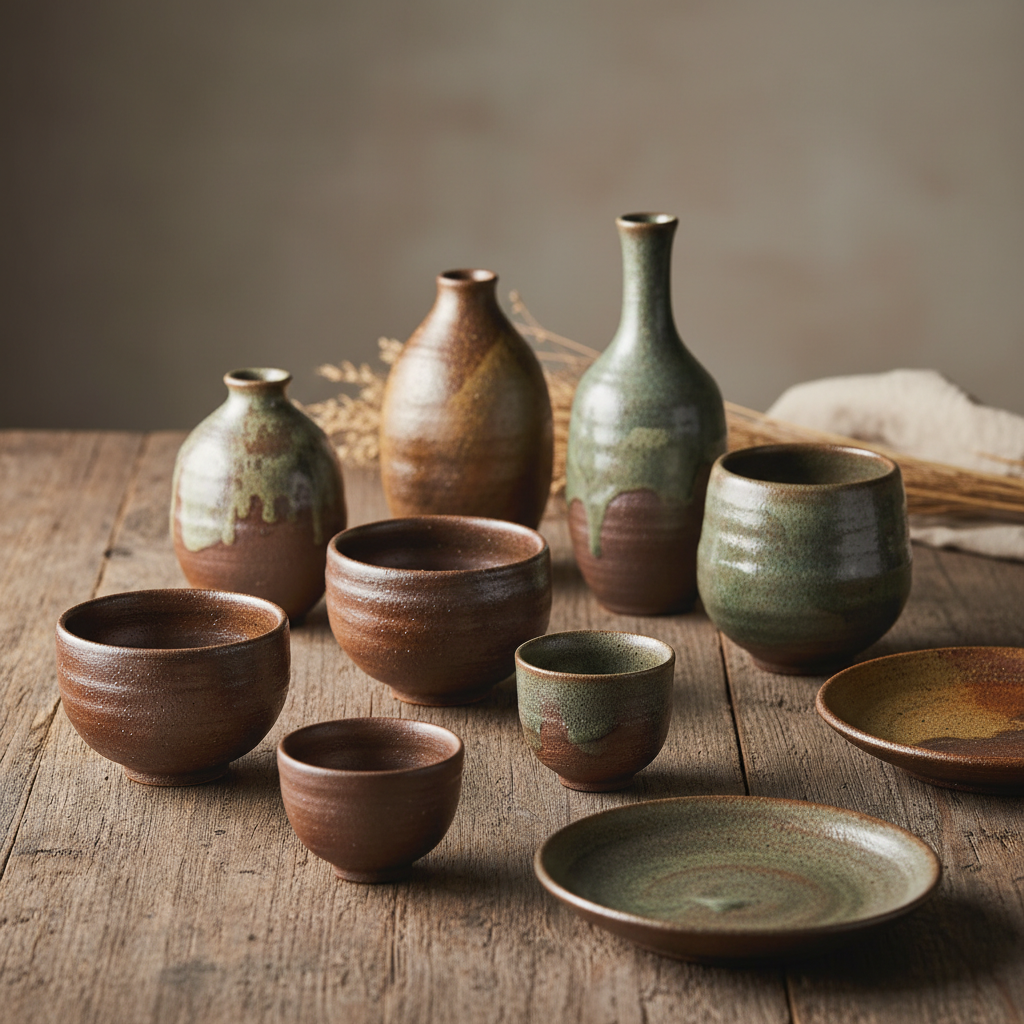

About Shitoro Ware | A Representative Ceramic Producing Area of Shizuoka Prefecture
Shitoro ware (shitoroyaki) is traditional pottery fired in the Kanaya region of Shimada City, Shizuoka Prefecture. With a long history spanning from the Muromachi period, it is known as a renowned kiln that was beloved by tea master Kobori Enshu and counted as one of the “Seven Kilns of Enshu” (Enshu Shichiyou). It is characterized by deep brown and dark brown hues and rustic, powerful aesthetics, and is designated as a Shizuoka Prefecture local craft.
The Kanaya region of present-day Shimada City was once called “Shitoro-go,” and this place name became the origin of the pottery’s name. Located on the west bank of the Oi River, this region has long been blessed with high-quality ceramic clay and possessed an environment well-suited to pottery making.
History of Shitoro Ware | From the Muromachi Period to Modern Times
Origins and Establishment
There are multiple theories regarding the origins of Shitoro ware. The most plausible theory is the “Old Seto-style glazed pottery” origin theory, which states that pottery craftsmen from Seto migrated to the area and began firing during the Daiei era (1521-1528) in the late Muromachi period. During this time, under the rule of the Ashikaga clan, Seto techniques spread throughout various regions, and it is believed that full-scale ceramic production began in the Shitoro area.
However, there are traces of pottery-making in the Kanaya area from before the Muromachi period, and many ancient kiln sites have been discovered. These archaeological remains reveal that the tradition of ceramics was rooted in this region before Shitoro ware was established.
Kobori Enshu and the Seven Kilns of Enshu
Shitoro ware became nationally known in the early Edo period. Tea master Kobori Enshu (1579-1647), who served as the tea ceremony instructor to the third shogun Tokugawa Iemitsu, took notice of Shitoro ware and provided instruction in tea utensil production.
Kobori Enshu possessed a unique aesthetic sense called “kireisabi” (refined simplicity), and instructed kiln owners throughout various regions to create ideal tea utensils. Shitoro ware was counted among his “Seven Kilns of Enshu,” alongside Mesho ware (Shiga Prefecture), Takatori ware (Fukuoka Prefecture), Ueno ware (Fukuoka Prefecture), Akahada ware (Nara Prefecture), Kosobe ware (Osaka Prefecture), and Asahi ware (Kyoto Prefecture), earning high evaluation as tea ceramics favored by Enshu.
Enshu’s fondness for Shitoro ware stemmed from its rustic, powerful aesthetics and the subtle beauty that embodied the spirituality of tea ceremony. Particularly in tea utensils such as tea containers, tea caddies, and water vessels, Shitoro ware demonstrated a unique presence.
Development During the Edo Period
Throughout the Edo period, Shitoro ware continued to develop as a tea ceramic. Its location near Kanaya Station, which flourished as a post station on the Tokaido road, contributed to the distribution and increased recognition of Shitoro ware. Travelers and merchants spread the reputation of Shitoro ware throughout the country, and demand increased.
During this period, Shitoro ware was not limited to tea utensils; daily tableware was also produced. Many practical vessels supporting the lives of local people were created, and the industry developed as a regional pottery with strong community roots.
Changes in Modern Times and Beyond
With the modernization of society in the Meiji era, traditional pottery-producing areas underwent a major period of transition. Shitoro ware was no exception, facing a temporary crisis of decline. However, through the efforts of craftspeople committed to preserving tradition, the kiln fires were kept burning and passed down.
During the Showa period, influenced by the mingei (folk art) movement, the rustic beauty of Shitoro ware was reevaluated. While maintaining traditional techniques, craftspeople explored work suitable for modern lifestyles, and diverse pieces beyond just tea utensils—such as flower containers and tableware—were created.
Today, Shitoro ware is designated as a Shizuoka Prefecture local craft, and its techniques and spirit are being passed on to future generations through kiln owners and ceramicists committed to preserving the tradition.
Characteristics of Shitoro Ware | Materials and Techniques
Properties of the Ceramic Clay
The greatest characteristic of Shitoro ware lies in the use of locally produced ceramic clay rich in iron content. This soil uses “niishi” (ferrous stone), a local stone as its raw material, and when fired, reveals a unique tea-brown or dark brown unglazed surface.
Ceramic clay rich in iron content becomes extremely hard when fired at high temperatures. This property made Shitoro ware ideal for tea containers, and during the Edo period it was highly valued as a vessel for storing tea leaves. The durable unglazed surface could appropriately regulate moisture and preserve the quality of tea leaves over long periods.
Interestingly, some modern kiln owners use soil from the tea fields that are a specialty of Shizuoka Prefecture. This circular approach of using tea field soil to make tea utensils—an idea unique to a tea-producing region—demonstrates new possibilities for Shitoro ware.
Glazes and Color Tones
Another element characteristic of Shitoro ware is its unique glazes. Representative examples include the following:
Black Glaze (Kokuyu)
A glaze that exhibits a deep black color and is one of Shitoro ware’s representative color tones. Reduction firing of glaze containing abundant iron produces a black approaching lacquer-black in depth. This black is not merely a dark color but a black with depth that subtly shifts in expression depending on the play of light.
Amber Glaze (Ameyu)
A glaze called amber-colored tea-brown. With a warm color tone, it emphasizes rustic aesthetics. The color’s depth changes with firing conditions, and even identical glaze can create different expressions in each piece.
Shitoro Glaze
A glaze unique to Shitoro ware that exhibits deep green. Using copper as its principal ingredient, this glaze is characterized by deep green coloring. In tea utensils, this color tone harmonizes with the aesthetic of wabi-sabi and has been beloved by tea practitioners.
These glazes, combined with the iron-rich unglazed surface, create Shitoro ware’s distinctive “ancient-colored ambiance possessing both subtlety and depth.” Though unpretentious, the pieces gain deeper appreciation through use—truly embodying Japanese aesthetic sensibility.
Manufacturing Methods and Techniques
The manufacturing method of Shitoro ware is fundamentally centered on traditional handwork. Forms are created through wheel-throwing or hand-building, and after drying, pieces undergo bisque firing. Subsequently, glaze is applied and pieces undergo the final firing.
However, the process includes delicate work requiring long years of experience and technical skill. In particular, glaze mixing and the management of firing temperature and atmosphere are crucial points where the ceramicist’s technique is tested.
Firing is conducted in climbing kilns, electric kilns, gas kilns, and other types. In traditional climbing kilns, wood is used as fuel, and unique kiln effects (kiln variations) emerge from the flow of flames and temperature changes. In modern practice, electric and gas kilns that allow more stable firing are also used, though some kiln owners continue to preserve climbing kiln techniques.
Many Shitoro ware pieces are simple and undecorated. This reflects an attitude prioritizing “the beauty of the unglazed surface”—emphasizing the beauty of the material itself. The traditional Japanese ceramic aesthetic of enjoying the flow of glaze and natural changes from firing as scenery is reflected in the work.
Shitoro Ware Producing Area | Kanaya Region of Shimada City, Shizuoka Prefecture
Geographic Environment
The Kanaya region of Shimada City, where Shitoro ware is produced, is located in central Shizuoka Prefecture on the west bank of the Oi River. The area once hosted Kanaya Station, a post station on the Tokaido road, and developed as a traffic hub.
The region is blessed with abundant water brought by the Oi River flowing from the Southern Alps and high-quality ceramic clay produced in surrounding mountains. The alignment of natural conditions necessary for pottery-making is one reason Shitoro ware has continued for so long.
Kiln Owners and Workshops
Currently, the number of kiln owners and ceramicists preserving Shitoro ware is limited, but each pursues unique creative work while protecting tradition.
Enshu Shitoro Ritougyou
One representative kiln owner positioned in Yokooka, Shimada City, Shizuoka Prefecture. While preserving traditional Shitoro ware techniques, it produces a wide range of works including tea utensils, flower containers, and tableware.
Hikoji Kiln
A workshop broadening the possibilities of Shitoro ware through unique approaches, such as utilizing tea field soil. It also produces playful works not bound by tradition, aiming at vessel creation suited to modern life.
Naotobori Kiln
A kiln owner creating works that carefully preserve Shitoro ware’s history and tradition while incorporating contemporary sensibility.
Some of these kiln owners accept ceramic experiences and workshop tours, allowing visitors to observe Shitoro ware production processes firsthand or create their own pieces.
Positioning as a Shizuoka Prefecture Ceramic Producing Area
Beyond Shitoro ware, Shizuoka Prefecture has other ceramic-producing areas such as Moriyama ware and Shizuhata ware. Among these, Shitoro ware holds the position of Shizuoka’s representative ceramic-producing area, being the oldest in history and the only kiln receiving nationwide evaluation as one of the Seven Kilns of Enshu.
Its designation as a Shizuoka Prefecture local craft demonstrates its high cultural value. Receiving attention as a regional traditional industry and tourism resource, Shitoro ware has become part of Shizuoka’s cultural identity.
Shitoro Ware Works | From Tea Utensils to Daily Wares
Tea Utensils
The true essence of Shitoro ware lies in tea utensils. With a history of development as one of the Seven Kilns of Enshu, numerous works embody the spirituality of tea ceremony have been created.
Tea Bowls
Shitoro ware tea bowls are often simple pieces with black or amber glazes, characterized by soft curves that fit comfortably in the hand and appropriate weight. Though unadorned, these pieces gain deeper appreciation through use, becoming vessels cultivated by the tea practitioner’s hands.
Tea Caddies and Tea Containers
The iron-rich, firmly fired unglazed surface is ideal for tea leaf preservation. Shitoro ware tea containers have been highly evaluated since the Edo period and valued in the tea ceremony world. Various sizes are produced, from small tea caddies to large containers.
Water Vessels
Water vessels used in tea ceremonies to hold water are also representative Shitoro ware works. Though rustic in appearance, they possess presence that strengthens the tea room atmosphere.
Flower Containers
Flower vessels for tea flowers are an important category of Shitoro ware. Design ranges from simple cylindrical forms to varied, sculptural shapes. The calm, dark or tea-brown hues harmonize with any flowers.
Contemporary Works
Beyond traditional tea utensils, numerous works adapted to modern life have been created.
Tableware
Rice bowls, tea cups, plates, and bowls for daily use are important Shitoro ware categories. While using traditional glazes, designs are carefully considered to suit modern dining tables. Shitoro ware tableware pairs surprisingly well with not only Japanese cuisine but Western dishes, earning evaluation for its practicality.
Flower Vessels
Various flower vessels from single-flower vases to large display vases are produced. The deep color tones of Shitoro ware suit both formal flower arrangement and casual flower display.
Sake Vessels
Sake serving bottles and small drinking cups are also popular. Shitoro ware’s rustic aesthetics are valued for enhancing the taste of Japanese sake.
Methods of Obtaining Works
Shitoro ware pieces can be purchased directly from kiln owners, as well as through craft shops and department stores throughout Shizuoka Prefecture and online shops. Works are also sometimes displayed at regularly held pottery markets and craft exhibitions.
Price ranges vary depending on work type, size, and artist, but daily tableware typically ranges from several thousand yen, while tea utensils and large works may exceed tens of thousands of yen. Shitoro ware, combining value as traditional craft with practicality, is suitable for personal use and gifts alike.
Shitoro Ware and Tea Ceremony Culture
Enshu-Favored Aesthetic Sensibility
Behind Kobori Enshu’s selection of Shitoro ware as one of the Seven Kilns of Enshu lay his unique aesthetic sense, “kireisabi” (refined simplicity). “Kireisabi” is an aesthetic that discovers wabi-sabi spirit within sophisticated beauty.
Shitoro ware’s rustic, powerful aesthetics stand opposite to showiness or flashiness while containing deep spirituality and beauty. This aligned with the ideal of “kireisabi” that Enshu sought.
Evaluation as Tea Utensils
Shitoro ware tea utensils are also valued for their high practicality. Tea bowls fit comfortably in the hand with appropriate heat retention. Tea containers and caddies possess high airtightness, excelling at tea leaf preservation. Water vessels have appropriate weight and stability.
The coexistence of practical excellence and aesthetic appeal is the reason Shitoro ware has long been cherished by tea practitioners.
Shitoro Ware in Contemporary Tea Ceremony
In contemporary tea ceremony, Shitoro ware remains important. Beyond traditional tea utensils, new designs reflecting modern tea practitioners’ sensibilities have also been created.
Ceramicists who find creative interest in expressing their contemporary selves while preserving tradition continue to evolve Shitoro ware. Works embodying contemporary sensibility emerge through subtle modifications while following classical forms.
Shitoro Ware Experience and Learning
Ceramic Experience
Some Shitoro ware kiln owners accept ceramic experiences. Visitors can experience the Shitoro ware production process by actually throwing on the wheel or hand-building forms.
Under ceramicist guidance, participants can create original works. Relatively simple forms like tea bowls, tea cups, and plates are typical starting points. Created works are fired at the kiln and received later.
The joy of creating unique pieces is exceptional. As an opportunity to touch traditional crafts, it remains popular with tourists and local visitors.
Workshop Tours
Workshop tours allow observation of actual production sites. Visitors can glimpse the pottery world normally hidden from view—ceramicists at work, kiln structures, glaze preparation, and more.
Through tours, visitors can directly hear from ceramicists about Shitoro ware’s history, techniques, ceramic soil properties, and related matters. Seeing, touching, and listening to actual information deepens understanding of Shitoro ware.
Event Information
Events related to Shitoro ware are regularly held. At pottery markets and craft exhibitions, multiple kiln owners’ and ceramicists’ works can be seen simultaneously, providing opportunities to purchase pieces.
Educational events like workshops and lectures are also occasionally held. Such events play important roles in promoting Shitoro ware and passing it to future generations.
Latest event information can be found on kiln owner websites and social media, and through Shimada City tourism information.
The Future of Shitoro Ware | Tradition’s Continuation and Innovation
Successor Development
Like many traditional crafts, Shitoro ware faces the challenge of successor shortages. Passing tradition to future generations is becoming increasingly important.
Currently active ceramicists are working to continue techniques and spirit through apprenticeship and ceramics classes. Additionally, an increasing number of people from other industries are entering the Shitoro ware world, bringing new perspectives that energize tradition.
Balancing Tradition with Modernity
Considering Shitoro ware’s future, the balance between tradition’s continuation and contemporary innovation proves crucial. Works must simultaneously preserve traditional techniques and aesthetics while accommodating modern lifestyles and aesthetic sensibilities.
Many ceramicists express finding creative interest in “preserving tradition while expressing themselves in contemporary ways.” This attitude is both the reason Shitoro ware has continued for over 600 years and the key to its future continuation.
International Evaluation
As international interest in Japanese traditional crafts increases, Shitoro ware gains more opportunities for overseas evaluation. Its simple, powerful beauty is readily understood by overseas people interested in Japanese culture and gains attention at international craft exhibitions.
Through international promotion, new possibilities for Shitoro ware are anticipated to emerge.
Regional Collaboration
Shitoro ware represents an important cultural and tourism resource for Shimada City. Efforts to strengthen regional collaboration and promote regional development centered on Shitoro ware are advancing.
Tourism programs combining tea and ceramics, leveraging Shizuoka Prefecture’s characteristics as a tea-producing region, are also being developed. Systems supporting and nurturing Shitoro ware with entire region participation are forming.
Conclusion | The Appeal and Value of Shitoro Ware
Shitoro ware is traditional pottery continuing for over 600 years in the Kanaya region of Shimada City, Shizuoka Prefecture. Beginning in the Muromachi period and counted as one of the Seven Kilns of Enshu by Kobori Enshu, it has earned high evaluation as tea ceramic ware.
Its greatest characteristic is the subtle and deep color tone produced through locally sourced clay rich in iron content and unique glazes like black glaze, amber glaze, and Shitoro glaze. Its rustic, powerful aesthetics embody tea ceremony spirituality, gaining deeper appreciation through use.
While centered on tea utensils, contemporary tableware and flower vessels are also produced, creating works balancing tradition with contemporaneity. Kiln owners offer ceramic experiences and workshop tours, providing opportunities to directly encounter Shitoro ware.
Though facing challenges like successor development and international promotion, Shitoro ware continues evolving through devoted ceramicists preserving tradition while pursuing innovation. As Shizuoka’s representative ceramic-producing area and one of Japan’s traditional crafts, Shitoro ware will continue being cherished by many people.
Shitoro ware pieces demonstrate unique presence in various contexts—as daily-use vessels, tea utensils, and art objects alike. Upon handling such pieces, you will be captivated by their rustic beauty and comfortable tactile feel. Should you visit Shizuoka Prefecture, please visit Shitoro ware kiln owners and personally experience this traditional craft’s appeal.