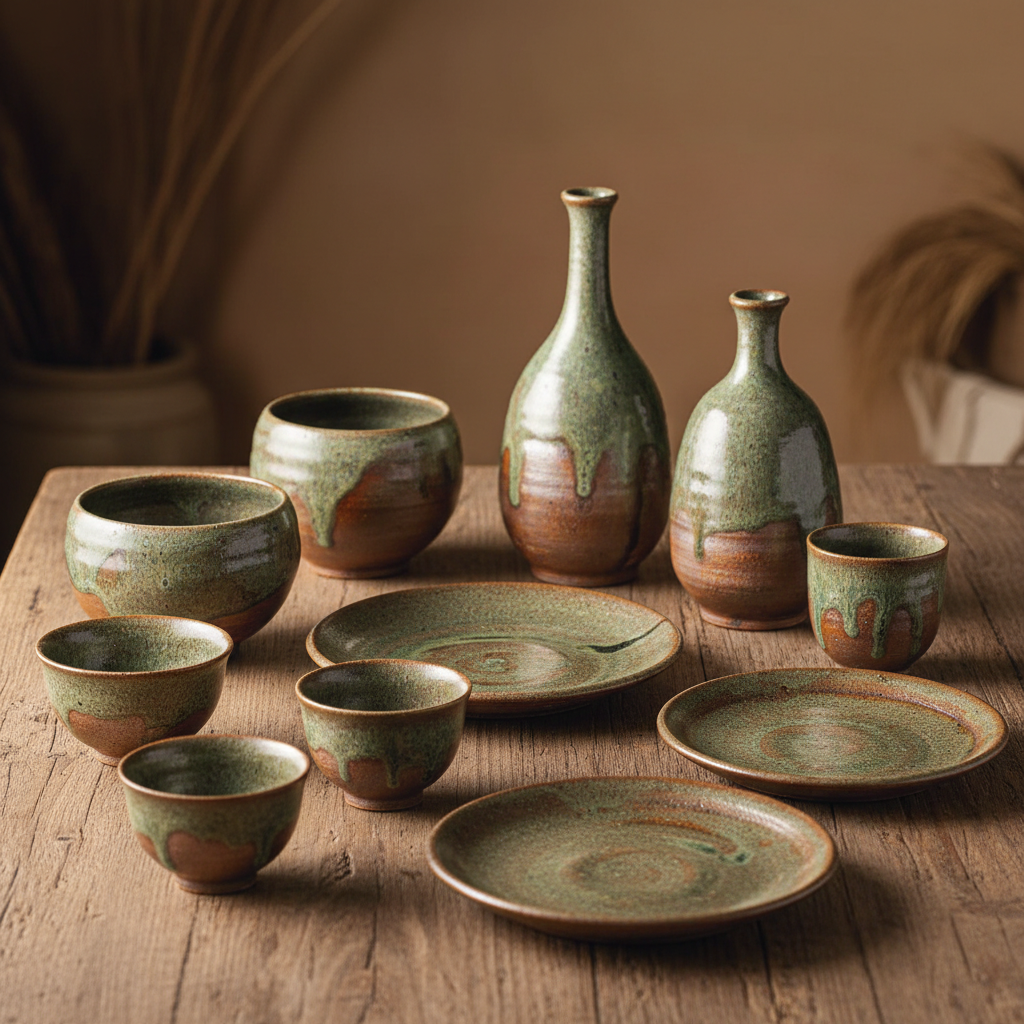

The Charm and History of Amakusa Ceramics|A Thorough Explanation of the Characteristics of Kumamoto Prefecture’s Renowned Ceramic Production Area
The Amakusa region of Kumamoto Prefecture boasts over 300 years of history as an important production area supporting Japan’s ceramic culture. Known as a source of high-quality raw material called Amakusa porcelain stone, it has become an indispensable presence in ceramic manufacturing throughout Japan, including Arita ware. This article provides a detailed explanation of the history, characteristics, and contemporary initiatives of Amakusa ceramics.
What is Amakusa Ceramics?
Amakusa ceramics is a general term for ceramics produced in the Amakusa region of Kumamoto Prefecture. Amakusa is nationally famous as a production area for “Amakusa porcelain stone,” the raw material for ceramics, and this high-quality porcelain stone supports the quality of Amakusa ceramics.
Characteristics of Amakusa Porcelain Stone
Amakusa porcelain stone is a white mineral extracted from the Amakusa region, one of Japan’s largest porcelain stone mining areas. It possesses the following excellent properties:
- High whiteness: Characterized by beautiful whiteness after firing
- Plasticity: Easy to shape
- Refractoriness: Suitable for firing at high temperatures
- Stable quality: Homogeneous with minimal quality variation
This Amakusa porcelain stone is shipped to ceramic production areas throughout Japan, including Arita ware, Hasami ware, and Tobe ware, fundamentally supporting Japan’s ceramic industry.
History of Amakusa Ceramics
Discovery of Amakusa Porcelain Stone
The history of Amakusa porcelain stone dates back to the 1670s. Potters from Hizen Province (present-day Saga Prefecture) visited the Amakusa region in search of high-quality porcelain stone and discovered white porcelain stone in Takahama Village (present-day Amakusa City). This discovery became the catalyst for Amakusa’s development as a ceramic production area.
Development During the Edo Period
During the Edo period, Amakusa porcelain stone was primarily supplied as raw material to ceramic production areas such as Arita and Hasami. At that time, Amakusa’s role centered more on raw material supply than ceramic manufacturing. The mining and transportation of Amakusa porcelain stone became an important industry supporting the regional economy, involving many people.
Changes After the Meiji Period
With the arrival of the Meiji period, ceramic manufacturing began in earnest in Amakusa as well. In the regions that had previously centered on raw material supply, kilns began to increase in number. In particular, Takahama ware and Uchida Sarayama ware became well known.
During the Showa period, the introduction of modern mining and refining techniques led to a dramatic increase in Amakusa porcelain stone production. Even today, Amakusa porcelain stone is said to account for approximately 80% of Japan’s ceramic raw materials, and its importance remains unchanged.
Amakusa as Kumamoto Prefecture’s Ceramic Production Area
Kumamoto Prefecture’s Ceramic Industry
In addition to Amakusa, Kumamoto Prefecture has traditional ceramic production areas such as Shiro ware (Arao City and Nankan Town). However, in terms of importance as a raw material supply area, Amakusa has established a unique position distinct from other areas.
Kilns and Characteristics of Amakusa
Several distinctive kilns exist in the Amakusa region:
Takahama Ware
- Ceramics fired in the Takahama district of Amakusa City
- Characterized by white porcelain using local Amakusa porcelain stone
- Produces everything from everyday tableware to works of art
Uchida Sarayama Ware
- A traditional kiln in the Uchida district of Amakusa City
- Simple and warm artistic style
- Pottery-making rooted in the community’s daily life
Maruo Ware
- A kiln in the Hondo district of Amakusa City
- Fusion of modern design and traditional techniques
- Popular with younger generations
Characteristics of Contemporary Amakusa Ceramics
Contemporary Amakusa ceramics have the following characteristics:
- Utilization of local materials: White porcelain products utilizing abundant Amakusa porcelain stone
- Diverse designs: From traditional to contemporary
- Emphasis on practicality: Pottery-making suitable for everyday use
- Warmth of handcraftsmanship: Individuality not found in mass-produced goods
Mining and Processing of Amakusa Porcelain Stone
Mining Methods
Amakusa porcelain stone mining is primarily conducted through open-pit mining. At mining sites scattered in the mountainous areas of Amakusa City, heavy machinery is used to extract porcelain stone, which then undergoes selection and crushing before being shipped as ceramic raw material.
Refining Process
Mined Amakusa porcelain stone becomes ceramic raw material through the following process:
- Selection: Removing impurities
- Crushing: Breaking into smaller pieces
- Water classification: Washing with water and removing further impurities
- Dewatering: Removing water
- Drying: Adjusting to appropriate moisture content
- Shipping: Distribution to each production area
Through improved refining technology, high-quality and uniform porcelain stone is now supplied stably.
Ceramic Manufacturing Techniques of Amakusa
Shaping Techniques
Various shaping techniques are employed at kilns in Amakusa:
Wheel Throwing
- Shaping clay on a rotating wheel
- Suitable for round vessels such as bowls and tea cups
- A traditional technique showcasing craftsmen’s skills
Mold Shaping
- Shaping clay by pressing it against a plaster mold
- Used when creating multiple vessels of the same shape or complex forms
- Suitable for plates and irregular vessels
Hand Building
- Shaping clay by hand
- Allows for free-form shapes
- Ideal for one-of-a-kind pieces
Decorative Techniques
The following decorative techniques are employed in Amakusa ceramics:
- Underglaze blue: Painting with a pigment called gosu
- Overglaze enameling: Colorful painting using multiple colors
- Carving: Inscribing patterns into the surface
- Glaze variation: Different expressions through various glazes
Firing
Firing of Amakusa ceramics is generally conducted through the following process:
- Bisque firing: Firing at approximately 800 degrees
- Glazing: Applying glaze
- Final firing: Firing at 1200-1300 degrees
- Cooling: Gradually lowering the temperature
The color and texture of the vessel change significantly depending on firing temperature, duration, and kiln atmosphere (oxidation or reduction firing).
Relationship Between Amakusa Ceramics and Other Production Areas
Deep Connection with Arita Ware
Amakusa porcelain stone has been used as the primary raw material for Arita ware for over 300 years. It is no exaggeration to say that Arita ware’s beautiful white porcelain would not exist without Amakusa porcelain stone. The two production areas have supported Japan’s ceramic culture together, transcending the relationship of raw material supplier and product manufacturer.
Relationship with Hasami Ware
Hasami ware in Nagasaki Prefecture also uses Amakusa porcelain stone as its primary raw material. Much of Hasami ware’s everyday dishware is made from Amakusa stone, and the cooperative relationship between the two areas continues today.
Supply to Production Areas Throughout Japan
Amakusa porcelain stone is supplied not only throughout Kyushu but also to production areas on Honshu such as Seto ware and Mino ware. It plays a role as the “unsung hero” supporting Japan’s entire ceramic industry.
The Appeal of Amakusa Ceramics
Quality of Materials
The greatest appeal of Amakusa ceramics is that it uses high-quality Amakusa porcelain stone produced locally. Vessels made in a raw material production area have the advantage of eliminating transportation costs and being able to use fresh materials.
Beauty of White Porcelain
White porcelain made from Amakusa porcelain stone is characterized by beautiful whiteness with transparency. This whiteness is also excellent as a base for painting, allowing various decorations to stand out.
Ease of Use
Many kilns in Amakusa focus on creating vessels for everyday use. Vessels are characterized by practical designs with shapes that fit the hand comfortably, appropriate weight, and convenient sizes.
Warmth of Handcraftsmanship
With many small-scale kilns, Amakusa’s focus is on handmade vessels. You can feel the warmth and individuality unique to handwork, which cannot be found in mass-produced goods.
Facilities Where You Can Experience Amakusa Ceramics
Amakusa City Pottery Experience Facility
Several facilities in Amakusa City offer pottery experience. Through wheel-throwing and hand-building experiences, you can directly feel the appeal of Amakusa ceramics.
Kiln Tours
Some kilns accept workshop visits. Seeing craftsmen’s techniques up close allows you to understand the depth of ceramic-making.
Amakusa Porcelain Stone Mining Site Tours
Some mining sites accept visitors. Seeing the mining site that supports Japan’s ceramics would be a valuable experience.
How to Purchase Amakusa Ceramics
Direct Purchase from Kilns
You can purchase vessels directly from kilns in Amakusa. One of the great pleasures of visiting a kiln is being able to select vessels while talking directly with the maker.
Roadside Stations and Product Centers
Local ceramics are sold at roadside stations and product centers in Amakusa City. You can view works from multiple kilns at once, allowing for comparison while selecting.
Online Shops
Recently, many Amakusa kilns have established online shops. It has become possible to purchase Amakusa ceramics from distant locations.
Exhibitions and Events
Several times a year, exhibitions and sales events for Amakusa ceramics are held. These are opportunities to encounter new works and special pieces.
Current Status and Challenges of Amakusa’s Ceramic Industry
Shortage of Successors
Like many traditional industries, Amakusa’s ceramic industry faces a shortage of successors. Many kilns are aging, and passing on techniques has become an issue.
New Initiatives
On the other hand, young ceramic artists moving to Amakusa to open kilns are increasing. There is a trend of maintaining tradition while incorporating contemporary design and sales methods.
Brand Development Promotion
Regional efforts to improve Amakusa ceramics’ brand power are underway. Unified PR activities and quality standard setting are being considered.
Environmental Consideration
Efforts to minimize the environmental impact of porcelain stone mining are also progressing. Land restoration after mining and sustainable mining plans are being implemented.
The Future of Amakusa Ceramics
Fusion of Tradition and Innovation
The future of Amakusa ceramics lies in preserving traditional techniques while incorporating new expressions and designs. Fresh works by young artists are bringing new vitality to Amakusa ceramics.
Connection with Tourism
Amakusa is blessed with beautiful natural scenery and historical tourist resources. Efforts are underway to create new appeal by connecting the ceramic industry with tourism.
International Expansion
Japanese ceramics are highly valued overseas. Amakusa ceramics, leveraging its high quality, are working toward expanding into overseas markets.
Educational Partnerships
There are also movements to incorporate pottery into local school education. By having children experience their region’s industry, it is hoped that this will cultivate love for their hometown and nurture future industry leaders.
Tips for Enjoying Amakusa Ceramics
Points for Selecting Vessels
When choosing Amakusa ceramics, please refer to these points:
- Consider the purpose: Is it for everyday use or special occasions?
- Handle and check: Confirm the weight and feel
- Artist’s individuality: Learn the characteristics of each maker
- Size: Confirm whether it fits your dining table
Vessel Care Methods
Proper care is important for using Amakusa ceramics long-term:
- Initial use: Simmering in rice-washing water prevents staining
- Washing: Wash gently with a soft sponge
- Storage: Dry thoroughly before storing
- Microwave and dishwasher: Confirm compatibility before use
The Joy of Aging Vessels
Ceramics become more appealing with use. In particular, vessels that develop craquelure (fine cracks on the surface) change in appearance over time, offering the pleasure of watching them evolve.
Conclusion: The Value of Amakusa Ceramics
The Amakusa region of Kumamoto Prefecture is an important production area fundamentally supporting Japan’s ceramic industry. It can be said to be a one-of-a-kind existence, possessing both the role of supplying high-quality raw material, Amakusa porcelain stone, and its own tradition of ceramic manufacturing.
While maintaining a history of over 300 years, Amakusa’s ceramic industry continues to undertake new challenges. Kilns that preserve tradition while aiming to create vessels suited to contemporary lifestyles. And Amakusa porcelain stone, which continues to supply raw materials to ceramic production areas throughout Japan.
Amakusa ceramics are vessels that enrich the daily lives of those who use them, while simultaneously supporting Japan’s entire ceramic culture. I would very much like many people to know about the appeal of Amakusa ceramics, which has these two faces.
When visiting Amakusa, please be sure to visit a kiln and hold a vessel made with the maker’s thoughts. And by using Amakusa vessels in your daily dining, you can reflect on the distant Kumamoto land. Such an encounter with a vessel will surely add new color to your life.
Amakusa ceramics are a treasure of which Kumamoto Prefecture is proud and an important production area supporting Japan’s ceramic culture, and will continue to develop in the years to come.