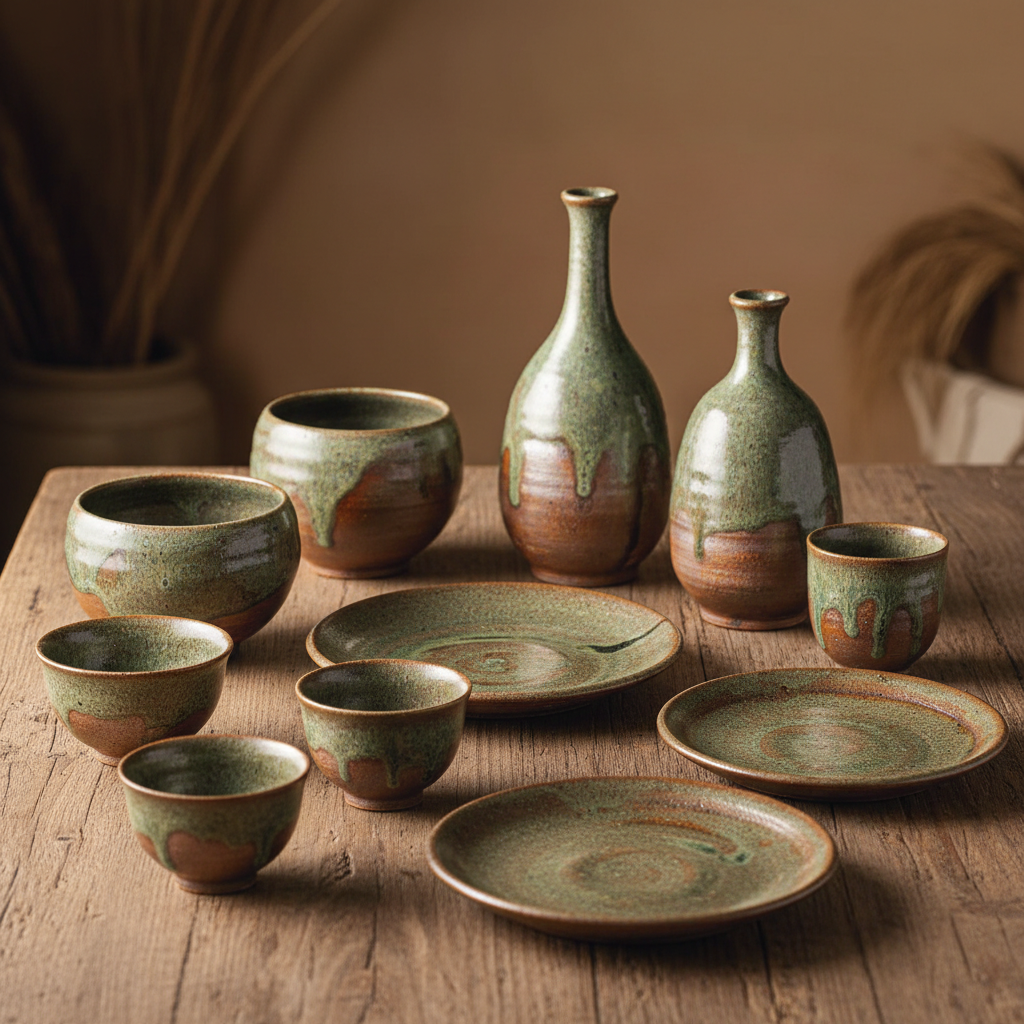

Takada Ware (Yatsushiro Ware) Complete Guide | The History and Charm of Kumamoto Prefecture’s Proud Inlay Ceramic Production Center
What is Takada Ware (Yatsushiro Ware)?
Takada ware (kodayaki) is pottery fired primarily in Yatsushiro City, Kumamoto Prefecture, and is also called Yatsushiro ware (yatsushiroyaki). Among Japan’s ceramic production centers, it is known as a particularly distinctive pottery, with its greatest characteristic being the white clay inlay (hakudo zougan) technique, which is rare in pottery.
A traditional craft continuing from 1632 (Kanei 9) in the early Edo period, it developed as the official kiln of the Hosokawa family. Today, the tradition is preserved in Yatsushiro City and Hikawa Town, and it is attracting attention from both domestic and international audiences as a representative ceramic production center of Kumamoto Prefecture.
How to Read Takada Ware and Its Alternative Names
Takada ware is read as “kodayaki.” Even though it shares the same name “Takada ware,” it should not be confused with Takada ware (takatayaki) produced in Tajimi City, Gifu Prefecture, which is a type of Mino ware—they are completely different types of pottery.
The alternative name Yatsushiro ware derives from the Yatsushiro region where it is produced, and both names are used locally. Historically, it began in Takada Village and became known as “Takada ware,” while as pottery from the broader Yatsushiro region it became known as “Yatsushiro ware.”
History and Origins of Takada Ware
Founder Sonkai (Ueno Kizaemon Takakuni) and Buzen Province Ueno Ware
The history of Takada ware begins with Sonkai (also known as Ueno Kizaemon Takakuni), a potter who came from the Korean Peninsula following Kiyomasa Kato after the Bunroku Campaign (1592-1593).
Sonkai was invited by Toshioki Hosokawa (Sangsai), the feudal lord of Buzen Kokura Domain and one of the Seven Disciples of Sen no Rikyu with deep knowledge of tea ceremony, where he opened the Ueno kiln in Ueno, Buzen Province (present-day Fukushima Town, Tagawa District, Fukuoka Prefecture). Ueno ware was highly valued as tea ceremony ware, and Sonkai’s techniques and aesthetic sensibilities created a deep connection with the Hosokawa family.
Transfer to Higo Kumamoto and the Birth of Takada Ware
In Kanei 9 (1632), when Toshioki Hosokawa moved to Higo Kumamoto Domain following his son Toshitoshi’s transfer, entering Yatsushiro Castle in Higo Province, Ueno Kizaemon (Sonkai) and his eldest son Toshubei also relocated to Takada Village in Yatsushiro District and established a new kiln. This marked the beginning of Takada ware.
The opening of the kiln in Takada Village is said to have occurred between 1632 and 1633, after which Takada ware developed as the official kiln of the Kumamoto Domain across generations, receiving domain protection. It played an important role in supporting the Hosokawa family’s tea ceremony culture, producing quality tea ceremony ware and daily items for the clan lord and warrior class.
Development and Changes as an Official Kiln
Throughout the Edo period, Takada ware advanced in technique and artistry under the patronage of the Hosokawa family. Its status as an official kiln provided potters with a stable creative environment, leading to the refinement of its distinctive inlay technique.
After the Meiji Restoration, with the loss of domain patronage, Takada ware temporarily declined, but the tradition was preserved through the efforts of potters committed to maintaining it. Currently, three kilns—Ueno kiln, Ryugen kiln, and Denshichi kiln—continue to preserve the tradition.
The Greatest Characteristic of Takada Ware: White Clay Inlay Technique
What is the Inlay Technique?
The most distinctive feature that clearly differentiates Takada ware from other ceramic production centers is the unique decorative technique called white clay inlay. Inlay is originally a technique used in metalwork, where grooves or holes are carved into a base, and different materials are fitted into them to create patterns.
Inlay in pottery is extremely rare, and Takada ware is a precious example of this technique developed to a high degree in the ceramic arts world. The refined and delicate patterns created by white clay inlay have become synonymous with Takada ware.
Production Process of White Clay Inlay
The production of Takada ware using white clay inlay involves the following precise steps:
- Forming: First, the vessel is formed using ceramic clay. Takada ware uses locally sourced ceramic clay, shaped using a pottery wheel or hand-building techniques.
- Carving in the Leather-Hard State: Once the formed piece reaches a leather-hard (partially dried) state, patterns are carved using spatulas or specialized tools. The critical skill at this stage is judging the clay’s hardness—if too soft it crumbles, if too hard it’s difficult to carve.
- Embedding White Clay: White clay is embedded into the carved grooves. White clay is clay with low iron content that turns white after firing. Skill is required to pack the white clay completely into all corners of the grooves.
- Scraping Away Excess: Once the white clay reaches a semi-dry state, excess material is carefully scraped away. This work clarifies the pattern outline and creates a smooth surface where the base clay and white clay are level.
- Drying and Bisque Firing: After complete drying, bisque firing is performed at around 800 degrees.
- Glazing: Transparent glaze or celadon glaze is applied. Transparent glaze makes the contrast between the base clay color and white clay beautifully stand out.
- Final Firing: The piece is fired at over 1200 degrees to completion.
Through this complex process, Takada ware is created with refined and elegant white patterns emerging against a pale gray base.
Inlay Pattern Designs
Takada ware inlay patterns are diverse, ranging from plant motifs, geometric patterns, to abstract designs. Drawing from its tradition as tea ceremony ware, the designs are characterized by subtle and refined aesthetics that evoke wabi-sabi sensibility.
Delicate grass flowers drawn in fine lines, geometrically arranged patterns, minimalist expressions utilizing negative space—all embody Japanese aesthetic principles. While contemporary makers preserve traditional techniques, they also develop new designs with modern sensibilities.
Another Distinctive Feature of Takada Ware: Celadon
Alongside white clay inlay, Takada ware is characterized by a pale grayish celadon glaze. The soft blue-gray tone created by reduction firing of iron-containing glazing produces Takada ware’s distinctive subdued beauty.
This celadon differs from Chinese celadon, possessing a more somber and restrained tone that aligns with the “withered simplicity” aesthetic valued in the tea ceremony world. The contrast between the white of the white clay inlay and the gray of the celadon creates Takada ware’s refined appearance.
Current Kilns and Production Areas of Takada Ware
Three Existing Kilns
The following three kilns currently preserve Takada ware’s tradition:
Ueno Kiln (Agano-gama)
The main house of Takada ware continuing directly from founder Sonkai. Located in Hinagu Town, Yatsushiro City, it has inherited techniques and spirit over 400 years. Situated near Hinagu Hot Spring, it is also known as the place where haiku poet Santoka Taneda composed “I don’t want to move for the rest of my life.” While preserving traditional white clay inlay technique, it continues creating vessels harmonizing with contemporary life.
Denshichi Kiln (Denshichi-gama)
Known as Higo Takada Ware Denshichi Kiln, it faithfully preserves traditional techniques. Creating tea ceremony ware and everyday vessels utilizing white clay inlay and celadon glaze, it transmits Takada ware’s charm to the present day. It is an important kiln continuing the pride and techniques of the official Hosokawa kiln to today.
Ryugen Kiln (Ryugen-gama)
A kiln producing ceramics in Hikawa Town, Yatsushiro District, currently with second-generation potter Susumu Egami continuing the tradition. Following Takada ware’s lineage while incorporating contemporary sensibility, it attracts attention for its modern approach to pottery. Its role in spreading Takada ware techniques in Hikawa Town, a region different from Yatsushiro City, is also distinctive.
Production Areas: Yatsushiro City and Hikawa Town
Takada ware is primarily produced in Yatsushiro City and Hikawa Town, Yatsushiro District, Kumamoto Prefecture. Yatsushiro City is Kumamoto Prefecture’s second-largest city, a historic castle town facing Yatsushiro Bay. The Yatsushiro region, including Takada Village where the kiln was opened, possesses an environment suitable for ceramic clay extraction.
Hikawa Town is adjacent to Yatsushiro City, where Ryugen Kiln is located. This surrounding area as Takada ware’s production center supports Kumamoto Prefecture’s ceramic culture.
The area around Hinagu Hot Spring is known as a historic hot spring town, with increasing numbers of tourists visiting Takada ware kilns. It is gaining attention as a hub for cultural tourism combining hot springs and traditional crafts.
Takada Ware and Other Kumamoto Ceramic Production Centers
Besides Takada ware, Kumamoto Prefecture has other representative ceramic production centers: Shodo ware (shoudaiyaki) and Amakusa ceramics.
Differences from Shodo Ware
Shodo ware is pottery fired around Arao City and Tamana City in Kumamoto Prefecture, possessing over 400 years of history like Takada ware. However, its characteristics differ significantly from Takada ware.
Shodo ware’s greatest feature is the strong texture derived from ceramic clay containing abundant iron and the natural scenery created by green and brown glazes. Techniques like pouring glaze and partial application create glaze effects that are never identical, possessing the beauty of chance.
While Takada ware pursues refined beauty through deliberately carved inlay patterns, Shodo ware is characterized by rustic beauty utilizing the natural flow of glazes and kiln effects. As two representative Kumamoto ceramics, they possess contrasting appeal.
Amakusa Ceramics
Amakusa ceramics are porcelain produced in Amakusa City, Kumamoto Prefecture. The Amakusa region is known as one of Japan’s premier ceramic stone sources, with high-quality Amakusa ceramic stone supplied to ceramic centers nationwide including Arita ware.
Amakusa ceramics are characterized by the beauty of white porcelain and delicate decorative painting, possessing the transparency and hard texture distinctive of porcelain, unlike Takada ware or Shodo ware.
How to Use and Enjoy Takada Ware
Takada Ware as Tea Ceremony Ware
Takada ware developed as tea ceremony ware supporting the Hosokawa family’s tea ceremony culture. Takada ware tea bowls, water vessels, flower containers, and incense containers used as tea implements embody the aesthetic of wabi-sabi.
The delicate patterns of white clay inlay and the subdued color of celadon glaze harmonize with the serene space of a tea room, enriching the tea ceremony experience. For those practicing tea ceremony, enjoying tea from a Takada ware tea bowl is a particularly special experience.
As Everyday Tableware
Contemporary Takada ware kilns, while preserving traditional tea ceremony ware techniques, produce many vessels for daily use. Teacups, rice bowls, plates, and bowls that grace the everyday table combine the beauty of traditional inlay technique with practicality.
The pale gray and white contrast easily complements not only Japanese cuisine but Western food as well, naturally integrating into contemporary lifestyles. As used over time, pieces develop deeper character and appreciation grows—a charm inherent to pottery.
How to Obtain Takada Ware
Takada ware can be purchased directly from each kiln, as well as at craft shops, department stores, and online retailers throughout Kumamoto Prefecture. Visiting kilns allows for studio tours and the pleasure of selecting pieces while conversing directly with artists.
When visiting Yatsushiro City or Hikawa Town, incorporating kiln tours into your travel plans is recommended. A trip combining visits with Hinagu Hot Spring offers a refreshing experience for body and spirit.
Technical Inheritance and Future of Takada Ware
Preservation of Traditional Techniques
Despite its 400-year history, Takada ware currently faces the challenge that only three kilns preserve the tradition. The white clay inlay technique’s mastery requires many years of study, making successor cultivation a pressing issue.
However, young generations at each kiln are learning traditional techniques while challenging contemporary approaches to pottery-making. The attitude of preserving tradition while pursuing innovation opens Takada ware’s future.
Value of Takada Ware in the Modern Era
In an age of mass-produced tableware, the value of Takada ware, where inlay is applied through individual handwork, increasingly rises. Vessels carrying a maker’s technique and spirit provide users with special experiences.
As cultural heritage, artistic value as fine art, and practical value enriching daily life—Takada ware combines all these qualities, representing Kumamoto Prefecture’s ceramic treasure to the world.
Regional Revitalization and As Tourism Resource
Takada ware is an important cultural resource for the Yatsushiro region and contributes to tourism development. Cultural tourism centered on Takada ware—including kiln visits, pottery experiences, and gallery tours—contributes to local economic revitalization.
Kumamoto Prefecture promotes “Kumamoto’s Three Major Ceramics” alongside Shodo ware and Amakusa ceramics, strengthening information outreach both within and beyond the prefecture. Efforts linking traditional crafts with tourism contribute to increased Takada ware recognition and sustainable production center development.
To Deepen Your Understanding of Takada Ware
Exhibition Facilities and Galleries
For those wishing to learn more deeply about Takada ware, the following facilities are recommended:
- Kumamoto Prefectural Traditional Crafts Museum: Located in Kumamoto City, this facility has permanent exhibitions of Takada ware and other prefectural traditional crafts.
- Kiln Galleries: Ueno Kiln, Denshichi Kiln, and Ryugen Kiln each have galleries where historical and contemporary works can be viewed.
- Yatsushiro City Museum Mirai no Mori Museum: A museum introducing Yatsushiro’s history and culture, displaying historical materials related to Takada ware.
Experience Programs
Some kilns offer pottery experience and inlay technique workshops. Through direct contact with clay and hands-on inlay experience, you can appreciate the difficulty and fascination of Takada ware techniques. Most require advance reservation, so confirmation before visiting is recommended.
Conclusion: The Charm of Takada Ware (Yatsushiro Ware), Kumamoto Prefecture’s Proud Ceramic Production Center
Takada ware (Yatsushiro ware) is a ceramic production center centered in Yatsushiro City, Kumamoto Prefecture, with over 400 years of history as a traditional craft. Beginning with founder Sonkai, developing as the official kiln of the Hosokawa family, possessing the distinctive white clay inlay technique rare in pottery, creating refined beauty through pale gray celadon glaze, and with three kilns currently preserving traditional techniques—Takada ware is particularly distinctive among Japan’s ceramic production centers and represents Kumamoto’s cultural identity.
Combining the refined beauty of tea ceremony ware with approachability as everyday tableware, Takada ware enriches our contemporary lives. When visiting the Yatsushiro region, be sure to visit the kilns, experience the artisans’ handiwork, and hold Takada ware in your hands. There you will find techniques and aesthetic sensibilities inherited across 400 years, as well as unique charm nurtured by Kumamoto’s soil and water.
Takada ware is a ceramic treasure that Kumamoto Prefecture presents to the world and a jewel of Japan’s traditional crafts. Passing its value to future generations and furthering its development is our responsibility.