Complete Guide to Tsutsumi Ware | Exploring the Charm of a 300-Year Traditional Ceramic Producing Area Boasted by Sendai, Miyagi Prefecture
What is Tsutsumi Ware (Tsutsumiyaki)?
Tsutsumi ware (tsutsumiyaki) is pottery fired in Tsutsumi-cho, Aoba Ward, Sendai City, Miyagi Prefecture, and is a folk kiln representing the Tohoku region with over 300 years of history. This pottery, which began when Date Tsunamura, the feudal lord of Sendai Domain, invited potters from Edo during the Genroku period (1688-1704) in the mid-Edo era, is characterized by its simple and powerful aesthetic, using locally-sourced clay and glazes made from rocks in the valleys of Sagi Forest and ash from rice husks.
The “namako glaze (sea cucumber glaze)” created by boldly pouring black and white glazes is the greatest feature, and this unique glaze expression clearly distinguishes Tsutsumi ware from other ceramic producing areas. Currently designated as a Traditional Craft designated by the Miyagi Governor, it is widely known as a representative traditional craft of Sendai.
History and Development of Tsutsumi Ware
Birth and Development in the Edo Period
The origins of Tsutsumi ware trace back to the Genroku period. It is said that Date Tsunamura, the fourth feudal lord of Sendai Domain, invited Kamimura Manemon, a potter of the Imado ware from Edo, to begin pottery production in Tsutsumi-cho on the north main street of the castle town of Sendai. At that time, it was also called “Sendai ware” or “Sugiyama ware,” and tea utensils and daily commodities were produced.
Throughout the Edo period, Tsutsumi ware developed under the protection of Sendai Domain, inheriting the traditions of Kenzan style from Kyoto while establishing its own simple and powerful style unique to the Tohoku region. By using high-quality local clay called Daidao soil, it achieved a unique texture and durability, becoming widely appreciated as daily commodities for common people.
Succession from Meiji to Showa
Entering the Meiji period, as the wave of modernization caused many traditional crafts to decline, Tsutsumi ware also faced difficult circumstances for a time. However, the techniques were continuously inherited through the efforts of local potters.
In the early Showa period, Yanagi Soetsu, the founder of the Mingei (folk art) movement, highly evaluated Tsutsumi ware as “a folk kiln representing Tohoku,” leading to a reappraisal of its value. Yanagi Soetsu played an important role in establishing its status as a folk craft by praising the simplicity, practicality, and unique beauty of Tsutsumi ware.
Tsutsumi Ware in Modern Times
Currently, only the “Tsutsumi Ware Kenba Kiln (Kenbagama)” continues to produce Tsutsumi ware. As the sole kiln, it preserves traditional techniques spanning over 300 years while also engaging in vessel-making suited to modern lifestyles. The attitude of preserving tradition while adapting to the times supports the sustained charm of Tsutsumi ware.
Characteristics and Appeal of Tsutsumi Ware
Beauty of the Namako Glaze (Sea Cucumber Glaze)
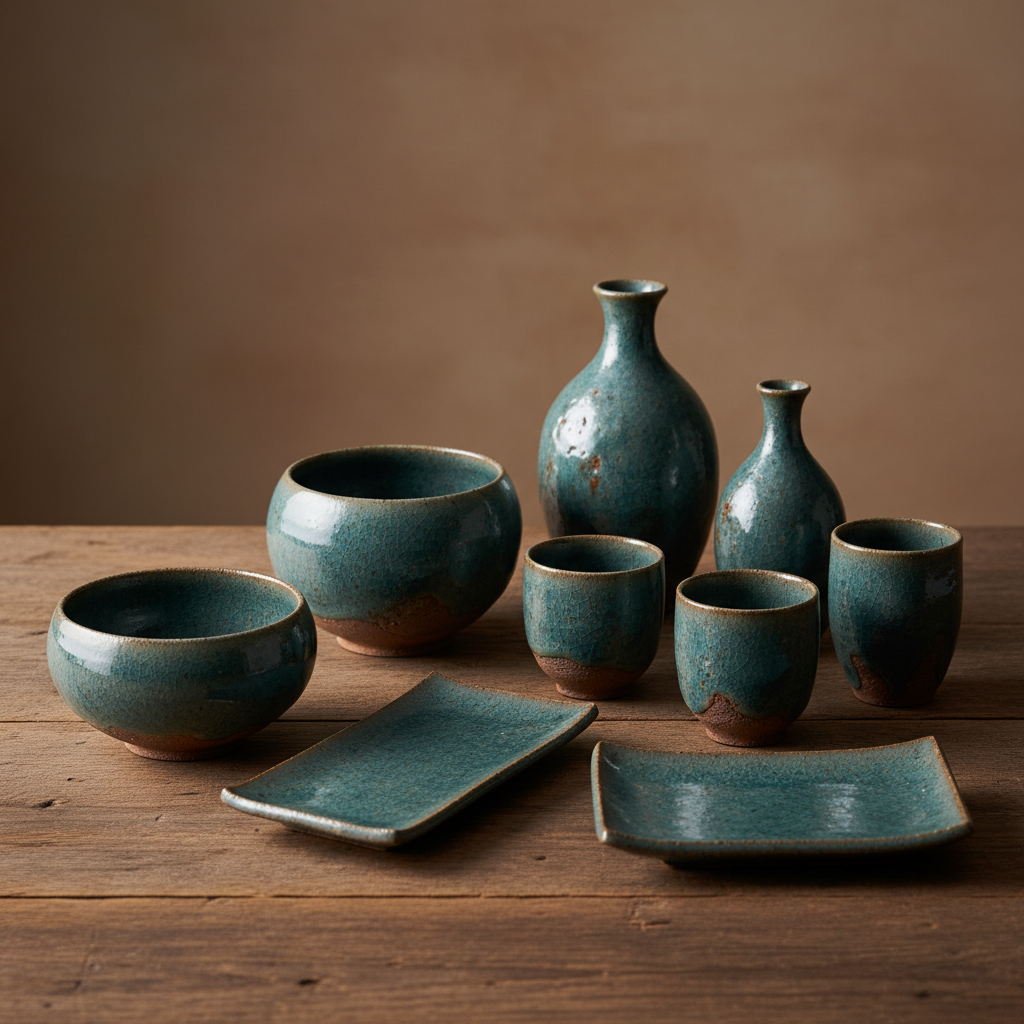
The greatest characteristic of Tsutsumi ware is the “namako glaze,” created by simultaneously applying black and white glazes. The unique patterns created by this technique have a texture resembling the surface of a sea cucumber, resulting in an individual finish where no two patterns are exactly alike.
The namako glaze is created by pouring black iron glaze and white feldspar glaze. As the two glazes melt together in the kiln and undergo chemical reactions, a distinctive blue-tinged color and complex patterns emerge. The beauty woven together by this interplay of chance and inevitability can be said to be the greatest appeal of Tsutsumi ware.
Commitment to Local Raw Materials
Tsutsumi ware is thoroughly committed to using locally-sourced raw materials. The clay used is mined from the Daidao district of Sendai City and is characterized by a slightly coarse texture. These coarse particles create the simple and powerful aesthetic of the fired finish.
The glaze also adheres to local sourcing, using crushed rocks found in the valleys of Sagi Forest or ash from burned rice husks. These natural materials produce a natural color and texture that cannot be achieved with chemical glazes.
Simple and Powerful Sculptural Beauty
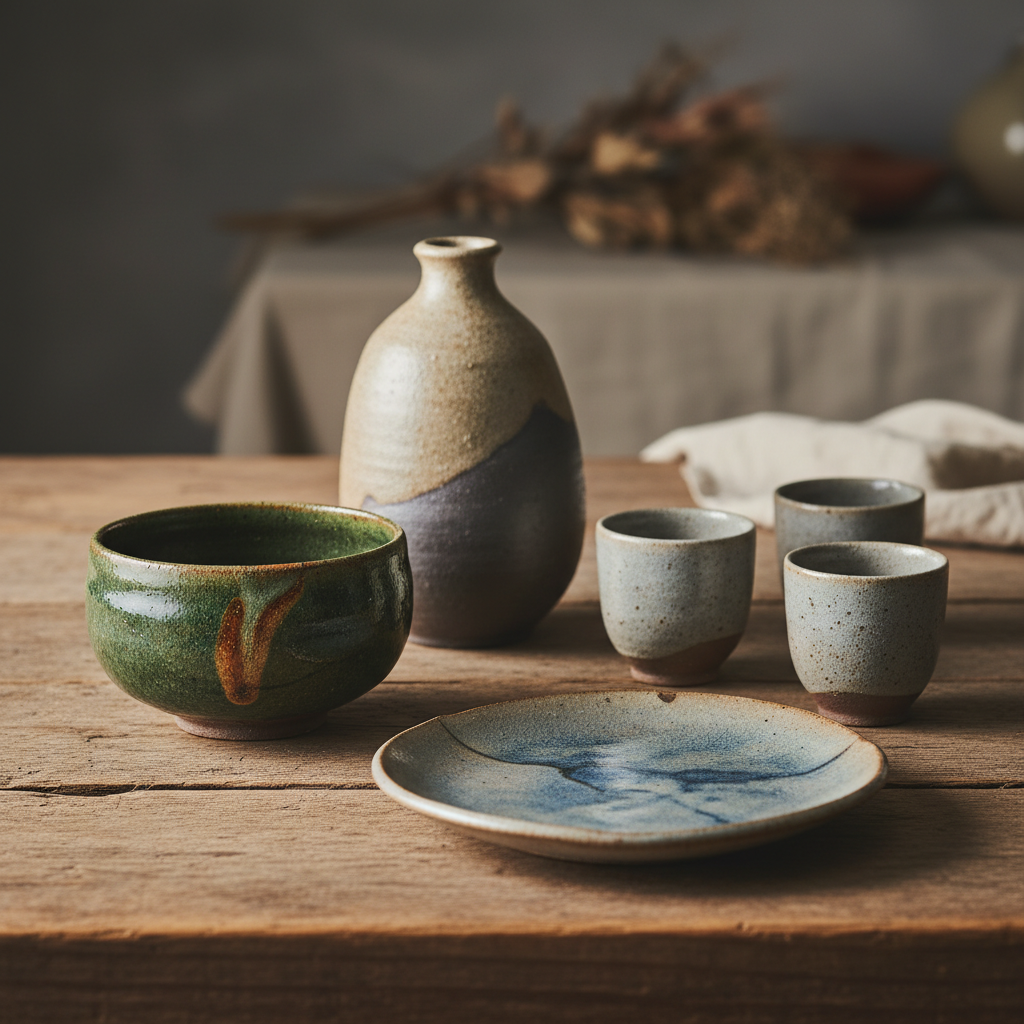
Tsutsumi ware vessels are characterized not by refined urban beauty but by rustic simplicity and powerful strength. Vessels formed on a potter’s wheel are not perfectly symmetrical and may retain slight irregularities and unevenness. However, this “imperfection” conveys the warmth of handcraftsmanship and brings peace of mind to the user.
The thick, earthy quality and rough texture also possess excellent practicality as vessels for daily use. Being durable and long-lasting, with increasing character through use, they embody an approach to craftsmanship that is the polar opposite of modern disposable culture, representing sustainable production.
Manufacturing Process of Tsutsumi Ware
Soil Preparation and Formation
The manufacture of Tsutsumi ware begins with the refinement of locally-sourced clay. Since Daidao soil contains impurities, they are carefully removed through a process called water levigation (suihi), adjusting the clay to appropriate plasticity and firmness. This soil preparation is an important process that determines the final quality of the vessel.
Formation is primarily done using a potter’s wheel. Skilled potters rely on senses cultivated through years of experience to carefully shape each piece. Various daily commodities such as plates, jars, sake vessels, tea cups, and tea utensils are formed by hand.
Drying and Bisque Firing
Formed vessels are first air-dried. Since rapid drying causes cracking, they are slowly dried over several days to a week while managing humidity and temperature.
After sufficient drying, bisque firing is performed at around 800 degrees Celsius. Bisque firing hardens the clay and provides the strength necessary to withstand the subsequent glaze application process.
Glaze Application and Kiln Firing
Glaze is applied to the bisque-fired vessels. The namako glaze characteristic of Tsutsumi ware is applied using a technique of boldly pouring black iron glaze and white feldspar glaze with a ladle. This pouring technique is key to creating Tsutsumi ware’s unique patterns.
The potter’s hand movements, glaze viscosity, quantity, and timing all interplay to create one-of-a-kind patterns. Even when performed in the same manner, different appearances emerge each time, which is the essence of handcraftsmanship.
Vessels with applied glaze are fired at temperatures above 1200 degrees Celsius. In the kiln, the glaze melts and sets on the vessel, forming a beautiful glazed surface. Firing takes over a full day, after which the pieces are slowly cooled before removal from the kiln.
Positioning as a Ceramic Producing Area in Miyagi Prefecture
Traditional Crafts of Miyagi Prefecture
In addition to Tsutsumi ware, Miyagi Prefecture has Kirikomi ware (kirikomi yaki), another traditional ceramic. Kirikomi ware is porcelain fired in Kami Town, Kami District, Miyagi Prefecture, characterized by an elegant style with underglaze blue and overglaze enamel painting on white porcelain.
While Tsutsumi ware is a simple stoneware, Kirikomi ware is a delicate porcelain, the two having contrasting characteristics. Both serve as the two major ceramic producing areas representing Miyagi Prefecture, each continuing to preserve their unique traditions.
Significance of Tsutsumi Ware in the Tohoku Region
The Tohoku region has various distinctive ceramic producing areas, such as Naraoka ware in Akita Prefecture and Kuji ware in Aomori Prefecture. Among these, Tsutsumi ware, as Yanagi Soetsu evaluated as “a folk kiln representing Tohoku,” holds an important position as a symbol of Tohoku ceramic culture.
Its simple and powerful style is rooted in the climate and lifestyle of Tohoku, embodying the harmony of practicality and beauty nurtured in a harsh natural environment.
Main Products of Tsutsumi Ware
Vessels as Daily Commodities
Tsutsumi ware has traditionally centered on the production of practical vessels for everyday use by common people. Currently, various vessels that brighten the dinner table are still produced, including plates, bowls, tea cups, rice bowls, sake decanters, and sake cups.
Sake vessels are particularly popular, and the unique aesthetic of the namako glaze is said to bring out the flavor of Japanese sake even more. The thick, earthy quality provides excellent heat retention, practically maintaining the appropriate temperature for sake.
Tea Utensils and Craft Objects
Tea ceremony utensils such as tea bowls and water containers, as well as flower arrangements, are also produced. Tsutsumi ware tea utensils, inheriting the Kenzan style tradition from Kyoto, are cherished by tea practitioners for their simple beauty embodying the spirit of wabi-sabi.
Additionally, craft objects such as jars and flower vases are produced and are popular as interior decorative items. The beautiful patterns of the namako glaze naturally blend with modern living spaces, harmonizing with both Japanese and Western interiors.
About Tsutsumi Ware Kenba Kiln
The Sole Successor
Currently, only the “Tsutsumi Ware Kenba Kiln” produces Tsutsumi ware. It continues to make vessels for modern living while preserving traditional techniques passed down through generations. The kiln is located in Tsutsumi-cho, Aoba Ward, Sendai City, and is equipped with a workshop, display/sales space, and pottery experience class facilities.
The name Kenba Kiln derives from the lineage of kilns continuing from the Edo period, serving as a valuable vessel transmitting over 300 years of history to the present day. While preserving tradition, it also works on developing new designs and uses adapted to the times.
Experience Classes and Promotion Activities
Tsutsumi Ware Kenba Kiln offers pottery experience classes open to the general public. Through wheel-throwing and hand-shaping experiences, participants can actually experience the Tsutsumi ware production process, providing a valuable opportunity to deepen understanding of traditional crafts.
Pieces created by participants are fired later and delivered to their homes, making them popular as souvenirs of the trip. Regular pottery classes are also held, with programs available for those wishing to study continuously.
How to Purchase Tsutsumi Ware and Retail Outlets
Purchase at the Kiln
The most reliable way to purchase Tsutsumi ware is to visit Tsutsumi Ware Kenba Kiln directly. The display/sales space attached to the workshop constantly displays various works available for purchase, where you can select pieces by handling them in person.
The advantage of purchasing at the kiln is being able to hear directly from the maker. You can learn in detail about the characteristics of the vessels, how to use them, and care methods, allowing you to continue using them with greater affection.
Retail Outlets in Sendai City
Tsutsumi ware is sometimes sold at craft shops and department stores within Sendai City. It can be found at souvenir shops around Sendai Station and specialty stores dealing with Miyagi Prefecture products.
Online Purchase
Online purchase is also possible through the Tsutsumi Ware Kenba Kiln official website. Those living far away or unable to visit in person can obtain Tsutsumi ware. However, since each handcrafted piece has a unique appearance, purchasing in person if possible is recommended.
How to Use and Care for Tsutsumi Ware
Seasoning Before First Use
Before using a new Tsutsumi ware vessel for the first time, it is recommended to perform “seasoning” (me-dome). Unlike porcelain, pottery has fine gaps between soil particles, and without this treatment, dirt and odors may seep in.
Seasoning is typically done by boiling the vessel in water with rinsed rice or dissolved flour. This treatment fills the gaps in the soil, making the vessel resistant to staining and longer-lasting.
Daily Care
After use, wash gently with neutral detergent and dry thoroughly before storing. Since pottery absorbs water easily, storing it while wet can cause mold.
Regarding microwave or dishwasher use, this varies depending on the piece, so it is recommended to confirm when purchasing. Generally, namako glaze vessels are susceptible to rapid temperature changes and require caution.
Enjoying Changes Over Time
Tsutsumi ware increases in character with continued use. Fine craze patterns called “kannyuu” may appear on the surface through use, but this is a characteristic of pottery and can be enjoyed as an aesthetic quality.
As the vessel is used over many years, it matures and develops a unique appearance all its own. Enjoying this aging process is one of the joys of using pottery.
Tsutsumi Ware and Sendai Culture
Craft Culture of the Castle Town of Sendai
Tsutsumi ware is a representative of the craft culture of Sendai, the castle town built by Date Masamune. Sendai Domain valued cultural and artistic pursuits and encouraged the production of various crafts. Tsutsumi ware was one such craft that developed under the Domain’s patronage.
In addition to Tsutsumi ware, Sendai has preserved various traditional crafts such as Sendai tansu (chests), Sendai-hira, kokeshi dolls, and tamaushi lacquerware. These have influenced each other, forming a unique Sendai culture.
Role of Tsutsumi Ware in Modern Times
In modern times, Tsutsumi ware is not merely a traditional craft but has become a symbol of Sendai’s cultural identity. For local people, it serves as a vessel for daily use, while for tourists, it functions as a souvenir embodying memories of Sendai, appreciated in various forms.
It also plays an educational role in transmitting traditional techniques to the modern era, providing many people the opportunity to experience Japanese traditional culture through experience classes.
Designations and Certifications
Traditional Craft Designated by the Miyagi Governor
Tsutsumi ware is designated as a Traditional Craft by the Miyagi Governor. This designation is granted to crafts with long history, made using traditional techniques and methods, utilizing the regional characteristics of the area.
By receiving this designation, the value of Tsutsumi ware as a traditional craft is officially recognized, and it becomes eligible for protection and promotion support. For consumers, it serves as proof of a product’s quality and tradition.
Value as Cultural Property
The Sendai City Museum holds numerous superior examples of Tsutsumi ware produced from the Edo through Meiji periods. These are utilized as valuable cultural properties transmitting Sendai’s history and culture through research and display.
In particular, representative works such as the namako glaze jar are highly evaluated as demonstrating the technical achievement of Tsutsumi ware production.
Visiting Tsutsumi Ware
Access Information
Tsutsumi Ware Kenba Kiln is located in Tsutsumi-cho, Aoba Ward, Sendai City. From Sendai Station, it is about 15 minutes by car. By public transportation, take the Sendai City Bus to the “Tsutsumi-cho” bus stop and walk a short distance.
With good accessibility from Sendai’s city center, it is easy to visit while sightseeing. It is recommended to contact in advance before visiting.
Nearby Attractions
There are other sights of interest around the Tsutsumi-cho area. Nearby is Daidao Forest Park, where you can enjoy walks in a nature-rich environment. Additionally, with good access to Sendai’s city center, you can plan a comprehensive tour combining major attractions such as Aoba Castle ruins, Sendai City Museum, and Zuihoden.
Future and Challenges for Tsutsumi Ware
Succession of Traditional Techniques
The current situation where only one kiln produces Tsutsumi ware presents challenges from the perspective of traditional technique succession. Training successors and recording and preserving techniques are important issues.
On the other hand, having only one kiln may help maintain consistency in quality and purity of tradition.
Adaptation to Modern Life
While preserving tradition, vessel-making suited to modern lifestyles is required. Adaptation to microwaves and dishwashers, development of modern designs, and meeting contemporary needs are all important.
Tsutsumi Ware Kenba Kiln continues efforts to be accepted by younger generations, producing not only traditionally-glazed namako ware but also vessels incorporating modern sensibilities.
Cooperation with Regional Revitalization
Tsutsumi ware is also an important tourism resource for Sendai and Miyagi. By working in cooperation with regional tourism and cultural promotion, the charm of Tsutsumi ware can be communicated to more people, enhancing industrial sustainability.
Various initiatives are possible, such as enriching experience classes, collaborating with other traditional crafts, and promoting use in restaurants and food service.
Conclusion
Tsutsumi ware is a traditional pottery that has been passed down for over 300 years in Sendai, Miyagi Prefecture. Vessels created using local soil and glaze with the unique namako glaze technique possess simple and powerful beauty, earning high evaluation as a folk kiln representing Tohoku.
Currently, only Tsutsumi Ware Kenba Kiln continues to preserve tradition, but its techniques and spirit are definitely being inherited in the modern era. Tsutsumi ware, combining practicality as daily use and beauty as craftswork, is an invaluable cultural heritage that brings warmth and richness to users’ lives.
When visiting Sendai, be sure to visit Tsutsumi Ware Kenba Kiln and experience vessels in which 300 years of history lives. By actually handling and using them, you will truly appreciate their charm.