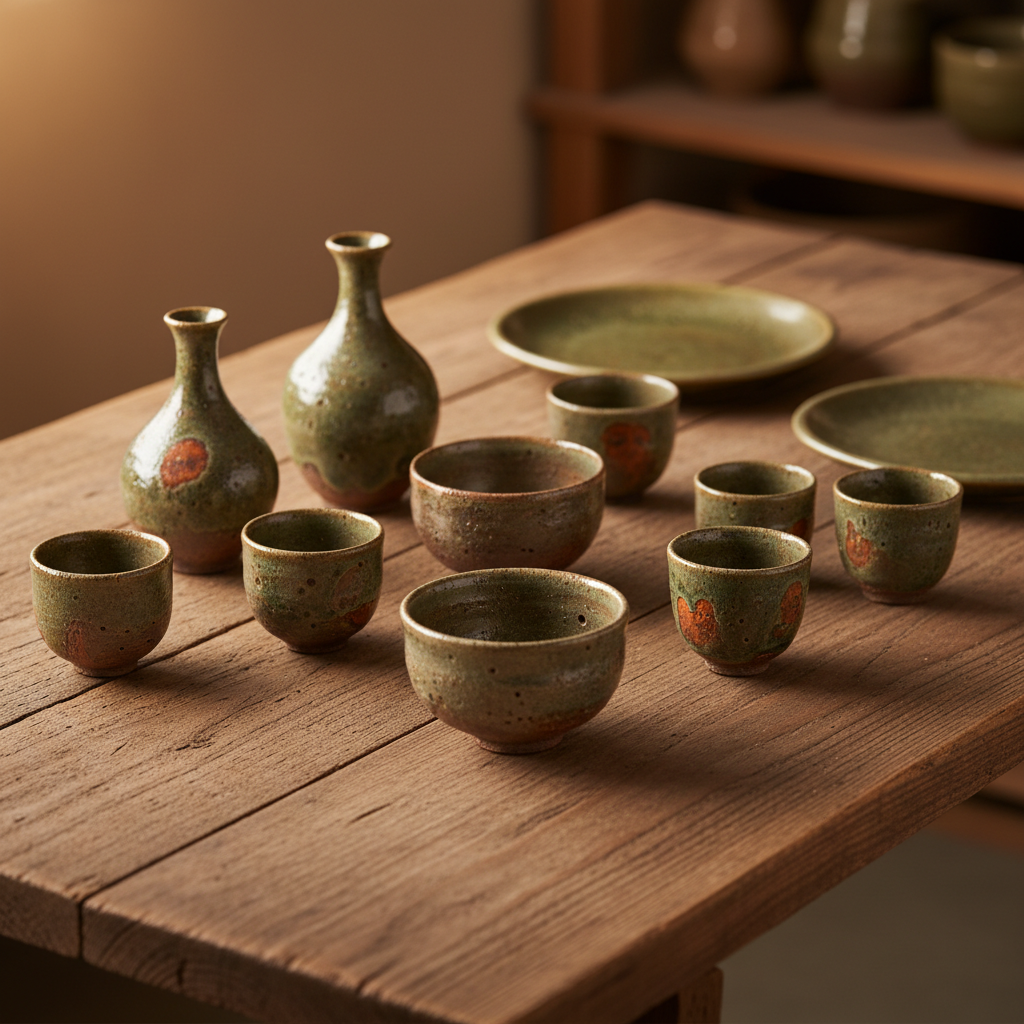
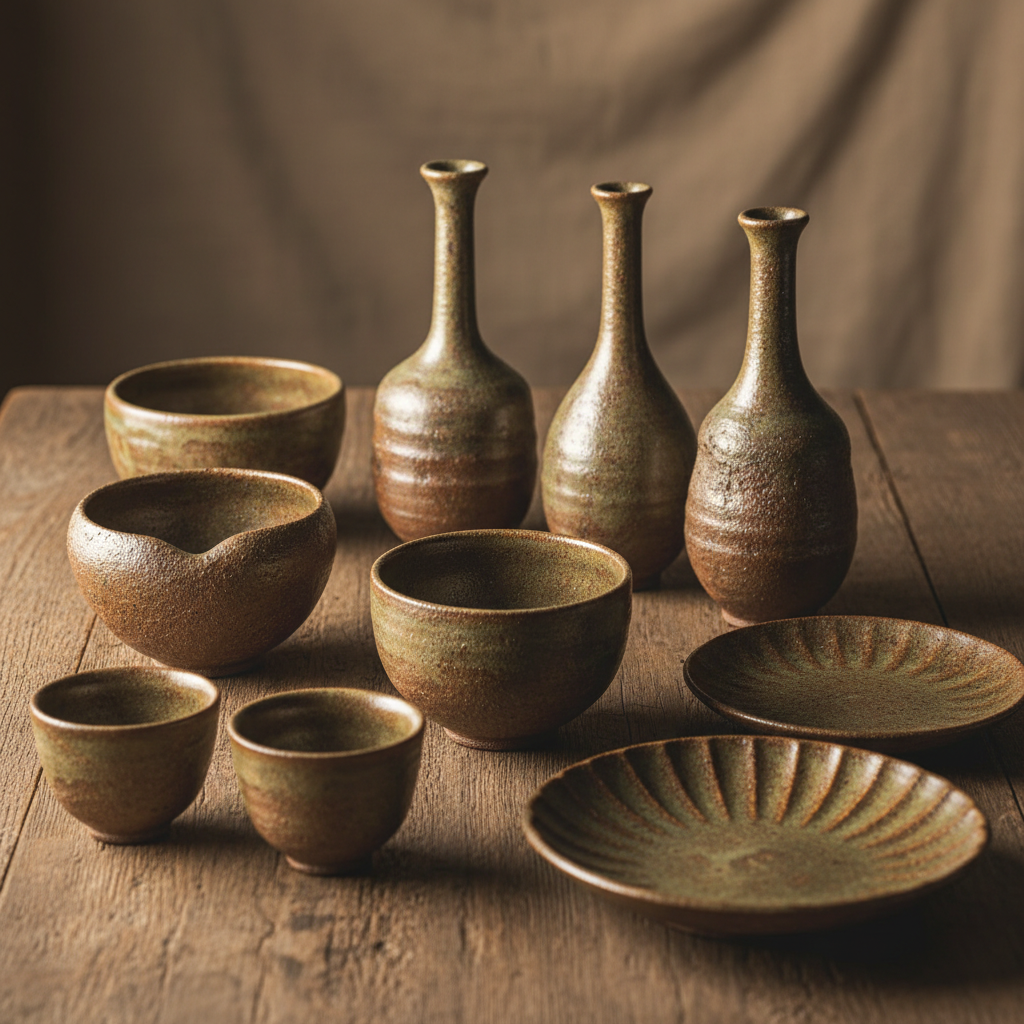
What is Akogi Ware? A Comprehensive Explanation of the History and Charm of Traditional Ceramics from Tsu City, Mie Prefecture
Basic Knowledge of Akogi Ware
Akogi ware (阿漕焼) is traditional pottery produced in Tsu City, Mie Prefecture. Its name derives from Akogi Ura, a place name in Tsu City, and while it follows in the tradition of Banko ware, it has developed along its own unique path. With a history of over 200 years, it is one of the precious ceramic production areas officially designated as a Mie Prefecture Traditional Craft.
Characteristics of Akogi Ware
Akogi ware is known as pottery that combines both practicality and artistry. With tea ceremony utensils at its center, a wide range of works have been produced, from daily-use tableware to flower vessels. While its techniques are influenced by Banko ware, it has nurtured a unique aesthetic sense reflecting the natural environment and culture of the Tsu region.
Among Mie Prefecture’s ceramic production areas, while Banko ware from Yokkaichi and Iga ware from Iga City are nationally famous, Akogi ware holds a unique position as urban ceramics developed in Tsu, the prefecture’s capital city.
The History of Akogi Ware: 200 Years of Rise and Decline
Origins: The Ando Ware Period (Mid-Edo Period)
The origins of Akogi ware trace back to the 1740s (Kanpo era) of the Edo period. Initially called “Ando ware,” it was produced around Ando Village in Tsu City (present-day Ando-cho area). This Ando ware is considered the direct ancestor of Akogi ware.
The establishment of Ando ware was influenced by Numiwa Rouzan, who founded Banko ware in Kuwana. Numiwa Rouzan established unique ceramic techniques in the mid-18th century, and his techniques and aesthetic sensibilities spread throughout the Tsu domain. Pottery production that began around Kannji Temple in Ando Village became established as a local industry with support from the Tsu domain.
However, in the late Edo period, it faced a crisis of discontinuation. Due to management difficulties and problems with technical transmission, Ando ware experienced decline.
Revival: The Birth of Akogi Ware by Kurata Kyuhachi
The person who revived the declining Ando ware was Kurata Kyuhachi. He learned the techniques of Ando ware and established a new kiln to resume pottery production. When the kiln location was moved to Sentocho, near Akogi Ura, the name “Akogi ware” came to be used.
Akogi Ura is a coastal area of Tsu City facing Ise Bay, where fishing had long been active. By adopting this place name, Akogi ware restarted as a brand strongly emphasizing Tsu’s regional character.
After its revival by Kurata Kyuhachi, Akogi ware developed with support from the Tsu domain. It particularly focused on the production of tea ceremony utensils and gained attention from the tea ceremony world, including the Omotesenke school.
Changes in the Meiji Period and Beyond
With the arrival of the Meiji period, Akogi ware took on new developments. Multiple kilns began operations in areas such as Naisaki and Tote Akogi, and the production area expanded in scale. However, the path of Akogi ware from Meiji through the Showa period was truly one of repeated rise and decline.
While production became active temporarily during the Meiji period, it faced another period of decline from the Taisho period into the early Showa period. Due to economic recession and the effects of war, many kilns were forced to close.
Postwar Revival and the Present Day
After the war, pottery artisans dedicated to the revival of Akogi ware began production anew. Multiple kiln operators and artists such as Kojima Akogi, Kamijima Akogi, Shigetomi Akogi, and Morimori Akogi have inherited the Akogi ware tradition.
In particular, contemporary artisans including Morimori Shigahiko are engaged in creating works that preserve traditional techniques while incorporating modern sensibilities. Works receiving calligraphic signatures from the Omotesenke chief priest Kenchusai are also produced, maintaining evaluation as tea ceremony utensils.
For a period, organizational production was attempted as a company, but it later disbanded, and production is now centered on individual artisans. Such organizational changes also form part of Akogi ware’s history.
The Position of Akogi Ware Among Mie Prefecture’s Ceramic Production Areas
Major Ceramic Production Areas in Mie Prefecture
Mie Prefecture is home to several of Japan’s major ceramic production areas. The most famous is Banko ware centered in Yokkaichi City, known nationally for practical ceramics such as teapots and clay pots. Next is Iga ware from Iga City, which has a long history and receives high evaluation for tea ceramics and flower vessels.
In contrast to these large-scale production areas, Akogi ware is characterized as a small-scale urban ceramic production area developed in Tsu, the prefecture’s capital city. While it does not match the production volume of Banko or Iga ware, it has specialized in high-quality work production centered on tea ceremony utensils.
Relationship with Banko Ware
While Akogi ware is said to follow in the tradition of Banko ware, this relationship carries meaning beyond simple technical inheritance. It inherited the spirituality and aesthetics of Banko ware founded by Numiwa Rouzan, while developing uniquely in the different region of Tsu.
While Banko ware steered toward mass production of practical ceramics, Akogi ware has emphasized production of ceramics as tea ceremony utensils and artistic works. This difference in direction has shaped the individuality of both.
Designation as a Mie Prefecture Traditional Craft
Akogi ware is officially designated as a Mie Prefecture Traditional Craft. This designation is awarded to crafts that meet criteria including over 200 years of history, inheritance of traditional techniques, and reflection of regional character.
Within Mie Prefecture, along with Banko and Iga ware, Akogi ware is positioned as a cultural asset for protection and promotion. The prefecture’s cultural policies advance successor development, preservation of technical records, and related initiatives.
The Techniques and Characteristics of Akogi Ware
Clay and Glazes Used
Akogi ware production has traditionally used ceramic clay quarried in the Tsu area and surrounding regions. This clay contains iron and produces warm colors after firing. The traditional techniques of clay selection and blending continuing from the Ando ware period have been transmitted to the present.
Traditional glaze formulation methods influenced by Banko ware are also employed. From transparent to colored glazes, various glazes are used depending on the purpose of the work and the artist’s intent.
Forming Techniques
Wheel-throwing is the foundation, while hand-building and mold-forming are also employed according to the work. Particularly in tea ceremony utensil production, meticulous finishing of details is required, demanding skilled technique.
Forming techniques suited to each tea ceremony piece—teabowls, water vessels, flower containers—have developed. Careful attention to details such as rim formation and footring carving reflects consideration for the user’s movements.
Firing Methods
Traditionally, wood-fired kilns were used, though contemporary production also uses gas and electric kilns. By adjusting firing temperature and atmosphere (oxidizing or reducing), the color and texture of works change significantly.
Pressing kiln marks on works is also part of Akogi ware tradition. Each kiln operator and artist possesses their own kiln mark, which serves as an important clue to authenticity and production period.
Principal Works and Uses of Akogi Ware
Tea Ceremony Utensils
The most important field for Akogi ware is tea ceremony utensils. Various tools used in tea ceremony, including teabowls, water vessels, tea containers, flower containers, and water basins, have been produced. Works receiving calligraphic signatures from the Omotesenke chief priest demonstrate high evaluation in the tea ceremony world.
Teabowls are especially important works, with careful attention to hand-feel, interior landscape, and footring formation. Akogi ware tea utensils are characterized by embodying wabi-sabi aesthetics while pursuing usability.
Daily Tableware
Beyond tea ceremony utensils, daily-use tableware such as rice bowls, tea cups, plates, and bowls are also produced. While prioritizing practicality, these possess the warmth and beauty inherent in handmade work.
Centered in Tsu City, these have become familiar as everyday table items. Valued as durable, easy-to-use pieces that gain character with use.
Flower Containers and Decorative Objects
Flower containers, vases, and jars for arranging flowers represent an important body of Akogi ware works. Production ranges from formal pieces for display in alcoves to casual items for adding flowers to everyday spaces.
Decorative objects such as figurines and incense containers are also produced, meeting demand as interior furnishings.
Contemporary Akogi Ware: Artisans and Workshops
Major Artisans and Workshops
Morimori Shigahiko, known as Morimori Akogi, is among the foremost contemporary artisans representing Akogi ware. The workshop preserves traditional techniques while incorporating contemporary sensibility into work production.
Previously, multiple kiln operators existed, including Kojima Akogi, Kamijima Akogi, and Shigetomi Akogi, each developing their own distinctive styles. Currently production is centered on individual artisans, though each inherits the Akogi ware tradition while exploring new expression.
The Challenge of Successor Development
As a small-scale production area, Akogi ware faces the significant challenge of developing successors. Acquiring ceramic skills requires long training periods, and establishing economic viability is not easy.
Various initiatives are being undertaken by Mie Prefecture and Tsu City, as well as regional cultural organizations, but sustained viability as a production area requires further support and interest.
Contemporary Initiatives
Beyond merely preserving tradition, development of new works suited to contemporary lifestyles is progressing. High-design tableware for younger generations, interior goods, and other efforts to meet contemporary needs are being made.
Information sharing and sales through social media and online shops are actively conducted by newer generation artisans.
Purchasing and Appreciating Akogi Ware
Where to Purchase
Akogi ware can be purchased from the following places:
Direct artisan workshop sales: Visiting artisans’ workshops directly allows purchase while deepening understanding through dialogue with creators. Prior contact is recommended.
Department stores and galleries: Items may be found in department stores and galleries handling crafts in Tsu City and throughout Mie Prefecture. Displays and offerings at exhibitions and events are common.
Online sales: Recently, artist websites, online shops, and specialty craft e-commerce sites make purchase possible.
Antique markets and curio shops: Older Akogi ware pieces can be found at antique markets and curio shops. Such venues are valuable for collectors seeking pieces with historical significance.
Price Range
Akogi ware prices vary greatly depending on work type, artist, and production period. According to auction data, average hammer prices are around 2,900 yen, representing small pieces or daily-use items.
Tea ceremony utensils and representative works of artisans fall into price ranges from tens of thousands to hundreds of thousands of yen. Works with Omotesenke calligraphic signatures or historical significance command even higher prices.
Points for Appreciation
Points to consider when appreciating Akogi ware:
Clay texture: Note the texture of fired clay, its color tone. The warm hue characteristic of iron-containing clay is notable.
Glaze expression: Enjoy the glaze application, color variation, and crazing (fine cracks) created by the glaze.
Form balance: The artisan’s technique and aesthetic sensibility appear in overall proportions, rim formation, and footring carving.
Kiln marks: Marks impressed on the piece’s base or sides reveal maker and production period.
Use sensation: The weight when held, tactile feel, and sensation in the mouth are important appreciation points.
Mie Prefecture’s Ceramic Culture and Akogi Ware
Mie Prefecture’s Pottery Culture
Mie Prefecture is a region where ceramic culture has long flourished. Its geographic position as the location of Ise Shrine has contributed to the development of tea ceremony and craft culture.
The prefecture contains multiple pottery production areas besides Banko, Iga, and Akogi ware, including Miihama ware. Each possesses its own history and characteristics, forming the rich craft culture of Mie Prefecture.
Akogi Ware in Tsu City’s Culture
Tsu City, as Mie Prefecture’s capital, has been the center of politics, economy, and culture. As a castle town, Tsu was home to many with cultural refinement, including tea ceremony practitioners.
Akogi ware developed within Tsu’s urban culture. While responding to demands from samurai, merchants, and cultural figures, it produced refined works. By adopting the place name Akogi Ura, it expresses affiliation with and pride in the Tsu region.
Potential as a Tourist Resource
Currently, Tsu City is advancing tourism promotion utilizing regional cultural resources. Akogi ware is positioned as an important resource conveying Tsu’s history and culture.
Initiatives increasing opportunities for tourists to engage with Akogi ware—through workshop visits, ceramics experiences, and work displays—are expected. Storytelling information conveying history and culture remains a future task.
Current Circumstances and Future of Akogi Ware
Challenges Facing Traditional Crafts
Challenges facing Akogi ware are common to many traditional crafts:
Successor shortage: Acquiring ceramic skills requires long training periods, with few young participants currently.
Market contraction: Changing lifestyles have reduced demand for traditional ceramics.
Low recognition: Akogi ware’s recognition lags Banko and Iga ware, with expanding recognition outside the prefecture remaining an issue.
Technical transmission: Production by few artisans makes complete technical transmission difficult.
Possibilities and Prospects
Meanwhile, Akogi ware also holds the following possibilities:
Strengths of small-scale production: Rather than mass production, added value can be increased as one-of-a-kind artistic works.
Partnership with Tsu City: Leveraging its location as a prefectural capital, enhanced visibility is possible through partnership with administration and cultural facilities.
Connection to tea ceremony culture: Utilizing evaluation as tea ceremony utensils, reliable demand from tea ceremony enthusiasts can be appealed to.
Contemporary design development: Traditional techniques can be employed while developing new works suited to contemporary lifestyles.
Experience-based tourism: Ceramics experiences and workshop visits can be developed as tourism content.
Support and Promotion Measures
Mie Prefecture and Tsu City are engaged in promotion of traditional crafts including Akogi ware. Various initiatives are implemented: designation as traditional crafts for protection, exhibition and sale event support, successor development programs, and more.
Future measures suited to the times will include digital information sharing, online sales support, and network building among young artisans.
Conclusion: The Value and Charm of Akogi Ware
Akogi ware is traditional pottery transmitted for over 200 years in Tsu City, Mie Prefecture. While following the Banko ware tradition, it changed its name from Ando ware to Akogi ware and continues to the present day, repeatedly facing discontinuation and revival.
Its history has never been smooth. From Edo-period Ando ware, through revival by Kurata Kyuhachi, to Meiji development, prewar and postwar decline and revival, through the present day, it has constantly faced existence challenges while being preserved by artisans’ passion.
While small-scale production brings difficulties, this is simultaneously the value of individual pieces created carefully. Handmade warmth and individuality impossible in mass-produced items are Akogi ware’s greatest charm.
High artistry centered on tea ceremony utensils, practicality as everyday-use pieces, and regional character embodying Tsu’s history and culture. Akogi ware, uniting these elements, is a precious cultural heritage of Mie Prefecture and a traditional craft deserving transmission to future generations.
Should you have opportunity to visit Mie Prefecture, please experience Akogi ware pieces. From their clay’s warmth, glaze expression, and form’s beauty, you can sense over 200 years of history and artisans’ dedication. Using Akogi ware vessels daily allows appreciating Mie Prefecture’s traditional culture intimately.
Akogi ware’s future depends on each person’s interest and support. To transmit this precious traditional craft to coming generations, it is important to first know of its existence, encounter works, use them, and share them with others.