
Yokkaichi Banko Ware: A Complete Guide to Mie Prefecture’s Pride – Ceramic Production Area [History, Characteristics, Manufacturing Process]
What is Yokkaichi Banko Ware
Yokkaichi Banko Ware (よっかいちばんこやき) is a representative Japanese ceramic product manufactured primarily in Yokkaichi City, Mie Prefecture. It is classified as semi-porcelain (stoneware), which has properties between pottery and porcelain, and is particularly known for heat-resistant clay pots and distinctive purple clay teapots with unique character.
Currently, approximately 80% of clay pots produced domestically are Yokkaichi Banko Ware, making it an important local industry supporting Japanese dining culture. On January 12, 1979 (Showa 54), it was designated as a traditional craft by the Minister of Economy, Trade and Industry, and its techniques and quality have been recognized by the state.
The Origin of the Name “Banko Ware”
The name “Banko Ware” (萬古焼) derives from the founder Nunami Rouzan (沼波弄山) stamping his works with the seal “Banko Fueki” (萬古不易). This phrase means “May the work remain unchanged and eternal forever,” expressing the permanence and universal value of pottery.
This seal is evidence of Rouzan’s wish that his works would be cherished across time, and it continues to be passed down today as the identity of Banko Ware.
Yokkaichi Banko Ware Production Area and Industry Scale
Geographic Characteristics of the Production Area
The primary production area for Yokkaichi Banko Ware centers on Yokkaichi City and Komono Town in Mie Prefecture. This region is located at the innermost part of Ise Bay, west of the Kiso River, near the prefectural border with Aichi Prefecture. It is adjacent to Kuwana City, where founder Nunami Rouzan first built his kiln, and Asahi Town in Mie County is also known as the birthplace of Banko Ware.
Yokkaichi City developed early as a port city and was a key logistics hub, which greatly contributed to the nationwide expansion of Banko Ware. Easy procurement of raw materials by sea transport and convenient shipping of finished products supported the area’s growth as a production center.
Number of Kilns and Industrial Agglomeration
Currently, over 100 kiln workshops are concentrated in Yokkaichi City and Komono Town, making it one of Japan’s leading ceramic production areas. These workshops maintain traditional techniques while developing products adapted to modern lifestyles, and the production area boasts a diverse product lineup.
The production area is organized around the Banko Ceramic Wholesale Commercial Cooperative, which systematically handles technology succession, quality control, and market development, with an established system supporting the traditional industry across the entire region.
Product Categories and Market Share
Representative product categories for Yokkaichi Banko Ware are as follows:
Clay Pots: Holding an overwhelming share of approximately 80% of domestic production, they are the flagship product of Banko Ware. High-quality clay pots capable of direct flame use are realized by using petalite (lepidolite), which has excellent heat resistance.
Purple Clay Teapots: Teapots made using purple clay (紫泥) which contains high amounts of iron. They have the characteristic of increasing in flavor with use. They are highly valued as tea implements for their ability to bring out tea flavor.
Tableware: Numerous tableware products suited to daily use and leveraging the properties of semi-porcelain are produced. They have a history of developing as “Taisho Ware” through semi-porcelain manufacturing technology developed by Mizutani Torajiro in the late Meiji period.
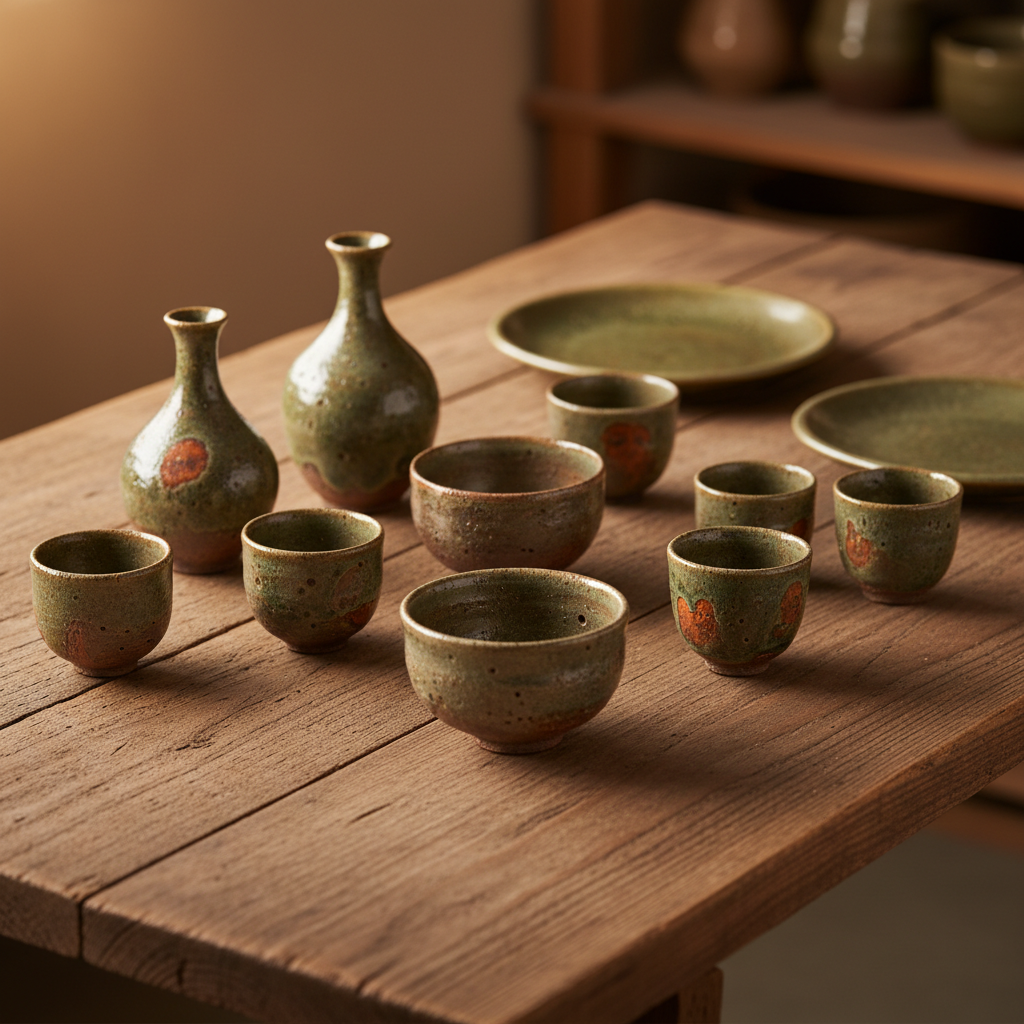
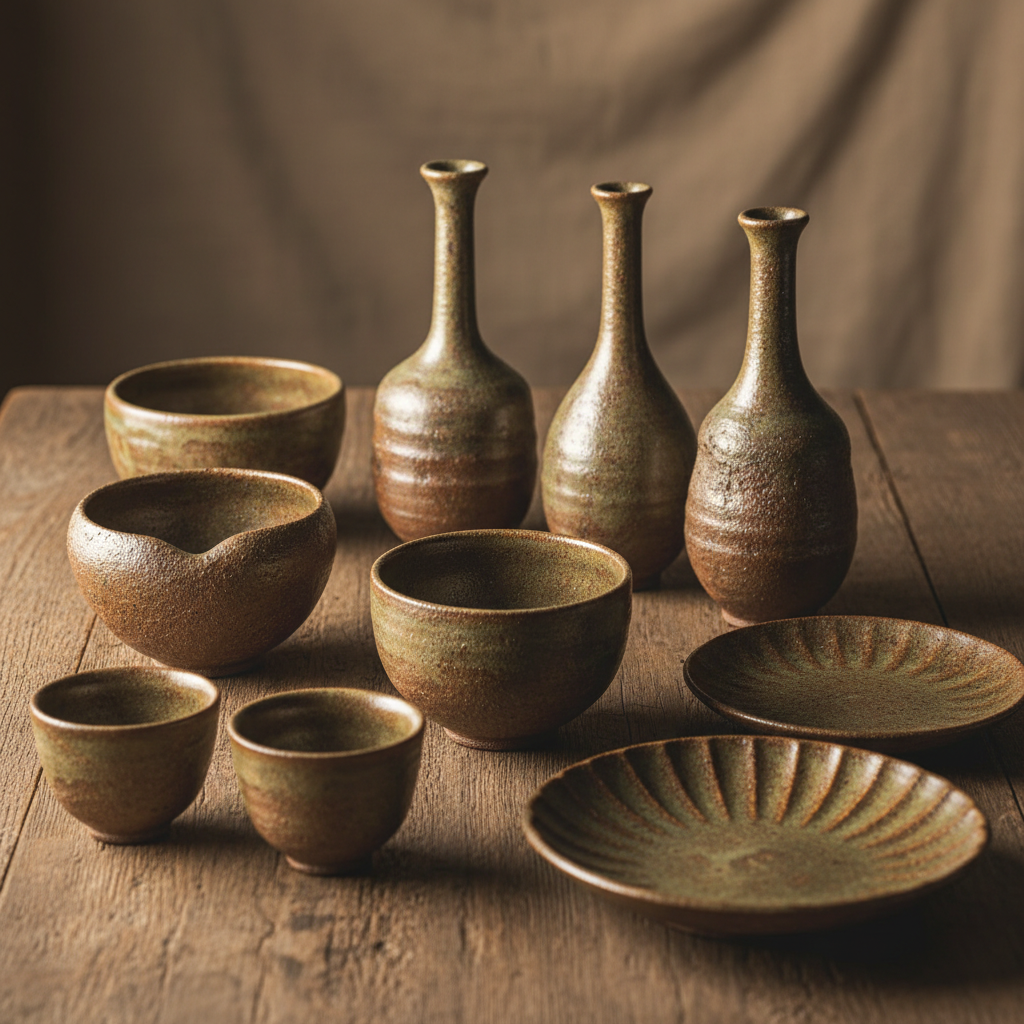
Art Works: Artistic pieces such as vases and flower vessels are created using traditional techniques and receive high evaluation as ceramic art.
History of Yokkaichi Banko Ware
The Ancient Banko Period (Mid-Edo Era)
The history of Banko Ware traces back to the Genbutsu era (1736-1740) of the Edo period. Nunami Rouzan, a wealthy merchant from Kuwana, developed a passion for tea and built a kiln in Komukai, present-day Asahi Town in Mie County, beginning to fire tea utensils himself.
In the closed era of national isolation (sakoku), Rouzan created exotic pottery depicting imaginary scenes from across the sea. His original designs, influenced by ancient Chinese ceramics and Nanban ware, were innovative for the time. Banko Ware from this period is called “Ko-Banko” (ancient Banko Ware) and is now treasured as valuable antiques.
Rouzan’s works employed diverse techniques including red overglaze painting, blue and white underglaze, and celadon, with particularly high evaluation of the beauty of colored overglaze. However, after Rouzan’s death, the production of Banko Ware temporarily ceased.
Revival through Mori Yusetsu Banko (Late Edo Period)
About 70 years after Rouzan’s death, during the Bunsei era (1818-1830), potter Mori Yusetsu (森有節) from Kuwana revived Banko Ware. Yusetsu studied ancient Banko Ware thoroughly and established “Yusetsu Banko” by adding his own techniques.
Yusetsu was particularly skilled in red overglaze techniques, leaving many works with fine decorative painting. Banko Ware during this period received protection from the Kuwana clan and developed as a special product of the domain.
Transfer to Yokkaichi and Industrialization (Meiji Era)
With the advent of the Meiji era, the center of Banko Ware shifted from Kuwana to Yokkaichi. The potters of Yokkaichi, led by Yamanaka Chuuza’emon, played important roles in this transition.
In the late Meiji period (around 1911), Mizutani Torajiro developed semi-porcelain manufacturing technology and marketed it as “Taisho Ware.” Semi-porcelain has intermediate properties between pottery and porcelain, combining the hardness of porcelain with the softness of pottery. This technological innovation led to Banko Ware’s significant development as a modern industry.
Showa Through Heisei (Modern Development)
Entering the Showa era, Yokkaichi Banko Ware established a mass production system for tableware and solidified its position as a nationwide ceramic production area. Particularly during Japan’s post-war period of high economic growth, production scale expanded in response to growing demand for household clay pots.
The 1979 (Showa 54) designation as a traditional craft became a turning point for re-recognizing the value of Banko Ware’s traditional techniques. Since then, it has continued to develop with two directions: production and sale of traditional craft items such as purple clay teapots and art works, and mass production of clay pots and tableware as daily-use items.
From the Heisei period onward, new developments by young artists in design and expansion into overseas markets demonstrate a continued willingness to innovate while preserving tradition.
Characteristics of Yokkaichi Banko Ware
The Unique Material of Semi-Porcelain
The greatest characteristic of Yokkaichi Banko Ware lies in its unique material, semi-porcelain (stoneware). Semi-porcelain has properties intermediate between pottery and porcelain with the following characteristics:
Pottery Properties: Warm texture, high heat retention, natural earth appearance
Porcelain Properties: High hardness, low water absorption, strength
By combining these two properties, it achieves both durability suited to daily use and the distinctive flavor of fired ceramics.
Excellent Heat Resistance
What could be called the trademark of Banko Ware is its excellent heat resistance. This characteristic is realized by blending petalite (lepidolite), a mineral, with clay.
Petalite has the property of expanding minimally when heated, imparting strength to ceramics that can withstand rapid temperature changes. Through this property, Banko Ware clay pots can endure direct flame use and are relatively resistant to dry firing, possessing durability to withstand long-term use.
Current Banko Ware clay pots have evolved with development of IH-compatible and microwave-compatible products, continuing to adapt to modern cooking environments.
The Beauty of Purple Clay
Purple clay products, represented by purple clay teapots, are another face of Banko Ware. Purple clay is a clay containing high amounts of iron that exhibits a unique purplish-brown hue when fired.
Characteristics of purple clay teapots:
Brings Out Tea Flavor: The fine pores of purple clay make tea taste smoother and reduce astringency.
Increasing Flavor with Use: As use continues, tea tannins penetrate the surface, creating a distinctive luster and color.
Excellent Heat Retention: Appropriate thickness and material properties keep tea at its temperature for extended periods.
Purple clay teapots are highly evaluated as tea implements and are treasured as essential tools, particularly in sencha tea ceremony.
Diverse Decorative Techniques
Through its long history, Banko Ware has developed diverse decorative techniques:
Red Overglaze: Vivid red decoration through overglaze painting
Blue and White Underglaze: Azure painting using cobalt oxide
Celadon: Beautiful coloration through blue-green glazes
Carving: Technique of carving directly into the clay body
Inlay: Technique of embedding clay of different colors
These techniques enhance the artistry of Banko Ware as a traditional craft.
Manufacturing Process of Yokkaichi Banko Ware
Raw Material Preparation
The manufacturing of Banko Ware begins with raw material preparation. Primary materials include:
Clay: Primarily locally sourced clay from Mie Prefecture, blended with multiple clays depending on use
Petalite (Lepidolite): Important material imparting heat resistance
Feldspar: Lowers firing temperature and forms glassy phase
Silica: Increases strength
These materials are precisely measured and mixed with water. By varying the blending ratios according to use—for clay pots, teapots, or tableware—clay bodies with characteristics optimized for each application are created.
Forming
Forming methods vary depending on the product:
Wheel Throwing: Used for circular products like teapots and tea utensils. Requires skilled technique, with most traditional crafts formed this way.
Mold Forming: Used for clay pots and mass-produced items. Clay is pressed into plaster molds.
Hand Shaping: Used for art works and one-of-a-kind pieces. This technique most reflects the artist’s individuality.
Slip Casting: Used for complex shapes. Liquid clay (slip) is poured into molds.
After forming, products are thoroughly dried. Since rapid drying causes cracks, humidity and temperature are managed to allow slow drying over several days to weeks.
Bisque Firing
After drying, the products undergo bisque firing. Bisque firing fires at approximately 800-900°C to solidify the clay body. Bisque firing provides:
- Increased product strength, making it easier to handle
- Uniform glaze absorption
- Organic matter combustion, improving gas release during final firing
After bisque firing, product surfaces are sanded and corrections are made as needed.
Glazing and Decoration
Glaze is applied to bisque-fired products. Various glazes are used for Yokkaichi Banko Ware depending on product use and design:
Clear Glaze: Emphasizes the clay body color and patterns
Colored Glaze: Various colored glazes including celadon, amber, and black
Unglazed: Some products, such as purple clay teapots, are fired without glaze
Glazing methods—dipping, pouring, and spraying—are selected based on the product.
Decoration includes underglaze (applied before glazing) and overglaze (applied after glazing). Traditional red overglaze painting is a representative overglaze technique, applied after final firing and refired at low temperature.
Final Firing
Final firing is the most crucial process determining Banko Ware quality. Firing temperature varies by product, generally around 1200-1250°C.
Gas kilns and electric kilns with precise temperature control are now mainstream, though some workshops use traditional climbing kilns. Firing time extends several days from temperature rise through cooling.
During firing, temperature curve management is extremely critical. Rapid temperature changes cause product warping and cracks, requiring delicate temperature management based on experience.
Quality Inspection and Finishing
After firing, products undergo rigorous inspection. Cracks, warping, glaze application, and color are individually checked, with only products meeting standards shipped.
Clay pots are accompanied by instruction manuals explaining the initial seasoning method (simmering in rice-washing water). For purple clay teapots, communicating proper initial care is also important.
Modern Development of Banko Ware
Challenges in New Design
While preserving tradition, Yokkaichi Banko Ware actively pursues new design development suited to modern lifestyles. Through collaboration with young artists and designers, modern products have emerged that overturn conventional Banko Ware images.
Colorful clay pots, tableware with designs usable as Western dinnerware, and flower vessels as interior objects show increasing diversity in both use and design.
Pursuit of Functionality
Development continues on IH-compatible clay pots, microwave-compatible tableware, and dishwasher-compatible products suited to modern cooking and living environments. While leveraging the traditional strength of heat resistance, technology development enables adaptation to new cooking tools.
Expansion into Overseas Markets
Against the backdrop of worldwide popularity of Japanese cuisine, Banko Ware is advancing expansion into overseas markets. Particularly, clay pots receive attention in Western and Asian markets for their functionality and design.
Participation in international trade shows and international buyer meetings show the production area’s commitment to global expansion.
Connection with Experiential Tourism
Yokkaichi City is seeing increased facilities and workshops where people can directly experience Banko Ware’s appeal. Pottery classes, kiln visits, and decorating experiences provide tourists opportunities to engage with Banko Ware, increasing production area fans.
Facilities like Banko no Sato Hall include exhibitions teaching Banko Ware history and manufacturing processes, with shops for actual purchases, serving as comprehensive information centers for Banko Ware.
Organizations and Initiatives Supporting Yokkaichi Banko Ware
Banko Ceramic Wholesale Commercial Cooperative
The Banko Ceramic Wholesale Commercial Cooperative serves as the central organization for Yokkaichi Banko Ware production area. The cooperative conducts the following activities:
- Setting and managing quality standards
- Joint sales promotion activities
- Technical training and successor development
- Market research and new product development support
- Traditional craft designation maintenance and promotion activities
Through cooperative organization, large-scale promotions difficult for individual kilns and technology standardization become possible.
Mie Prefecture Support
Mie Prefecture positions Yokkaichi Banko Ware as important local industry, providing various support. Traditional craft designation as a Mie Brand, promotion of traditional crafts, successor training support, and market development support show comprehensive governmental backing.
The Prefectural Industrial Research Institute provides technical support including development of new glazes and improvement of firing techniques.
Successor Development: Challenges and Initiatives
Like traditional industries generally, shortage of successors is a common challenge. In Yokkaichi Banko Ware, aging of skilled craftspeople and training of young workers present important issues.
The production area addresses these through:
- Cooperation with pottery classes and vocational training schools
- Support for young artist independence
- Providing platforms for artist work presentation
- Information transmission support utilizing SNS
A movement is emerging where younger generations rediscover Banko Ware’s appeal and inherit tradition from new perspectives.
Purchasing and Enjoying Banko Ware
Where to Purchase
Yokkaichi Banko Ware can be purchased at:
Direct Sales from Production Area: Workshop direct sales in Yokkaichi City and direct sales facilities like Banko no Sato Hall
Department Stores: Ceramics counters at major department stores nationwide
Specialty Shops: Ceramic specialty shops and Japanese tableware stores
Online Shops: Official online stores of kilns and cooperative, various e-commerce sites
Trade Shows: Mie Prefecture trade shows and traditional craft exhibits
Visiting the production area allows handling diverse products directly and hearing directly from makers.
How to Use and Care for Clay Pots
Tips for long-term use of Banko Ware clay pots:
Initial Seasoning Before First Use: Simmer rice-washing water or rice porridge to seal the clay pot’s fine pores. This prevents water leakage and extends the pot’s life.
Usage Precautions:
- Do not place over fire while wet (dry the bottom thoroughly)
- Avoid dry firing
- Avoid rapid temperature changes (do not immerse hot pots in cold water)
Care Methods:
- Wash thoroughly after use and dry completely
- Store in low-humidity locations to prevent mold
- If odors develop, deodorize through methods like simmering tea leaves
Cultivating Purple Clay Teapots
Purple clay teapots offer the pleasure of “cultivation”:
Starting Out: New teapots are first rinsed with hot water and thoroughly dried.
Daily Use: By consistently brewing the same type of tea, tea components penetrate the teapot, creating distinctive luster and flavor.
Care: After use, simply rinse with water without soap. Cultivating tea tannins is the joy of purple clay teapots.
Storage: Store after complete drying. Offset the lid slightly to ensure air circulation.
Conclusion: The Future of Yokkaichi Banko Ware
Yokkaichi Banko Ware, with approximately 300 years of history continuing from the Edo period, has constantly evolved to meet contemporary needs. It is a rare production area in Japan combining overwhelming production capability with approximately 80% domestic clay pot share and artistry as a designated traditional craft.
Over 100 kiln workshops centered in Yokkaichi City, Mie Prefecture create diverse products while leveraging their individual specialties. Banko Ware’s distinctive characteristics—excellent heat resistance using petalite, unique semi-porcelain material, and beauty of purple clay teapots—hold high value in modern living.
While preserving tradition, Banko Ware continues forward with challenges in new design, pursuit of functionality, and overseas market expansion. Though successor development presents challenges, new initiatives from younger generations are emerging, furthering efforts to increase sustainable viability as a traditional industry.
Yokkaichi Banko Ware is simultaneously a practical tool supporting Japan’s food culture and an art work backed by long history and high technique. Its multifaceted appeal will continue to attract many people. Please actually handle products from this ceramic production area, Mie Prefecture’s source of pride, and experience their quality and beauty firsthand.