What is Koito Yaki? A Thorough Explanation of the History, Characteristics, and Kilns of Gifu Prefecture’s Traditional Takayama Ceramics
Koito yaki (小糸焼) is a traditional ceramic ware fired in Takayama City, Gifu Prefecture. In Gifu Prefecture, where Mino ware is famous, Koito yaki represents a valuable production center that continues the unique ceramic culture of the Hida region to the present day, drawing attention from many ceramic art enthusiasts and folk crafts fans. This article provides a comprehensive introduction to the appeal of this traditional craft, from its history and manufacturing methods to its current kilns.
History and Origins of Koito Yaki
Opening of the Kiln in the Edo Period
The history of Koito yaki dates back to the early Edo period, to the Kan’ei era (1620s). Kanmori Shigenaga, the feudal lord of Takayama Castle at that time, promoted the ceramic industry as part of a local economic development policy. Shigenaga obtained the mediation of his brother Kanmori Sokwa, renowned as a tea master, and invited Takeya Genjūro, a master potter from Kyoto, to Takayama.
Genjūro built a kiln on a slope called Koito-zaka west of Takayama castle town and began ceramic production there. This place name became the origin of the name “Koito yaki.” The Kanmori family was a daimyo house with deep knowledge of tea ceremony culture, and Koito yaki from its inception had a strong character as tea ceramics.
Development Under Domain Patronage
In its early period, Koito yaki functioned mainly as an official kiln for the Kanmori domain under their patronage. It was primarily used to produce tea ceremony utensils such as tea bowls, flower vessels, and incense containers, which were favored by the samurai and wealthy merchants of Takayama. Even after the Kanmori family lost their domain, and later when Hida became a tenryō (direct shogunal territory), the tradition of Koito yaki was carried on by local potters.
Modern Continuation
After the Meiji Restoration, as many traditional crafts declined, Koito yaki also faced the danger of disappearing. However, with the entry into the Showa period and the renewed recognition of the value of traditional crafts, efforts were made to revive Koito yaki. Today, a small number of kilns continue to preserve tradition while creating vessels suited to contemporary lifestyles.
In 1978 (Showa 53), it received designation as a Gifu Prefecture folk craft, and was officially recognized as an important cultural asset of the region.
Characteristics and Manufacturing Methods of Koito Yaki
Raw Materials Used
One of the major characteristics of Koito yaki is its use of local Hida clay. The primary source clay is mountain soil from Furukawa Town in Hida City, located approximately 20 kilometers north of Takayama City. This Hida clay has strong plasticity and is easy to shape, but alone it lacks sufficient refractoriness.
To increase refractoriness, white clay from Seto is mixed with it. This ratio is adjusted according to the individual kiln and work, and becomes one of the factors that create the individuality of each kiln. By combining Hida clay with Seto clay, durable and practical vessels are created.
The Appeal of Irabo Glaze (伊羅保釉)
Irabo glaze is indispensable when discussing Koito yaki. Irabo glaze is the traditional glaze of Koito yaki, characterized by a color ranging from brown to yellowish-brown and a slightly rough texture. This glaze is said to derive from techniques originating in the Korean Peninsula and has long been prized by Japanese tea masters.
The appeal of Irabo glaze lies in its simple and warm appearance. The surface features fine crazing (small cracks in the glaze), and the more it is used, the more its character deepens. The way the light falls changes its expression, and no two pieces finished with the same glaze look exactly alike—a charm that comes only from handwork.
Innovation with Blue Irabo
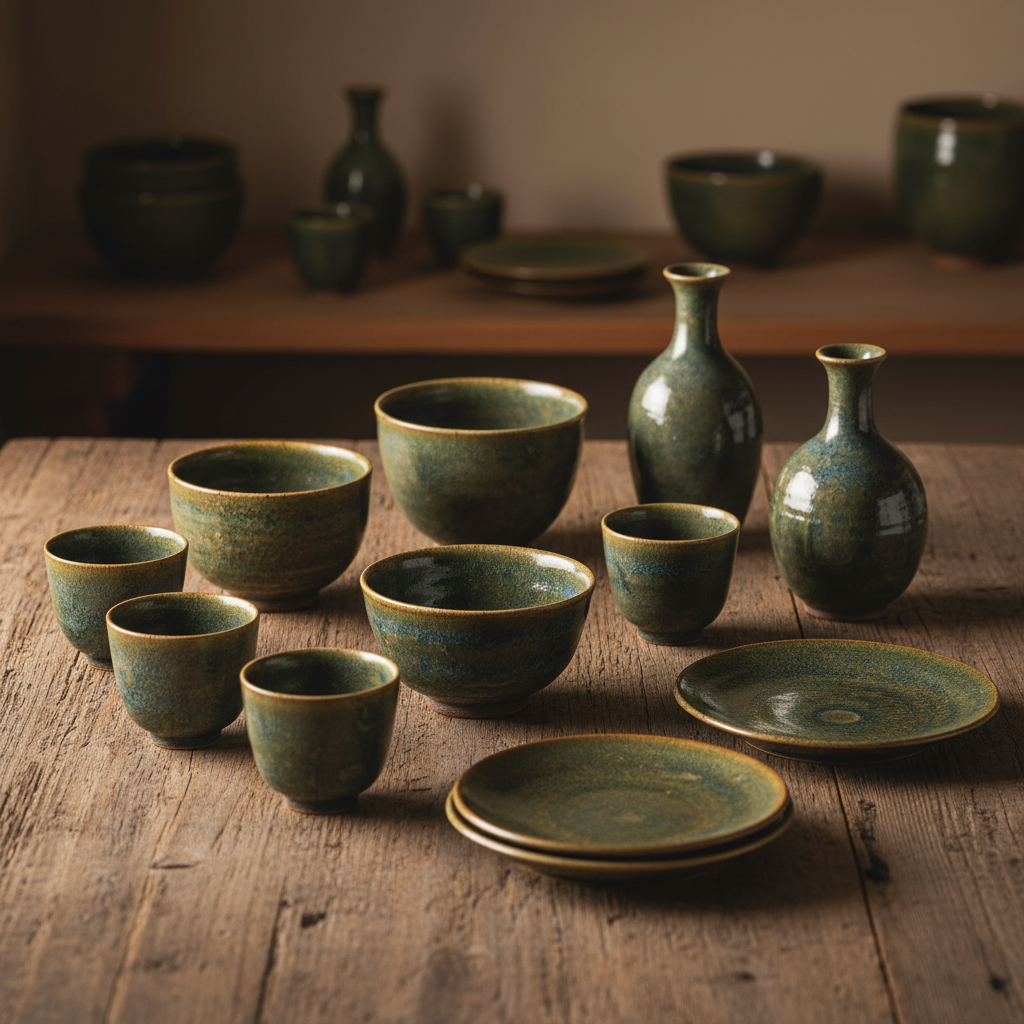
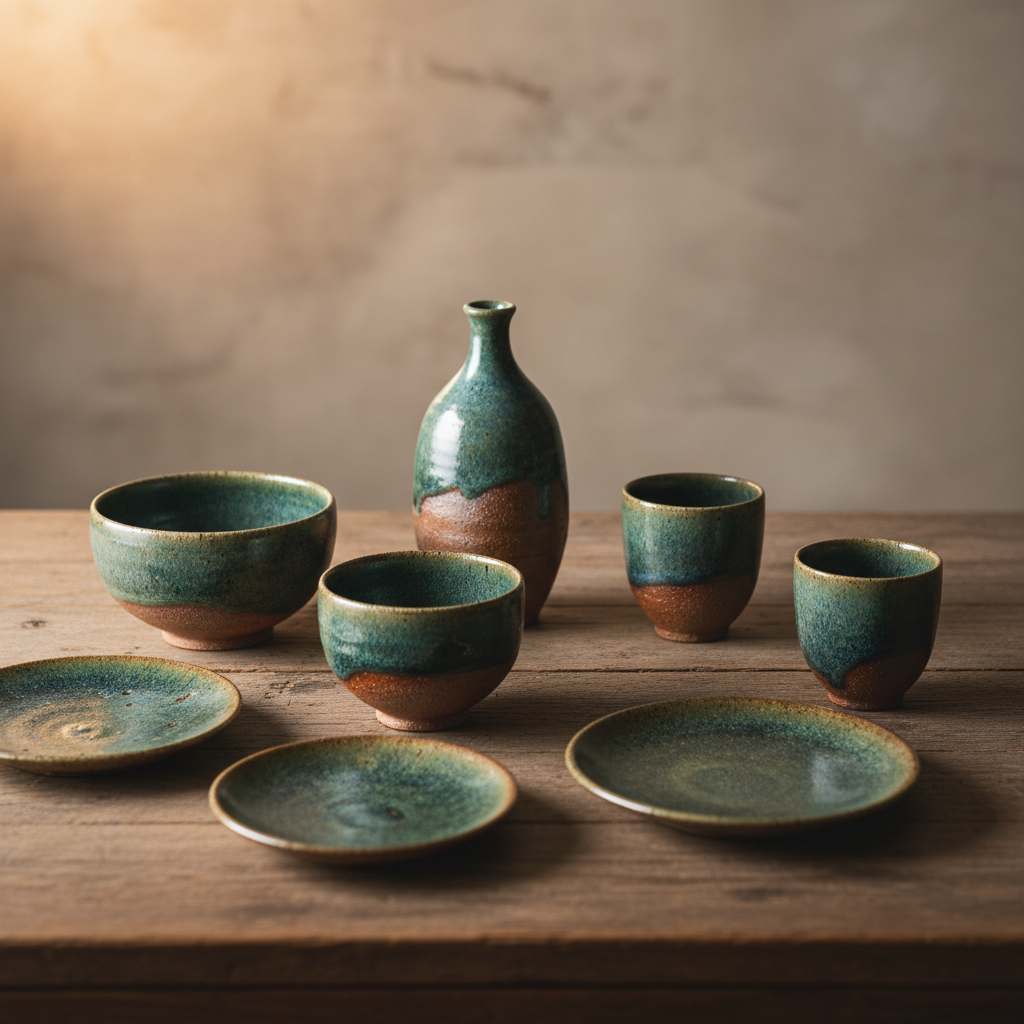
In addition to the traditional tea-brown Irabo glaze, contemporary Koito yaki kilns have also developed a new glaze called “Blue Irabo (青伊羅保).” This is characterized by a distinctive subdued deep cobalt blue, the result of pursuing a new beauty that harmonizes with modern dining tables while maintaining tradition.
Blue Irabo is gaining popularity as a color that builds on traditional techniques while harmonizing with modern living spaces. It has been applied to designs such as coffee cups and plates that work well as Western tableware, gaining support from younger generations.
Manufacturing Process
The production of Koito yaki is primarily done through traditional handwork.
- Clay Preparation: Hida mountain soil and Seto white clay are combined and thoroughly kneaded. Removing air from the clay and achieving a uniform state is important.
- Shaping: Shaping using a pottery wheel is the main method. Through skilled technique, vessels ranging from thin and light to sturdy tea bowls are created.
- Drying: After shaping, the piece is thoroughly dried. Rapid drying causes cracking, so this is done carefully over time.
- Bisque Firing: First firing at approximately 800 degrees. This hardens the clay and makes it easier to apply glaze.
- Glazing: Glaze such as Irabo glaze is applied. Various techniques such as dipping and pouring are used.
- Glaze Firing: Firing at temperatures of 1,200 degrees or higher. During this process, the glaze melts into a glassy substance, creating the distinctive texture and color.
- Kiln Removal: After cooling, pieces are removed from the kiln. Each piece’s appearance is confirmed before completion.
Koito Yaki’s Position Among Gifu Prefecture’s Ceramic Production Centers
Differences from Mino Ware
Gifu Prefecture is known as Japan’s largest ceramic production region, but the vast majority is Mino ware produced in the Tono region in the southern part of the prefecture. Mino ware is characterized by its diversity, encompassing various styles such as Oribe, Shino, Ki-Seto, and Seto-guro. Annual production volume is enormous, with about half of Japan’s tableware said to be Mino ware.
In contrast, Koito yaki is produced by a small number of kilns in the mountainous Hida region, maintaining tradition—the opposite of Mino ware. Unlike mass production, Koito yaki is carefully handmade one piece at a time, earning high evaluation from folk craft enthusiasts who value folk craft values.
Craft Culture of the Hida Region
Koito yaki is one of the representative traditional crafts of the Hida region, along with Hida Shunkei (lacquerware) and Ichii Ichigatana (wood carving). While Hida is famous as the home of woodworking, ceramic culture has also been continuously passed down since the Edo period.
Within the townscape of Takayama with its preserved streets and old town houses, Koito yaki is cherished as part of the region’s cultural identity. For tourists as well, it is an important element that allows them to experience the traditional culture of Takayama, Hida.
Current Koito Yaki Kilns
Current Status of Koito Yaki Kilns
Today, very few kilns produce Koito yaki. The representative kiln, “Koito Yaki Kiln,” has a history spanning more than 75 years since its opening and continues to preserve tradition across two generations of family ownership. As a small family-run kiln, each work carries the thoughts and feelings of its maker.
The kiln produces everyday vessels including tea cups, coffee cups, plates, and bowls. The price range is also relatively affordable, with tea cups starting at 880 yen and coffee cups from 2,750 yen, making them familiar to many as practical everyday vessels.
Purchase Methods and Visits
Koito yaki can be purchased directly at kilns within Takayama City. It is also handled at souvenir shops and craft shops throughout the city. Visiting a kiln allows observation of the workspace, and there is the pleasure of selecting vessels while talking directly with the maker.
There are kilns near the Hida no Sato (Hida Folk Village), which can be visited along with tourism. If you contact in advance, you may be able to observe the production process or participate in pottery experience programs, so those interested should inquire.
Online Purchase
In recent years, it has become possible to purchase Koito yaki through online shopping. It is carried by specialized Japanese tableware online shops and e-commerce sites dealing in crafts. However, as the vessels are handmade, inventory is limited, and popular items may sell out quickly.
Using and Caring for Koito Yaki
Preparation Before First Use
Koito yaki being pottery, it is recommended to perform “seasoning” before use. Seasoning involves boiling the vessel in water mixed with rice-rinsing liquid or dissolved flour, sealing the fine pores in the pottery to prevent staining and discoloration.
- Add water and rice-rinsing liquid (or approximately 2 tablespoons of flour) to a pot large enough to submerge the vessel
- Place the vessel in the water and simmer over low heat for about 20 minutes
- Remove from heat and allow to cool naturally
- Rinse thoroughly with water and dry completely
This treatment helps vessels last longer and maintain their beautiful appearance.
Daily Use
Koito yaki has sufficient strength for everyday use. However, paying attention to the following points will allow longer enjoyment:
- Soak in water before use: Soaking for a few minutes before use makes it less likely for food colors and odors to transfer
- Microwave and dishwasher: Generally safe, but avoid sudden temperature changes
- Direct flame and oven: Heat-resistant, but never use empty
- Avoid metal scouring pads: Wash gently with a soft sponge
Storage Method
After use, store the piece only after it has dried thoroughly. Avoid storing in humid locations; a well-ventilated place is ideal. When stacking pieces, placing cloth or paper towels between them prevents scratching.
The Appeal and Value of Koito Yaki
Connection to the Folk Crafts Movement
Koito yaki embodies the spirit of the folk crafts movement proposed by Yanagi Soetsu. Not elaborate decoration, but beauty born in everyday use, appreciation cultivated in dialogue with the user—these are the very ideals of folk crafts.
The simple appearance of Irabo glaze and the warmth inherent in handwork embody “beauty in function.” Precisely because they are not perfectly uniform, each piece has individuality, and affection deepens through relationship with the user.
Koito Yaki in Contemporary Life
Traditional crafts may seem inaccessible for everyday use to some. However, Koito yaki is made with emphasis on practicality and can be casually used at the daily table.
Coffee cups and mugs work seamlessly as Western tableware, fitting naturally into any table setting regardless of style. The deep blue of Blue Irabo also matches contemporary interiors, gaining support from younger generations.
Value as a Gift
Koito yaki is appreciated as a gift because of its history and quality. It is suitable as a gift for life milestones such as wedding gifts, housewarming gifts, and 60th birthday celebrations, as well as gifts for overseas visitors to convey Japanese culture.
Being handmade and a traditional craft with a history of nearly 400 years becomes a way to convey thoughtfulness from the giver. Koito yaki, both practical and culturally valuable, becomes a gift that will be cherished for years.
Koito Yaki and Takayama Tourism
Koito Yaki Experience in Takayama City
For tourists visiting Takayama, Hida, Koito yaki is one cultural experience not to be missed. While exploring the old streets, you can handle Koito yaki at craft shops. Visiting a kiln offers a deeper experience—selecting vessels while hearing stories from the maker.
Some kilns accept pottery experience participants. You can shape a vessel yourself, have Irabo glaze applied, and have it fired and mailed to you later. This has become a popular activity as a keepsake of the trip and an opportunity to own a unique, personal Koito yaki piece.
Combination with Hida no Sato
Hida no Sato (Hida Folk Village) is an open-air museum where traditional gassho-style farmhouses have been relocated, making it a popular Takayama tourism spot. Koito yaki kilns are also located in this area, allowing visitors to experience traditional Hida life and craft culture at once.
Various events are held seasonally at Hida no Sato, with demonstrations and hands-on programs of traditional crafts. Food and beverage services using Koito yaki vessels are also available, allowing you to see how the vessels are actually used.
The Future and Challenges of Koito Yaki
Shortage of Successors
Like many traditional crafts, Koito yaki faces the challenge of lacking successors. The number of currently active kilns is limited, and passing on the technique is urgent. Pottery requires years of apprenticeship, with ten or more years sometimes needed to become proficient.
On the other hand, growing interest in traditional crafts has increased the number of young people pursuing pottery. Koito yaki kilns are working to accept apprentices and hold workshops to promote technical succession and dissemination.
Balancing Tradition and Innovation
The balance between preserving tradition and meeting contemporary needs is a challenge all traditional crafts face. Koito yaki maintains traditional Irabo glaze while challenging itself to develop new glazes like Blue Irabo and create vessels with contemporary design.
Efforts are also underway to communicate Koito yaki’s appeal to ceramic fans nationwide through SNS and online shops. Finding ways to convey tradition’s value without diminishing it, while matching the times, is key to opening Koito yaki’s future.
Regional Revitalization Partnerships
Takayama City positions traditional crafts as important resources for regional revitalization. Koito yaki is valued not only as a tourism resource but also as a cultural heritage that forms regional identity.
Various forms of support for Koito yaki’s succession and development are provided through city and prefectural assistance, traditional craftsperson certification systems, exhibitions, and sales events. A system where the entire region works to preserve and nurture traditional crafts supports Koito yaki’s future.
Conclusion
Koito yaki is a traditional ceramic ware with a history of approximately 400 years in Takayama City, Gifu Prefecture. It was opened under the patronage of the Kanmori family during the Edo period and developed as tea ceramics characterized by the unique Irabo glaze.
The combination of Hida mountain soil and Seto white clay, the simple and warm Irabo glaze, and the painstaking handmaking of each piece represent Koito yaki’s unchanging appeal. In modern times, new glazes like Blue Irabo have also been developed, and vessel-making continues that maintains tradition while fitting contemporary times.
Though Gifu Prefecture boasts Mino ware, Japan’s largest ceramic production center, Hida’s Koito yaki, while small in scale, possesses its own unique value and is cherished by many ceramic enthusiasts. The image of a small number of family-run kilns preserving tradition embodies the spirit of folk crafts.
Though facing challenges such as successor shortages, Koito yaki’s appeal is being passed to the next generation through regional support and new methods of communication. When visiting Takayama, Hida, be sure to pick up a Koito yaki vessel and experience its warmth and history. Whether used as everyday tableware or as a gift, Koito yaki adds rich color to contemporary life.