What is Miyajima Ware? A Comprehensive Explanation of the History, Characteristics, and Kilns of Hiroshima Prefecture’s Traditional Crafts
Miyajima ware (miyajimayaki), a traditional craft representing Hiroshima Prefecture, is pottery deeply connected to the World Heritage Site Itsukushima Shrine. Also known by the alternate names “O-suna ware (osunayaki)” and “sacred sand ware (shinshayaki),” it is characterized by a unique manufacturing method in which sacred sand from beneath the main hall of Itsukushima Shrine is mixed into clay before firing. This article provides a comprehensive explanation of Miyajima ware as a ceramic production area in Hiroshima Prefecture, covering everything from its history to current kilns, product characteristics, and purchasing methods.
Basic Information and Production Area of Miyajima Ware
Miyajima ware is pottery produced primarily in the Miyajima-guchi district of Hatsukaichi City, Hiroshima Prefecture. This region, overlooking the World Heritage island of Miyajima (Itsukushima) across the water, has long prospered as the gateway to visits to Itsukushima Shrine.
Characteristics of the Production Area
The Miyajima-guchi area of Hatsukaichi City, the production area for Miyajima ware, is a region with a warm climate facing the Seto Inland Sea. Today, several kilns in this area continue their pottery work while preserving tradition, and Miyajima ware is designated as a Hiroshima Prefecture-designated traditional craft.
While the scale of this ceramic production area is smaller compared to major production areas such as Arita ware and Seto ware, it holds a unique cultural value as a production area through its connection to Itsukushima Shrine, a world-renowned tourist destination.
History of Miyajima Ware: From the Edo Period to the Present
Origins in the Edo Period and the Custom of “Returning Sacred Sand”
The origins of Miyajima ware trace back to the Edo period. At that time, when people from Aki Province (present-day western Hiroshima Prefecture) set out on journeys, they had the custom of carrying sacred sand from beneath the main hall of Itsukushima Shrine as a protective charm. This was called “sacred sand protection” and was done to pray for safe travels.
Upon returning home safely, travelers would observe the custom of “returning sacred sand” by adding sand they had collected on their journey to double the amount and returning it to the shrine. This practice of deep religious faith formed the background for the birth of Miyajima ware. Vessels made by mixing sacred sand into clay became popular as lucky charms associated with visits to Itsukushima Shrine and became known as “O-suna ware.”
Several Periods of Rise and Decline of Kilns
Although Miyajima ware began to be produced in the Edo period, its history has not been straightforward. It is said that there were several periods of rise and decline of kilns, with production occasionally coming to a halt.
Various factors such as warfare, economic hardship, and lack of successors led to kilns closing at times, but each time they were revived by people who recognized the value of Miyajima ware.
Mid-Meiji Period: Establishment of a Solid Foundation
The solid foundation of present-day Miyajima ware was established in the mid-Meiji period. During this time, improvements in technique and the establishment of production systems advanced, and Miyajima ware became established as a traditional craft.
As the wave of modernization swept through during the Meiji period, while traditional manufacturing methods were preserved, improvements suited to the times were made, and a unique style with a pristine atmosphere was established. The techniques and aesthetic sense built during this period have been passed down to the present day.
Characteristics of Miyajima Ware: Unique Atmosphere from Mixed Sacred Sand
Use of Sacred Sand from Beneath Itsukushima Shrine’s Main Hall
The greatest characteristic of Miyajima ware is its manufacturing method of mixing sacred sand from beneath the main hall of Itsukushima Shrine into clay. This sacred sand is considered holy, and mixing it into vessels creates their value as lucky charms.
While ceramic production areas in general use local soil as their basic material, the manufacturing method of mixing shrine sand is extremely rare and becomes a distinctive feature unique to Miyajima ware.
Pristine Atmosphere and Unique Patterns from Kiln Changes
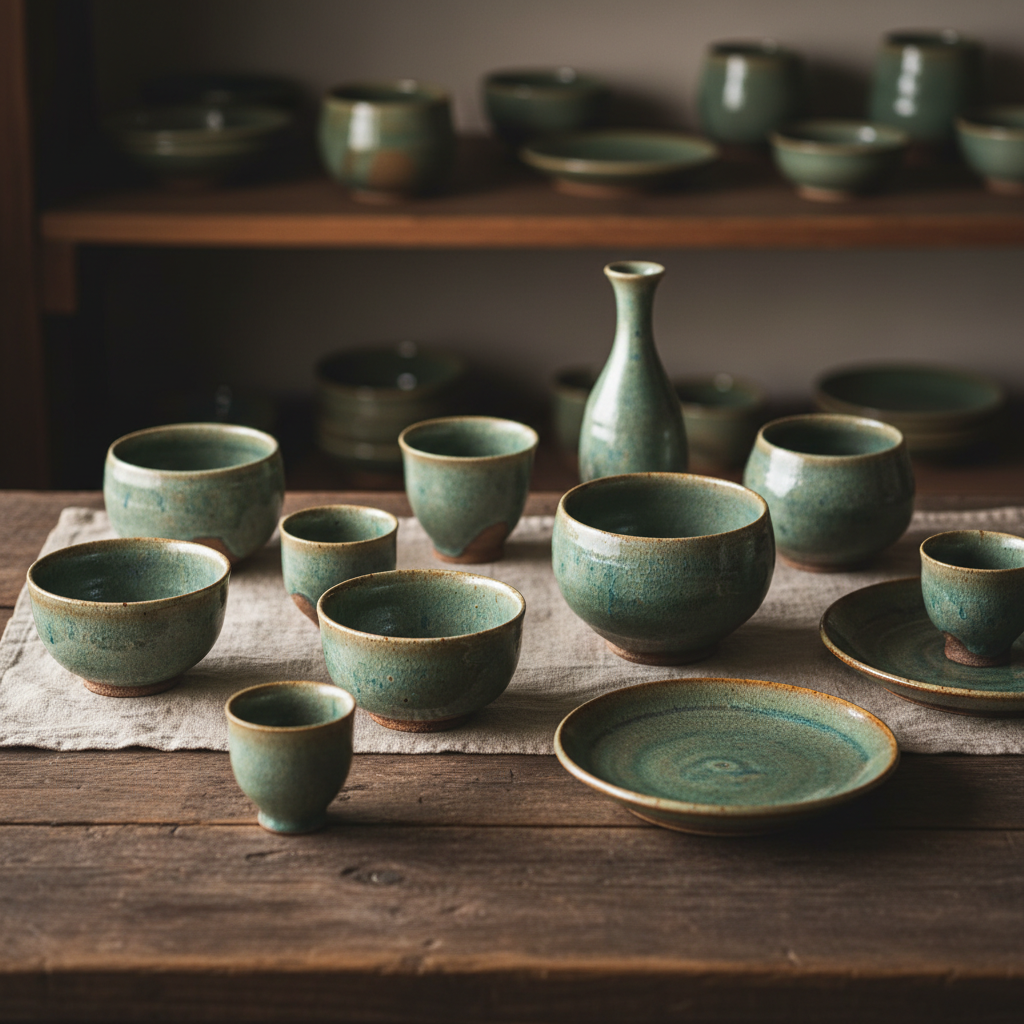
Products of Miyajima ware are characterized by a pristine atmosphere. The subdued, refined color palette and the simple, warm texture are beloved by many people.
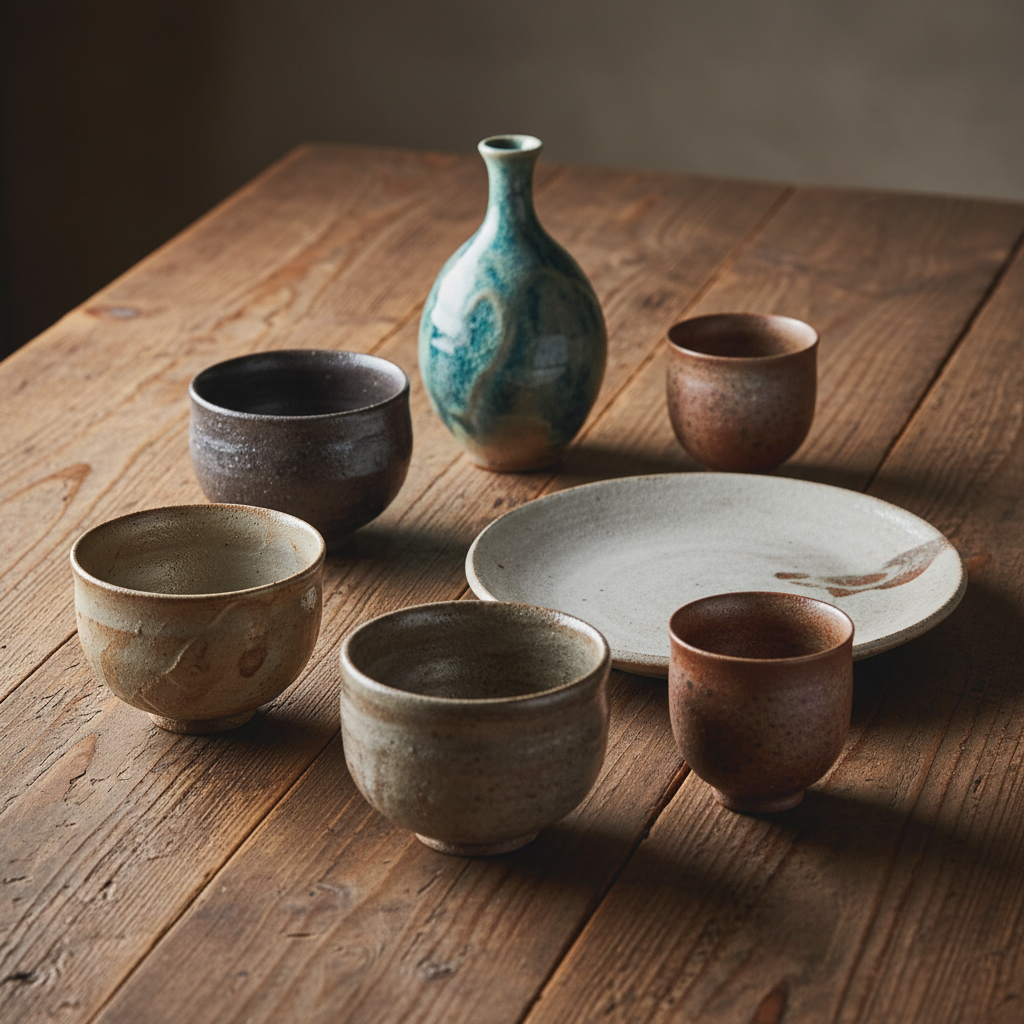
When sand is mixed into clay, kiln changes occur readily, and unique patterns naturally appear depending on temperature and flame conditions during firing. This unpredictable change creates the distinctive atmosphere of Miyajima ware, with each vessel of the same shape presenting a different appearance.
Regional Character Using Hiroshima Clay
Miyajima ware is pottery made using local Hiroshima soil. Clay extracted within Hiroshima Prefecture possesses appropriate plasticity and strength after firing, making it suited to the characteristics needed for everyday dishes.
By mixing sacred sand into soil from this region, vessels that combine durability with spirituality are completed. The approach of utilizing regional materials is an important element of Miyajima ware as a traditional craft.
Present-Day Miyajima Ware: Major Kilns and Potters
Several kilns continue to preserve the tradition of Miyajima ware today, each expanding the possibilities of Miyajima ware through their unique interpretations and techniques.
Yamane Taigendō (yamane taigendō)
One of the representative kilns of Miyajima ware is Yamane Taigendō. While preserving traditional techniques, they create vessels suited to modern living.
In addition to the traditional “O-suna ware” using sacred sand from Itsukushima Shrine, Taigendō develops original products linked to Miyajima’s culture and beliefs, including the “tomoshibi” series using ash from the eternal flame in glazes, “momiji-mon” created by casting impressions of fresh maple leaves, and “akari” and “inori” using ash from the burning of folded paper cranes in glazes.
Kawahara Gankoku-dō Corporation
Kawahara Gankoku-dō is another important kiln inheriting the tradition of Miyajima ware. It produces a wide range of products from everyday vessels to tea ceremony utensils and flower containers, creating works that combine practicality with beauty.
Miyajima O-suna Yaki Keisai Kiln
Keisai Kiln is a pottery that pursues its own aesthetic sense while preserving traditional Miyajima ware techniques. It also creates works with strong artistic individuality and has drawn attention from collectors.
Miyajima Ware Products: From Daily Use to Tea Ceremony Utensils
Everyday Vessels
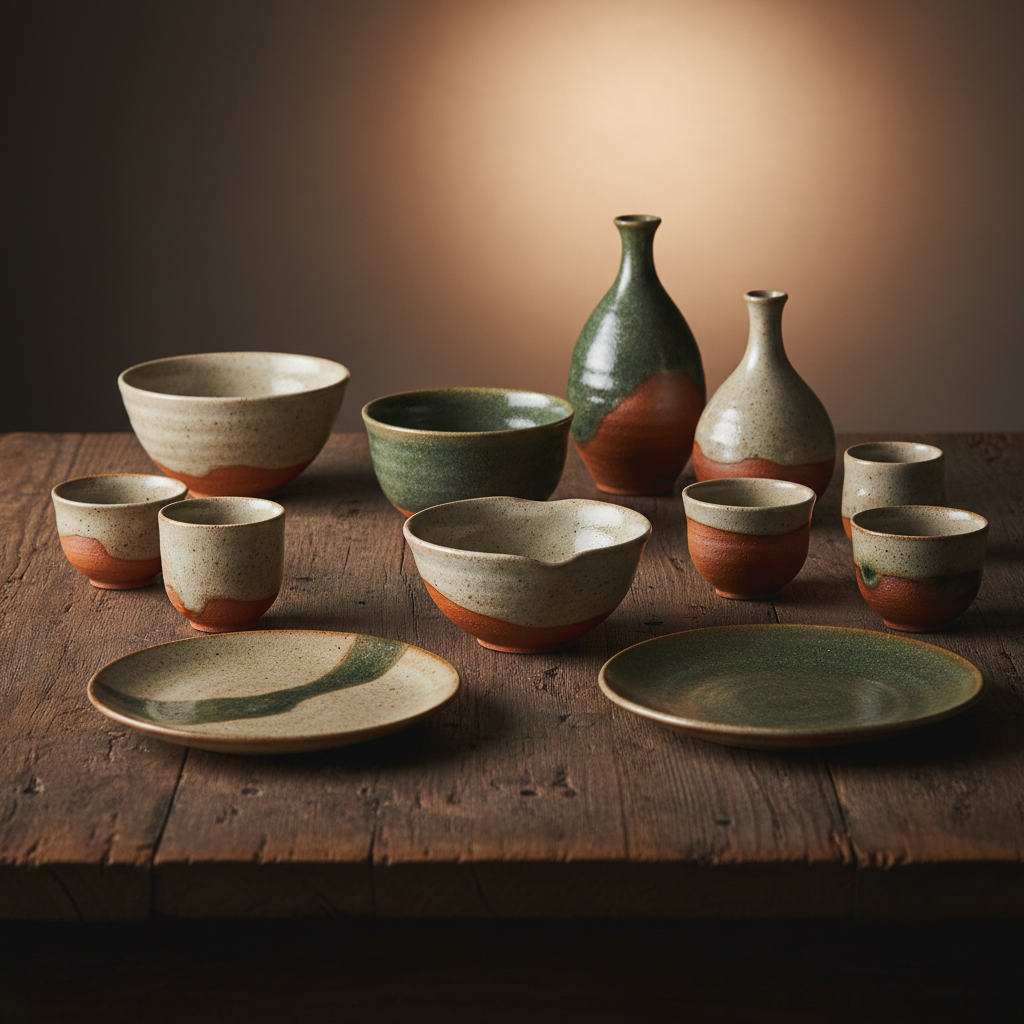
Miyajima ware is widely produced in everyday items such as rice bowls, tea cups, plates, and bowls. The simple, warm texture brings a peaceful atmosphere to the daily dining table.
The unique patterns from kiln changes become an element that creates affection the more the vessels are used, and they are valued as dishes that can be used for a long time.
Tea Ceremony Utensils
With its pristine atmosphere, Miyajima ware is also suitable as tea ceremony utensils. Implements used in the world of tea such as tea bowls, water jars, and flower containers are created, and tea practitioners hold them in high regard.
The simplicity aligned with the aesthetic sense of wabi-sabi and the spirituality born from mixing sacred sand enhance their value as tea ceremony utensils.
Miyajima Ware as Lucky Charms
Miyajima ware mixed with sacred sand from Itsukushima Shrine is also popular as a lucky charm. It is frequently chosen by tourists visiting Miyajima as a souvenir of their trip or as a gift, contributing to increased recognition of Hiroshima Prefecture’s traditional crafts.
Modern Miyajima Ware Displaying More Diverse Expressions
Preserving Tradition While Adapting to the Times
Today’s Miyajima ware potters are unafraid of change suited to the times while preserving tradition. Innovative efforts are underway, such as designs suited to younger generations’ lifestyles and development of new glazes.
For example, vessels like mugs and coffee cups adapted to Western culture are also being made, with products being proposed under concepts such as “mugs to accompany you through life” that can be used long-term.
New Initiatives Making Use of Miyajima’s Cultural Resources
As seen in the previously mentioned efforts of Taigendō, new product development utilizing Miyajima’s cultural resources is progressing, such as using ash from the eternal flame or ash from the burning of folded paper cranes in glazes.
These are extensions of the traditional concept of “mixing sacred sand” and are attracting attention as attempts to embed the spirituality and narrative of the land of Miyajima into vessels.
Purchasing Miyajima Ware and Experience
Direct Purchase at Kilns
The most reliable way to purchase Miyajima ware is to visit the kilns directly. In the Miyajima-guchi district of Hatsukaichi City, there are multiple kilns, many of which have galleries or sales spaces at workshops where products can be purchased.
By speaking directly with the potters, your understanding of the background and usage of the products deepens, allowing you to use them with greater affection.
Retailers in Hiroshima Prefecture
Miyajima ware is also handled at craft shops and souvenir stores in Hiroshima City and Hatsukaichi City. Particularly at tourist destinations, there are stores that gather Hiroshima Prefecture’s traditional crafts including Miyajima ware, allowing you to compare and select.
Online Purchase
In recent years, it has become possible to purchase Miyajima ware through official kiln websites and online shops for crafts. People living in distant locations can now obtain Hiroshima Prefecture’s traditional crafts.
Pottery Experience
Some kilns accept pottery experience sessions. By actually touching clay and working the potter’s wheel or hand-forming pieces, your understanding and affection for Miyajima ware deepen.
Pottery you create yourself becomes something uniquely special in the world, and is ideal as a memento of your Miyajima trip.
Positioning of Miyajima Ware as a Ceramic Production Area in Hiroshima Prefecture
Other Ceramic Production Areas in Hiroshima Prefecture
Hiroshima Prefecture has several ceramic production areas besides Miyajima ware. Himeyatani ware and Kamikakari ware, among others, exist with their own unique histories and characteristics, but Miyajima ware occupies a special position through its connection to Itsukushima Shrine.
Miyajima Ware in the Chūgoku Region
Looking at the entire Chūgoku region, while Hagi ware from Yamaguchi Prefecture is nationally famous, Miyajima ware possesses unique value through its connection to a World Heritage site. From the perspective of the fusion of tourism and traditional crafts, it is receiving attention as a model case for regional revitalization.
Distinctive Features Among National Ceramic Production Areas
While Japan has numerous ceramic production areas, Miyajima ware is the only one with a manufacturing method that involves mixing shrine sand. This fusion of spirituality and practicality is an important element that differentiates Miyajima ware from other production areas.
Preservation of Miyajima Ware and Future Prospects
Protection as a Hiroshima Prefecture-Designated Traditional Craft
Miyajima ware is designated as a Hiroshima Prefecture-designated traditional craft and is subject to protection and support from the administration. This allows it to receive support in areas such as technique succession, successor cultivation, and sales channel development.
Issues in Successor Cultivation
Like many traditional crafts, Miyajima ware faces the important challenge of cultivating successors. Current potters are putting efforts into training apprentices and recording techniques for transmission to the next generation.
Utilization as a Tourism Resource
The annual millions of tourists visiting the World Heritage Site Itsukushima Shrine represent an important market for Miyajima ware. By connecting tourism with traditional crafts, increased recognition and promotion of sales for Miyajima ware are expected.
As demand for experiential tourism grows, content development such as pottery experiences and kiln visits is progressing, and Miyajima ware is playing an important role as a tourism resource.
Adaptation to Modern Life
Product development that preserves tradition while adapting to modern lifestyles continues. Innovations such as dishwasher-safe vessels and products usable in microwave ovens are being made to enhance practicality.
Additionally, attention is being given to the aspect of vessels as interior décor, with items such as flower containers and objects created for viewing purposes also being produced.
Conclusion: The Appeal and Value of Miyajima Ware
Miyajima ware is a traditional craft of Hiroshima Prefecture continuing from the Edo period, known for its unique manufacturing method of mixing sacred sand from Itsukushima Shrine. Its pristine atmosphere and unique texture from kiln changes are loved across a wide range of uses from everyday vessels to tea ceremony utensils.
With its solid foundation built in the mid-Meiji period, Miyajima ware has been passed down to the present day through several periods of kiln rise and decline. Through the efforts of kilns such as Yamane Taigendō, both the succession of tradition and adaptation to change are being achieved.
Making use of the characteristics of the production area in Hatsukaichi City, Hiroshima Prefecture, vessels made from local soil and sacred sand from Itsukushima Shrine are a unique existence combining spirituality with practicality. While small in scale as a ceramic production area, it possesses special value through its connection to a World Heritage site.
When visiting Miyajima, be sure to visit the kilns of Miyajima ware and experience its history, techniques, and the thoughts of the potters. From the vessels you hold, you will be able to feel the depth of Hiroshima Prefecture’s tradition and culture.