What is Ushino-to Ware? A Thorough Explanation of the History and Charm of Tottori Prefecture’s Traditional Ceramic Production Area
Basic Information about Ushino-to Ware
Ushino-to ware (うしのとやき) is a traditional ceramic with a history of over 350 years, produced in Yazu Town, Yazu District, Tottori Prefecture (formerly Kawahara Town). This production area is known as one of the “Three Kilns of Inaba,” and has produced a wide range of ceramics from everyday dishes to artistic works.
As a ceramic production area in Tottori Prefecture, Ushino-to ware is deeply connected to the region’s culture, and multiple kilns continue to preserve traditions while working on new creations today. It is characterized by a simple, warm aesthetic, and is supported by many enthusiasts as ware that develops more depth and character the more it is used.
History of Ushino-to Ware: From the Edo Period to Modern Times
Establishment and Development in the Edo Period
The history of Ushino-to ware dates back to the early Edo period, specifically the Kanbun era (1661-1673). It is said to have begun as an official kiln for the Inaba Province Tottori Domain, producing everyday wares using high-quality ceramic clay sourced locally.
The Tottori Domain at that time was focused on industrial development, and opening a kiln in Ushino-to established the foundation for the region to become a ceramic production area. Throughout the Edo period, many vessels essential to daily life—such as jars (kame), vases, and mortars—were produced, supporting the lives of people in the Inaba region.
Changes in the Meiji and Taisho Periods
After the Meiji Restoration, Ushino-to ware faced a crisis of decline after losing the domain’s patronage. However, it made a new start as a privately-owned kiln, continuing production while meeting local demand.
During the Taisho period, the ware came under the influence of the Mingei (folk crafts) movement. Central figures of the Mingei movement—such as Soetsu Yanagi, Kanjiro Kawai, and Bernard Leach—took notice of the simple beauty of Ushino-to ware. In particular, Kanjiro Kawai highly evaluated Ushino-to ware and is known to have collected its works.
From the Showa Period to the Heisei and Reiwa Eras
As the Showa period began, artisans influenced by the Mingei movement inherited the tradition of Ushino-to ware while exploring new forms of expression. During Japan’s post-war high-growth period, the ware faced difficult times being pushed aside by mass-produced goods, but came back into the spotlight as the value of handwork was reassessed.
From the Heisei to Reiwa periods, young artisans have entered the field and new designs have been introduced, creating ware that preserves tradition while adapting to contemporary living. As a ceramic production area in Tottori Prefecture, it also plays an important role in regional development.
Characteristics and Charm of Ushino-to Ware
Materials and Techniques
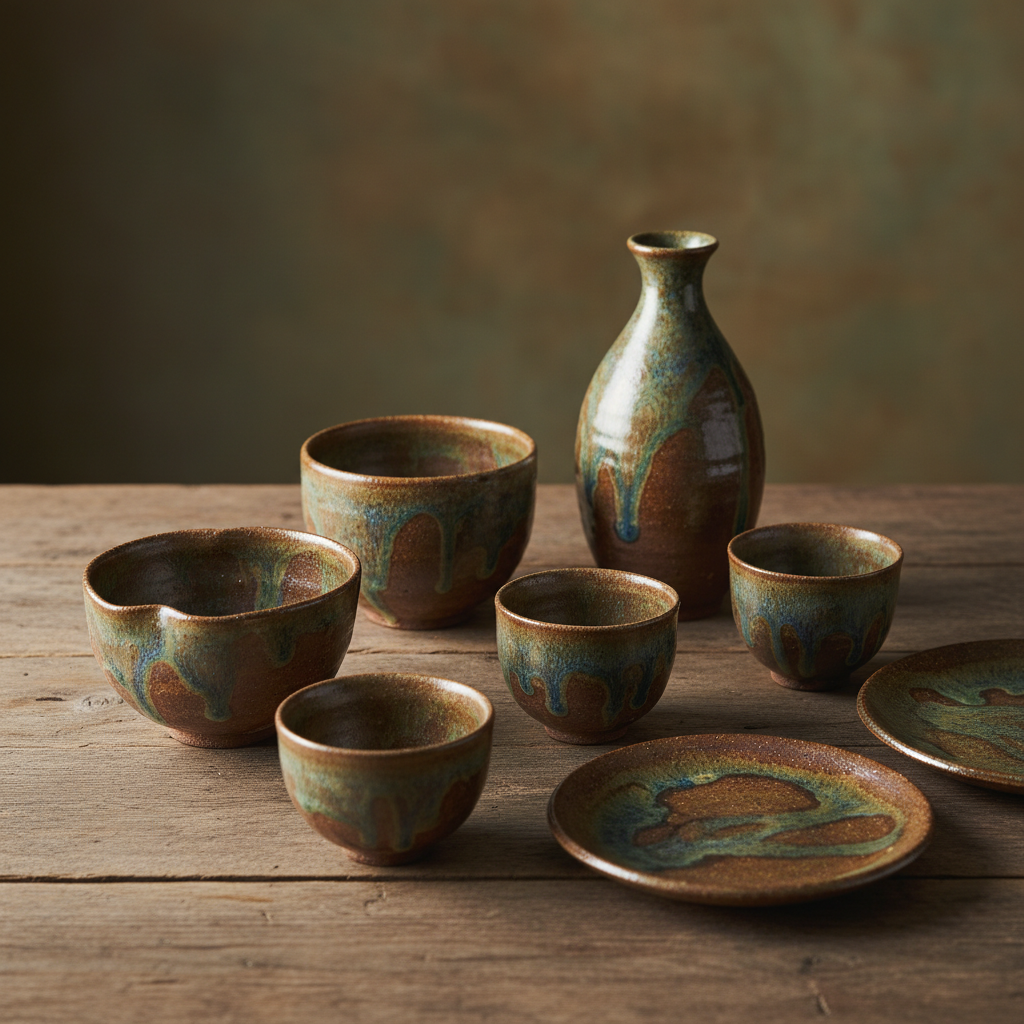
The greatest characteristic of Ushino-to ware is the use of ceramic clay sourced from the local Tottori Prefecture. This clay is rich in iron, and when fired takes on warm, tea-brown or reddish-brown tones.
Major techniques include the following:
- Wheel-throwing (rokuro): A traditional forming technique using a pottery wheel
- Scraping technique (kakiochi): A decorative technique that scrapes away slip to create patterns
- Brush-marked pattern (brushe-me): A traditional decoration where slip is applied with a brush
- Iron painting (tetsu-e): Painting technique using pigments containing iron
Characteristics of Glazes
Ushino-to ware uses distinctive glazes that take advantage of local materials:
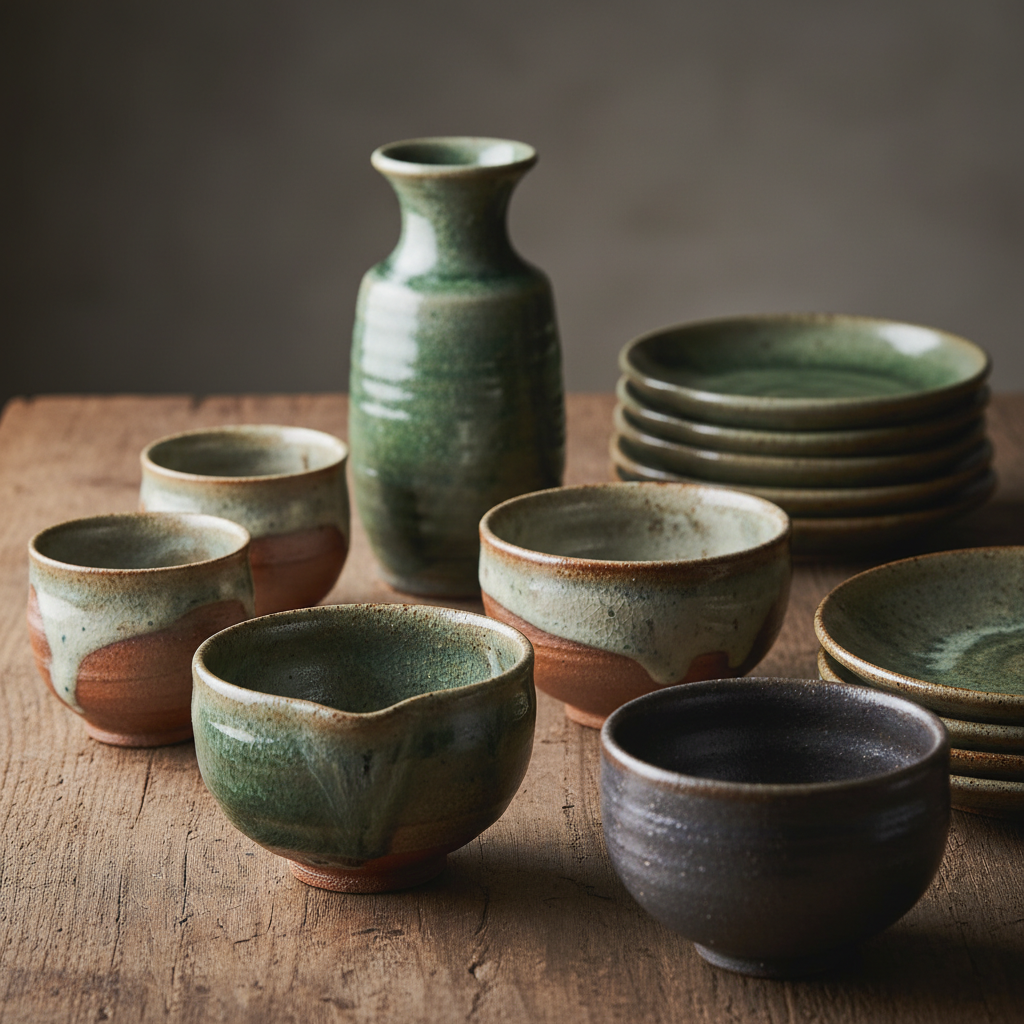
- Persimmon glaze (kaki-yu): A type of iron glaze characterized by deep tea-brown tones
- Black glaze (kuro-yu): A glaze high in iron content, producing a heavy black color
- White slip (shiro-kesho): White slip coating that creates a brighter appearance
- Ash glaze (hai-yu): A traditional glaze made using wood ash
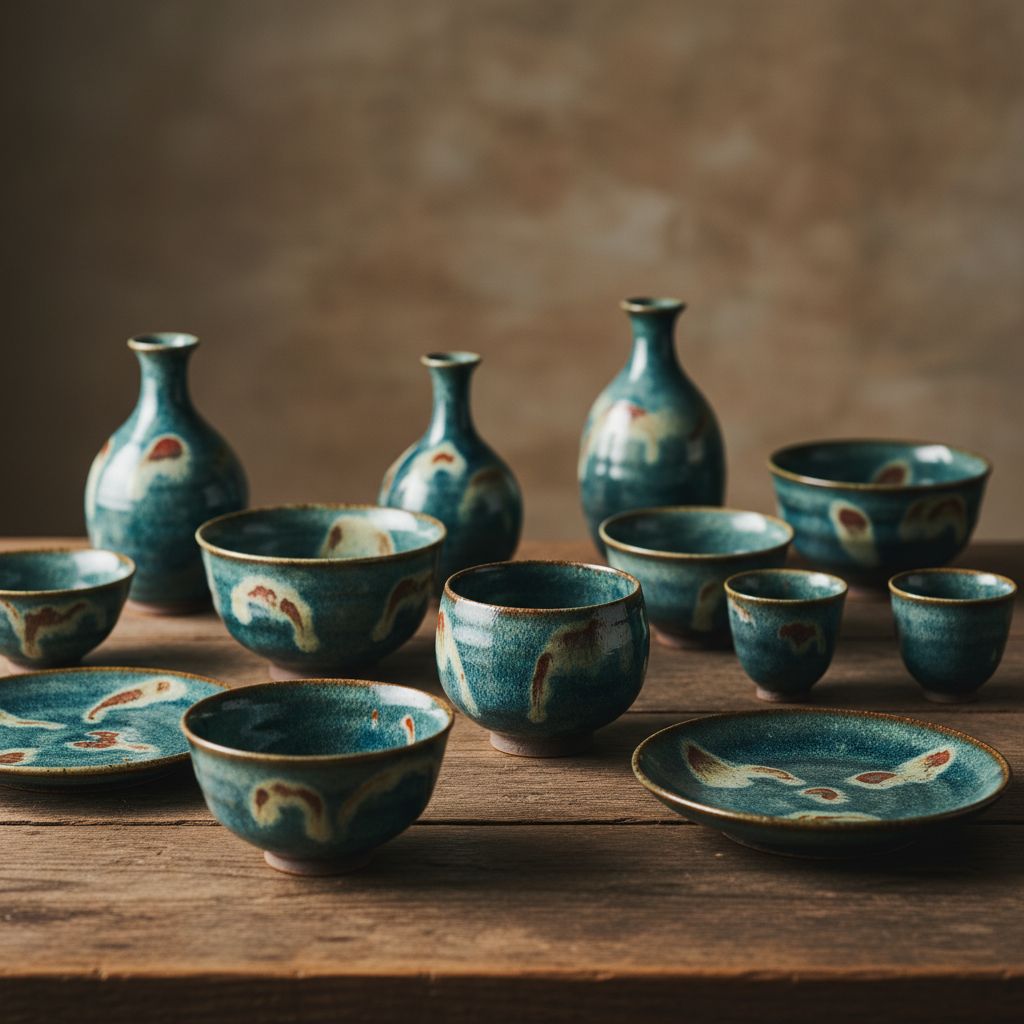
These glazes create subtle variations in color and appearance depending on how the flames hit the pieces in the kiln and temperature changes, resulting in individual, unique finishes where no two pieces are identical.
Uses and Product Types
Ushino-to ware is created in a wide range of products, centered on everyday dishes:
- Tableware: Rice bowls, tea cups, plates, bowls, rice bowls, etc.
- Sake vessels: Sake bottles, sake cups, sake pouring vessels, etc.
- Flower vessels: Flower vases, flower containers, etc.
- Tea ceremony utensils: Tea bowls, tea ceremony water jars, waste water vessels, etc.
- Daily items: Mortars, jars, vases, etc.
Everyday ware is particularly characterized by many people using it for long periods, as the pieces conform to the hand the more they are used and allow one to enjoy how they change over time.
Positioning as a Ceramic Production Area in Tottori Prefecture
The Three Kilns of Inaba
Historically, the Inaba region in eastern Tottori Prefecture had three major ceramic production areas known as the “Three Kilns of Inaba”:
- Ushino-to ware (Yazu Town, Yazu District)
- Inakuyama ware (Tottori City)
- Takaragi ware (Tottori City)
Among these, Ushino-to ware holds the longest history and occupies an important position as a production area where production continues actively today.
Relationship with Other Kilns in Tottori Prefecture
Besides Ushino-to ware, Tottori Prefecture has several other ceramic production centers, including the “Yamane Kiln” in Kurayoshi City and kilns in the Sakaiminato City area. Ushino-to ware has developed while exchanging with these other kilns, contributing to the development of ceramic culture throughout Tottori Prefecture.
In recent years, Tottori Prefecture has been putting effort into promoting crafts, and Ushino-to ware has been recognized as a traditional craft of the prefecture and receives support.
Current Kilns and Artisans
Major Kilns
Currently, several kilns are active in Yazu Town, the production area of Ushino-to ware. While each kiln maintains its own individual character, they all inherit the tradition of Ushino-to ware.
Each kiln preserves traditional techniques while also challenging itself to create new designs suited to contemporary lifestyles. Regular kiln-opening events and ceramic classes are held, increasing opportunities for the general public to experience Ushino-to ware.
Activities of Young Artisans
In recent years, young artisans have moved to the Ushino-to ware production area, bringing new energy. While learning traditional techniques, they create works incorporating contemporary sensibility, conveying the charm of Ushino-to ware to younger generations.
Active information sharing through SNS and online shops has also begun, with fans of Ushino-to ware now visiting from across the nation.
Ushino-to Ware and the Mingei Movement
Kanjiro Kawai and Ushino-to Ware
Kanjiro Kawai, a central figure of the Mingei movement, particularly highly evaluated Ushino-to ware. Kawai was drawn to the simple, powerful beauty of Ushino-to ware, not only adding it to his own collection but also introducing its value widely.
What Kawai evaluated was the artless, natural beauty. The “beauty of utility” that dwells in vessels created by craftspeople as part of their daily work was the ideal form of beauty sought by the Mingei movement.
Influence of the Mingei Movement
Through the influence of the Mingei movement, Ushino-to ware came to be recognized not merely as a daily-use item, but also as a craft with artistic value. This resulted in:
- Heightened awareness among creators
- Improved national recognition
- Increased collectors and enthusiasts
- Renewed appreciation of traditional techniques
However, at the same time, Ushino-to ware creators have not forgotten the original purpose of “everyday dishes” and continue to create ware with emphasis on practicality.
Points for Appreciating Ushino-to Ware
Points to Note When Viewing
When appreciating Ushino-to ware, paying attention to the following points allows one to enjoy its charm more deeply:
- Expression of the clay: The warm color of clay containing iron
- Glaze character: Subtle color changes and flow due to kiln variation
- Balance of form: Natural curves from wheel-throwing
- Decorative appeal: The traces of handwork in brush marks or scraping
- Finishing of the base: The feel in the hand and stability when holding
Enjoying Through Use
The true value of Ushino-to ware is revealed when actually used:
- Beginning of use: Initially, water passing through tightens the clay
- Changes over time: The luster increases and color deepens with use
- Tactile sensation: The comfortable feeling of the earth’s warmth transmitting to the hand
- Compatibility with food: Easily matches both Japanese and Western cuisine
By using regularly and caring for the ware properly, it can be used for decades to come.
How to Purchase Ushino-to Ware
Purchase at the Site
The most reliable purchase method is to visit the kilns in Yazu Town, Tottori Prefecture directly:
- Direct kiln sales: Choose while speaking directly with the artisan
- Galleries: Compare works of multiple artisans
- Pottery markets: Special prices available at events held several times a year
It is recommended to contact in advance before visiting. Some kilns offer kiln tours and hands-on ceramic experiences.
Online Purchase
Methods available for those in distant locations:
- Kiln official online shops
- Craft specialty e-commerce sites
- Tottori Prefecture antenna shops
- Department store craft sections
With online purchases, the disadvantage of not seeing the actual piece is offset by being able to check detailed photos and descriptions before selecting.
Price Range
The price of Ushino-to ware varies depending on the type of work and the artisan:
- Everyday-use small bowls and tea cups: Approximately 2,000-5,000 yen
- Rice bowls and plates: Approximately 3,000-8,000 yen
- Flower vessels and large bowls: Approximately 8,000-20,000 yen
- Tea ceremony utensils and artistic works: 20,000 yen and above
Considering that these are one-of-a-kind pieces made by hand, the pricing is quite reasonable.
Care and Storage of Ushino-to Ware
Initial Treatment
When beginning to use a new piece of Ushino-to ware, the following treatment is recommended:
- Sealing the pores: Boil in rice washing water or soak in water mixed with wheat flour
- Water treatment: Soak in water before use to tighten the clay
- Drying: Allow to dry thoroughly after use
This prevents stains and dirt from adhering easily.
Daily Care
- Cleaning: Wash gently with a soft sponge using neutral detergent
- Drying: After washing, wipe away moisture with a cloth and allow to dry thoroughly
- Storage: Store in a well-ventilated location
- Things to avoid: Microwave, dishwasher, and sudden temperature changes
Tips for Long-Term Storage
When not using for extended periods:
- Ensure completely dry before storing
- Wrap in newspaper to prevent moisture
- Air out regularly
- Be careful when stacking (place paper between pieces to prevent scratching)
Facilities and Events Where You Can Experience Ushino-to Ware
Ceramic Experience
Some kilns in the Ushino-to ware production area offer ceramic experiences:
- Wheel-throwing experience: Spin an actual wheel under artisan guidance to create vessels
- Hand-building experience: Beginner-friendly way to shape by hand
- Painting experience: Paint designs on pre-fired ware
Pieces created during experiences are kiln-fired and mailed back to participants. Eating a meal using a dish you created yourself is a special joy.
Regular Events
Events related to Ushino-to ware:
- Spring and autumn kiln openings: Kilns open simultaneously with new works on display
- Pottery markets: Sales at special prices and artist interactions
- Workshops: Classes to learn techniques
- Exhibitions: Artwork displays at galleries inside and outside the prefecture
Information about these events can be found on individual kiln websites and SNS, as well as Tottori Prefecture’s tourism information sites.
A Journey Through Tottori Prefecture’s Ceramic Production Areas
Access to the Ushino-to Ware Production Area
Public transportation:
- Transfer from JR Tottori Station to the Wakasa Railway, get off at Yazu High School Station
- Reach kilns by taxi or rental bicycle from the station
By car:
- Approximately 10 minutes from “Kawahara IC” on the Tottori Expressway
- Approximately 30 minutes from central Tottori City via National Route 53
Nearby Tourist Attractions
Sightseeing destinations that can be enjoyed along with a visit to the Ushino-to ware production area:
- Tottori Sand Dunes: Japan’s largest sand dunes (approximately 40 minutes by car)
- Legendary sites of Inaba’s White Hare: White Hare Beach, home to mythological stories
- Hot springs in Tottori City: Yoshioka Hot Spring, Shikano Hot Spring, etc.
- Nature in Yazu Town: Mt. Hyounoyama, Mt. Oguiyama, and other hiking destinations
Model Courses
Day trip course:
- Morning: Kiln visits and pottery purchases
- Lunch: Meals using local ingredients
- Afternoon: Ceramic experience or Tottori City sightseeing
2-day, 1-night course:
- Day 1: Multiple kiln visits, ceramic experience, hot spring resort stay
- Day 2: Tottori Sand Dunes sightseeing, Tottori City exploration
What Ushino-to Ware Conveys to the Modern Era
Value of Traditional Crafts
Through its tradition spanning over 350 years, Ushino-to ware conveys several important values to the modern age:
- Warmth of handwork: The human hand’s mark that machines cannot replicate
- Regional cultural inheritance: Using local clay and preserving regional techniques
- Sustainability: The meaning of creating ware that lasts long
- Respect for individuality: Diversity where no two pieces are alike
Significance in Contemporary Living
In a modern era surrounded by mass-produced goods, traditional crafts like Ushino-to ware:
- Cultivate mindful living: Foster appreciation for things
- Enrich the five senses: Stimulate sensibility through touch and sight
- Create connections: Relationship between maker and user
- Contribute to regions: Participate in regional development by supporting traditional industries
Passing to the Next Generation
The Ushino-to ware production area is also putting effort into transmitting techniques to the next generation:
- Apprentice training: Apprenticeship system at kilns
- Collaboration with educational institutions: Ceramic classes in schools
- Information sharing: Charm conveyed through SNS and websites
- New challenges: Attitude of preserving tradition while innovating
Conclusion: Rediscovering the Charm of Ushino-to Ware
Ushino-to ware is a traditional ceramic production area with a history of over 350 years in Yazu Town, Tottori Prefecture. While preserving techniques that have continued since the Edo period, it continues to create ware suited to contemporary living.
The simple beauty appreciated by masters of the Mingei movement, the warm aesthetic derived from locally-sourced clay, and above all the practicality as everyday ware that can be cherished for long periods constitute the great charm of Ushino-to ware.
As an important ceramic production area in Tottori Prefecture, Ushino-to ware contributes to the inheritance and development of regional culture. By visiting kilns to speak with artisans, holding pieces in hand, and using them in daily life, one can come to appreciate their true value.
Ushino-to ware, with the warmth and individuality that only handwork can provide, is unobtainable in mass-produced items. A chance meeting with a single piece of ware might become the catalyst for reconsidering a more mindful way of living. When visiting Tottori Prefecture, please be sure to visit the Ushino-to ware production area and experience its charm firsthand.